Industrial - Bachelor

Ultrasound Practice Platform

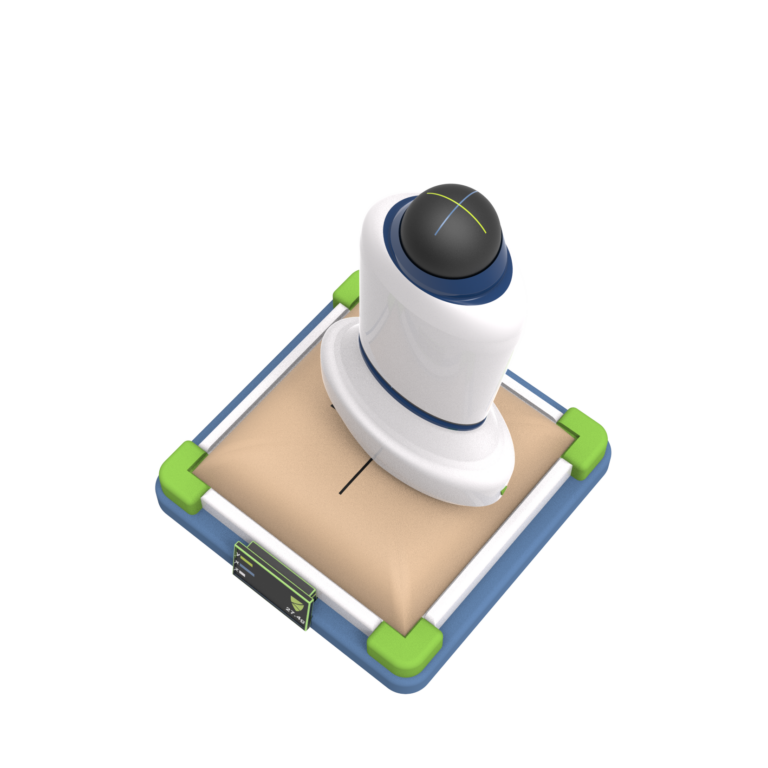
Sonography students and teachers at CQU identified effective use of the ultrasound probe as an area where students struggled to transition from their first year of off campus studies to hands-on practicals. The Ultrasound Practice Platform provides home learning using a skin pad and ultrasound probe which measures pressure and position. The platform also has a ball compass and interchangeable tips to allow students to practice with different directions and probe types.

Ultrasound Practice Platform

The Research

This project started with research into why distance based sonography students struggle in transitioning to practical work on campus. This was done by conducting surveys with 16 CQU sonography students, interviews with 4 teachers and observation of scanning on a phantom compared to a real patient. Results from the students showed that they had the least amount of confidence when it came to gripping the probe, navigating the machine and handling the probe in their first year. This was also the case in their second year as these skills were still being developed. The teachers also agreed with this and said that the main issue was gripping the probe and ergonomics. They also mentioned that there was often a lack of connection between theory and practice. The observation also showed that phantoms are much more forgiving than real patients. It was also found that there was a large gap in current products when benchmarking. There is a large range from cheap phantoms to expensive platforms around $250,000USD. There is no affordable option for practicing at home. Full details of methods, results and analysis can be found in the research report below. You can download it using the link below.

The Solution

The Ultrasound Practice Platform

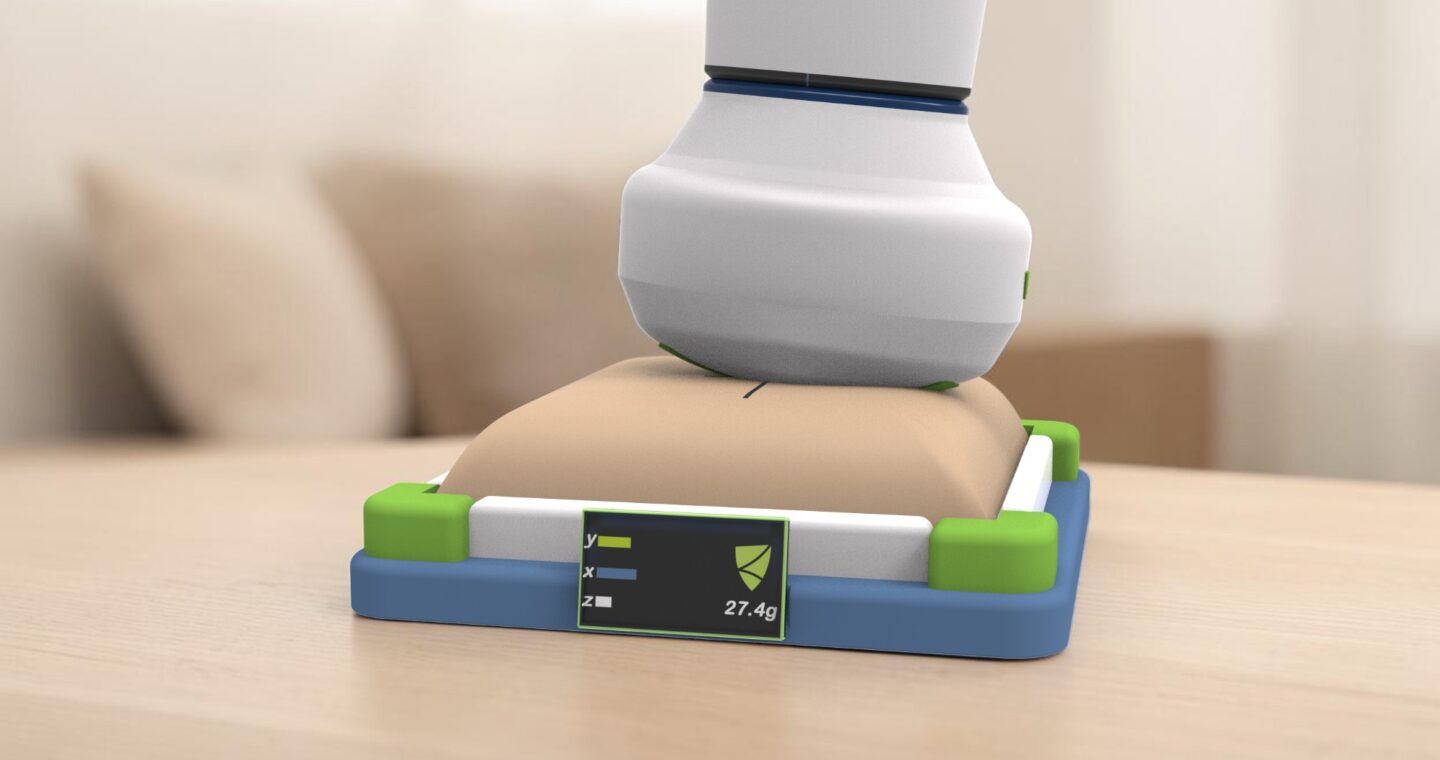
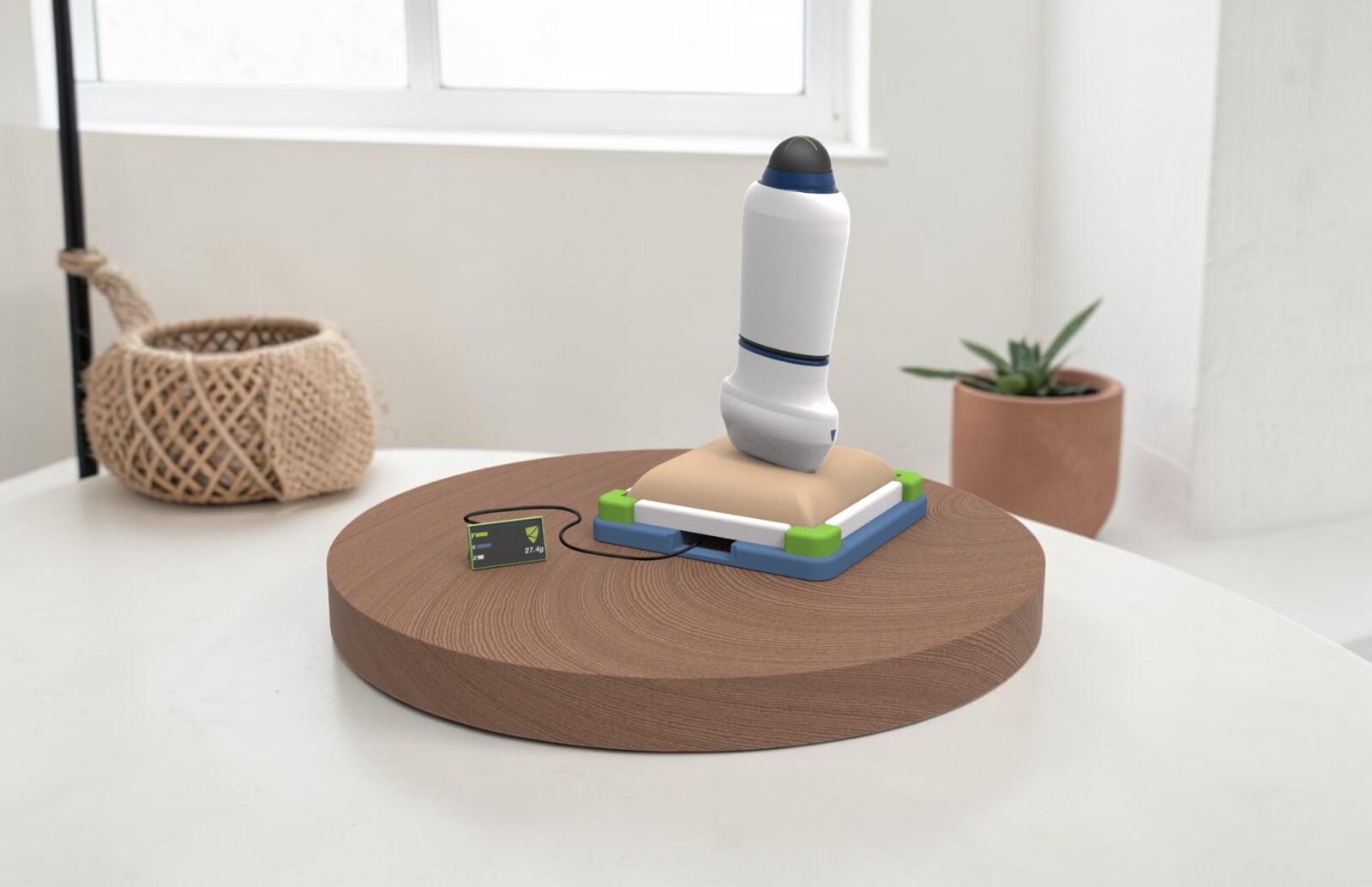
This has led to the creation of the Ultrasound Practice Platform. The largest issues that were encountered by students were difficulty in gripping and handling the probe. The device contains a skin pad to measure the pressure and location of a practice probe with information displayed on an attached screen. It also contains a ball compass to help with directional language, and interchangeable straight and curvy tips to cover the 2 most common types of probe. The device is made using low cost components allowing students to gain measurable practice at home prior to their second year.

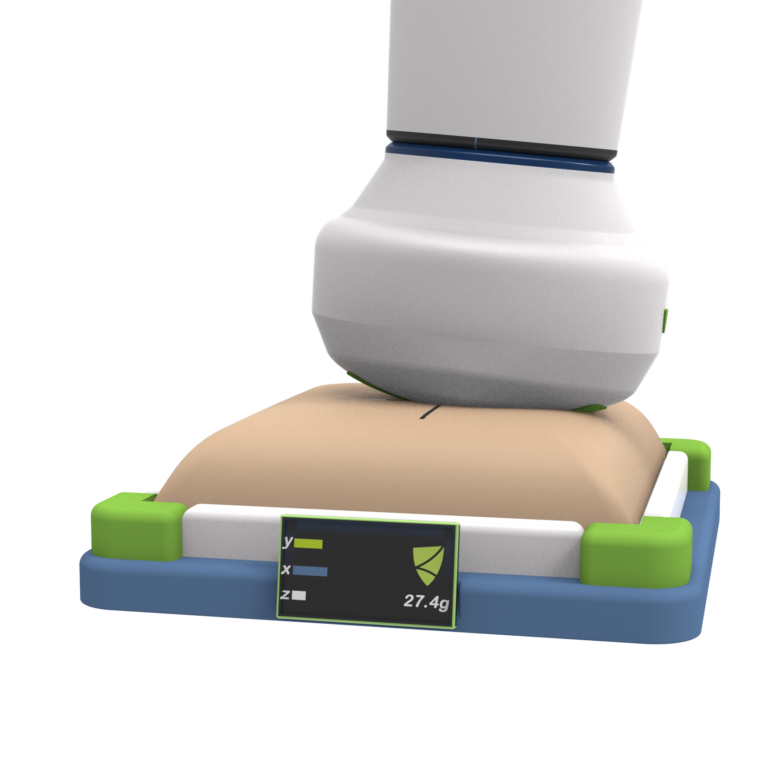
Screen Located at Front of The Ultrasound Practice Platform

Screen Feedback

A projector shows students how their probe is being manipulated. There are two sensors; a magnet sensor under the skin pad which shows the position of the magnet on the probe tip in relation to the platform. This is shown by 3 bars, one for each axis (X, Y and Z). There is also a pressure sensor which displays the amount of pressure applied to the platform in grams. This allows instant feedback of how they are doing. The screen can also be pulled out using a spooled cord so can be placed next to the skin pad making it look like a real ultrasound machine.
Compass Located at The Top of The Probe

Compass of Sonographic Directions

One area that was confusing for the students was directional terminology. Using the compass on the top of the probe for directional terms when scanning helped put this into context. By turning the probe around, the ball compass gives the student a continual reference point of what direction they are facing, helping them get into the habit of thinking about things in relation to the sonographic direction.
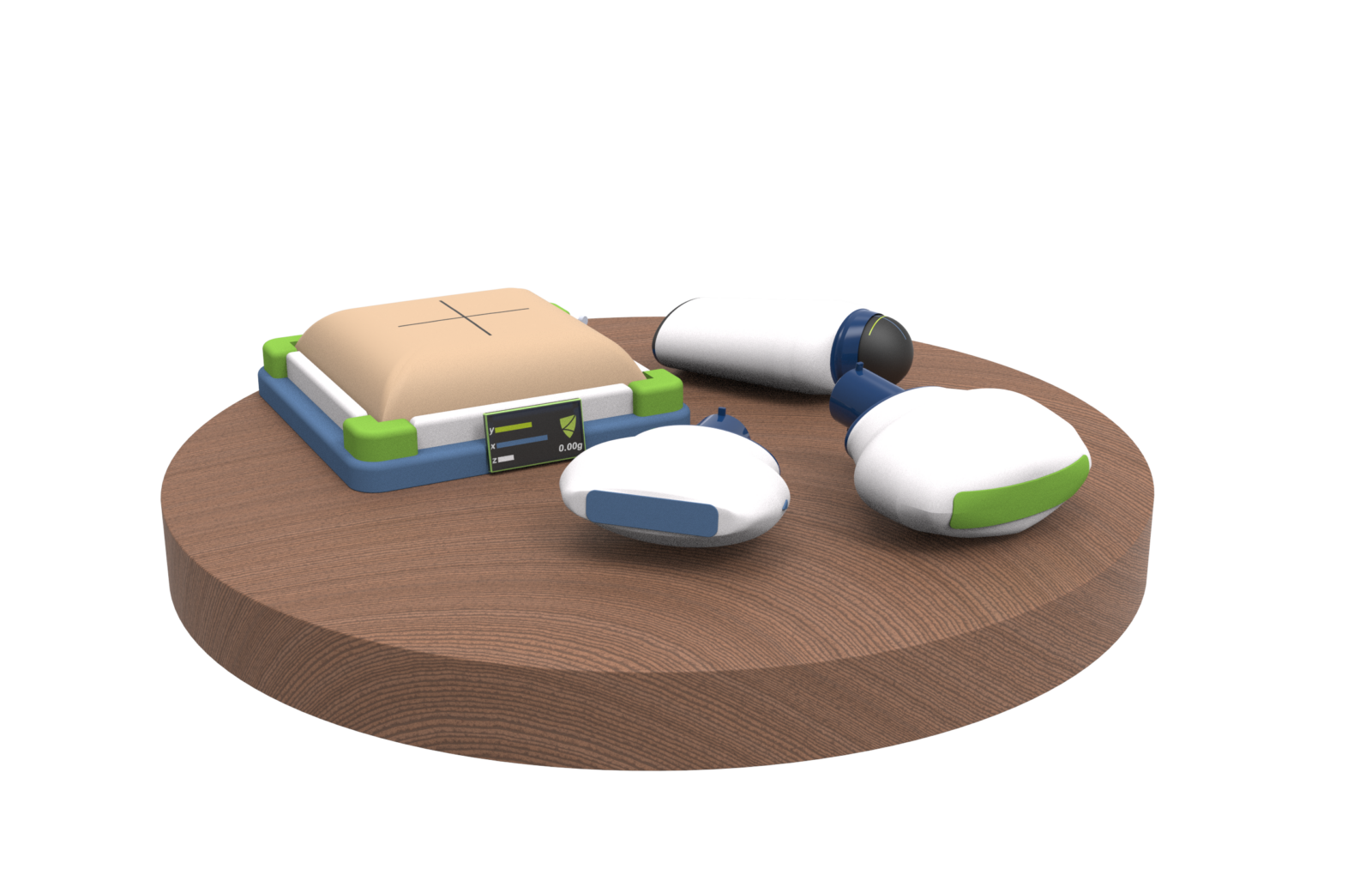
Probe Swapping Between Linear and Curved Linear Tips

Swappable Probe Types

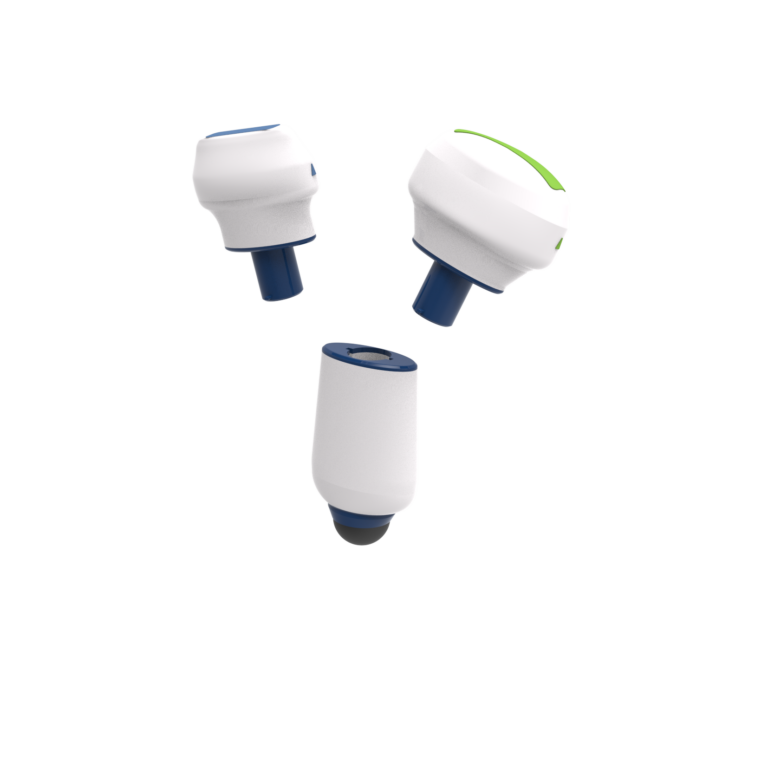
The real life application of ultrasonography requires a variety of probes to be used depending on the area being scanned, therefore using a single probe will limit the knowledge gained by the students. A simple twist lock system allows the probe head to switch between the two most commonly used types of probes (curved and linear). The colour coding makes it easy to identify which probe tip is being used. The versatility of this means students can practice using different grips and handling techniques for each type of probe to increase the amount of scenarios they can be trained on.
Cord Spool Extending Screen Away from The Base

Wire Spool and Chargeability

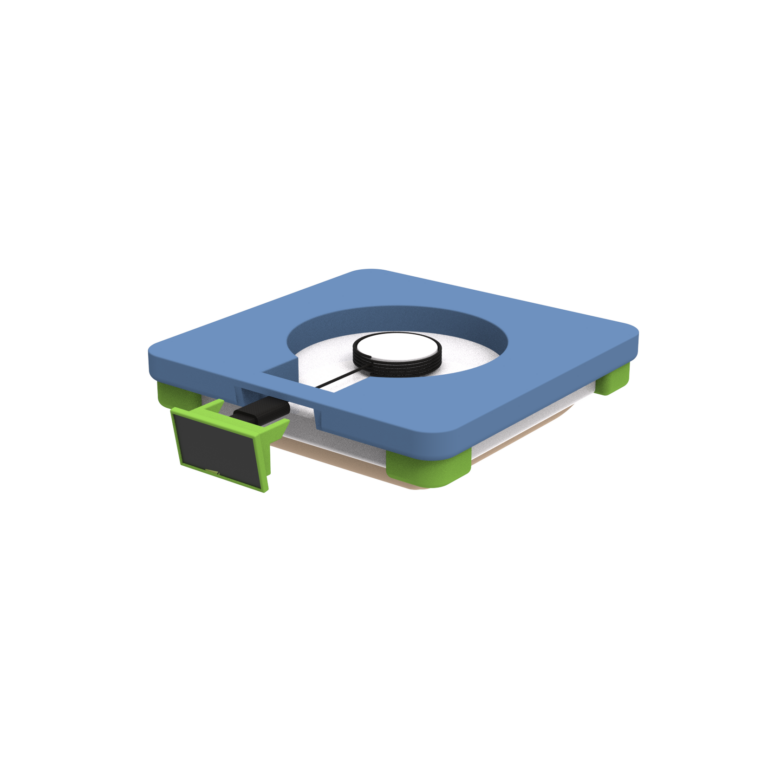
A wire spool at the bottom of the base connects the screen to the platform and can be unwound to recreate common sonographic ergonomics, with the screen directly in front of the student and the platform positioned to the side. This setup mirrors how sonographers work with a real machine. When practice is finished, the screen can be unplugged and the base plugged into a wall outlet to charge. Only the base needs charging, as the probe is passive and requires no battery.

The Ultrasound Practice Platform demonstrates how working alongside students and teachers can create a cost-effective home based tool to help improve students’ skills on the probe. In the future the product could be trialled with CG91 students and develop the training provided. Thank you for looking at this project. If you would like to find out more about the research I have undertaken please download the full report below. Feel free to contact me using my contact details.

Dominic Chester

Dominic Chester is currently studying his third year of Industrial Design at QUT and will graduate in mid-2027. Dominic has experience using SolidWorks, 3D Printing and creating ergonomic, user focused designs. He is able to take ideas and turn them into tangible products. His Capstone project is called Ultrasound Practice Platform which helps sonography students practice their probe skills.

Vote For This Project

"*" indicates required fields

This field is for validation purposes and should be left unchanged.
This field is hidden when viewing the form
Project