Research – the challenges of contamination in Endangered seed collection for Conservation seedbanks
The contamination of endangered seeds for conservation seedbanks is an ongoing challenge that effects the processing of the seeds. The research and experiences presented by seedbank workers offers insight into the impacting factors of contamination. Time-constraints have increased the amount of contamination and have affected the precision of worker’s output. The smaller scales of conservation seedbanks harm the possibilities of gaining further resources to treat contamination. The automation of existing products makes them unusable for these seedbanks as they can’t account for the excessive seed variation and lower budget.
“I know these things exist (separating machines based on physical appearance) but they tend to be fairly bulky and pretty expensive. Our facility here is pretty small so we only have a little lab, and we don’t have a particularly big budget” – participant 2
The research conducted identified several gaps in the market for design opportunities. The lack of customisation and products built for accuracy in a smaller scale forces conservation seedbank workers to hand process seeds, increasing the time taken so there’s not enough time left to manage contamination.
To see further research results, please read my research report about the challenges of managing contamination:
- Name
- Research Report
- File Type
- application
- File Size
- 1 B
- Link
- Download File
Process – Ideation
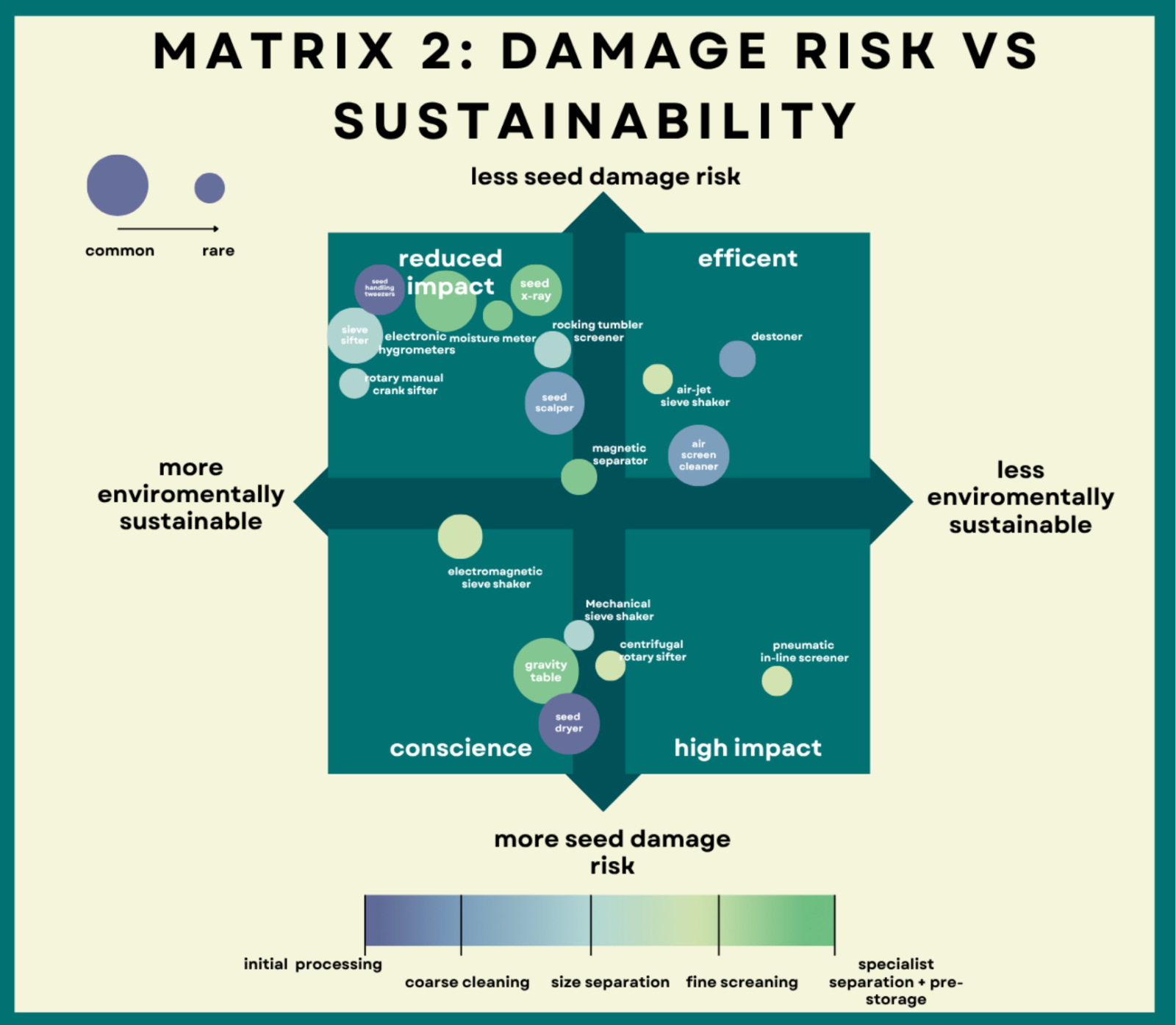
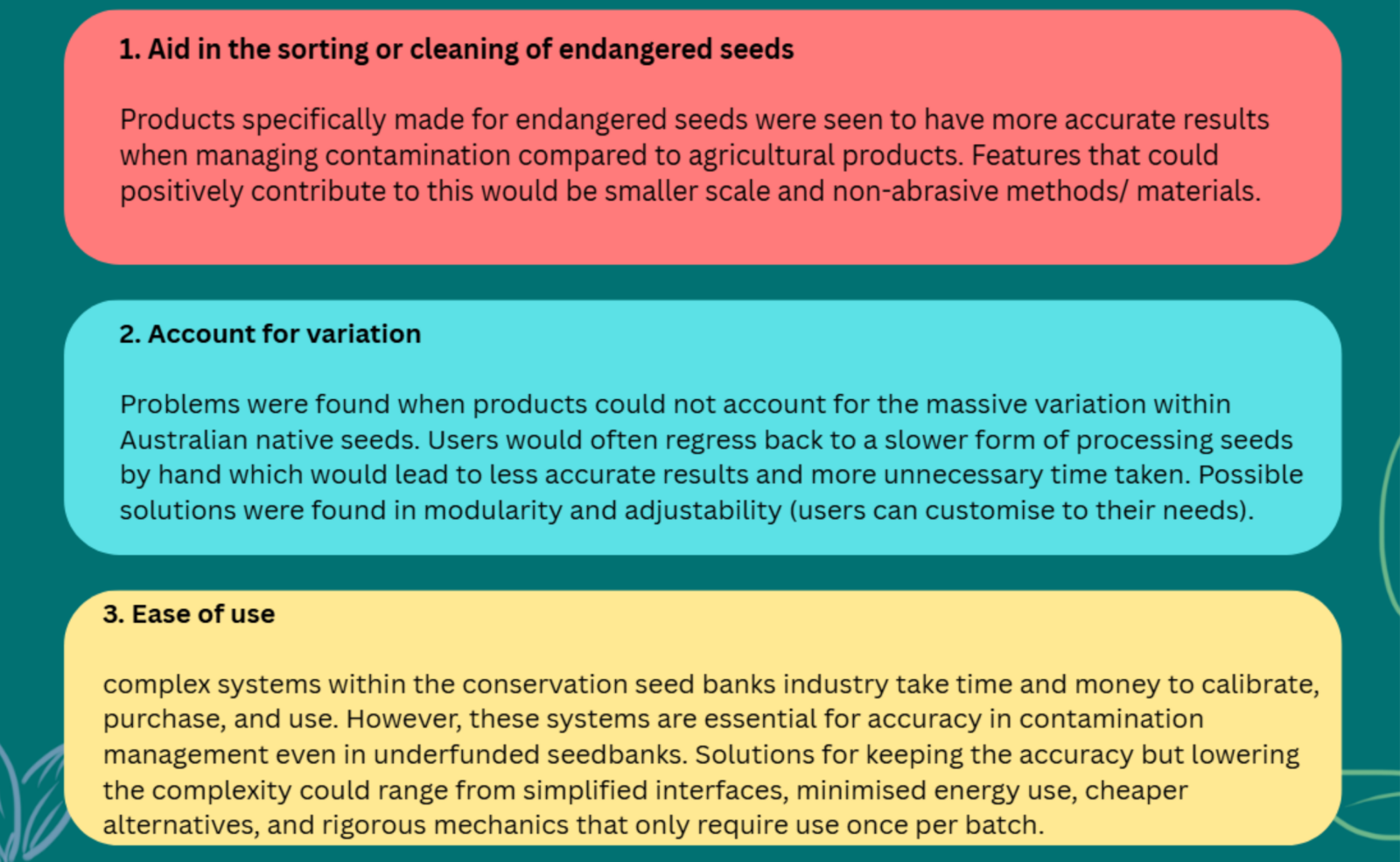
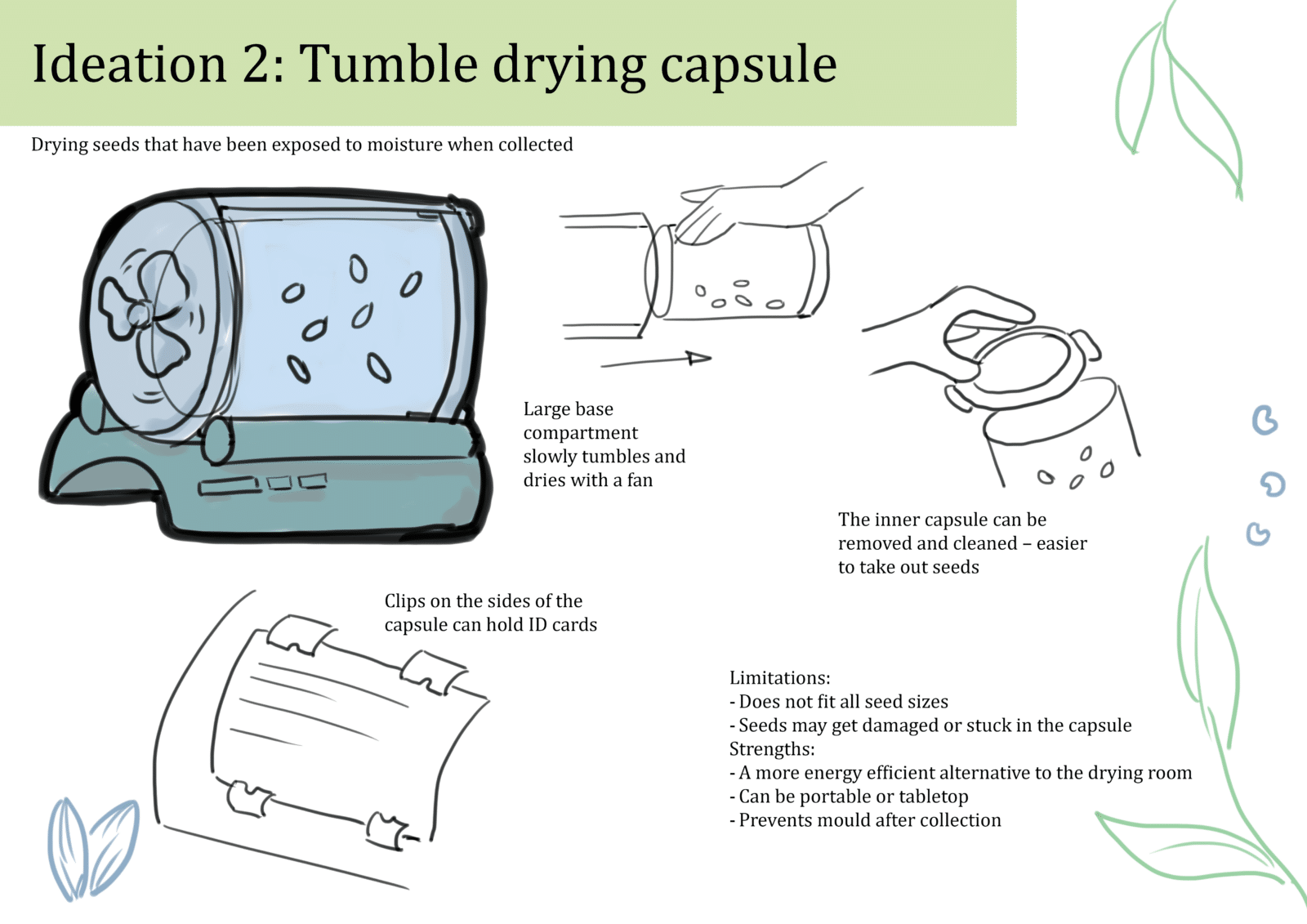
The ideas I had initially, were influenced by criteria summariesed from my report
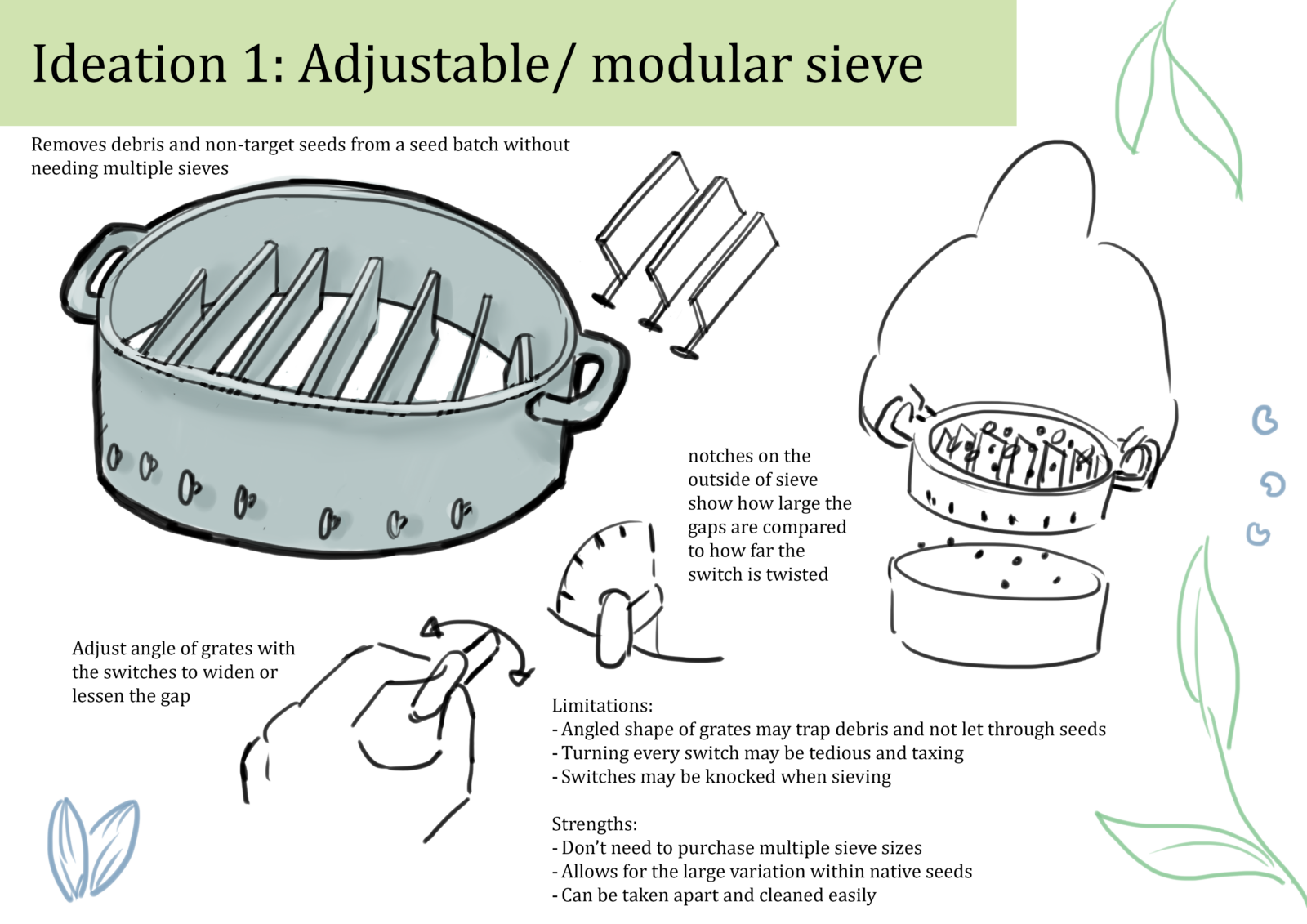
I decided to combine two ideas I had to create a product that was adjustable, modular, portable, and reduced contamination in two different ways; Drying and seperating.
Solution – features
Features:
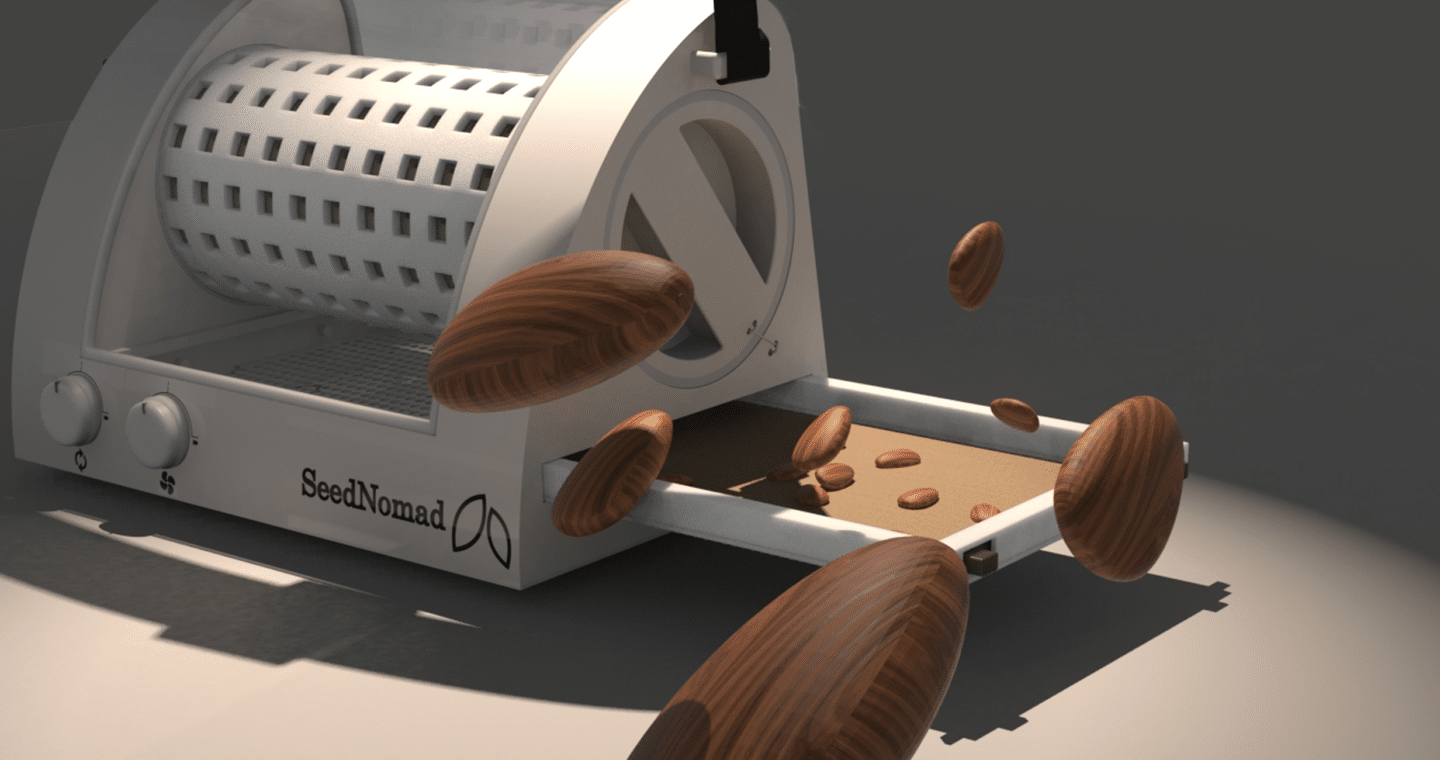
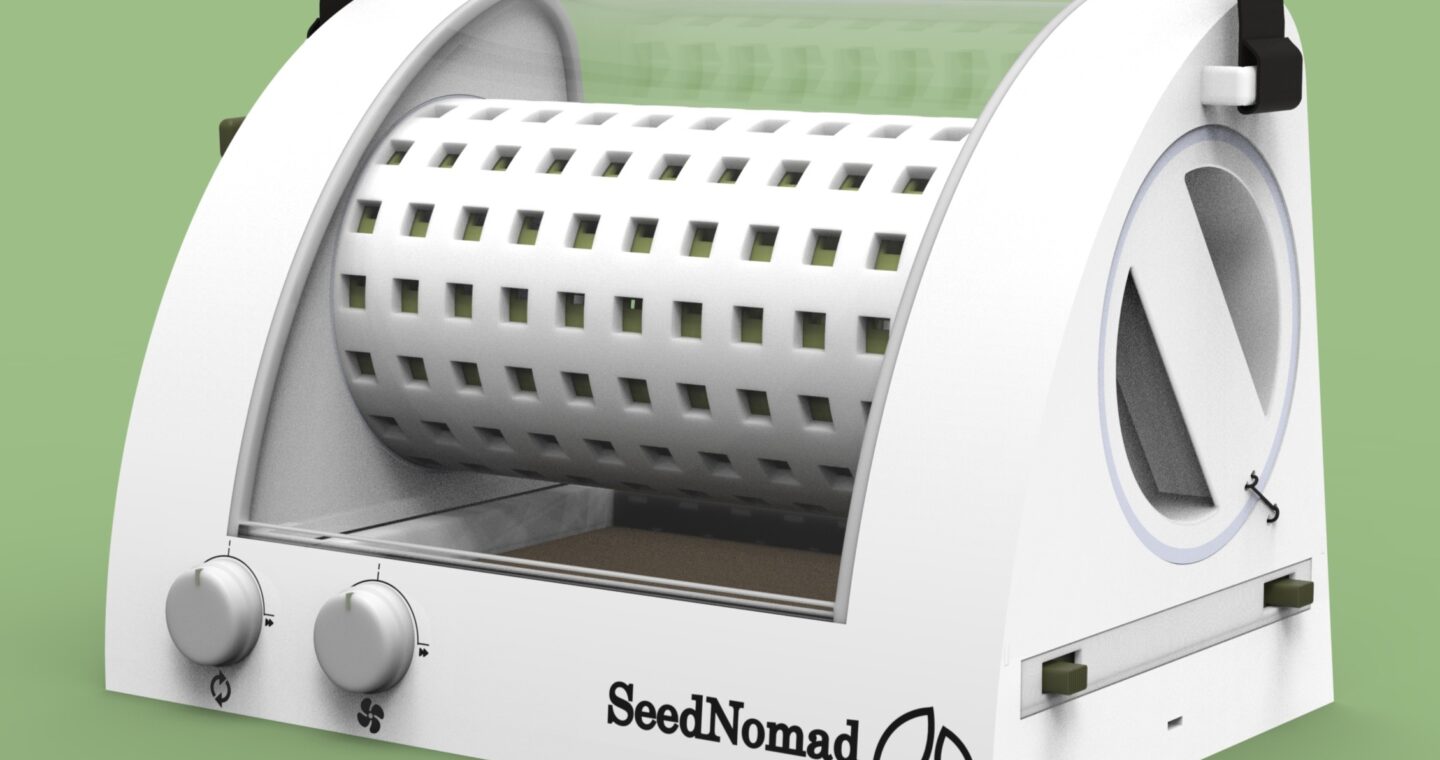
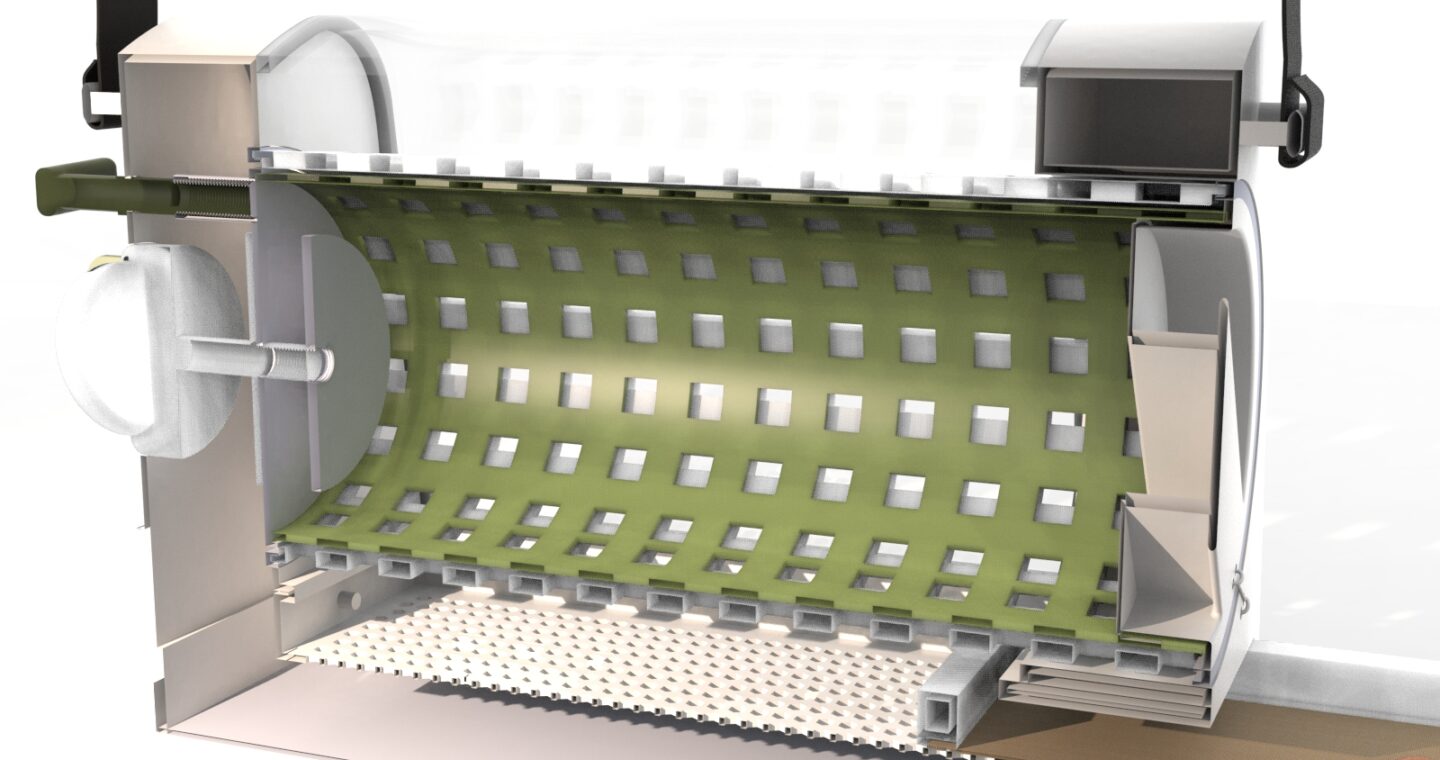
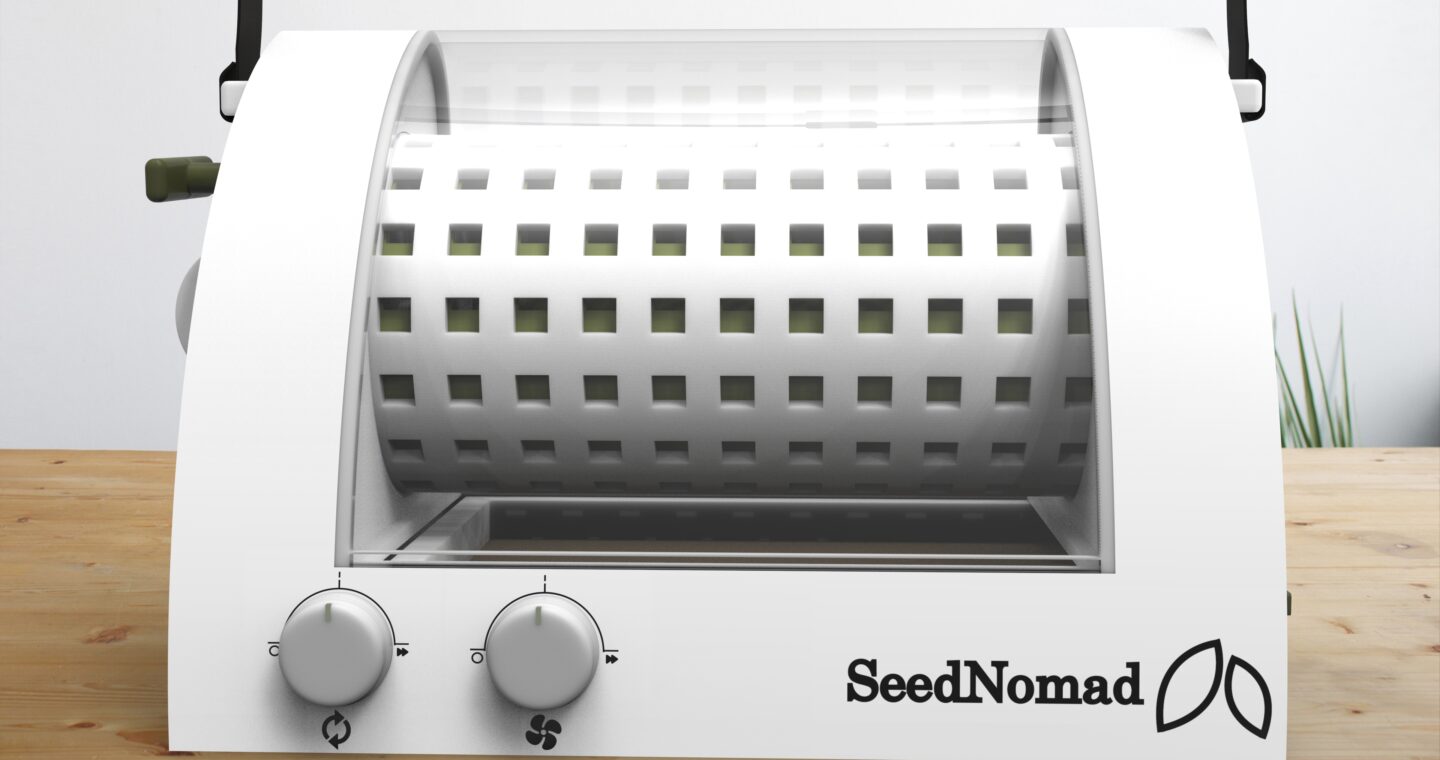
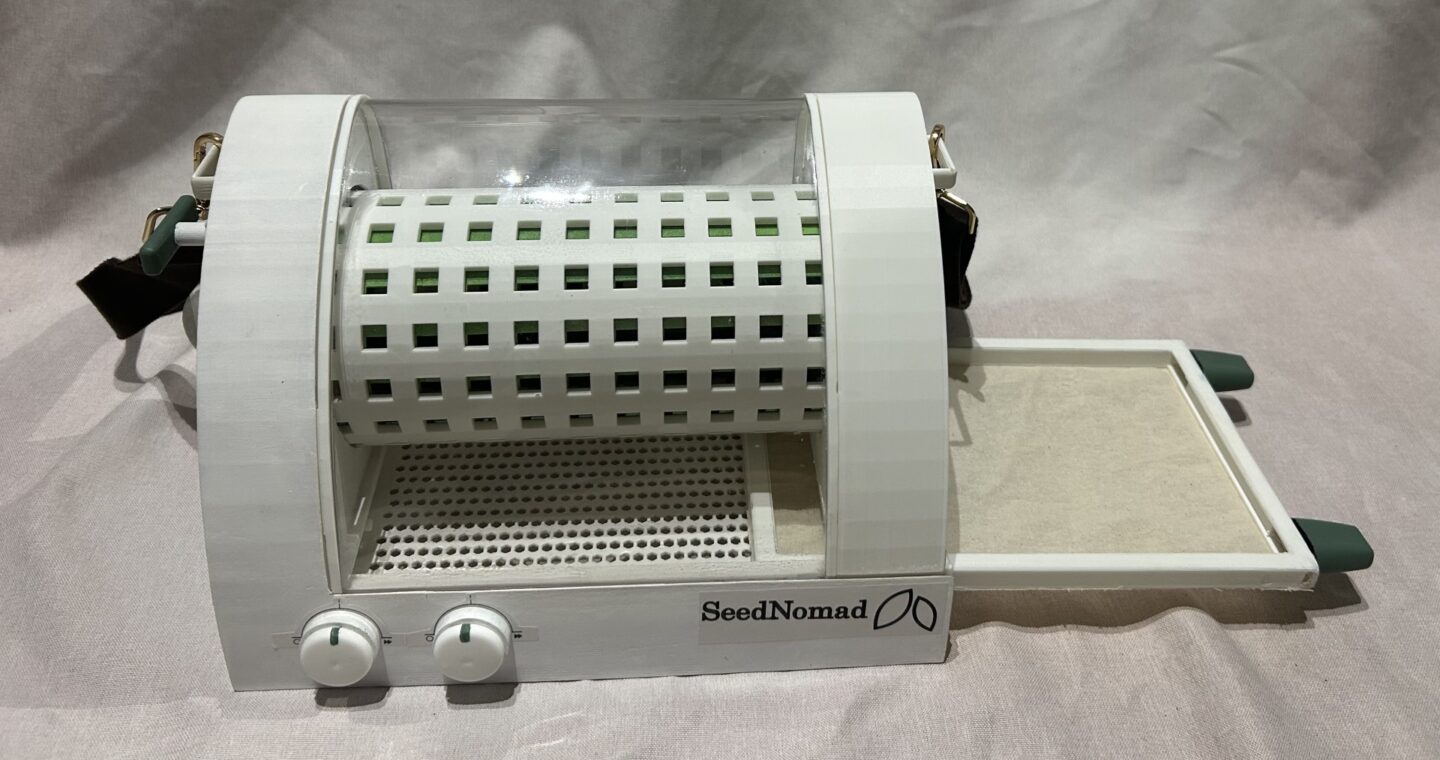
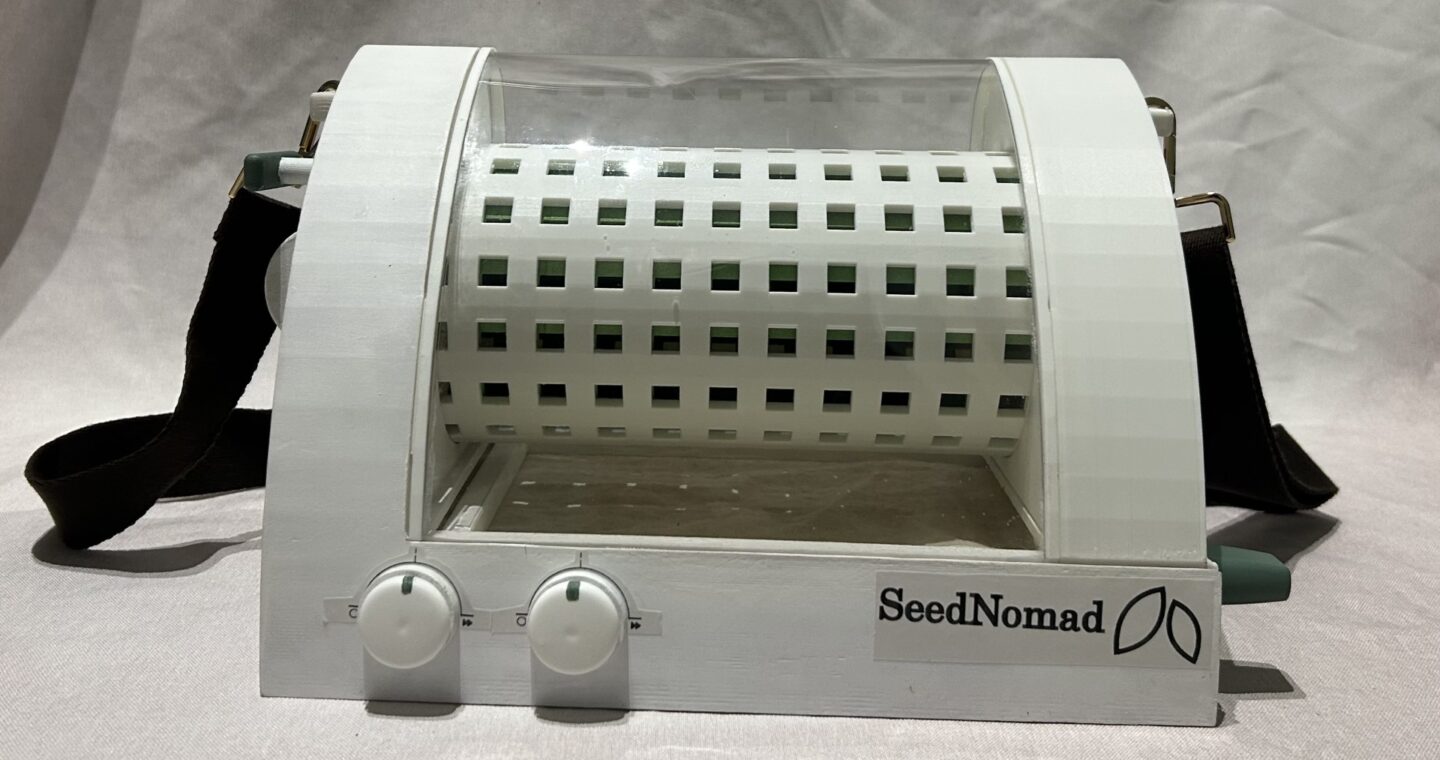
The adjustable tumbling sieve cylinder. This functions by including 2 mesh cylinders, one inside the other. as the inner cylinder is
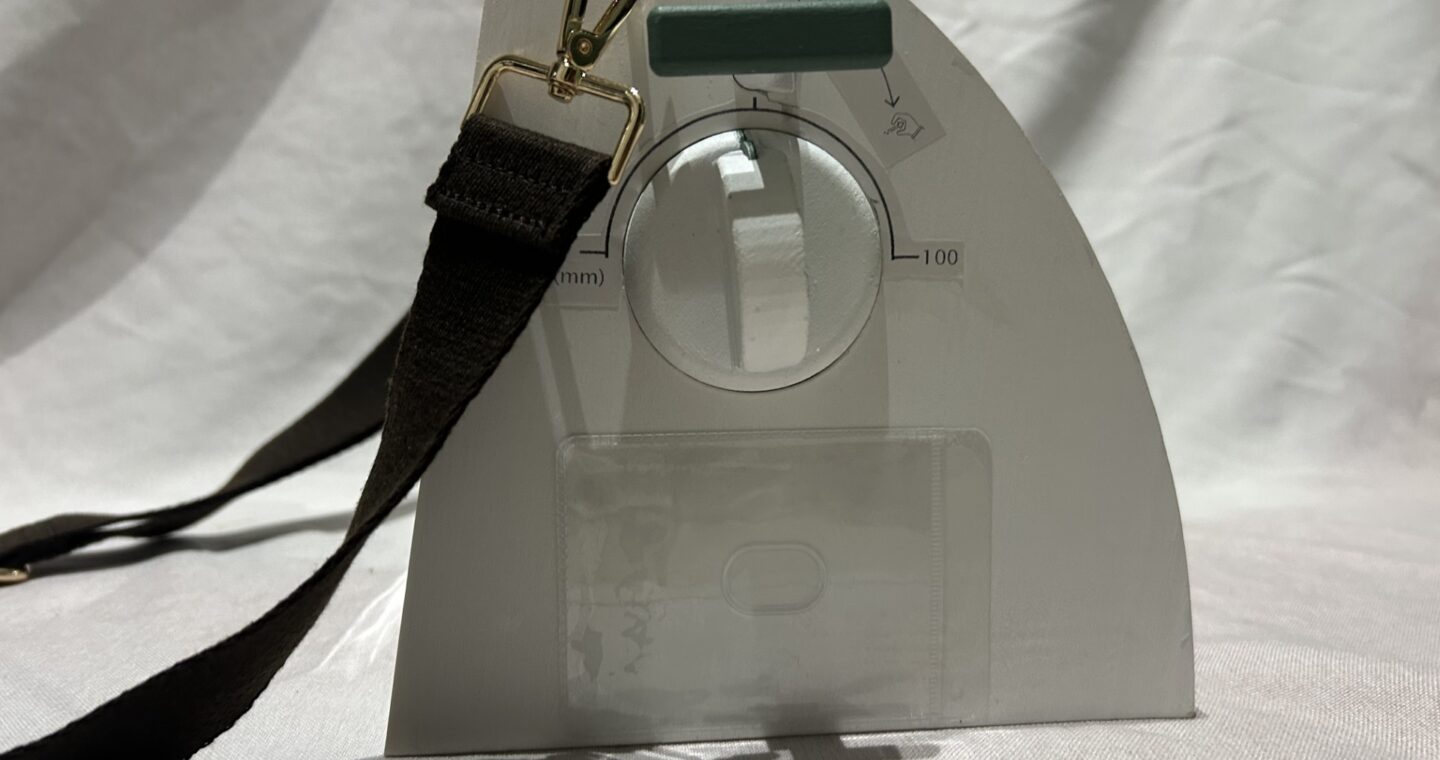
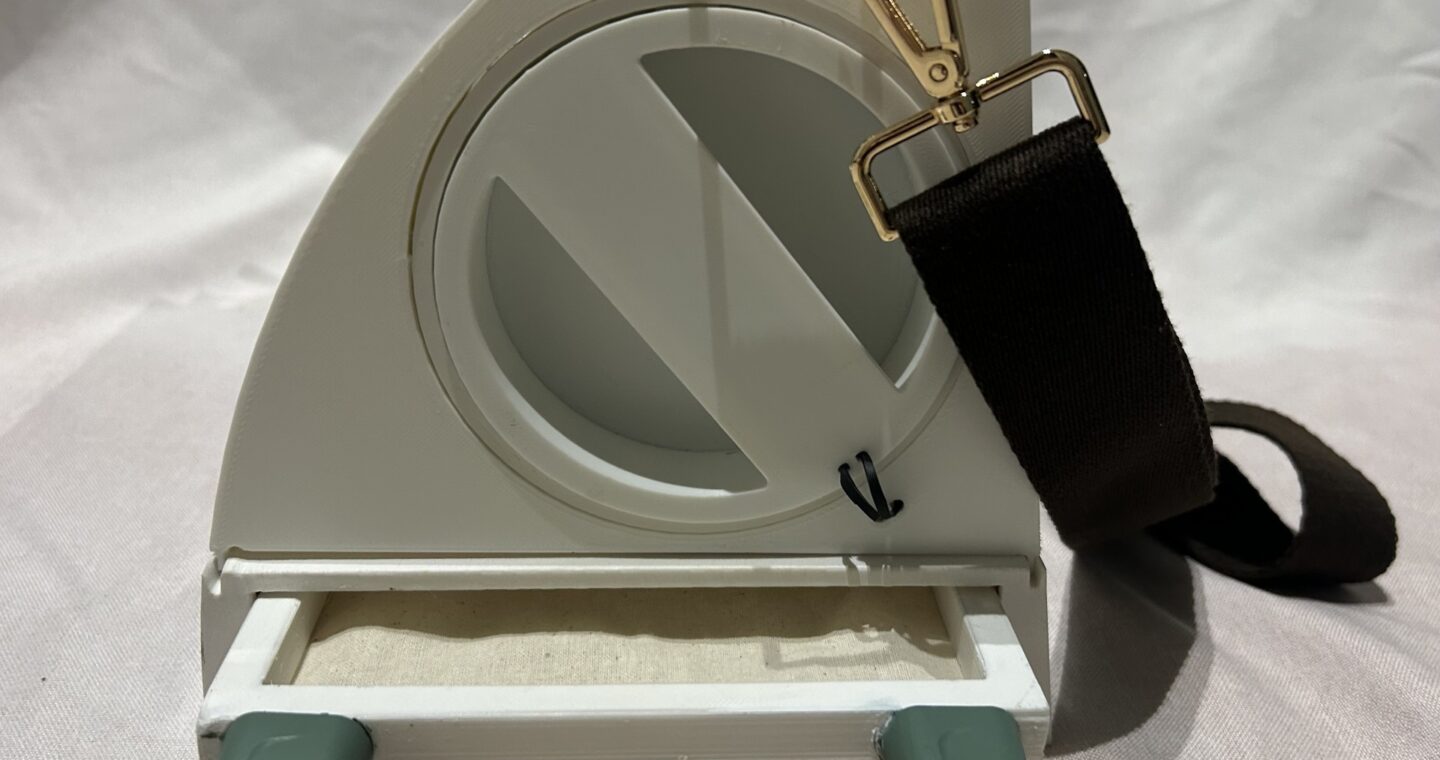
rotated, the gaps on the outer cylinder changes and therefore creates a different gauge in the mesh. The mesh can range in size between 1cm to 1mm, which covers an extensive variety of seed species. This is done by using the pin to disengage the inner cylinder from the tumble motor while the adjustor switch rotates to the desired size.
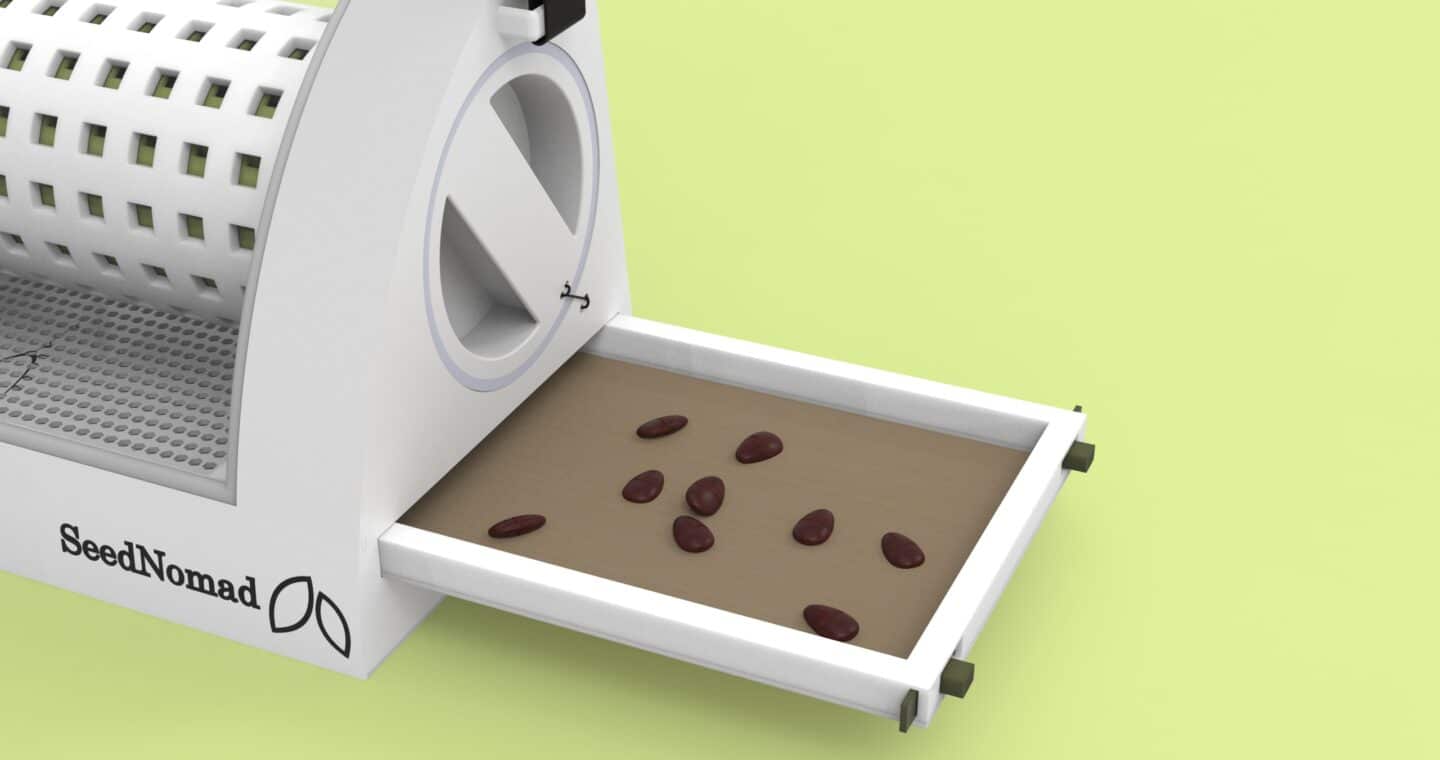
The removable catchment tray under the sieve is also a defining feature that has a breathable cloth base, letting the fan below dry the seeds before they are removed. The drying of the seeds can take place from the moment of collection and can be left on throughout transport to the bank. While it may not be a replacement for the drying room in most seedbanks, it can make the difference between healthy seeds and mouldy ones just from creating a simple preprocessing treatment.
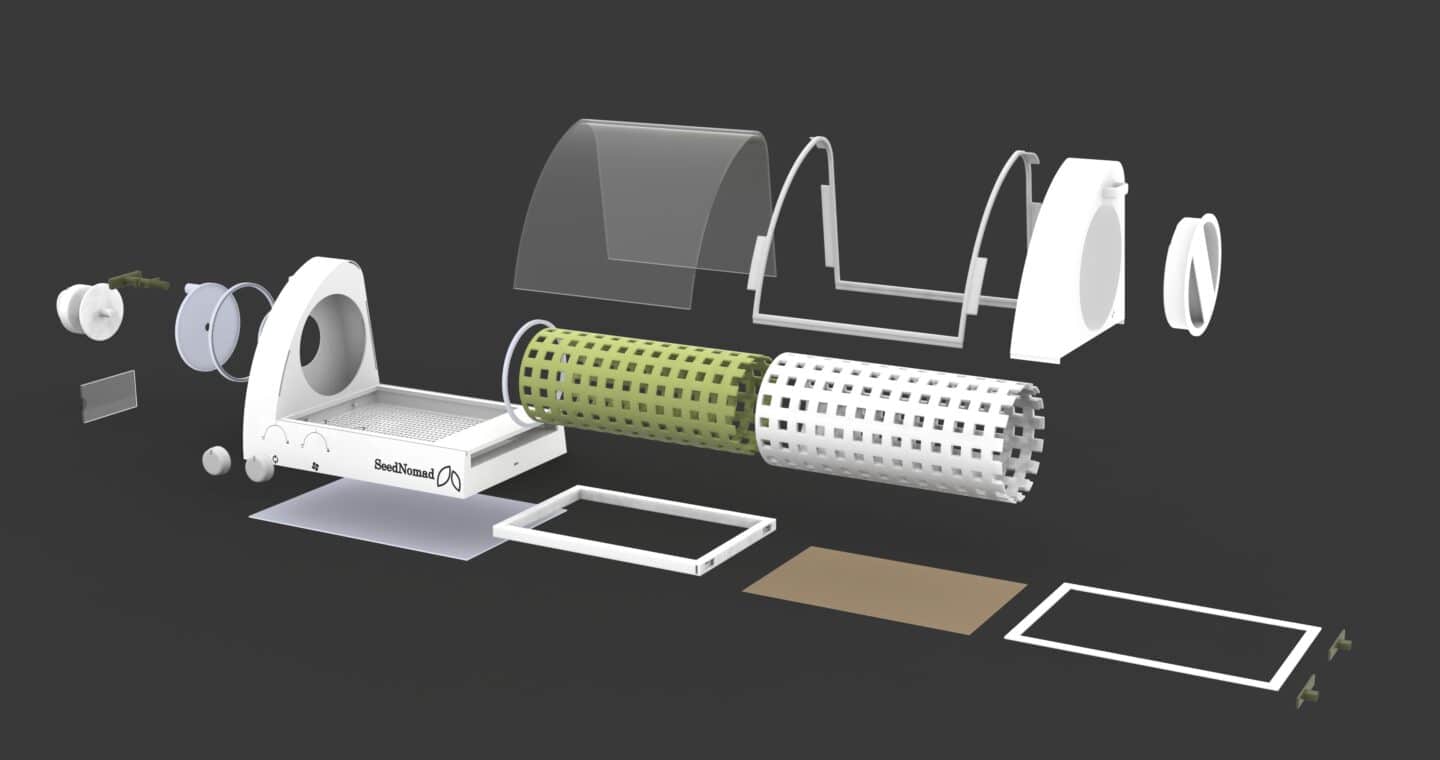
All the parts that come into contact with the seeds and plant material are removable for easy cleaning and preventing contamination from one batch to another. The cloth bottom of the tray is interchangeable and all parts slot into each other with secure grooves and joints.
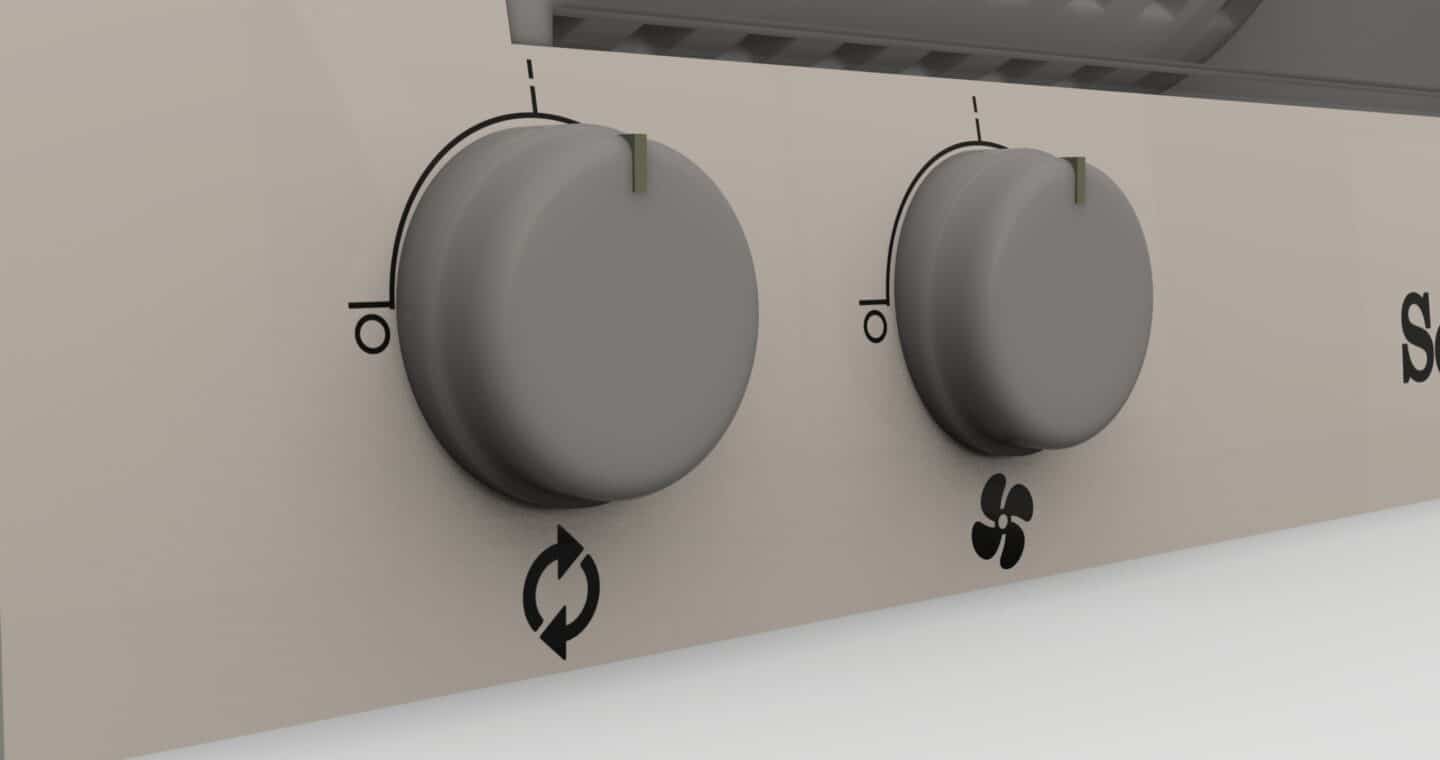
The speed of the sieve tumbler and fan can be controlled by dials on the front of the seednomad depending on the weight and fragility of the seeds as to not damage them.
Information such as the seed species, batch no., date, and the collector can be placed on the outside in the ID holder, to make sure there’s no mislabelling and no seeds lost.
The device is rechargeable and can run for an estimated 3 hours, giving plenty of time to for the user to finish collecting and to dry the seeds properly after they are sifted.
The adjustable strap lets the user carry the seednomad with ease out in the field. the form of this design aids in an ergonomic interaction when transporting the seeds as one side is flatter than the other. Making it less bulky and easier to place by the users side. The product weighs around 5 kilos, so it wouldn’t put any unusual on stress on the first percentile female.
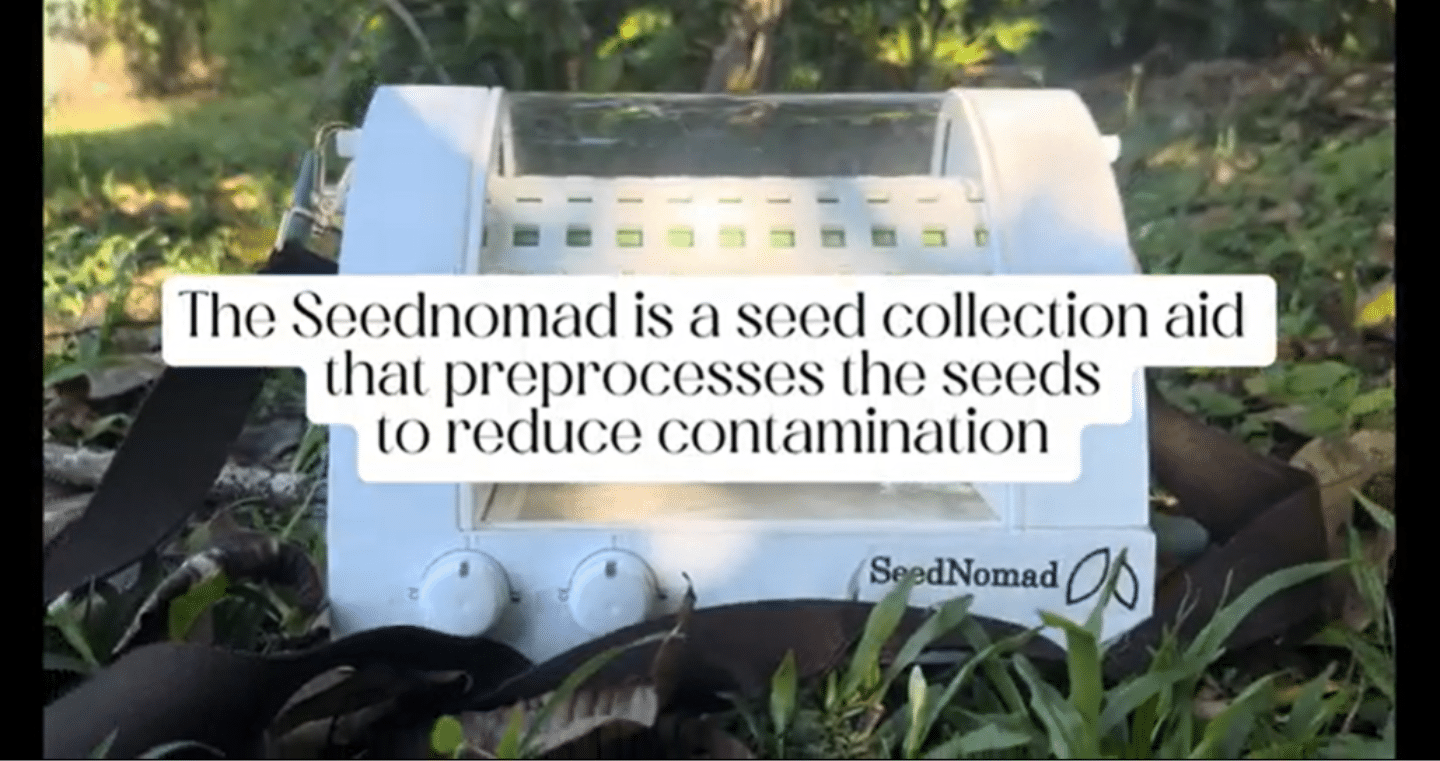
showcase video
Prototype photos