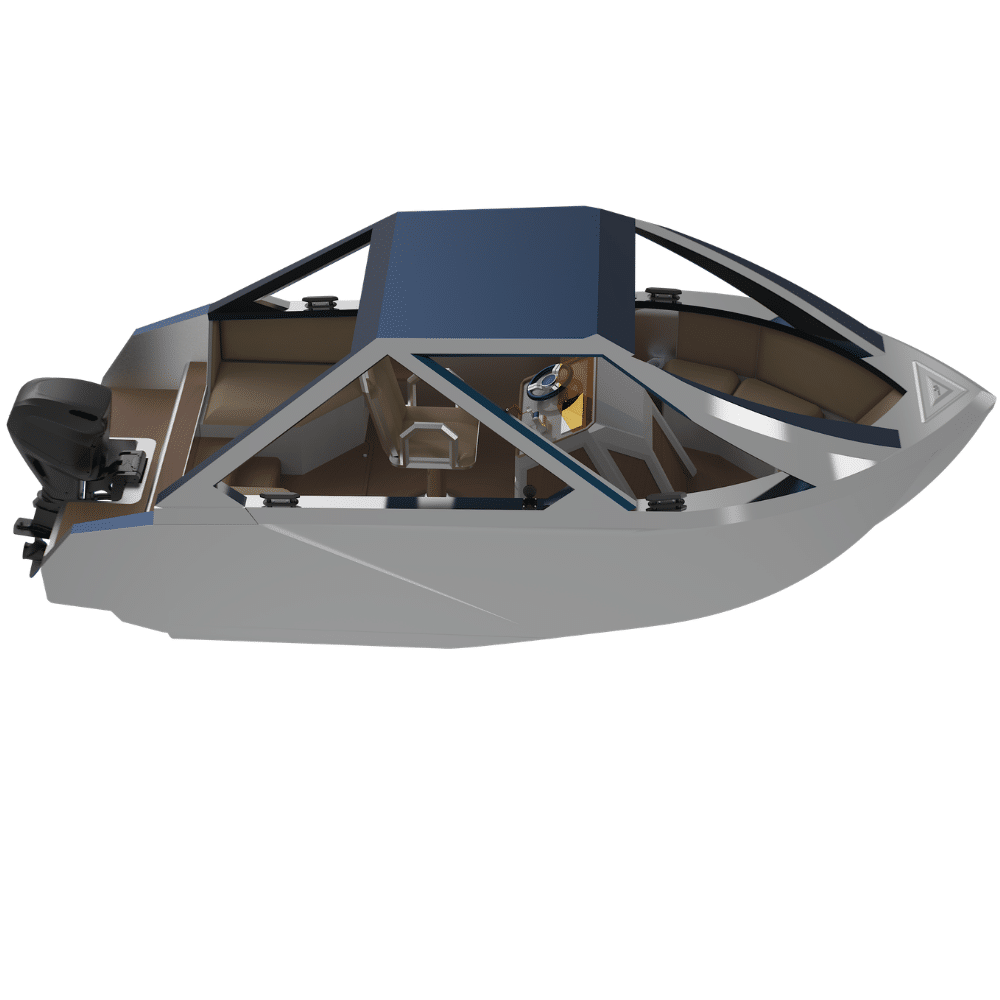
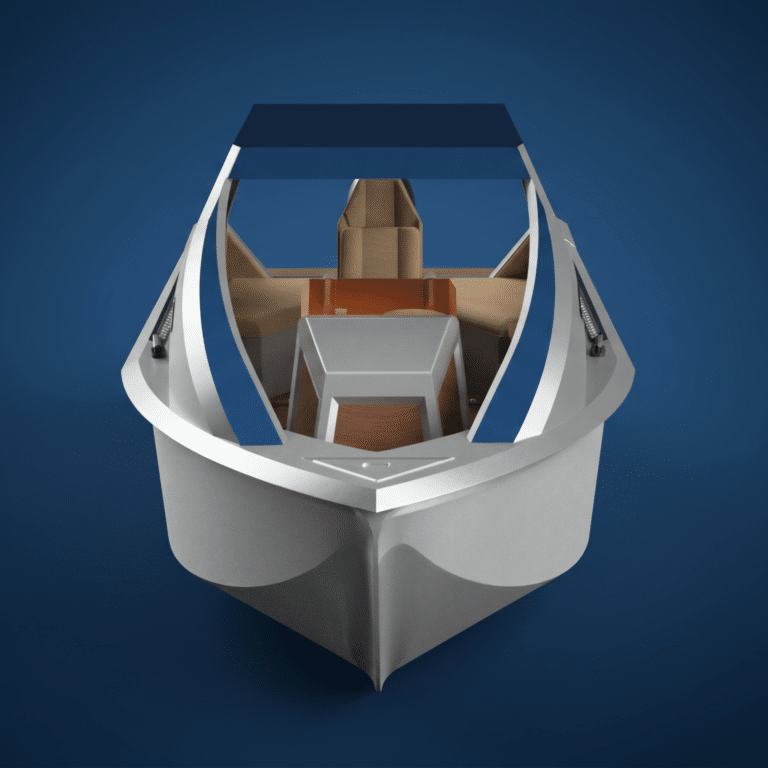
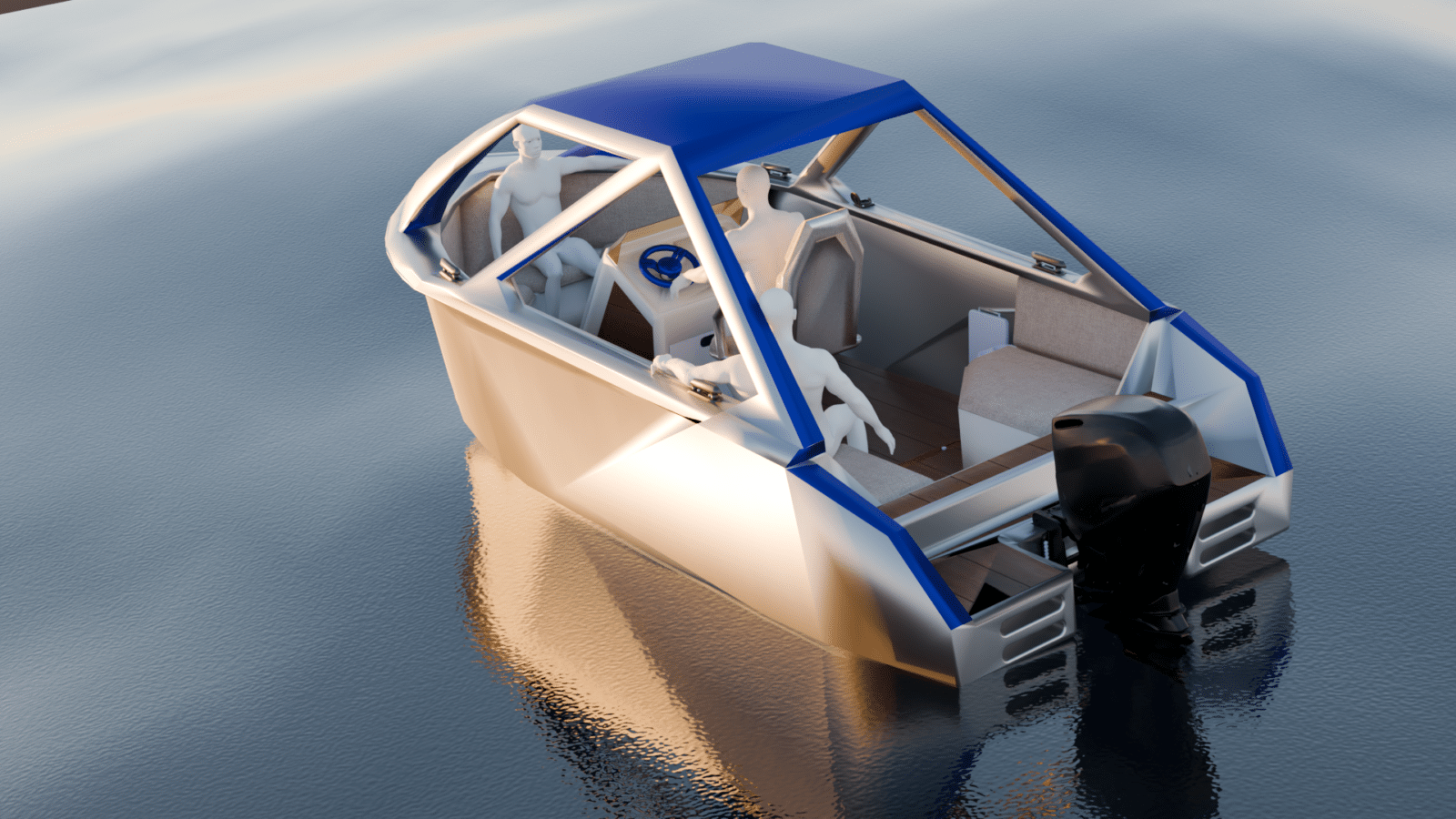
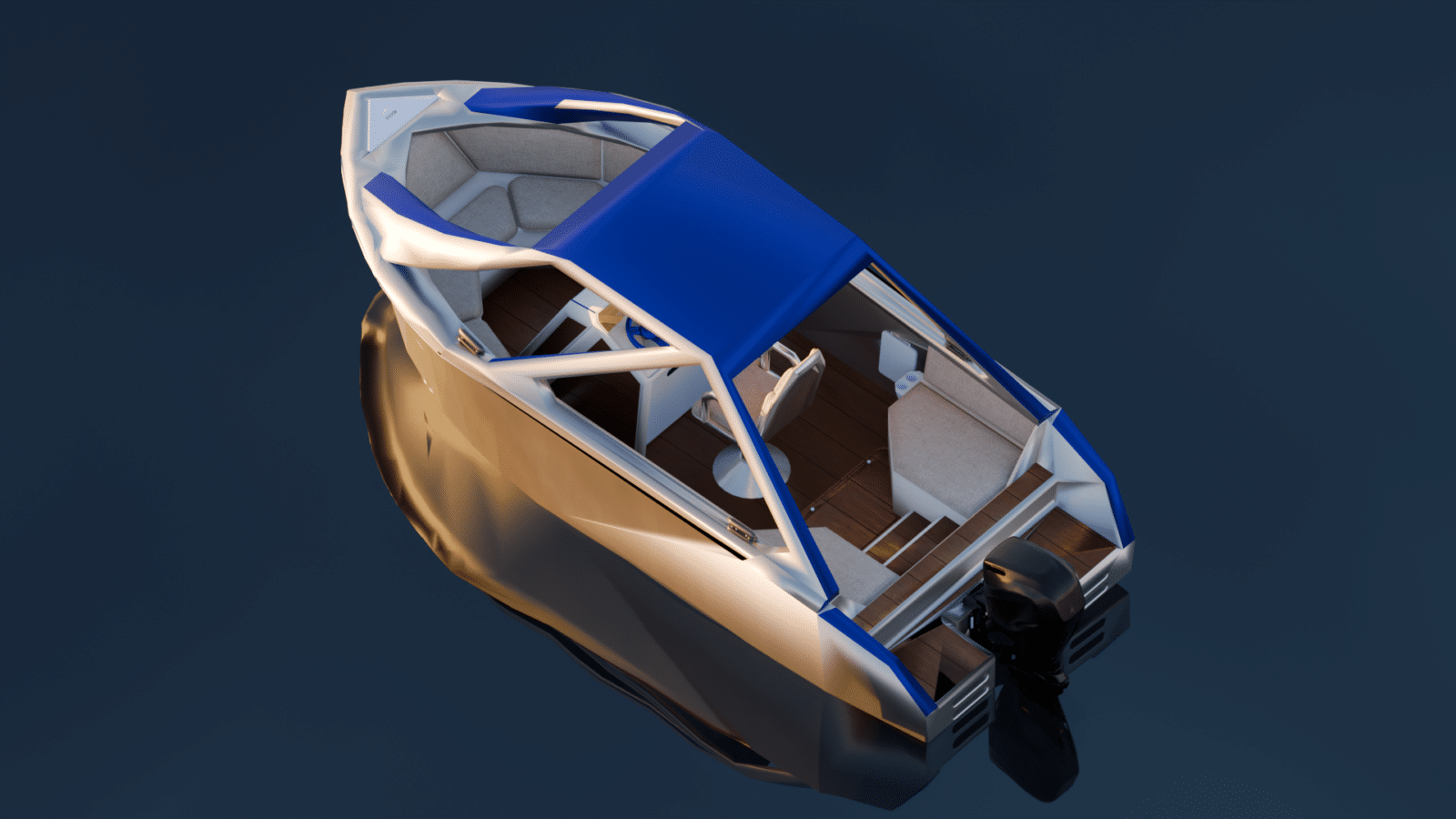
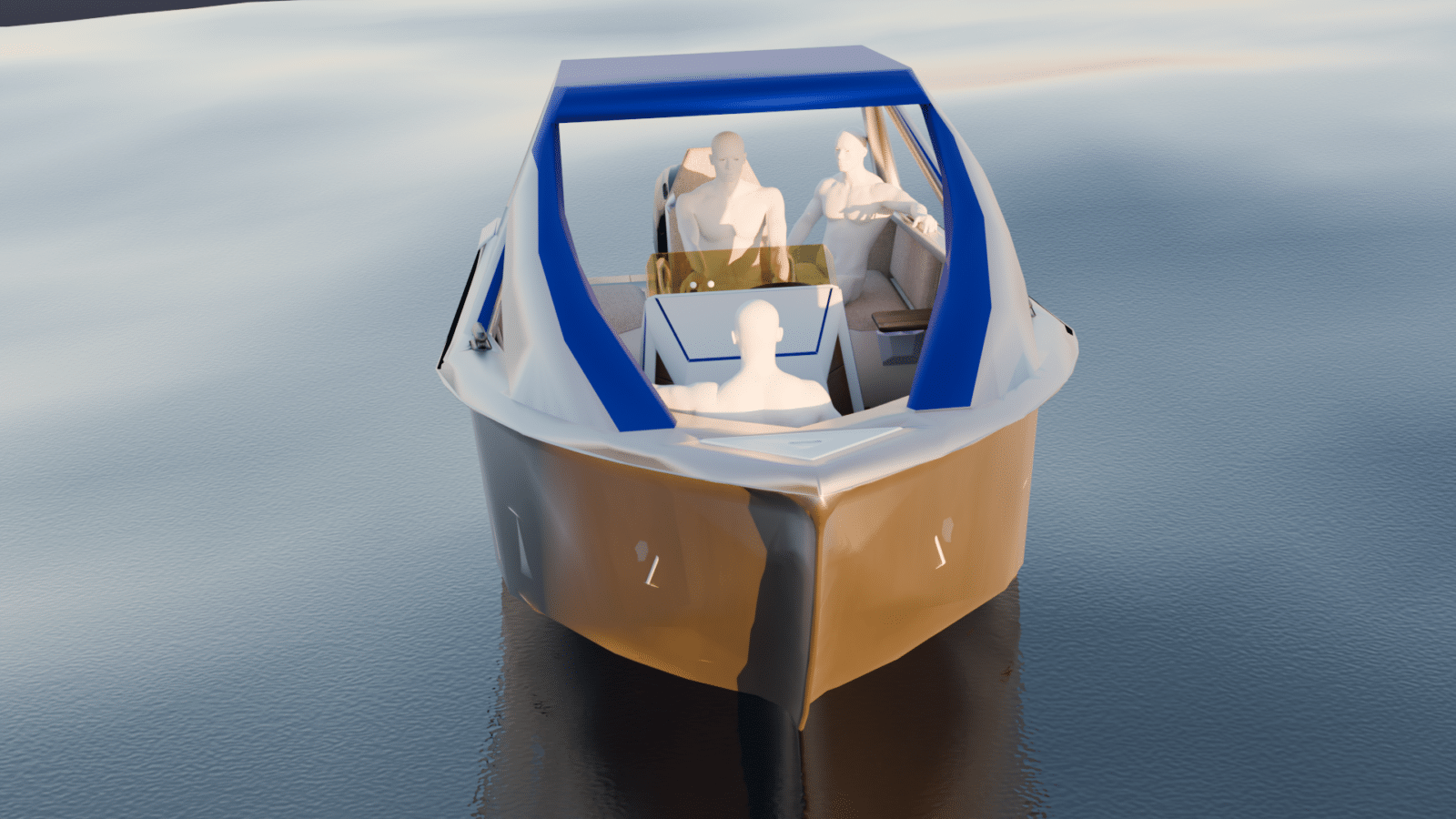
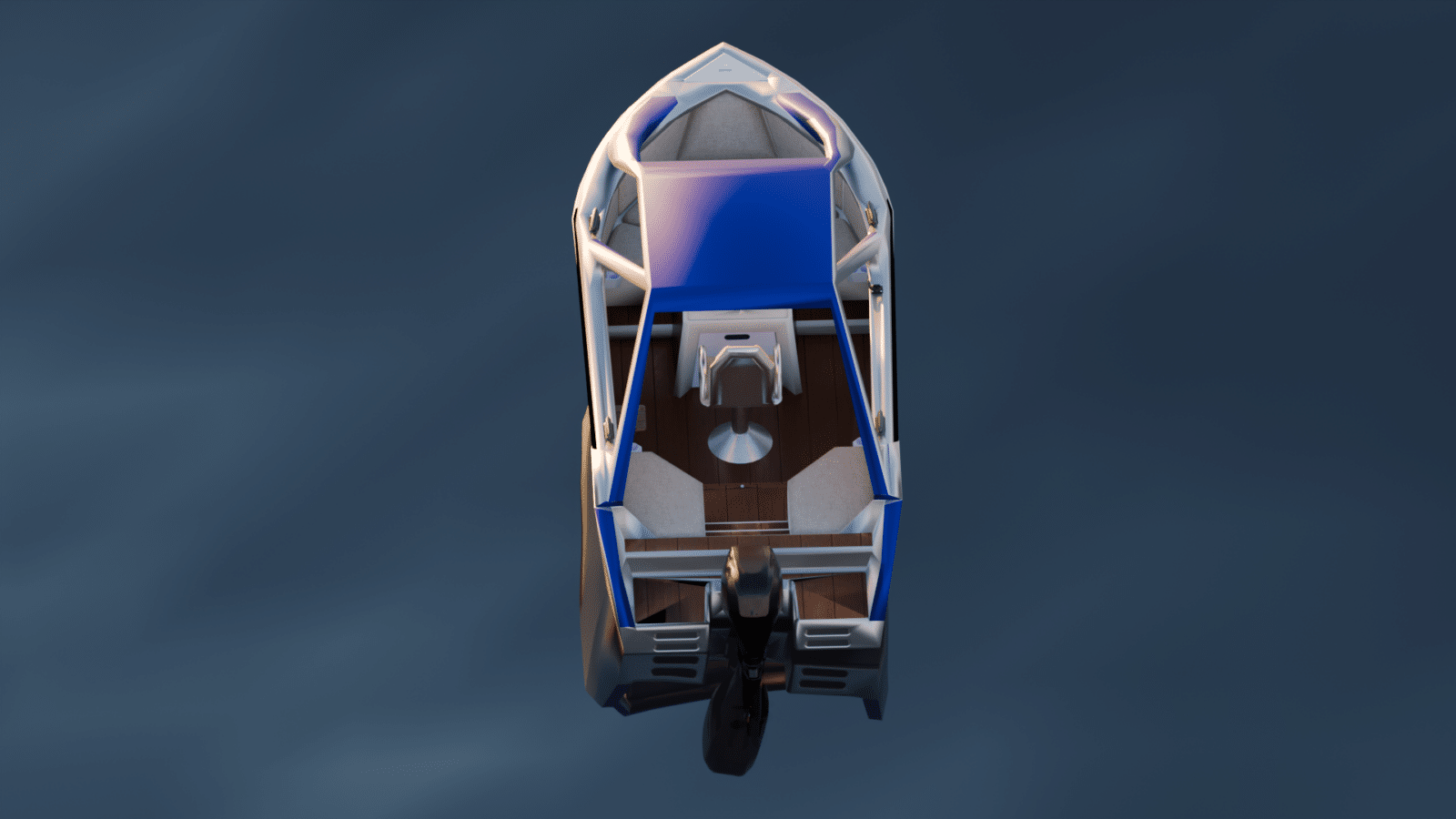
Shockwave Electric reimagines recreational boating with a focus on reducing the environmental impact of conventional petrol-powered vessels. Designed for Queensland’s Gold Coast and Moreton Bay, this six-metre concept integrates electric propulsion with an efficient aluminium V-hull to reduce local emissions and operating noise, while delivering performance, versatility and a refined recreational experience.
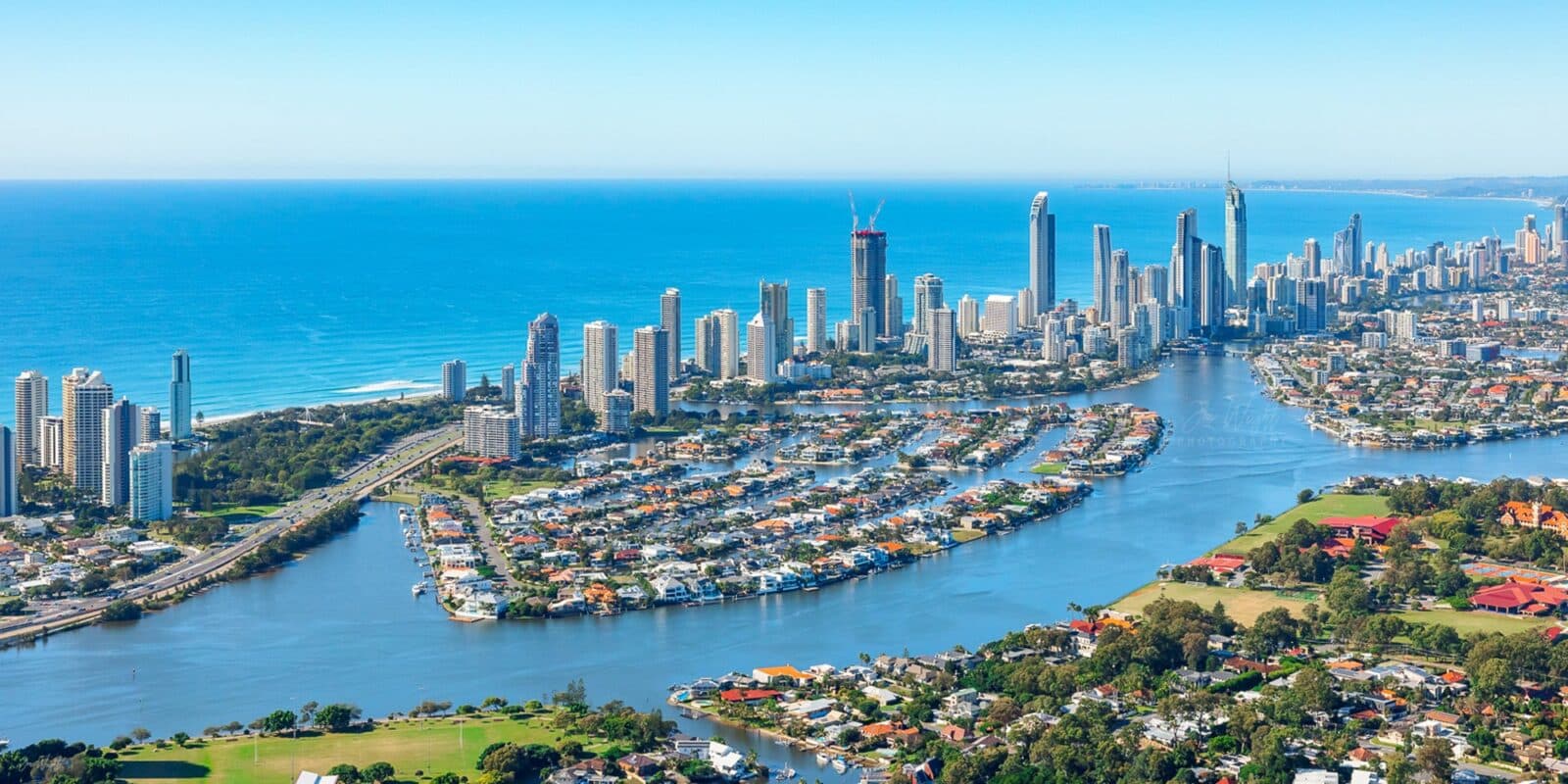
The Gold Coast and Moreton Bay are defined by extensive coastal waterways that support recreational activities alongside diverse marine ecosystems. Seagrass meadows, mangroves and coastal habitats provide important environments for marine wildlife, highlighting the ecological significance of the region.
Recreational boating is deeply embedded in Queensland’s coastal lifestyle, supporting watersports, tourism and leisure activities. However, conventional petrol-powered vessels contribute to greenhouse gas emissions, local air pollution and underwater noise, introducing environmental pressures within these sensitive waterways.
As recreational and environmental interests coexist, there is a growing need to reconsider the impact of conventional marine transport and explore more environmentally responsible approaches to coastal boating.
THE DESIGN SOLUTION
Shockwave Electric reimagines coastal boating by bringing environmental responsibility, performance and contemporary design into a single recreational vessel.
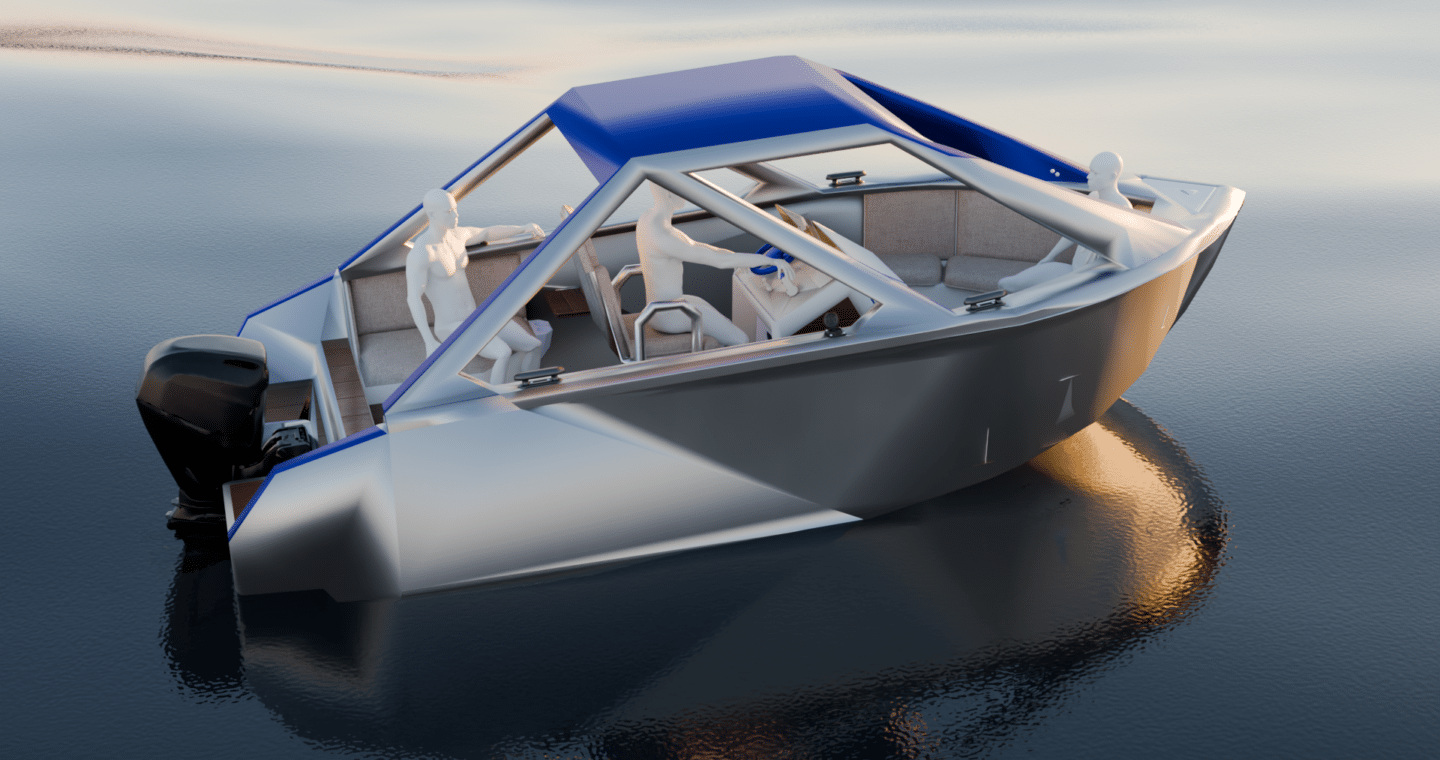
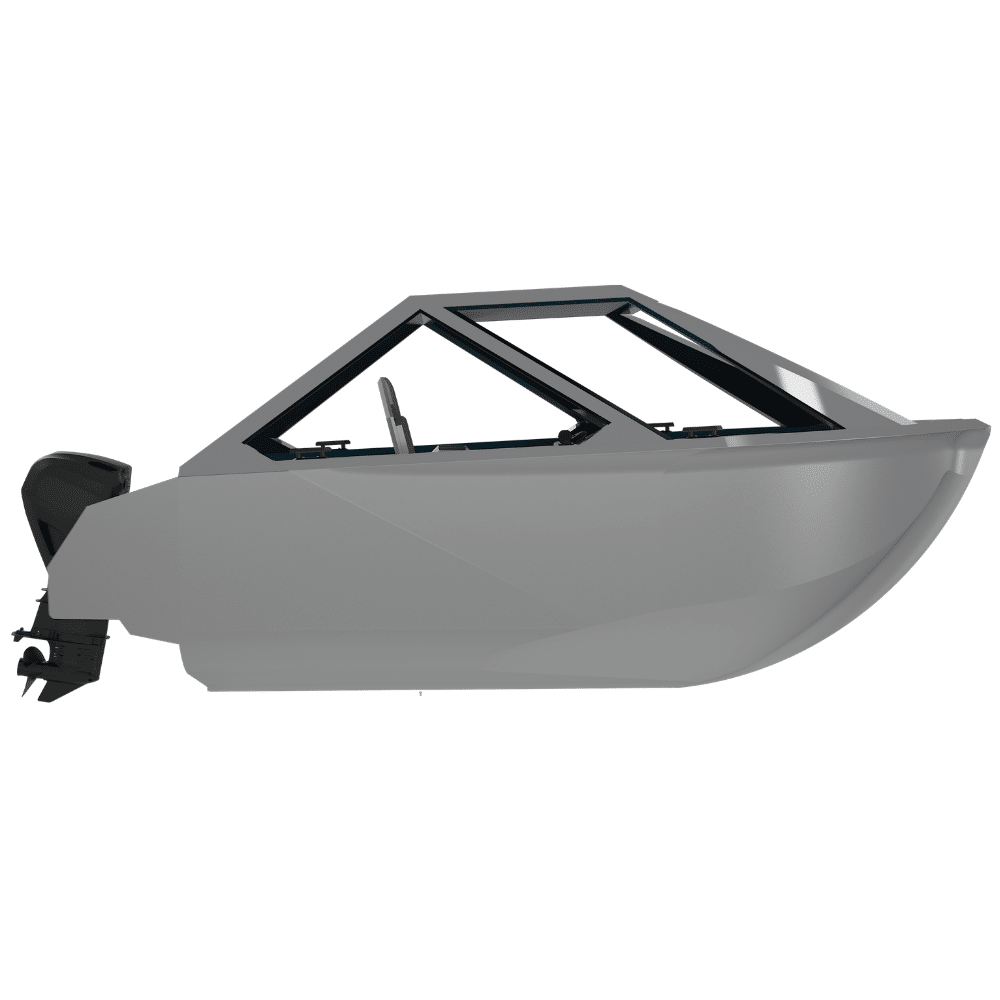
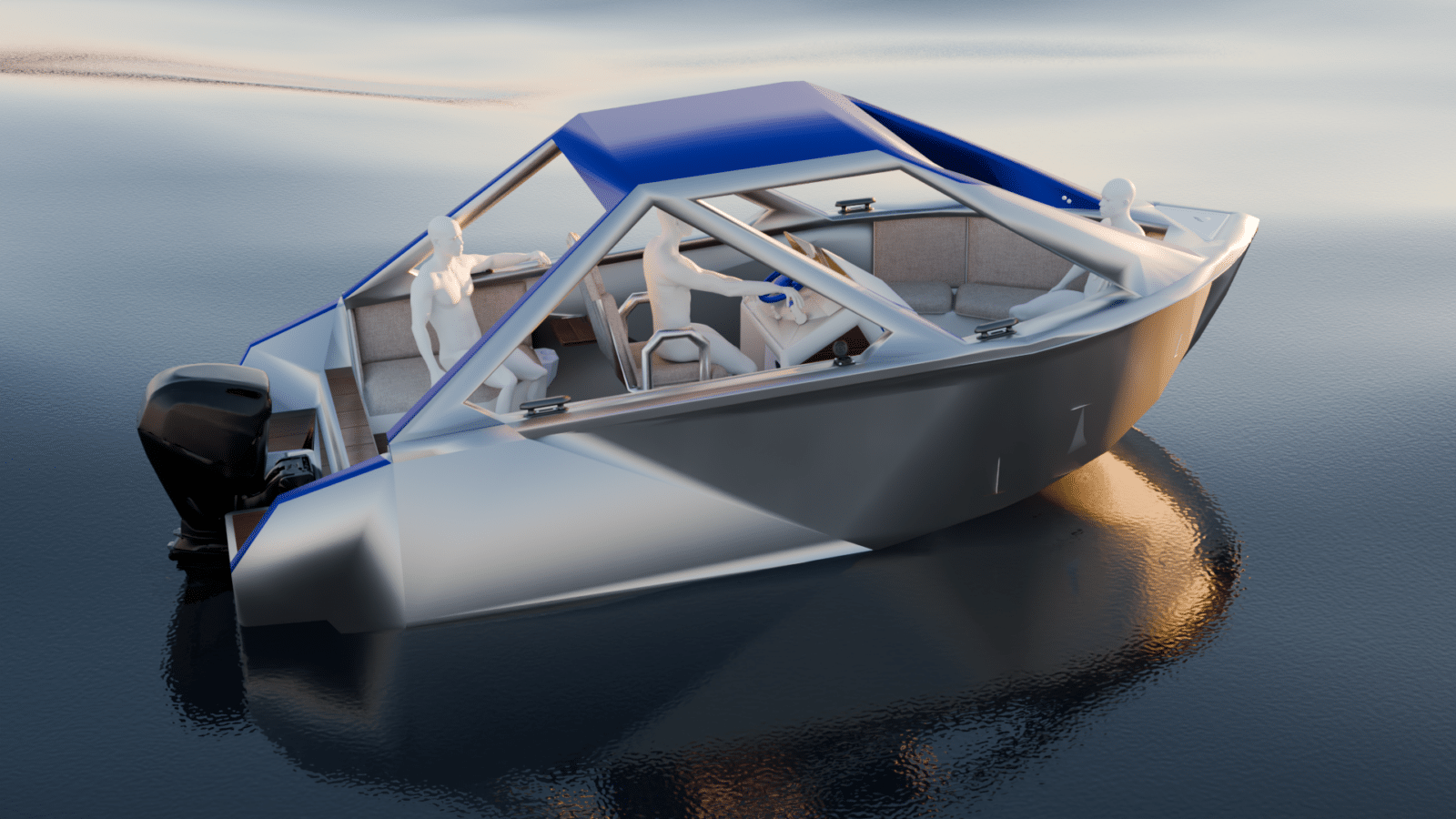
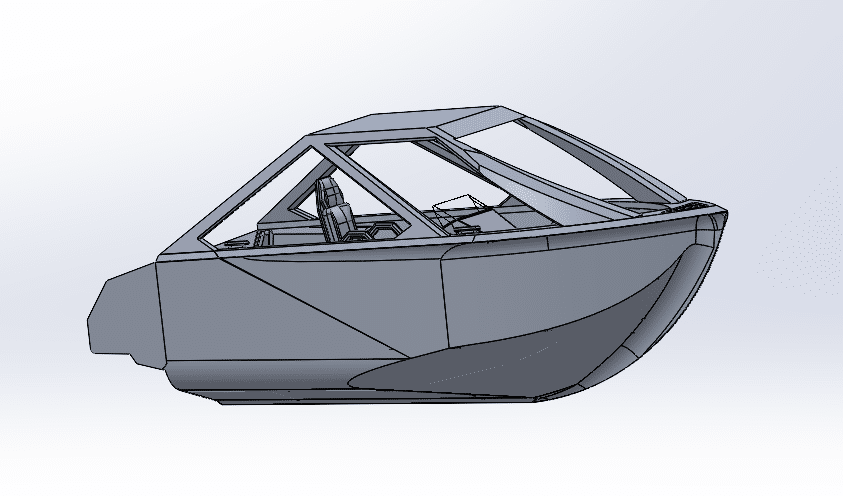
Developed for the Gold Coast and Moreton Bay, this six-metre concept integrates ExploMar electric propulsion within a lightweight aluminium V-hull, eliminating tailpipe emissions during operation while aiming to reduce propulsion noise. Its sculpted hull, angular silhouette and refined finishes establish a distinctive electric identity that communicates movement and technological progression.
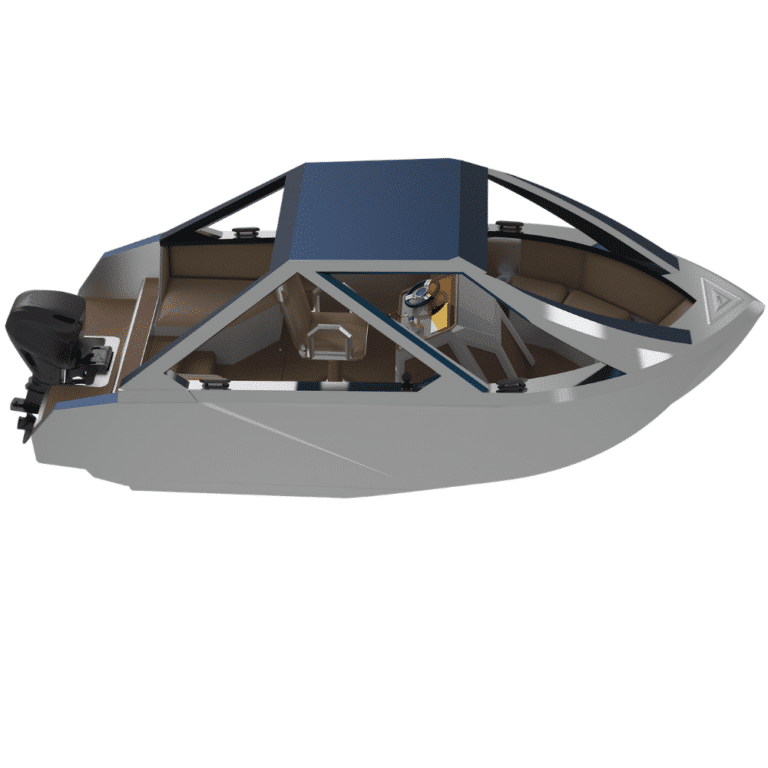
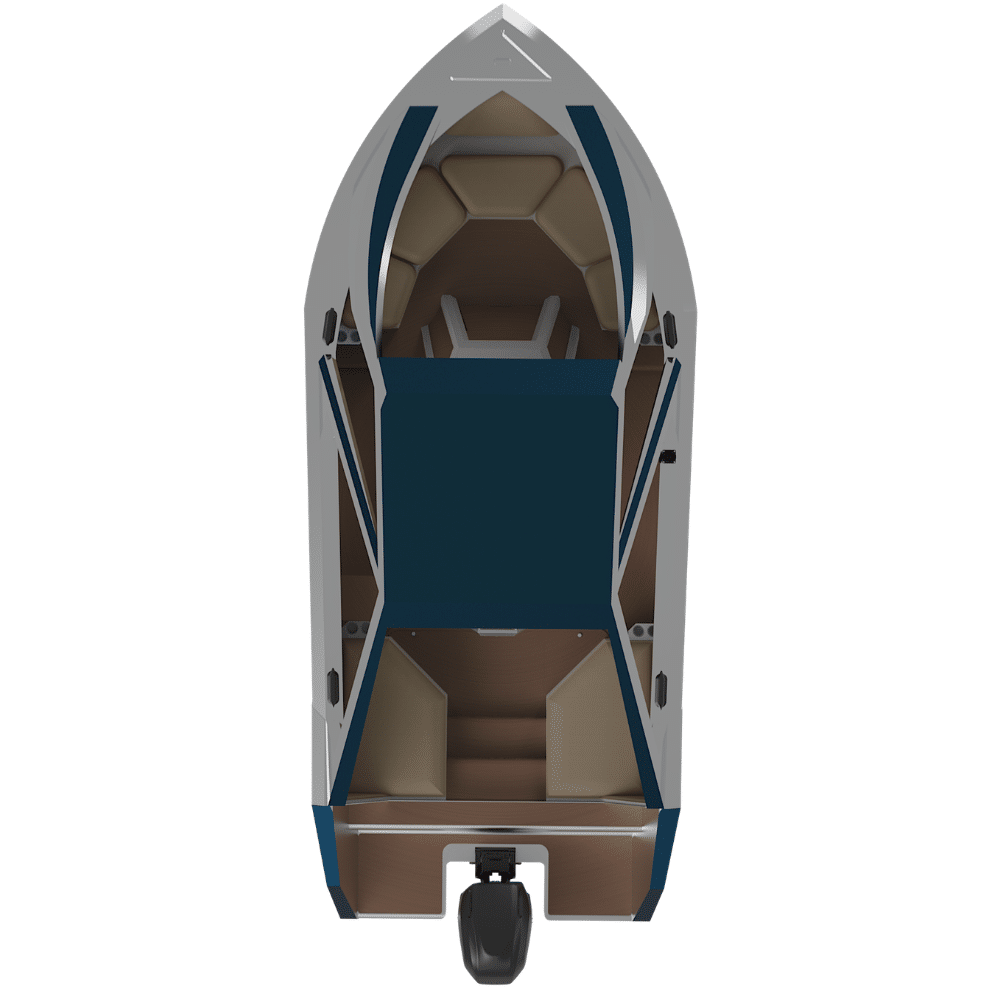
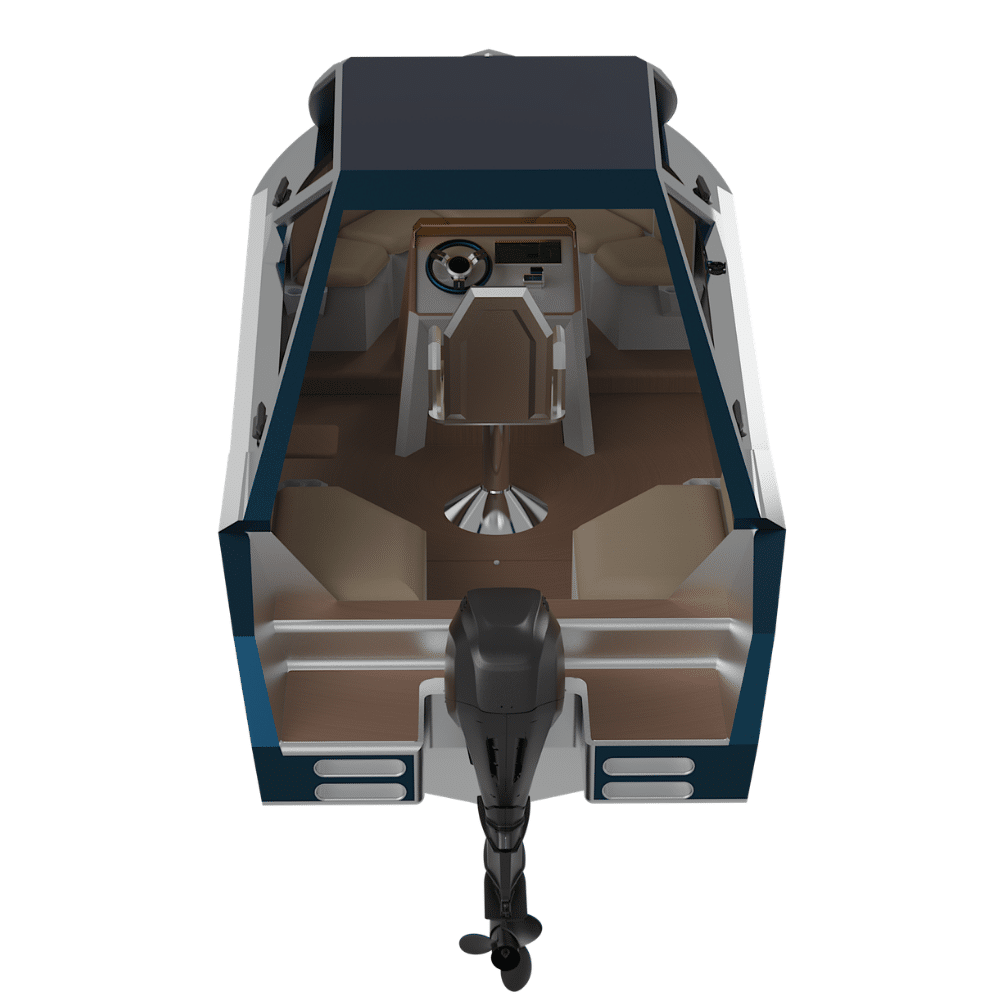
Inside, an open, ergonomic layout combines adaptable seating, integrated storage and practical features for watersports and coastal leisure. Rather than simply replacing a petrol engine, Shockwave explores how electric technology can influence the entire boating experience, from vessel architecture to everyday usability.
RESEARCH & DESIGN OPPORTUNITY
Shockwave’s development was informed by a combination of industry interviews, user surveys and competitor benchmarking. These research methods identified the technical limitations of electric propulsion alongside the recreational expectations of coastal boaters, establishing a foundation for design development.
“The greatest limitation in electrical applications, in particular for boats, is still energy density… so long as you’re carrying that penalty in weight, we won’t see the same level of range and performance out of the electric boat that we would see out of a gasoline one.”
-industry interview participant
Industry interviews highlighted battery energy density as a critical limitation, revealing how increased weight can affect vessel performance, range and hull design. This reinforced the importance of considering electric propulsion throughout the vessel’s development.
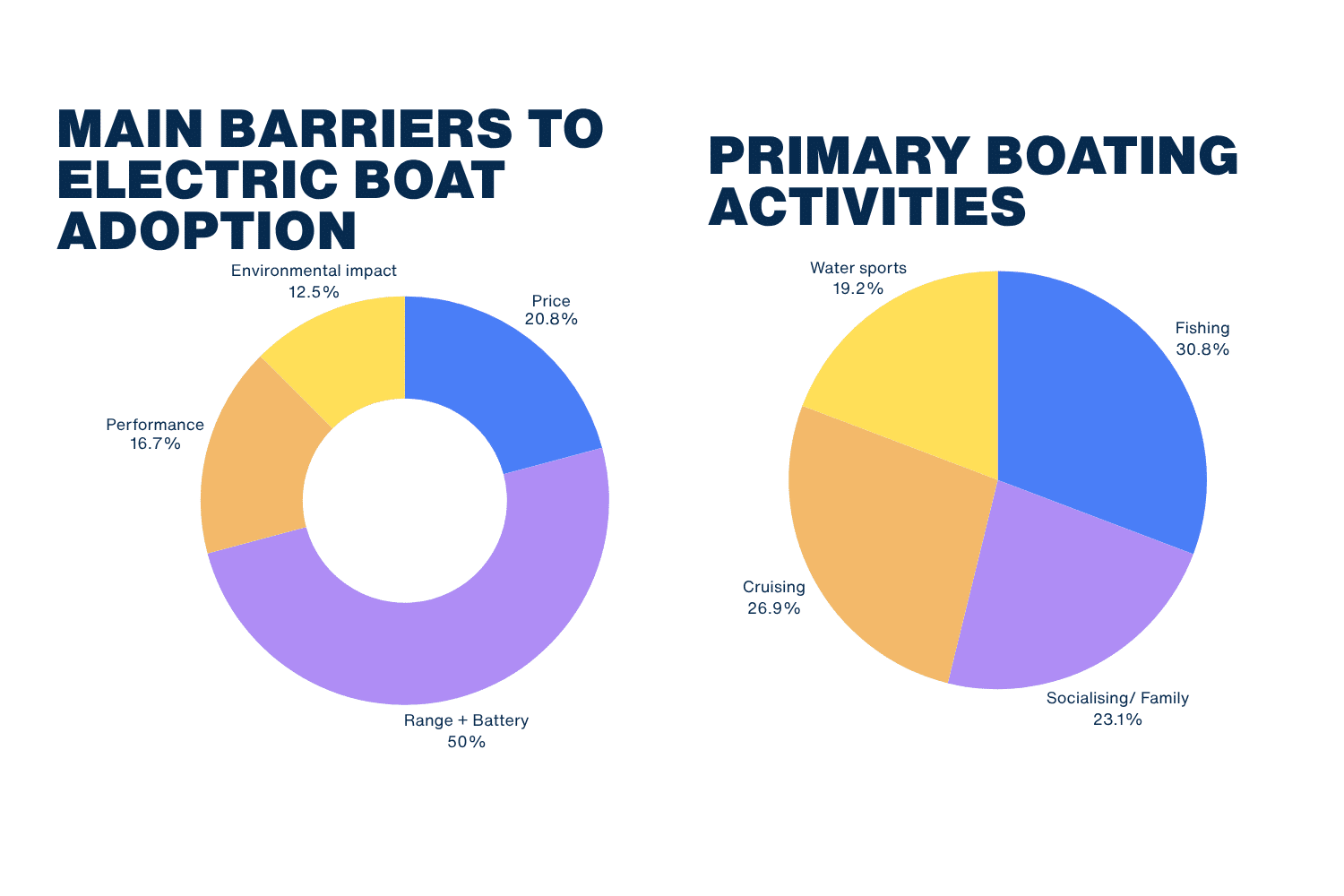
Survey findings explored the primary activities of recreational boaters and the perceived barriers to adopting electric propulsion. These insights helped establish the relationship between user expectations, environmental considerations and the practical requirements influencing Shockwave’s design direction.
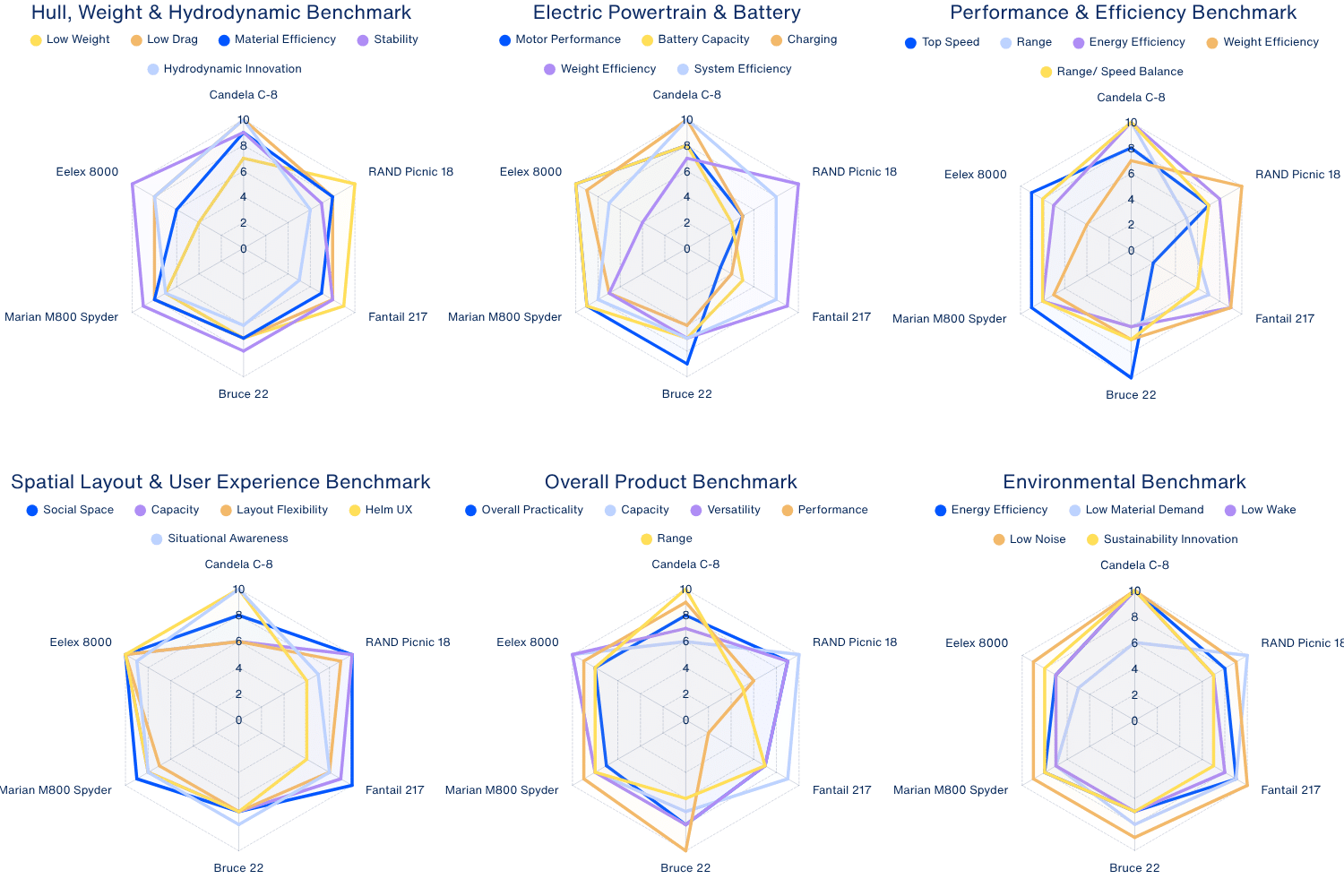
Competitor benchmarking examined existing electric vessels across performance, hull design, recreational functionality, technological integration and overall user experience. The comparative spider charts highlighted the strengths and limitations of different design approaches, revealing how prioritising certain characteristics can create compromises elsewhere. This analysis identified an opportunity to better integrate electric propulsion with the practical and lifestyle expectations of recreational boaters.
Together with user surveys and industry interviews, these findings established a clear design direction for Shockwave. These insights formed the foundation for a cohesive vessel that balances environmental responsibility, performance and contemporary recreational design.
FORM & IDENTITY
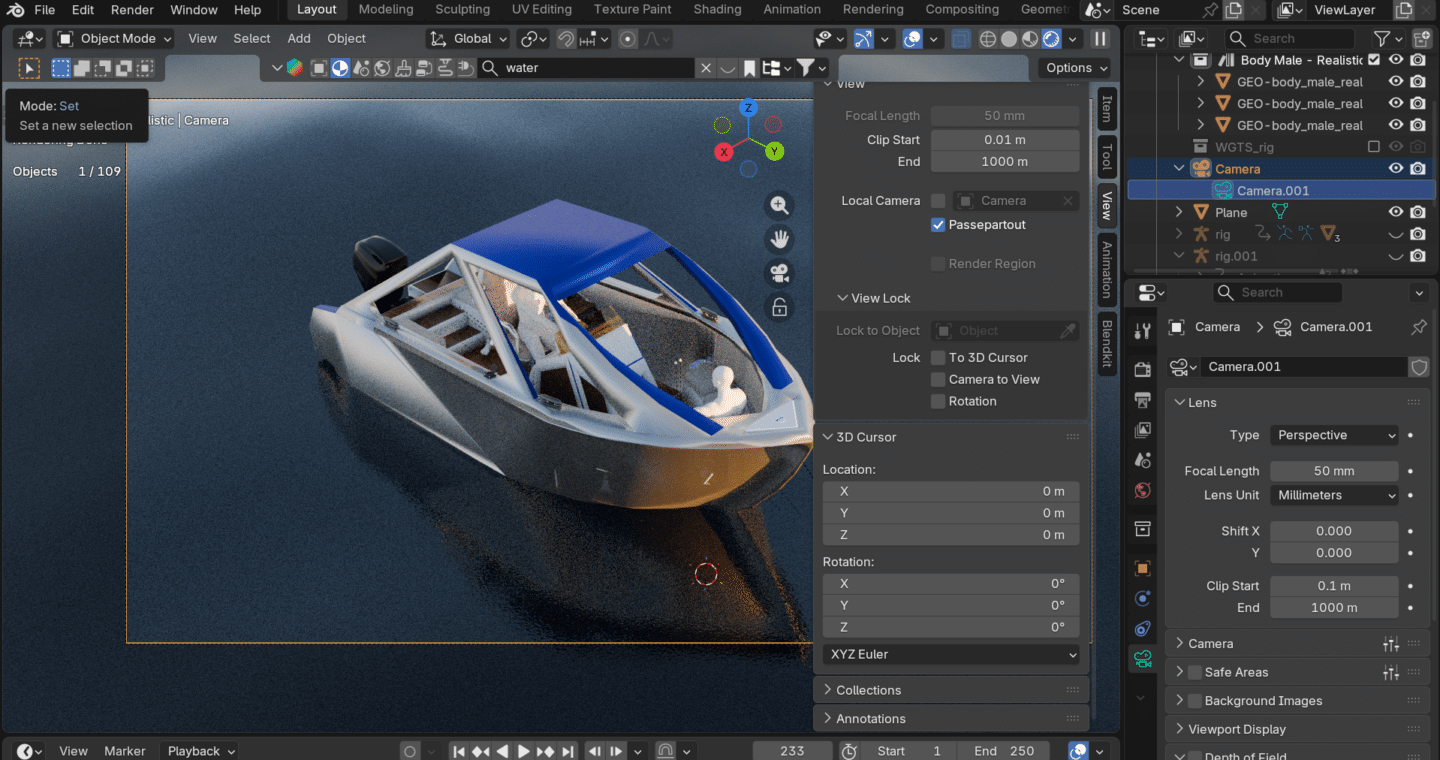
Shockwave’s visual identity combines dynamic, performance-inspired geometry with the sophistication of contemporary electric design.
Its angular bow, sculpted hull and strong directional lines create a sense of forward momentum, establishing an assertive presence on the water even when stationary. This athletic silhouette appeals to water sports enthusiasts while maintaining the refinement expected of premium leisure vessels.
Clean, uninterrupted surfaces and minimal mechanical detailing communicate electric innovation through a modern, technologically advanced aesthetic.
The contrasting metallic finishes and distinctive geometric roof structure reinforce this identity, balancing visual dynamism with elegance. Its open architecture further connects passengers to their surroundings, creating a cohesive relationship between performance, electric technology and recreational luxury.
HULL DESIGN
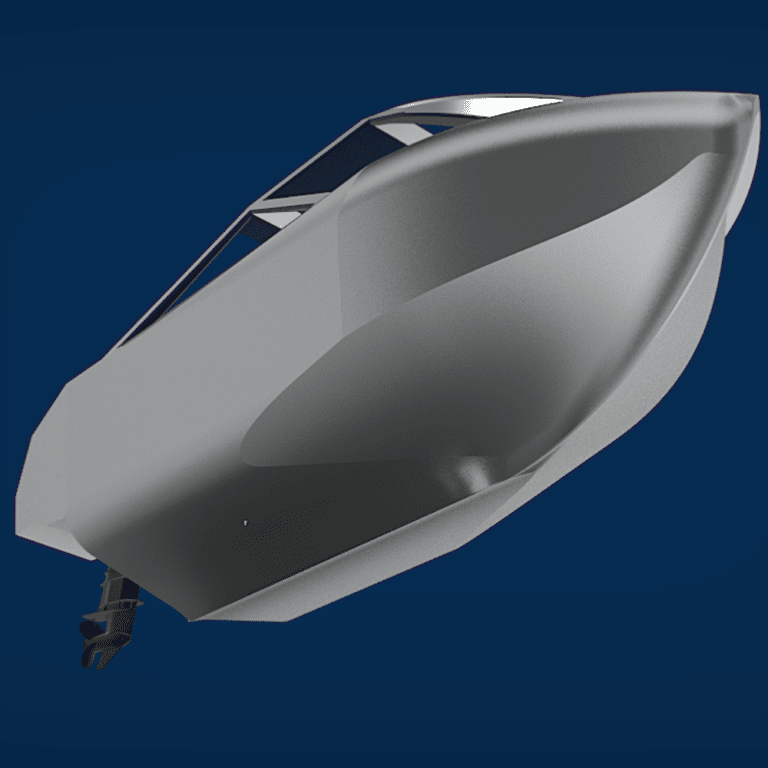
Early hull research compared displacement, planning and V-hull configurations against the performance expectations of watersports and coastal leisure users. While displacement hulls favour efficient lower-speed travel, they were less suited to the intended dynamic experience. The selected modified V-hull incorporates a sharp bow entry and refined running surfaces, aiming to manage hydrodynamic resistance and improve ride quality in coastal conditions. Reducing resistance at the vessel’s intended operating speeds is important for electric propulsion, where energy demand directly affects available range. This approach aims to improve hull efficiency and maximise electric range while maintaining the performance and handling expected by recreational boaters.
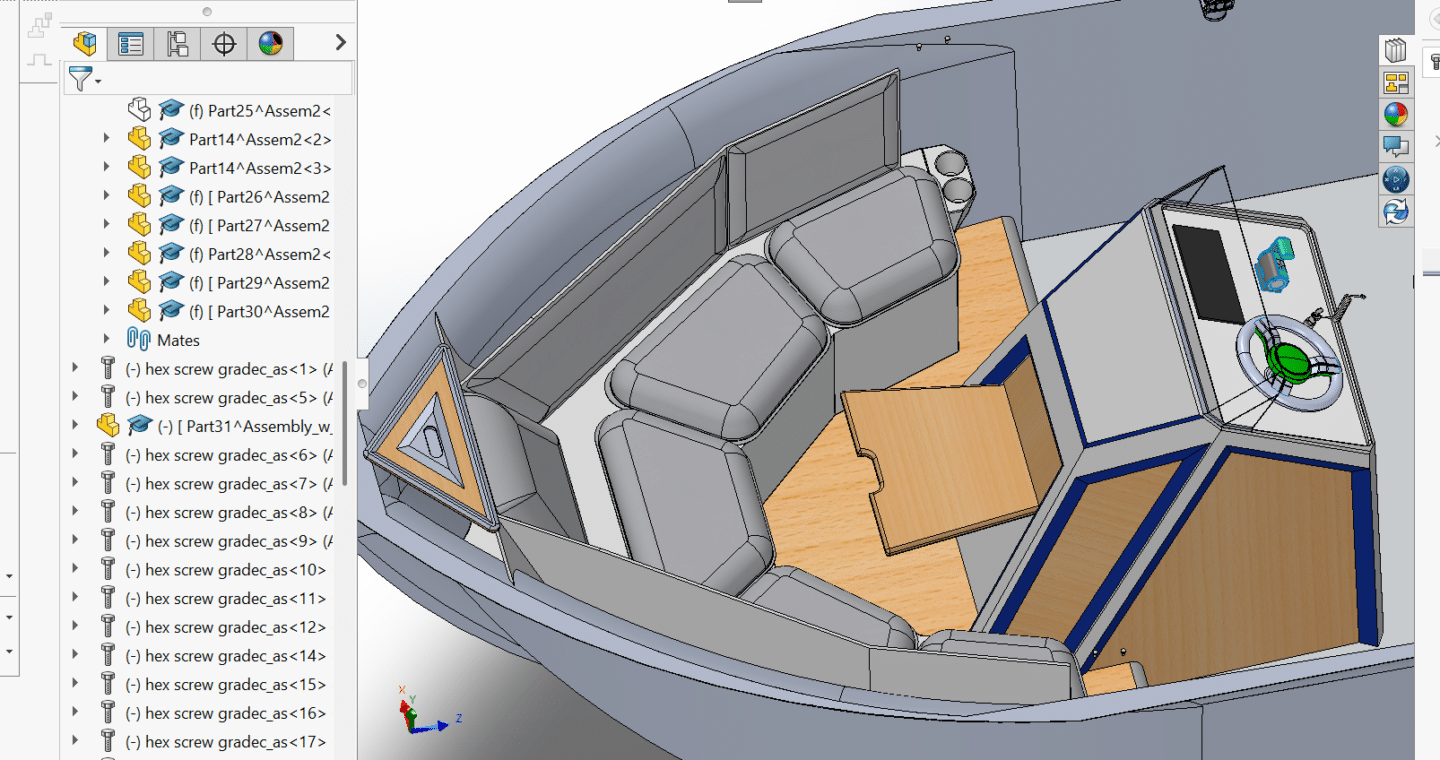
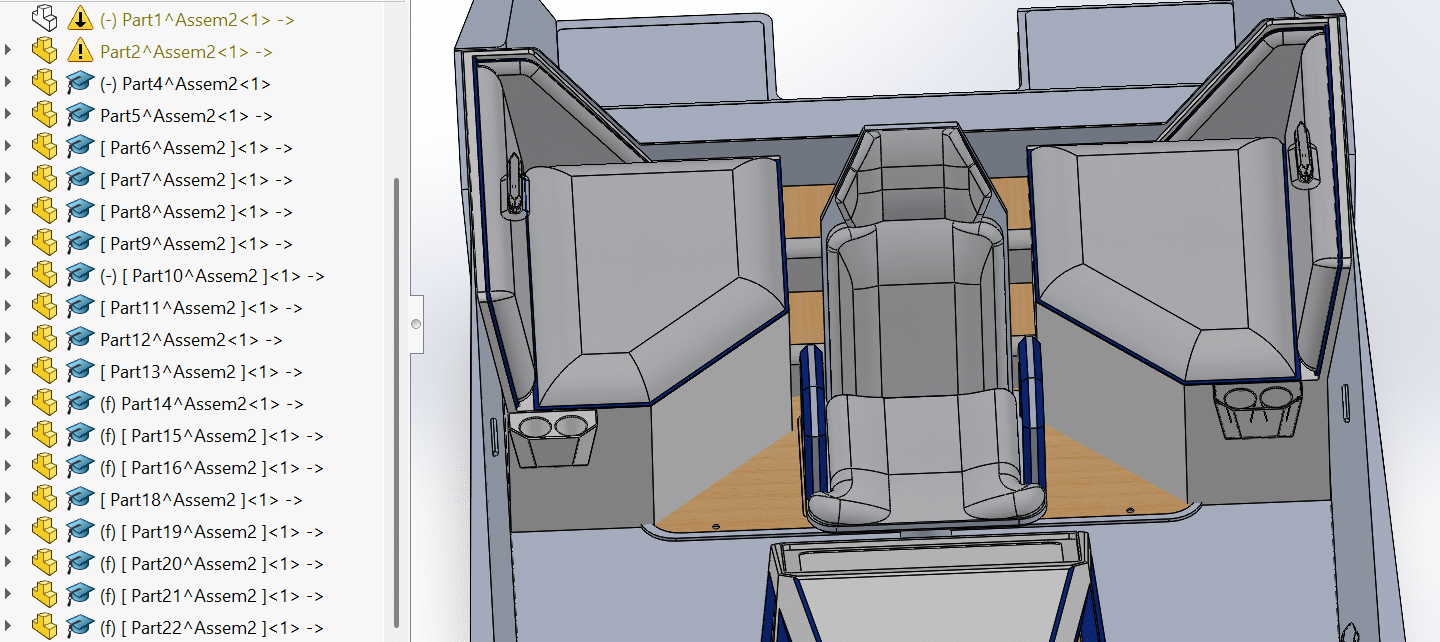
CAD development reconciled competing structural, hydrodynamic and packaging requirements rather than simply defining the hull’s appearance. Refining the hull proportions and chine geometry required balancing potential planing behaviour and stability against the internal volume needed for electric systems. The transom was configured around outboard mounting requirements, while panel geometry considered the constraints of CNC cutting, forming and welding.
Internally, aluminium framing establishes structural support while reserving underfloor space for buoyancy provisions. Battery positioning was assessed against longitudinal weight distribution, centre of gravity and maintenance access, recognising that concentrated mass can influence trim, stability and usable deck space. These decisions demonstrate how propulsion integration shaped the vessel’s architecture, although hydrodynamic performance and reserve buoyancy would require further engineering validation before manufacture.
Integrated Electric Propulsion
ExploMar WAVE 150+ Outboard
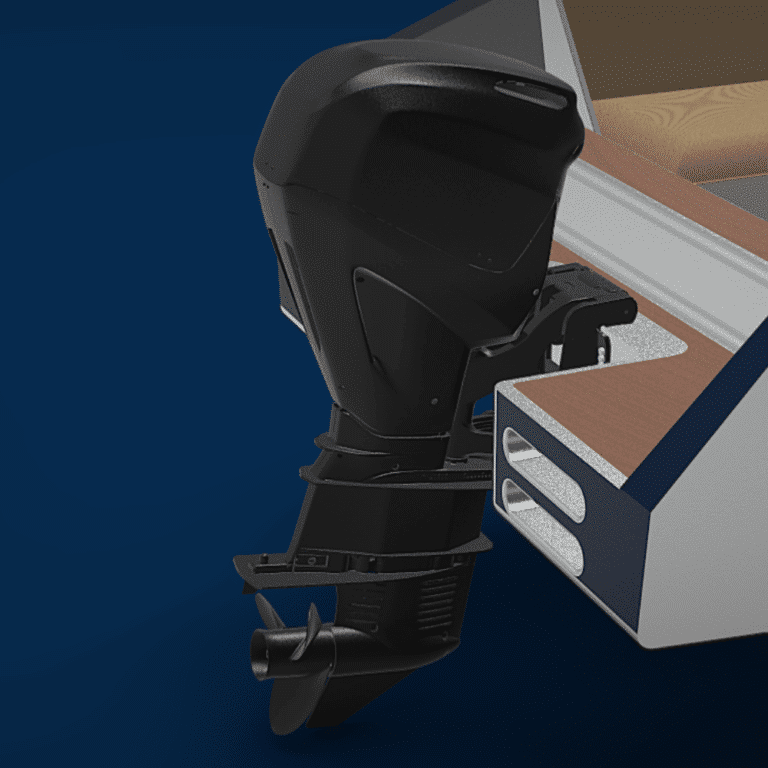
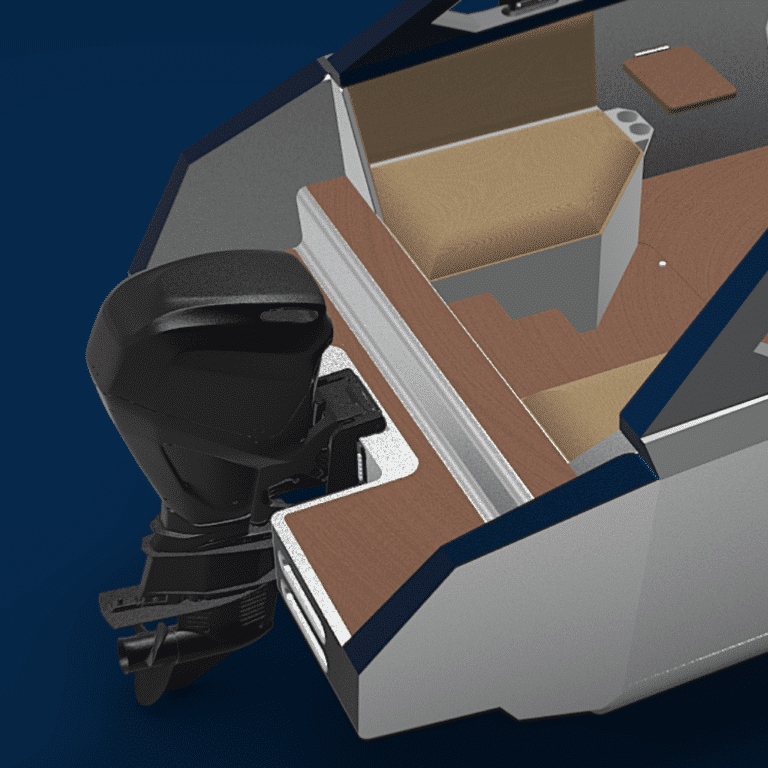
Shockwave integrates the ExploMar WAVE 150+ electric outboard to eliminate tailpipe emissions during operation and potentially reduce propulsion noise compared with conventional petrol systems. Its installation informed the transom geometry, mounting provisions and structural reinforcement required to accommodate propulsion loads. Positioning the outboard at the stern also influenced weight distribution, access for servicing and the relationship between the motor and swim platform. Rather than treating propulsion as an added component, the system was considered alongside hull development and recreational use, supporting a cohesive vessel architecture and a refined on-water experience.
Charging & Electrical Systems
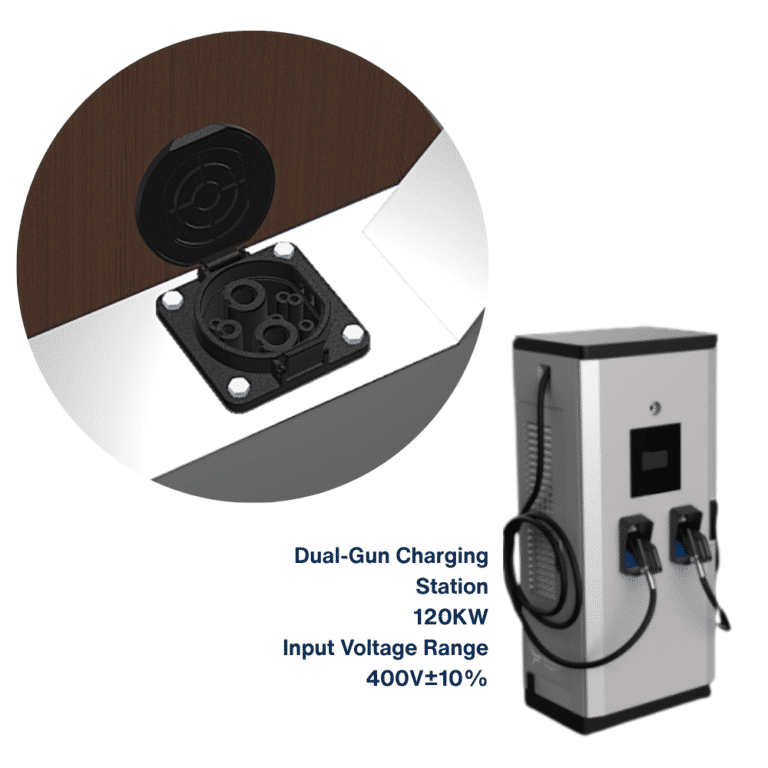
Charging accessibility emerged as a key consideration through user research, particularly the availability of suitable marina infrastructure and the convenience of dockside connections. Shockwave incorporates an externally accessible charging port, positioned to simplify connection while preserving the vessel’s streamlined exterior and usable deck space. ExploMar’s dual-gun charging station is rated at 120 kW, with a specified input voltage range of 400 V ±10%, highlighting the infrastructure requirements associated with electric marine charging. Integrating charging into the design from the outset supports a more practical ownership experience, while acknowledging that actual charging performance depends on system compatibility and available local facilities.
Human–Machine Interface
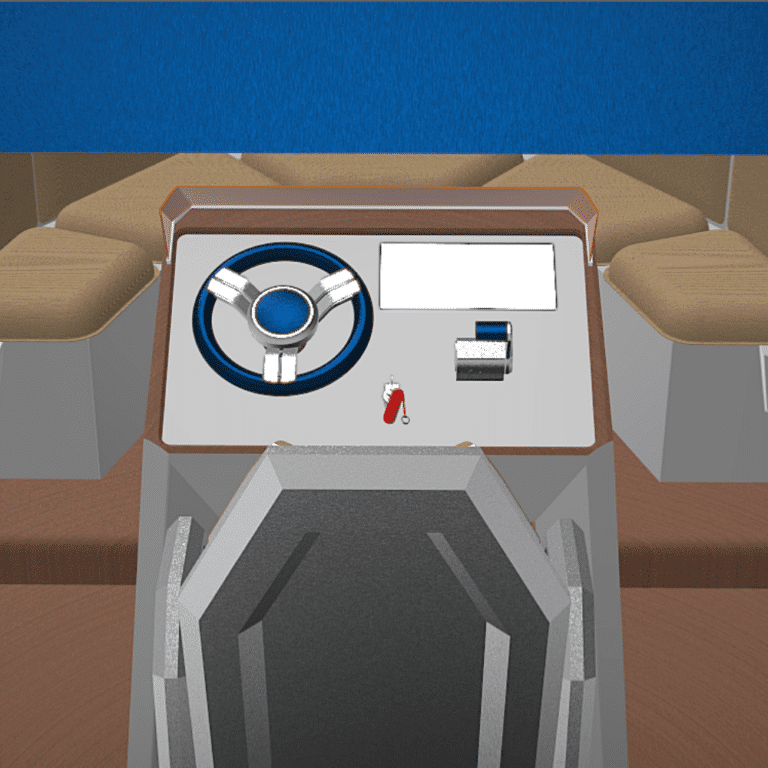
The integrated HMI provides a central interface between the user and the vessel’s electric systems. It is intended to communicate essential operating information, including battery status, power usage and remaining range, supporting informed decisions while cruising. Its positioning within the helm considers visibility, accessibility and intuitive interaction, creating a more connected experience between the operator and the electric propulsion system.
USER EXPERIENCE
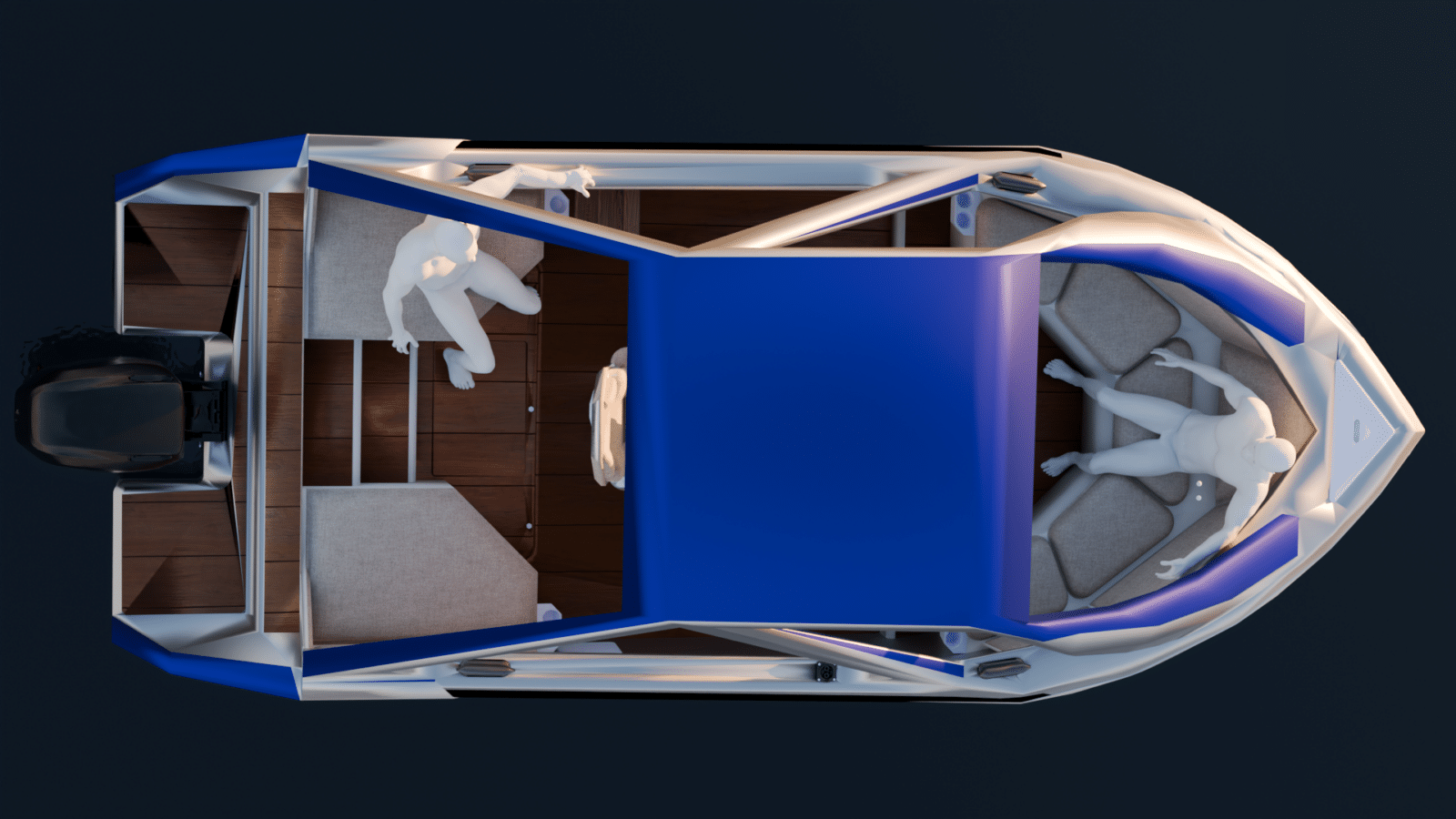
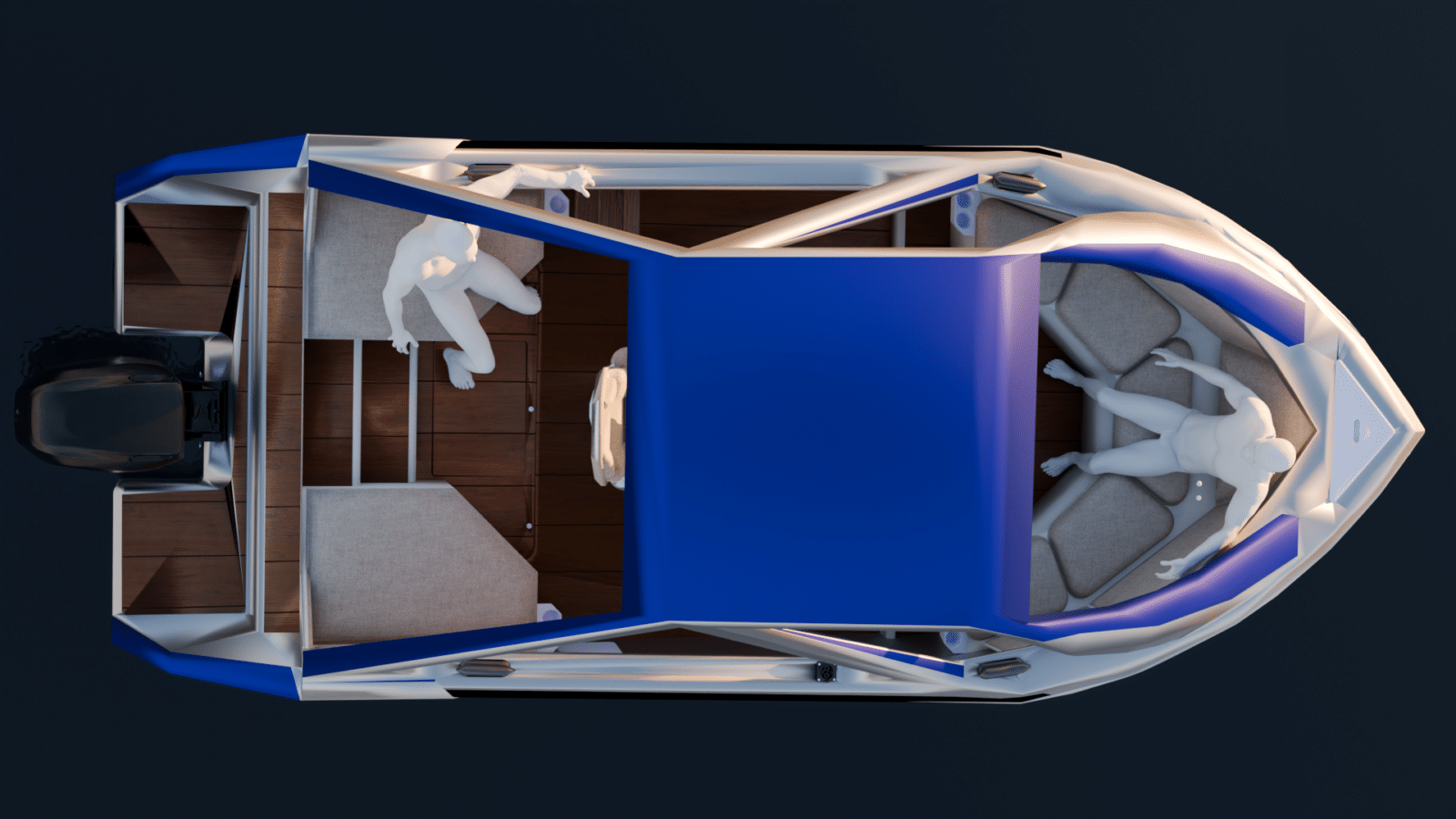
Shockwave’s interior layout was developed around the practical and social needs of watersports and coastal leisure. The arrangement prioritises clear circulation, ergonomic seating and a strong connection between passengers, equipment and the surrounding water.
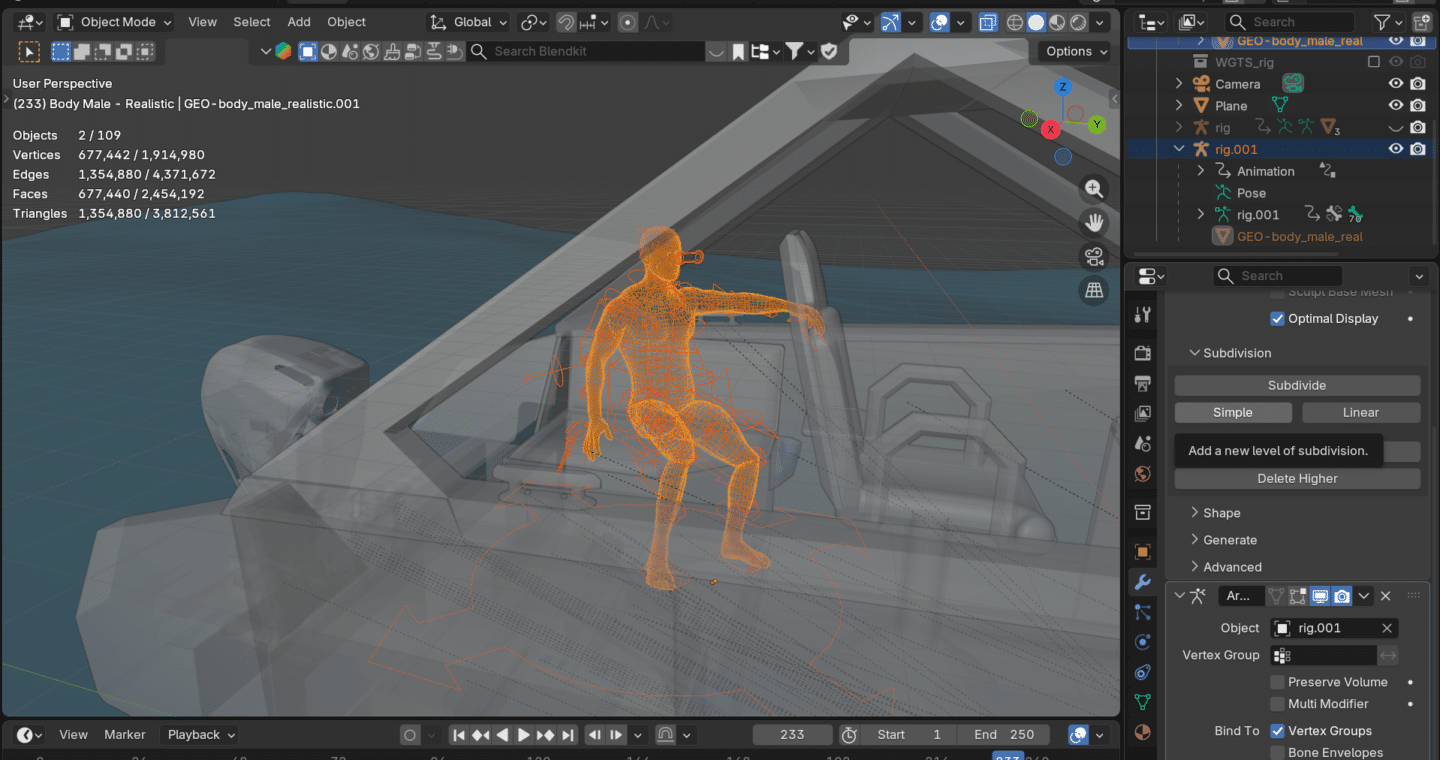
The forward lounge, helm and stern seating were arranged to create connected spaces that encourage conversation, relaxation and movement. This configuration supports social interaction while maintaining clear circulation throughout the cockpit. Seating proportions and positioning consider passenger comfort, accessibility and the different postures associated with cruising and leisure activities. At the helm, visibility, reach and seating ergonomics informed the driving position to support intuitive vessel operation. The open arrangement also maintains a visual connection with the surrounding environment, reinforcing the sense of freedom associated with coastal boating. Together, these considerations balance ergonomic functionality with a refined recreational experience.
Integrated Storage & Convenience
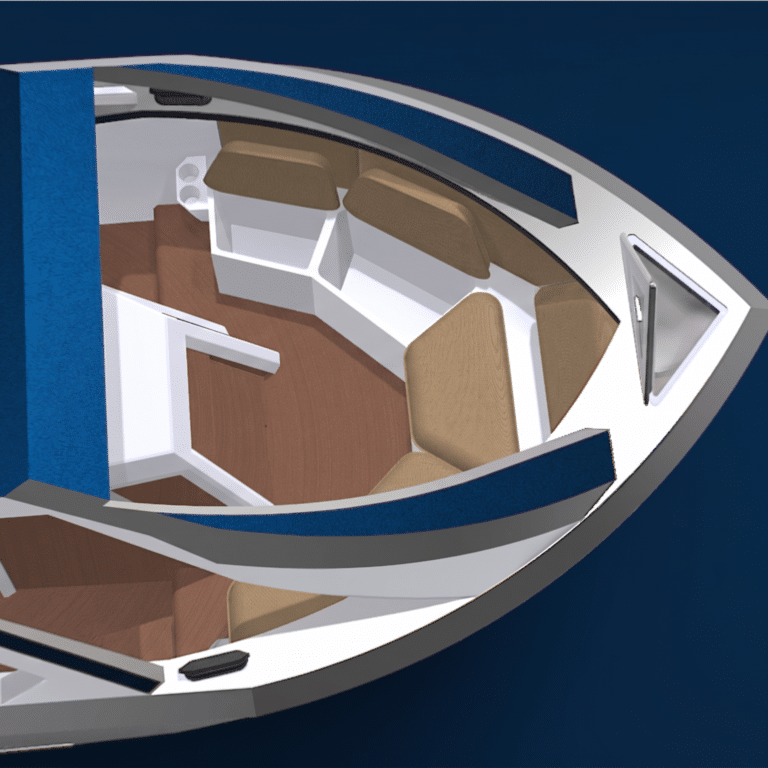
Storage was integrated throughout the vessel to maximise usable deck space and maintain an organised interior. Under-seat compartments accommodate watersports equipment, personal belongings and essential safety gear, ensuring items remain protected and accessible during recreational activities. A dedicated bow compartment provides secure anchor storage, separating marine equipment from passenger areas. Fold-out tables introduce adaptable surfaces for refreshments and social interaction, folding away when additional space is required. Integrated cup holders provide everyday convenience while maintaining the interior’s streamlined appearance. These features demonstrate how practical storage and adaptable functionality can enhance comfort without compromising the vessel’s open, recreational character.
Water Access
At the stern, the swim platform creates a seamless transition between the cockpit and surrounding water, supporting swimming, watersports and coastal recreation. Its positioning considers how passengers move between seating, equipment storage and water-based activities, allowing convenient access without disrupting the main social spaces. The open stern arrangement supports easy preparation for recreational activities while maintaining a strong visual and physical connection to the marine environment. By integrating water access into the vessel’s overall layout, Shockwave encourages greater interaction with its surroundings, reinforcing the design’s focus on recreational versatility, accessibility and an enjoyable experience both onboard and in the water.
MANUFACTURING & ASSEMBLY
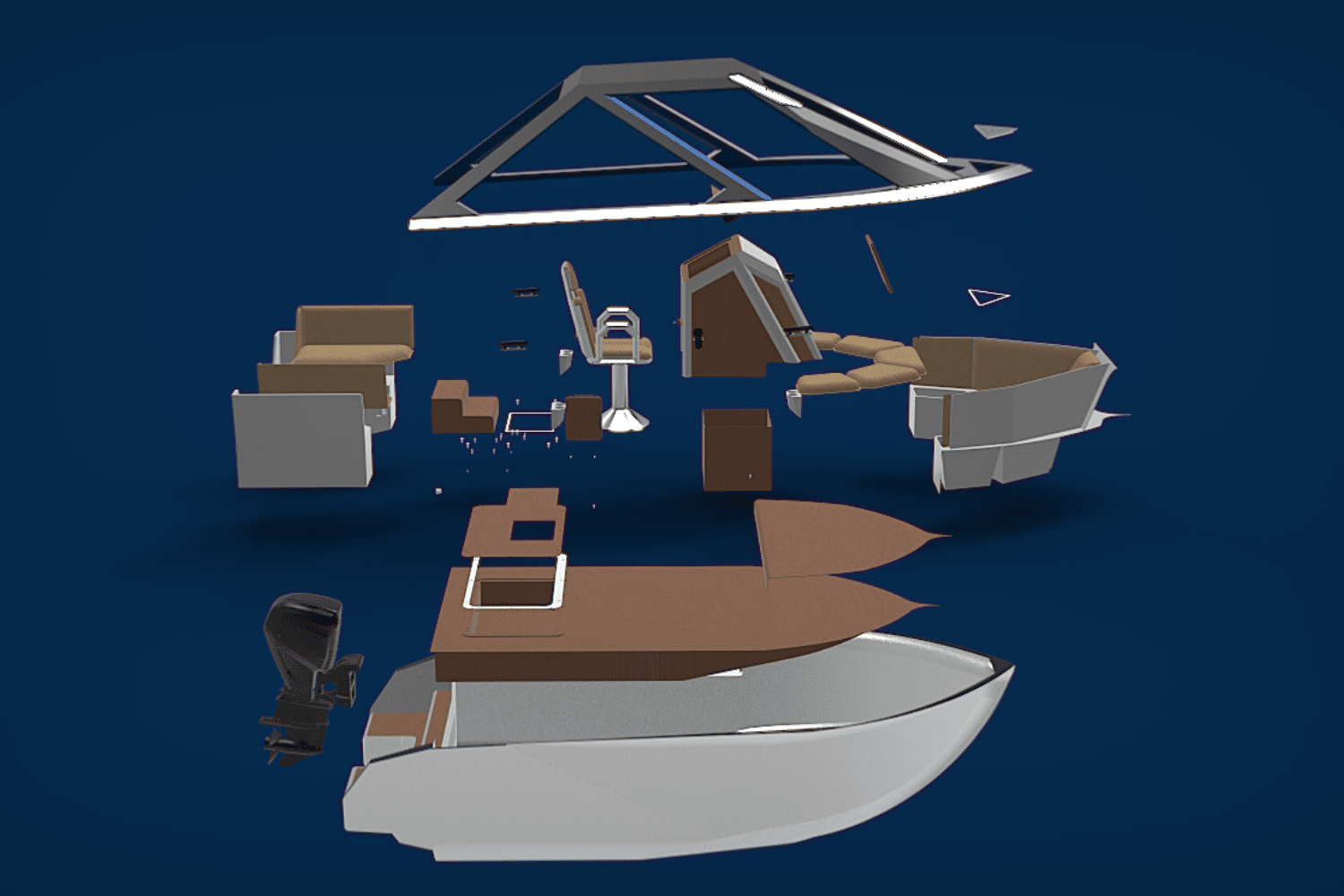
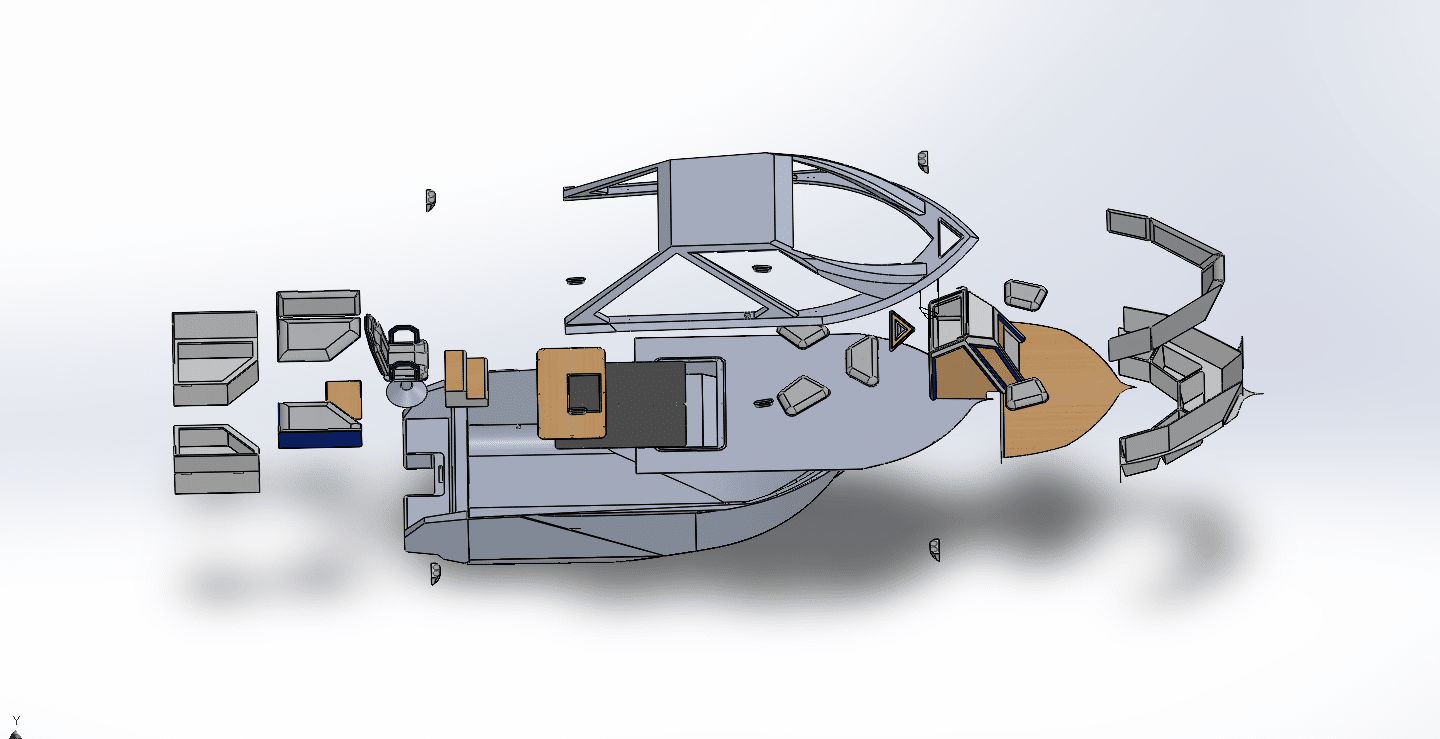
Shockwave’s manufacturing approach prioritises structural integrity, efficient fabrication and long-term durability. Marine-grade aluminium was selected for its strength-to-weight ratio, corrosion resistance and suitability for marine environments. The hull is designed around CNC-cut aluminium panels, formed and welded to achieve its angular geometry while minimising unnecessary manufacturing complexity. Reinforced internal framing provides structural support, with dedicated underfloor compartments designed to accommodate reserve buoyancy provisions. A modular construction approach allows the roof, centre console, seating and deck components to be manufactured and assembled separately, simplifying production and installation. Removable fasteners and accessible internal systems further support maintenance, component replacement and disassembly. Together, these considerations establish a practical manufacturing strategy that balances structural performance, production efficiency and product longevity.
Shockwave Electric
DESIGN DEVELOPMENT
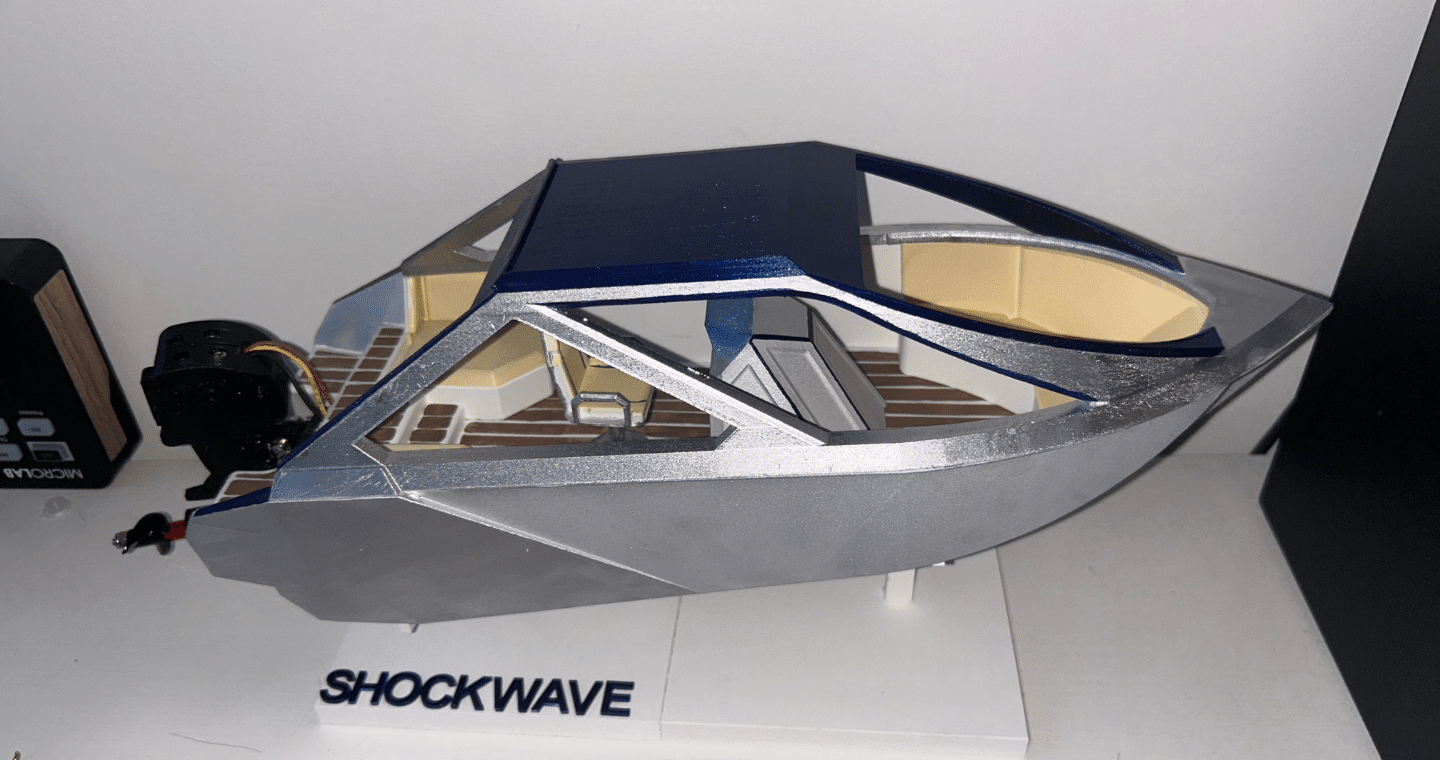
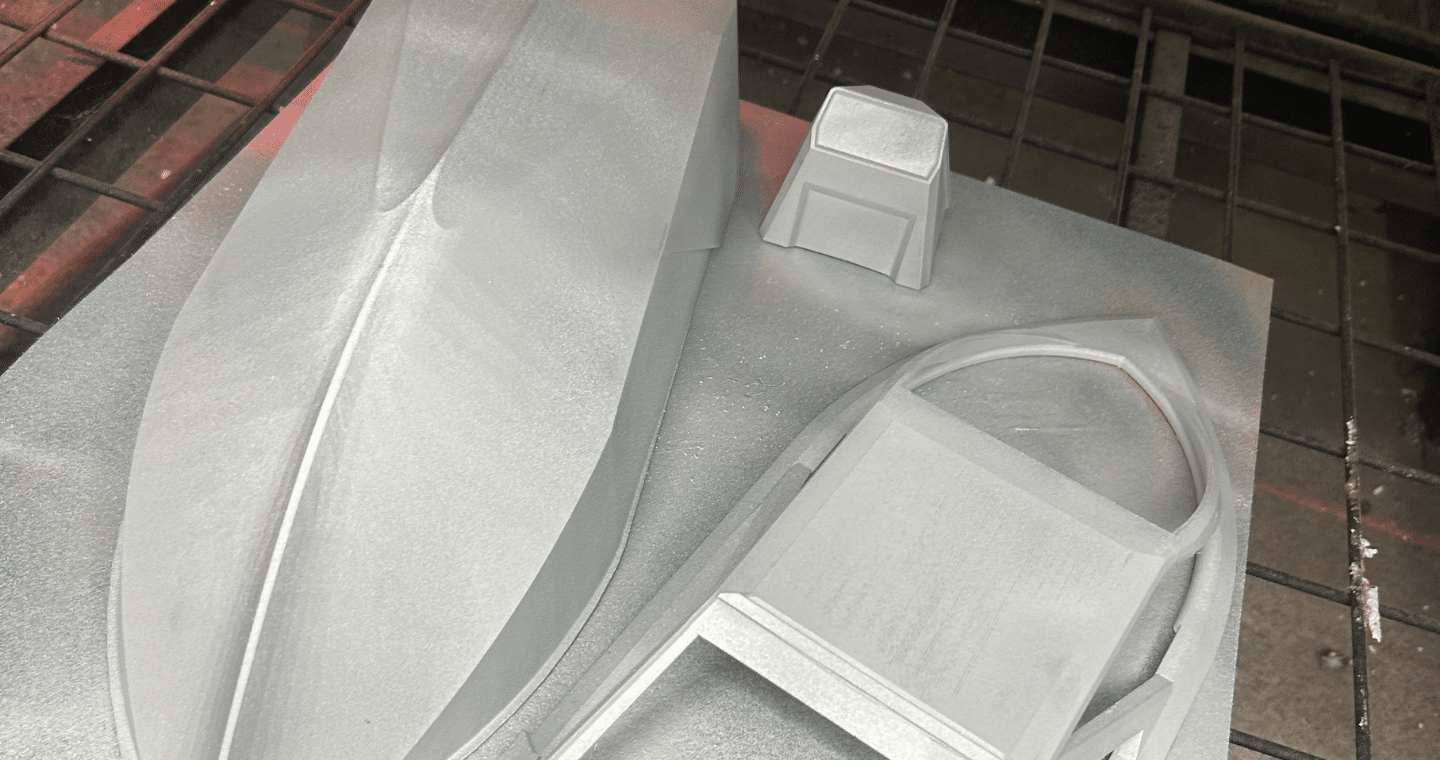
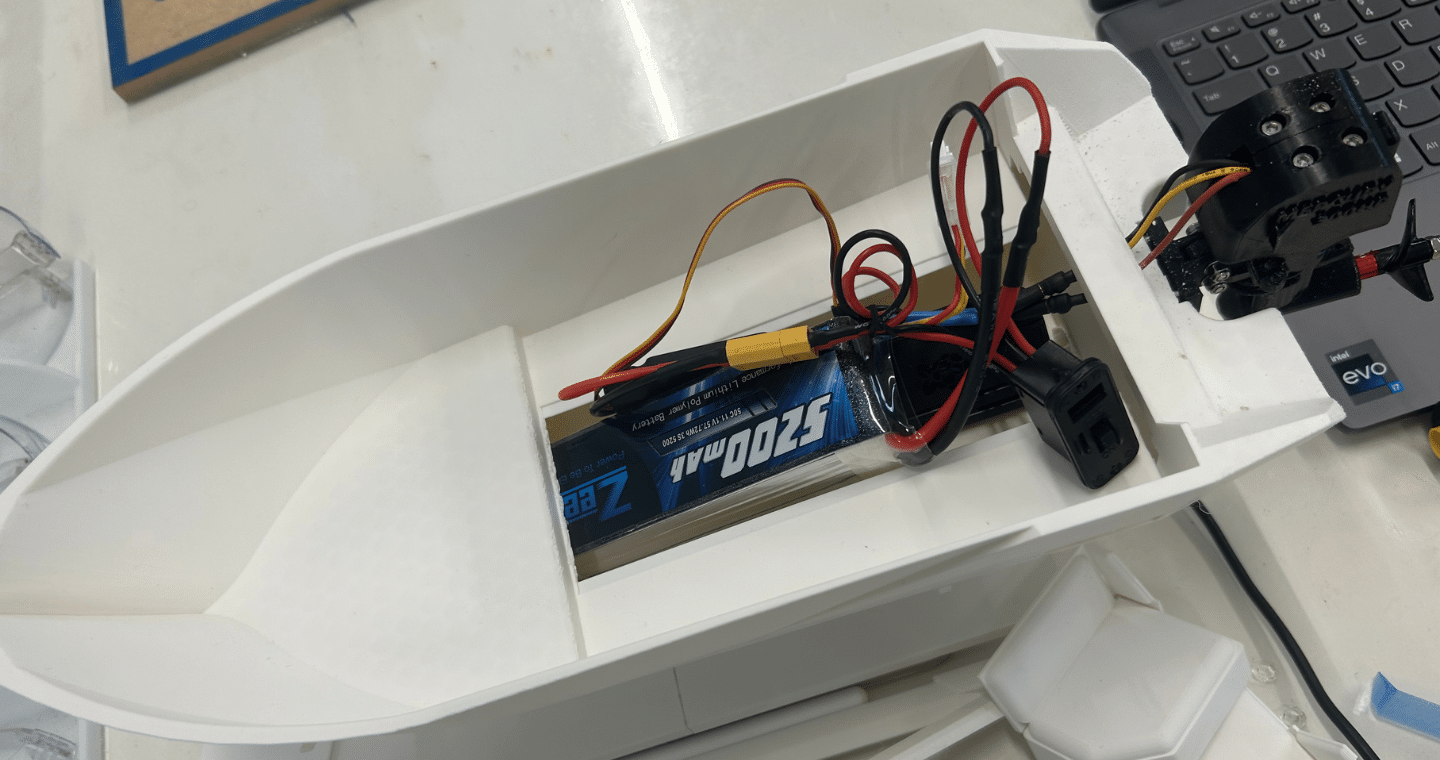
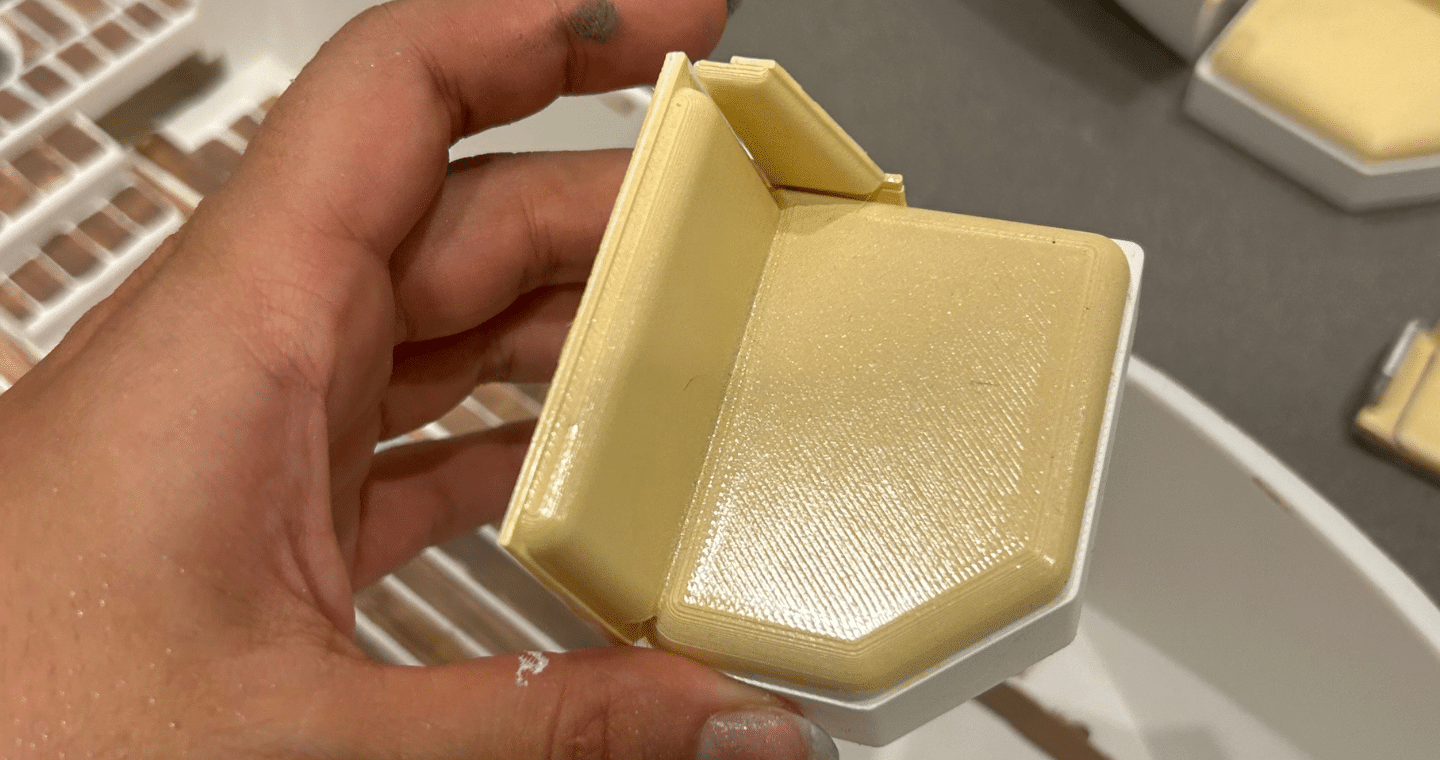
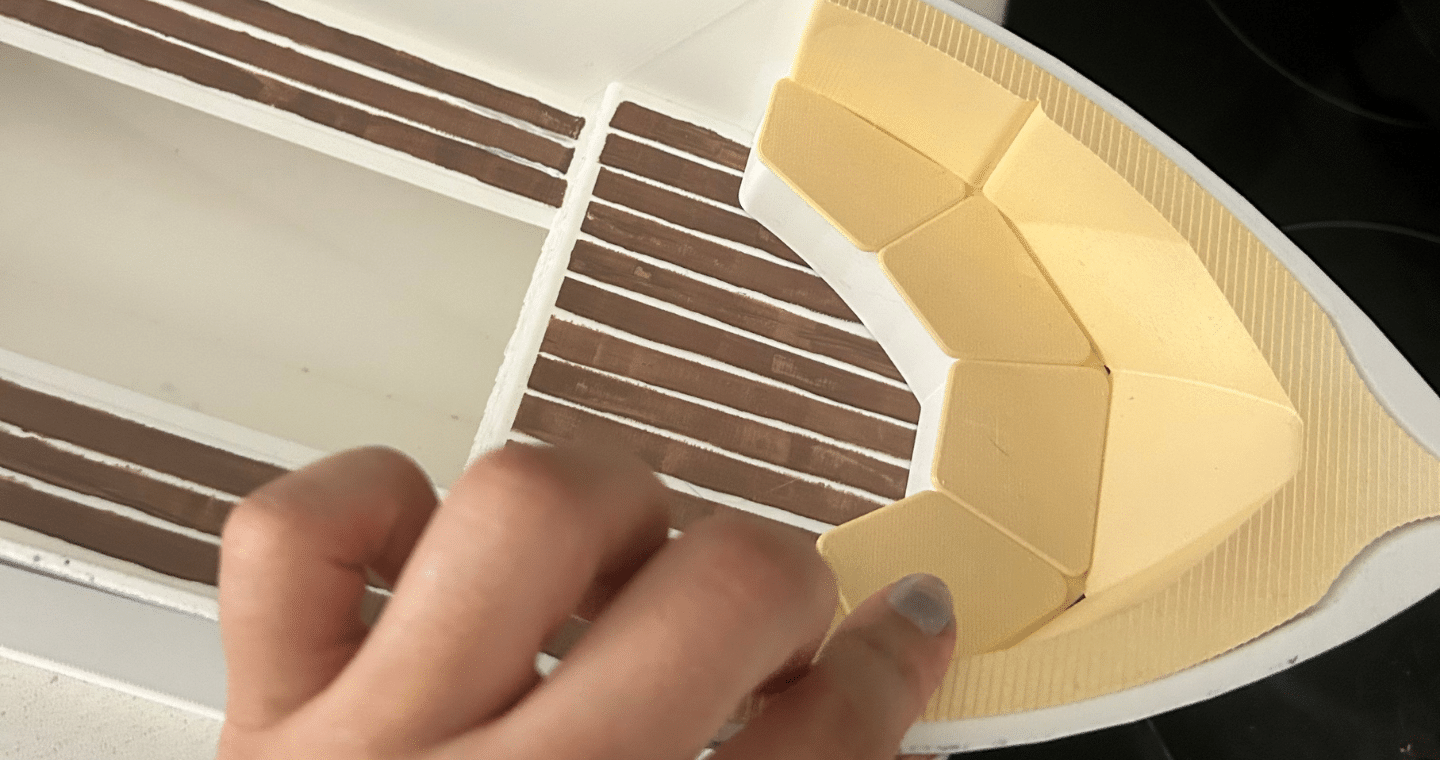
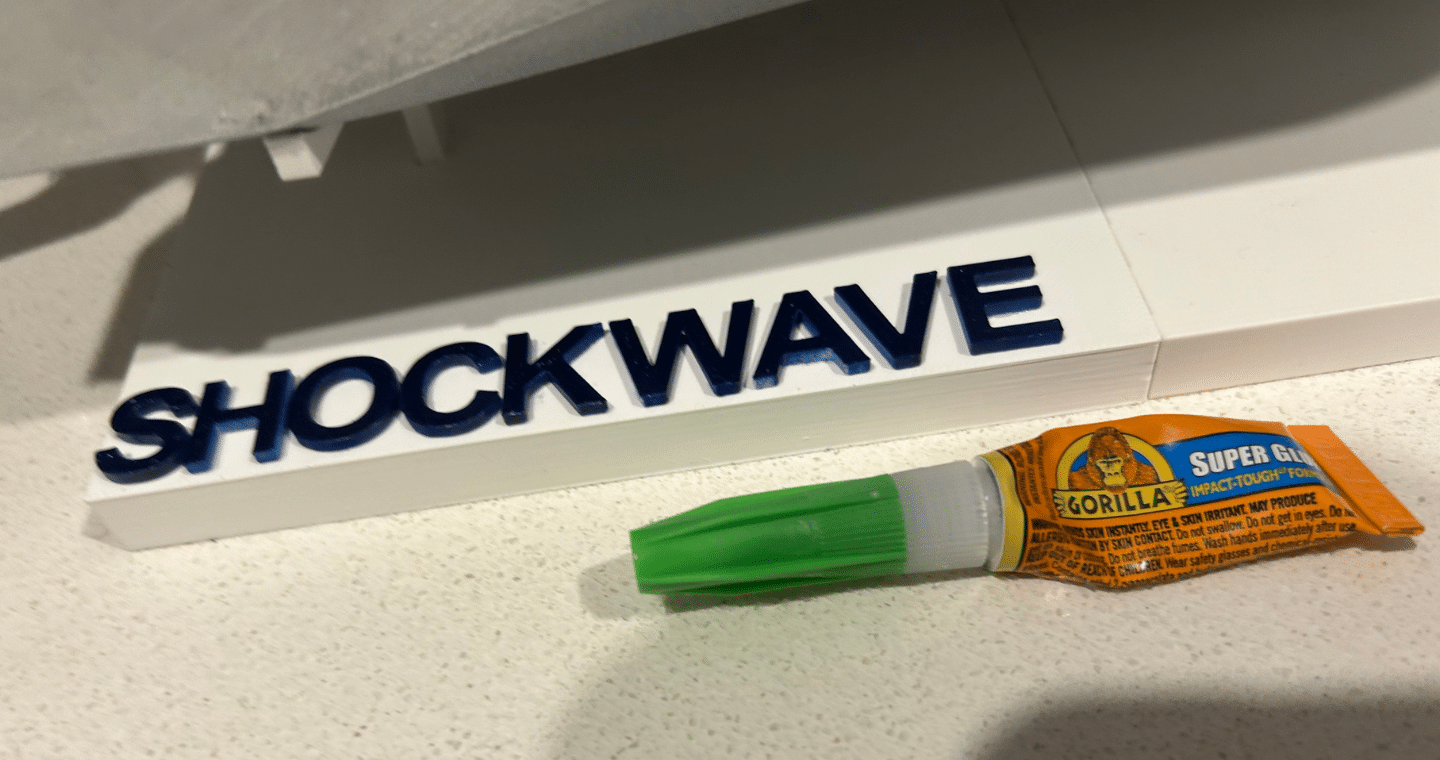
Initial concept exploration and hull studies established key directions in performance, layout and recreational use. These ideas were then tested through 3D-printed models, CAD development and CMF exploration, allowing the design to be refined across form, function and manufacturability. Together, these stages demonstrate how research findings were translated into the final outcome.
CaD Process
prototype process
Jasmin Price
Jasmin Price is an emerging industrial designer driven by a passion for transforming ambitious ideas into compelling, functional products. Combining creative exploration with technical precision, she approaches design through innovation, thoughtful problem-solving and a strong visual identity, with particular interests in automotive, marine and future-focused product design.