Industrial - Bachelor of Design (Industrial Design) / Bachelor of Business (International Business)
Plant Translator: Interactive Plant Care
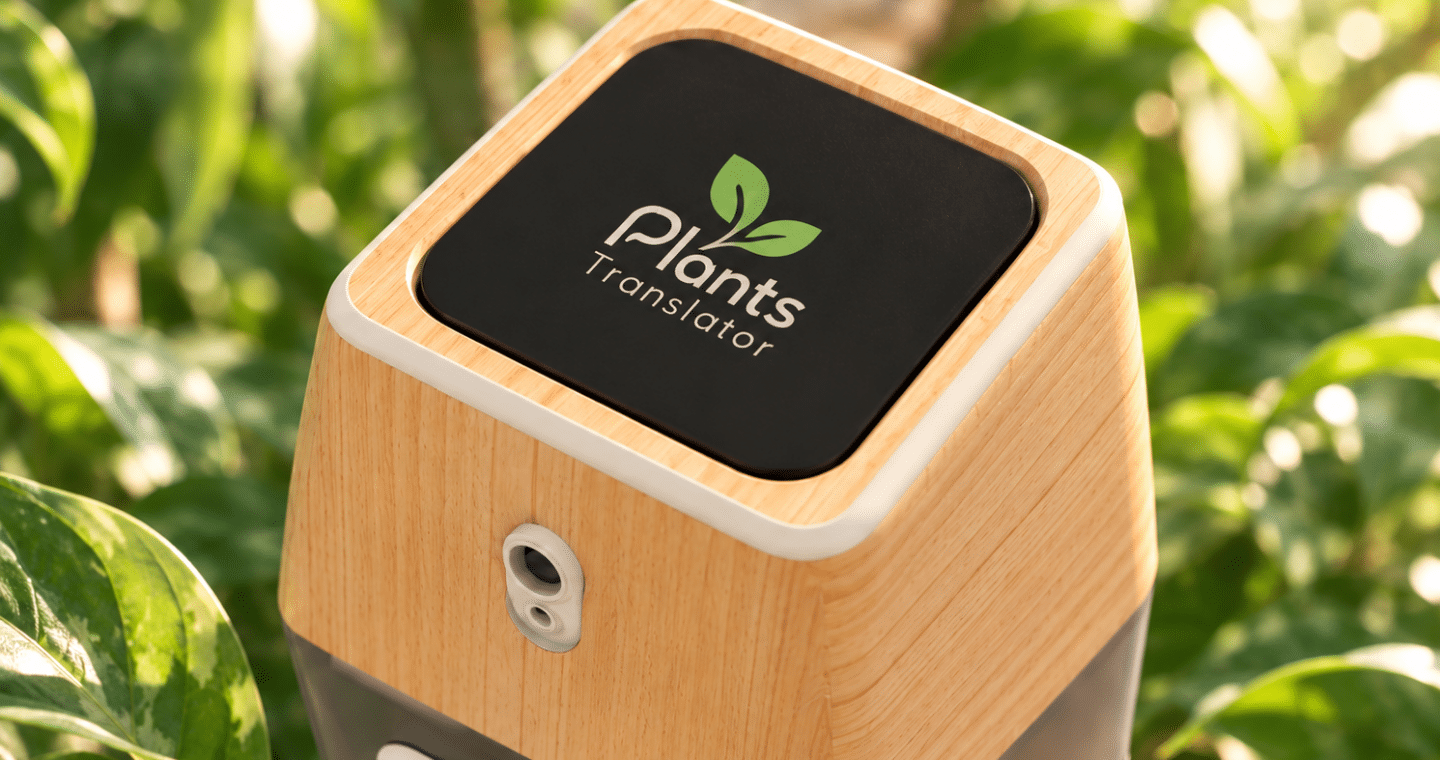
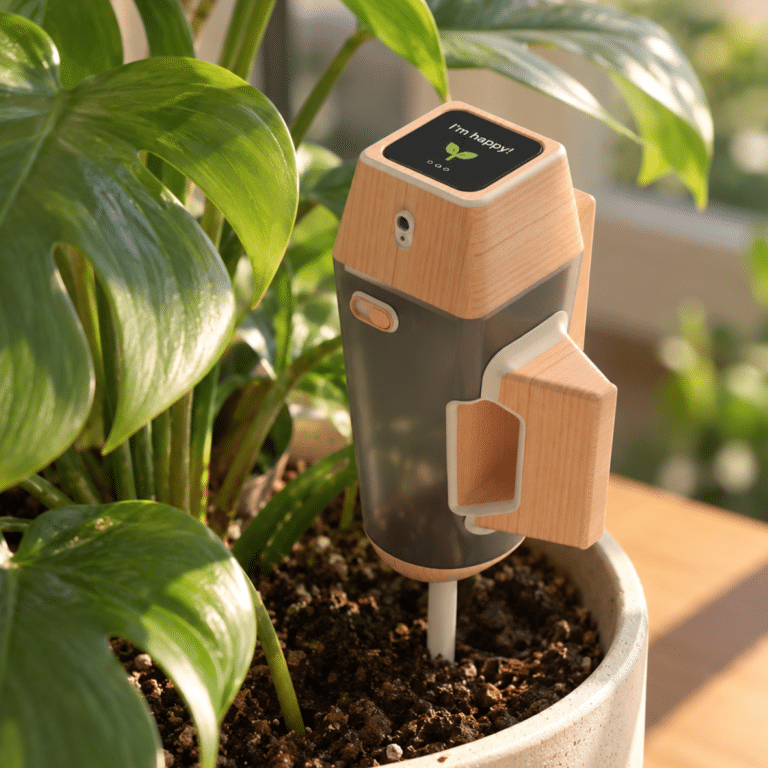
Plant Translator is an interactive plant care device designed for urban living. Combining soil moisture sensing, touch interaction, and automated watering, it helps users understand and care for their plants. Its modular design encourages hands-on engagement with nature, supporting everyday wellbeing while making plant care more accessible.
01. Understanding the Relationship Between People and Plants
Plants Translator is a product design project that explores how we can bring people closer to plants through everyday interaction. The main goal is to create a new way for people to connect with nature, especially for those who do not usually have much contact with plants or have little experience with gardening.
The project started by looking at the problems people face when growing plants in urban homes. Many people live in small spaces with limited sunlight and no outdoor garden. These conditions can make plant care difficult, especially for beginners. Through product research, I studied 30 existing products, including hydroponic systems, soil-based growing systems, and plant care devices with automatic watering or grow lights. This research helped me understand the current market and identify what was missing from existing products. Many products focus on growing plants efficiently, reducing the time needed for care, or increasing the number of plants people can grow. However, there were very few products that focused on the relationship between people and plants or the possible mental health benefits of plant care.
To understand users’ experiences, I also conducted an online survey with 57 participants in Australia. The results showed that 67.9% of participants felt that caring for plants had a positive effect on their mental health. In addition, 53.6% said that plant care helped them reduce stress. However, space was still a major problem, with 39.3% of participants who had stopped growing plants identifying limited space as a reason. The survey also showed that people value the appearance, functions, and price of plant care products.
I also interviewed two researchers to learn more about the connection between people and plants. From these interviews, I learned that even a small amount of time spent caring for plants can be meaningful. Simple activities, such as touching leaves, checking the soil, watering, and observing new growth, can help people feel more connected to nature. Using our five senses and having regular contact with plants can also make the experience more personal and enjoyable.
Based on this research, I decided that the product should not simply automate every part of plant care. Instead, it should make plant care easier while encouraging users to stay involved. The aim of Plants Translator is to help people understand what their plants need and create a reason to interact with them regularly.
02. Exploring Form Through Physical Modelling
During the design development stage, I focused on finding a form that would feel natural next to plants and fit comfortably into a home environment. Since this product combines technology, water, and plant care, I wanted to avoid making it look like a typical electronic device. The design needed to feel friendly and approachable rather than technical or industrial.
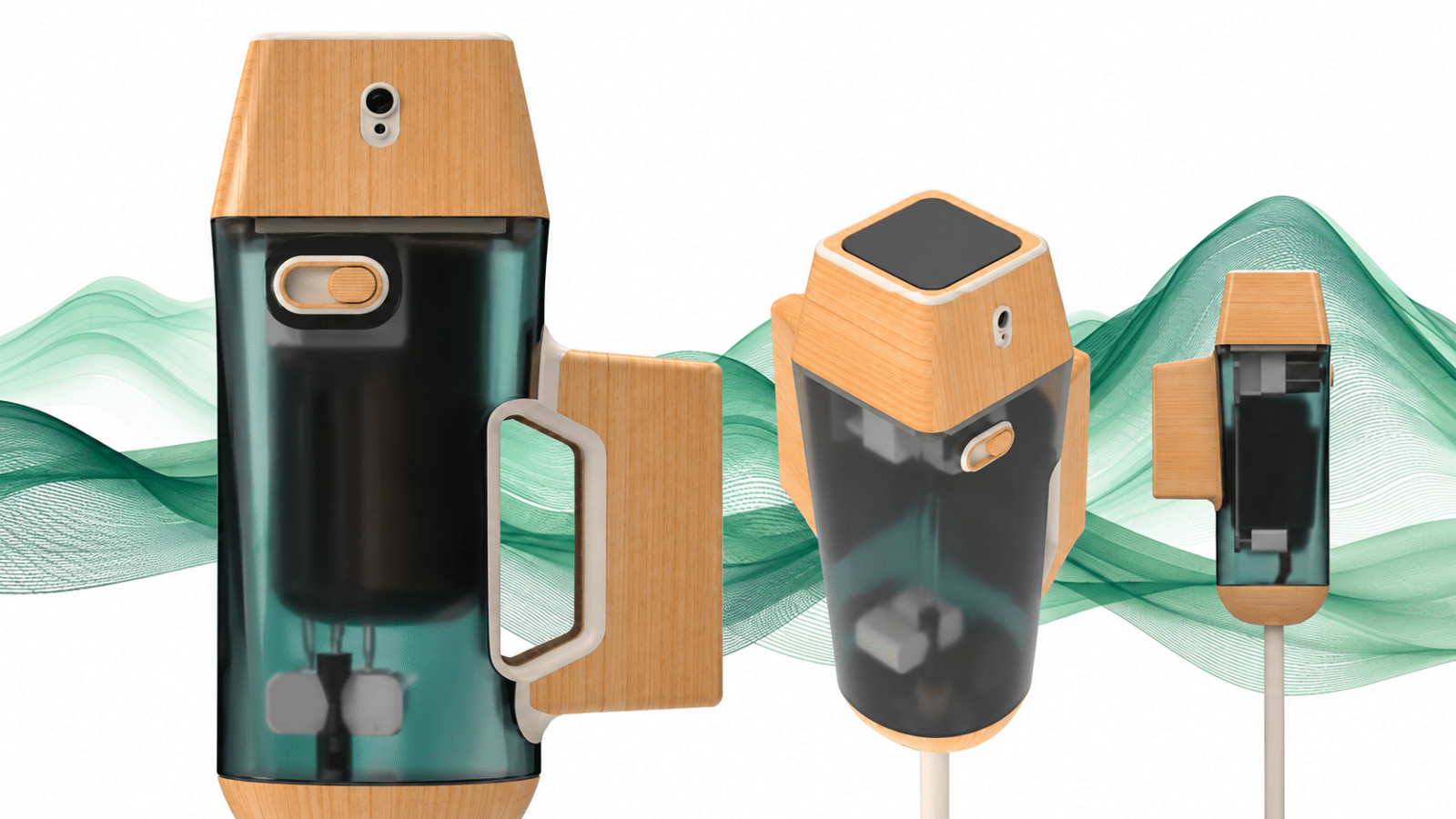
I used expanded polystyrene foam to create several physical models and explore different shapes, sizes, and proportions. By cutting, shaping, and adjusting the foam, I was able to test different design directions quickly. This process helped me understand the product’s overall volume and how its shape would look from different angles. It also allowed me to explore how the upper section, water tank, and side controls could work together as one object.
One of the main questions during this process was how to make the design feel organic. I looked at natural forms and tried to find a balance between soft curves and clear geometric shapes. I wanted the product to have a simple structure, but with enough detail to make it interesting and comfortable to interact with. The relationship between the wooden surface and the translucent body was also important. The natural wood finish helps the product feel warm and familiar, while the transparent body gives a small view of the water and internal components.
Through repeated physical modelling, I was able to compare different ideas and improve the proportions before moving towards the final design. This was an important part of the project because it helped me make design decisions through actual objects, rather than relying only on drawings or computer models.
The final direction combines a natural appearance with simple technology. My intention was to create a product that does not feel out of place next to a plant, but instead looks like a natural part of the growing environment.
03. Bringing Plants Translator into Everyday Life
Plants Translator is designed to make plant care easier while giving users more opportunities to interact with their plants. Once placed in the soil, the device uses a soil moisture sensor to check the condition of the soil. When the user activates the watering function using the physical switch, water flows from the built-in 1-litre tank towards the plant. A pinch valve controls the water flow, and the system is designed to stop watering automatically when the soil has reached the required moisture level.
The LCD screen provides simple messages that help users understand their plants’ condition. Instead of showing only technical information, the product aims to communicate in a more friendly and familiar way. A built-in camera also records the plant over time, allowing users to observe changes and notice new growth. The modular design allows multiple units to be connected when additional water capacity is needed.
Although the product uses sensors and automatic functions, the user’s involvement remains an important part of the experience. Users are encouraged to touch the device, activate watering, check the plant, observe its growth, and take care of it regularly. The purpose is not to remove people from the process, but to reduce unnecessary difficulty and make these small interactions easier to enjoy.
In the future, several areas still need further development and testing. These include improving the accuracy of the soil moisture sensor, testing the watering system with different types of soil and plants, and developing a reliable internal structure for the water tank, pump, valve, and electronic components. The camera and display functions also need further testing to make sure they work well in different home environments. Water capacity, cleaning, maintenance, and long-term durability are other important points to consider.
Ultimately, I hope Plants Translator can help people who are not familiar with gardening take their first step towards growing plants. By combining simple technology with physical interaction, the product aims to create small but meaningful moments between people and nature. It is not only about keeping a plant alive, but also about building a relationship with it over time.
Tadashi Uemura
Tadashi Uemura is an Industrial Design student at Queensland University of Technology, with a background in Life Systems Engineering. His work combines design thinking, technical knowledge, and practical problem-solving to explore innovative solutions that improve everyday experiences and create meaningful connections between people and their environments.