The problem
For many older adults, the kitchen represents more than a place to prepare food. It provides routine, personal choice and an important sense of independence. However, as physical abilities change with age, familiar kitchen tasks can become increasingly challenging.
While assistive products aim to address these difficulties, their clinical appearance and association with disability can create a sense of stigma. Products that look out of place in the home, or make users feel defined by their limitations, may be overlooked despite their practical benefits.
There is an opportunity to rethink how accessibility is incorporated into everyday kitchenware, creating products that support changing needs without compromising personal style, dignity or independence.
The opportunity
Rather than introducing another piece of conventional assistive equipment, this project explores how an everyday kitchen object can be redesigned to better support its users.
The traditional chopping board provides a familiar starting point. By rethinking how ingredients are prepared, collected and transferred, there is an opportunity to address several everyday challenges within one integrated product.
The aim was to create something that people would genuinely want to use: a practical, accessible kitchen product that feels at home in any kitchen.
introducing kinda
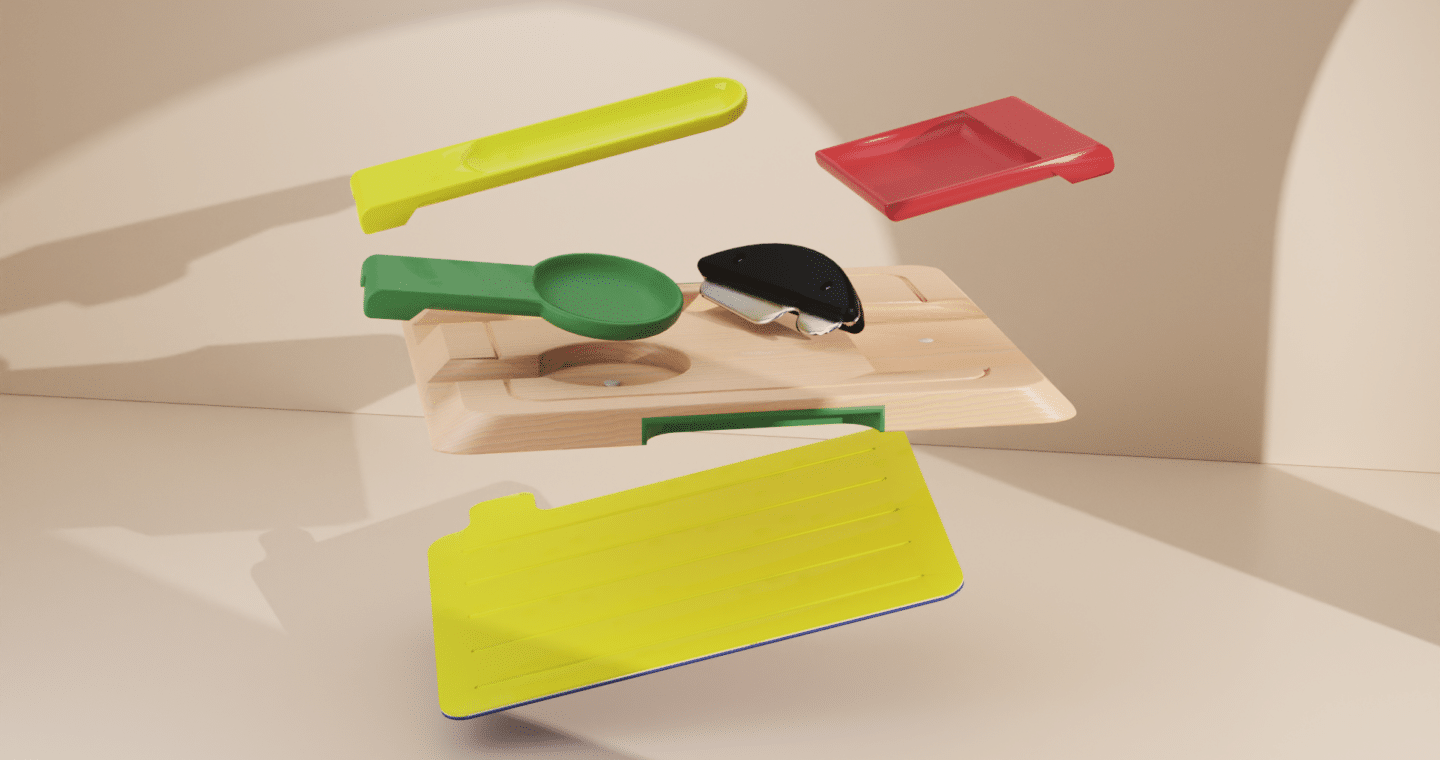
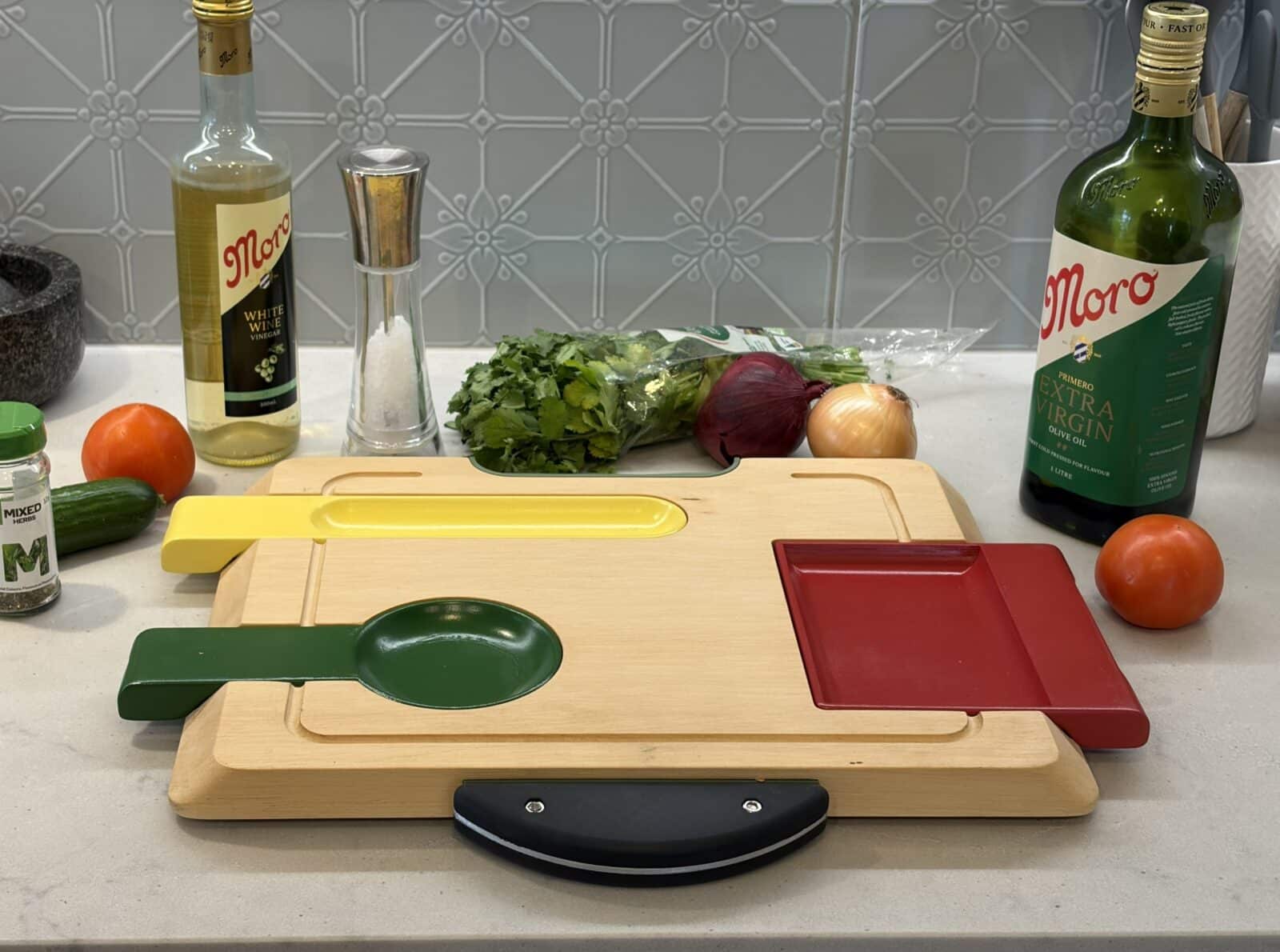
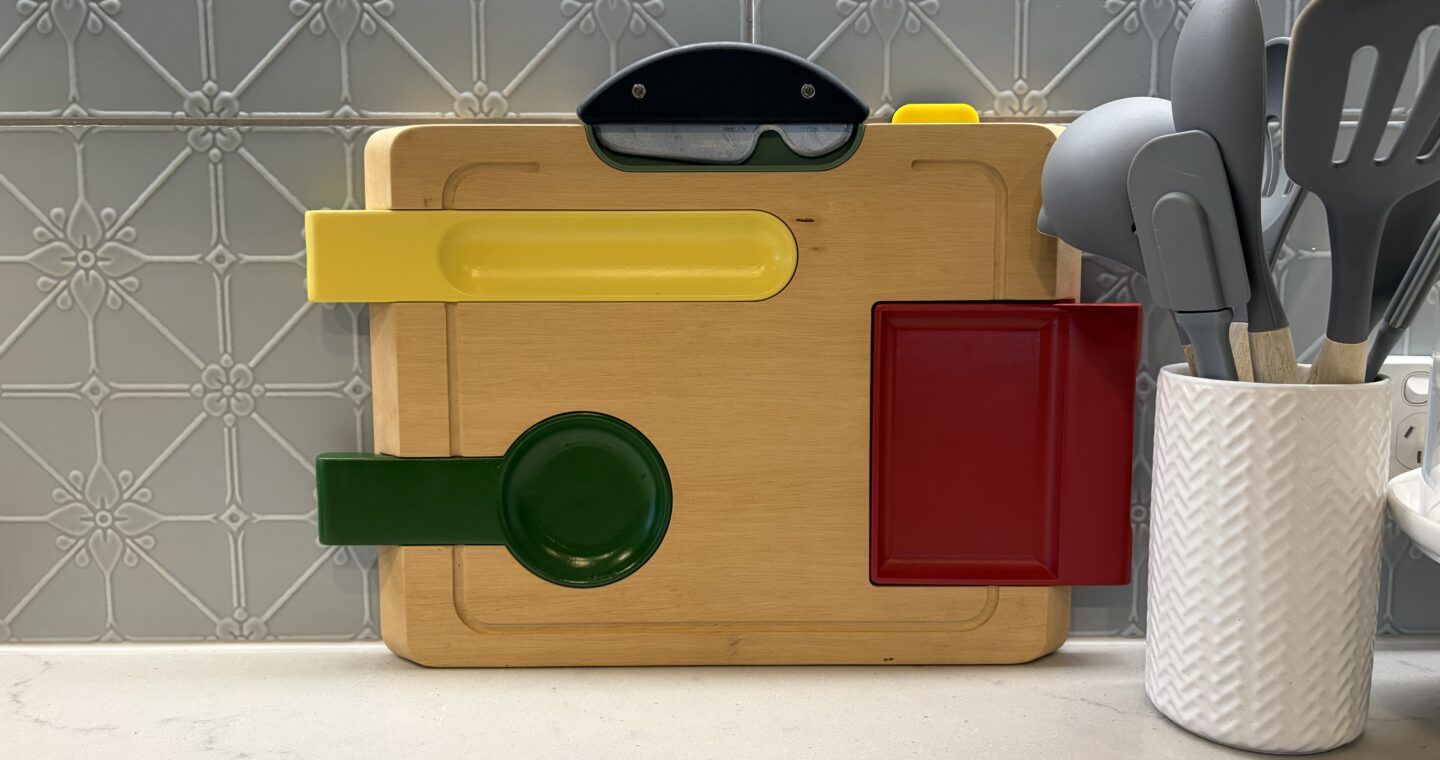
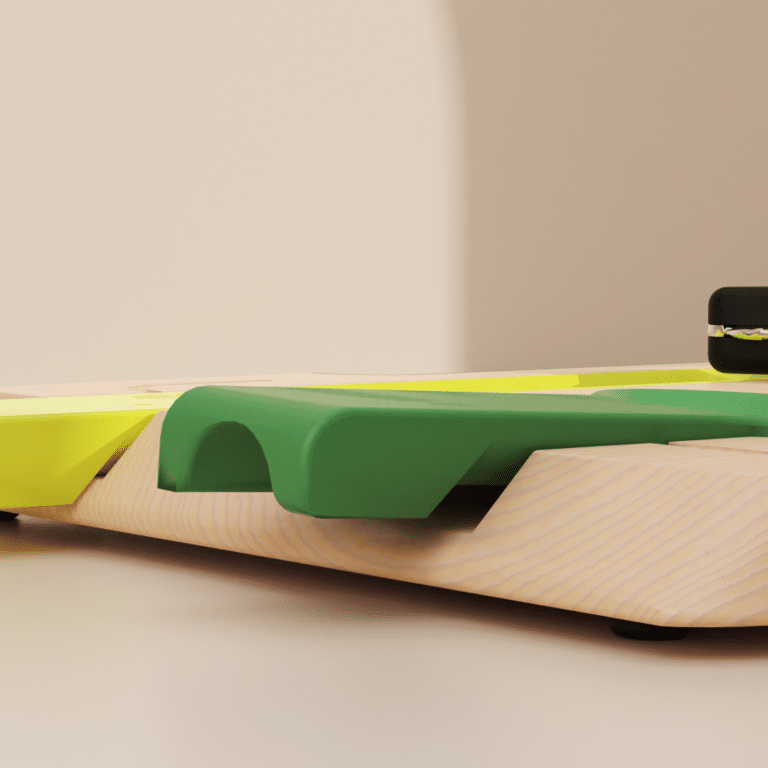
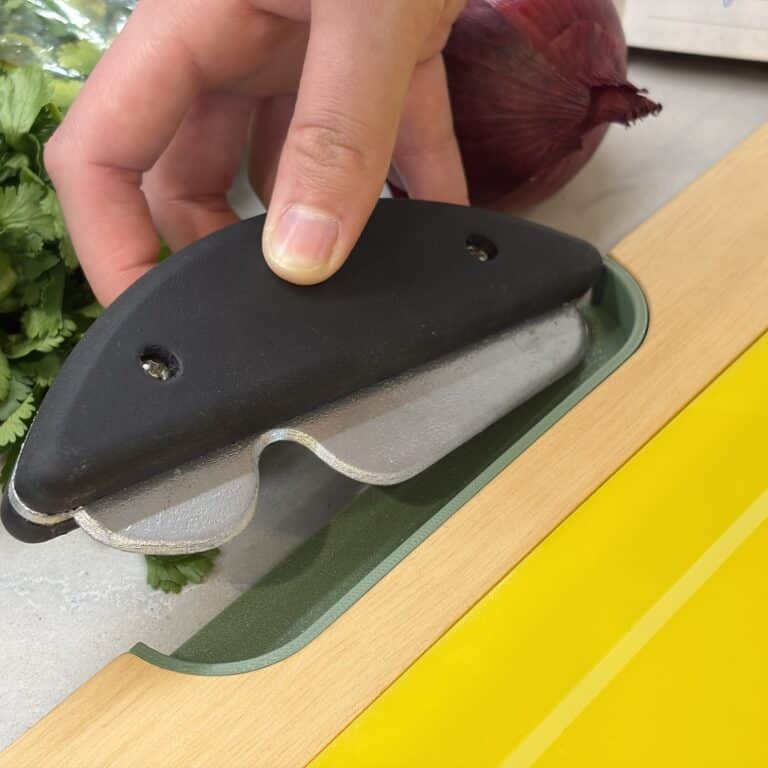
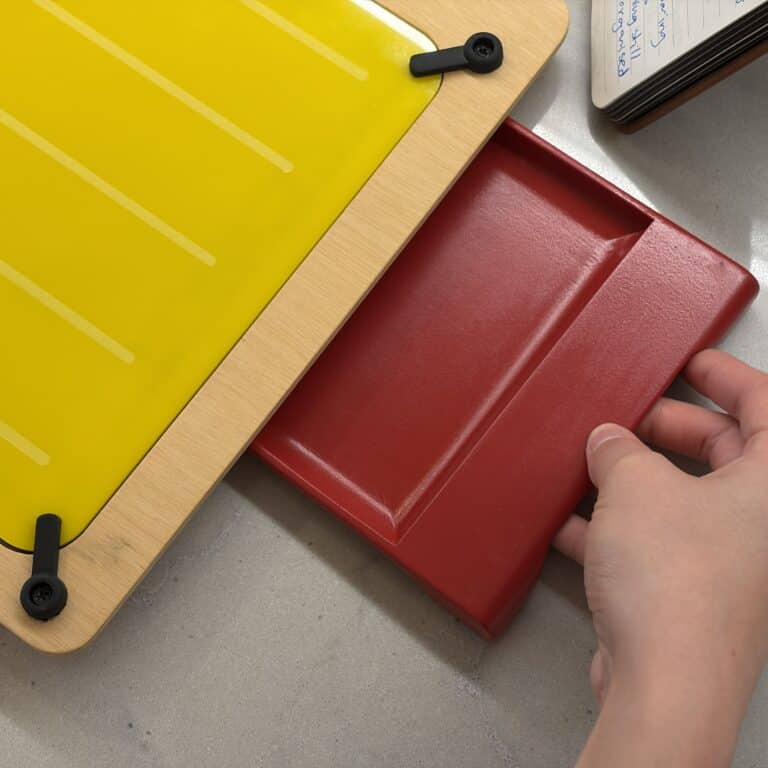
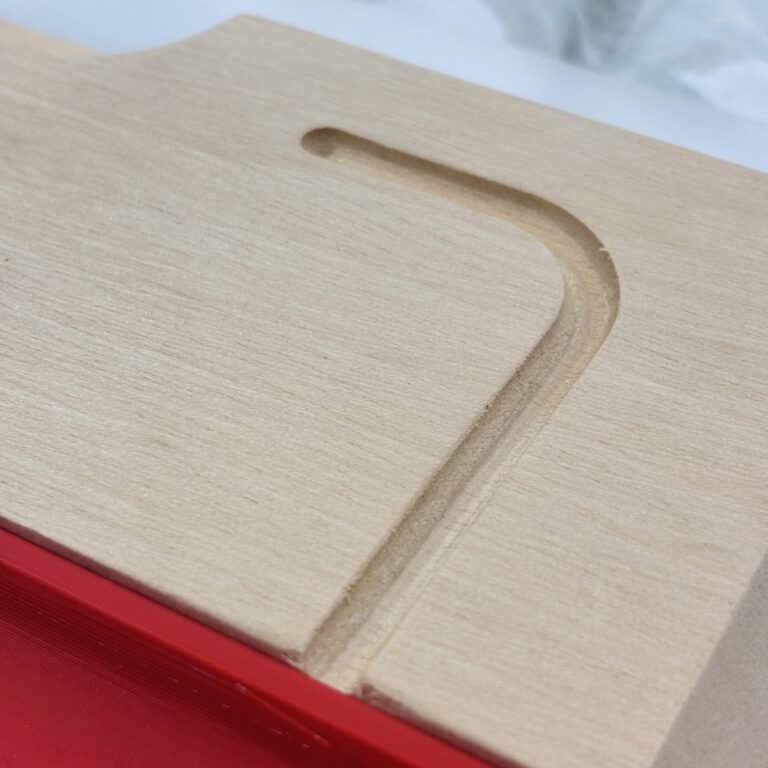
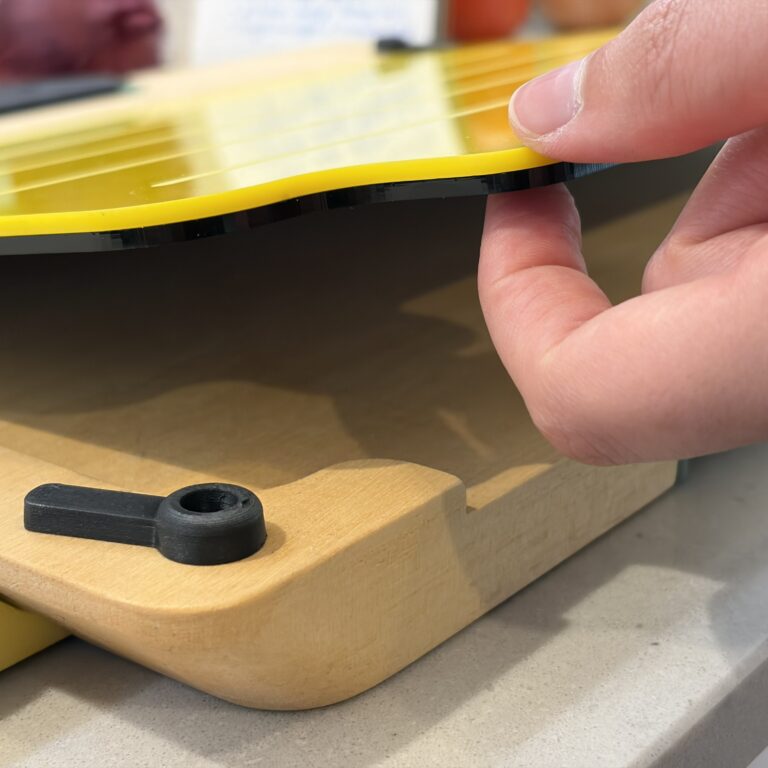
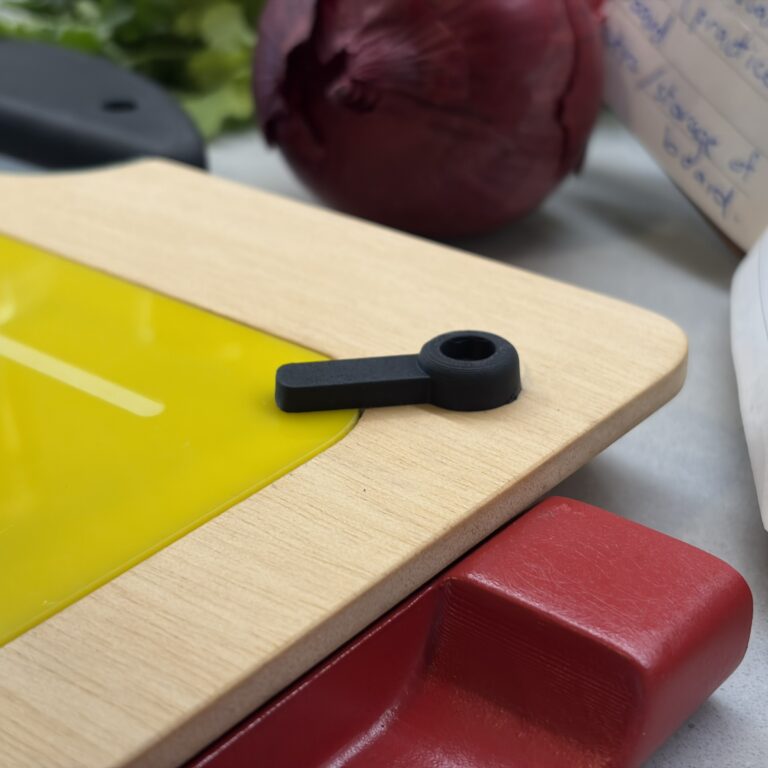
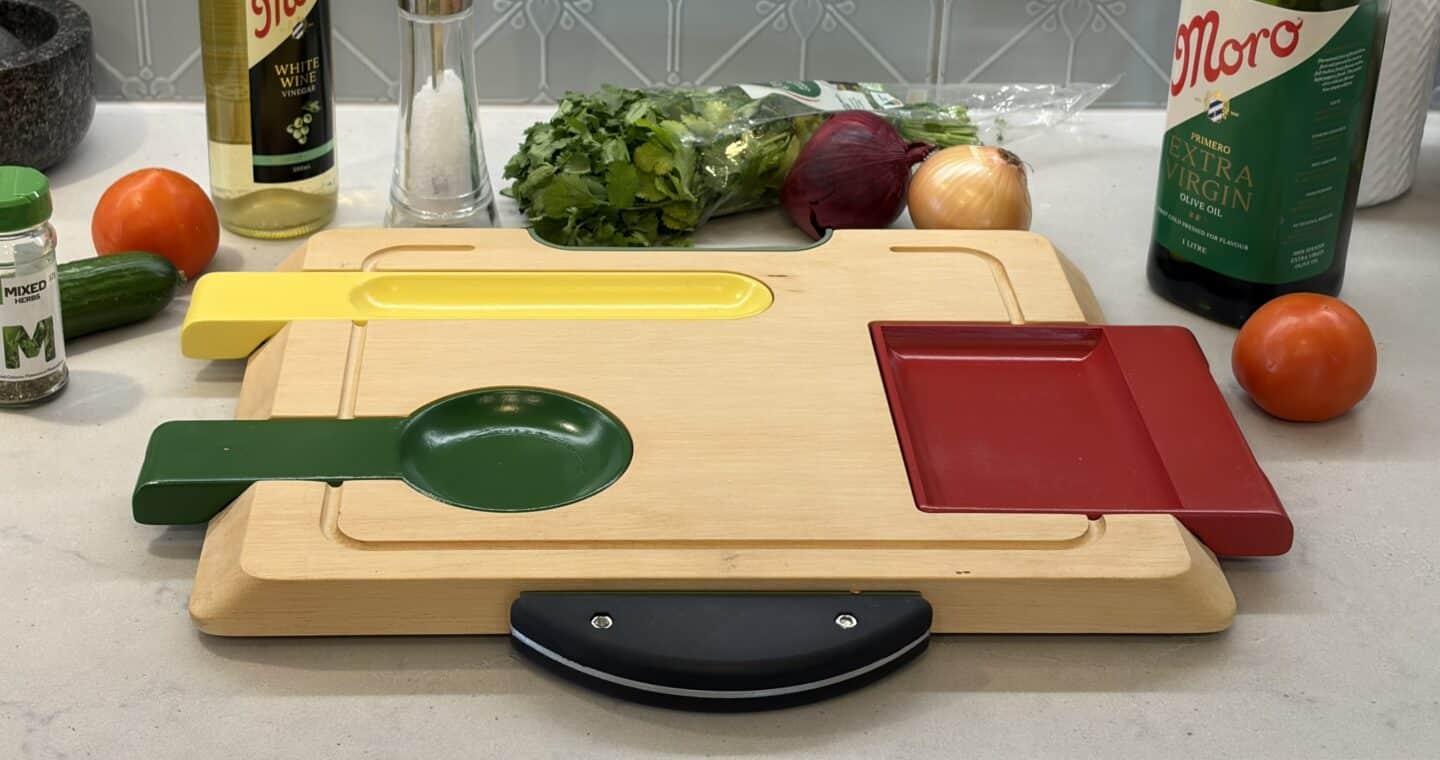
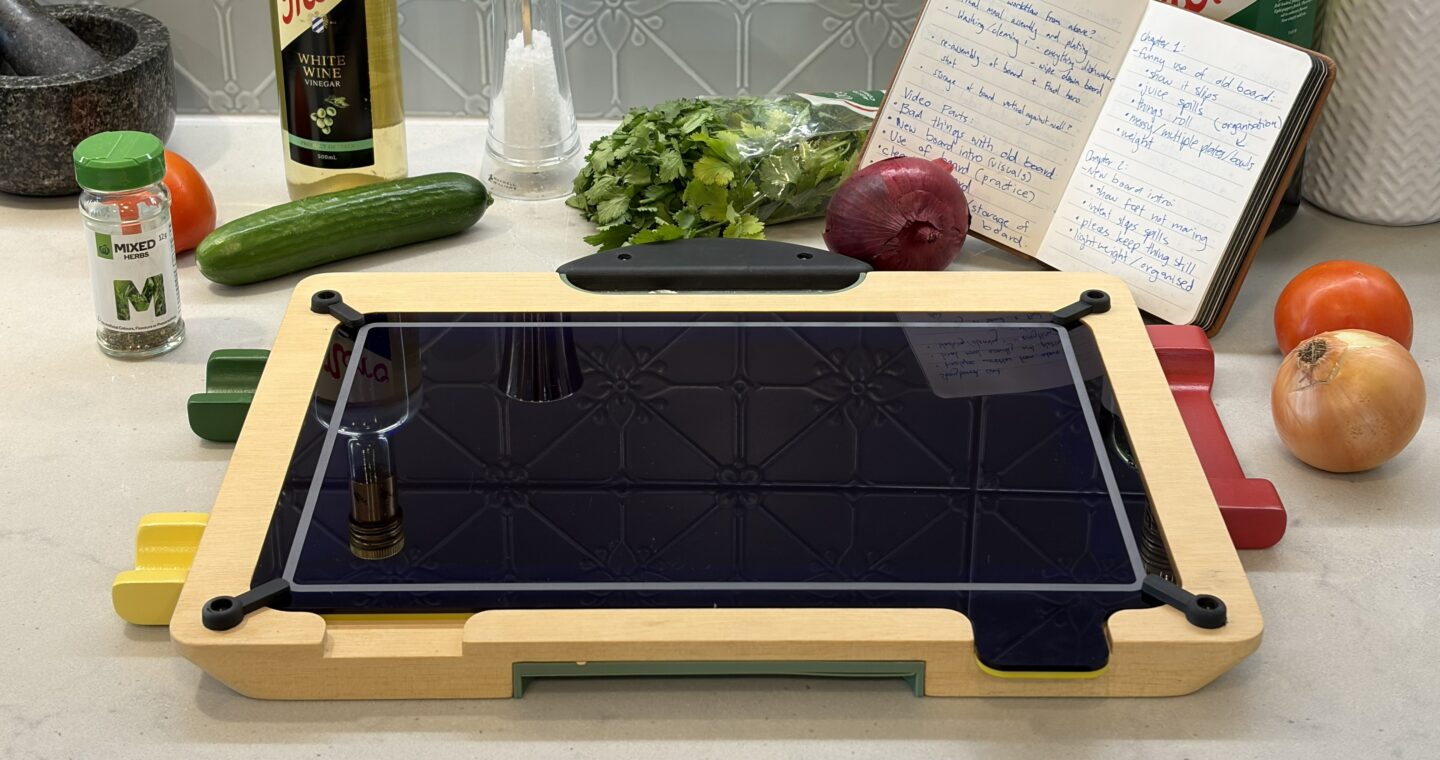
KINDA reimagines the traditional chopping board as an accessible food preparation system for older adults. Its lightweight timber construction conceals a more considered approach to everyday cooking, integrating removable preparation containers, a specially designed rocker knife and reversible cutting surfaces.
Designed to support the entire process of cutting, collecting and transferring ingredients, KINDA brings practical accessibility into a familiar kitchen object without the clinical appearance often associated with assistive products.
key features
“Attractive things work better.”
DONALD A. NORMAN
Designing Beyond the Assistive Aesthetic
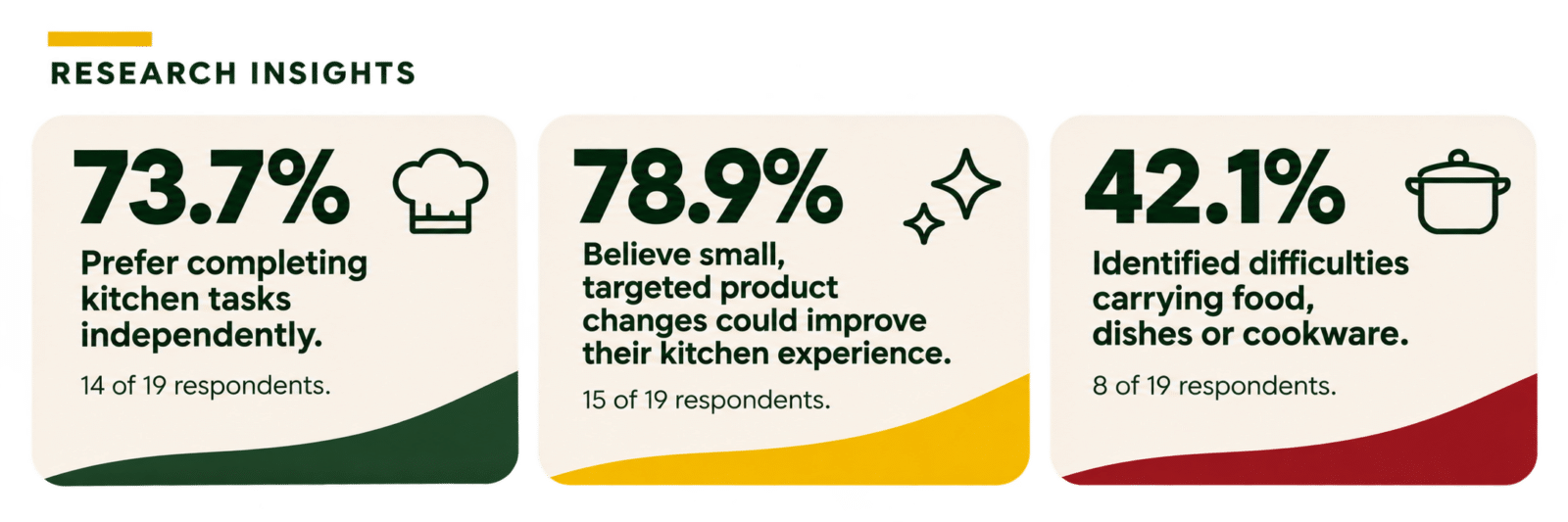
Accessibility should not come at the expense of appearance. Research highlighted that the look and feel of assistive products can influence whether people are willing to use them, particularly when products carry clinical associations or make users feel different from those around them.
KINDA challenges this perception by building accessibility into the design of a familiar kitchen object. Natural timber, considered proportions, contrasting colours and integrated functionality create a product intended to feel like a desirable piece of kitchenware first, rather than an assistive device.
The aim is simple: create something people want to use, not something they feel they have to use.
the value of kinda
KINDA demonstrates how thoughtful changes to familiar products can make everyday activities more accessible without compromising the experience of using them. By integrating practical functionality into a desirable piece of kitchenware, the design challenges the perception that assistive products need to look clinical or distinguish their users. Ultimately, KINDA aims to make independent food preparation more manageable while preserving the confidence, dignity and enjoyment that come with cooking for yourself.
- Name
- Research Report: As We Age – Maintaining independence in the Kitchen
- File Type
- application
- File Size
- 1 B
- Link
- Download File