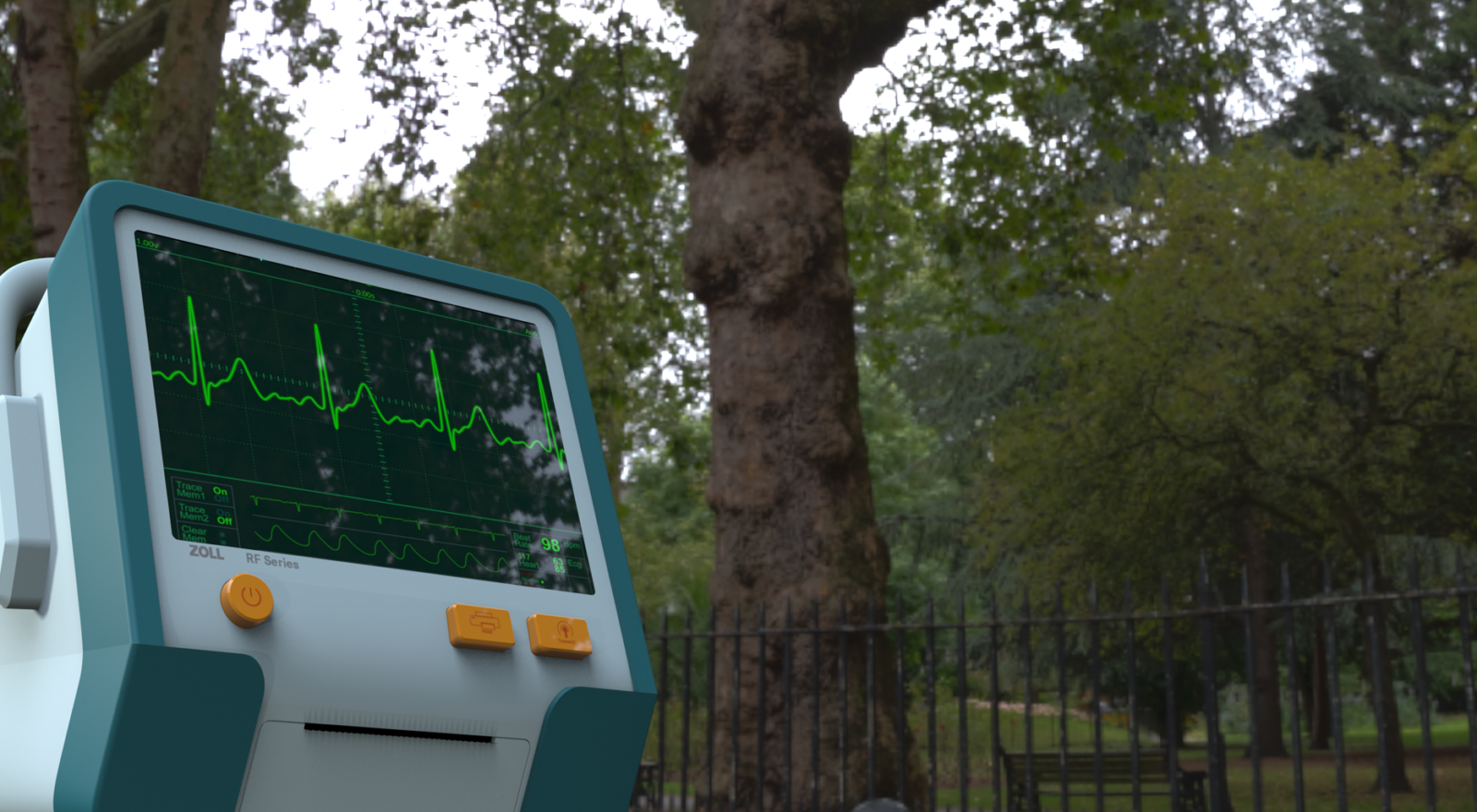
This project investigates a clinic-to-field design mismatch in ECG (electrocardiogram) and monitor-defibrillator equipment used by paramedics, where cable entanglement, unreliable electrode adhesion and workflow disruption arise in the field. The research informs a rugged, RF-sensing monitor with wireless adhesive body nodes.
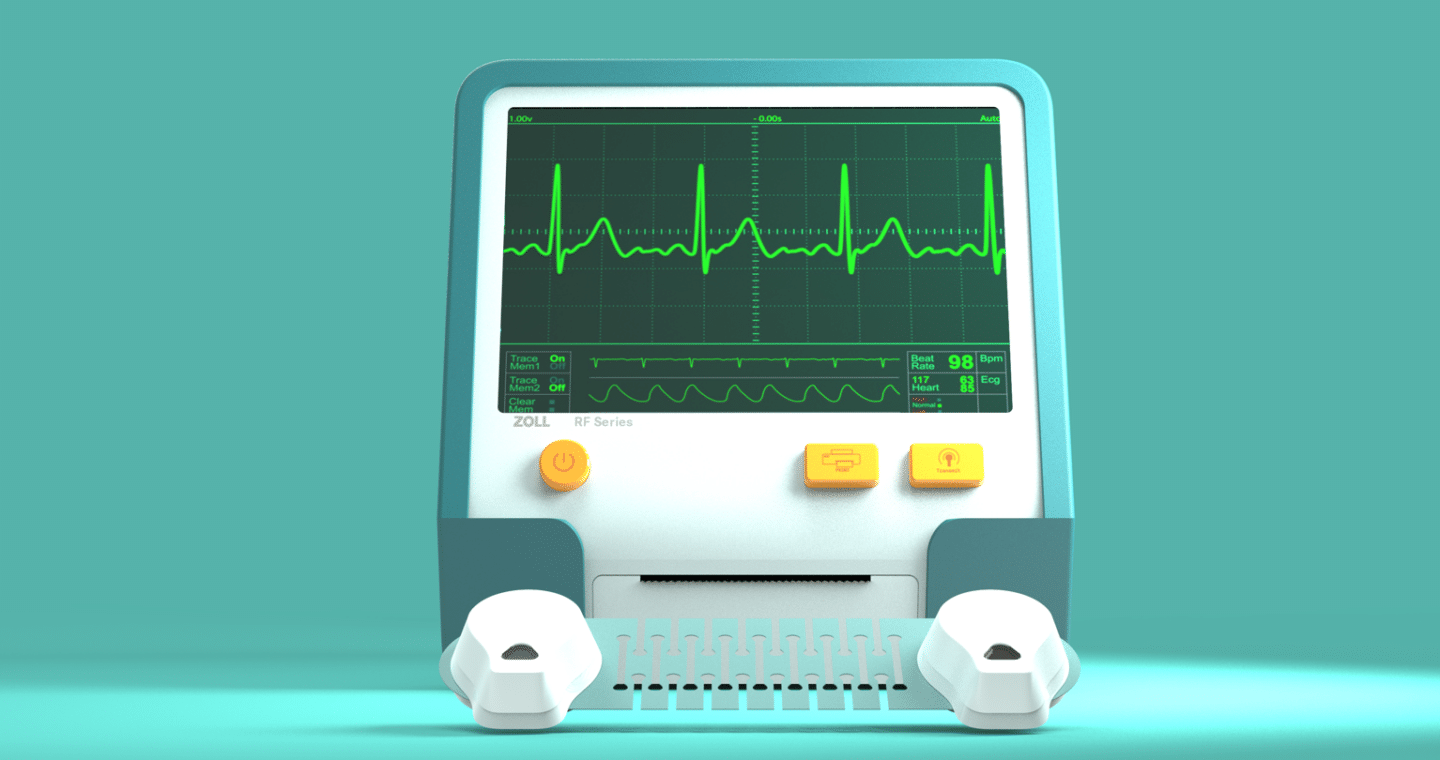
The RCG is a radio-frequency-powered heart monitor designed to support high-efficiency paramedical diagnostic workflows. This device allows paramedics to efficiently and reliably gather information and coordinate treatment plans.
BACKGROUND
Paramedics rely on ECG monitors to make critical decisions about a patient’s heart condition. Yet these devices are designed around the controlled conditions of a hospital, not the unpredictable environments where paramedics actually work: roadsides, cramped homes, moving ambulances and rural locations. This project explores the gap between clinic and field through research with end users and a review of the current market. Using qualitative research, it was found that ECG cables slow down paramedics and create tripping hazards when removing patients. Electrodes can struggle to stay attached across differing body types. These setbacks interrupt care in moments where every second counts.
The lack of cable management causes significant tangling issues, in conjunction with the long process of setting up, including attaching patches to the wires and accurately applying them to ten locations on the patient, resulting in significant time waste. Not only does this affect efficiency but also reliability; inaccurate placements and constant breakage disrupt readings and make the diagnosis more difficult. Poor diagnostic results can lead to the wrong treatments being provided to the patients, which in extreme cases could be fatal. These are not moments of human error, but real problems with real consequences.
Throughout the research, it was found that radio frequencies have been tested for cardiologic diagnostics, yielding results and reliability equal to standard electrocardiograms. However, this has not been brought into the field, much like other wireless interventions such as patch-type ECGs, all marketed towards consumer products or controlled clinical settings. This led me to a wearable RCG concept, combining field ruggedness and unused technology to target an undervalued problem.
RCG Monitor
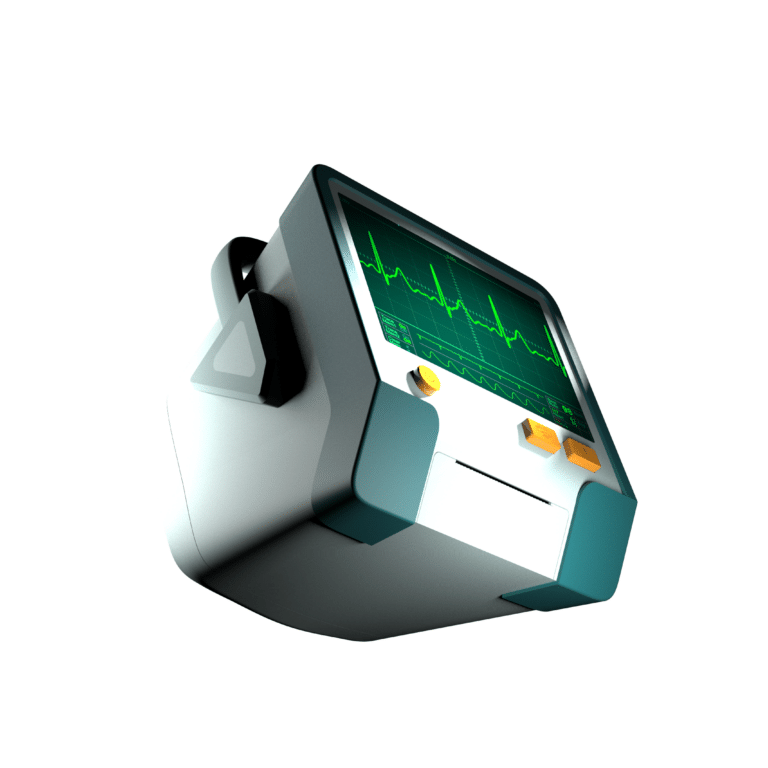
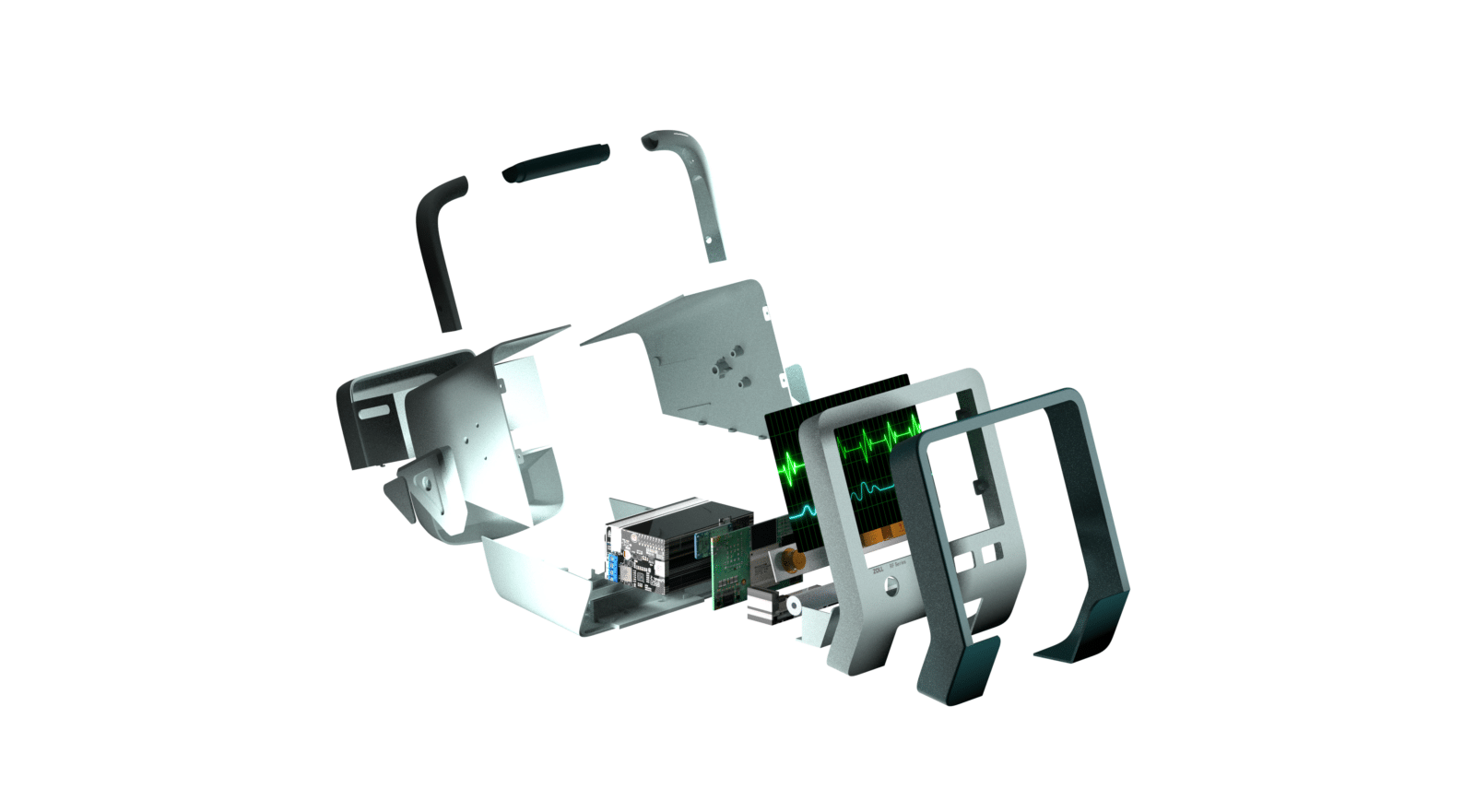
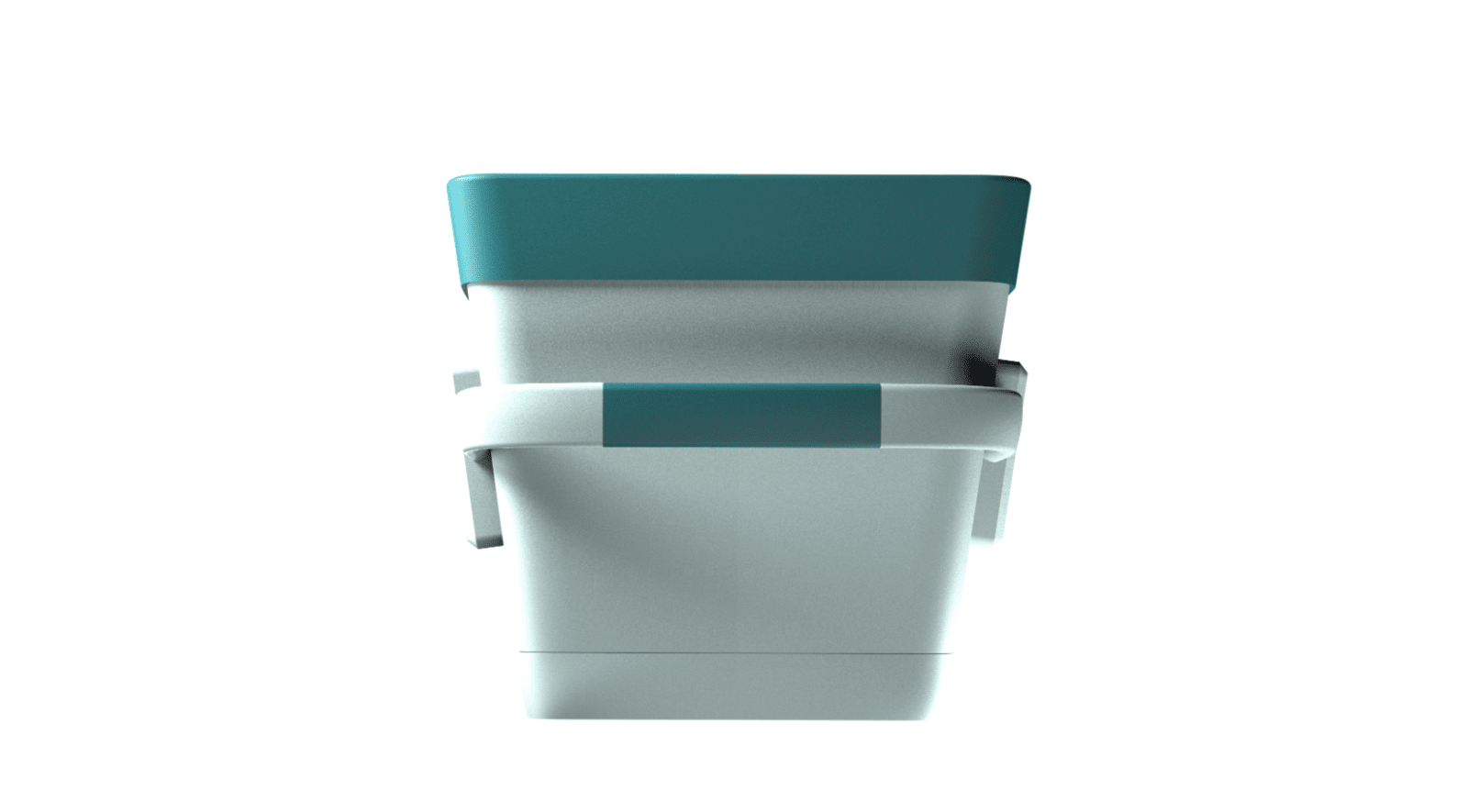
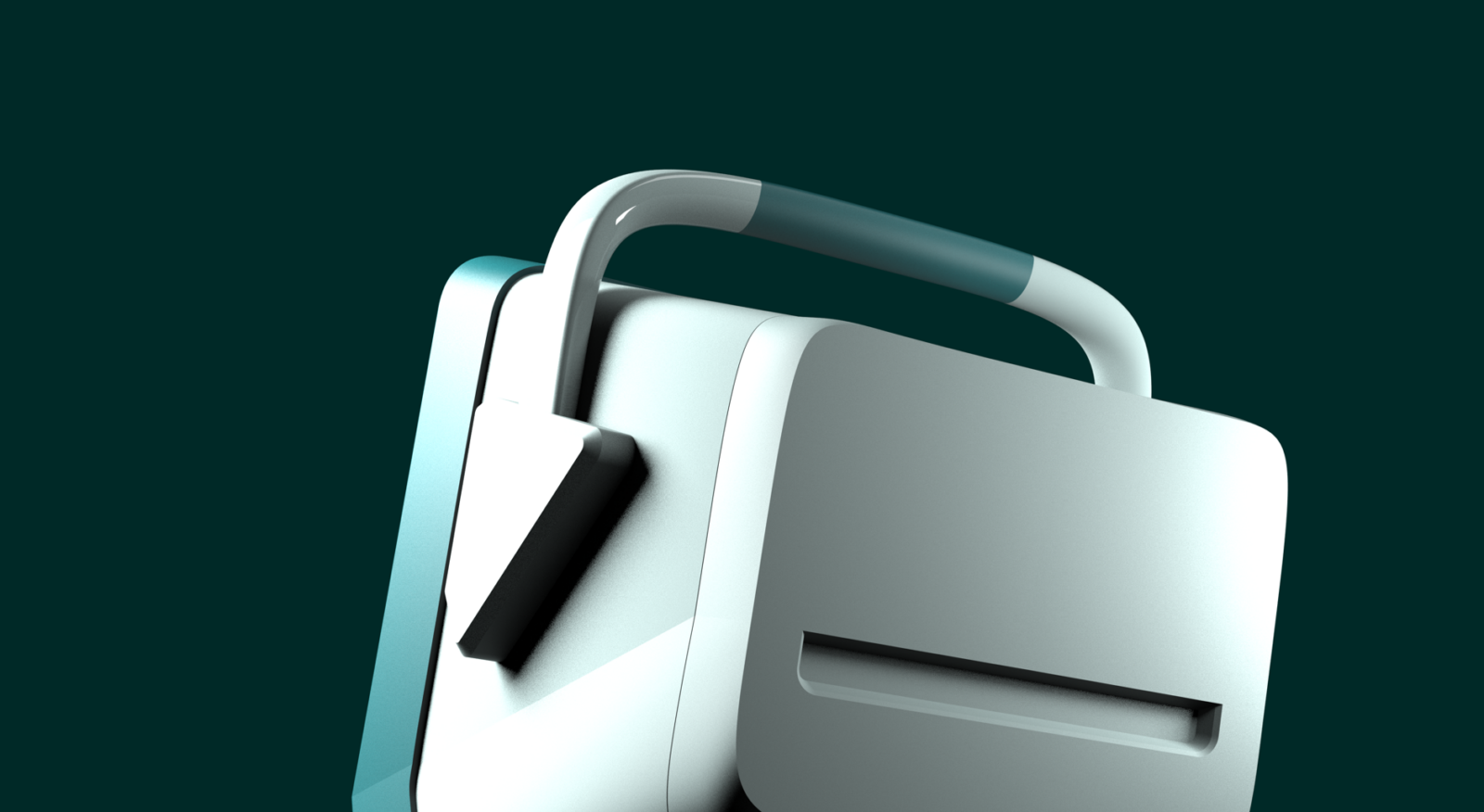
The monitor is the main unit, featuring standard internal components such as a processor, touch interface, transmitters, and receivers. Thermal printing is used for physical copies of the reading and is then passed on during handover, readings are typically not transmitted unless the case is highly urgent – this is so that the online infrastructure does not become bloated with low-priority cases. Towards the end is a storage unit housing the wearable and extra supplies such as batteries, disinfectant wipes, adhesive patches, and thermal rolls. Hospital-grade disinfectant is necessary due to the circumstances that the wearable component will be used, after each case the bands will need to be cleaned.
Field ruggedness is a key component of paramedic equipment; the device’s housing is made from an injection-moulded ABS PC blend, which is known for its strength and resistance. For added protection, there is a layer of rubber overmould on the handle and towards the front. Everything is covered with a matte finish to reduce glare, scratches, and add further grip.
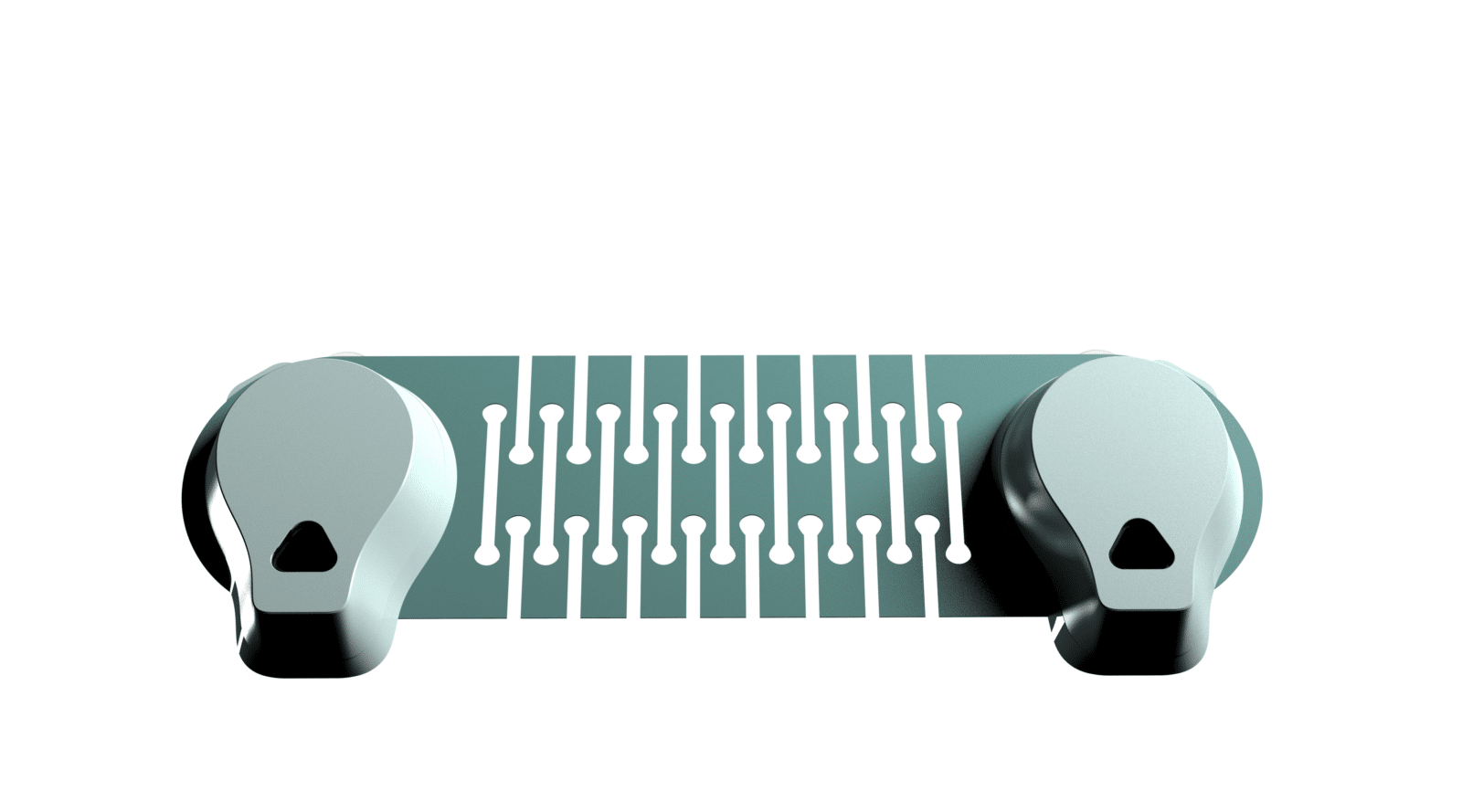
RCG Wearable
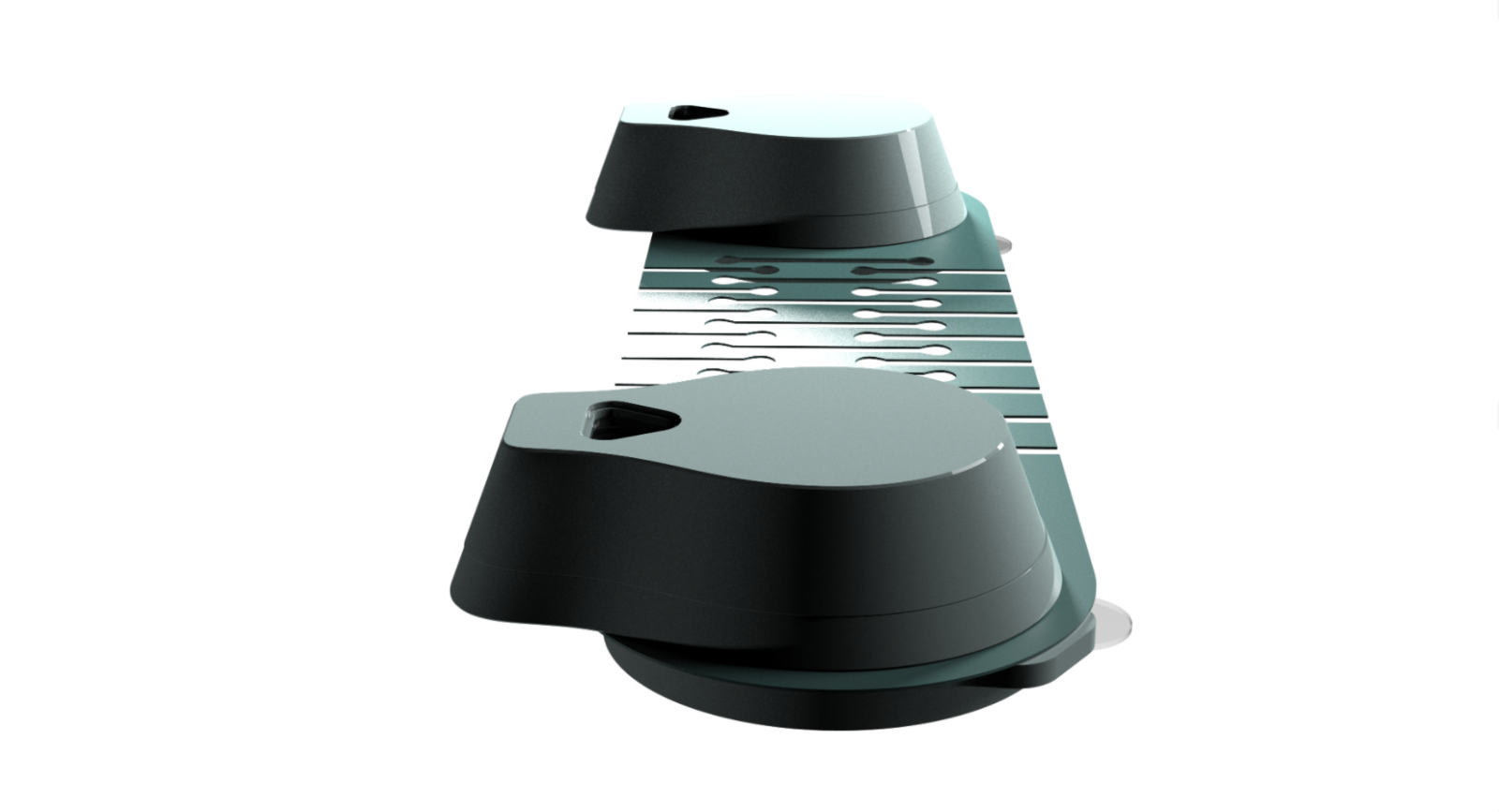
The RCG wearable features two radio frequency nodes attached by a stretchable nylon band via its cutouts. This component prioritises ease of setup so that paramedics can focus more on the patient’s health and not the cable status.
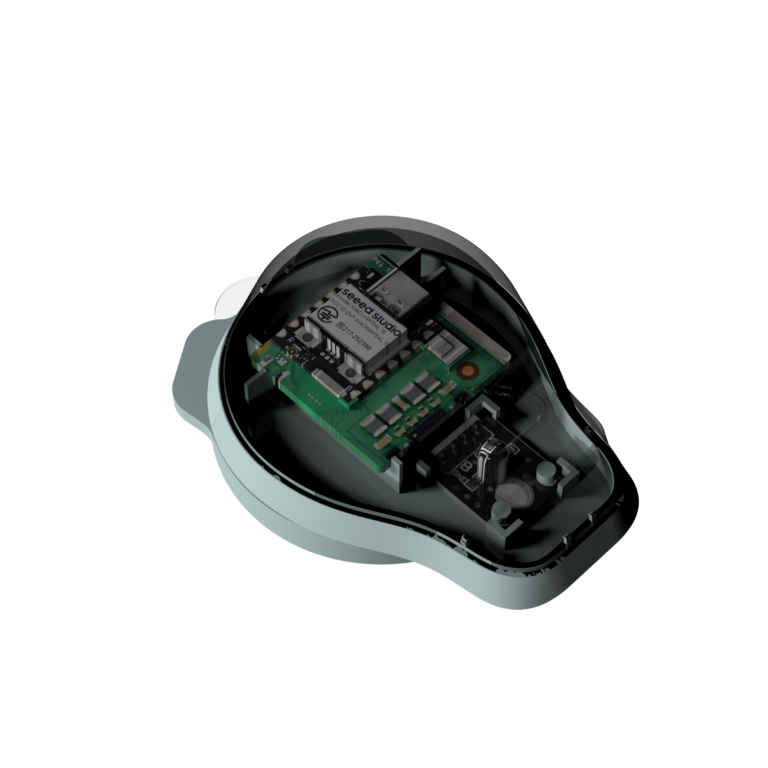
The radio frequency chip featured inside these nodes sends out frequencies to the heart, which bounce back. The data is then relayed to the monitor for analysis and filtering. Each node is powered by a coin cell battery and utilises a single LED module for visual feedback during different tasks.
Wesley Van
Wesley Van is an industrial designer with a passion for turning ideas into tangible products. Industry experience has grounded his practice in design for manufacture, from CAD modelling to CNC milling and laser cutting. Combining technical skill with a people-focused perspective drawn from customer-facing roles, he approaches each project with both practicality and ambition, and aspires to develop tools that bring modelling, sketching and rendering together in one workflow.