bACKGROUND
Ecologists study how living organisms interact with each other and with their environment, and a large part of this job is finding out what’s actually out there. How many of a species are in an area, how diverse a habitat is and how this changes over time. This data is what decisions about conservation and restoration get based on.
To get this data, ecologists conduct field surveys. The most common approaches are to lay a square frame called a quadrat on the ground or run a measuring line called a transect through the site, and record which plants are there and how much ground they cover. Often they’ll also walk an area counting a particular species, and mark where each one is with a GPS so it can be turned into a map later.
Research
Primary research was conducted via two means, these being semi-structured interviews with practicing ecologists, and an online targeted questionnaire. Findings from these methods was broken down with qualitative coding and quantitative bivariate analysis. Interviews and questionnaires focus largely on ecological surveying methods, equipment and data processing.
To support this primary research, an in-depth literature review was conducted in order to gain a clear understanding of past and current surveying methods and equipment, in order to see how these have changed over time, and in order to locate gaps or opportunities within existing methods.
Key findings
The findings of this research suggest that while existing ecological survey techniques such as quadrat or transect sampling are both suitable and functional, the data collection and handling workflow – recording and processing – is a large frustration point to many ecologists and bottlenecks the efficiency of the entire process.
This aligns closely with reviewed literature, which confirmed a heavy reliance on tools such as quadrat squares and GPS units (Sorrells & Glenn, 1991), both of which were identified as highly important to current surveying methods. However, the reviewed literature focused almost exclusively on survey techniques and methods alone, with little mention of data recording or processing – a vital component of the ecological surveying process. This presents an apparent gap, in that existing research addresses ecological surveying, but excludes the tools and workflows of data handling.
The research that has been conducted addresses this gap. Findings revealed that ecologists often use two or more data recording methods in combination, such as paper, phone apps or Excel. This indicates that ecologists are likely re-entering the data across multiple tools from paper or notes app to spreadsheet in a bottlenecked workflow, rather than a streamlined one. As well as this, while satisfaction levels of physical survey tools such as quadrat squares were consistently positive, data input and processing tools were often linked to user frustration. This was not discussed in the reviewed literature, which did not consider equipment satisfaction levels or process efficiency.
By identifying this gap between established survey techniques and the under-supported data handling, this research outlines new findings relevant to a design intervention with the purpose of improving or streamlining ecological surveying. Rather than redesigning effective tools like quadrat squares or transect lines, meaningful opportunities are centered around the data recording, input and processing stages of the ecological survey process.
design problems
Several key design problems were identified through the analysis of interview and survey data, primarily in relation to how field data is recorded and processed once collected.
– Fragmented recording process: Most ecologists use two or more data recording tools/methods in combination with each other (Excel 94.1%, phone apps 76.5%, paper 64.7%) instead of a single integrated or streamlined system. This implies that data is often recorded once in the field via paper or a phone application such as notes, and then manually re-entered later into more formal spreadsheets, graphs and figures. By inputting data twice, this not only lengthens the process, but also increases the risk of error.
– Low satisfaction with data input and processing tools: While physical data collection and observation tools such as quadrats and transects were viewed positively, data input and processing tools were often linked to frustration in both interviews and surveys.
– Desire for automation: Interview analysis revealed a desire for automation around data input and report writing. This theme was the most mentioned sub-code across both interviews.
design opportunities
These outlined problems point toward several clear design opportunities, primarily focused on integrating and automating the data recording and handling process, not redesigning existing ecological surveying techniques.
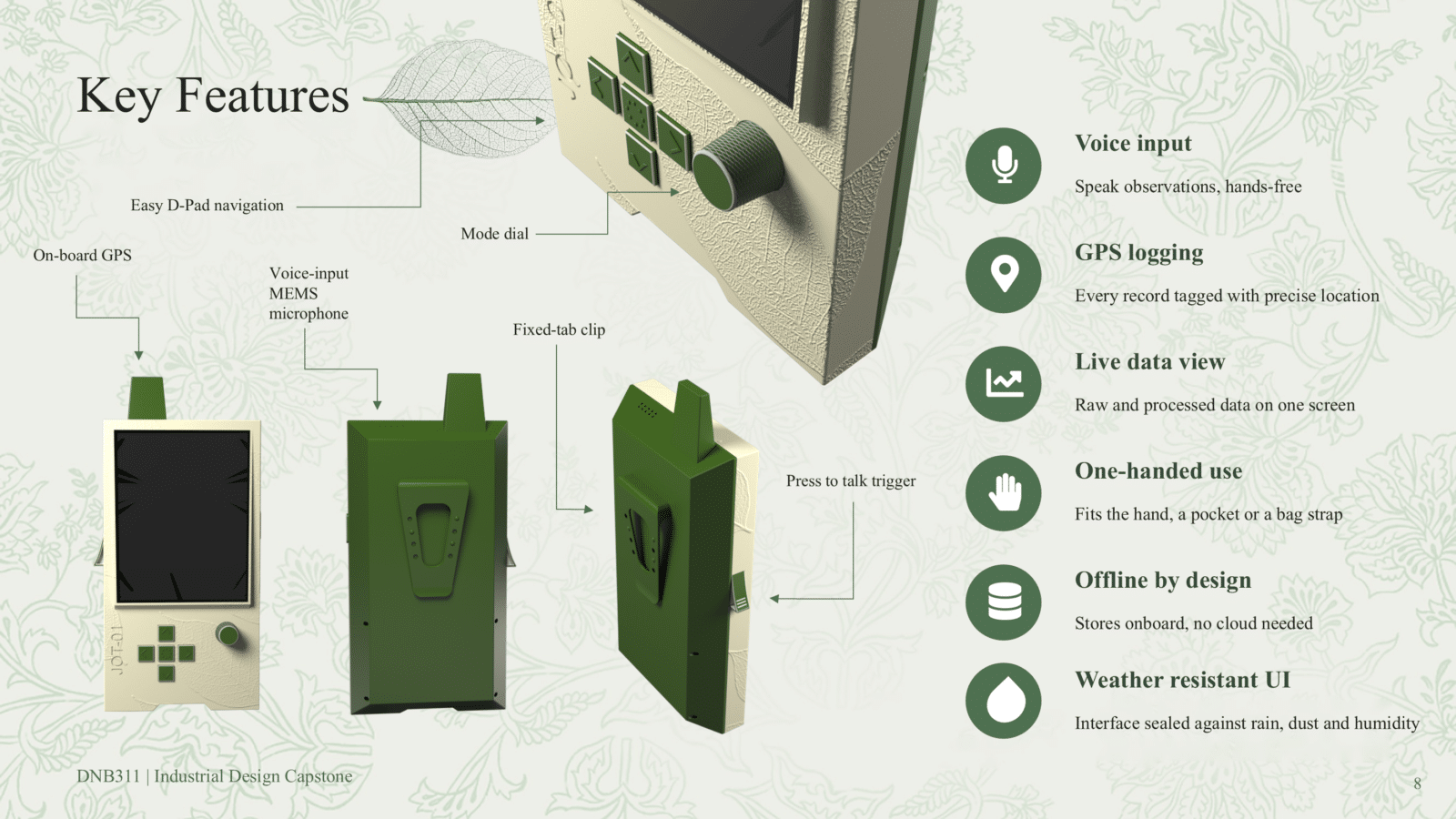
– Integrated multi-functional equipment: Survey participants specifically made suggestions of integrating multiple pieces of equipment into a single integrated device, rather than relying on separate standalone equipment. This directly responds to the fragmented data recording process as mentioned above, as an integrated device could potentially reduce or eliminate data re-entry across multiple methods, therefore simplifying and streamlining the process.
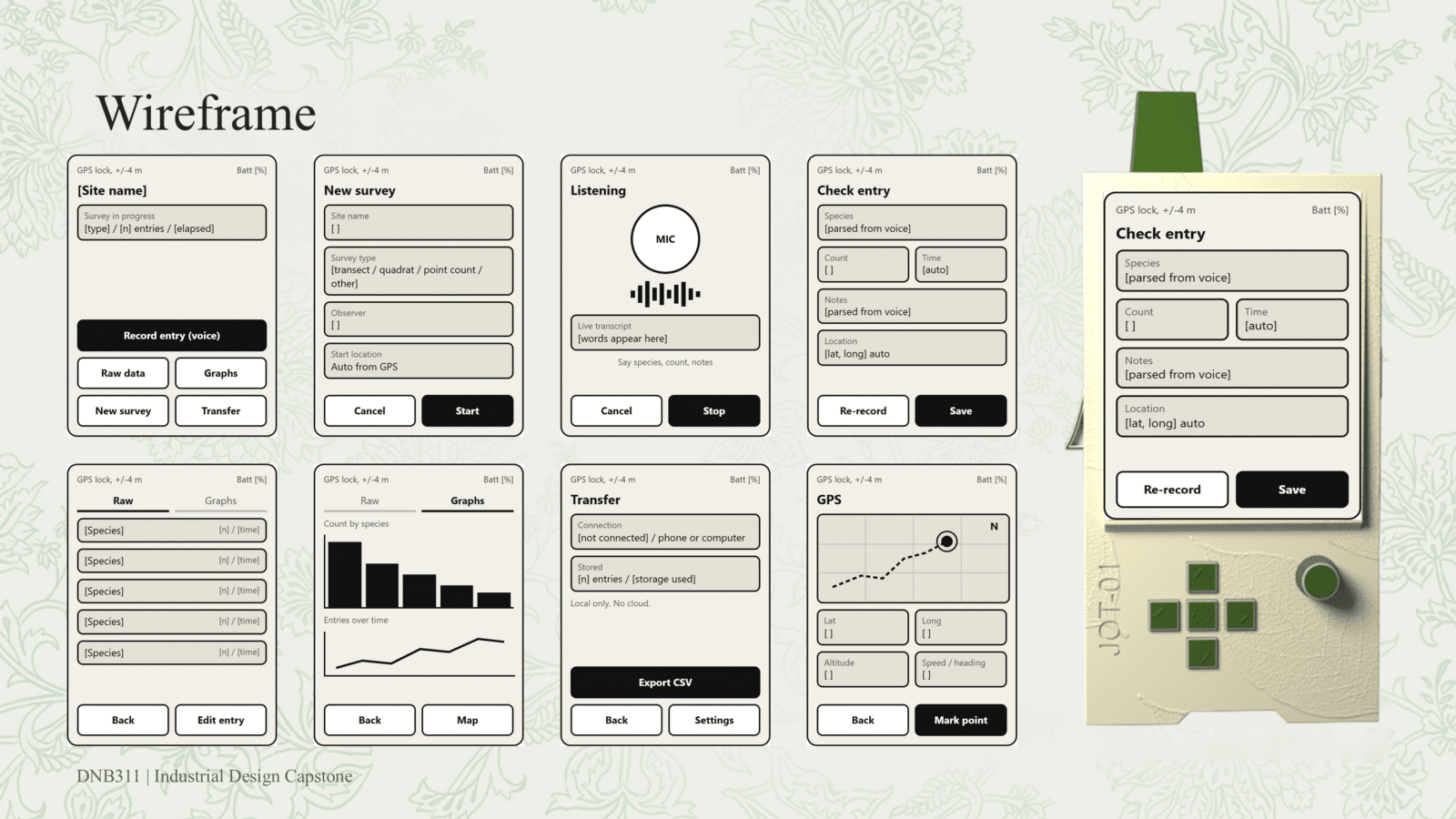
– Voice input for hands free, streamlined data input: Research suggests that integrated devices incorporating voice input as a method of data recording without manual entry, therefore reducing reliance on paper based and phone-based note taking which later needs to be transferred into the necessary tables and figures.
– Automated data input and processing: As automation for data input and report writing was frequently mentioned during interviews, there is a strong opportunity to reduce manual and repetitive data handling tasks through automation, which directly addresses this frustration point.
- Name
- Data in the Wild: Designing for the Realities of Fieldwork
- File Type
- application
- File Size
- 1 B
- Link
- Download File
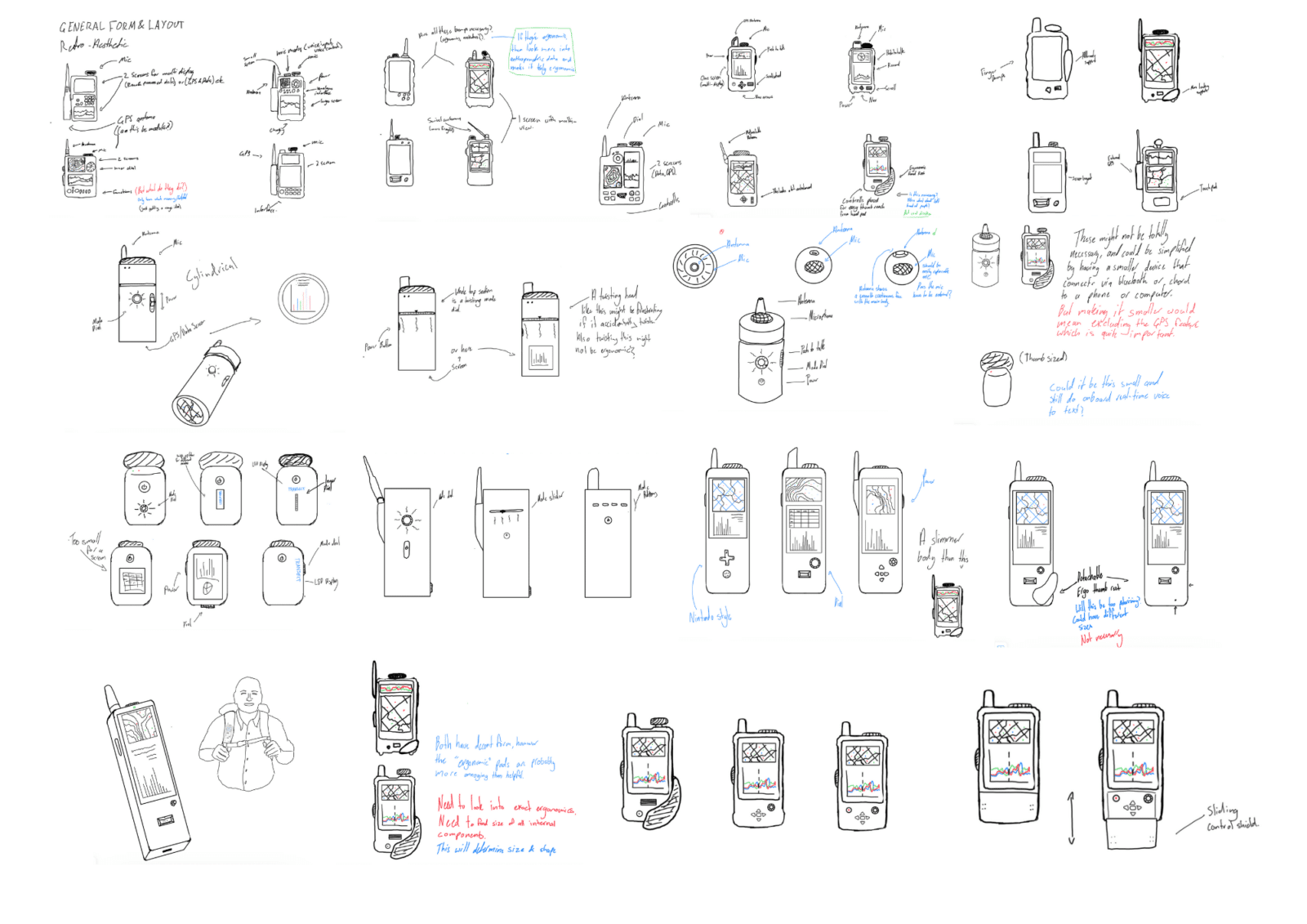
Design ideation sketching
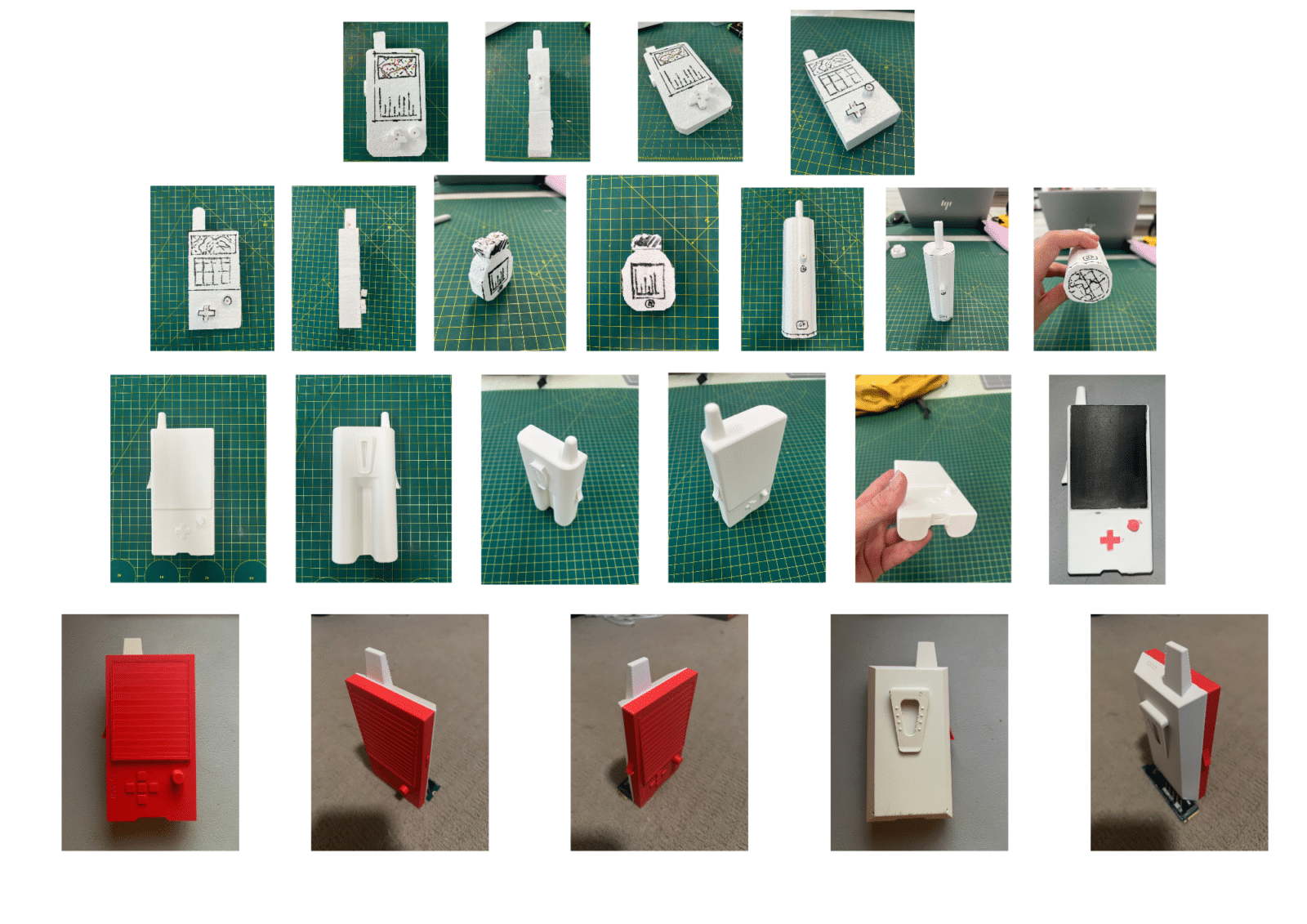
design ideation prototypes
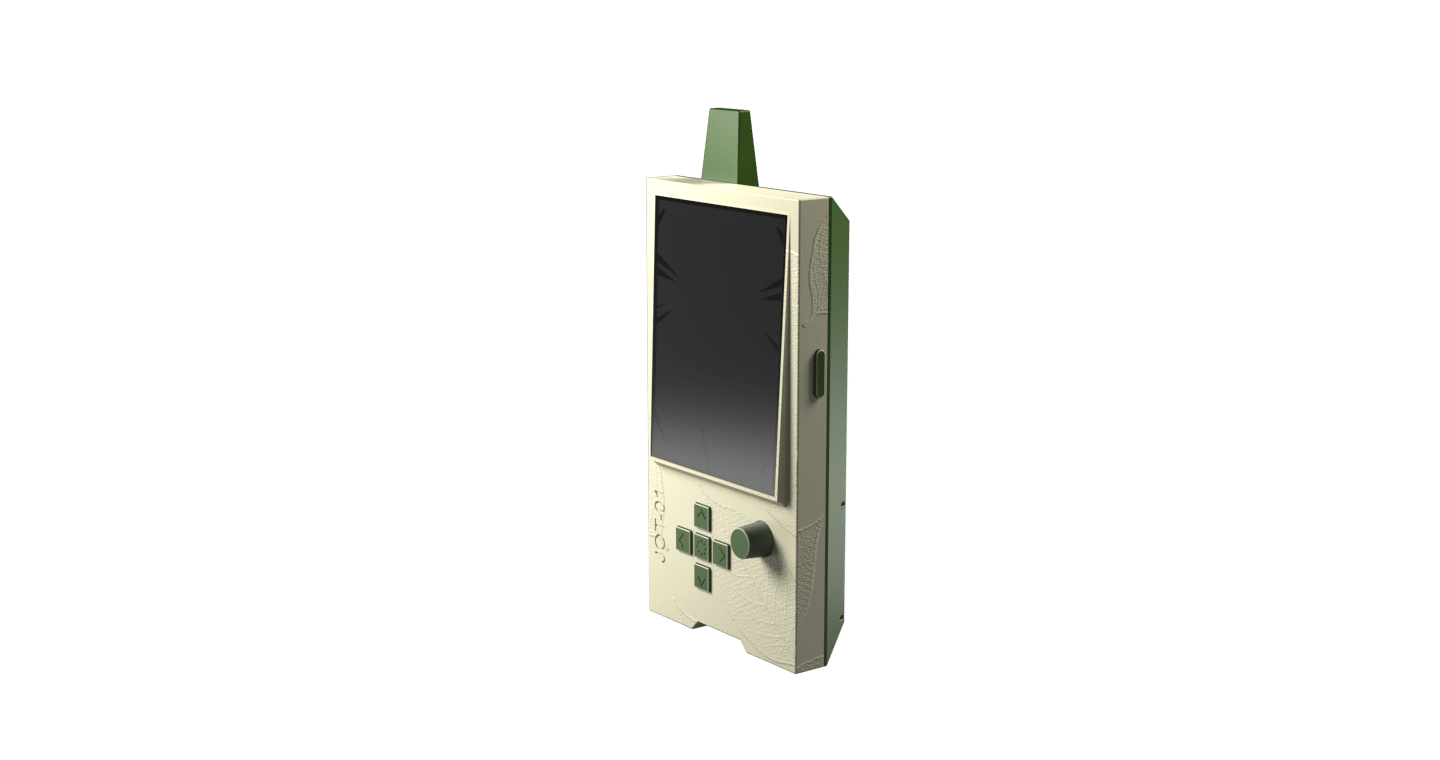
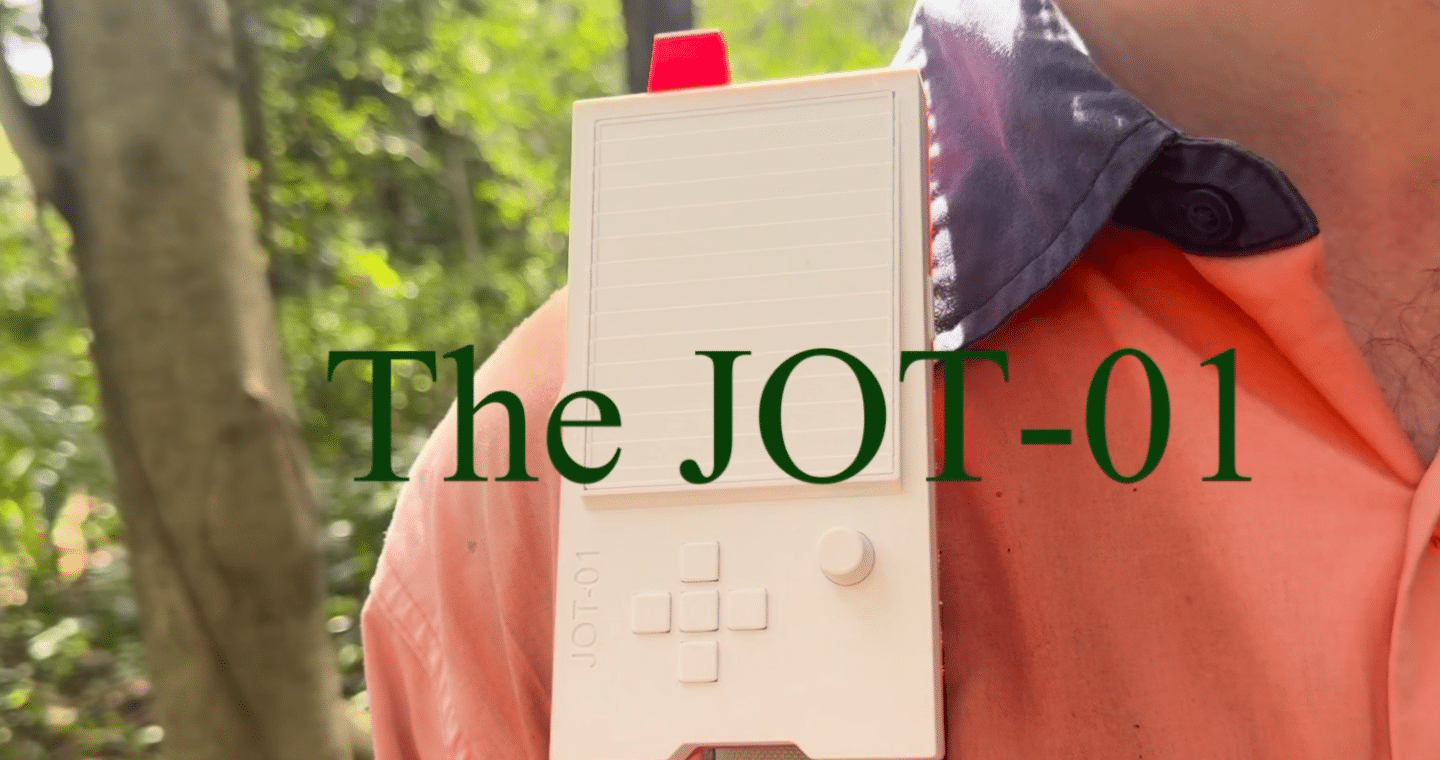
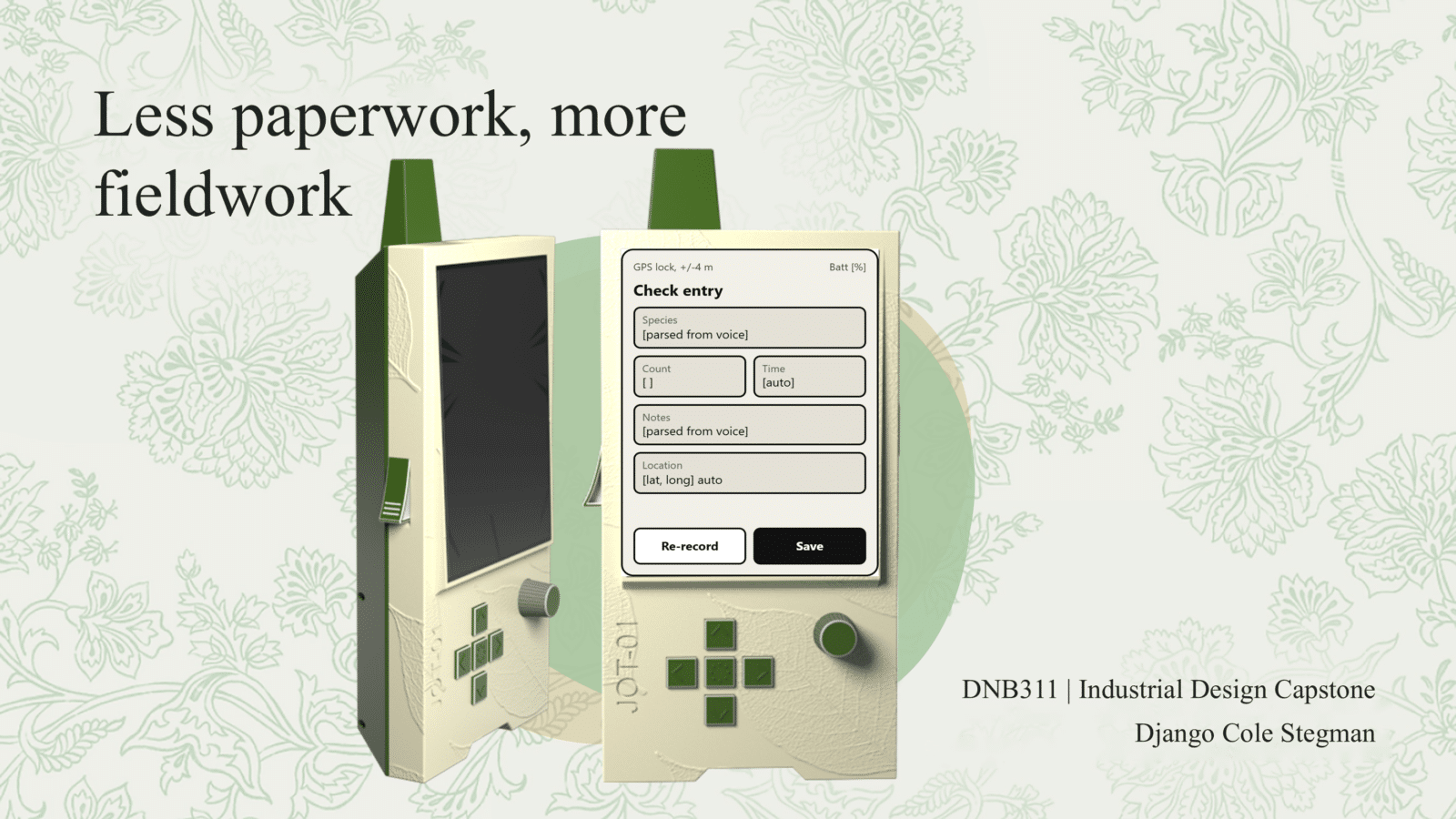
the solution