Industrial - Bachelor
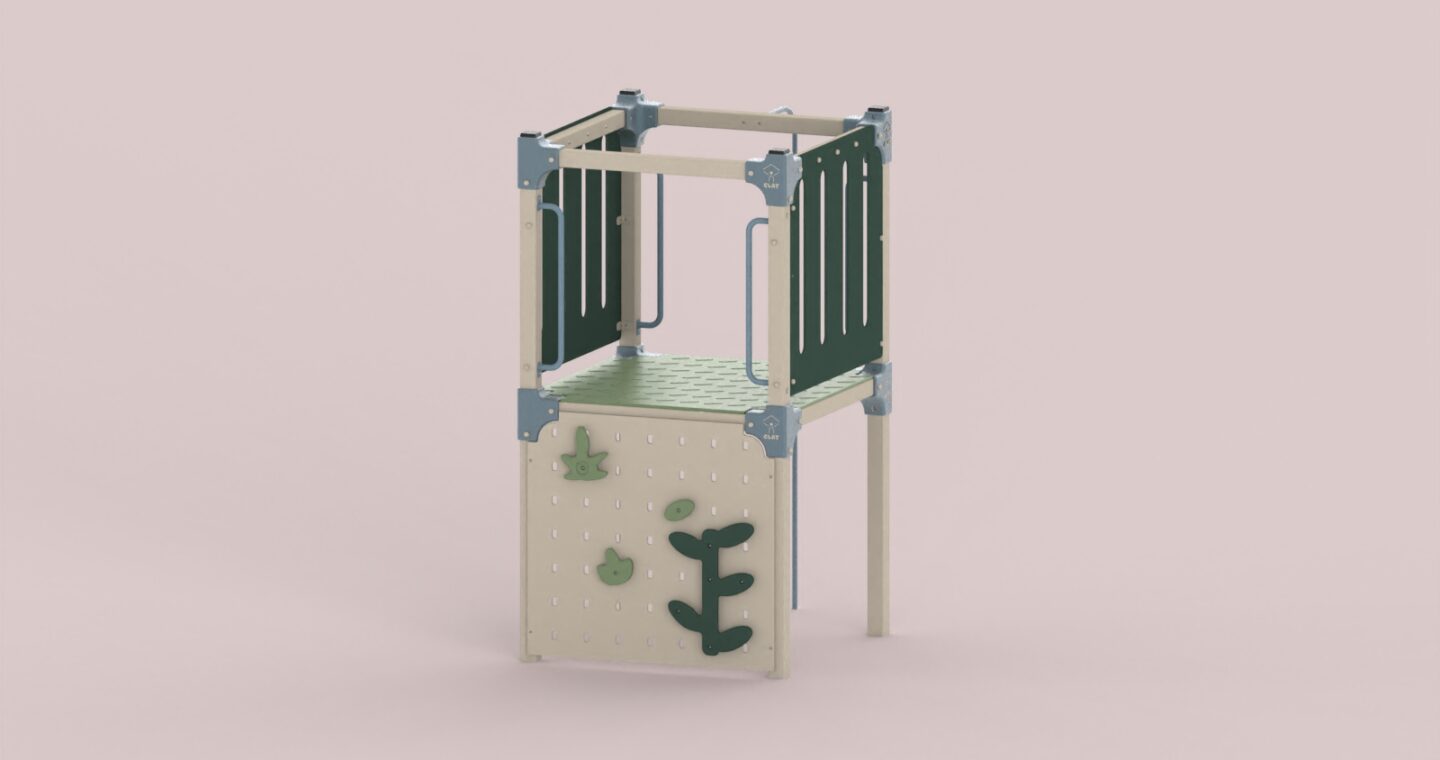
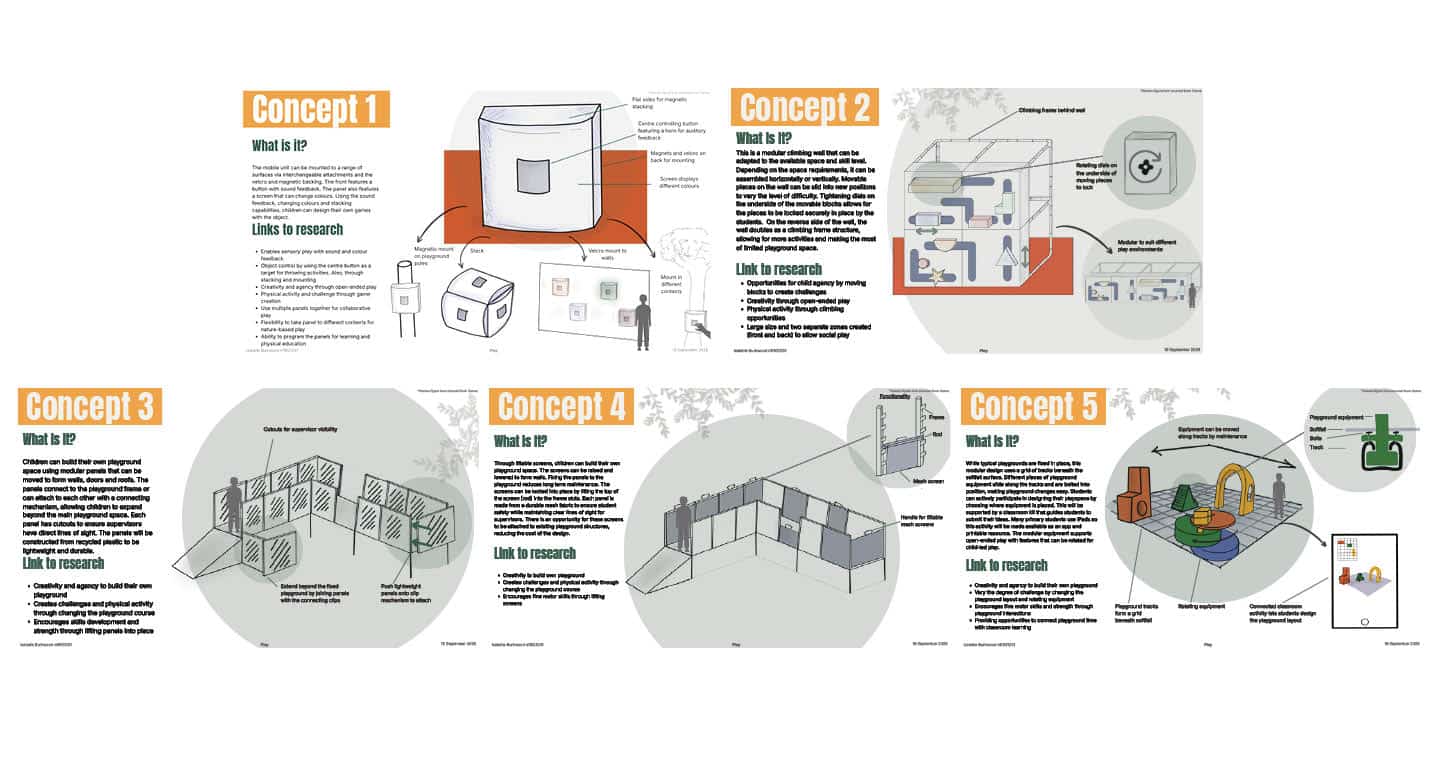
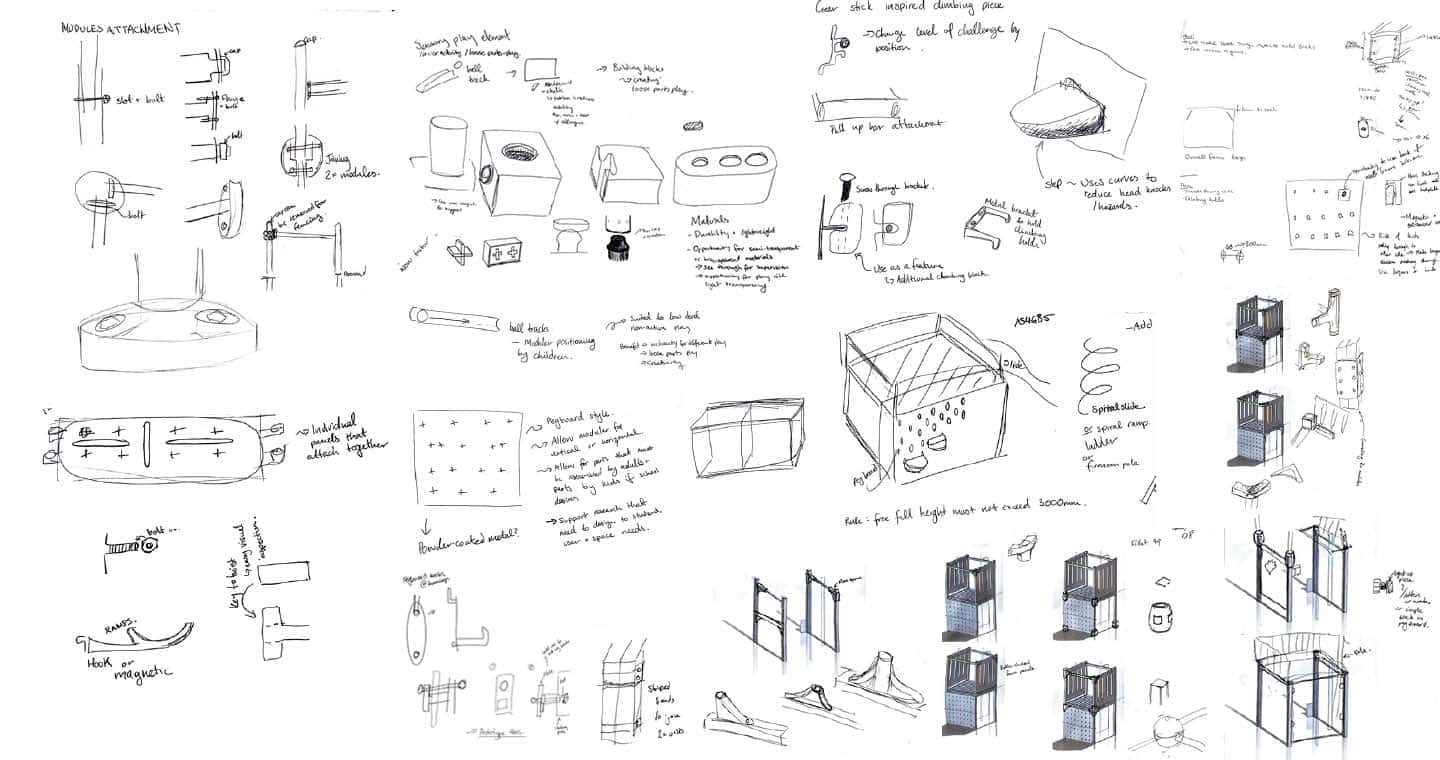
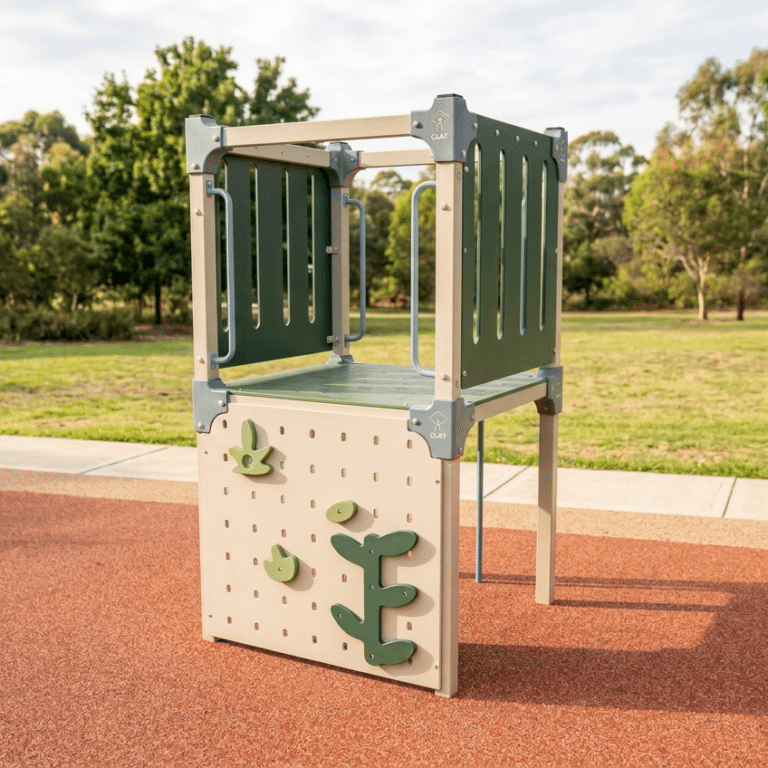
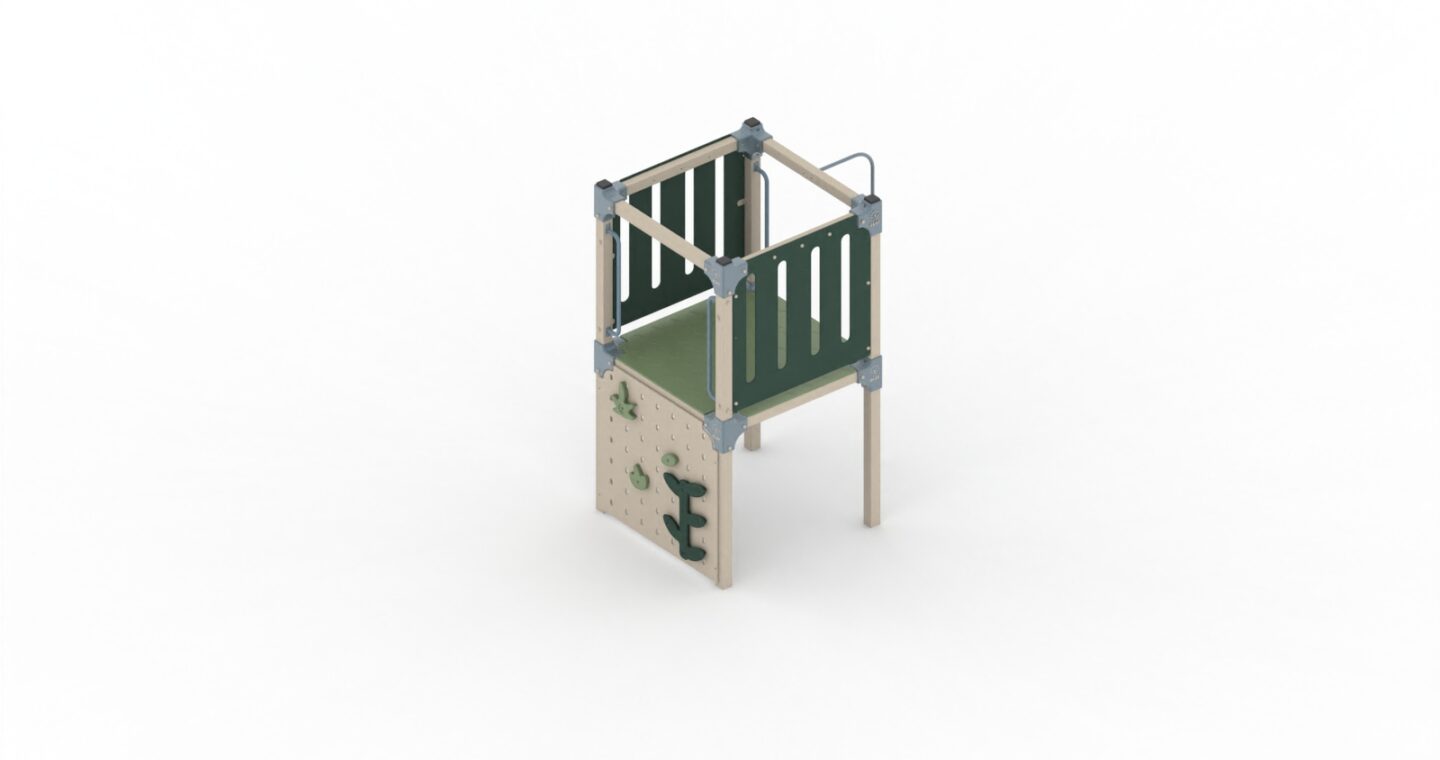
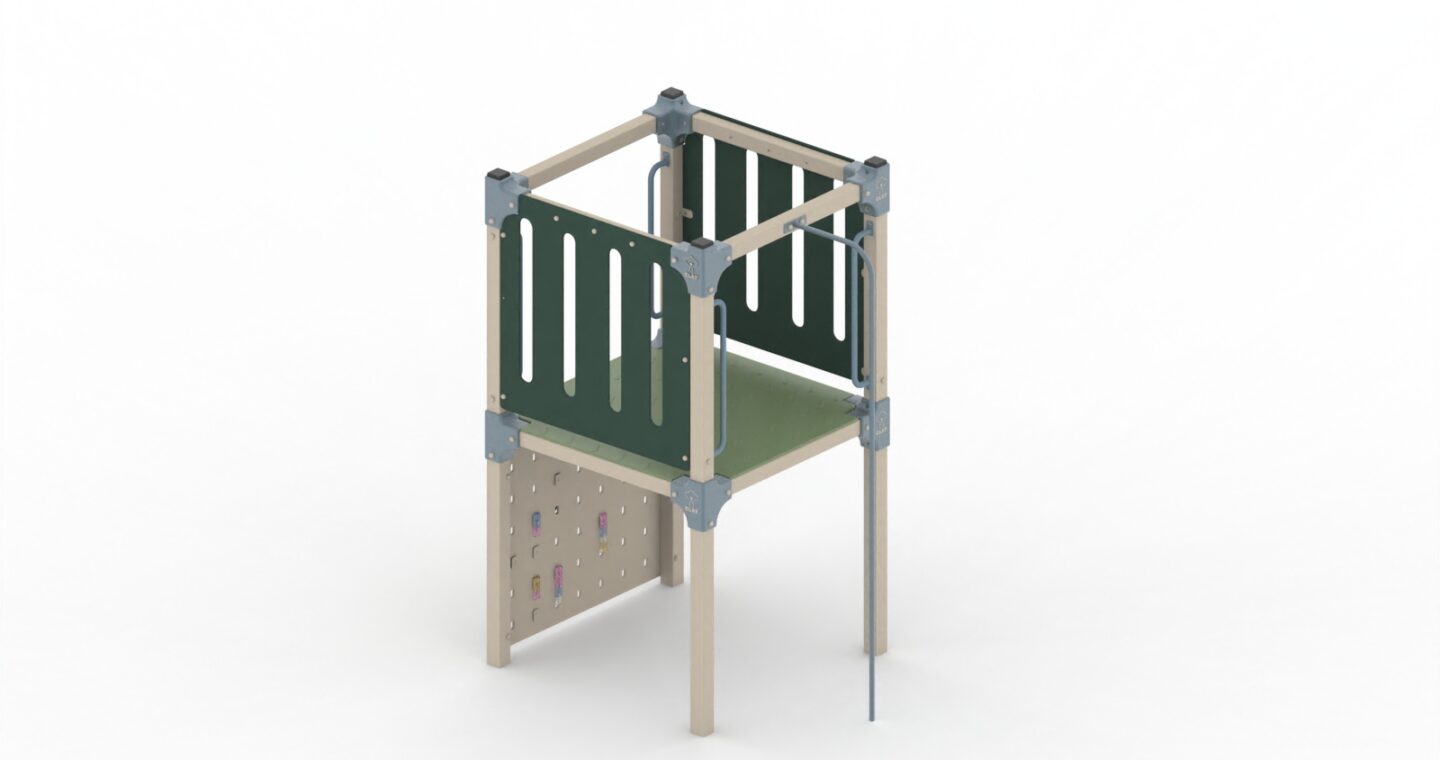
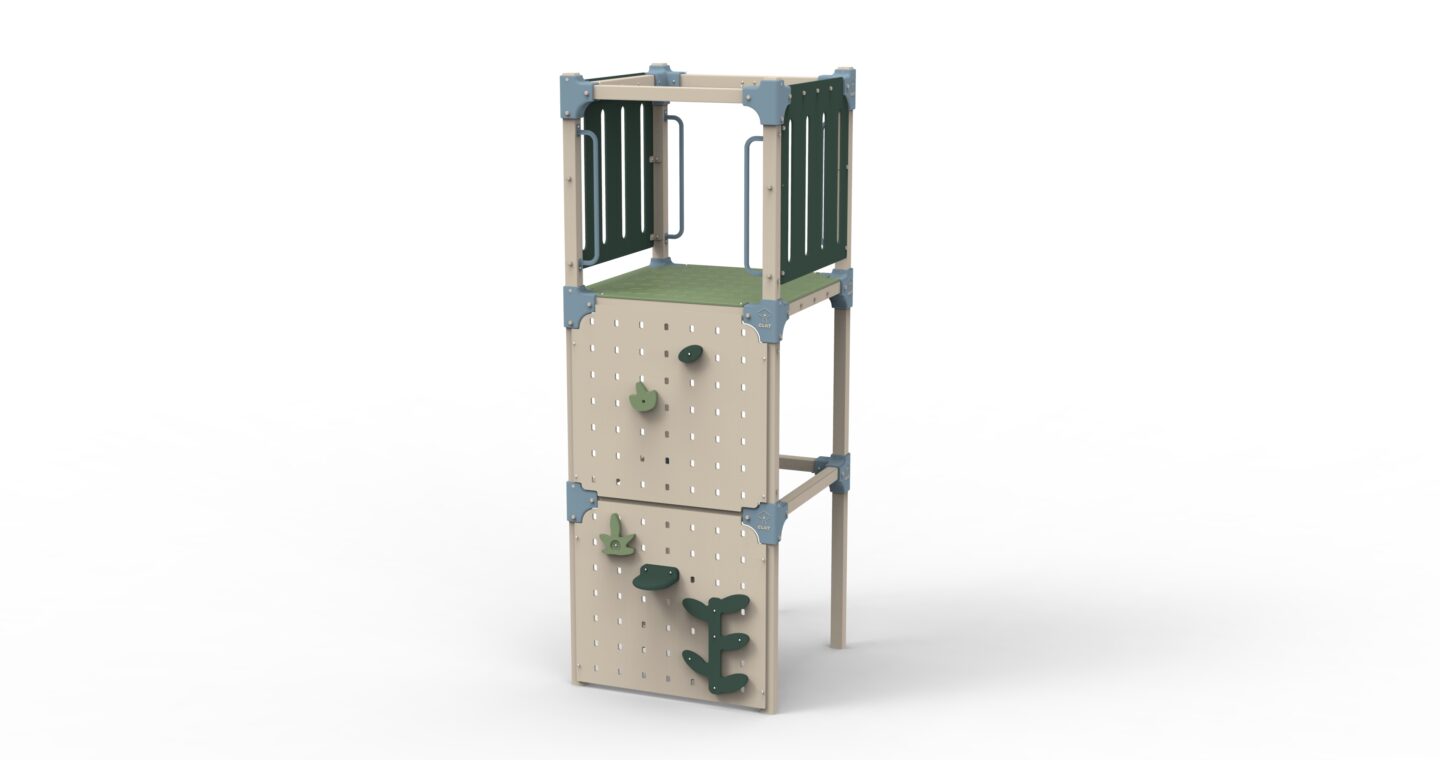
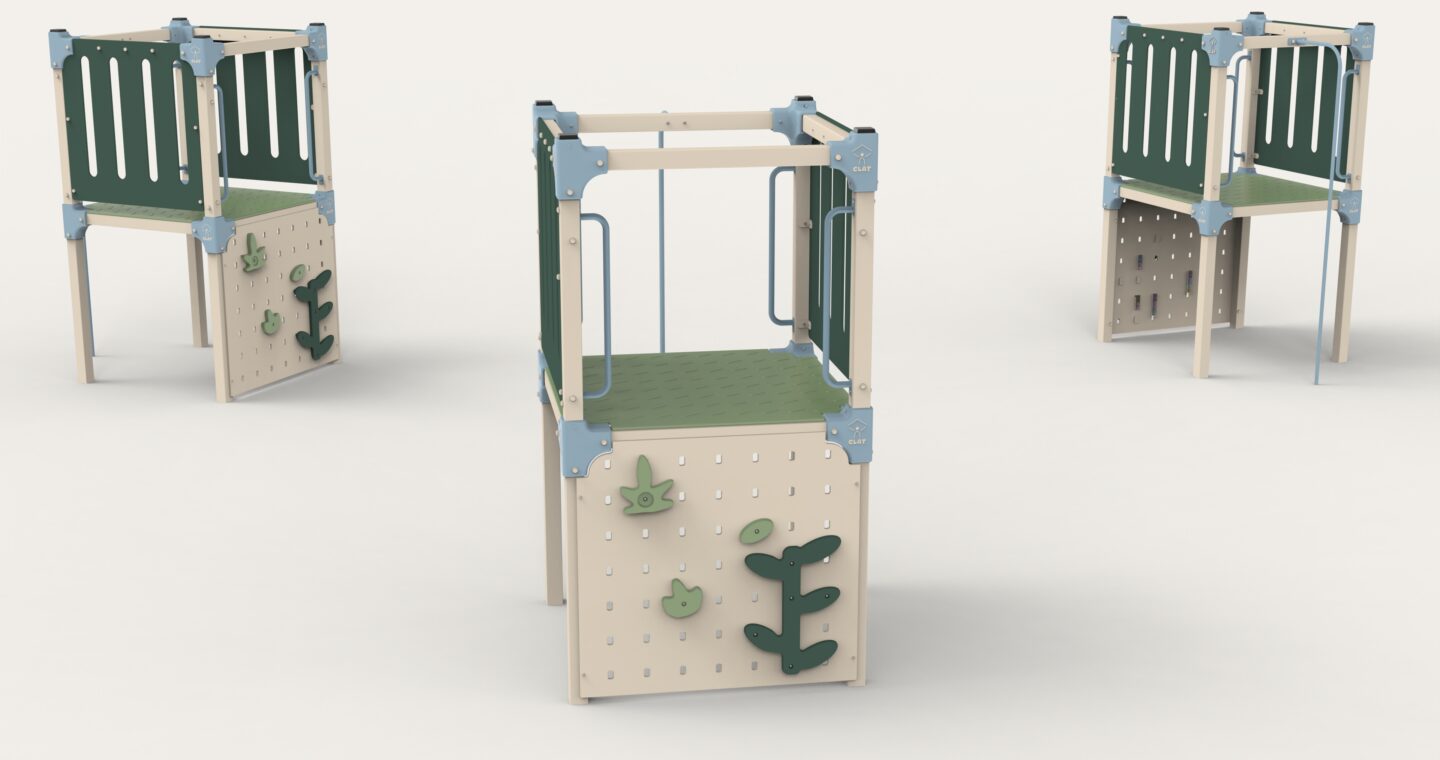
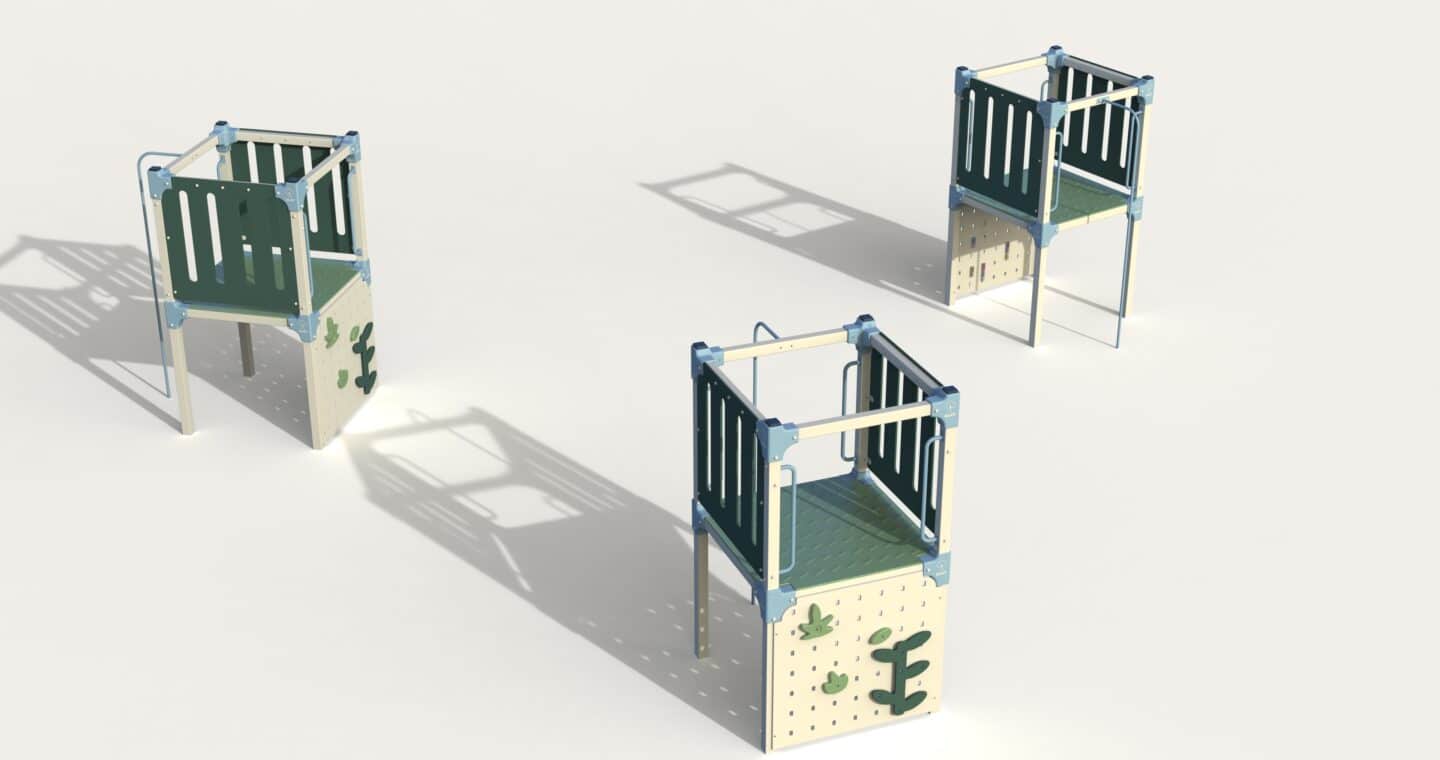
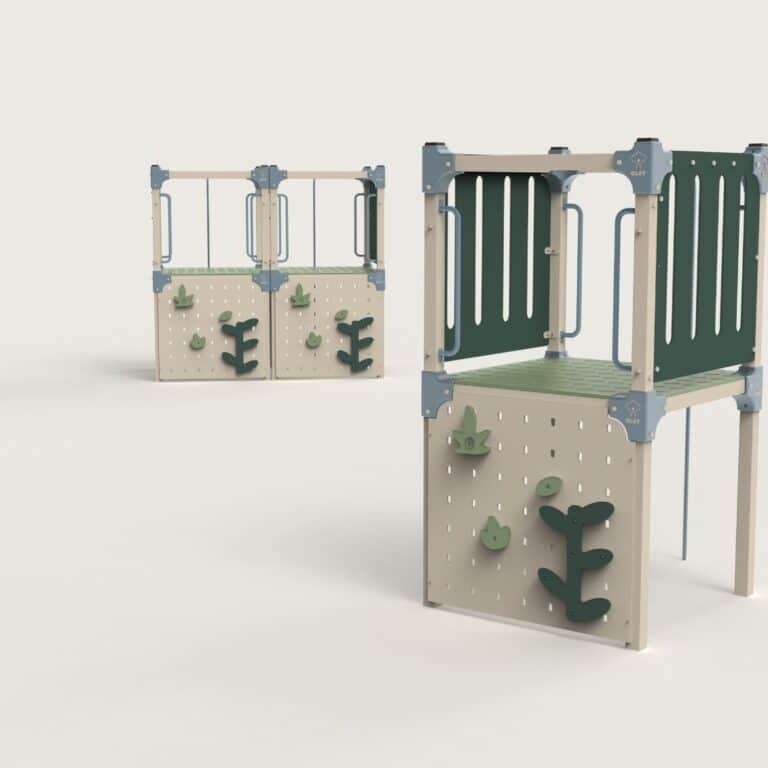
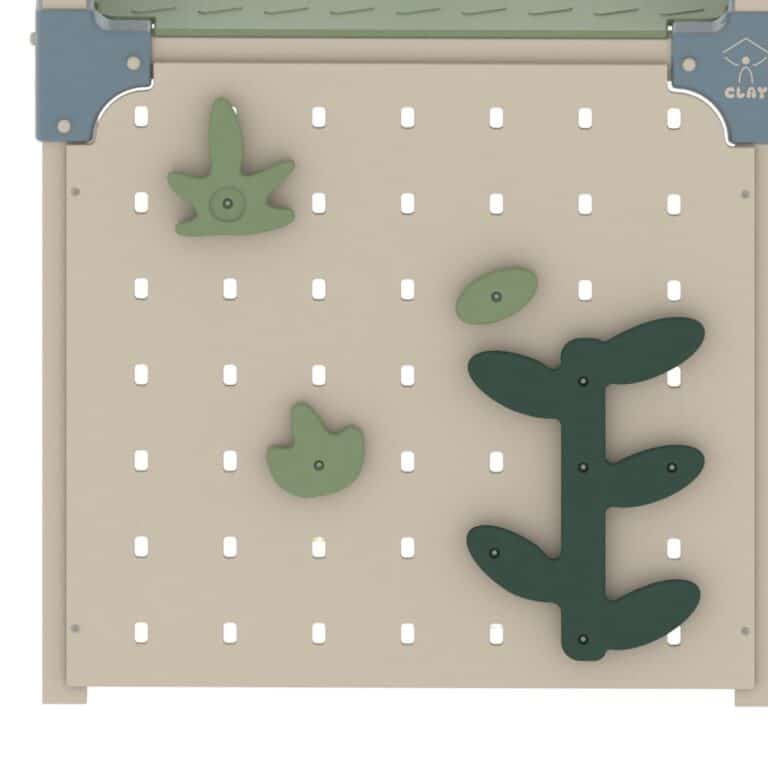
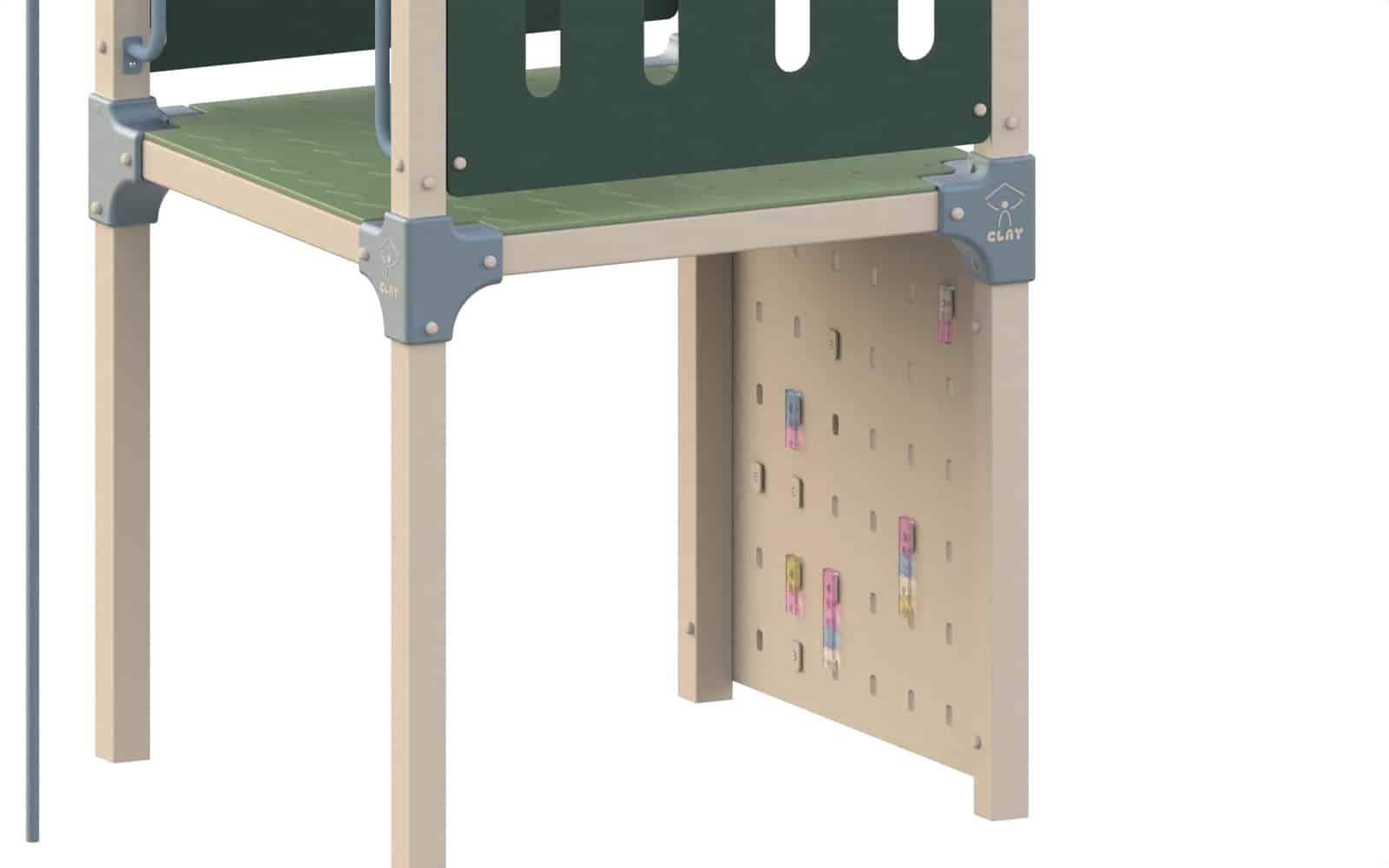
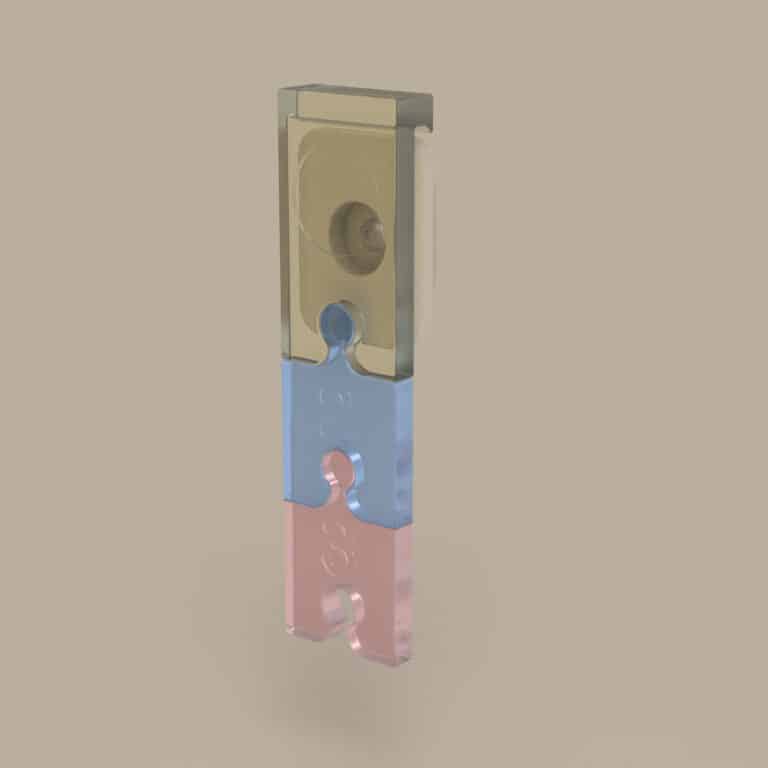
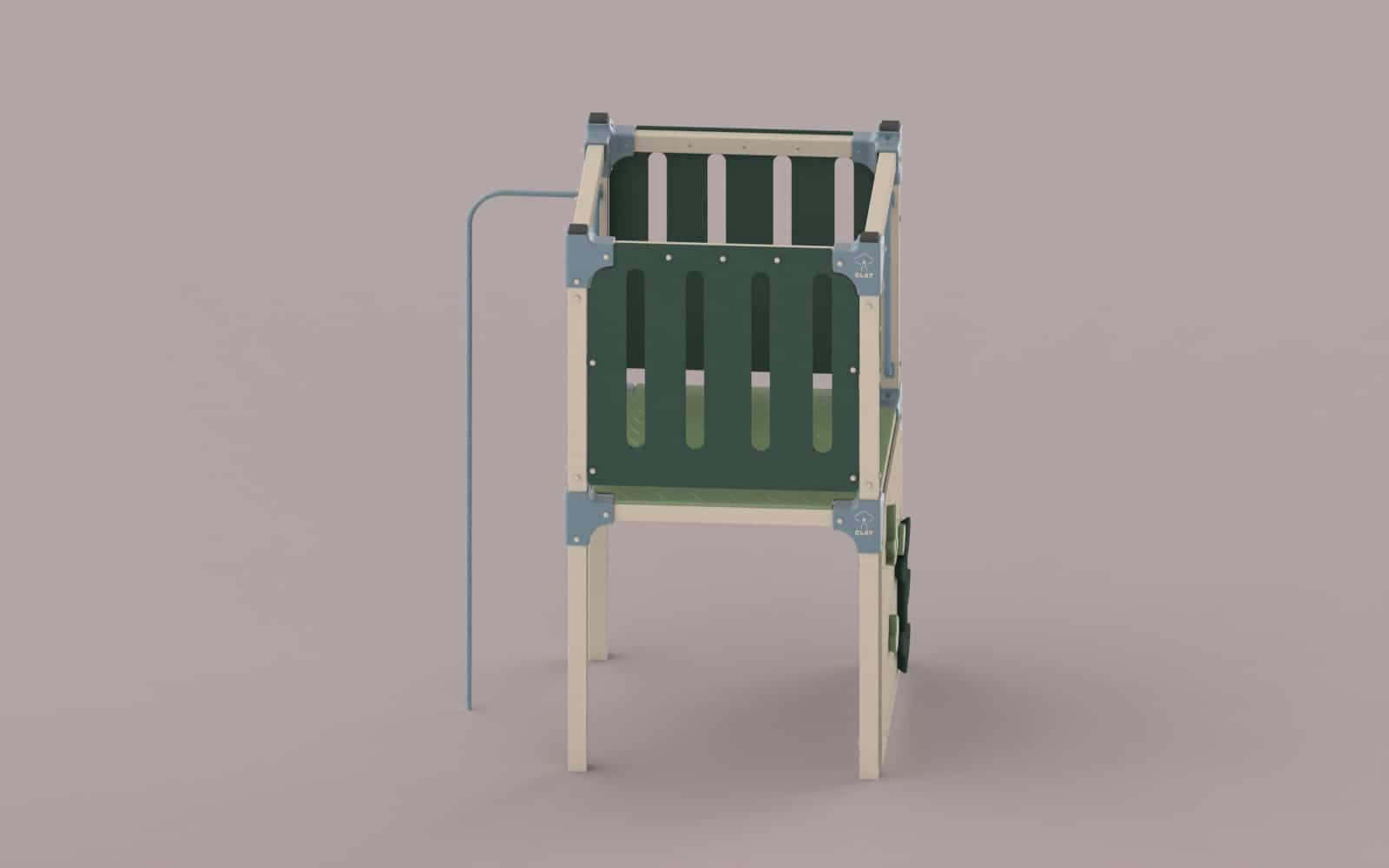
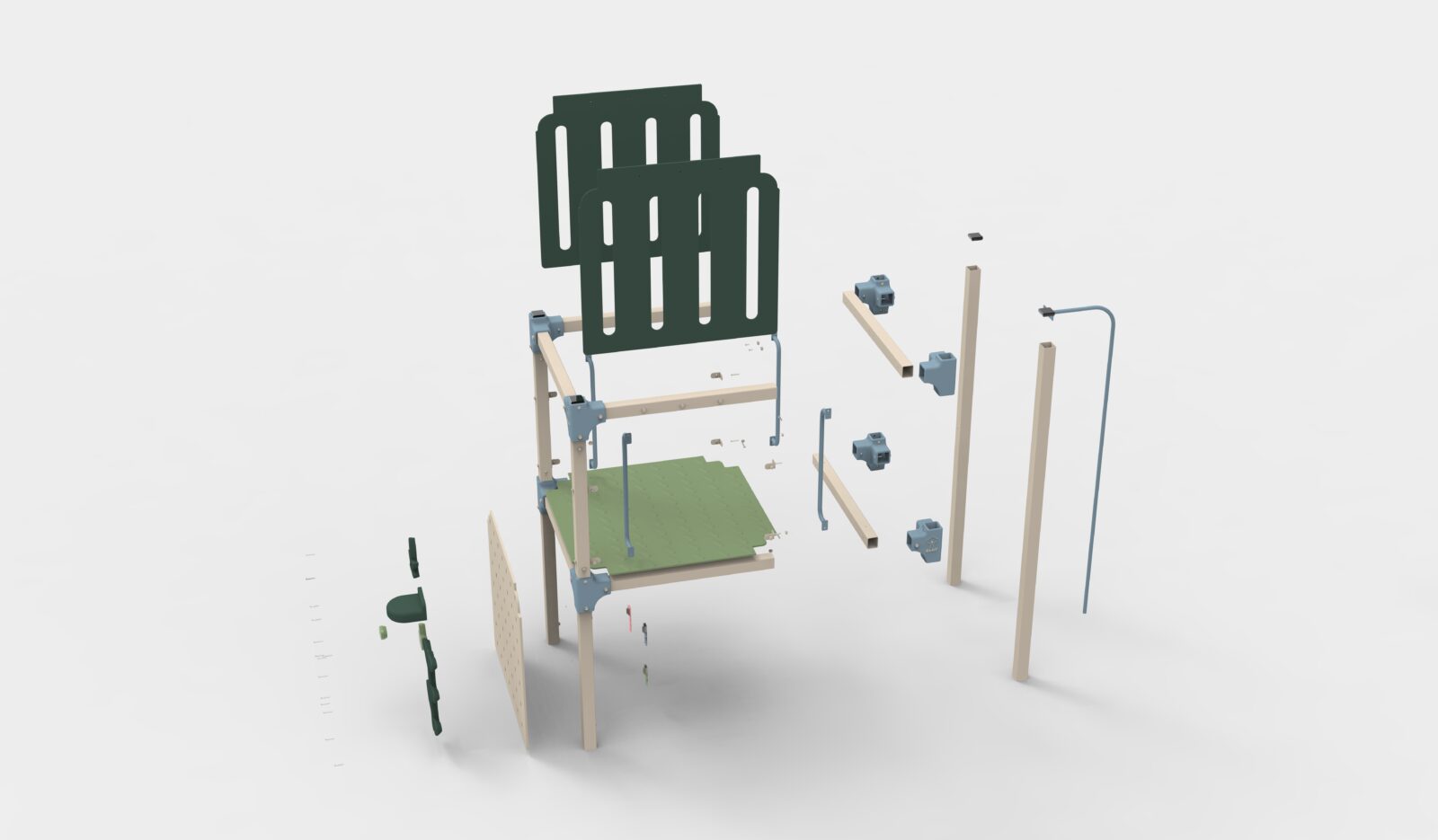
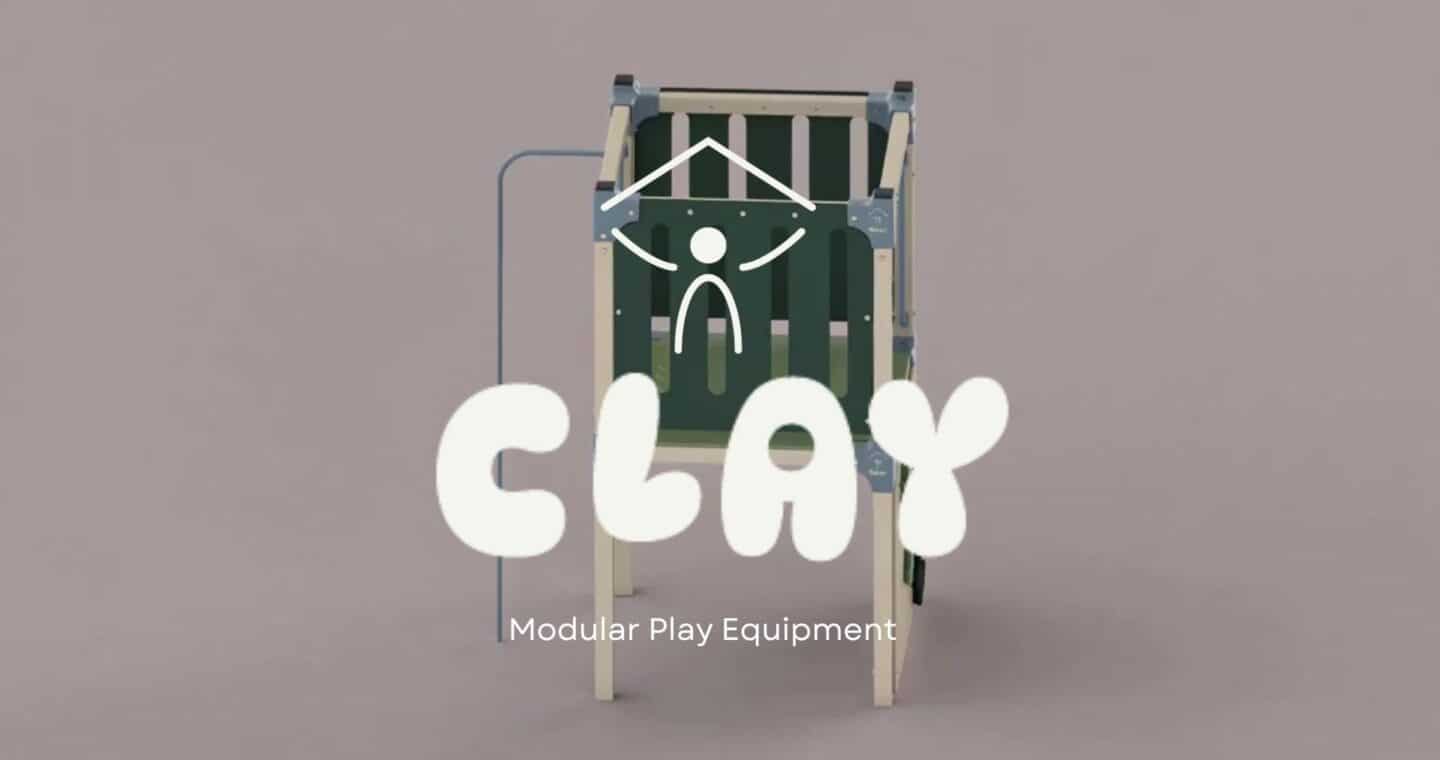
CLAY is a modular playground system for primary schools that gives students agency in the design of their play space. Climbing holds can be periodically moved and rearranged on the pegboard wall in response to student-led designs. On the reverse, puzzle block pieces support creativity and the development of fine-motor skills. Like clay, this playground can be shaped and adapted to suit the evolving needs of its users.

Play is vital to a child’s development as it supports building cognitive, social and physical skills. Within schools, playgrounds form the primary context for play during break times, influencing student interactions and activity. Primary school is a critical period for children to develop healthy behaviours, including physical activity. As a convergence point for social interactions, physical activity and learning, the playground should be carefully designed to enhance value.
A key challenge is balancing opportunities for beneficial risk-taking with safety considerations. As standards and requirements have evolved, it is increasingly important to prioritise and support the child’s development while reducing hazards. Playgrounds must also accommodate many students at a time, often in a limited space. In some schools, increasing student numbers and new classrooms are further diminishing the available space for play.
School playgrounds can account for up to 50% of a primary school student’s recommended daily physical activity. For some children, access to physical activity is limited outside of school. The playground provides an opportunity to engage in an easily accessed and supervised space.
Developing physically active habits in primary aged students can be beneficial as studies indicate that active children are more likely to continue being active into adulthood. This has a broader impact when considering the global public health priority of increasing physical activity to prevent chronic diseases.
This is particularly relevant considering a trend of children increasing sedentary behaviour. The 24-Hour Movement Guidelines are developed by the Australian Government and include guidelines for a child’s daily physical activity. For children (ages 5-17) it recommends over 60 minutes a day of moderate to vigorous physical activity. Additionally, 60 minutes of muscle-strengthening activity 3 days a week (such as climbing) and several hours of light physical activity (such as walking to school). In the 2023 National Nutrition and Physical Activity Survey, 18.3% aged 5-17 years met physical activity recommendations and 7.2% met all 24-Hour Movement Guidelines for Australians.
Cognitively, play provides a range of benefits. Research supports that physical fitness can improve working memory, executive control, attention span, and academic performance in children. Additionally, playgrounds can facilitate imaginative play and creative thinking. Physical activity is also shown to assist with regulation and managing mental stress.
From a social development perspective, playgrounds provide opportunities for collaboration and group interactions. Children can explore social and communication skills, developing social competence and resilience. The interactions in the playground are invaluable to social development.
As a result of the early playground movement, play shifted from the early German kindergarten movement (which focussed on educational outdoor nature-based play) to rigid play structures that suited an increasingly urbanised environment and stricter regulatory restrictions. The fixed structures dictate a specific aspect of how the equipment should be used and limit children’s agency.
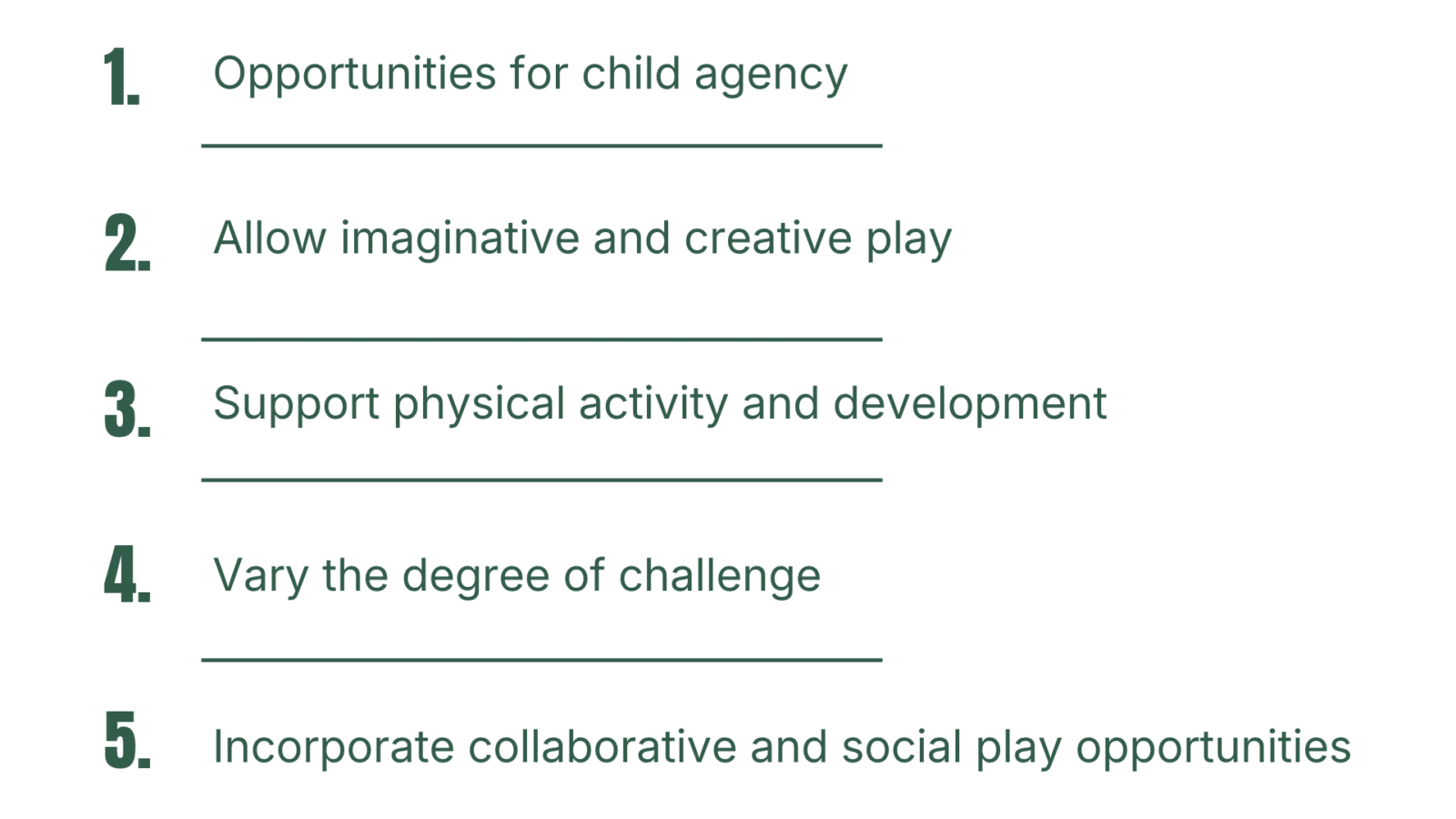
After an extensive focus on safety and regulation, the focus has shifted to the core development needs and whether a playground’s value is diminished. Some organisations are reintroducing free play, outdoor activity, and opportunities for risk, responding to criticism that modern playgrounds are “too safe” and rigid. A loose parts playground is often a collection of mismatched items that resembles a junkyard. The items provide opportunities for kids to dictate the playground environment, taking risks and using creative problem-solving.
A distinction is made between risks and hazards. Risks provide opportunities for children to take control and extend their skills, identify potential outcomes and manage their safety. Hazards, however, are the unexpected dangers that are difficult to see and should be mitigated. Loose parts playgrounds have been acknowledged as useful to promoting risky outdoor play and agency, representing a contrasting approach to traditional playgrounds.

FMS are the foundational skills needed for movement in complex physical activities, such as sports. It includes locomotor, object control and stability skills. These skills should be supported in the play space.
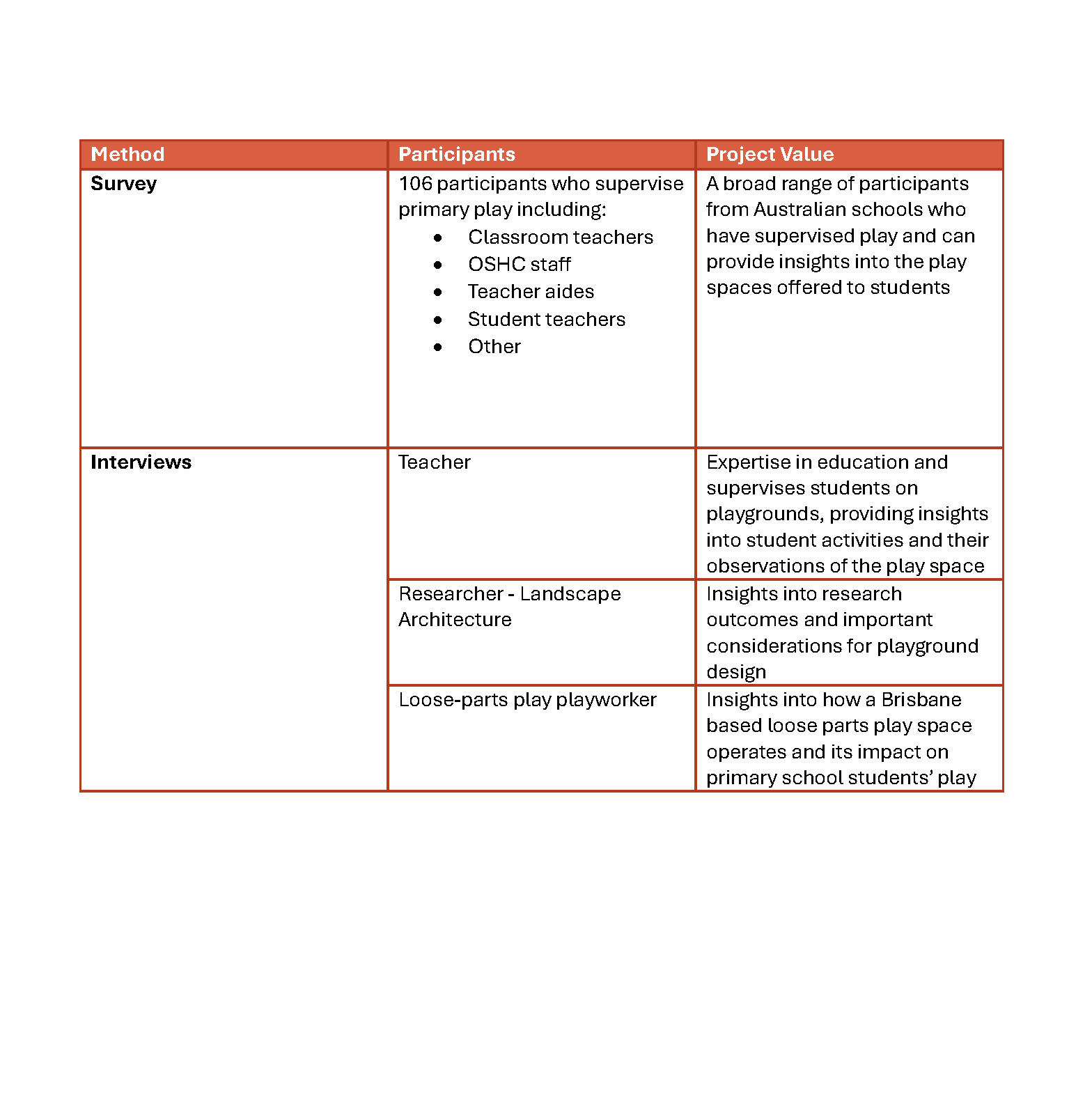
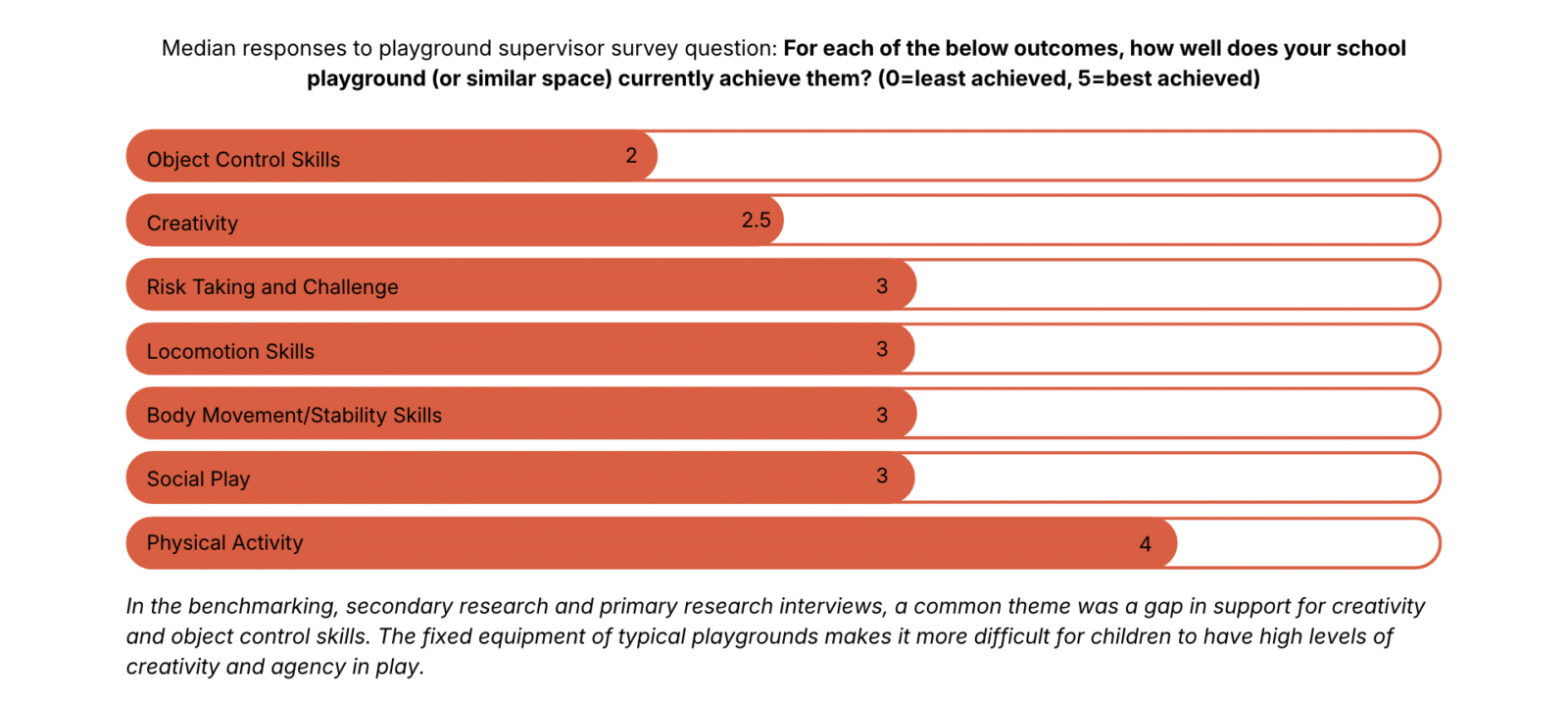
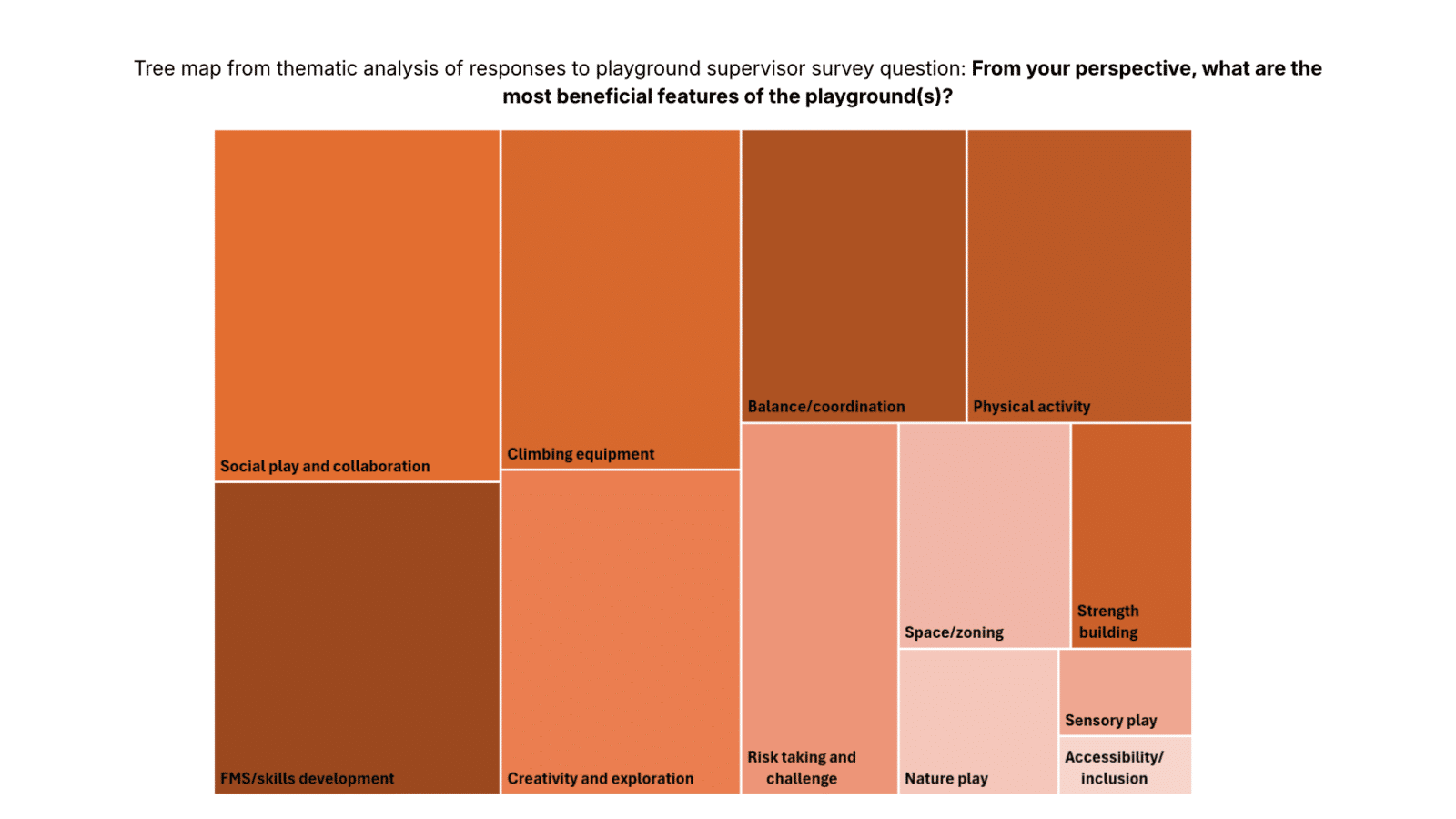
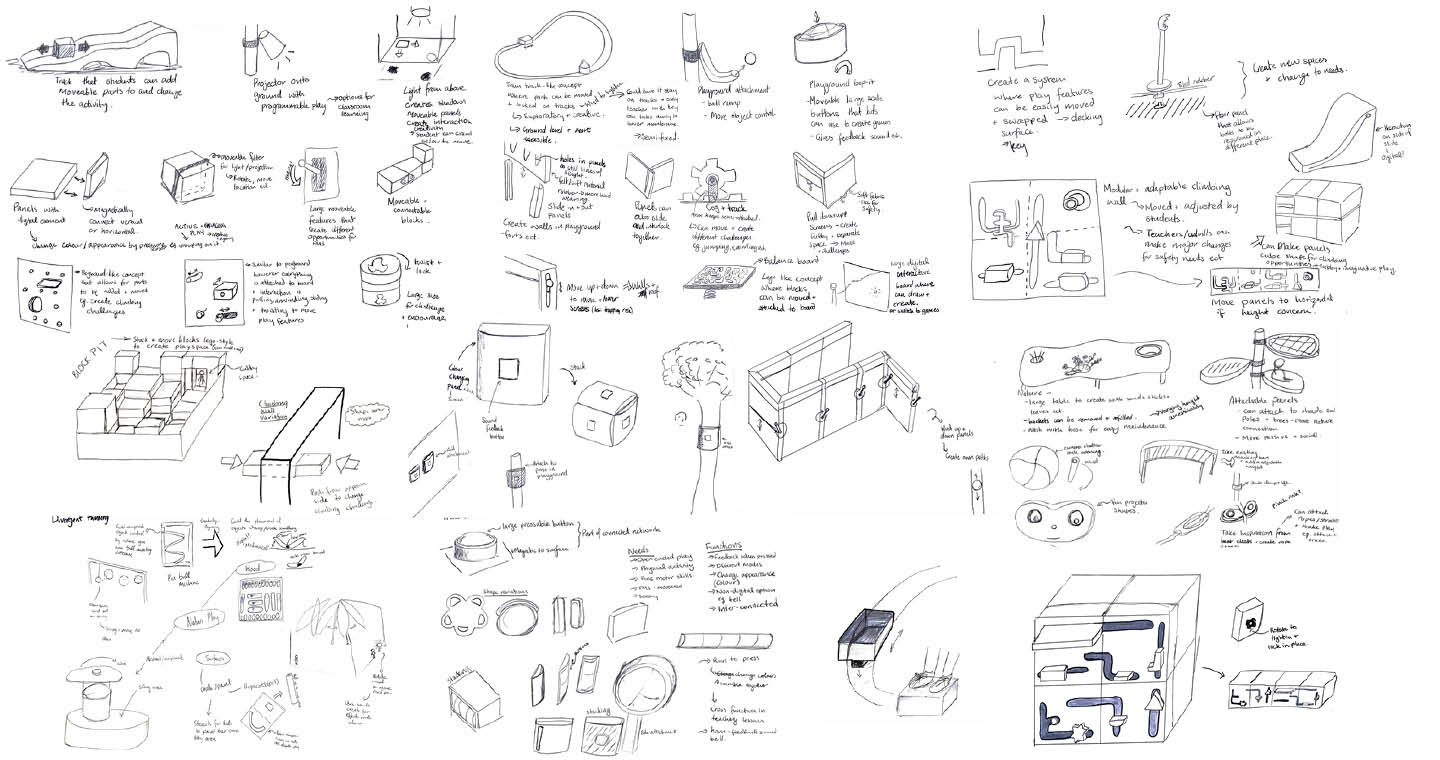
Primary research included an online survey with 106 playground supervisors and three interviews. These methods provided insights into current playground experiences and opportunities to redesign the play space.
The features of this playground strengthen the physical, cognitive and social value of the playground, allowing students to shape their play experience.
Isabelle is an emerging designer completing her studies in Industrial Design and Business Management. She has a passion for creating thoughtful and strategic user-centred solutions. Her approach combines creativity and problem-solving with a continual drive to learn. She is interested in the intersection of business and design to solve problems and deliver meaningful impact.
"*" indicates required fields