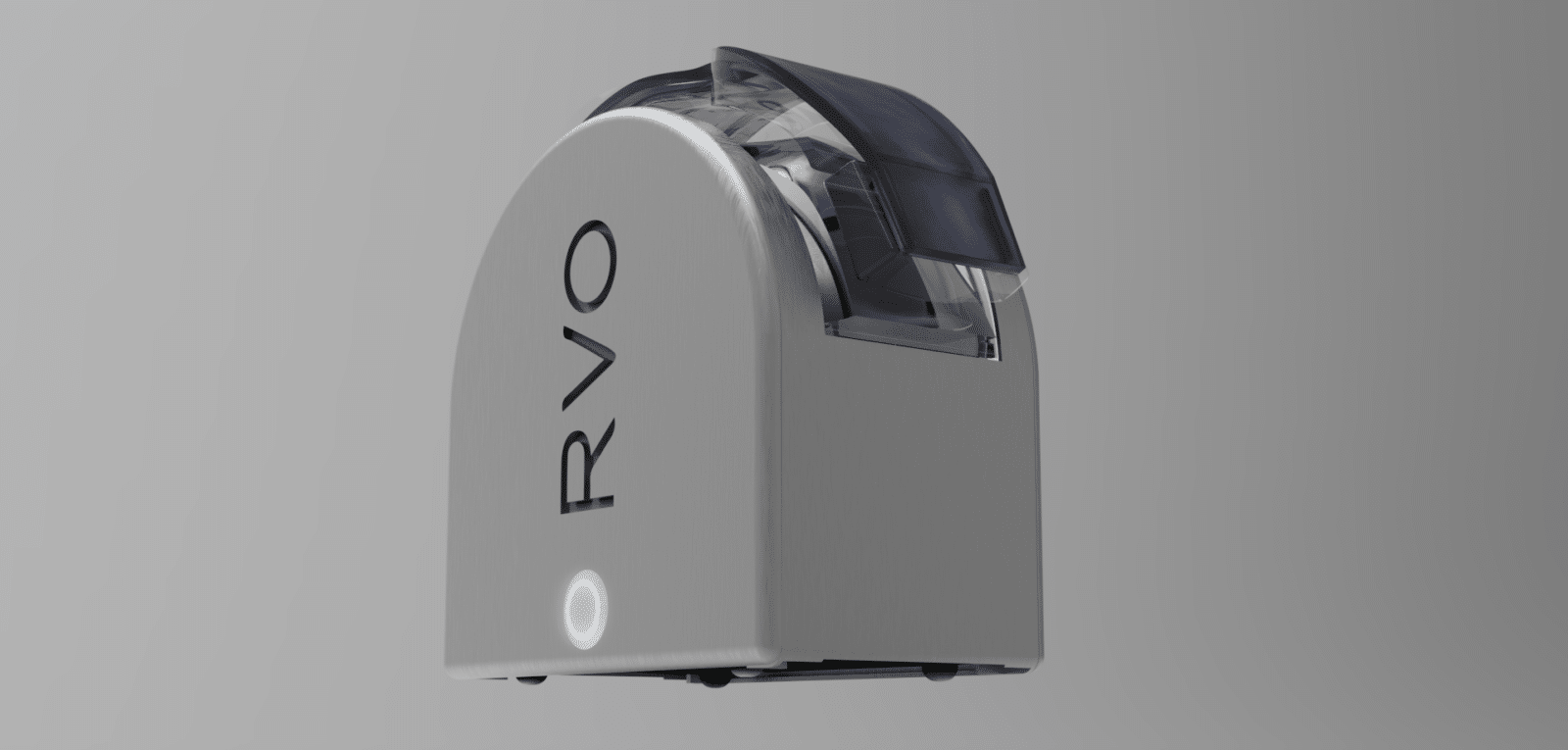
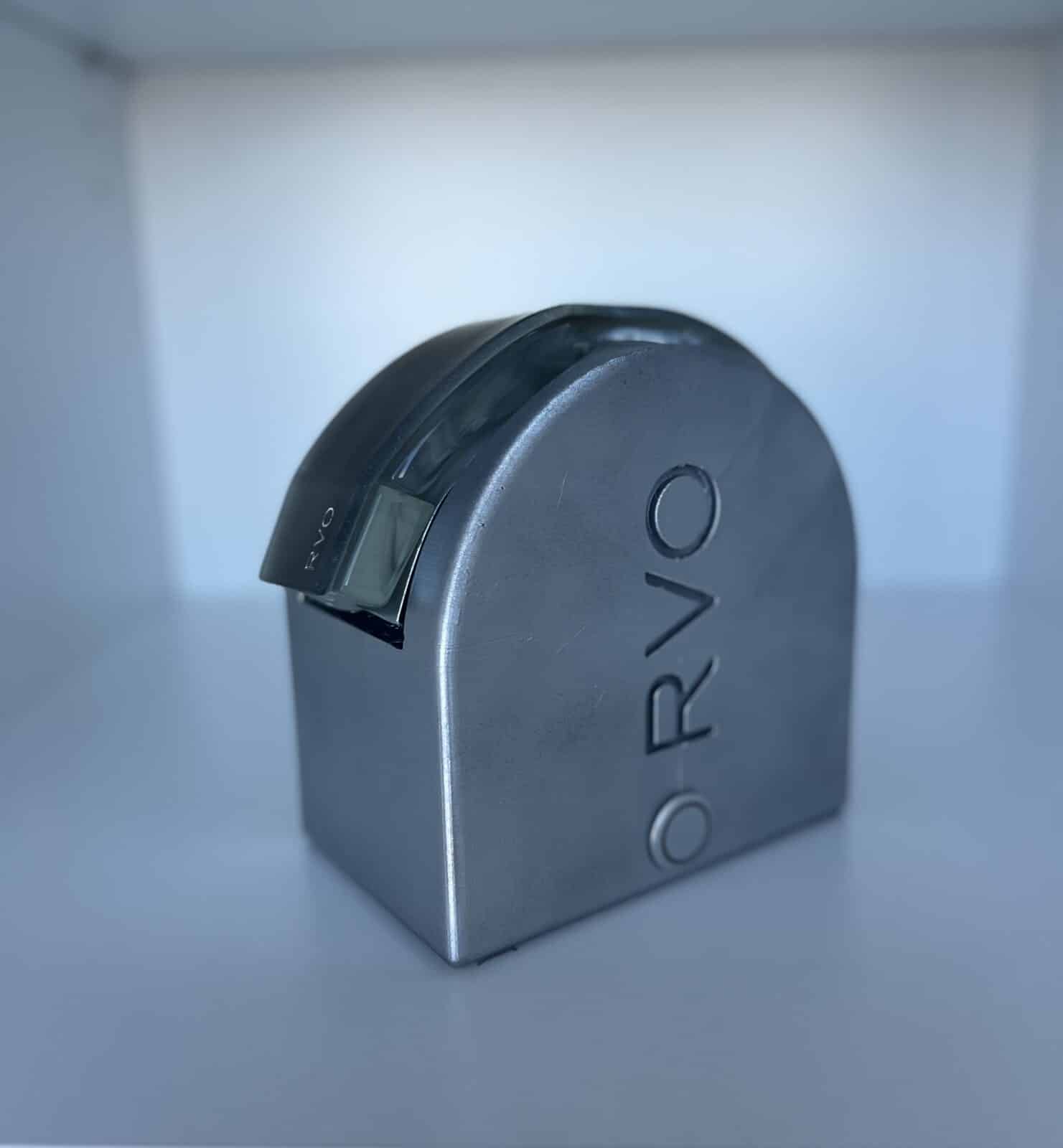
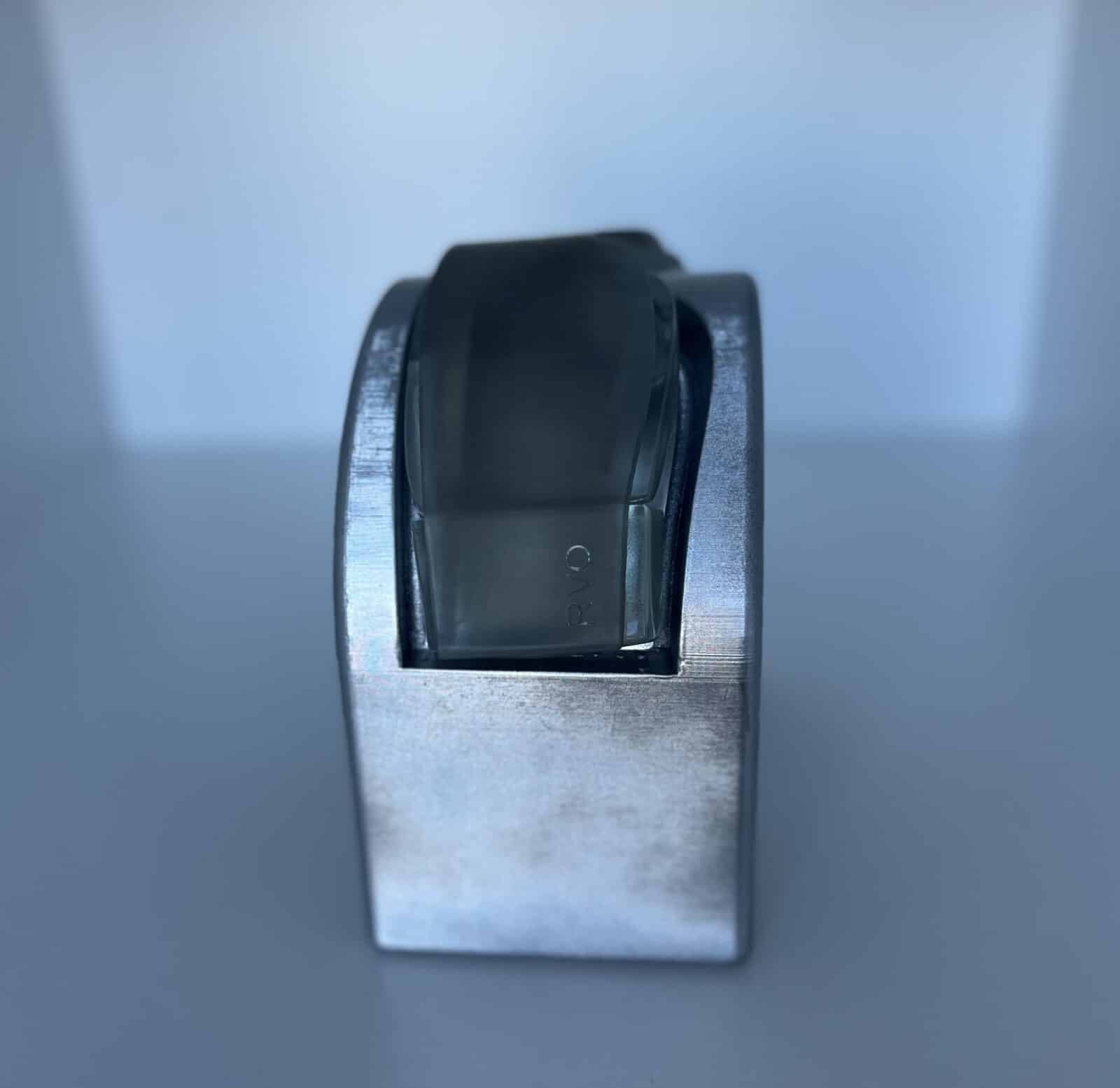
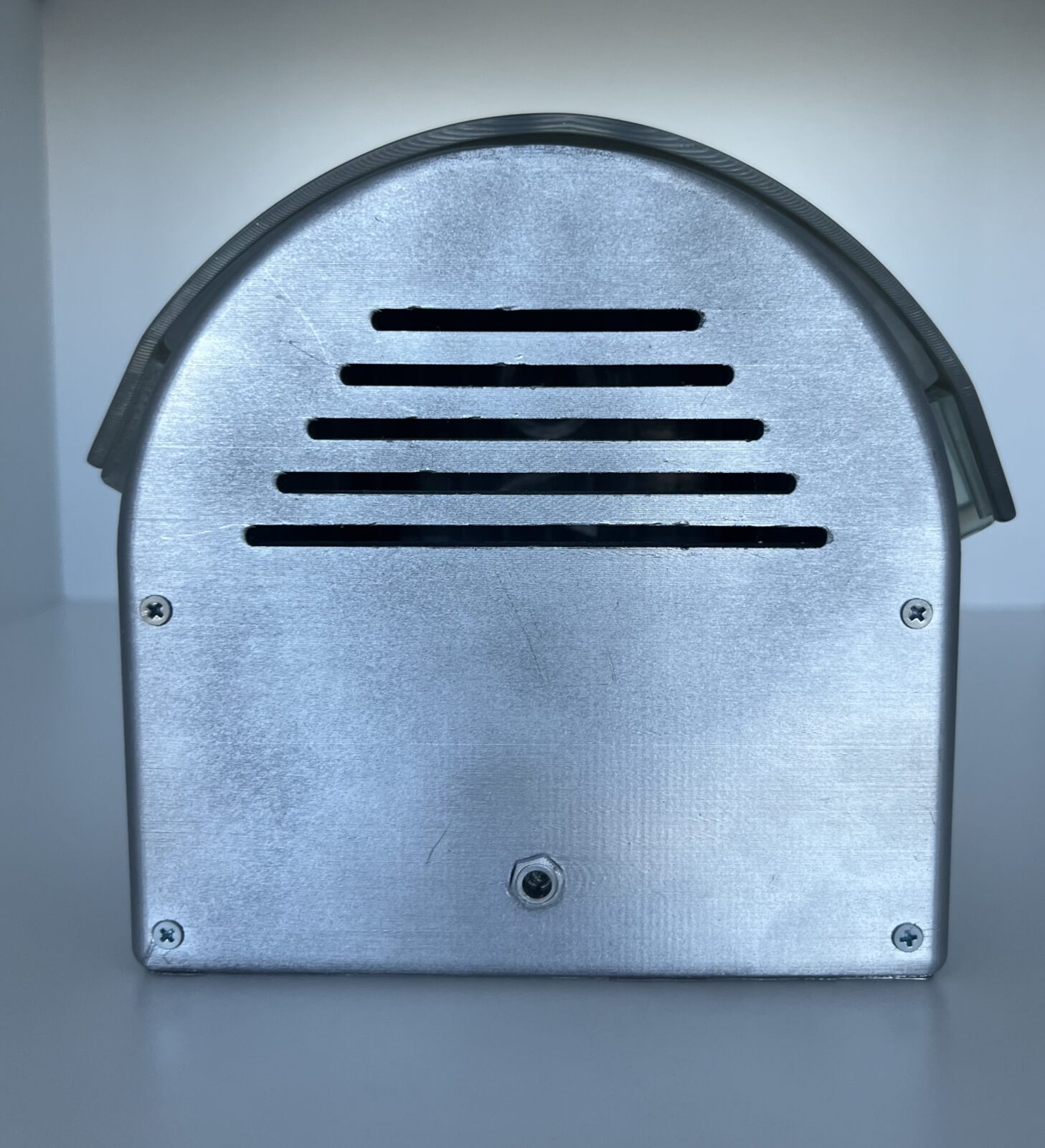
RVO is an all-in-one at-home wellness system designed to help busy professionals disconnect from the demands of an always-on working culture. Combining controlled facial cooling with ambient light signalling, RVO creates a physiological reset and an external cue to switch off. In under 15 minutes, RVO makes recovery part of the daily routine, helping users release work pressures, restore energy and transition into personal time feeling refreshed.
The way we work has changed. the way we recover hasn’t.
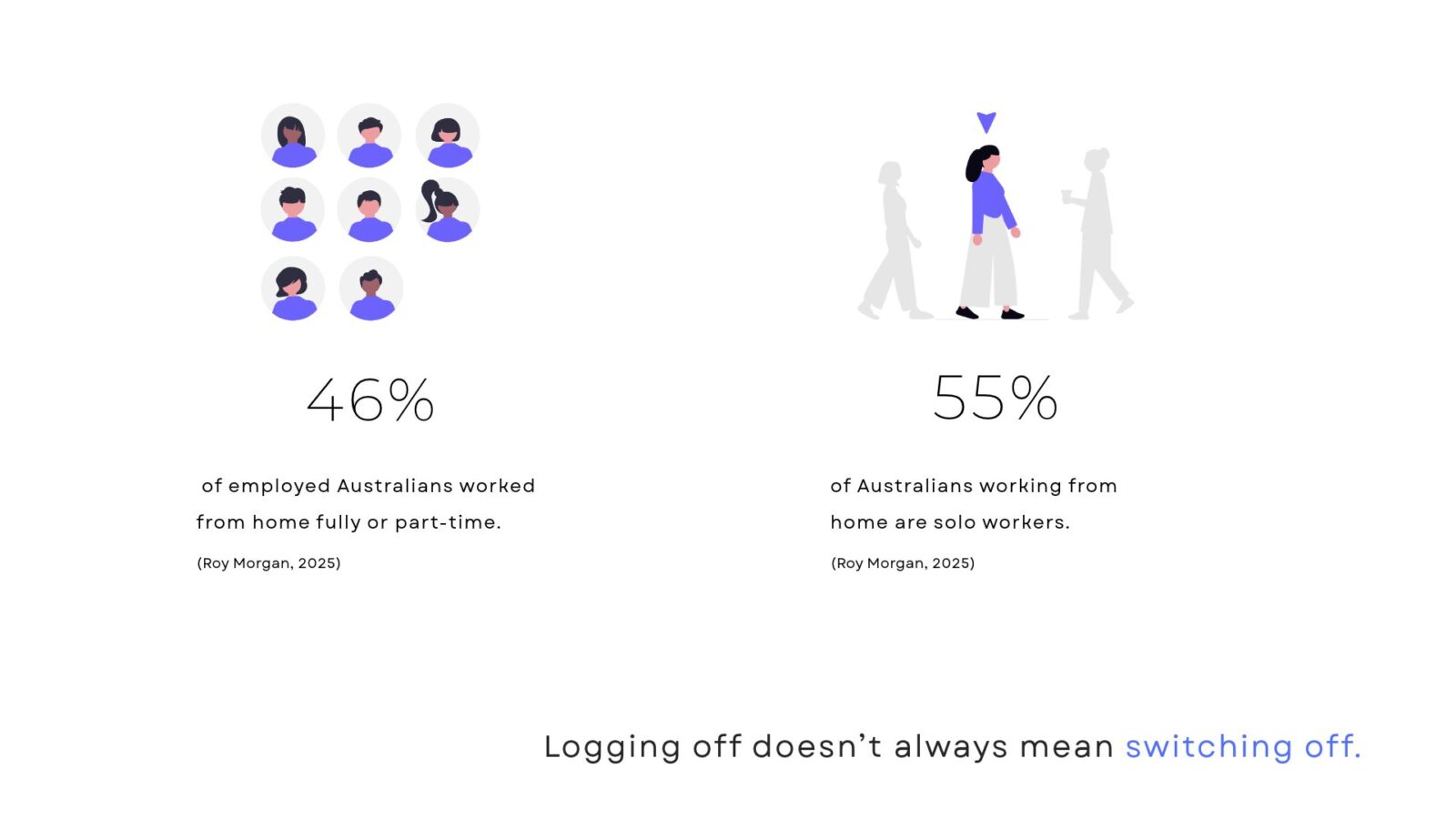
COVID-19 accelerated the shift towards remote and hybrid working, fundamentally changing how knowledge workers engage with their work. Australian governments and businesses have increasingly embraced Work-from-Home (WFH) arrangements, recognising the benefits of greater flexibility and autonomy. Recent data indicates that 46% of Australians work from home either fully or some of the time. While these arrangements offer benefits for individuals, businesses and society, their implications for recovery and psychological detachment from work remain less understood.
PSYCHOLOGICAL DETACHMENT
is defined as “an individual’s sense of being away from the work situation”
(Pensar & Mäkelä, 2023).
why is switching off so difficult?
When physical, temporal and digital boundaries between work and personal life become blurred, individuals can struggle to mentally disengage, relax and recover from work demands. Without adequate opportunities for recovery, prolonged exposure to work-related stress can negatively affect physical and psychological wellbeing, increase the risk of burnout and compromise long-term career sustainability.
The opportunity
insight 01- TEMPORAL boundaries
I try to stop at 5 but its doesn’t always happen…
SOLO WORKER, BUSINESS ANALYST (P2)
Without defined working hours or external boundaries, solo workers can struggle to establish a clear end to the working day. Work can gradually extend into personal time, making it difficult to disconnect. This creates an opportunity for a physical intervention that signals the end of the working day and encourages workers to step away from their desks, without imposing rigid schedules or limiting their autonomy.
INSIGHT 02- TRANSITION
For a cognitive reset, I need time and space.
SOLO WORKER, ENTREPRENUER (P1)
Moving away from work requires more than simply closing a laptop. Individuals need time and space to mentally transition out of work mode, disengage from ongoing responsibilities and shift their attention towards personal time.
INSIGHT 03- DIGITAL BOUNDARIES
Digital devices don’t give [the brain] permission to turn off.
BEHAVIOURAL DESIGN PSYCHOLOGIST AND CO-CHAIRMAN OF THE DESIGN INSTITUTE OF AUSTRALIA (E2)
Digital technology can make psychological detachment from work increasingly difficult. Constant access to screens, notifications and digital platforms can extend working hours beyond traditional boundaries, with emerging technologies such as AI encouraging further computer use. Primary research also highlighted that replacing work-related screen time with digital entertainment may continue cognitive stimulation rather than provide an opportunity for genuine recovery.
This creates an opportunity for physical, screen-free experiences that encourage individuals to step away from digital environments, pause and transition into rest.
INSIGHT 04- RECOVERY AWARENESS
It’s really important for people to start to really think about: Have I actually switched off?
CLINICAL PSYCHOLOGIST (E1)
Finishing work does not necessarily mean individuals have mentally disengaged or begun to recover. Without recognising their own need for recovery, they may continue carrying work-related stress and cognitive demands into their personal time. This creates an opportunity for experiences that encourage individuals to recognise when they have not fully switched off and actively engage in restorative activities.
THE REMOVAL OF THE COMMUTE
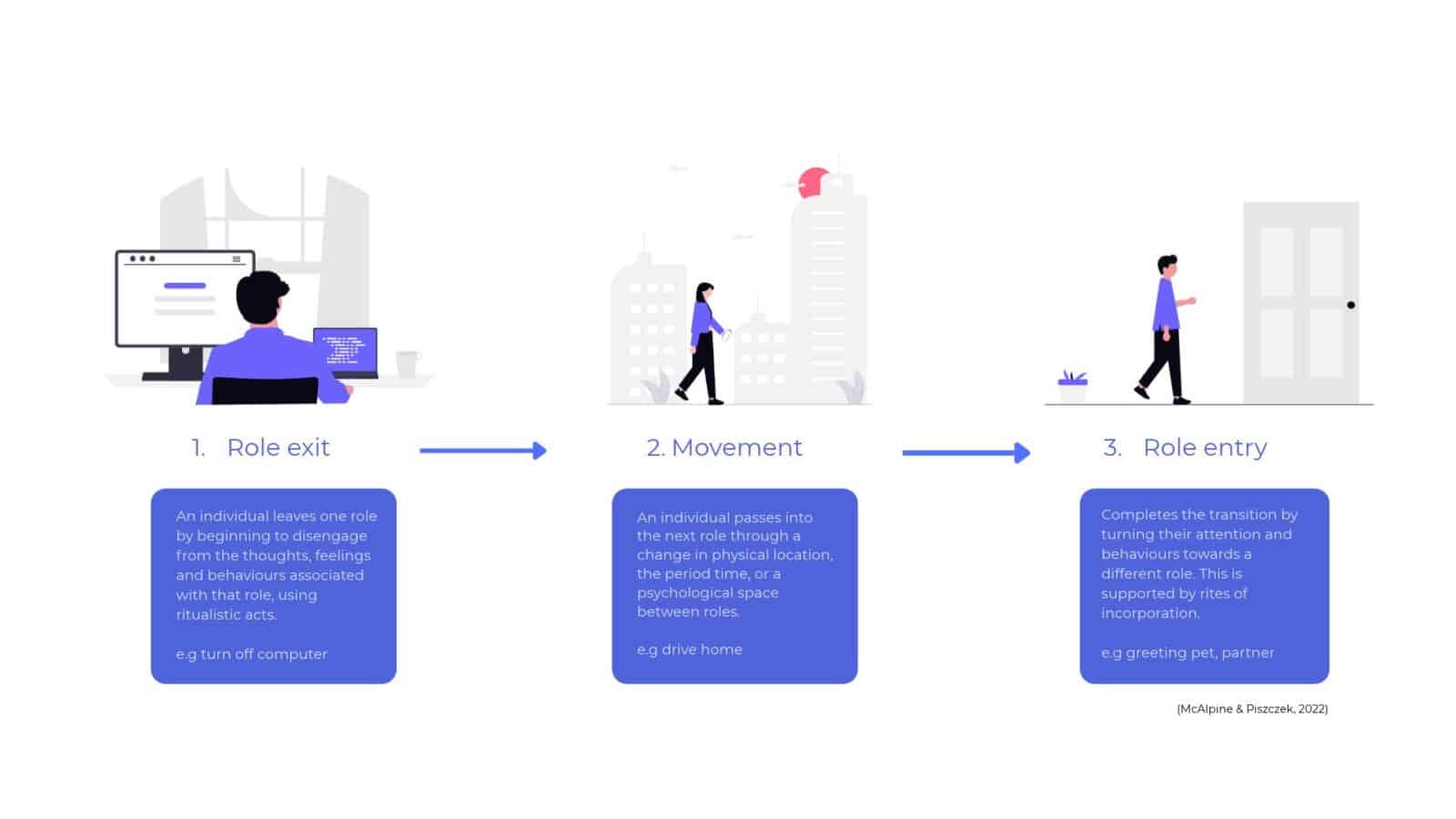
For traditional office workers, commuting can provide a structured transition between professional and personal roles. This process allows individuals to gradually disengage from work before entering their personal lives.
With the removal of the commute, remote workers may lose this natural opportunity to transition between roles, creating an opportunity for more intentional end-of-work rituals.
How might we create a deliberate transition between work and personal time?
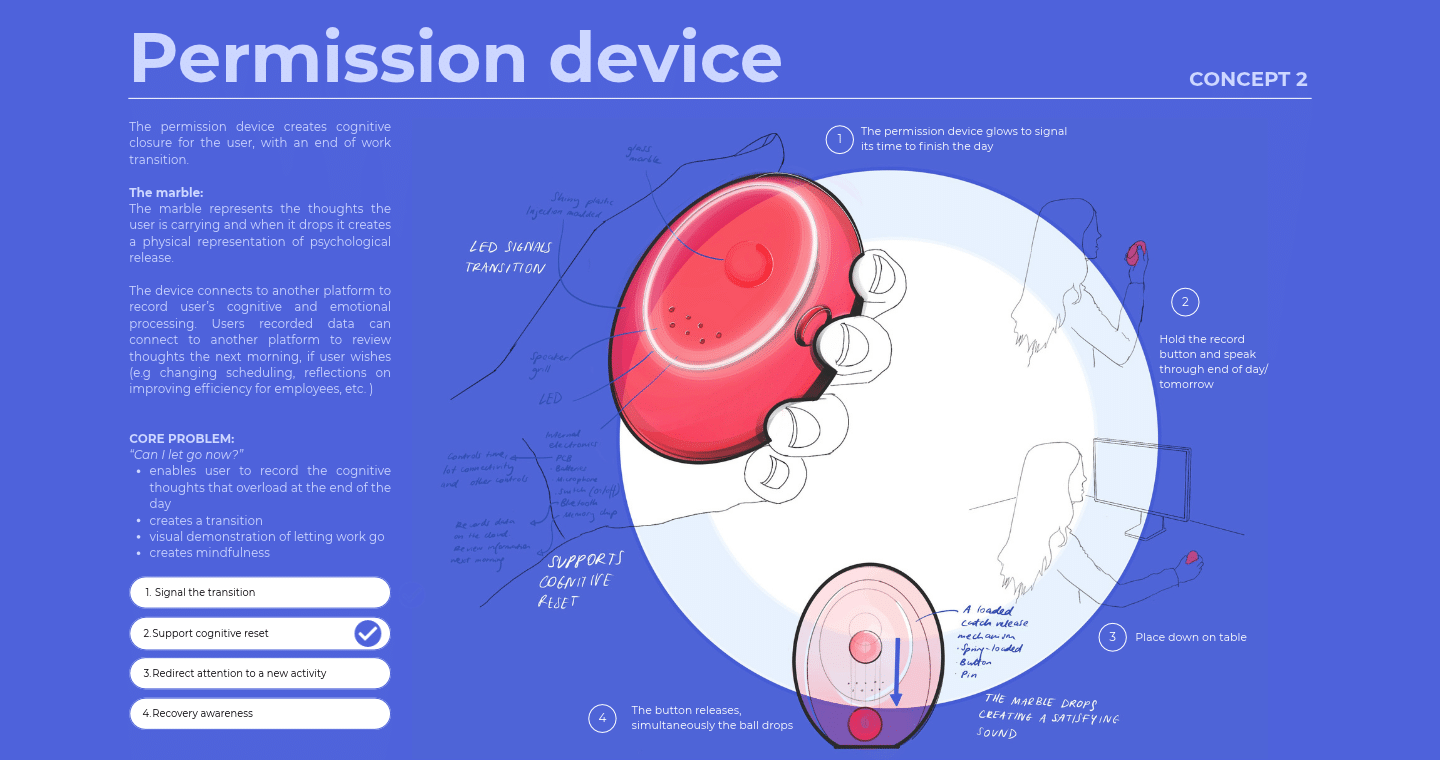
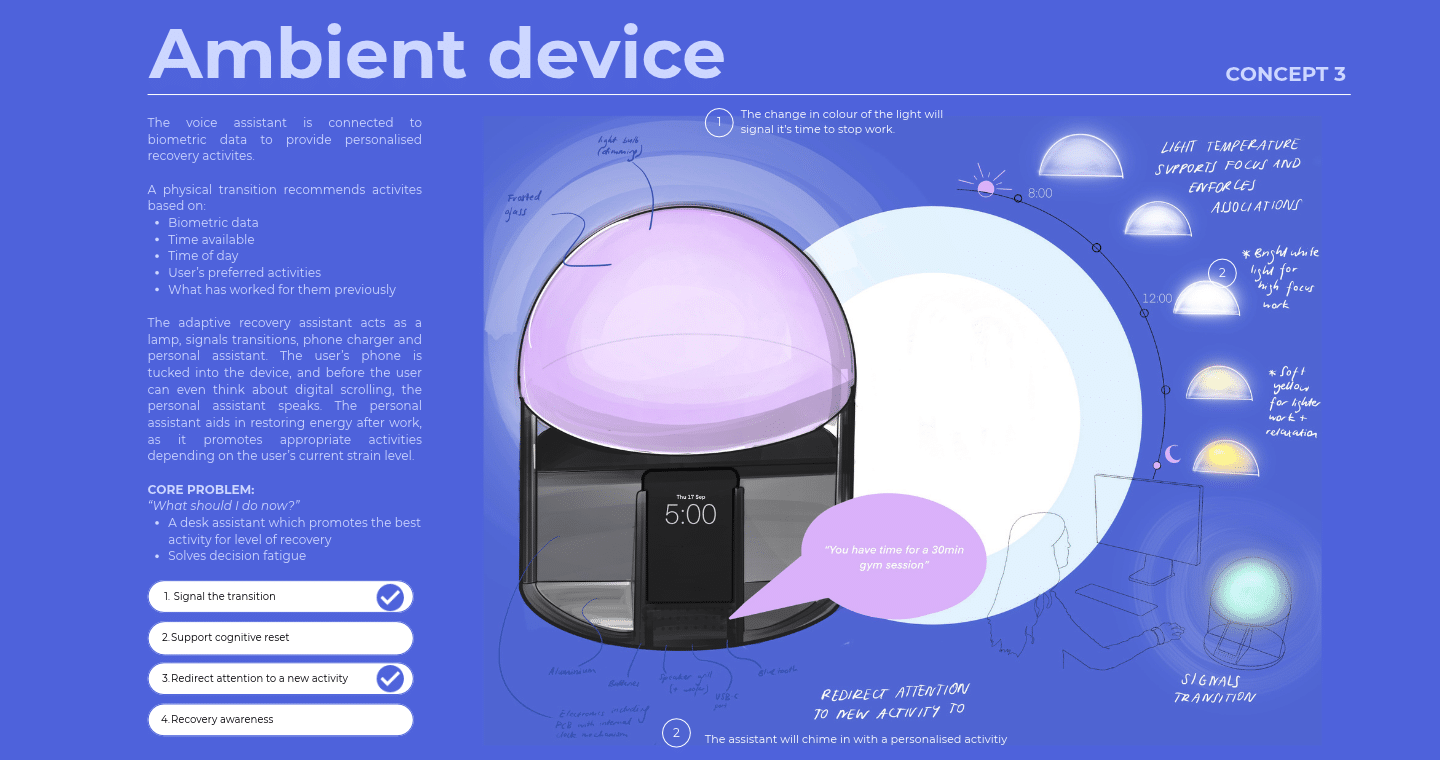
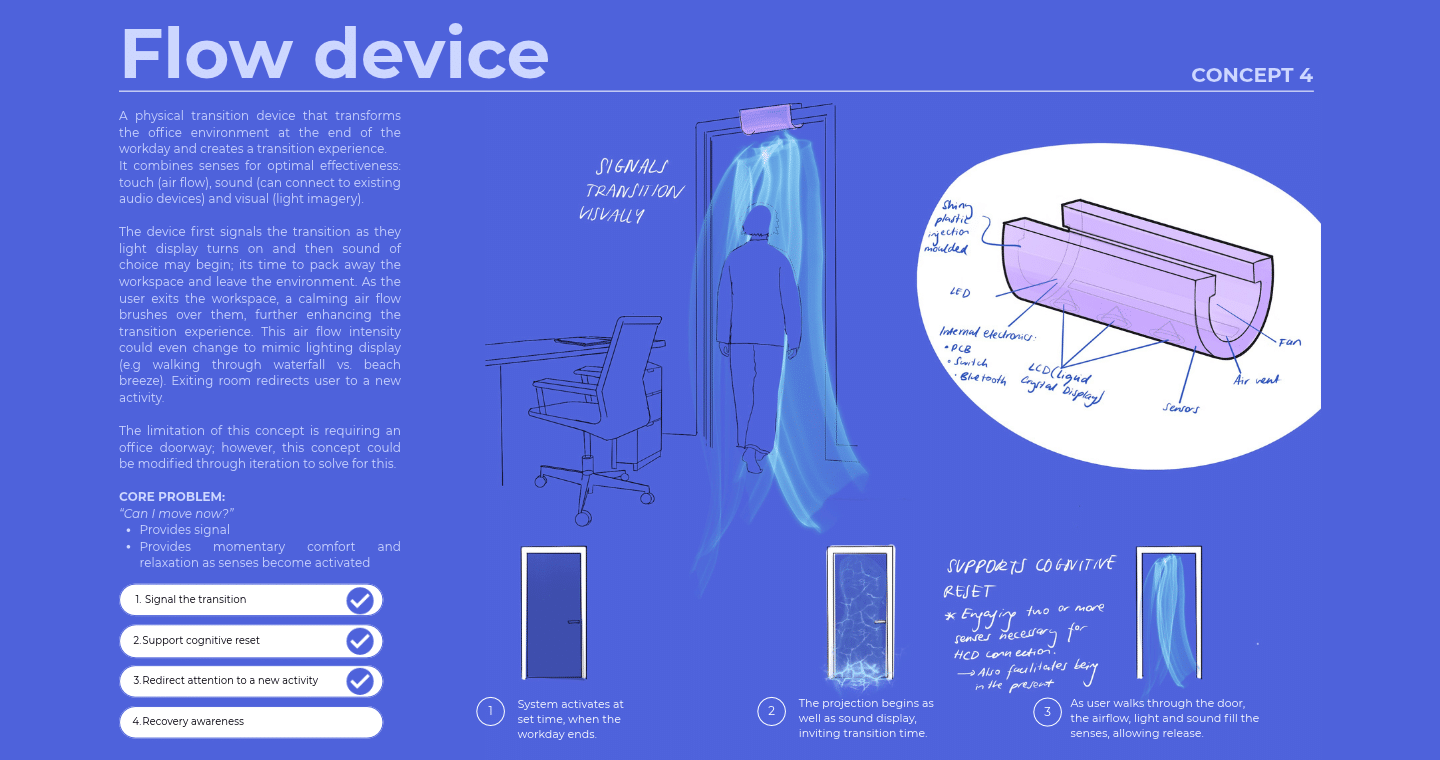
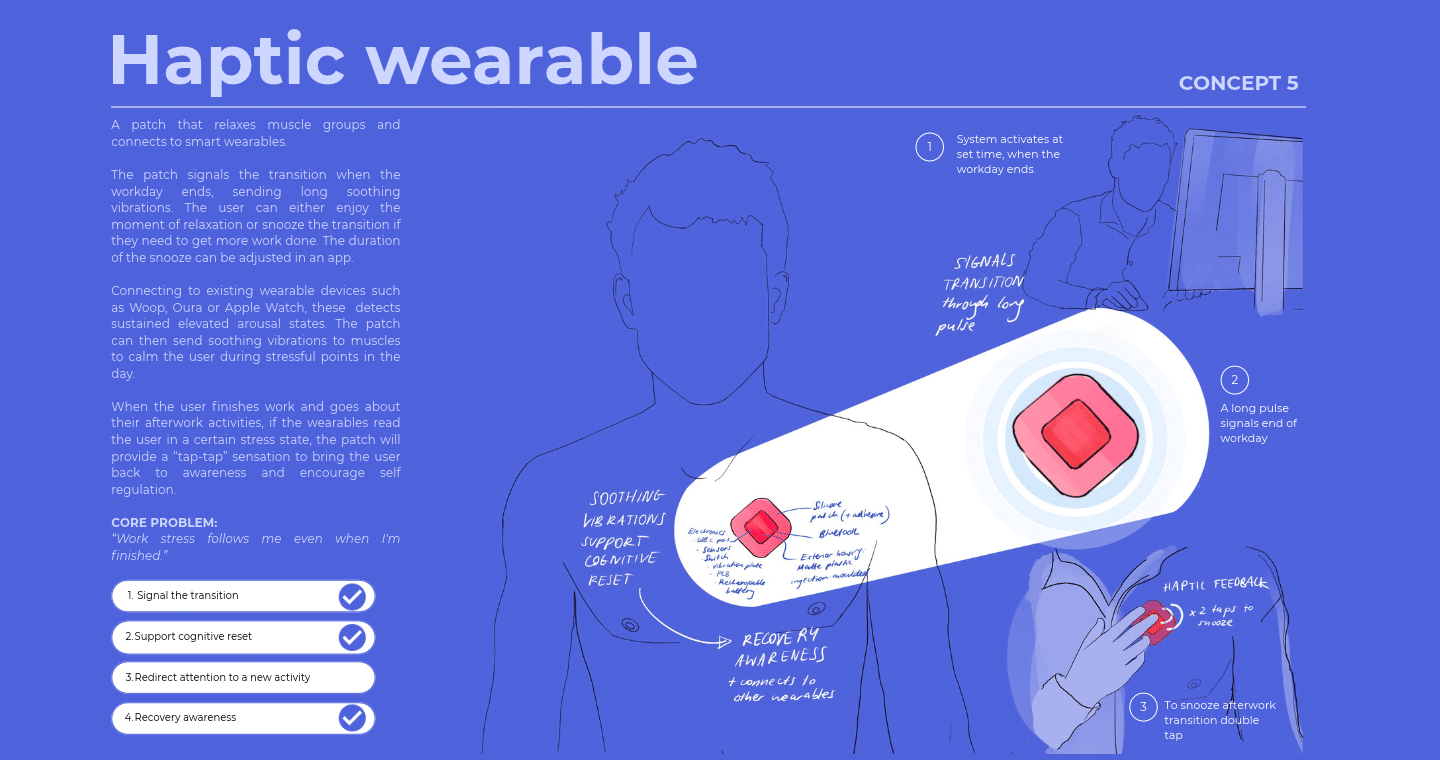
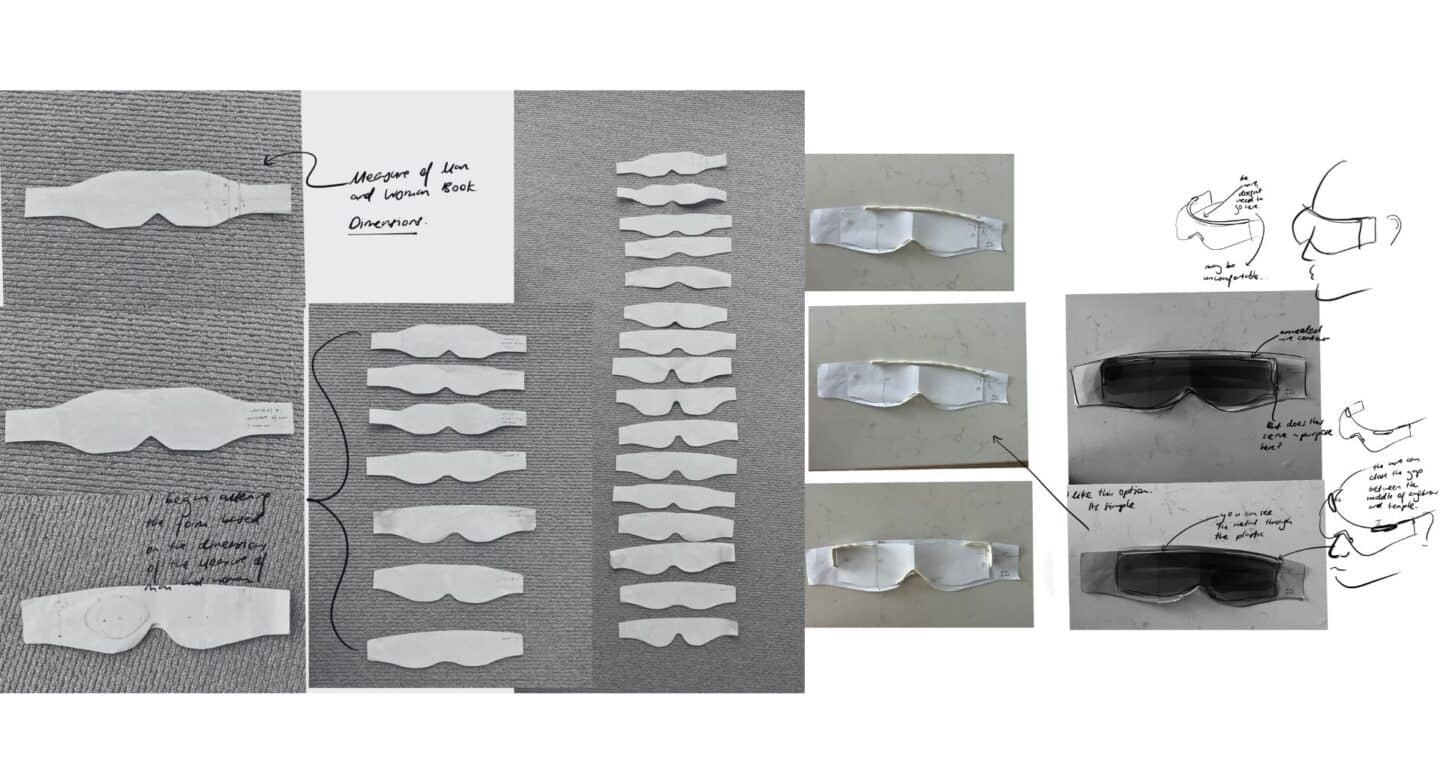
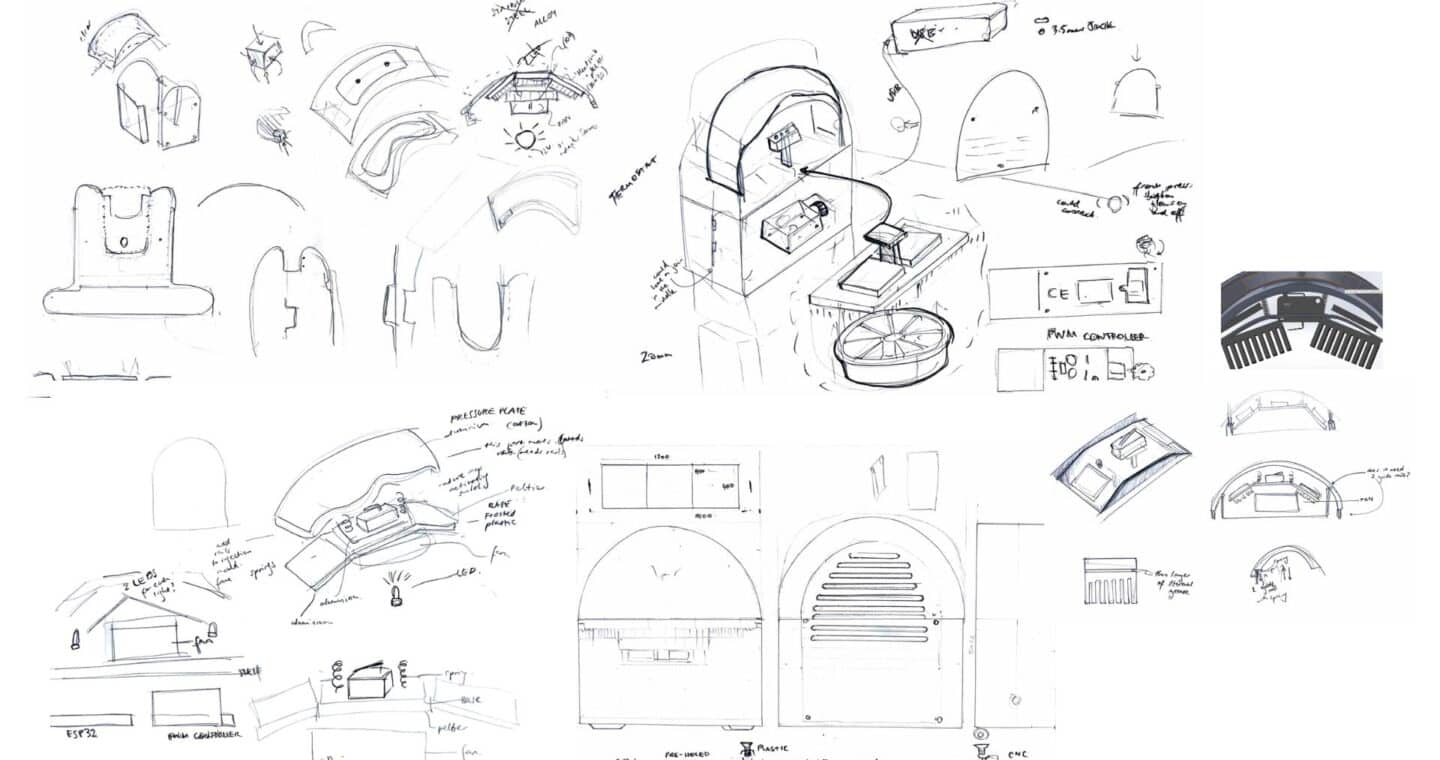
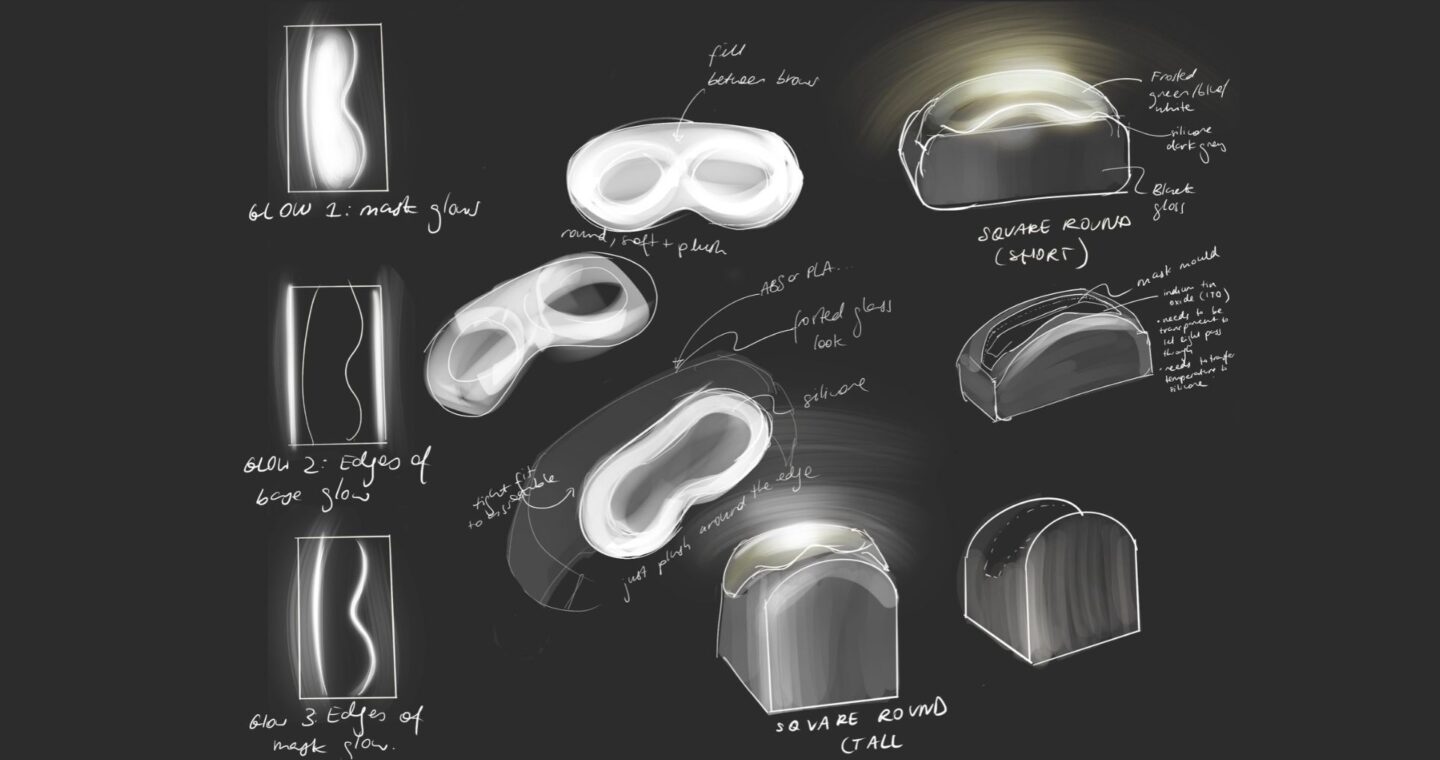
initial concepts
DESIGN DEVELOPMENT
THE SOLUTION
INTERACTIOn
01 Preparing | Flashing Blue
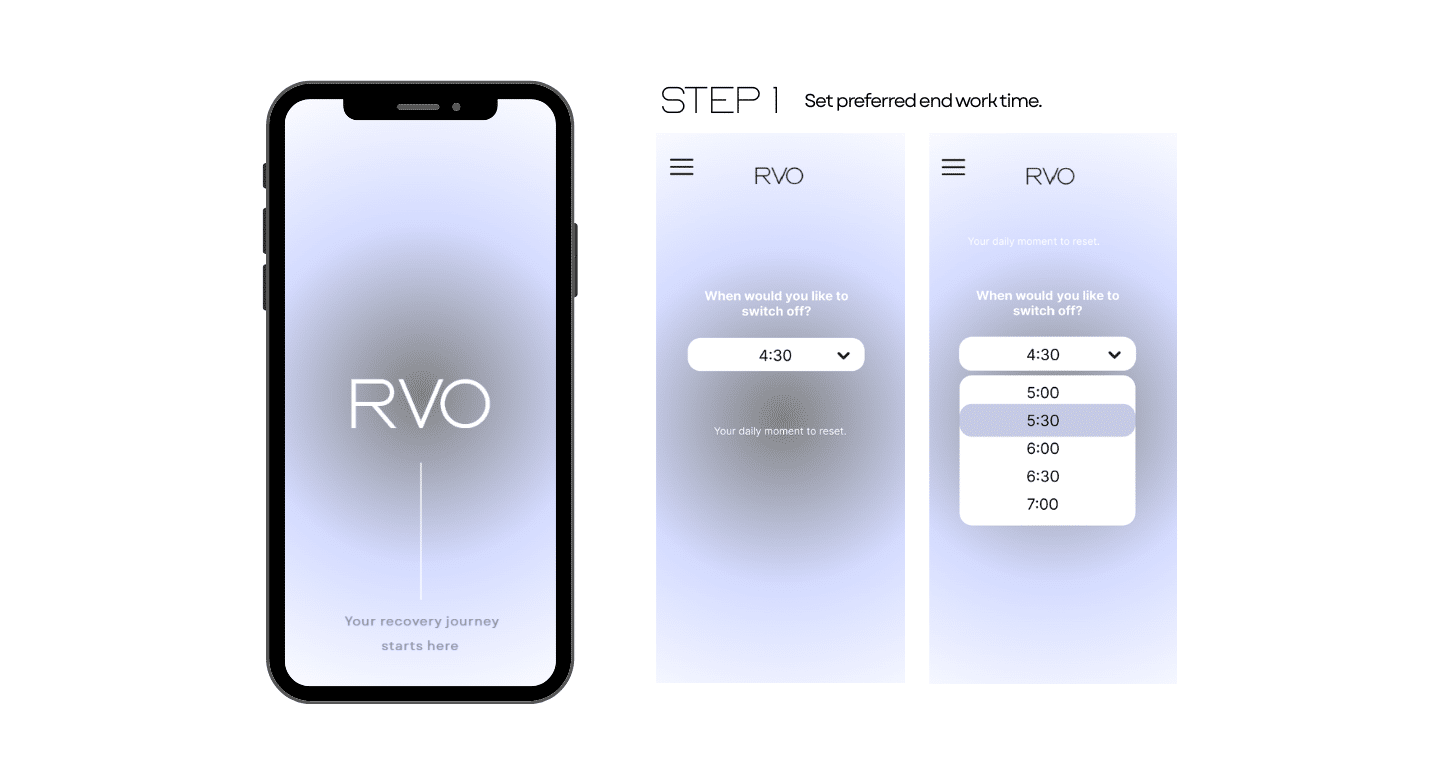
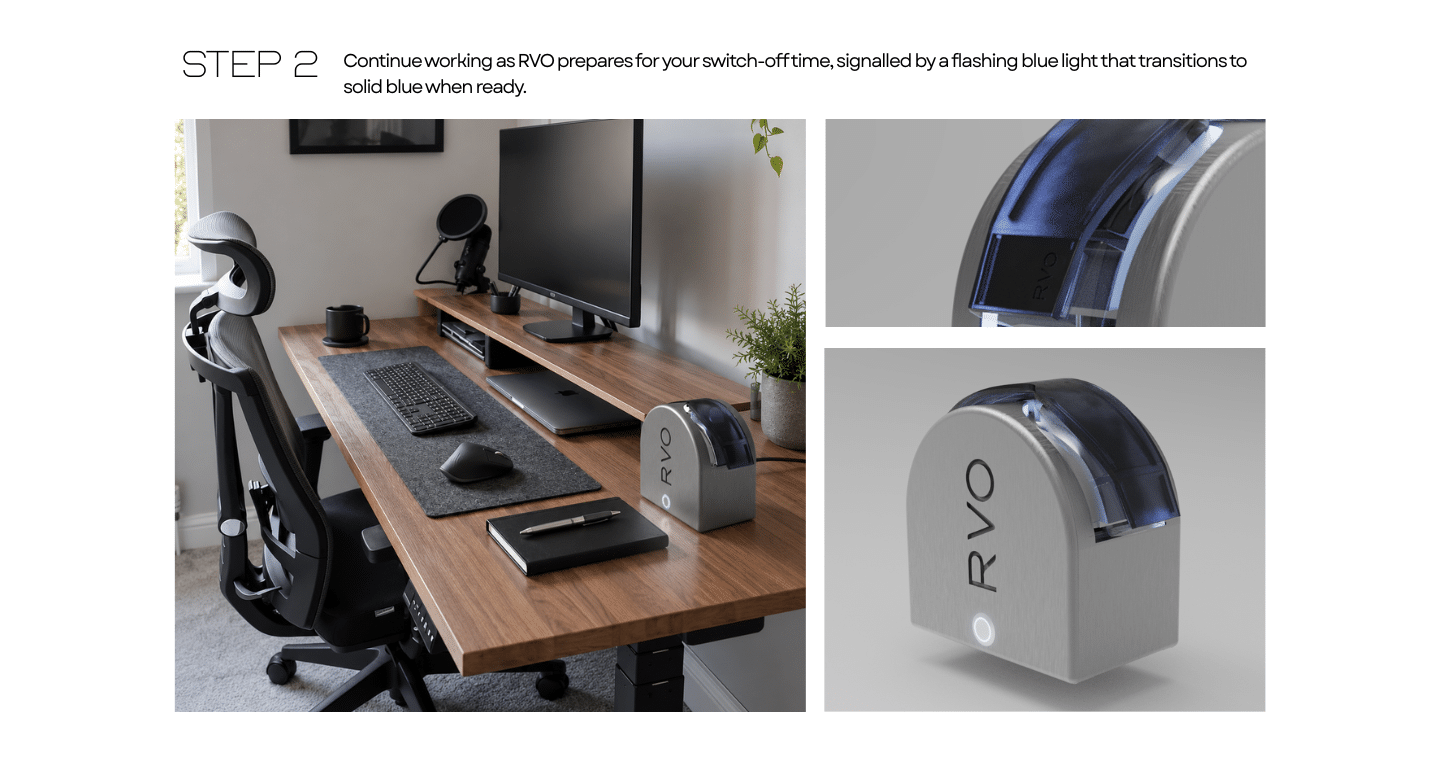
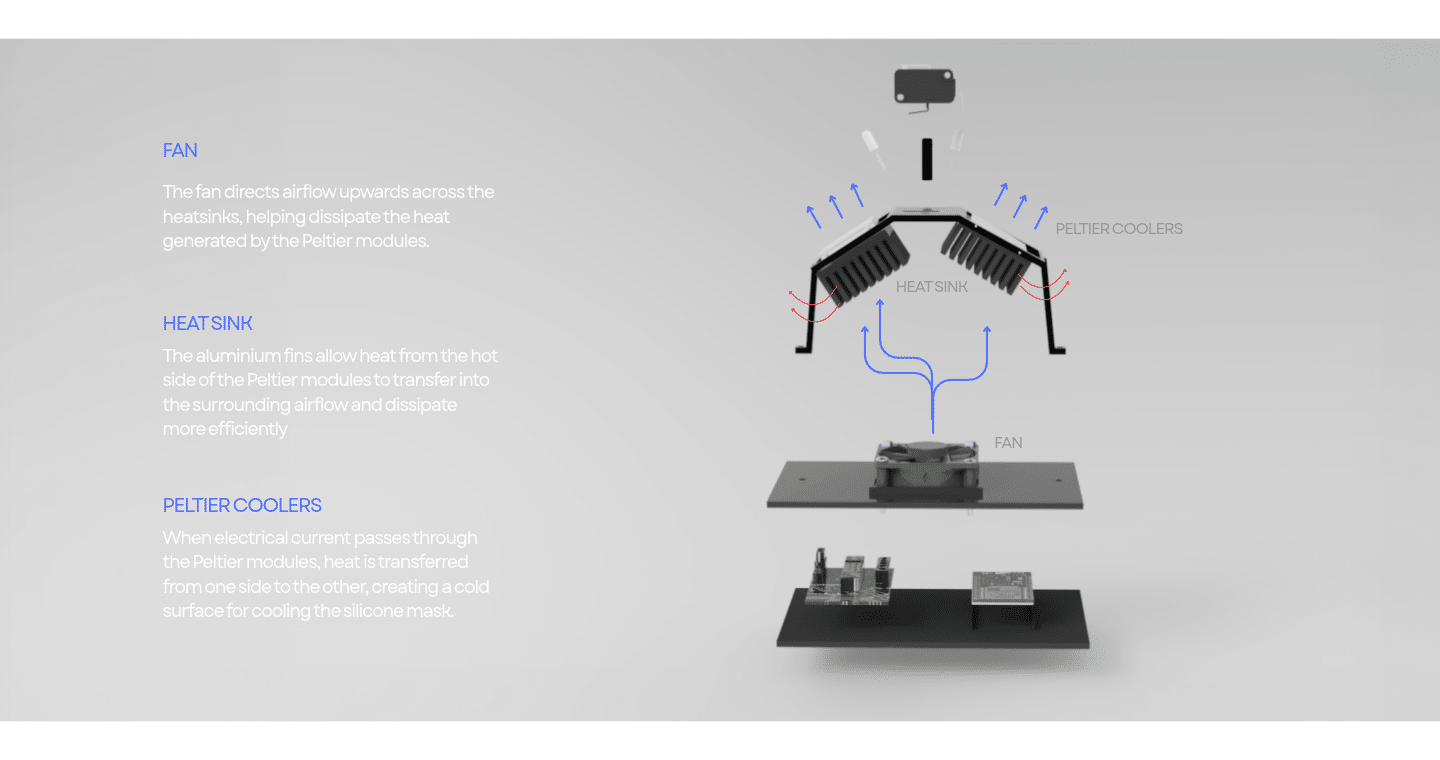
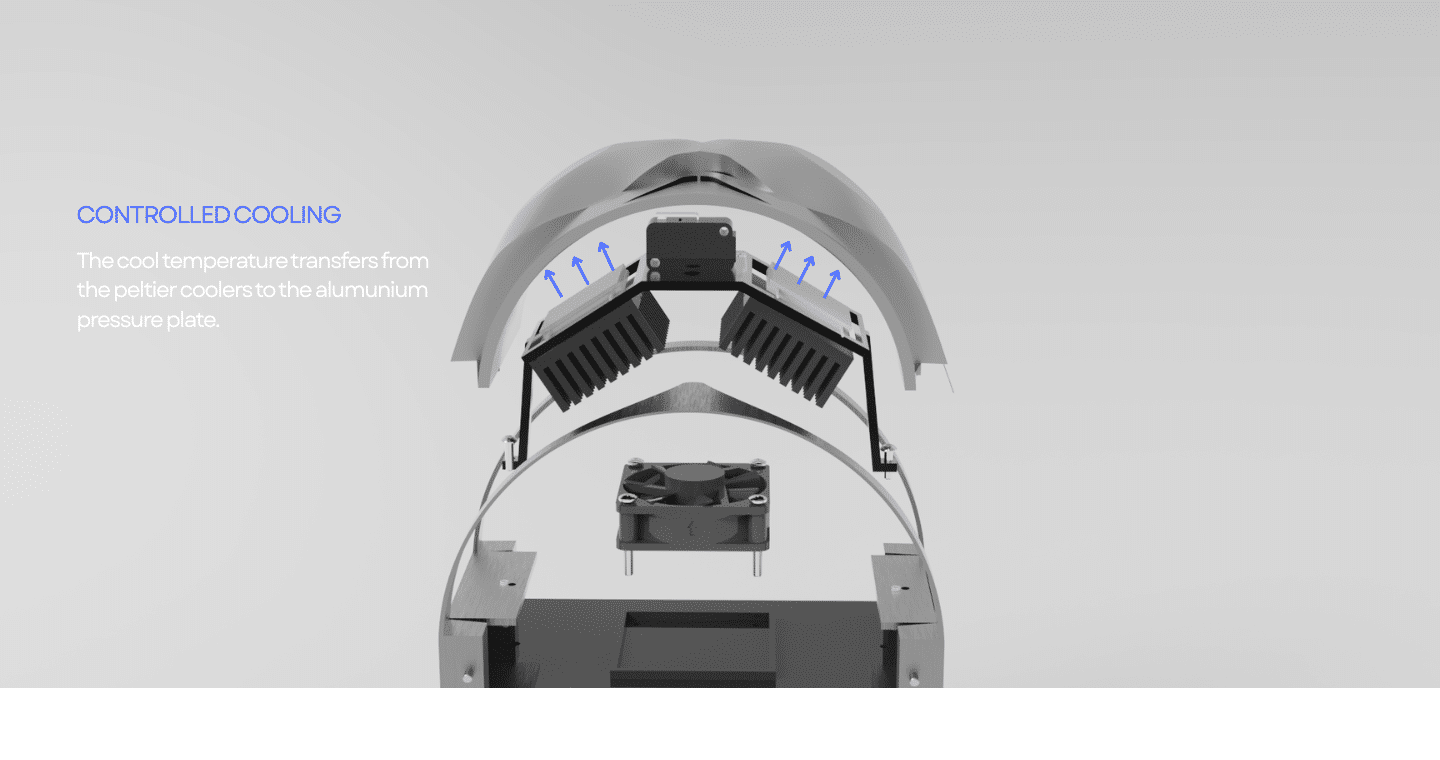
30–45 minutes before the preferred switch-off time, a flashing blue light provides the first gentle reminder that the workday is coming to an end. Simultaneously, the base begins cooling the mask.
02 Ready | Steady Blue
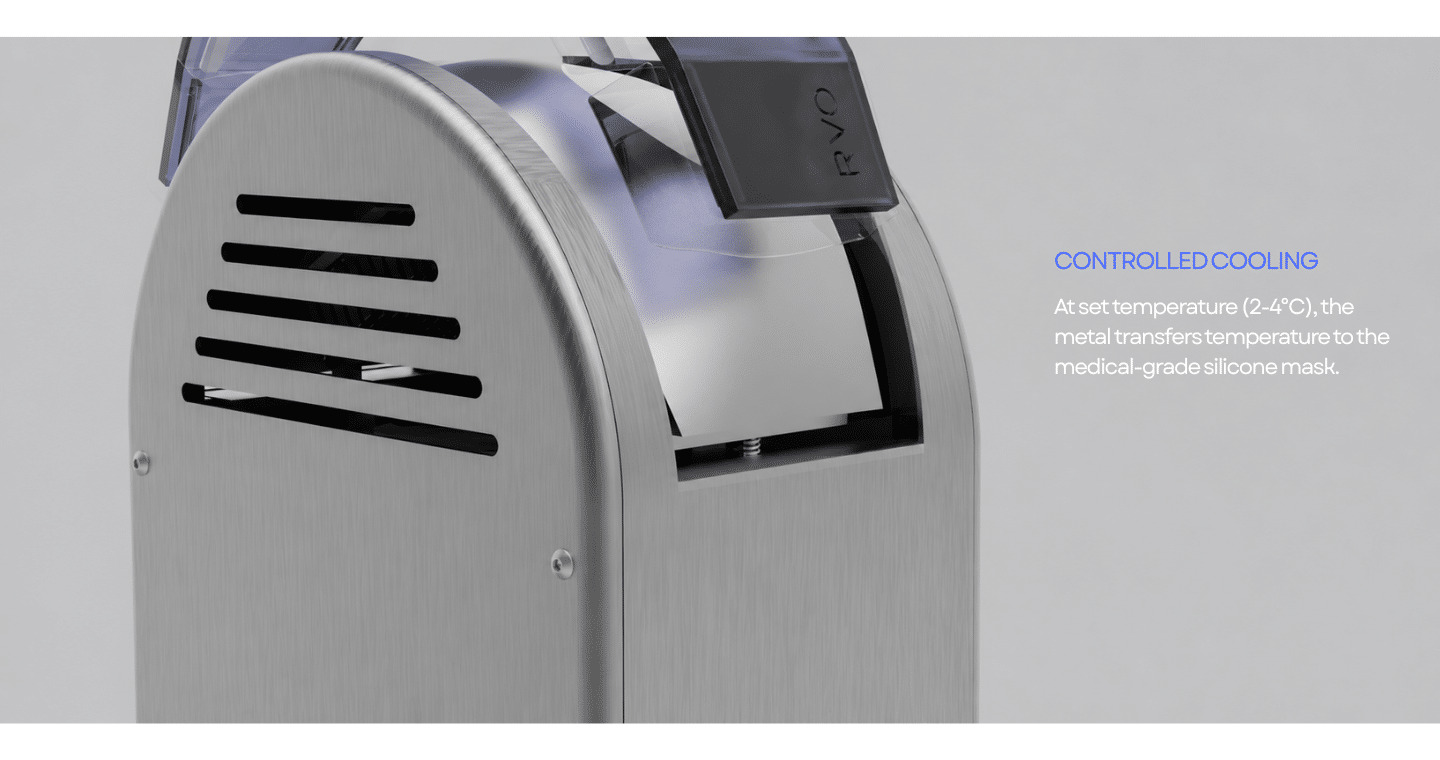
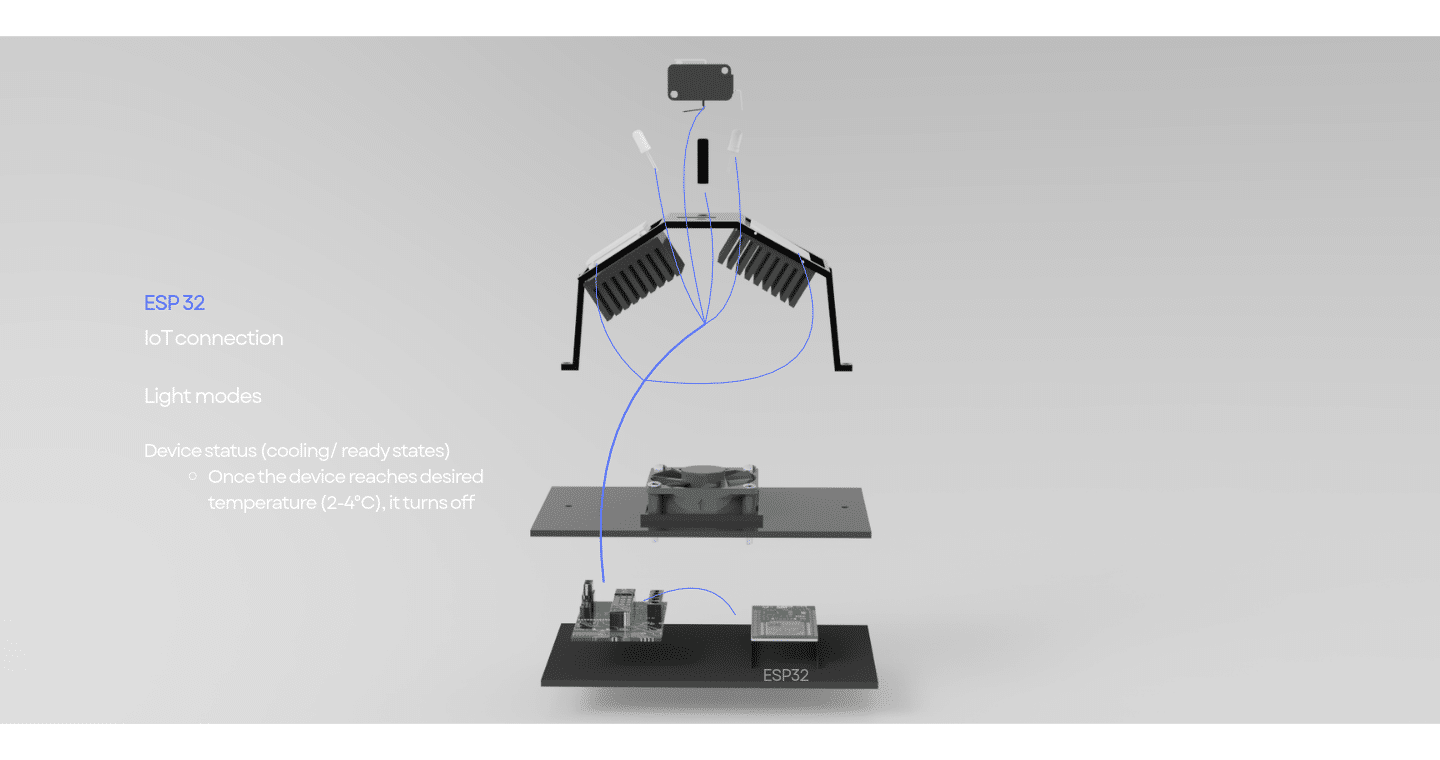
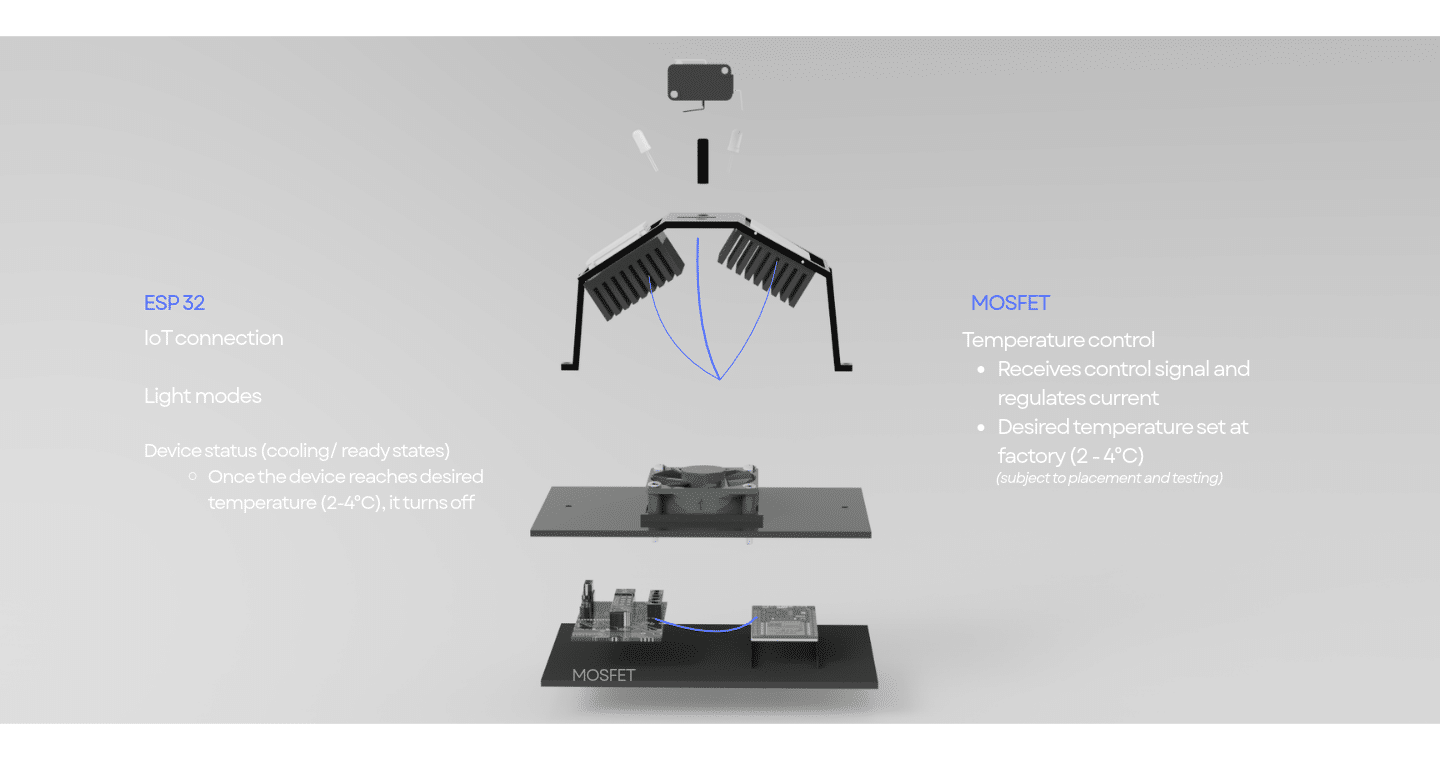
Once the mask reaches its optimal temperature of 2–4°C, the flashing light transitions to a steady blue, signalling that the mask is ready for use.
03 Return and reset | Mechanical Click
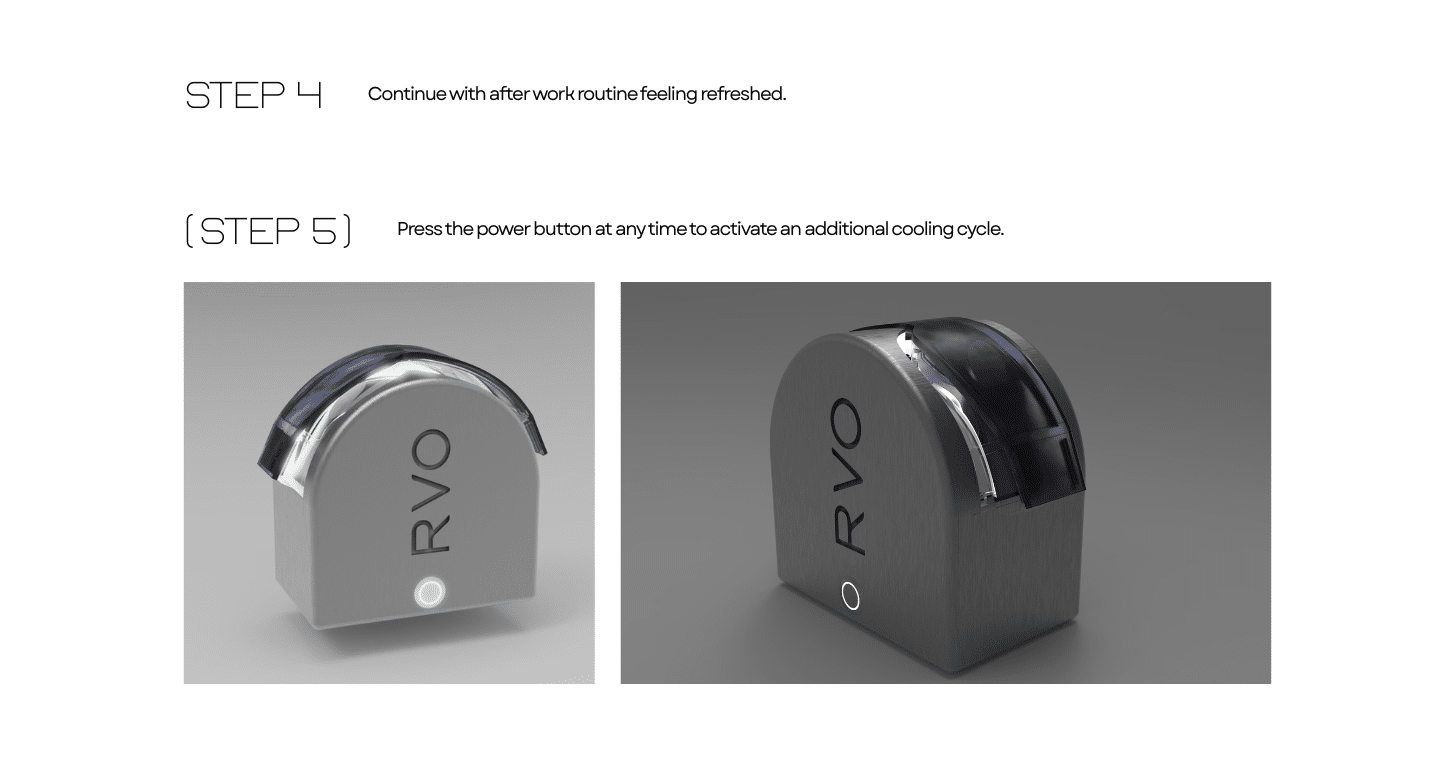
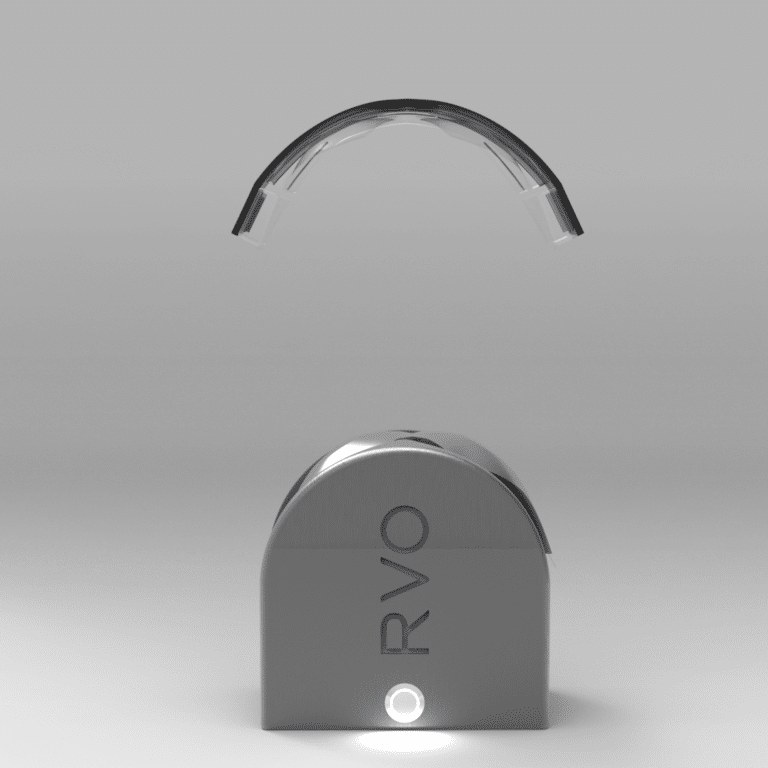
Removing the mask lifts the base’s pressure plate, triggering an internal switch that automatically disengages the cooling technology. When the mask is returned to the base, pressing it into place creates a satisfying mechanical click. A brief white light pulse confirms that the mask is correctly seated before the light switches off. The cooling system remains inactive until the next scheduled cycle.
04 Manual Activation | White Light
Outside the scheduled routine, the user can press the power button to initiate an additional cooling cycle. A soft white light acknowledges activation before the system returns to its usual blue sequence: flashing while cooling and steady once ready.
TECHNOLOGY AND INNOVATION
COLD FACE TEST (CFT) METHOD
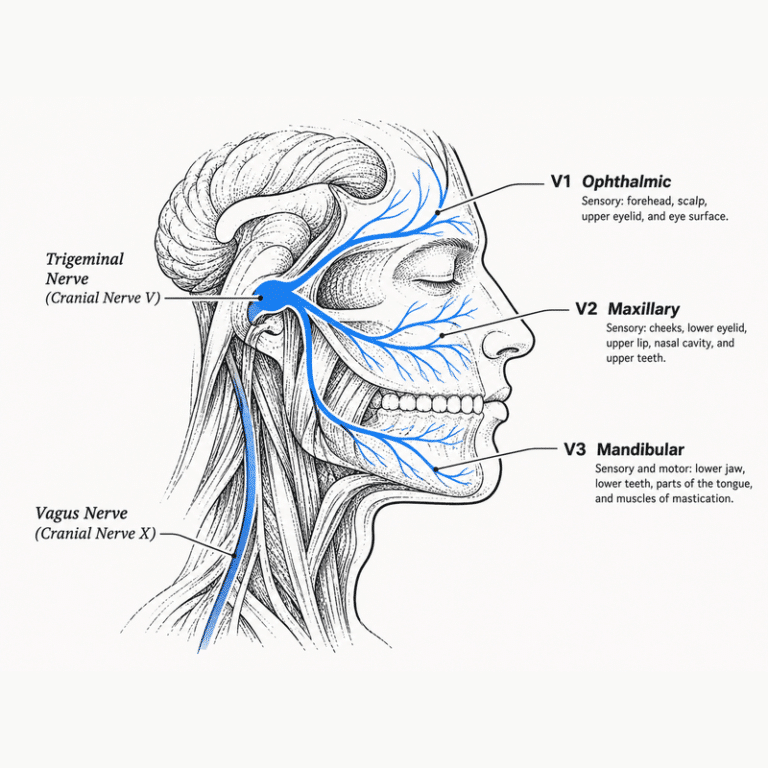
RVO draws on the Cold Face Test (CFT), a research method that uses controlled facial cooling to investigate the body’s autonomic response. When the forehead, eye region and cheeks are exposed to cold, sensory signals travel through the V1 and V2 branches of the trigeminal nerve to the brainstem, triggering a reflex pathway involving the vagus nerve.
Research has shown that facial cooling can increase cardiac parasympathetic activity within the first two minutes, contributing to an initial reduction in heart rate. RVO translates this physiological response into a short, intentional afternoon cooling ritual, designed to help users transition from a state of stress towards relaxation and support recovery.
MANUFACTURING
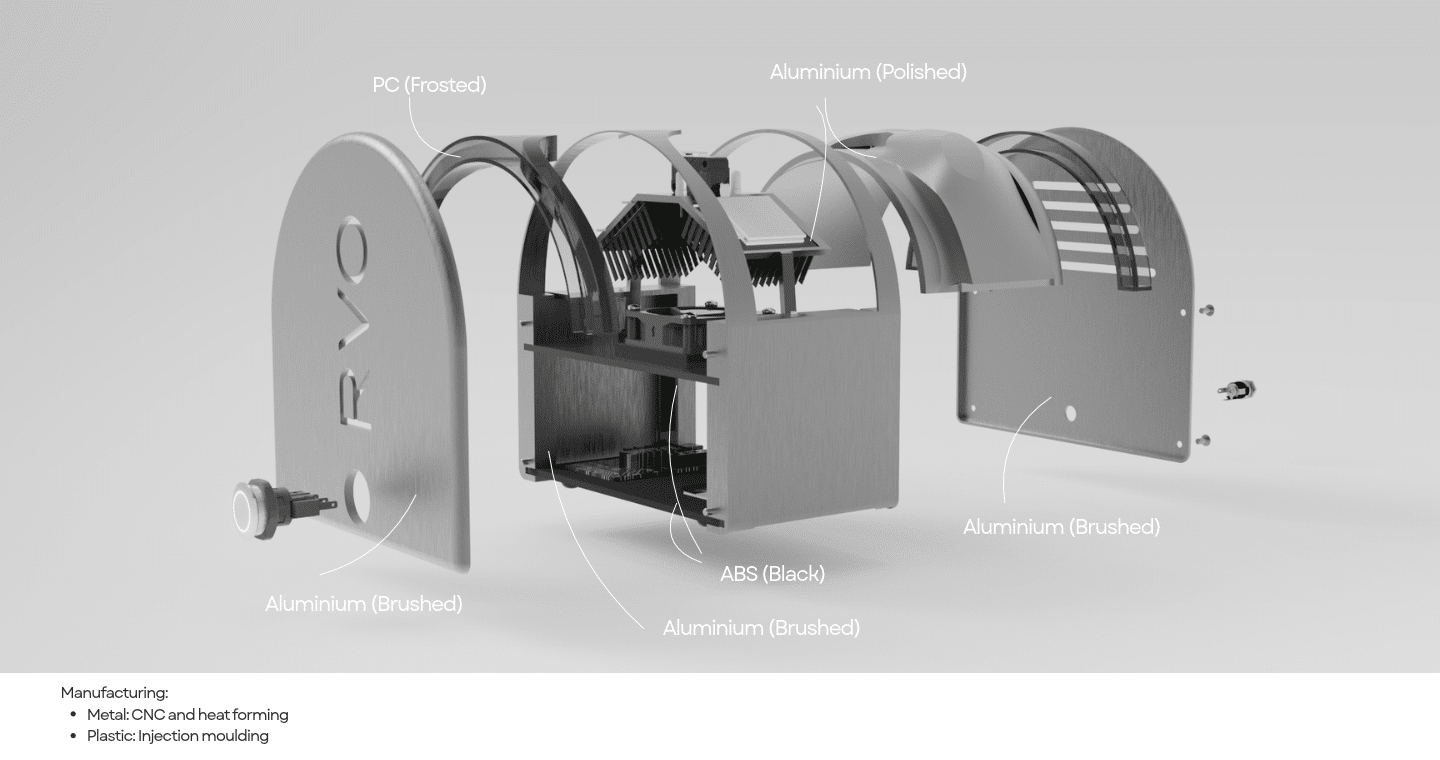
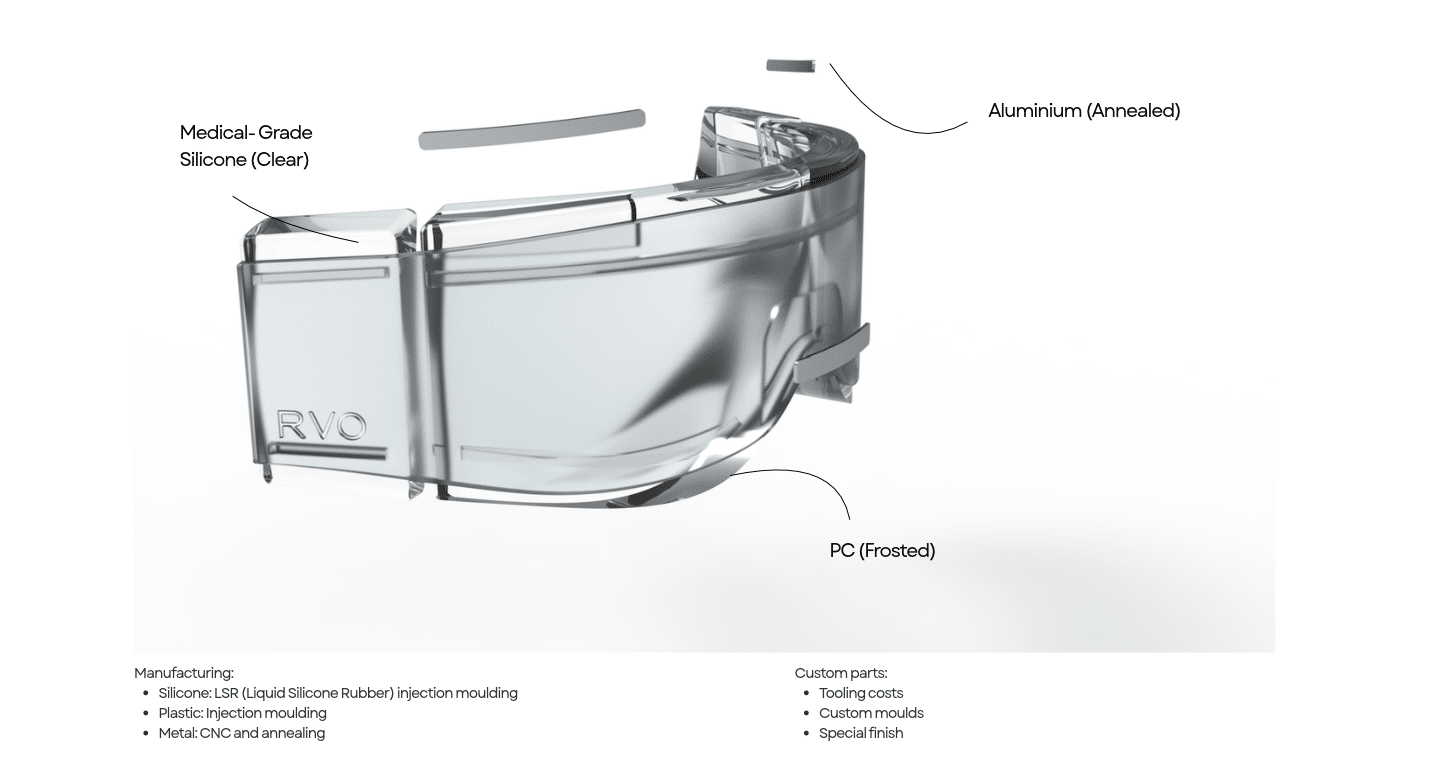
Medical-Grade Silicone
Medical-grade silicone was selected for its skin compatibility, softness and flexibility, making it suitable for repeated facial contact. Its ability to conform to individual facial contours creates a cushioned, supportive fit while maintaining consistent contact across the cooling surface. This flexibility also allows the mask to accommodate variations in facial shape without compromising comfort.
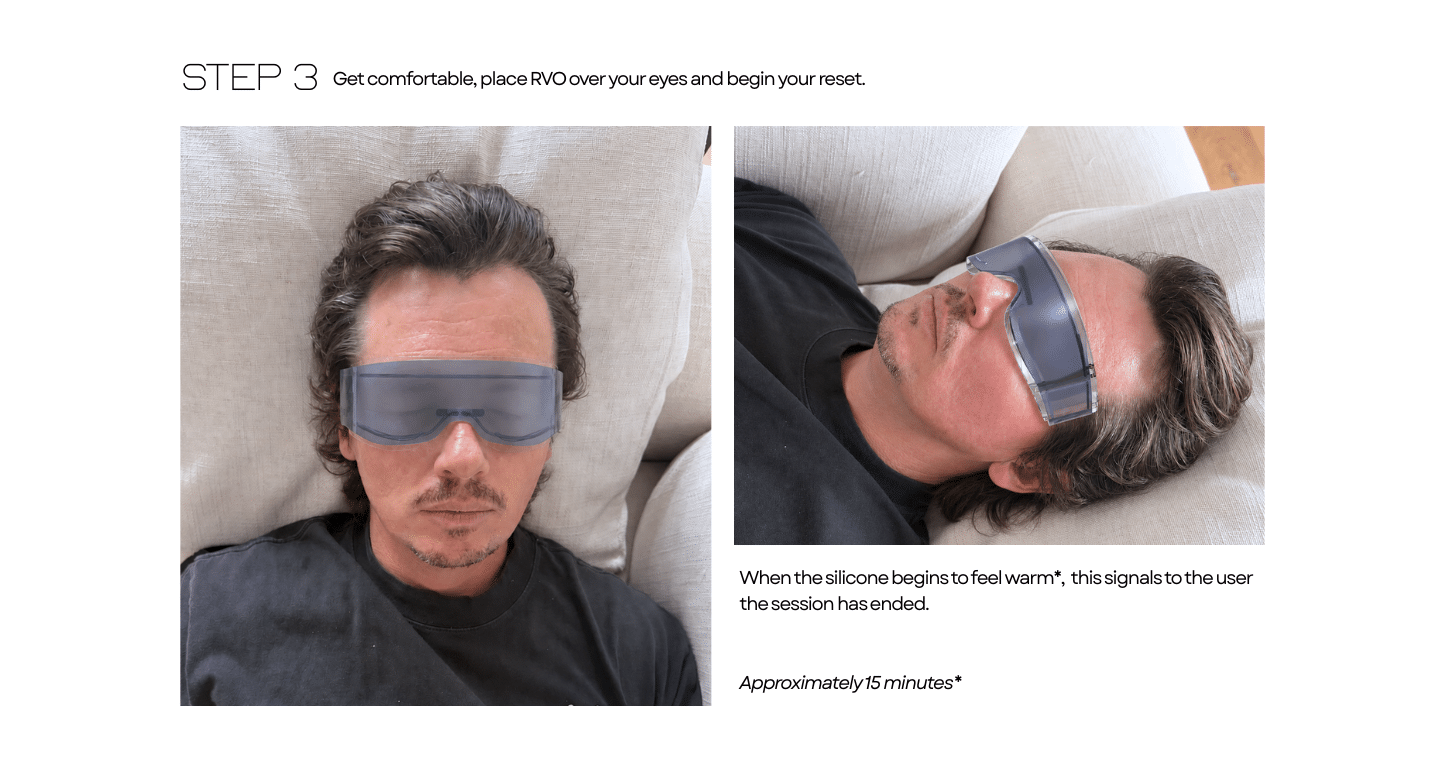
Prototype testing demonstrated that the silicone retained a noticeable cooling sensation for approximately 15 minutes when refrigerated, making it suitable for a short, intentional recovery session. Its durability and ease of cleaning further support its use as a reusable product.
Beyond its functional properties, silicone plays an important role in creating RVO’s intended sensory transition. The initial cool sensation provides a distinct physical contrast to the warmth of the face and surrounding environment, helping establish a deliberate shift away from the working day and towards relaxation. Its soft-touch finish reinforces this experience, complementing RVO’s focus on comfort, functionality and a premium user experience.
Aluminium
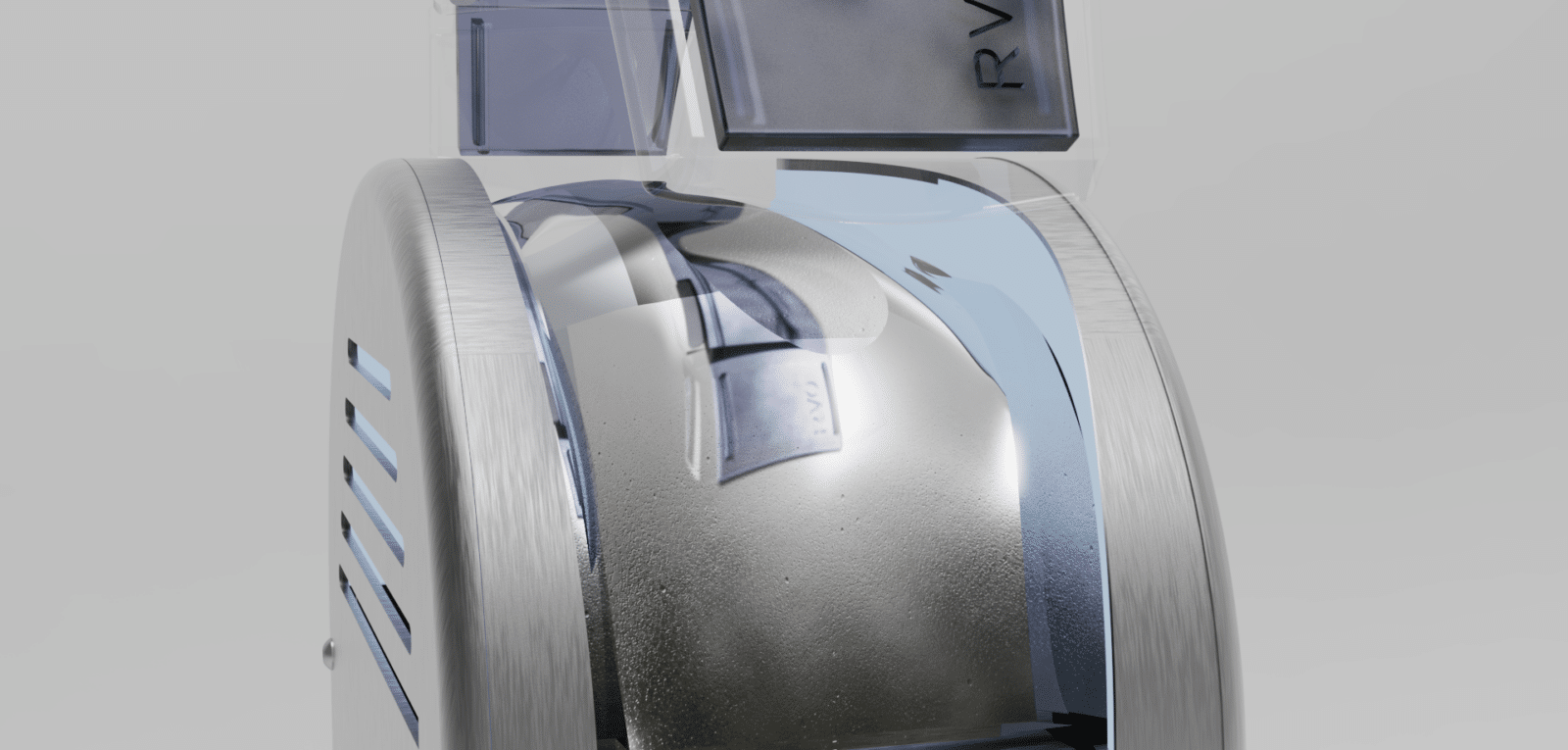
Aluminium was selected for its excellent thermal conductivity, lightweight properties and premium appearance. Its ability to transfer thermal energy efficiently helps distribute the cooling sensation evenly across the silicone contact surface, supporting a consistent and comfortable cooling experience.
Its brushed and polished finish introduces a refined, understated aesthetic that aligns with RVO’s premium design language. Aluminium also offers structural strength and durability, making it suitable for a reusable product while maintaining a lightweight and portable form. Its naturally cool-to-touch surface further reinforces the sensory experience, creating a tactile contrast between the precision-engineered metal and the soft, flexible silicone.
Polycarbonate (PC)
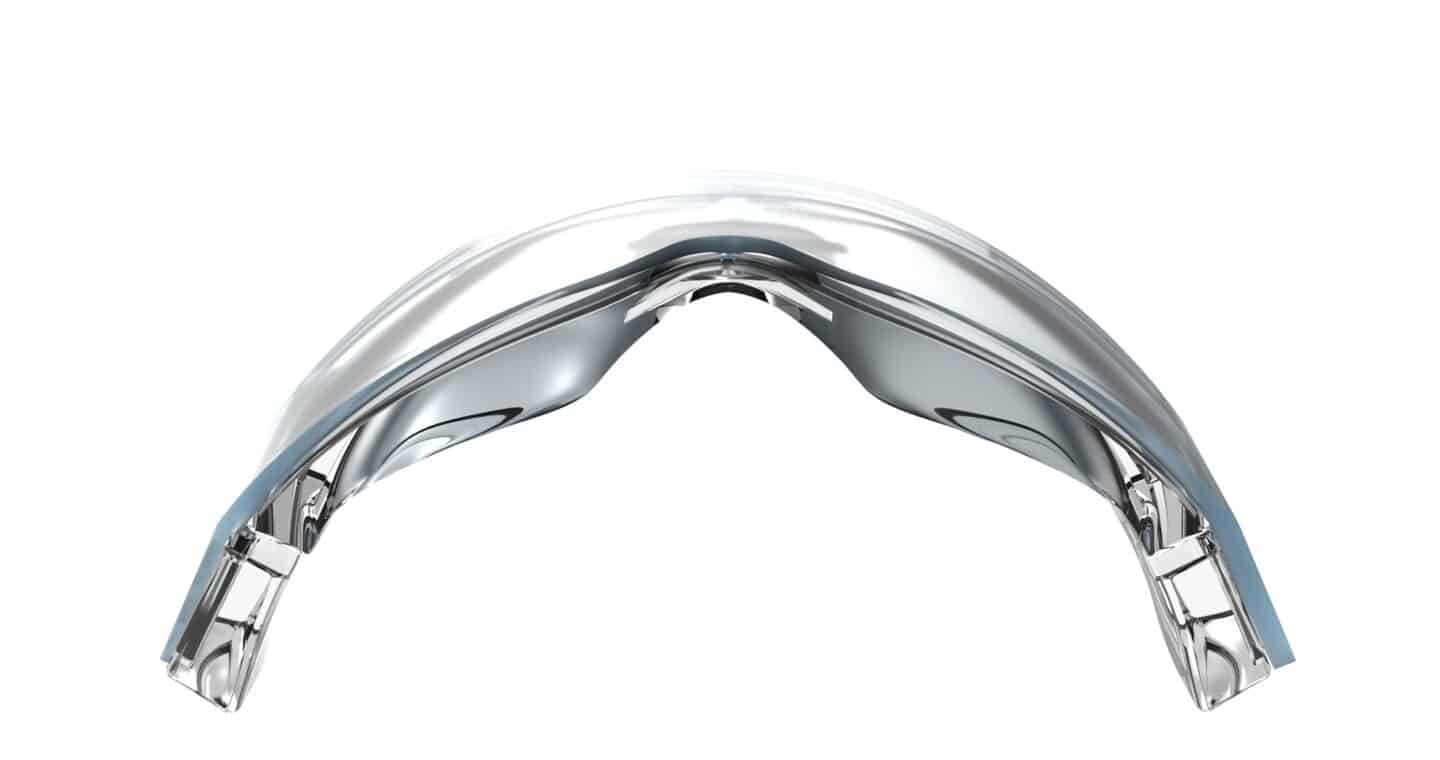
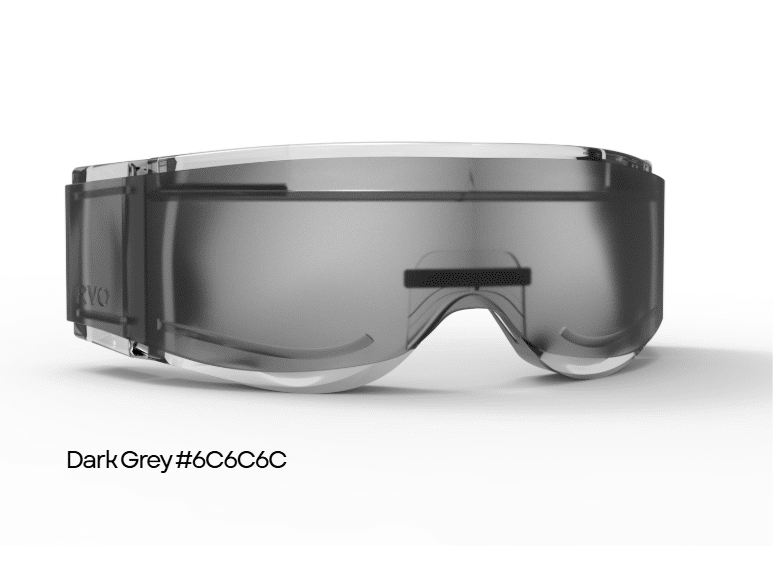
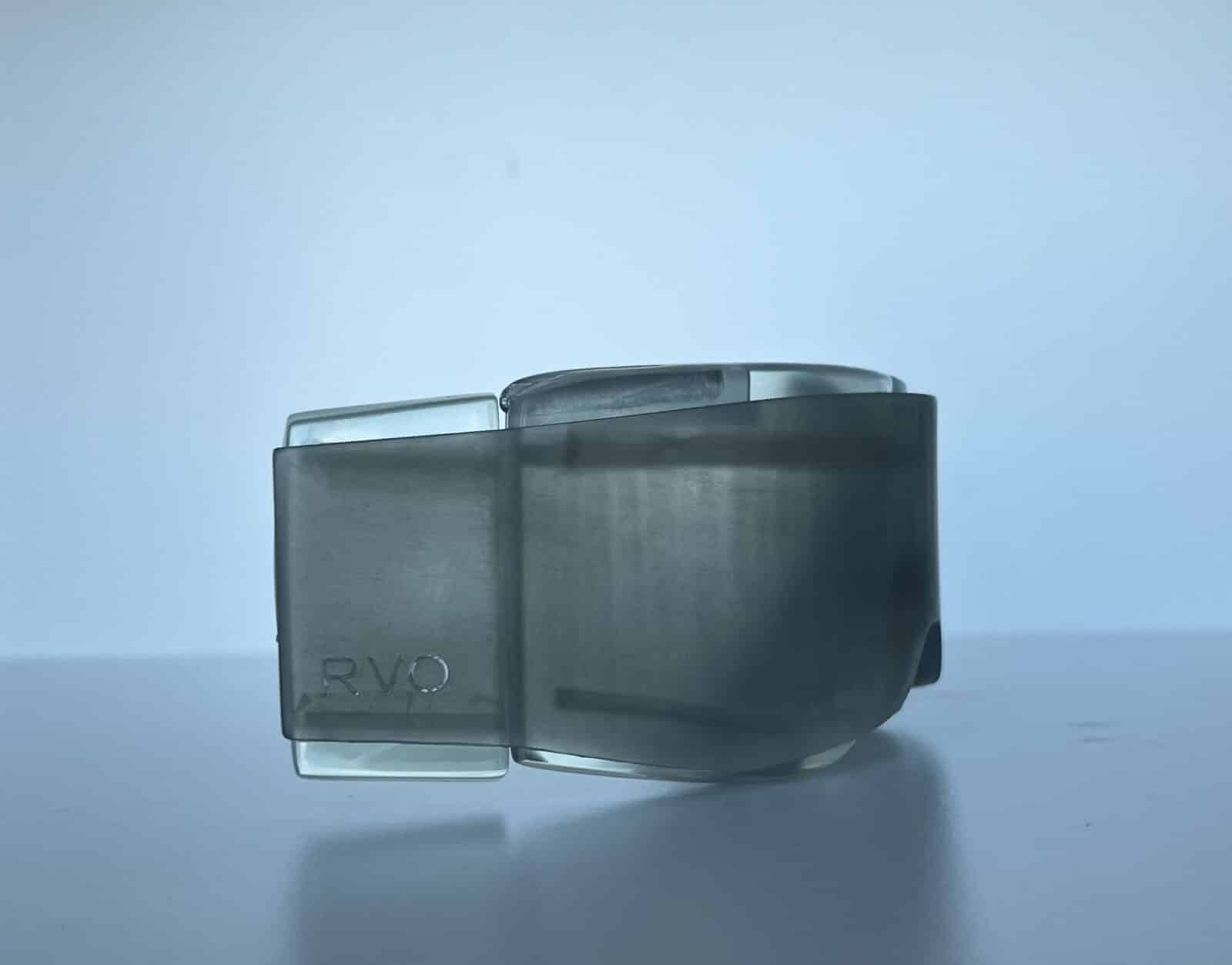
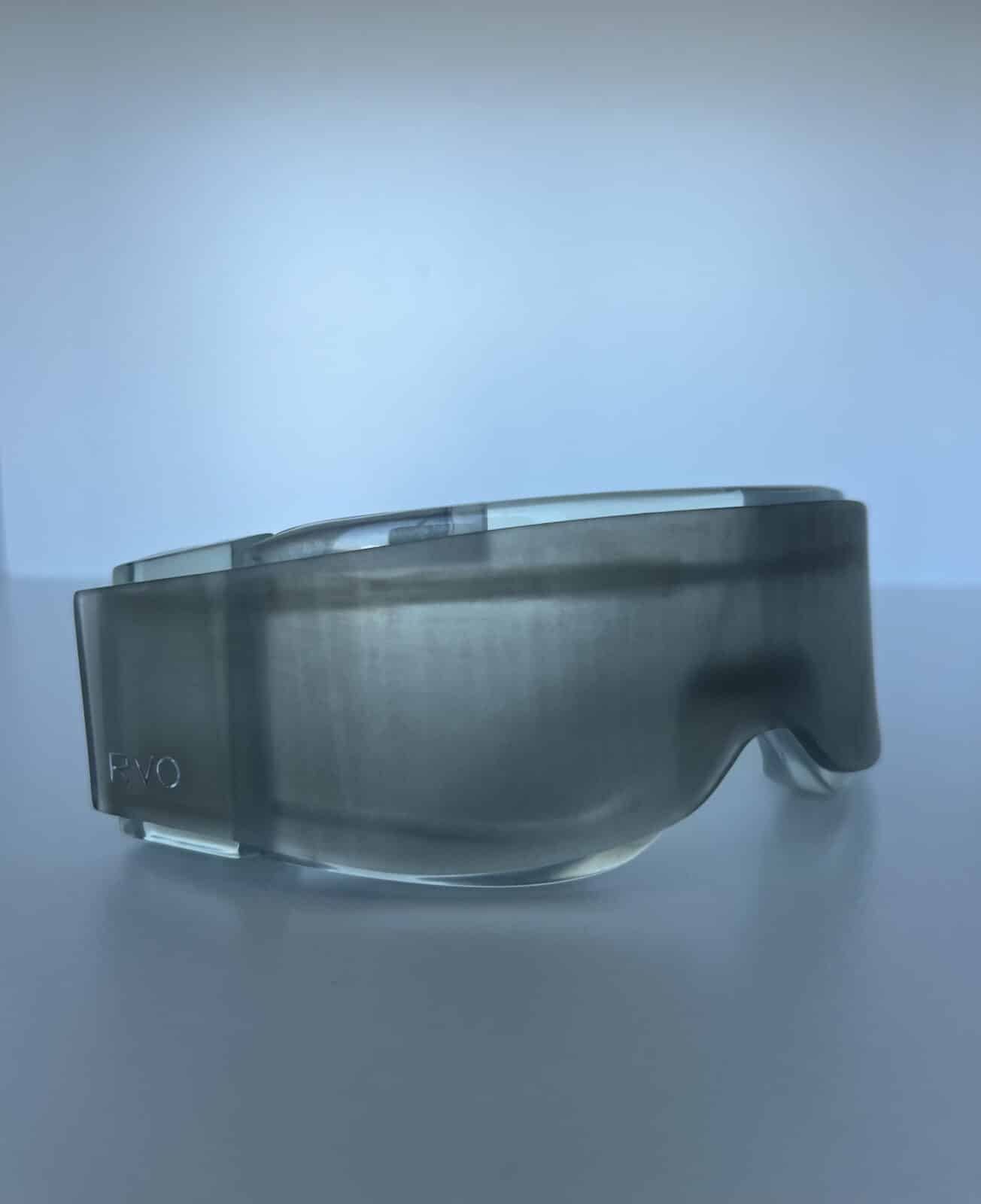
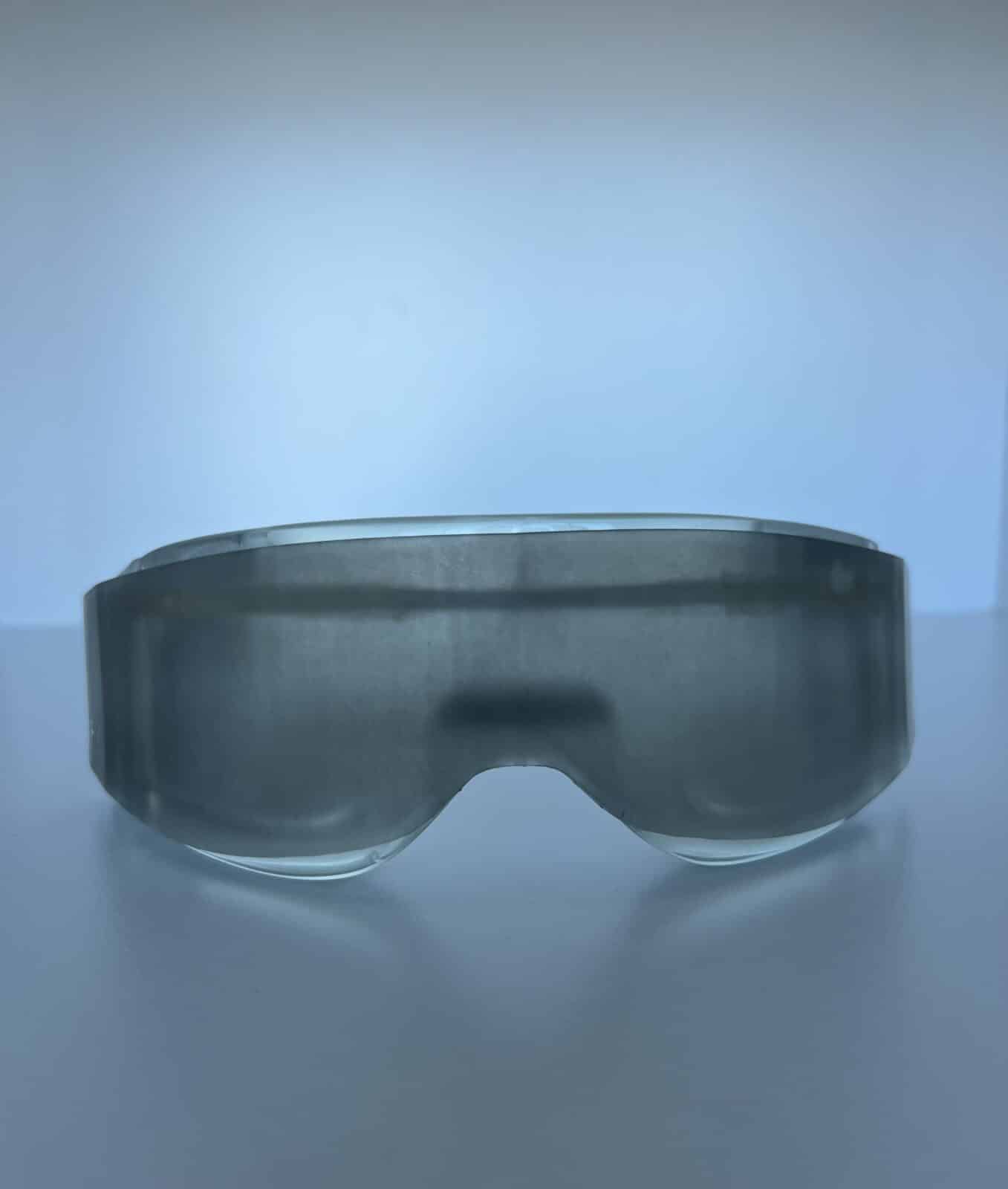
Polycarbonate was selected for the mask lens due to its lightweight, durable and impact-resistant properties, making it suitable for a product designed for repeated handling and use. Its ability to be manufactured with a frosted, translucent finish also supports RVO’s visual identity.
The frosted surface softens reflections and conceals the internal components, creating a seamless, understated appearance. This allows the lens to complement the brushed aluminium and soft silicone elements while maintaining a clean, contemporary aesthetic.
Ergonomics
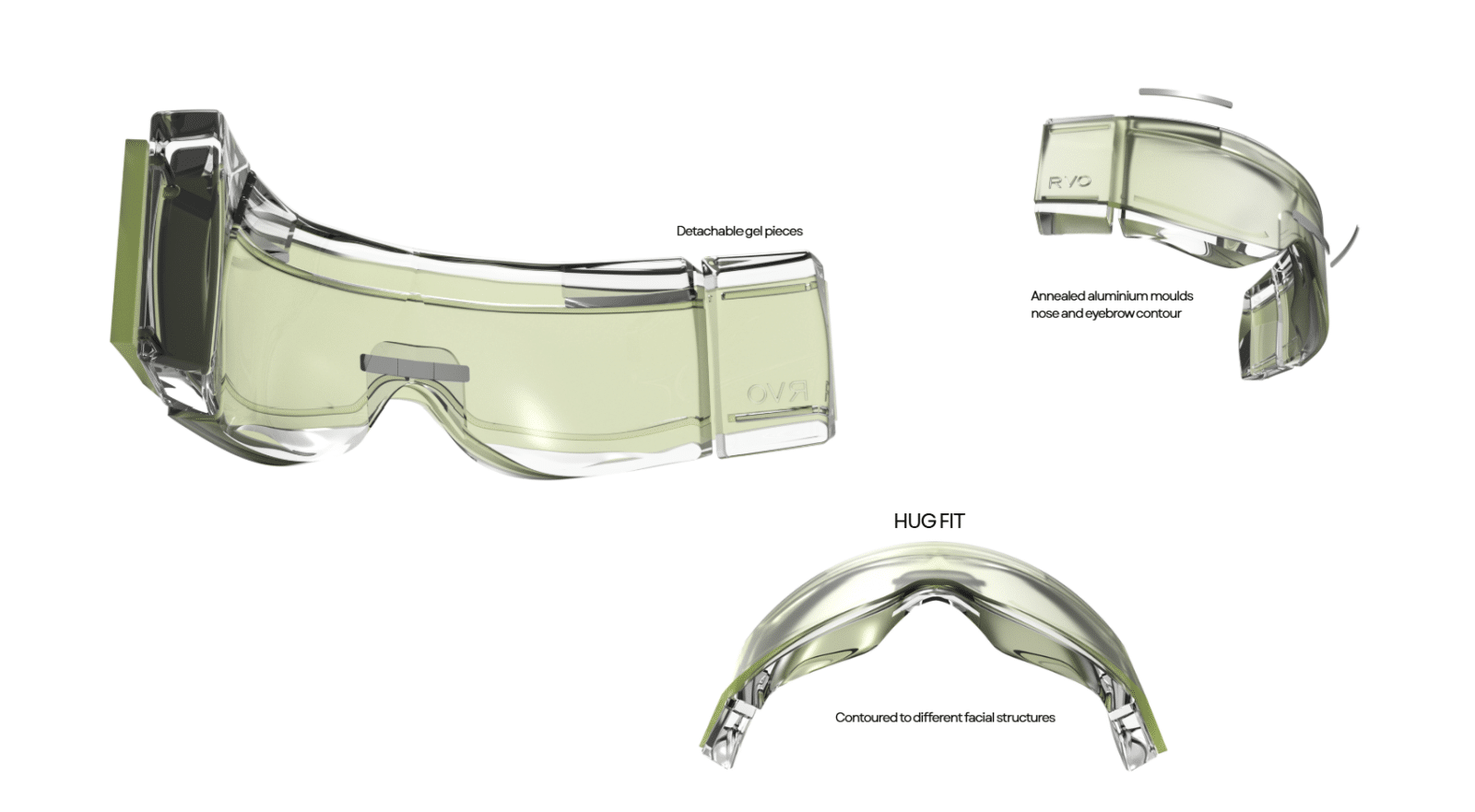
Adjustable gel pieces
RVO incorporates interchangeable temple pieces to accommodate different head widths and provide a more personalised fit.
Each masks comes with three different widths for users to choose from: 9mm, 12mm and 15mm. There is a 3mm thickness difference that caters for all user groups cooling comfort and pressure preferences.
Annealed aluminium nose bridge
The nose bridge incorporates a shapeable annealed aluminium strip, designed to accommodate a wide range of nose shapes and bridge profiles. Its malleability allows users to gently adjust the contour for a more personalised fit, helping maintain consistent contact between the silicone and the surrounding facial areas. The adjustable structure also helps keep the mask securely positioned while the user is lying down, preventing it from shifting during the recovery session.
Annealed aluminium eyebrows
The mask incorporates an annealed aluminium strip along the eyebrow region, designed to provide gentle, adjustable pressure while maintaining the mask’s contour against the face. Annealing softens the aluminium, allowing it to be carefully shaped to accommodate different facial profiles. The strip also provides structural support, helping the silicone maintain a secure and consistent fit.
‘Hug fit’
The mask has been designed to follow the natural contours of the face, creating a supportive ‘hug fit’ that maximises comfort across the contact areas. The eye sockets are recessed to minimise direct contact with the delicate eyelid region, reducing sensitivity to cold temperatures while maintaining a comfortable fit around the eyes.
Sizing chart
Size guide based on temple width
S= 120-130mm
M= 130-140mm
L= 140-150mm
AESTHETICS
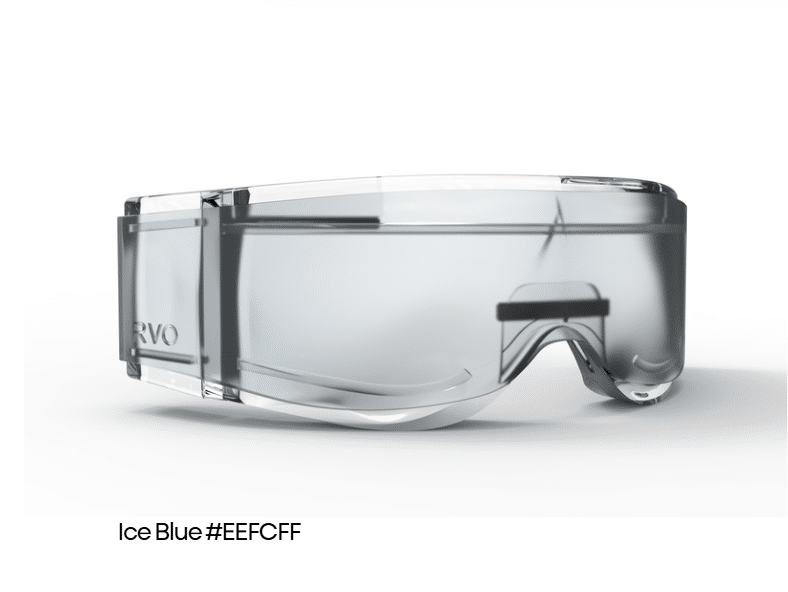
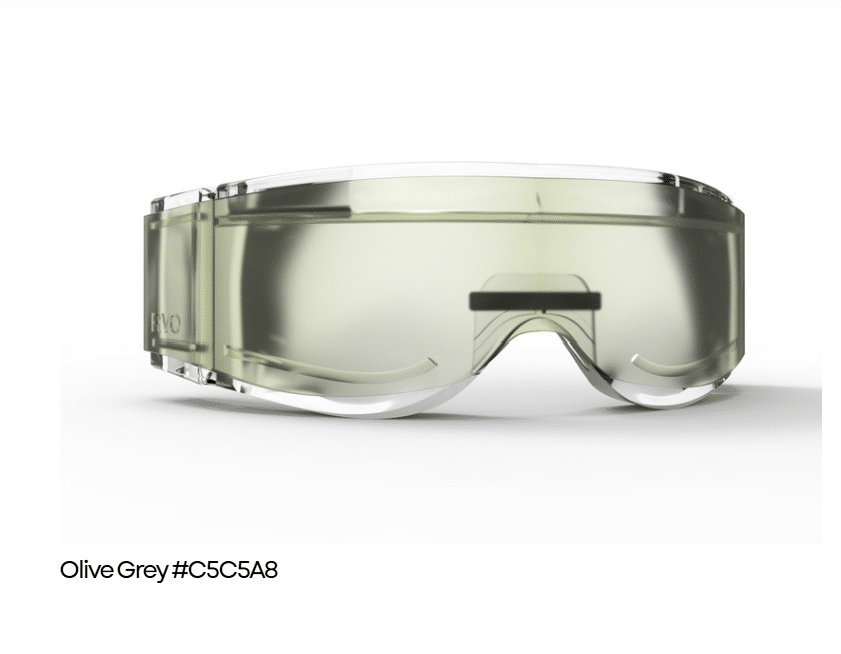
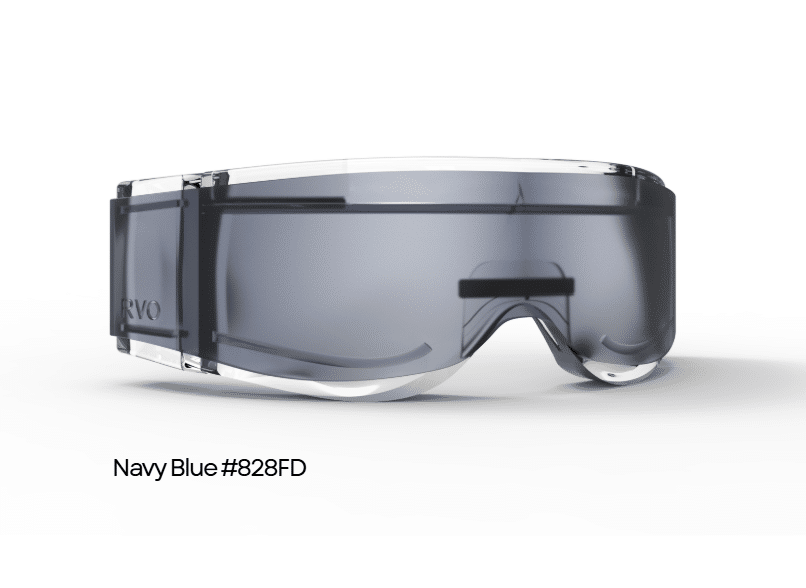
RVO balances the aesthetics of wellness and technology. Designed with a predominantly male demographic in mind, its restrained, unisex colour palette ensures broader appeal.
The mask is intentionally analogue, with all technology housed in the base. Its transparent, frosted finish and soft, flowing curves communicate clarity, comfort and calm, creating a refreshing and contemporary wellness aesthetic.
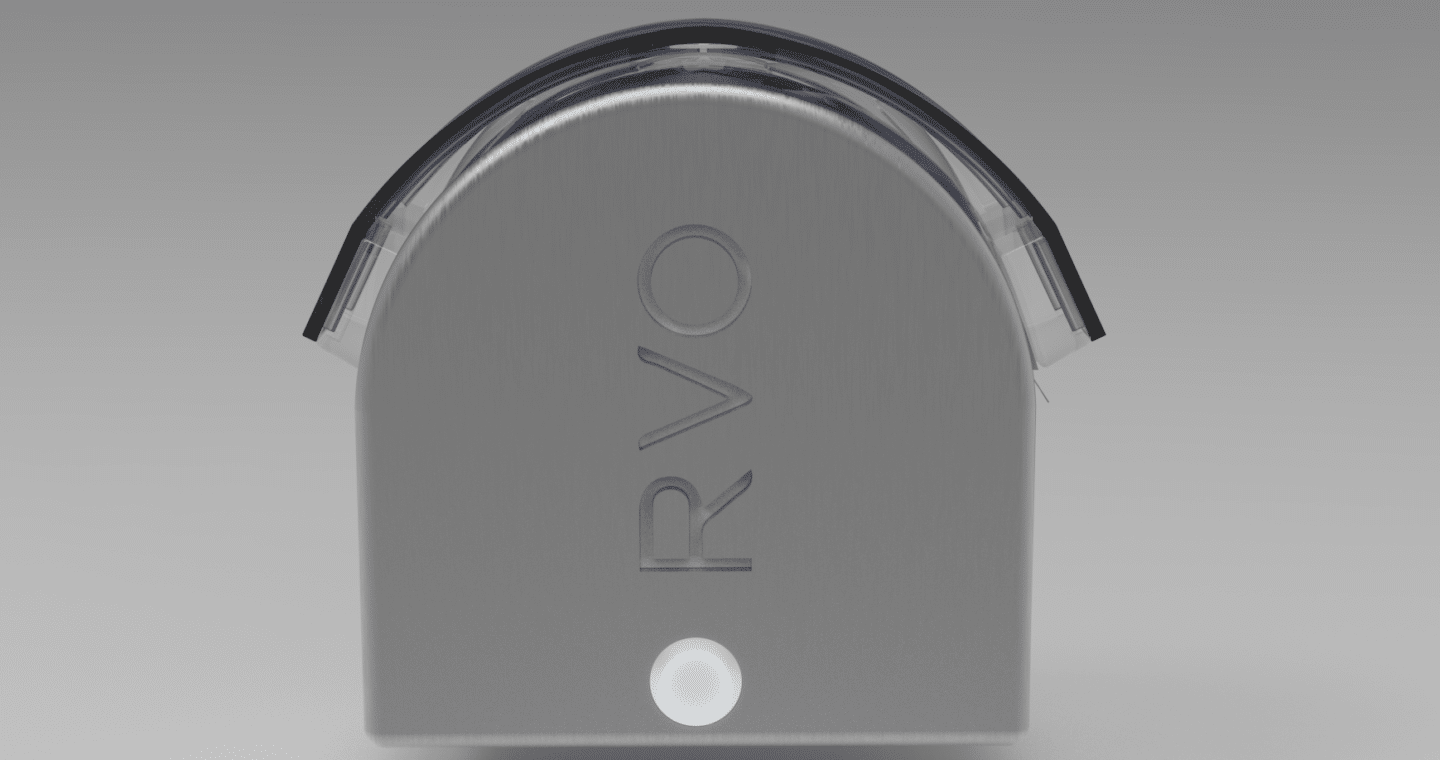
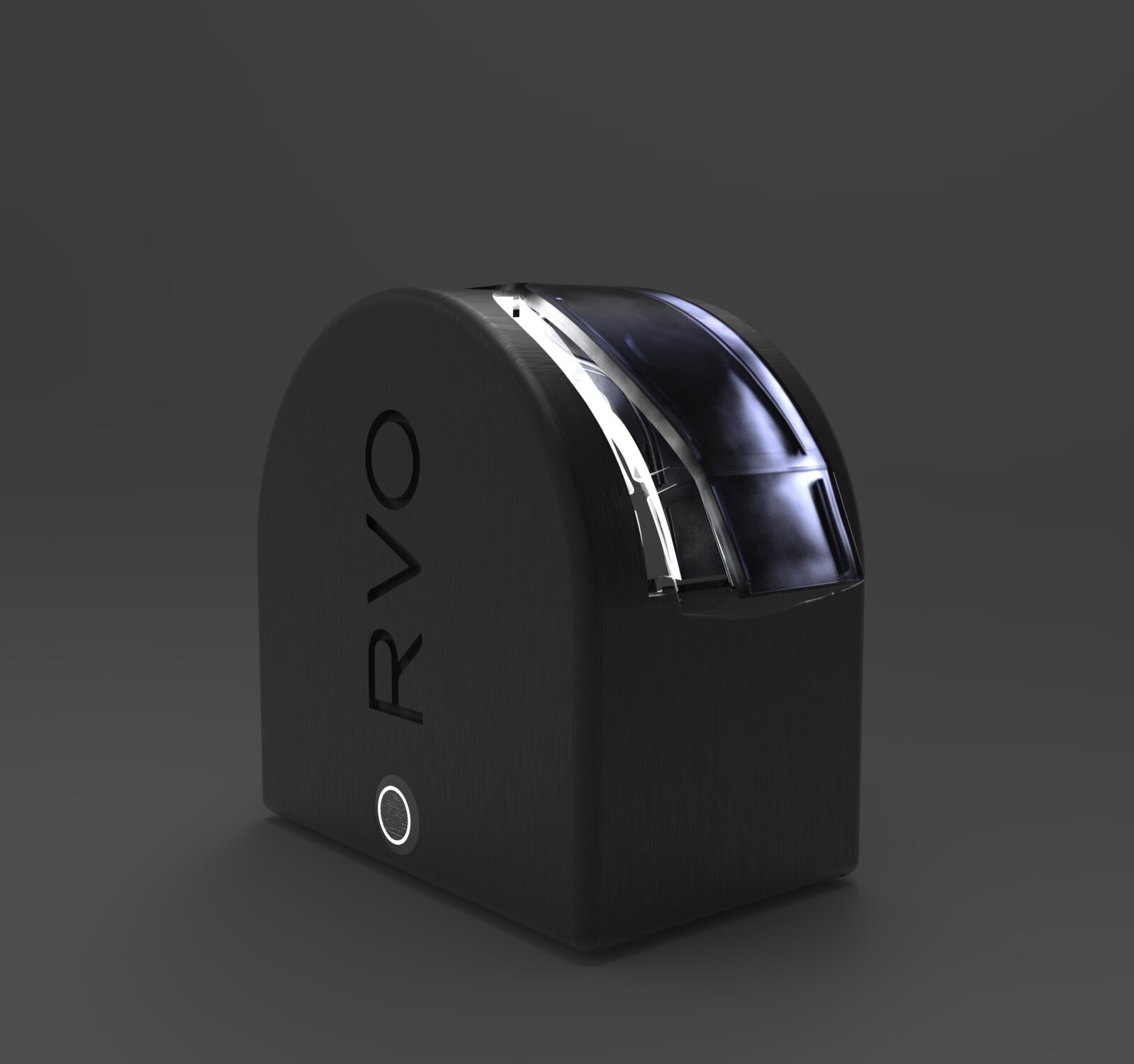
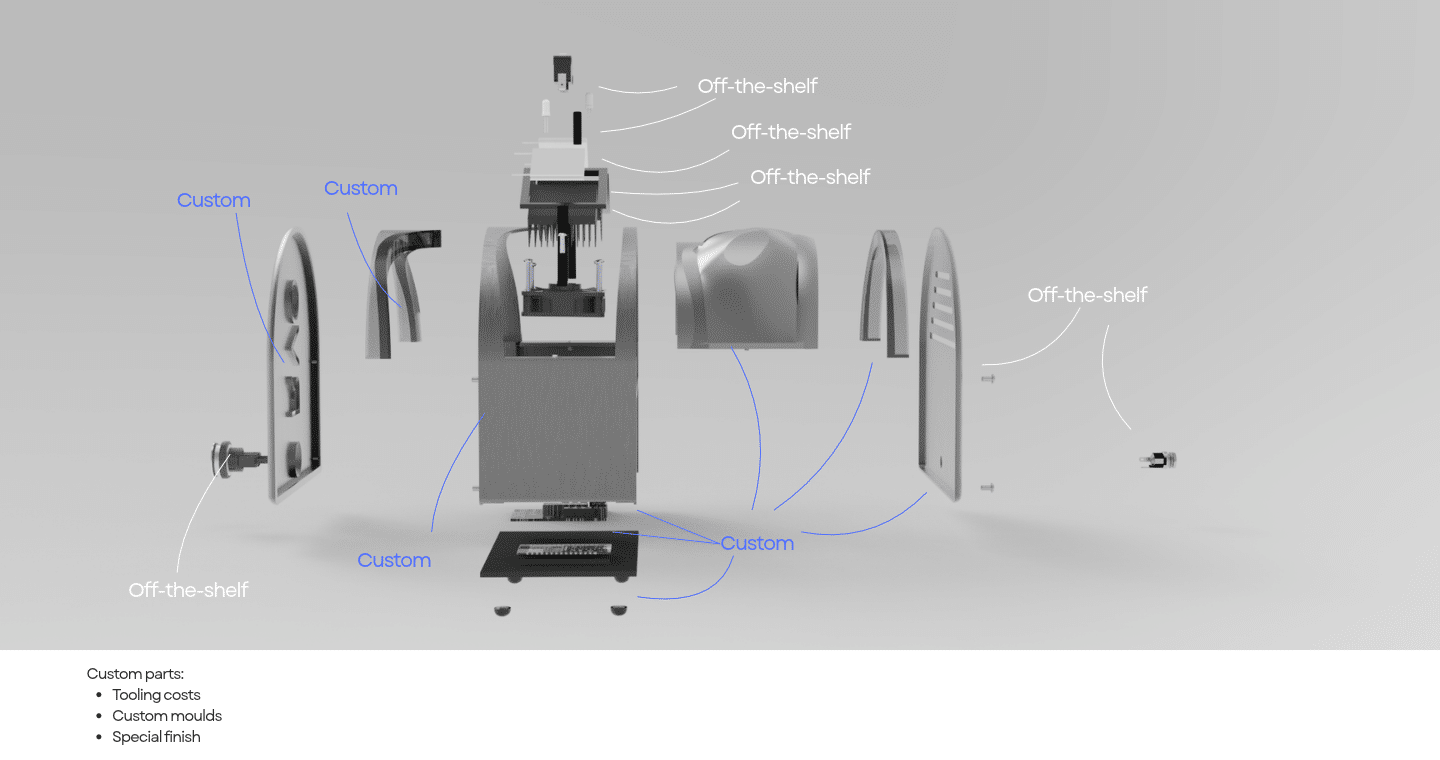
In contrast, the base features brushed aluminium and clean detailing to reflect its technical function. Designed as a refined desk accessory, it integrates into the user’s workspace while balancing the softness of the mask with a more engineered aesthetic.
THE MODEL
RVO
your afternoon reset.
Charlize Challen
Charlize is an Industrial Designer with a background in Marketing and a passion for exploring the relationship between design, people and business. She approaches design with a multidisciplinary perspective, combining creative thinking, research and commercial awareness to develop meaningful solutions. Driven by curiosity about human behavior, she is particularly interested in how product, brand and experience come together to shape everyday life.