the problem
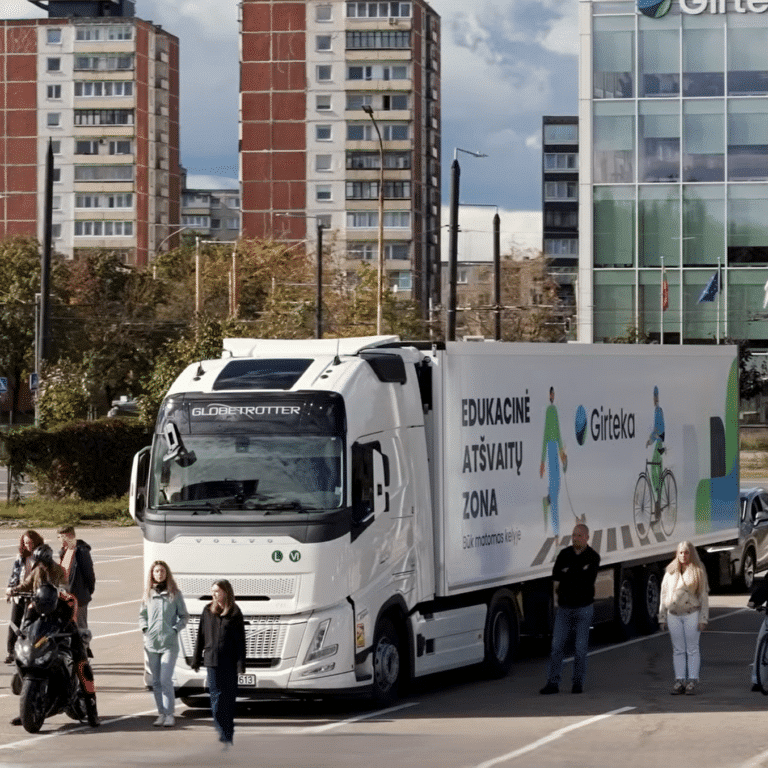
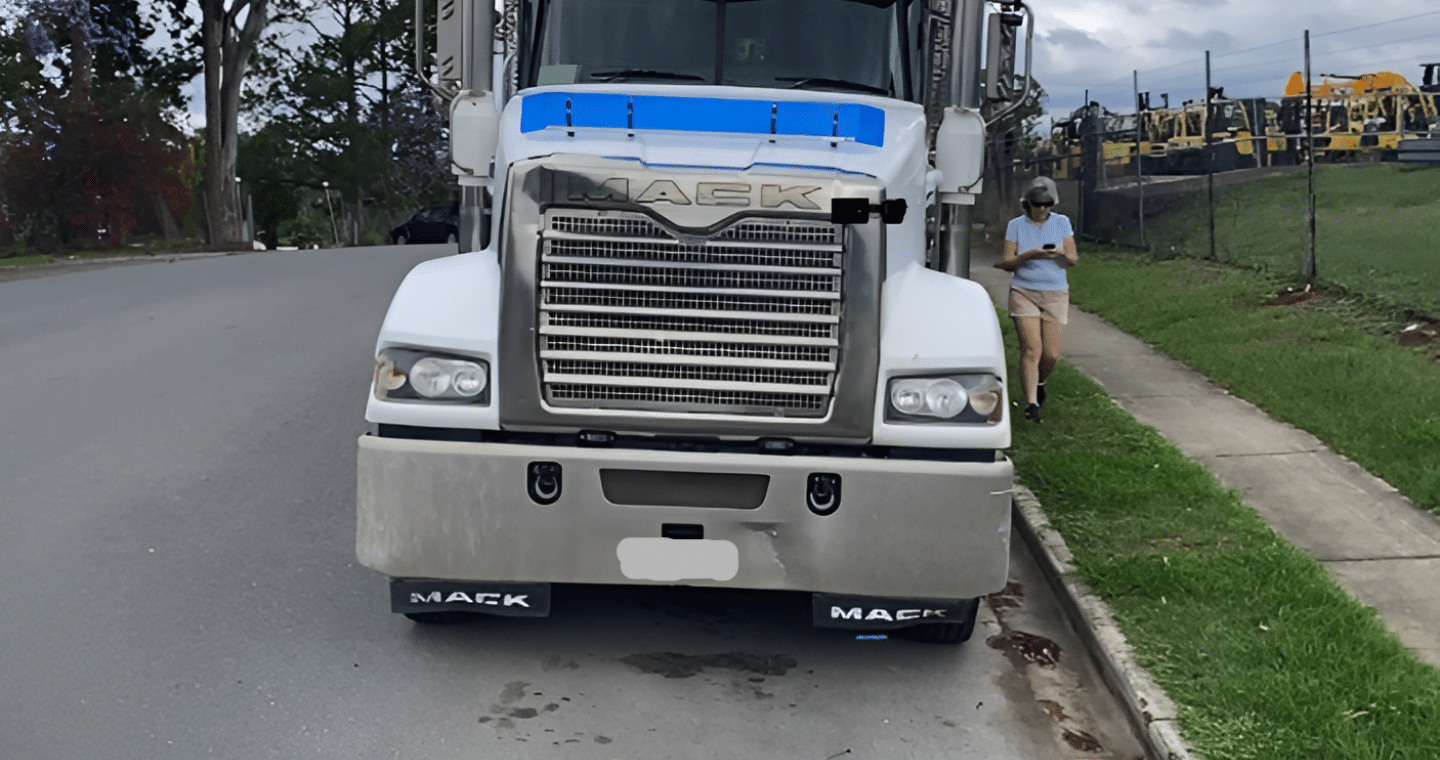
Heavy vehicles carry the goods Australia runs on, but they share the road with people their drivers often can’t see. In the 12 months to March 2026, 225 people died in crashes involving a heavy vehicle in Australia, a 22.3% increase on the year before. Every truck has blind spots: directly in front of the cab, beside the driver’s door, behind the trailer, and a large zone along the passenger side. Mirrors and cameras help the driver, but they do nothing for the pedestrian, cyclist or motorcyclist standing in that zone, who usually have no idea they can’t be seen. Most blind-spot systems respond by adding more alarms in the cab. This project asked a different question: what if the person on the ground knew too?
Only 4% of Australian drivers could correctly identify all of a truck’s blind spots.
Transurban Insights: Road Safety, 2022
research
To find out whether blind spots are still a problem, and for whom, I used a mixed-methods approach. An online survey gathered 26 responses from truck drivers, vulnerable road users and the heavy vehicle industry, testing how well each group could identify a truck’s blind spots and how they felt about current safety systems.
Five semi-structured interviews then went deeper: two truck drivers, a cyclist who is also a former truck driver, and two people from the heavy vehicle industry. Combining the survey’s numbers with the interviews’ lived experience meant findings could be cross-checked, and it showed where drivers and the public understand the problem differently.
70% of truck drivers identified the blind spot directly in front of the cab. Only 23% of vulnerable road users did.
RIGVISION survey, 2026
“There’s lots of things that drivers disable […] because they find them too nauseating or too interfering.”
Interview participant 1
One of the clearest findings was how little data exists. Blind-spot incidents aren’t routinely reported, so there’s no clean baseline for how often they happen or who they happen to. That makes the problem easy to overlook. But a lack of data isn’t a lack of a problem, and the people at the centre of it, both drivers and the people around their trucks, still need help now.
“Fifty truck drivers die a year […] and nobody seems to report or care about that […] and they remove it from the data.”
Interview participant 5
- Name
- Research Report | A Shared Responsibility: Reducing Truck Blind Spot Risk for Vulnerable Road Users
- File Type
- application
- File Size
- 1 B
- Link
- Download File
Design development
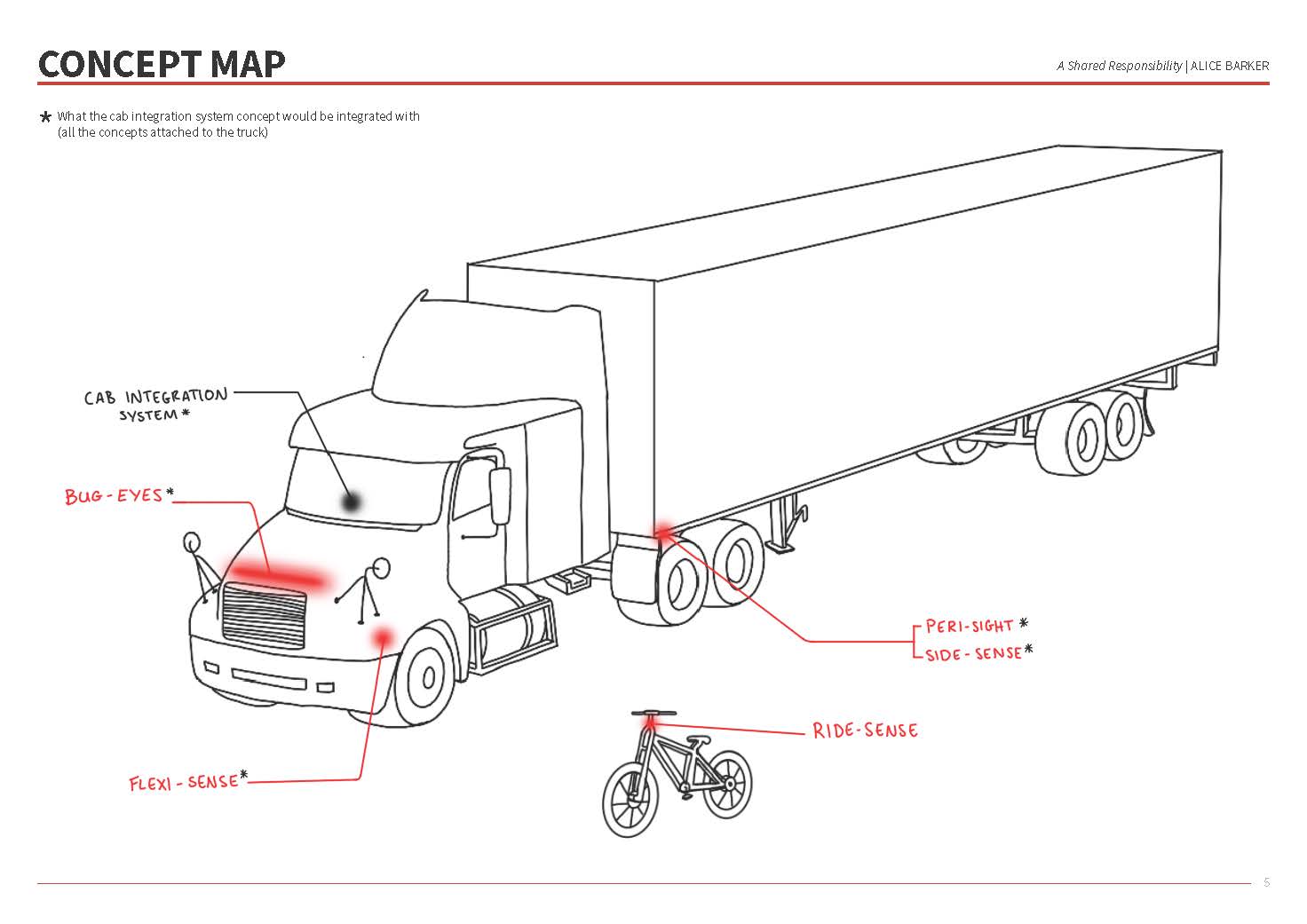
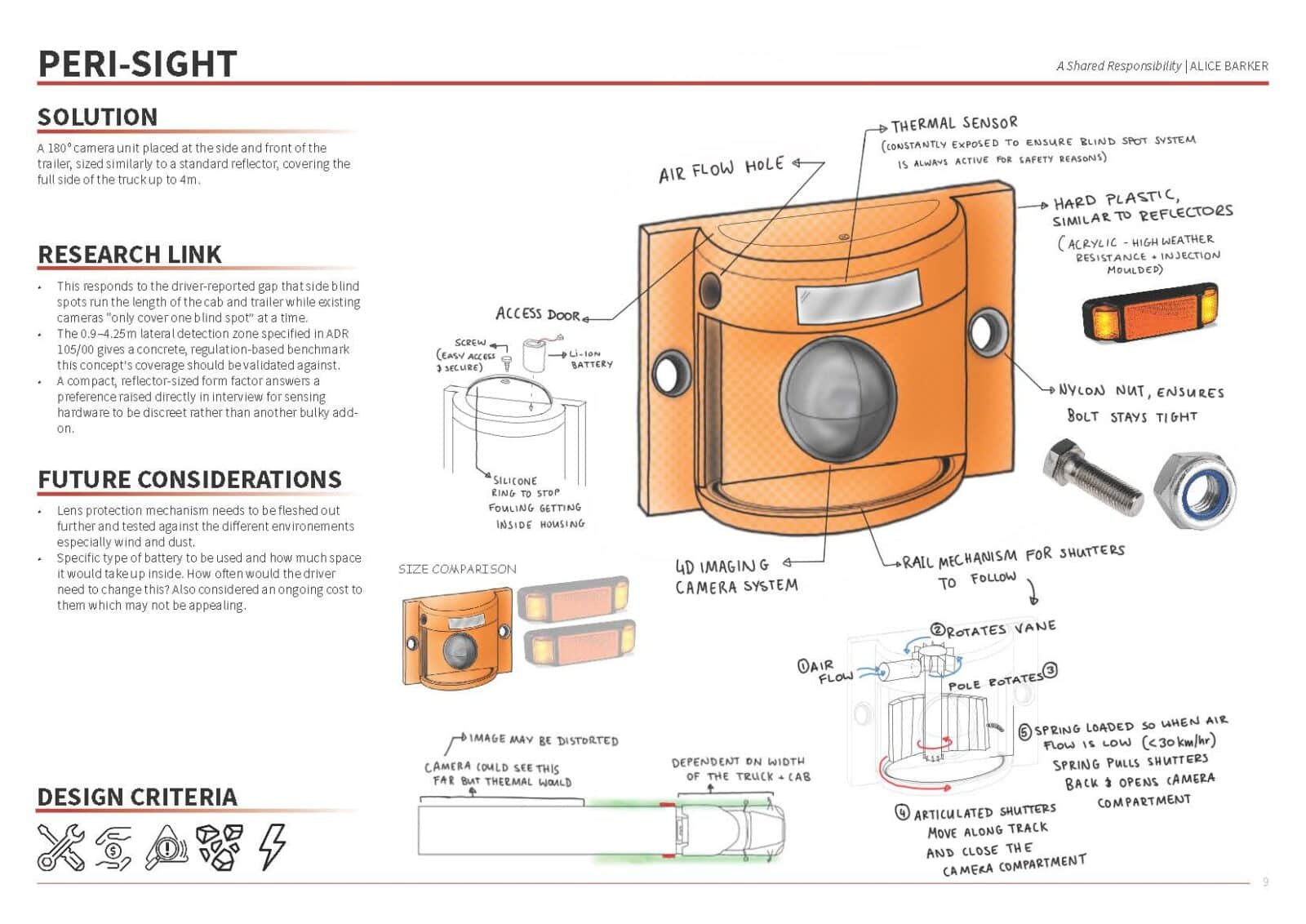
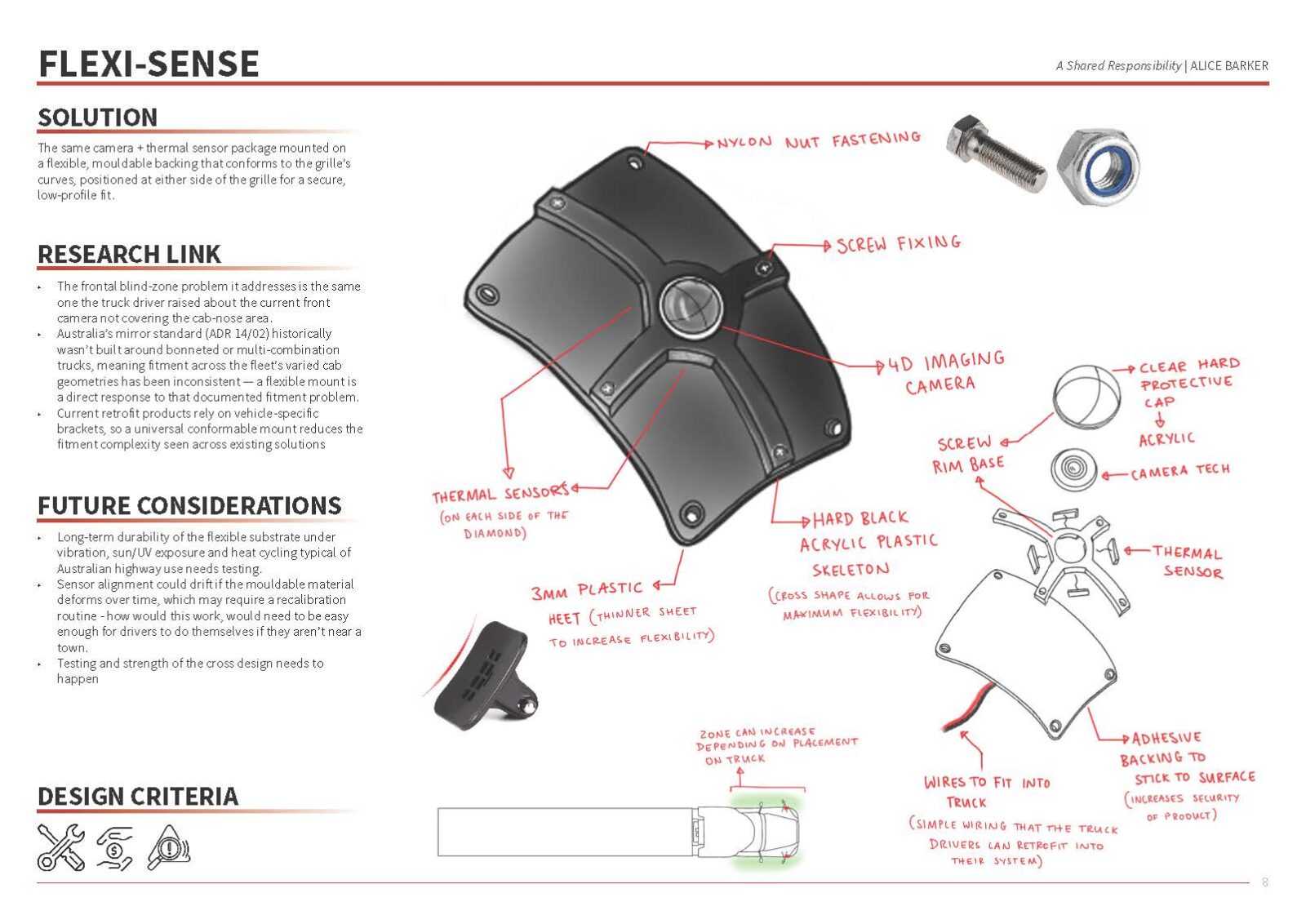
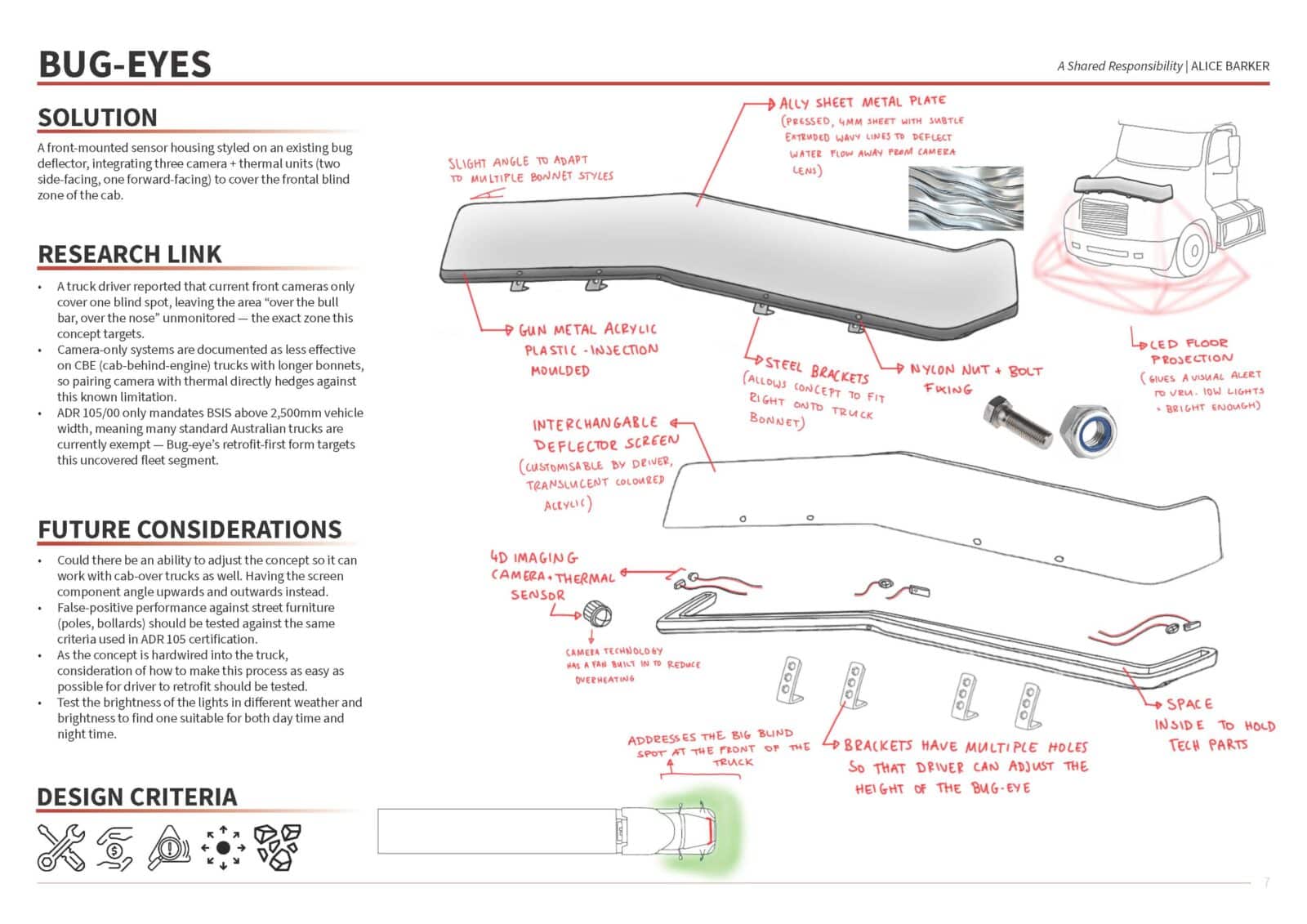
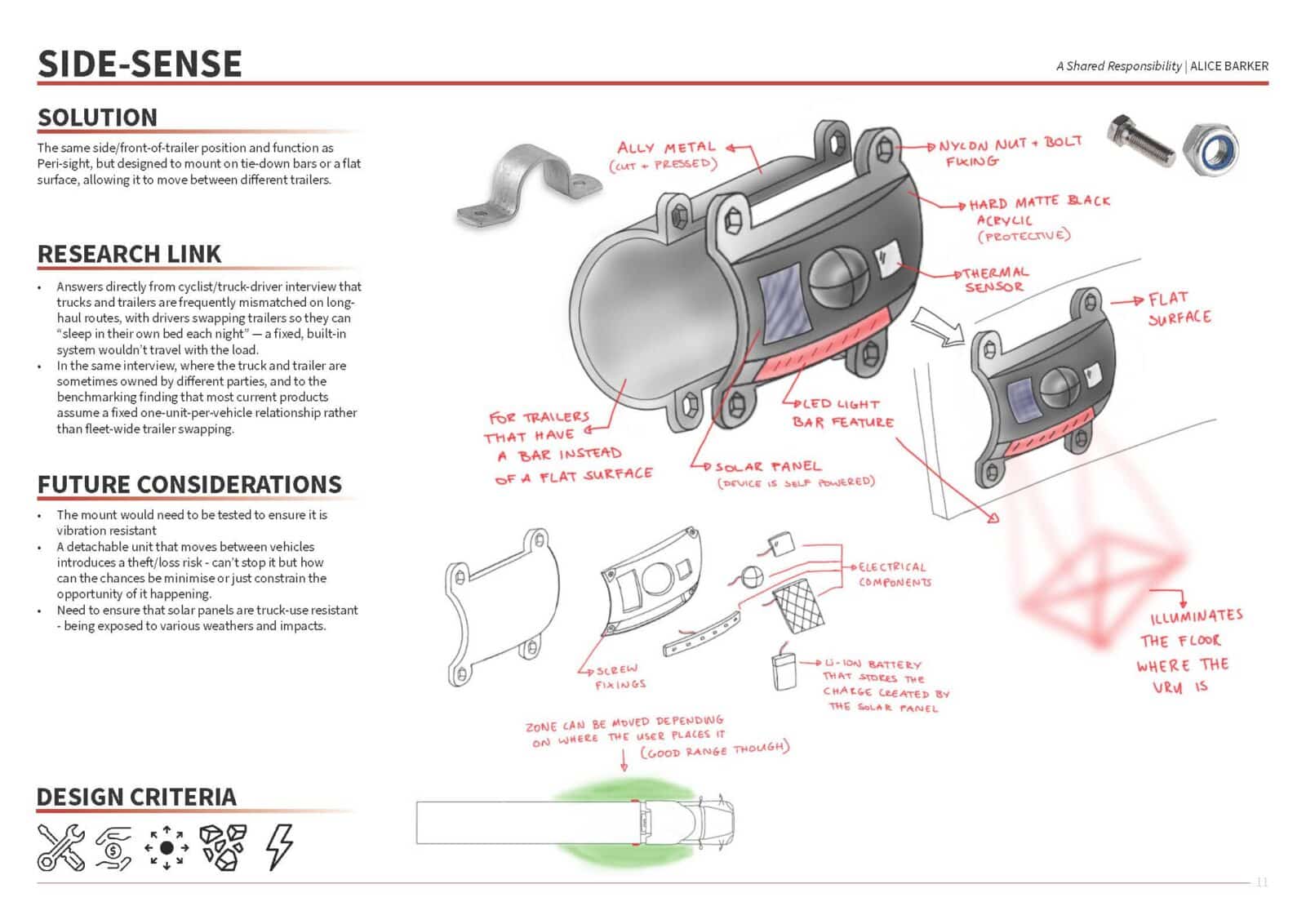
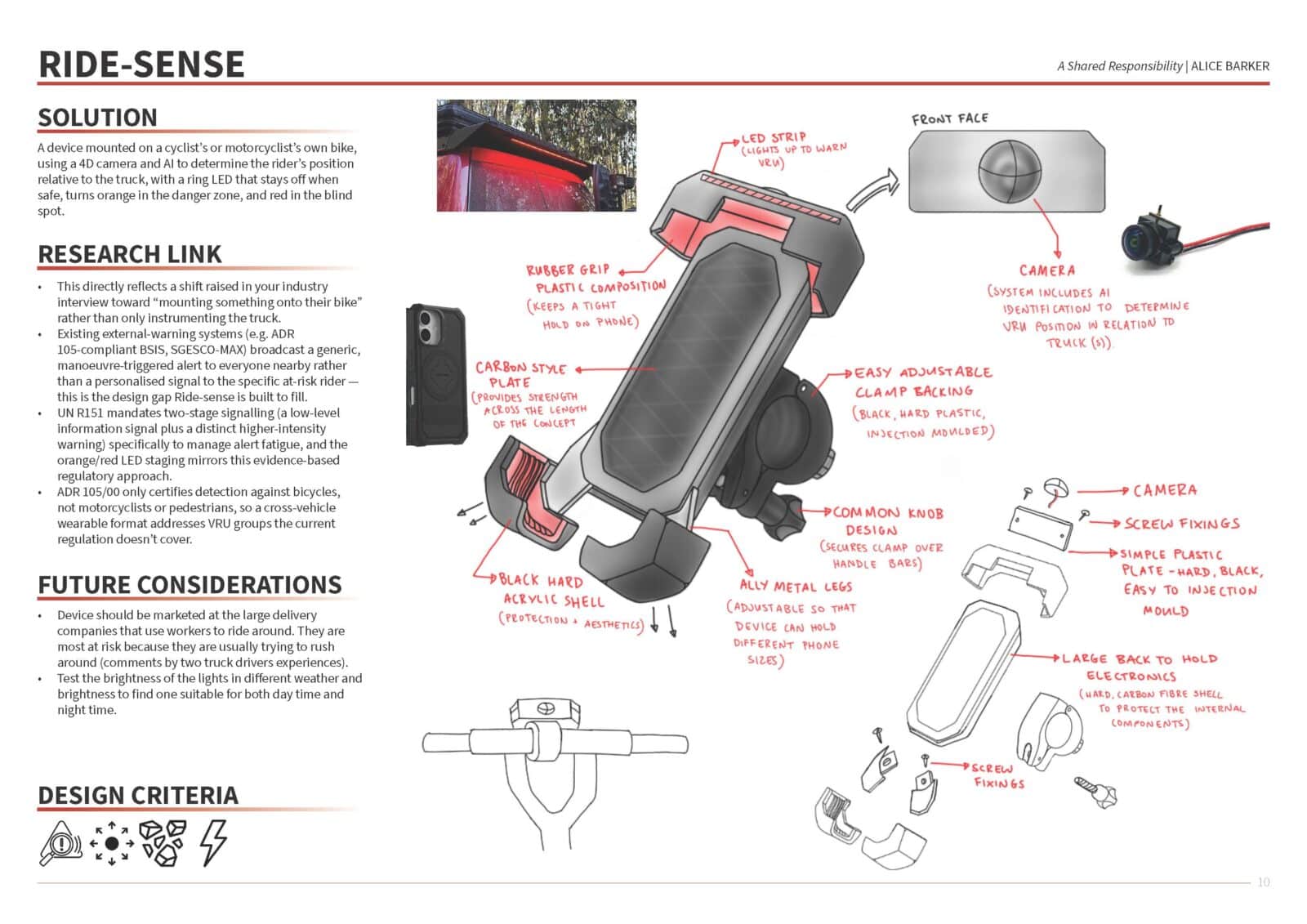
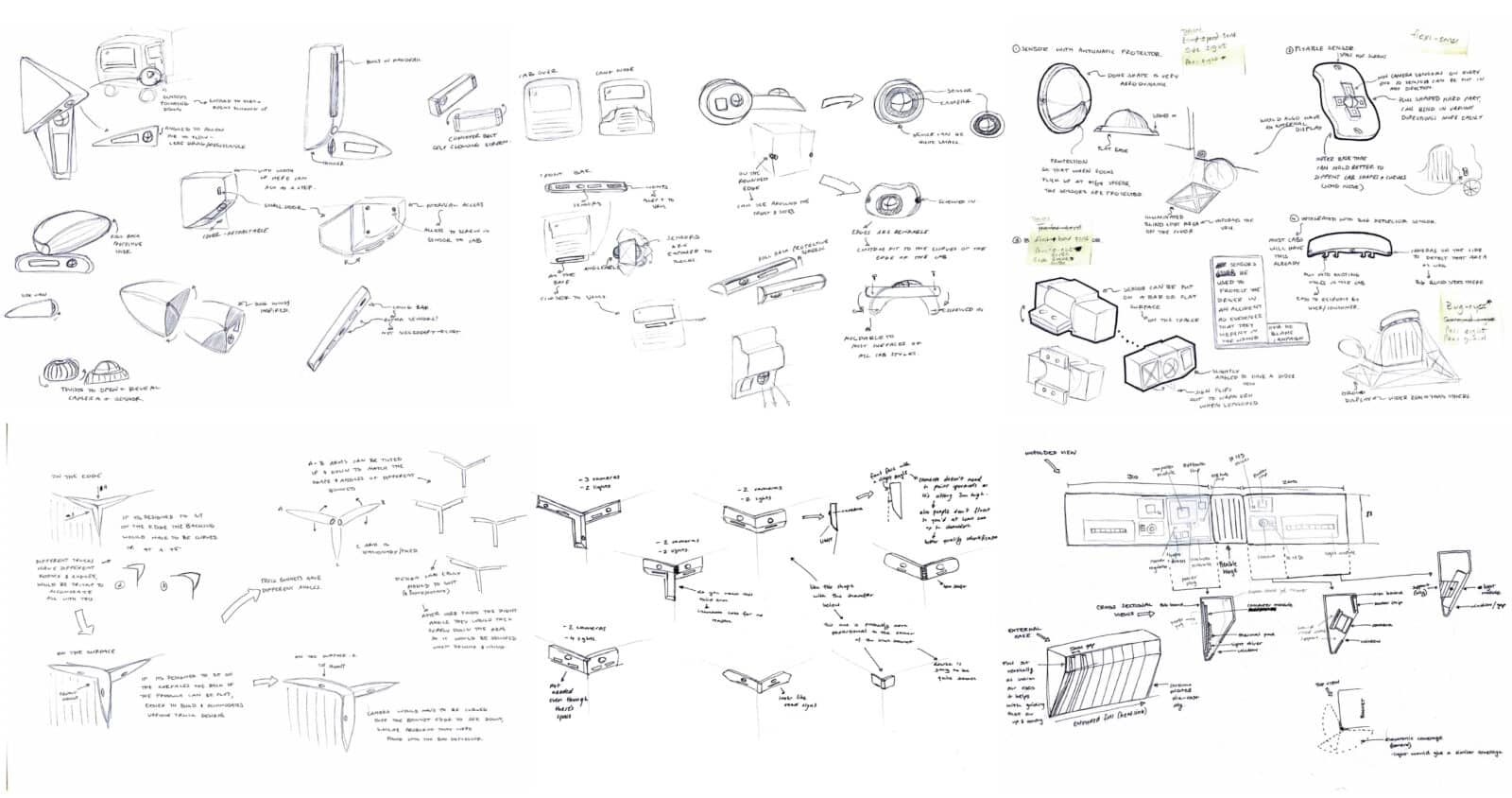
With the research pointing to a problem shared by drivers and the people around them, I explored concepts for different zones around the truck: the front, the sides, the wheels, and even one mounted on a cyclist’s bike. Each was assessed on user feedback, how accessible it would be, and how practical it was to fit, the same issues drivers raised in interviews. No single concept did it all, so RIGVISION combines the strongest parts of two. From concept, FLEXI-SENSE, came the wide-angle camera, styling and materials. From concept, BUGS-EYES, came the placement, targeting the front of the truck, the blind spot the public understands least.
RIGVISION
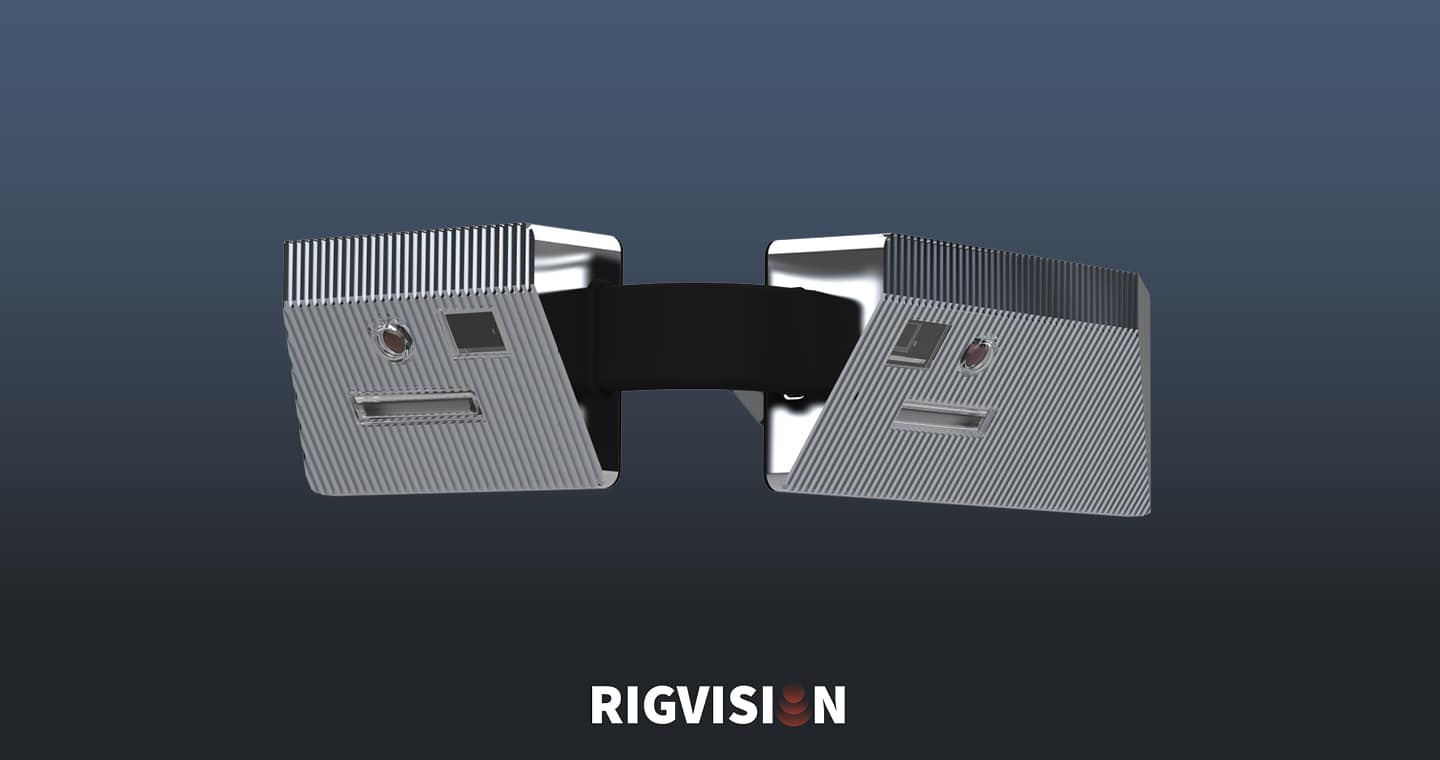
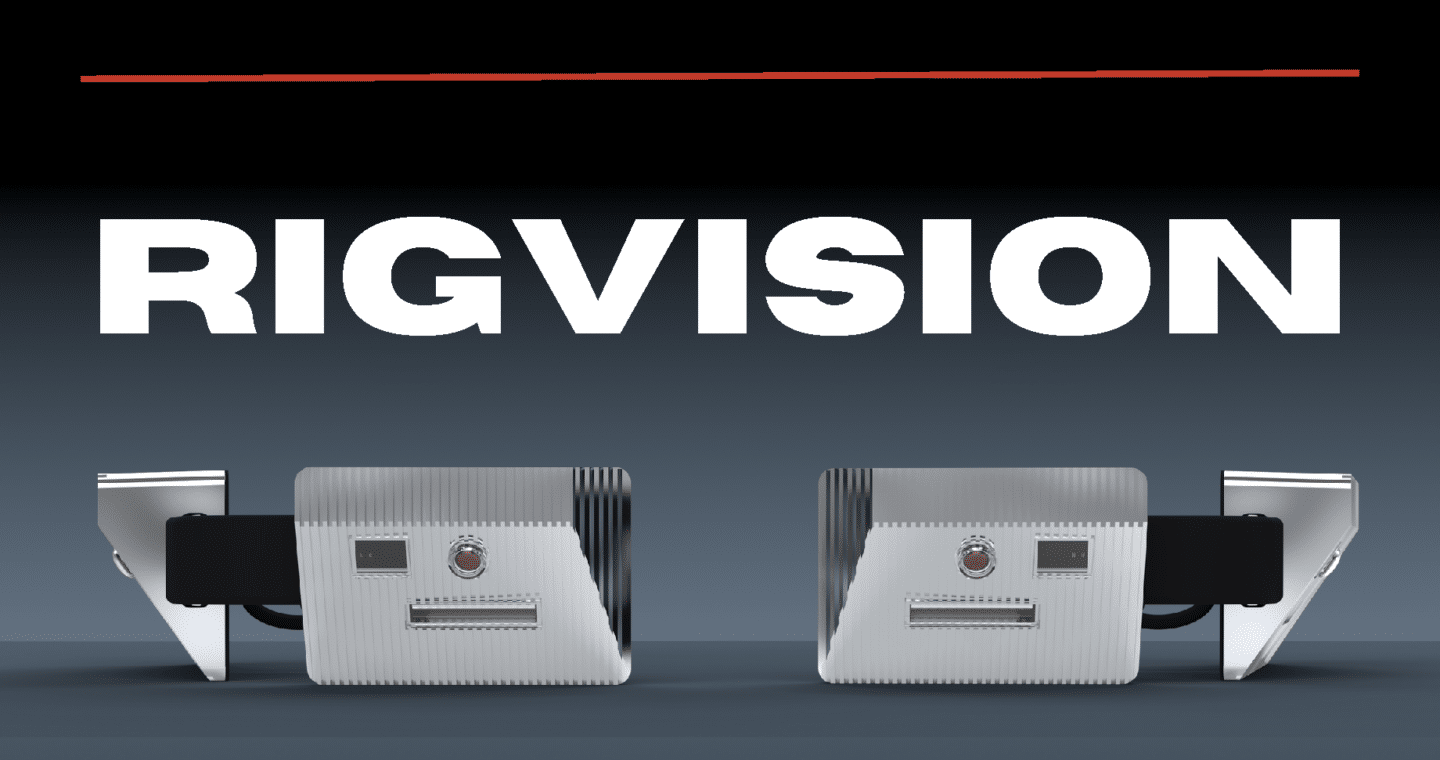
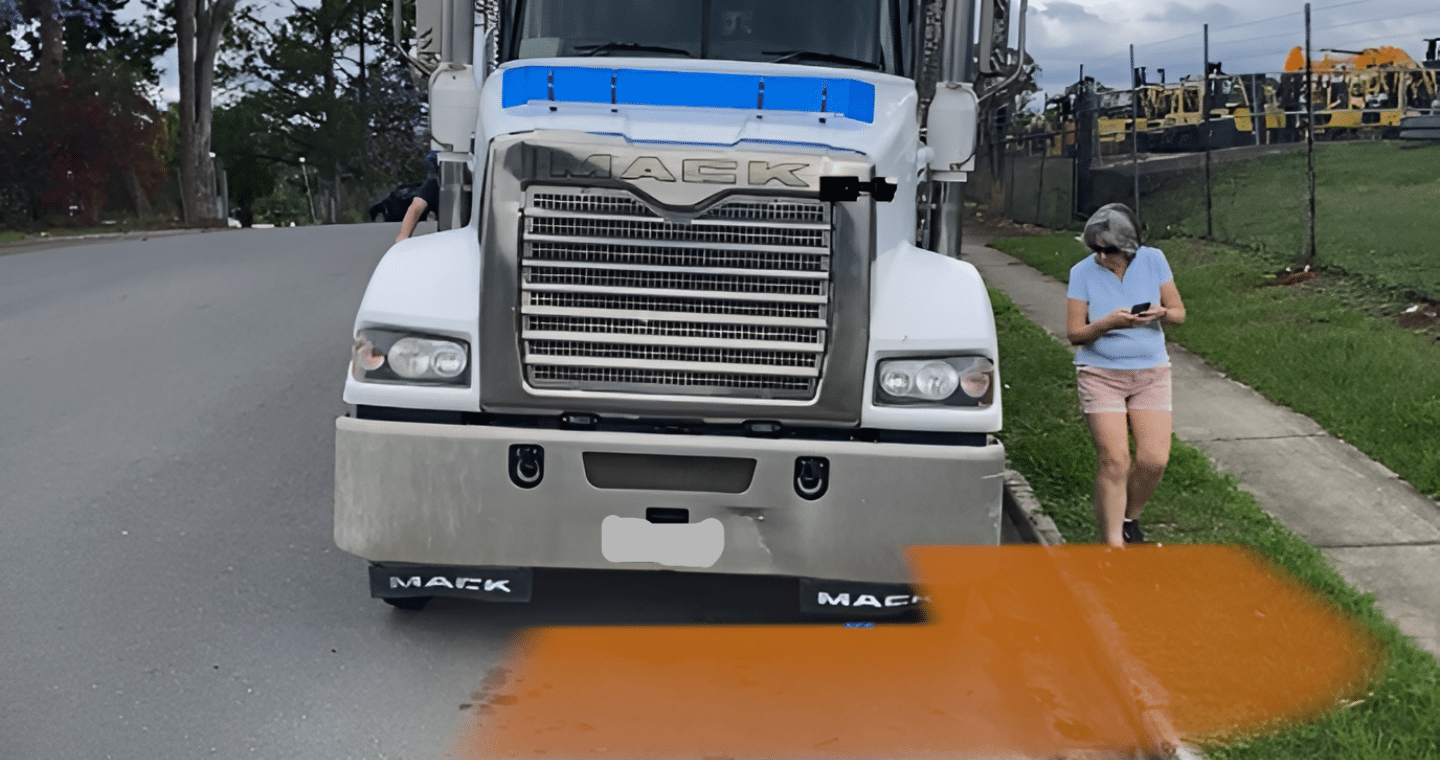
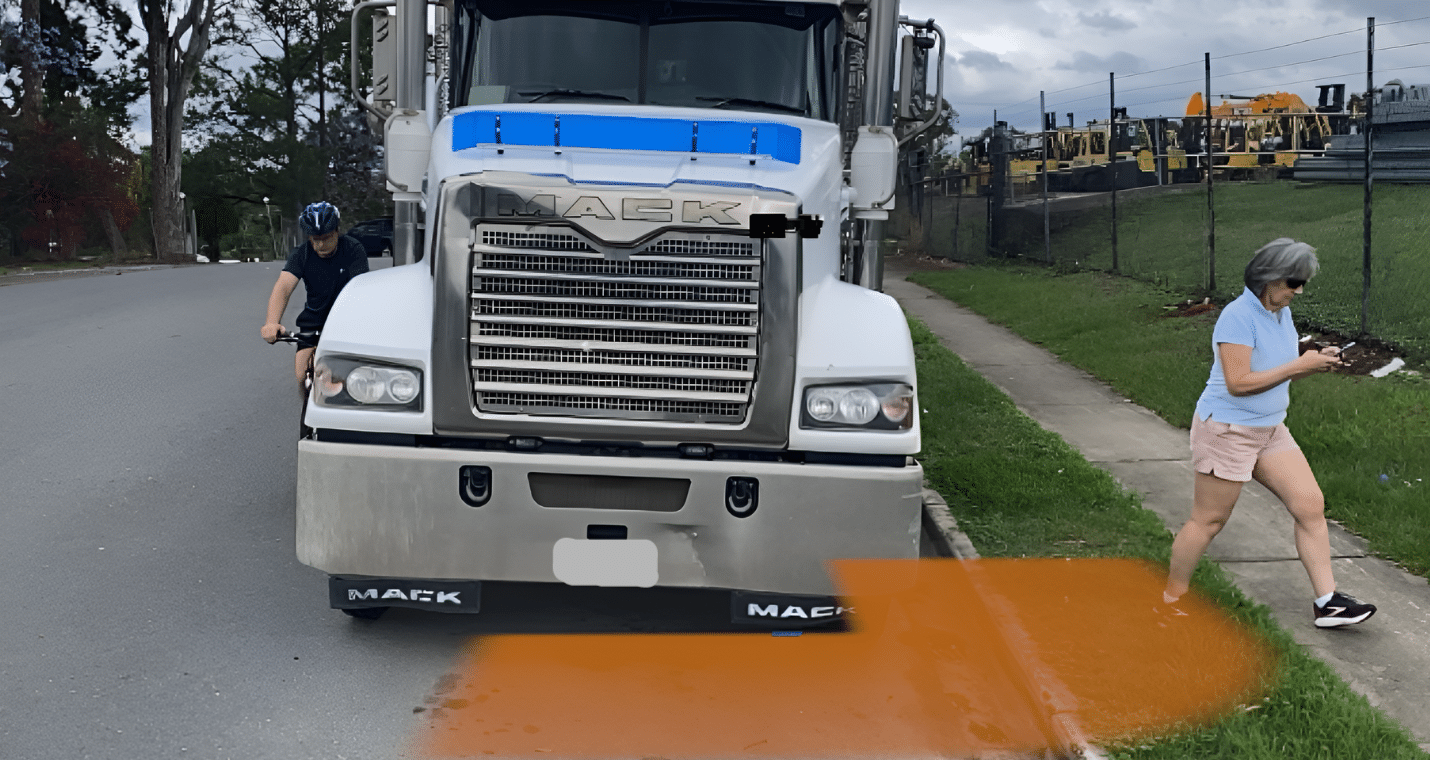
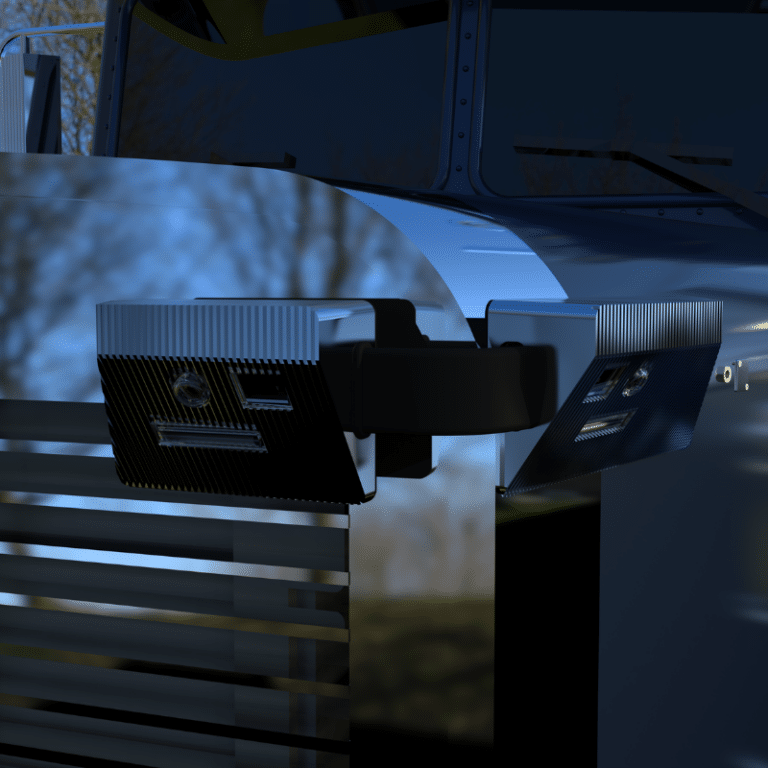
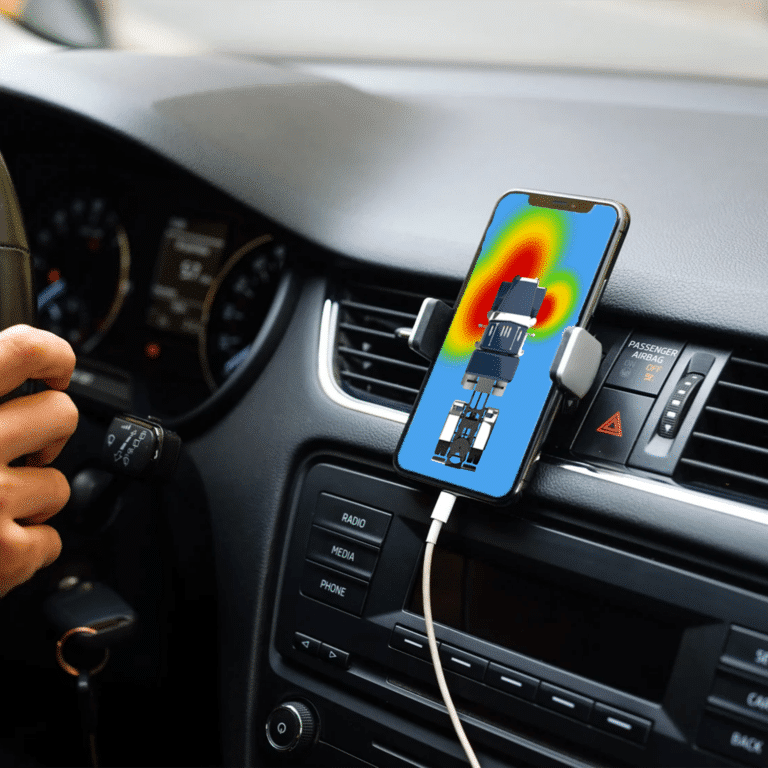
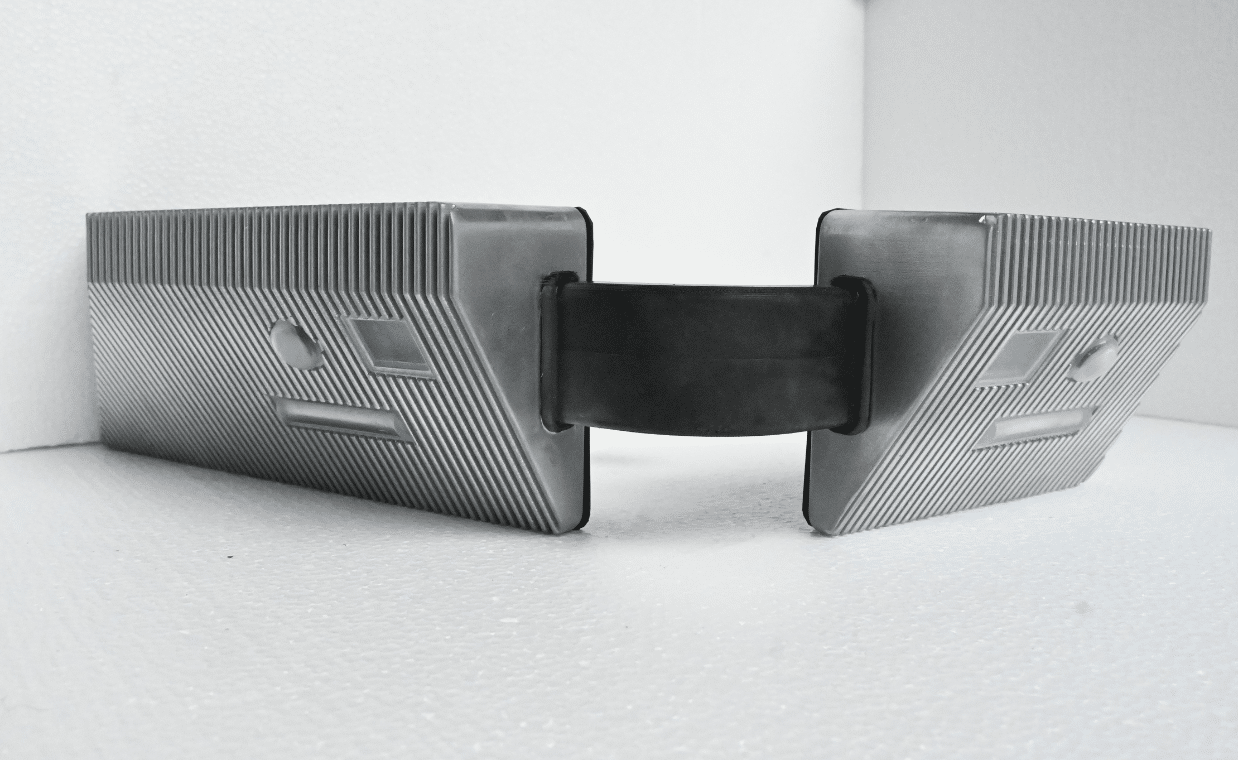
RIGVISION is a systems of sensors and warning units that mount on the front corners of a truck’s bonnet, covering the blind spot directly in front of the cab. When someone steps into that zone, RIGVISION projects an amber light onto the ground around them, right where people look when they’re walking or checking their phone. At the same time, the driver sees them on a simple heat map on their phone. No sirens, no extra screen, and no footage of anyone. Just the right information, to both people, at the moment it matters.
RIGVISION covers the blind spot the public understands least. A wide-angle camera, radar and infrared sensors work together so detection keeps working through glare, rain and darkness, while an onboard AI module checks what it’s seeing, so it reacts to people, not poles. When it detects someone, a high-brightness amber light marks the ground around them. It needs no words: they notice it, look up, and step clear. Over time, people learn what the light means. At the same moment, the driver’s phone shows where they are.
“The camera […] points down rather than a wider, more distant view […] It doesn’t actually give me any sense of where I am in relation to another car behind me, or two cyclists who pulled up behind me, or a motorbike.”
INTERView participant 1
INSIDE RIGVISION
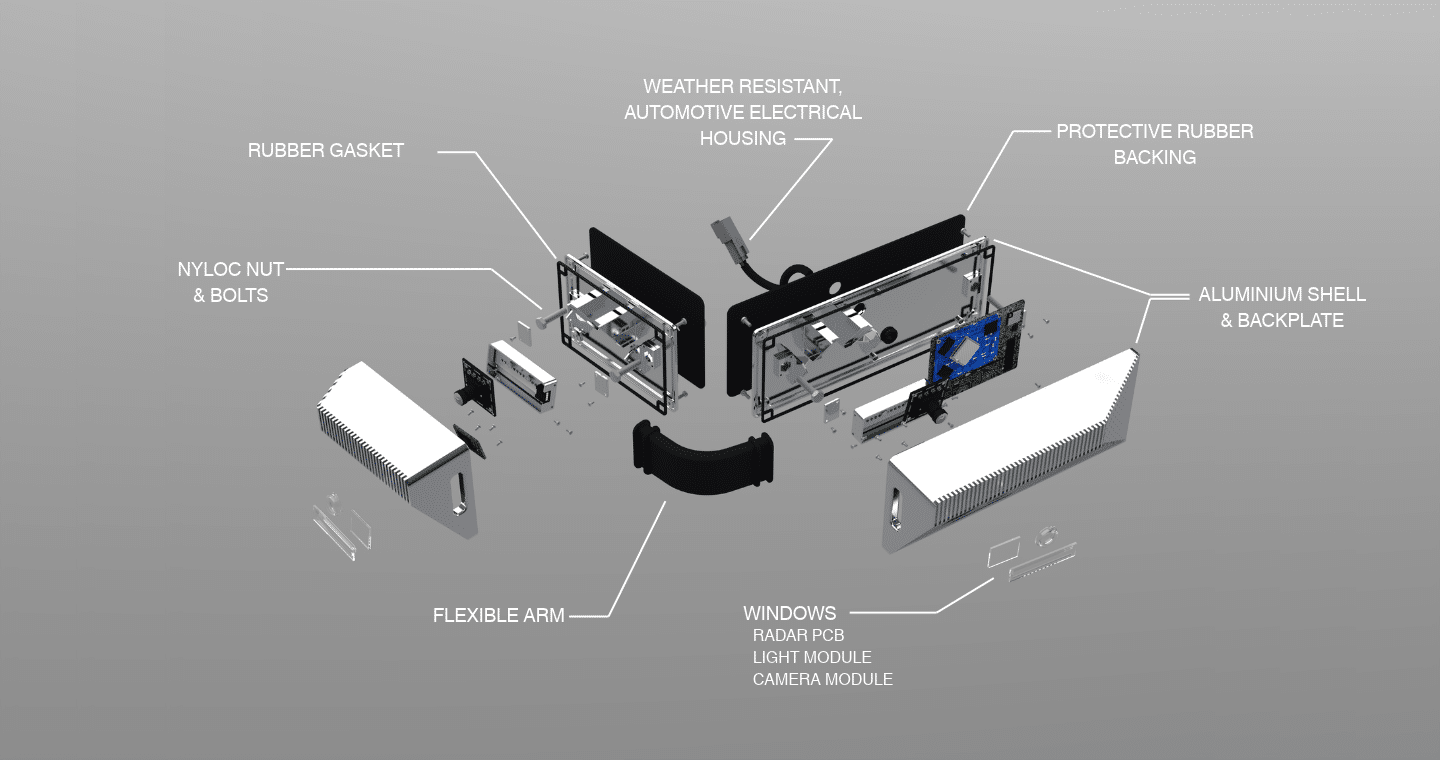
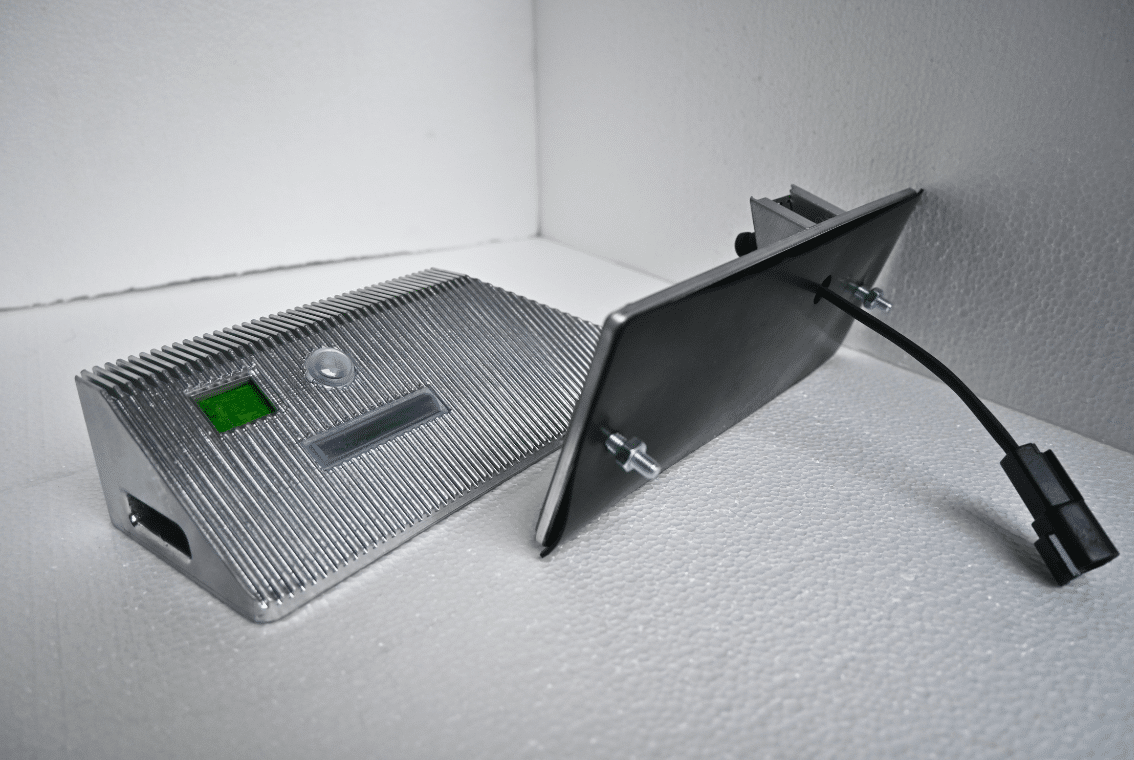
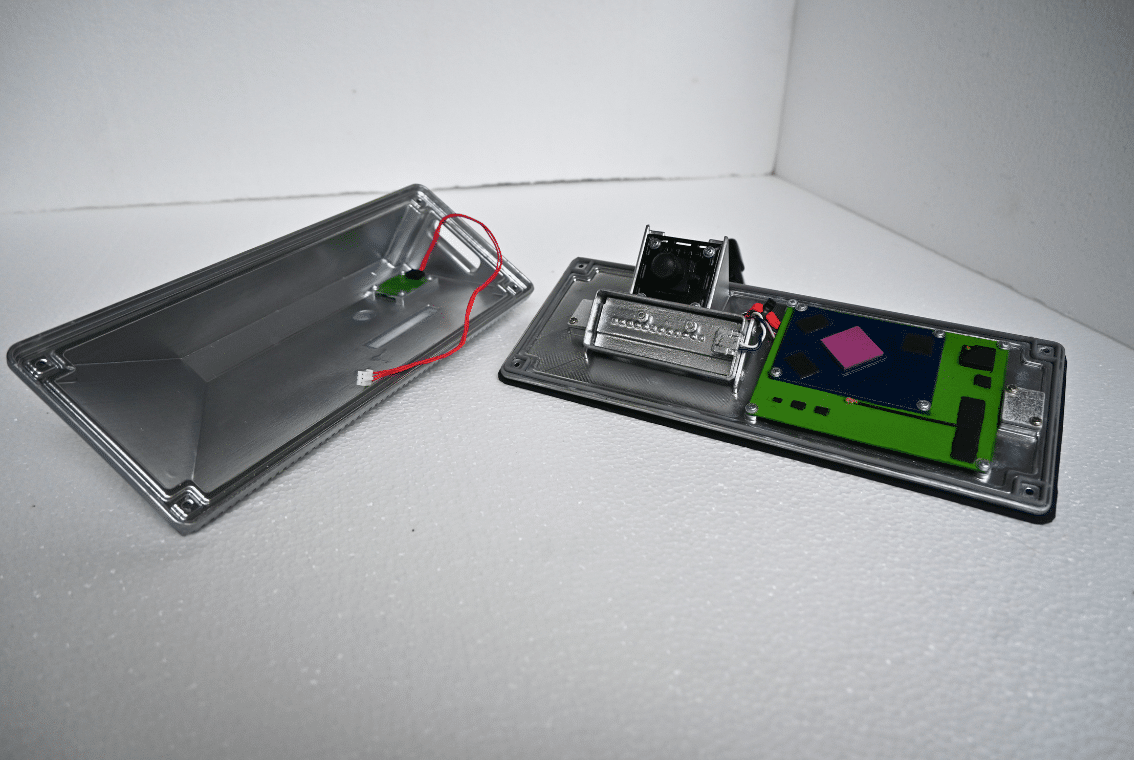
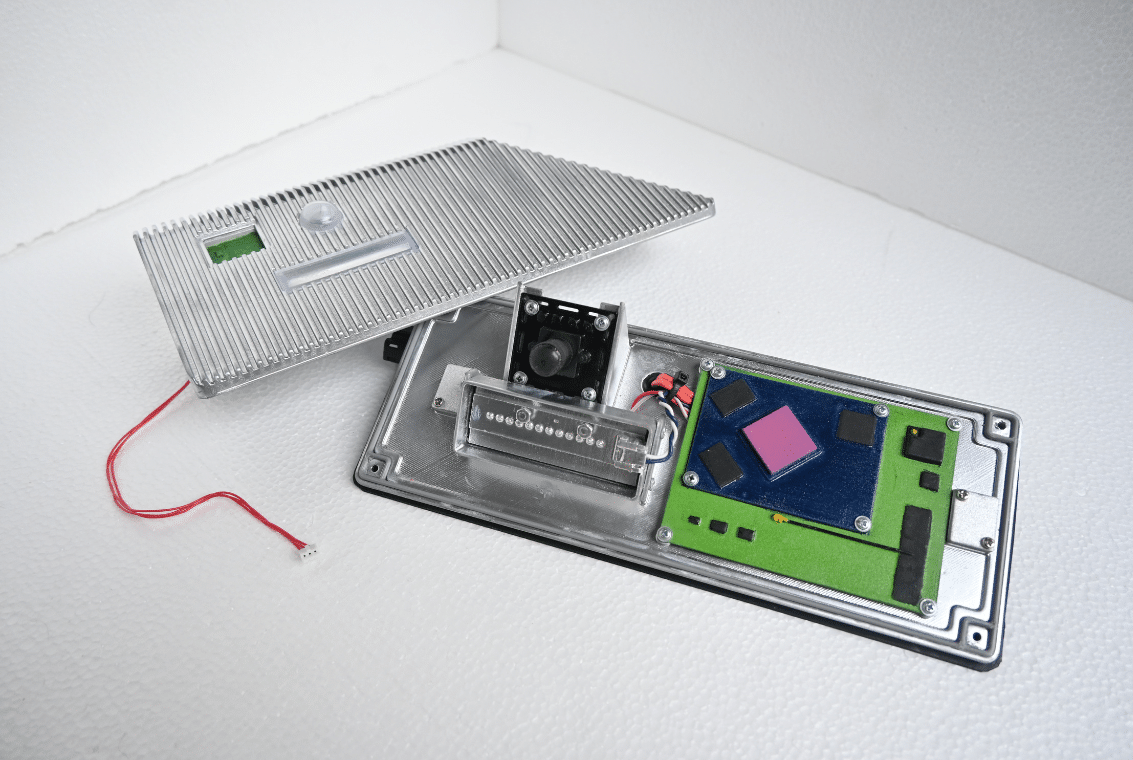
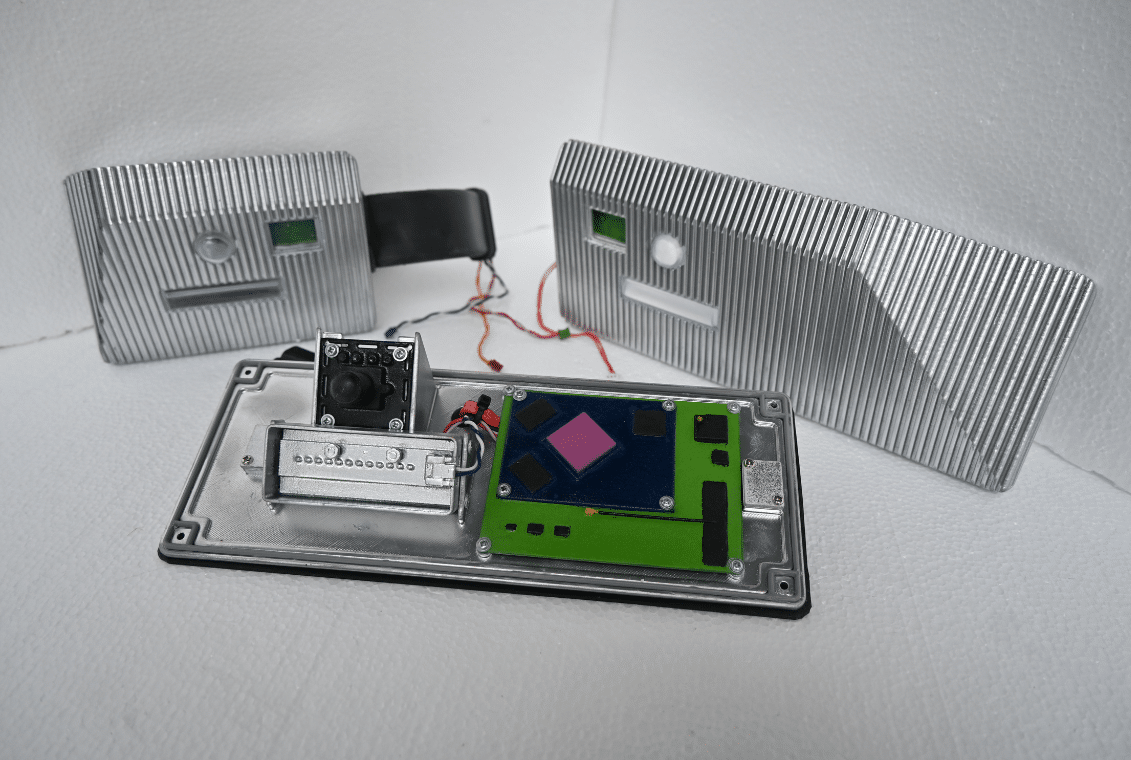
RIGVISION combines 17 custom parts with 21 off-the-shelf components. The custom parts are the ones that shape and protect the product: the shell, seals, flexible arm and windows. The electronics use proven, off-the-shelf parts, which keeps cost down and makes repairs simpler. Fitting takes eight bolts and two cables, with no specialist needed.
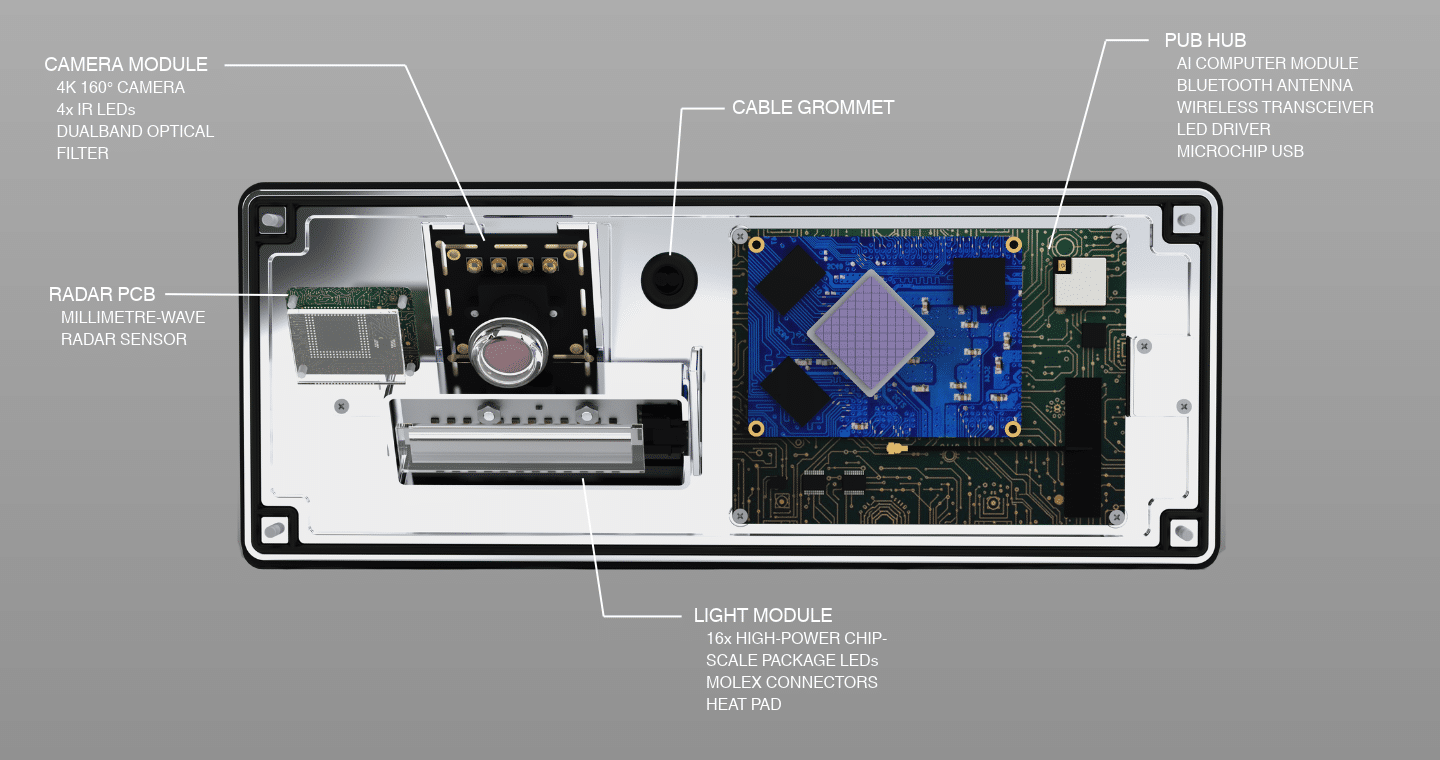
Each unit packs four systems into one compact, sealed housing: a camera to see, a radar to measure, a light to warn, and a central hub that works out what it’s looking at and tells the driver. Two sensing technologies are used on purpose. A camera alone struggles in glare and darkness, and radar alone can’t reliably tell a person from a pole. Together, they cover each other’s weaknesses.
-
Aluminium shell and backplate
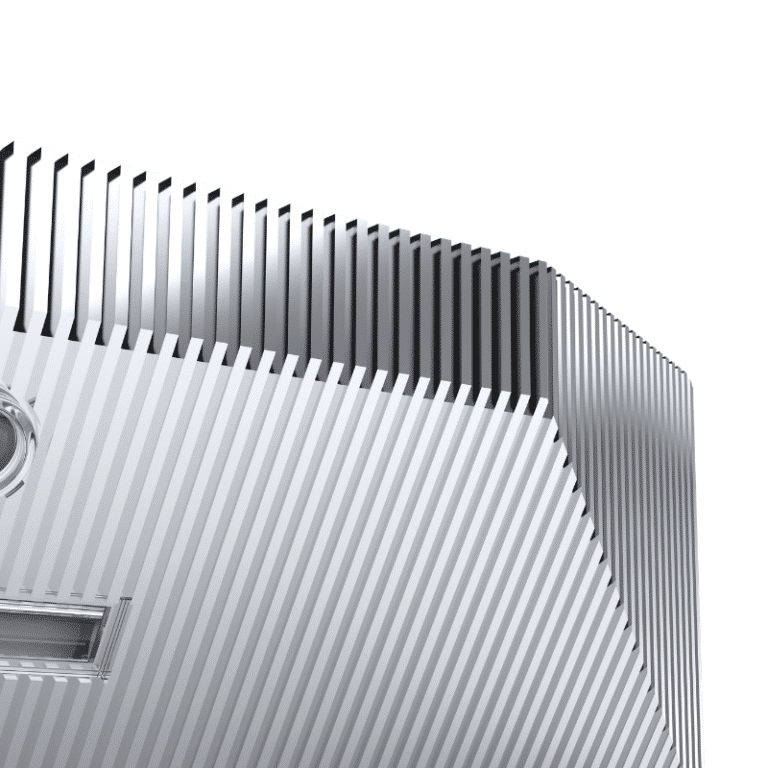
The shell is die-cast aluminium: strong, durable, and an excellent conductor of heat, which lets the fins cool the electronics. Die-casting forms the fins, slope and mounting points in one part
-
Rubber gasket
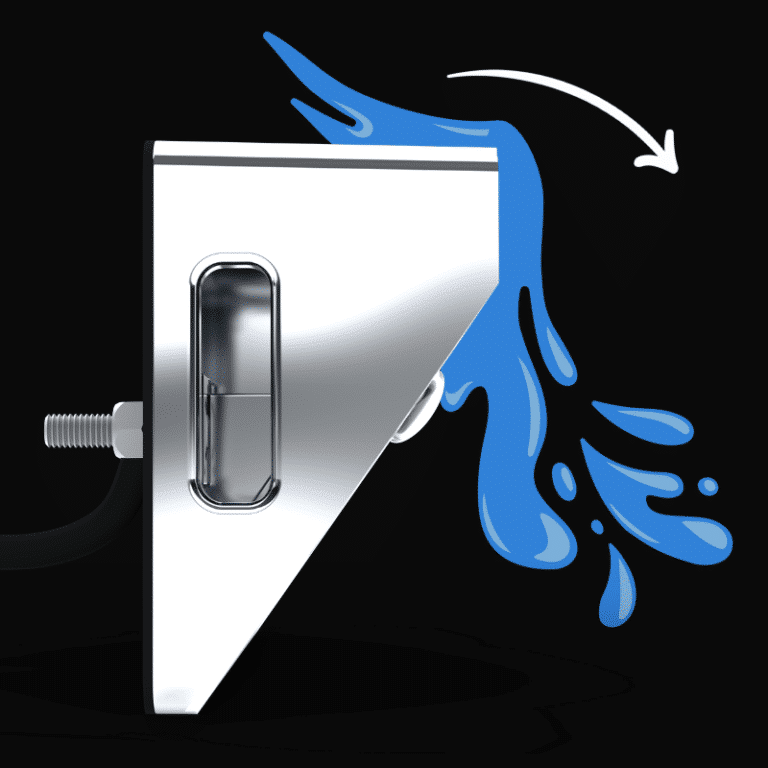
A compression-moulded gasket seals the shell to the backplate, keeping out water and dust while still letting the unit be opened for repair.
-
Protective rubber backing
Die-cut EPDM rubber sits between the unit and the bonnet. EPDM resists UV and weathering, cushions vibration, and protects the truck’s paint.
-
Flexible arm
Injection-moulded TPU lets the side unit bend to follow the angle of the bonnet, so one design fits a range of trucks. It flexes without cracking, even after years of vibration and sun.
-
Windows
Injection-moulded polycarbonate windows sit over the radar, light module and camera. Polycarbonate is impact-resistant and optically clear, so it protects the sensors from stones and debris without blocking their view.
-
Nyloc nuts and bolts
Nylon-insert lock nuts resist loosening under constant vibration, which matters on a vehicle that spends its life on the road.
-
Camera module
A 4K camera with a 160° wide-angle lens gives the broad, forward view that existing downward-facing cameras miss. Four infrared LEDs light the scene invisibly at night, and a dual-band optical filter lets the camera see in both daylight and infrared, so it keeps working after dark.
-
Millimetre-wave radar
The radar measures how far away something is and how it’s moving, and it isn’t affected by darkness, glare, rain or dust. It confirms what the camera sees and tracks how close someone is to the truck.
-
Light module
Sixteen high-power chip-scale LEDs produce the amber warning projected onto the ground, bright enough to stand out in Australian daylight from a compact module. A heat pad draws heat from the LEDs into the aluminium shell, where the fins carry it away.
-
PCB hub
The brain of the unit. An AI computer module combines the camera and radar data to classify what’s been detected, so a pedestrian, cyclist or motorcyclist triggers a warning while a pole or parked car doesn’t. An LED driver controls the light, and a Bluetooth antenna and wireless transceiver send detections, not footage, to the driver’s phone. A USB connection allows for servicing and software updates.
-
Cable grommet
A single cable enters through a rubber grommet and connects to the truck through a weather-resistant, automotive-grade electrical housing, keeping water and dust away from the electronics.
PROTOTYPE
A product unseen, until it matters