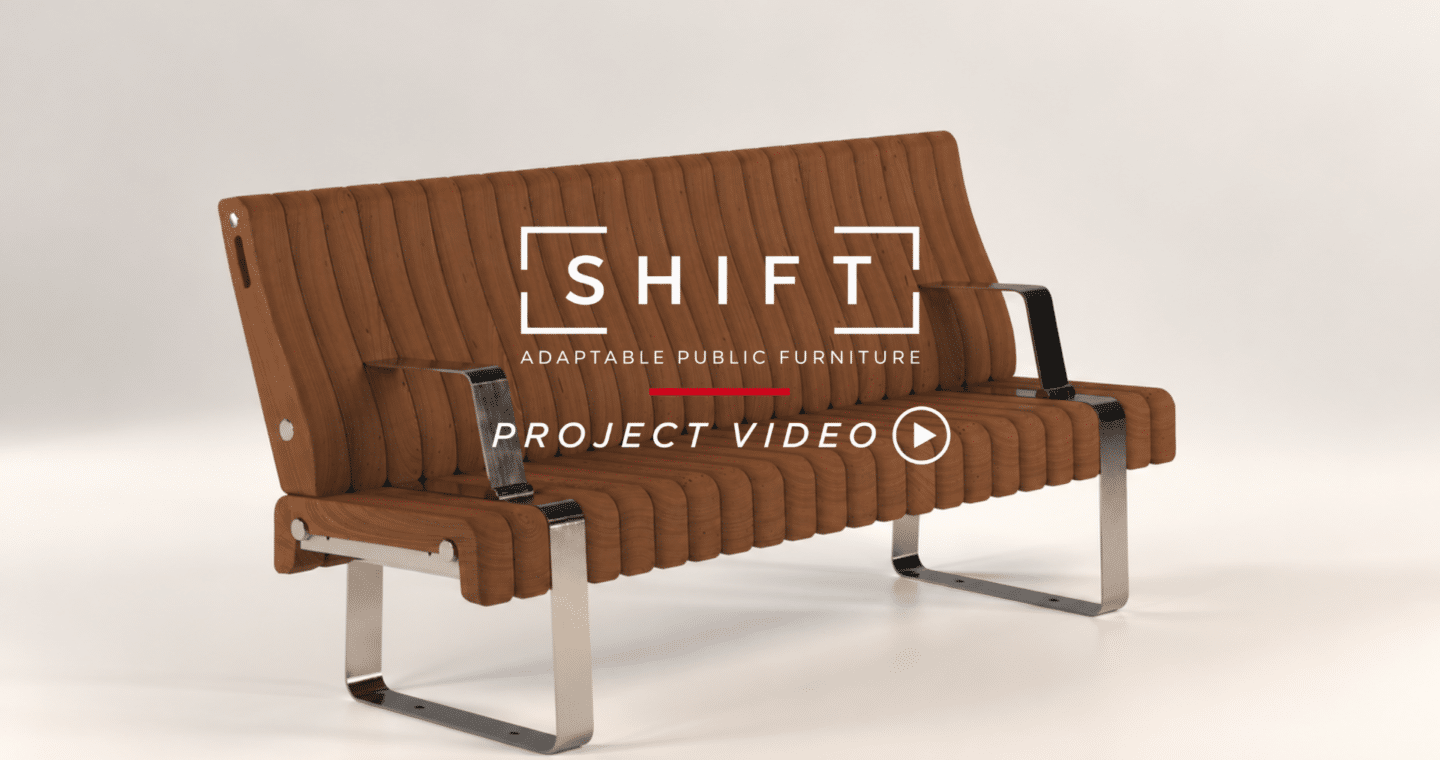
NOT JUST ANOTHER BENCH.
The bench is one of the most familiar pieces of furniture in our public spaces. Found in parks, along streets and throughout university campuses, it has become such an ordinary part of our surroundings that we rarely stop to question its design.
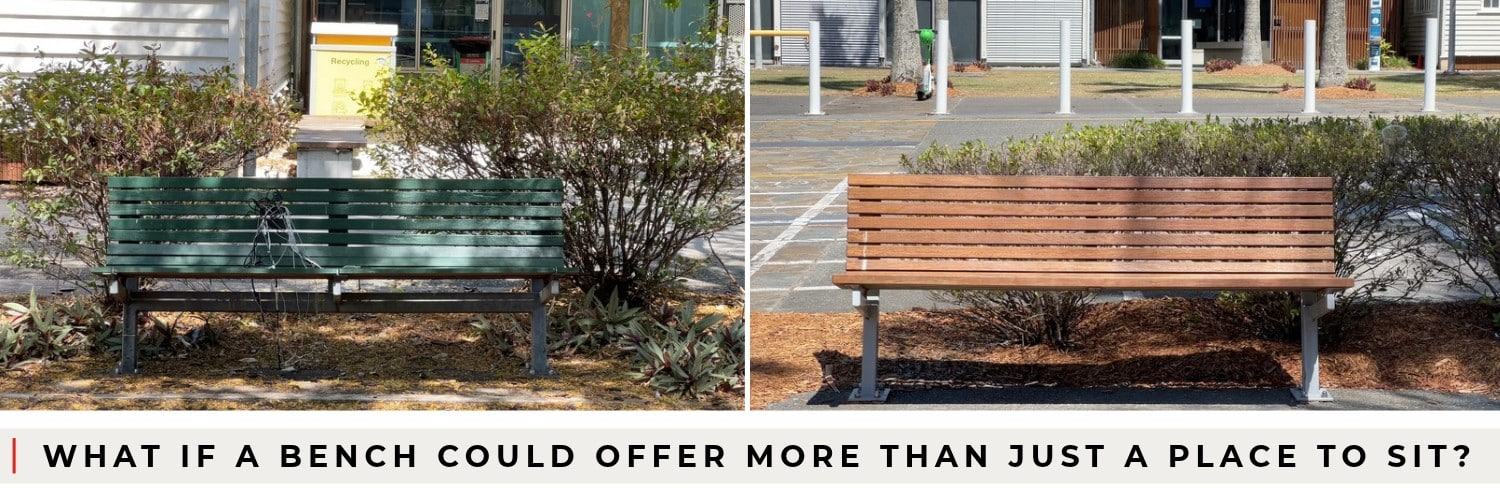
But while the way we use public spaces continues to evolve, the conventional bench has largely remained the same.
THE PROBLEM
A place to sit, but not a reason to stay.
As students, we recognise the importance of spending time outdoors. Whether it’s taking a break between classes, catching up with friends or simply stepping away from our screens, these moments play an important role in our wellbeing.
Yet despite university campuses providing outdoor spaces for students to enjoy, many remain underutilised.
During 7.5 hours of naturalistic observations at QUT’s Kelvin Grove campus, 758 people were recorded passing through selected outdoor areas, while only 27 were observed sitting. Interestingly, 89.7% of surveyed students considered spending time outdoors important for their wellbeing.
These findings highlighted a disconnect between how much students value spending time outdoors and how often they choose to stay.
If students recognised the benefits of being outdoors, why weren’t they stopping?
In his book Life Between Buildings: Using Public Space, Jan Gehl describes optional activities as:
Rather than simply providing somewhere to sit, could outdoor furniture create more opportunities for students to spend time outside?
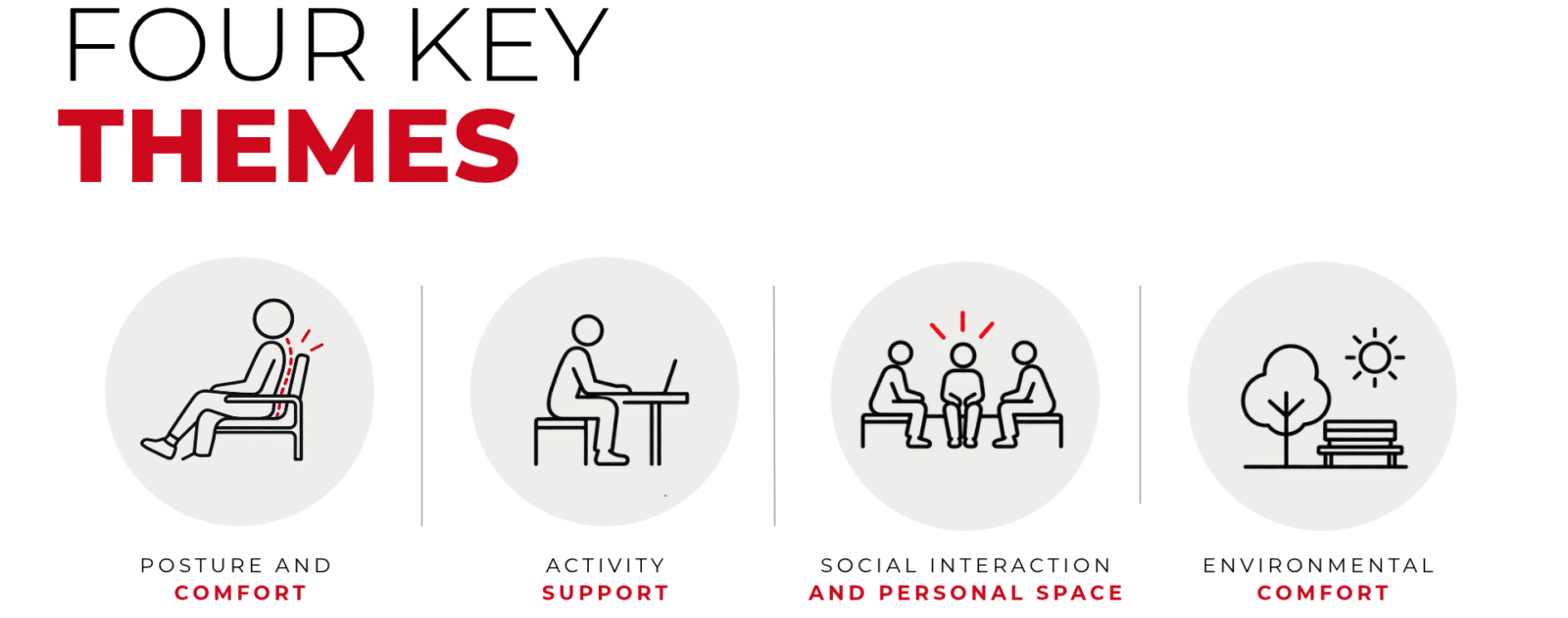
This idea became the foundation of SHIFT. Through naturalistic observations and a student survey, four key design considerations were identified: posture and comfort, activity support, social interaction and personal space, and environmental comfort.
Together, these findings guided the development of a seating system designed not just to accommodate students, but to give them more reasons to stay.
01 — POSTURE AND COMFORT
Making comfort a reason to stay.
the problem
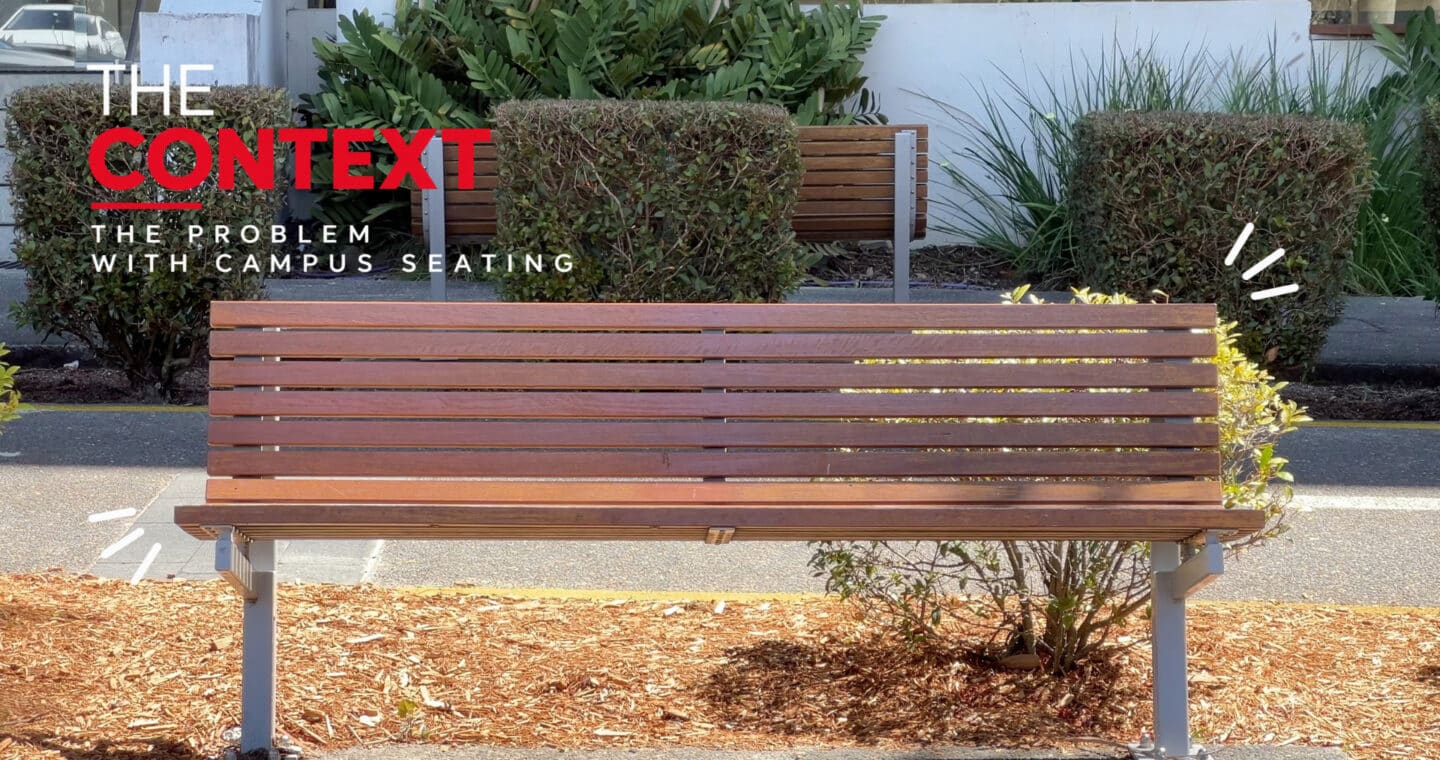
Conventional outdoor benches often prioritise durability and simplicity over ergonomic comfort. Limited back support and rigid seating positions can make them less inviting for students wanting to relax or spend extended periods outdoors.
The design response
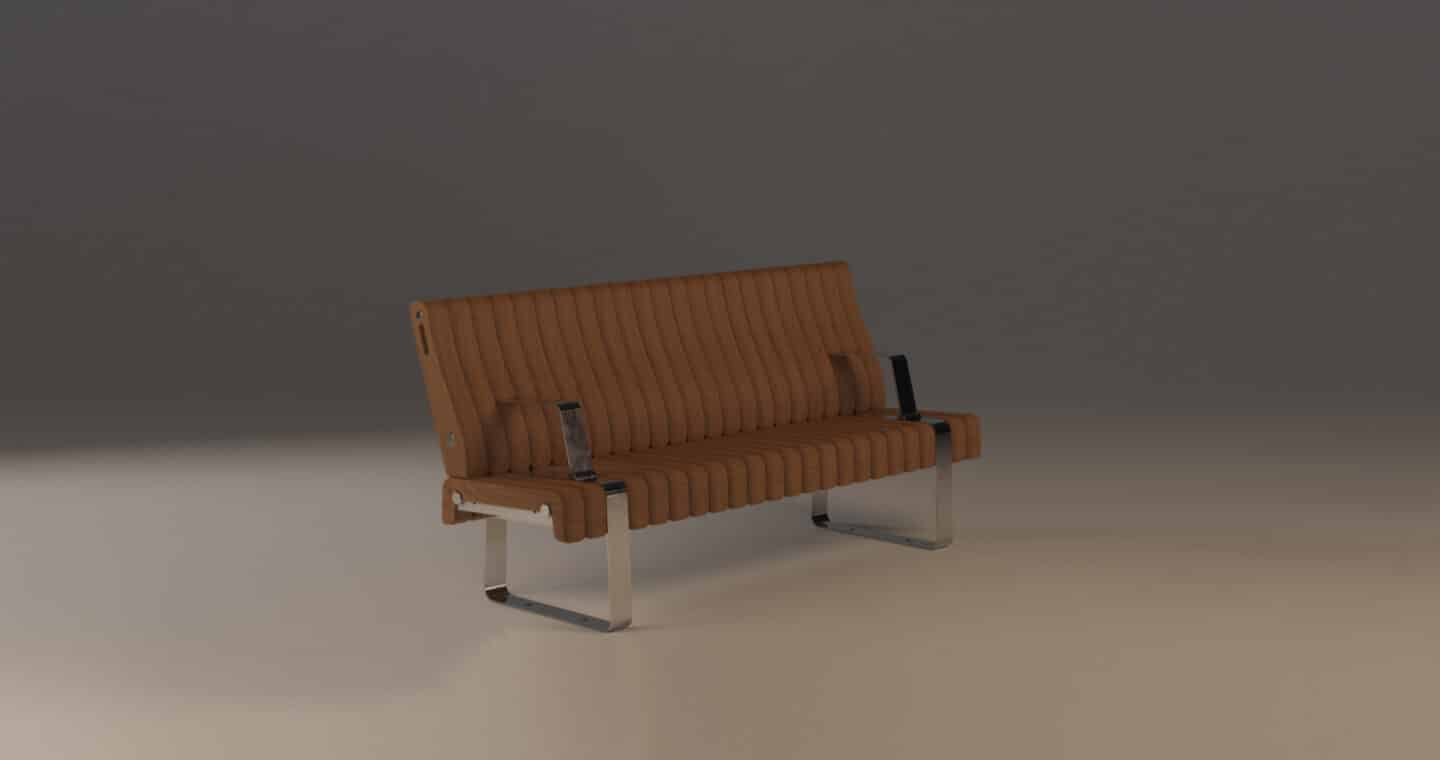
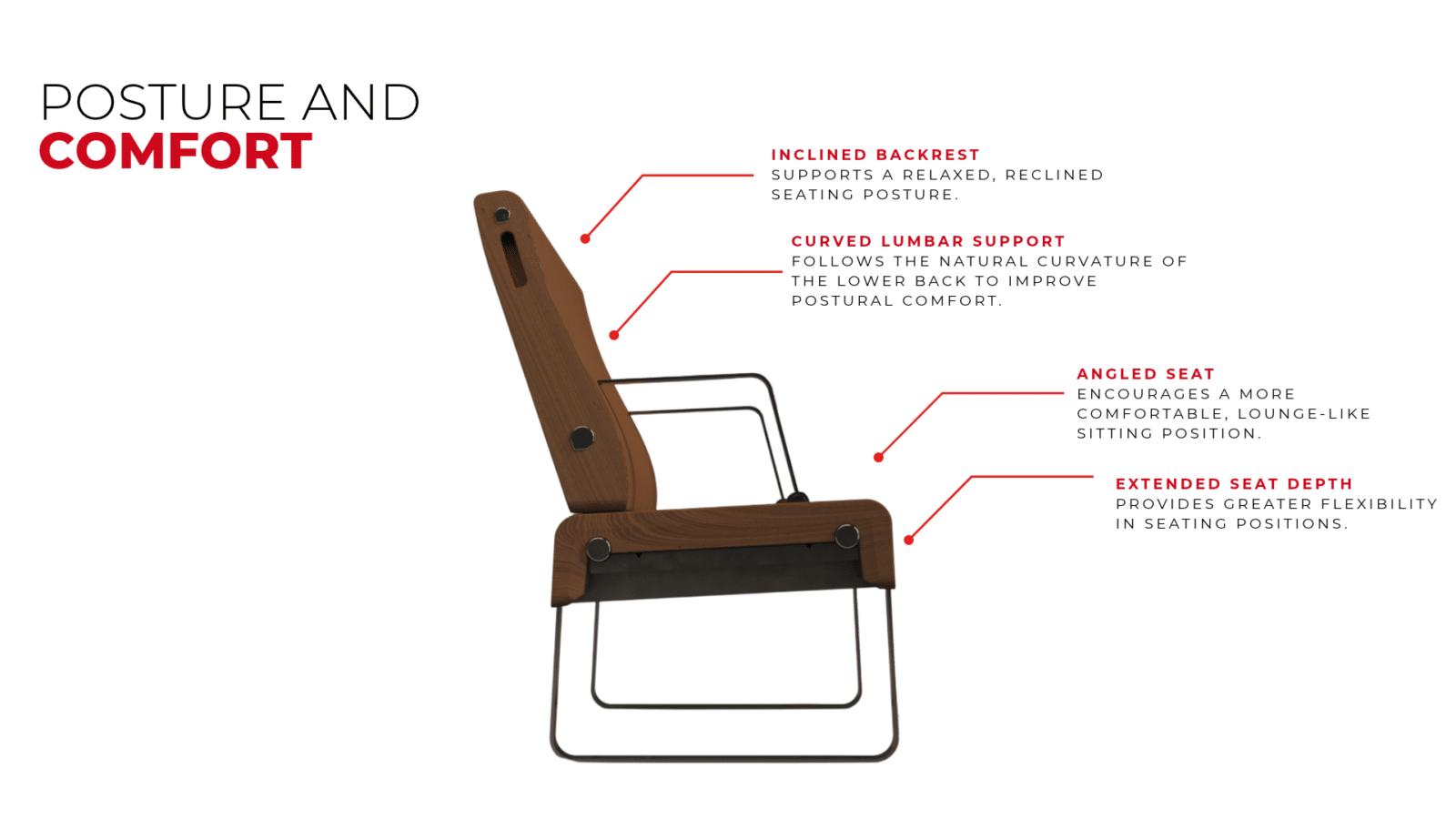
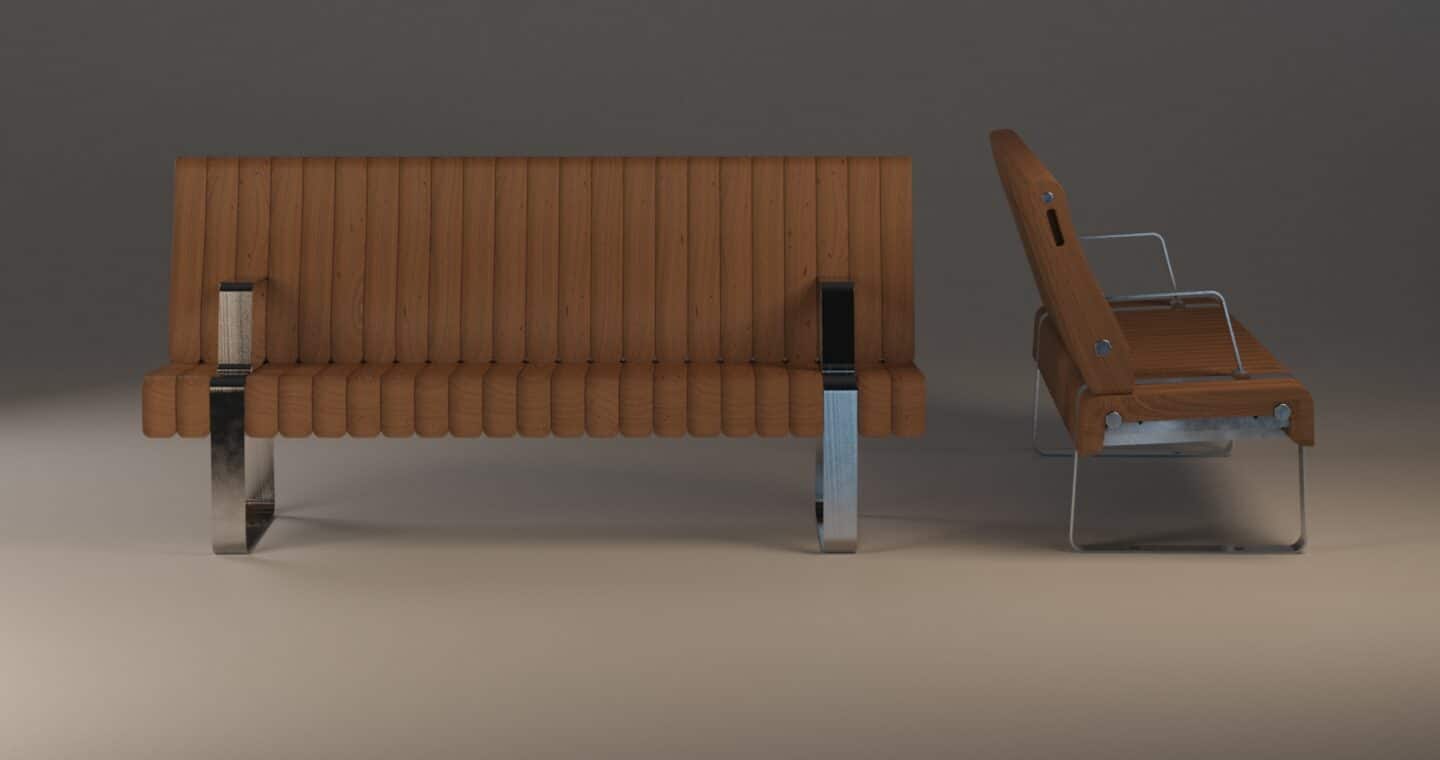
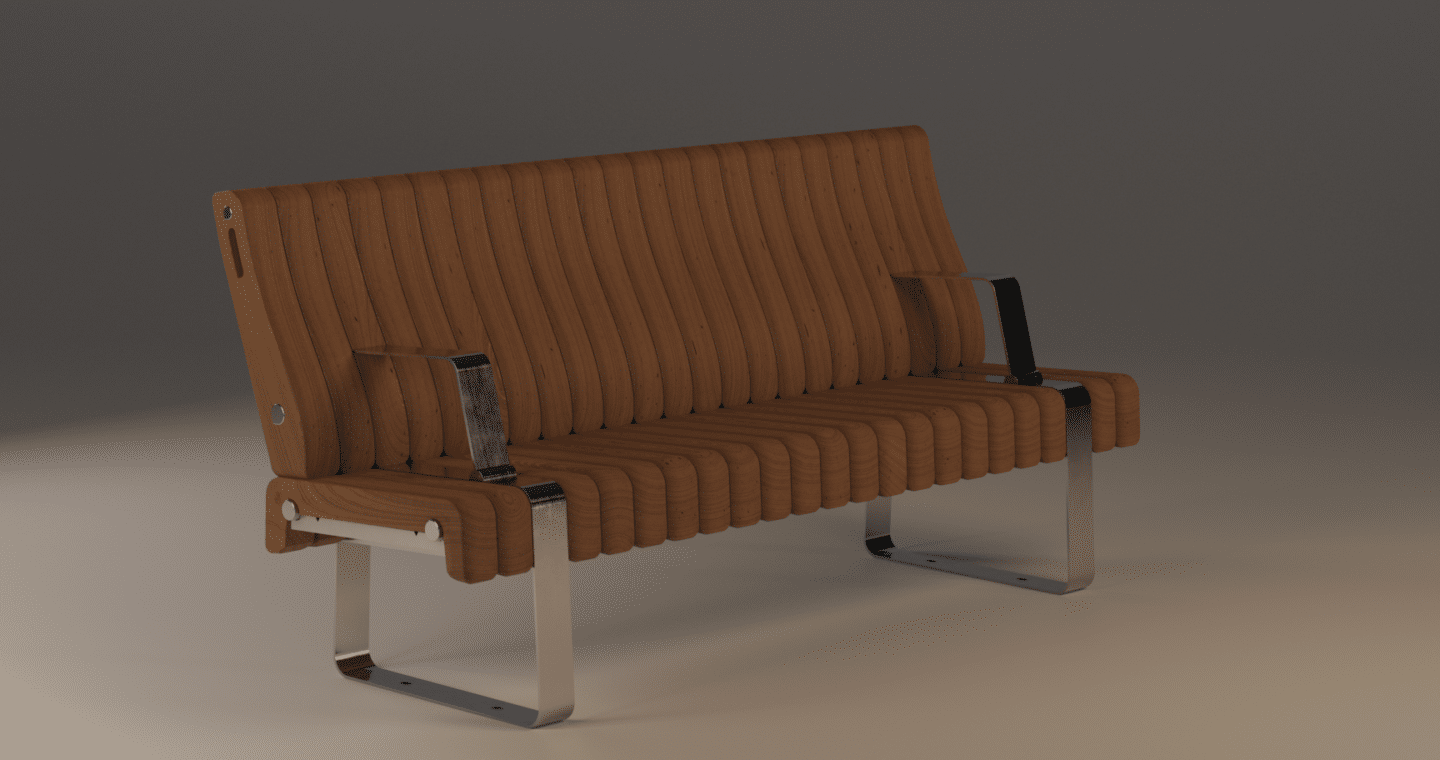
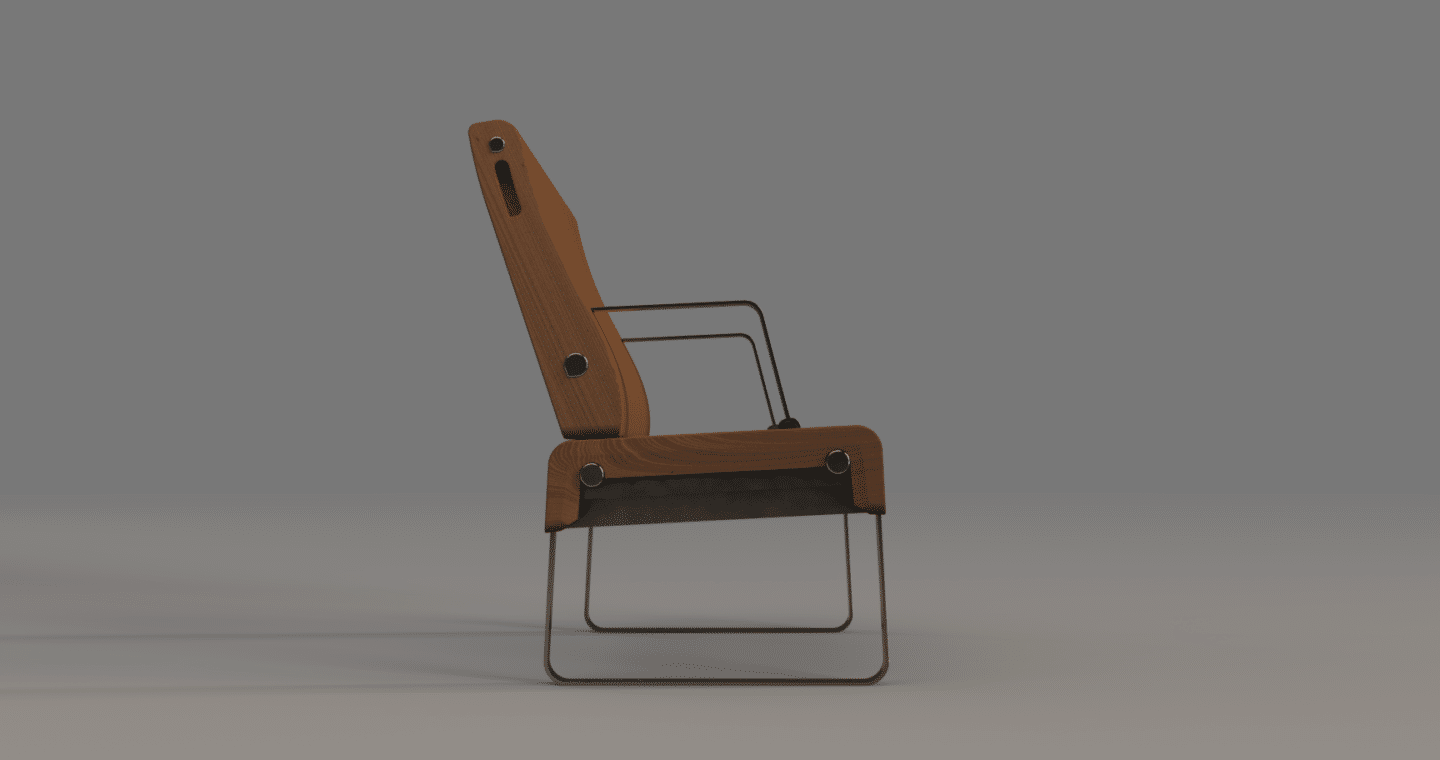
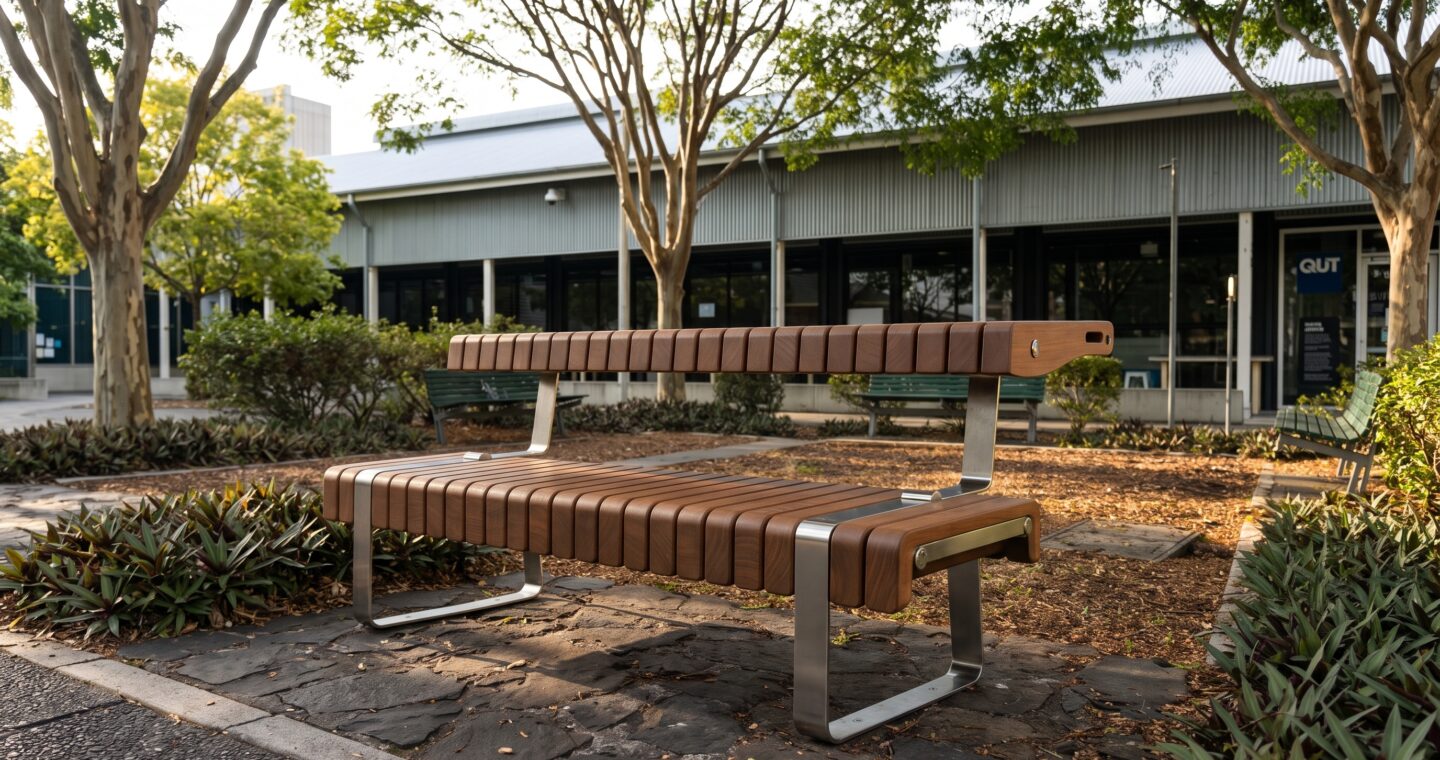
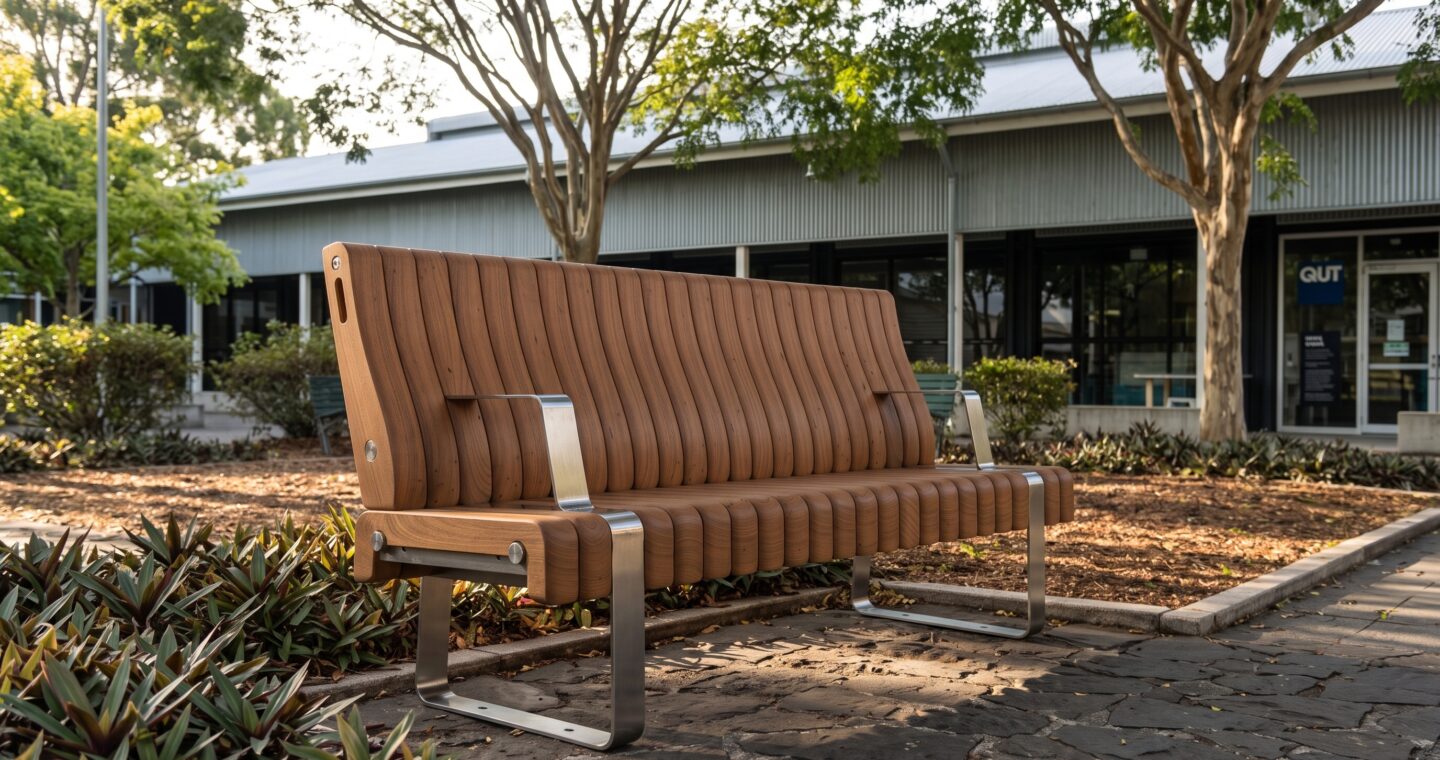
SHIFT incorporates an inclined backrest, curved lumbar support and angled seating surface to encourage a more relaxed sitting posture. Guided by ergonomic dimensions from Henry Dreyfuss Associates’ Humanscale and further refined through user testing, the design prioritises comfort across different seating preferences.
An extended seat depth also provides greater flexibility in how students choose to sit, accommodating more informal positions, such as sitting cross-legged.
Together, these features aim to create a more comfortable and inviting outdoor seating experience, encouraging students to stay longer.
02 — ACTIVITY SUPPORT
Because sitting is only the beginning.
The problem
Students use campus spaces for much more than sitting. Between classes, they study, eat, work on laptops and spend time with friends. Yet conventional benches often provide little support for these everyday activities.
The design response
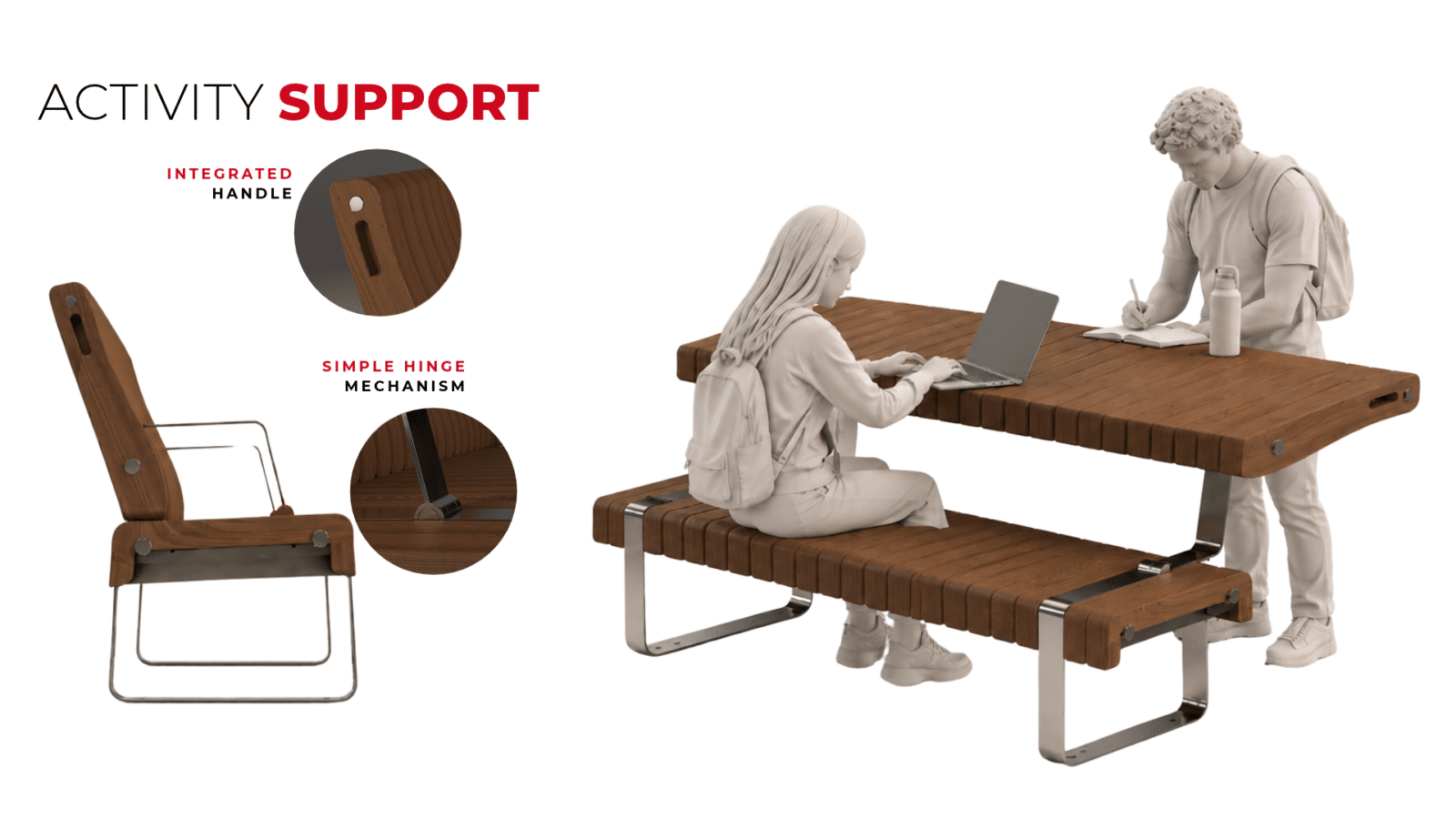
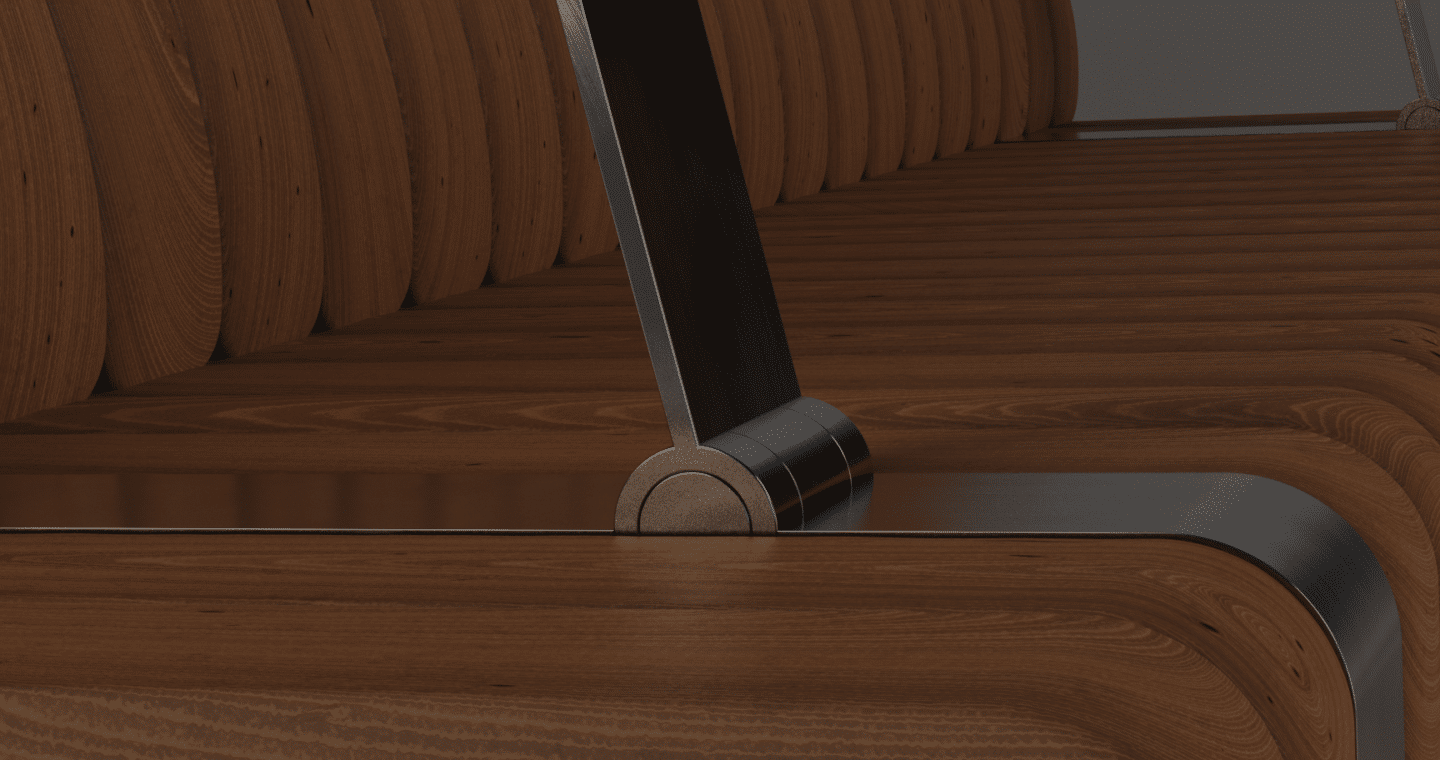
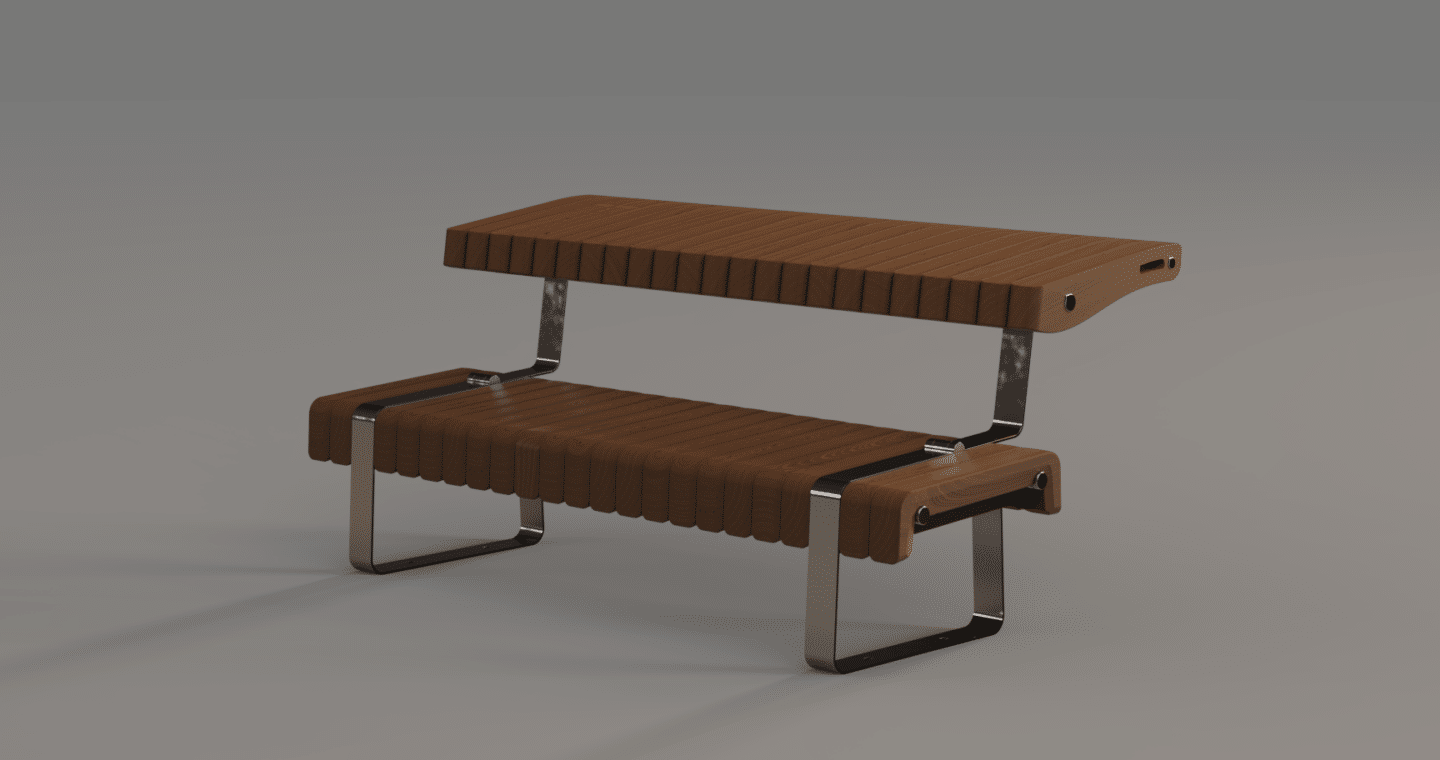
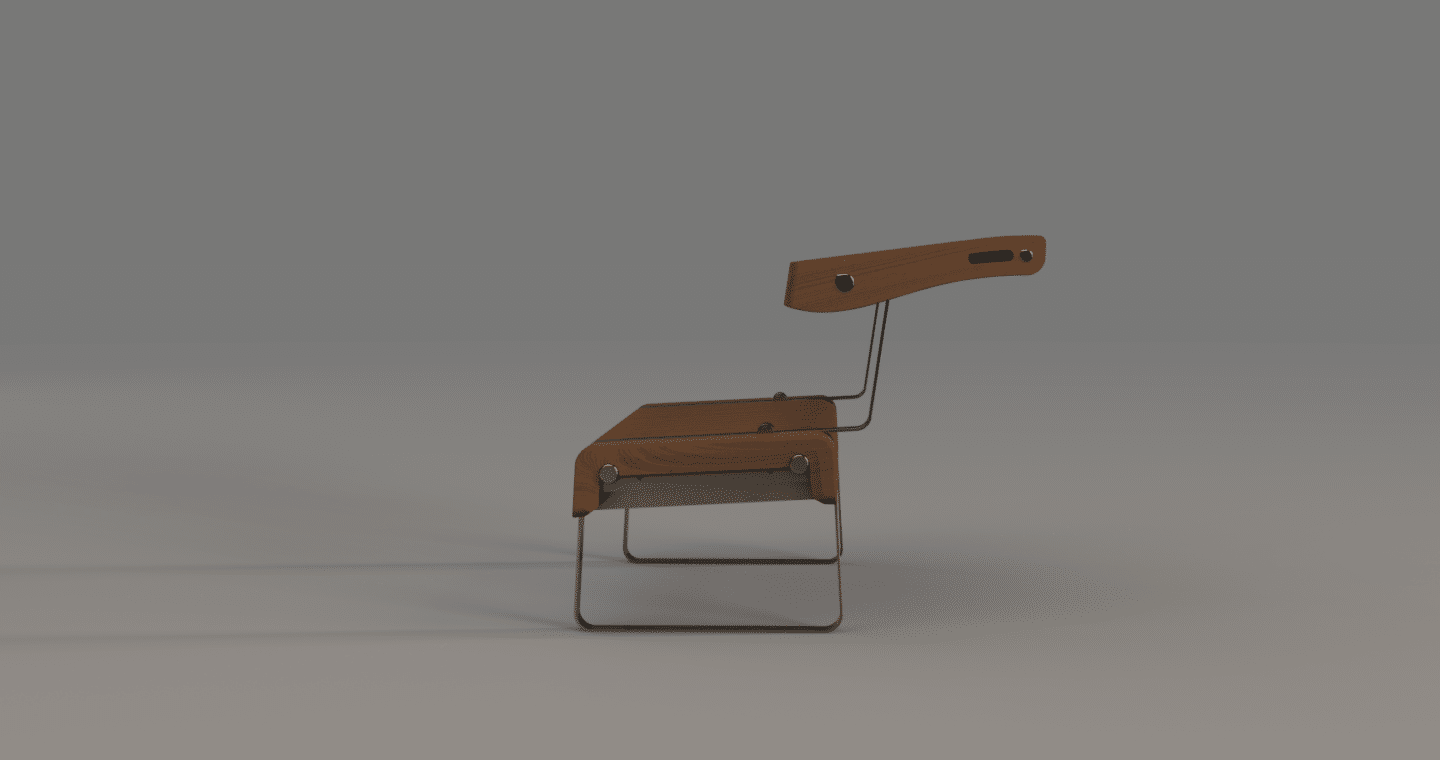
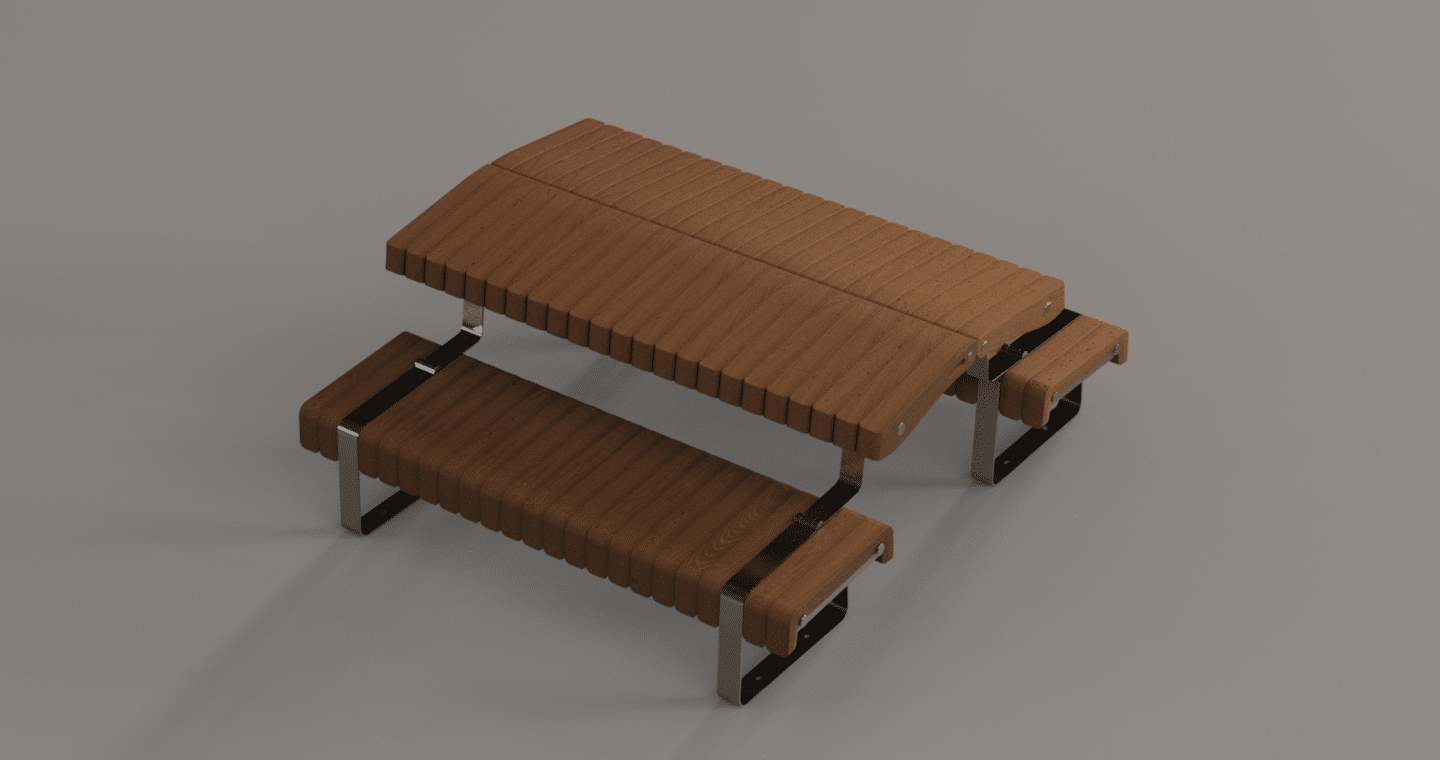
SHIFT introduces an integrated hinge mechanism that allows the backrest to rotate forward into a functional tabletop.
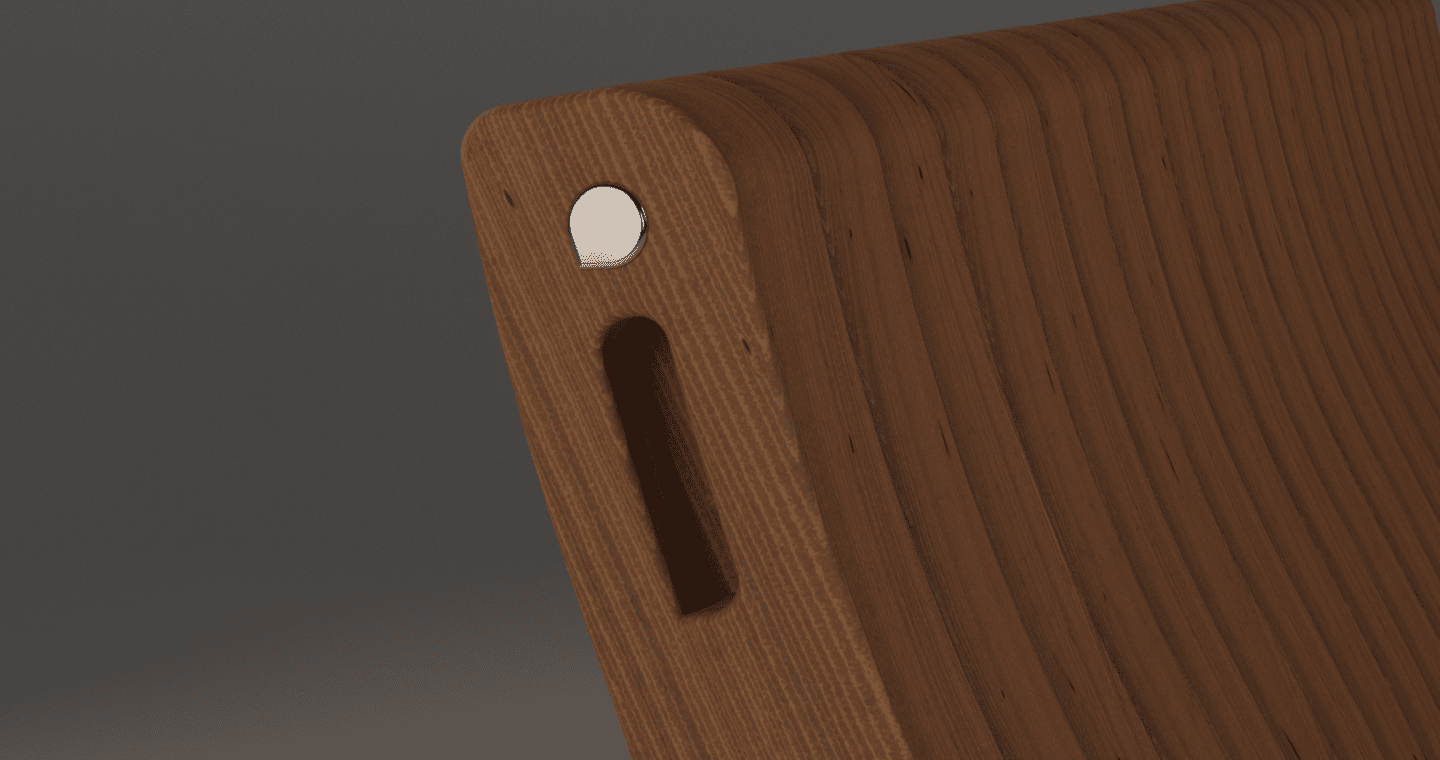
A recessed handle makes the transformation intuitive, allowing students to adapt the furniture to their needs.
From enjoying lunch to working on a laptop or using the table while standing, SHIFT creates more possibilities within a single piece of furniture.
03 — SOCIAL INTERACTION & PERSONAL SPACE
Together when we want. Apart when we need.
The problem
Outdoor environments need to accommodate different social preferences. While some students seek opportunities to connect, others prefer quieter spaces where they can relax or work independently.
Fixed seating arrangements can limit these choices, offering little flexibility between social interaction and personal space.
The design response
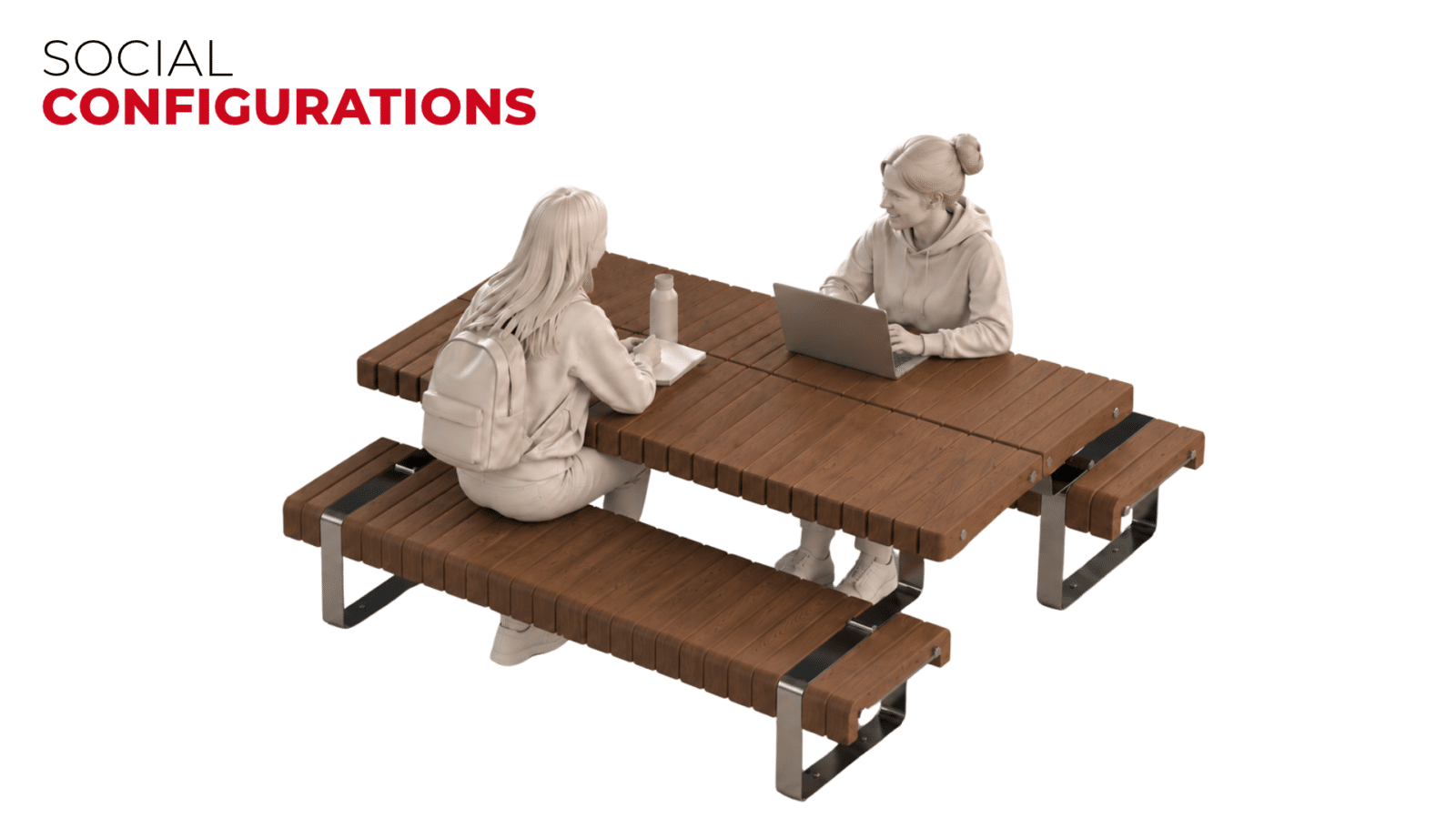
SHIFT’s modular configurations allow benches to be arranged in ways that encourage connection or separation.
Facing arrangements support conversation, back-to-back configurations offer greater personal space, and opposing table configurations create collaborative, picnic-style settings.
The elevated backrest also considers the principles of prospect and refuge, providing a greater sense of enclosure while maintaining visibility of the surrounding environment.
04 — ENVIRONMENTAL COMFORT
Designed for the outdoors. Considered for the future.
The problem
Outdoor furniture must respond to changing environmental conditions while withstanding ongoing exposure and frequent use.
Materials that become excessively hot or cold can discourage use, while difficult-to-repair construction can shorten a product’s practical lifespan.
The design response
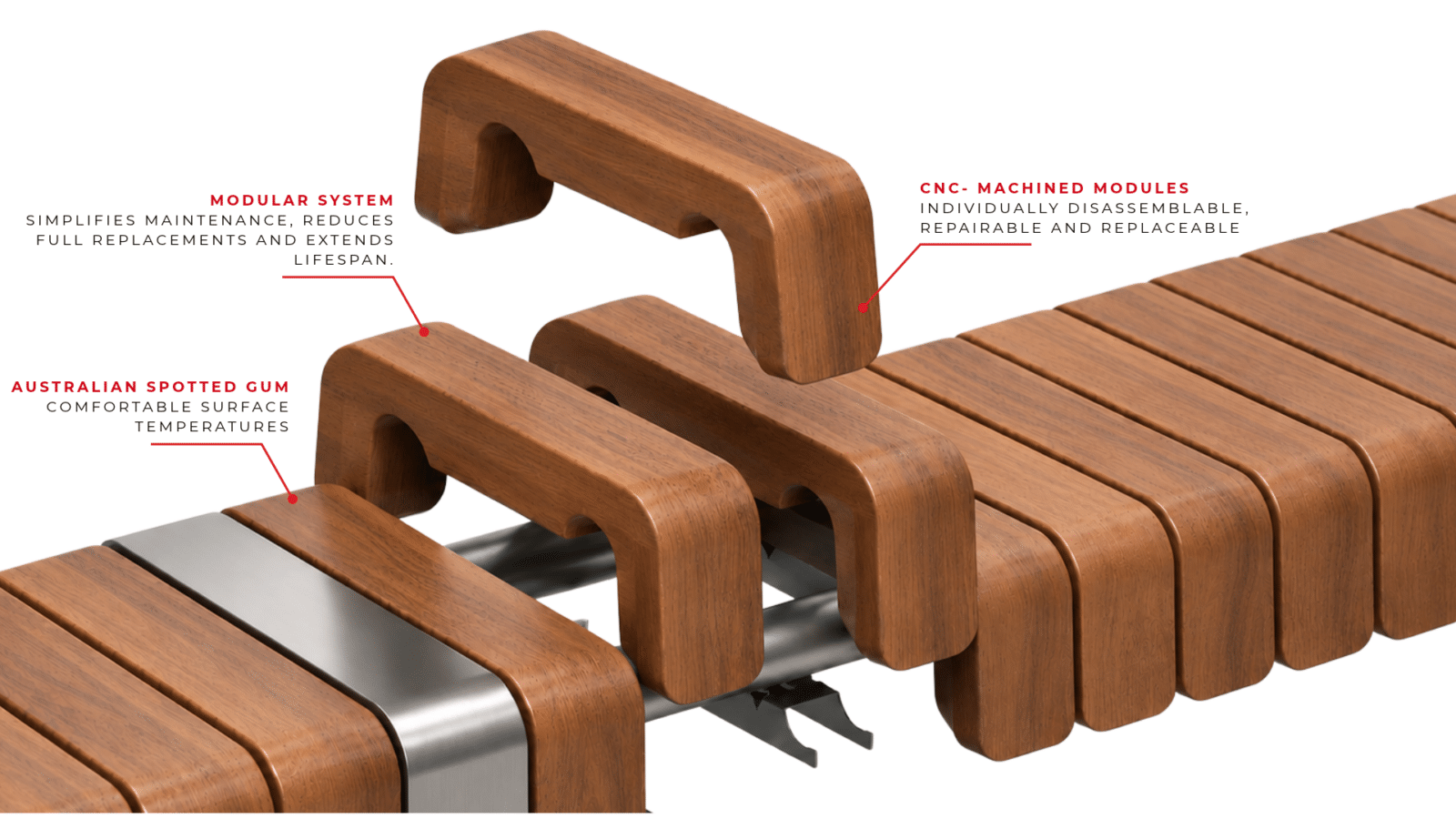
Australian spotted gum timber was selected for its natural appearance and thermal properties, providing a more comfortable contact surface in varying outdoor temperatures.
Supported by a stainless steel structure, SHIFT incorporates CNC-machined timber modules designed to be individually disassembled, repaired or replaced.
Developed with consideration for Flexro’s existing modular furniture system, this approach aims to simplify maintenance, reduce unnecessary replacements and extend the product’s lifespan.
THE OUTCOME
More reasons to stay.
SHIFT brings these four considerations together in a multifunctional outdoor seating system that goes beyond the conventional bench.
By combining ergonomic comfort, activity support, adaptable social configurations and considered material selection, SHIFT explores how public furniture can encourage optional activities.
Because the goal was never simply to give students somewhere to sit.
It was to give them a reason to stay.
final renders