Research
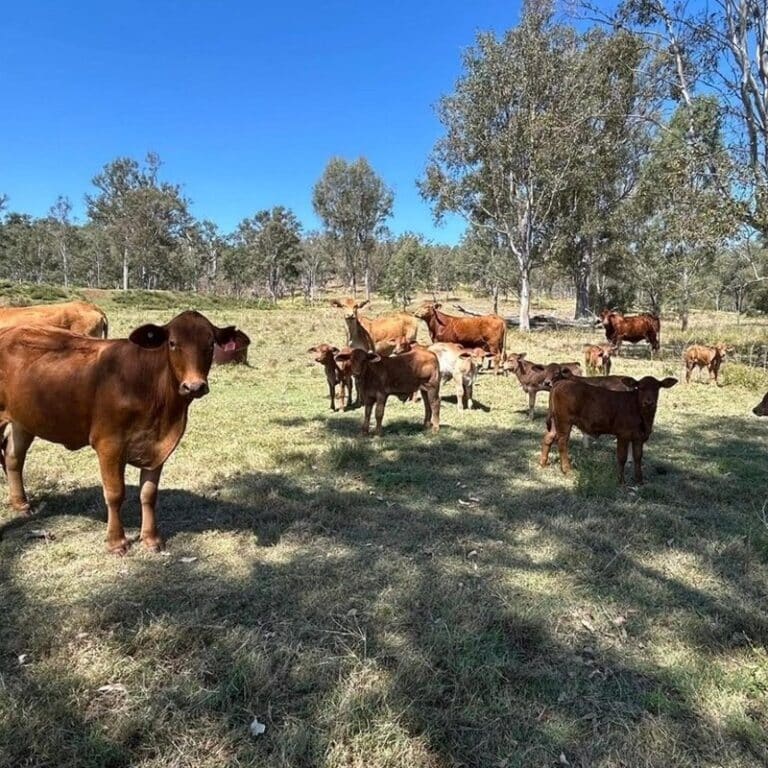
Interviews with six producers and vets, observation of three Queensland breeding operations and a review of 25 existing livestock monitoring systems shaped the design. Producers were clear they would struggle to back anything that needs charging, a ground tower or an expensive subscription. That set three Design Needs: no ground infrastructure, five to eight years unattended, and welfare safe fitting during a normal muster.
“Recharging a device across all our breeders on multiple properties is a chore, not a product.”
Interview participant P5, 2026
Ideation
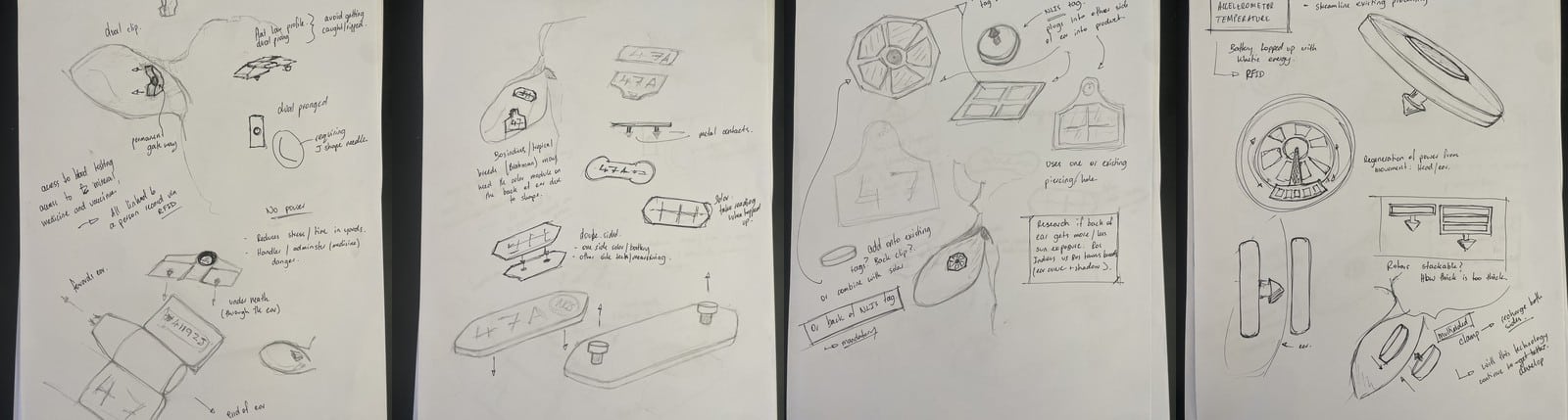
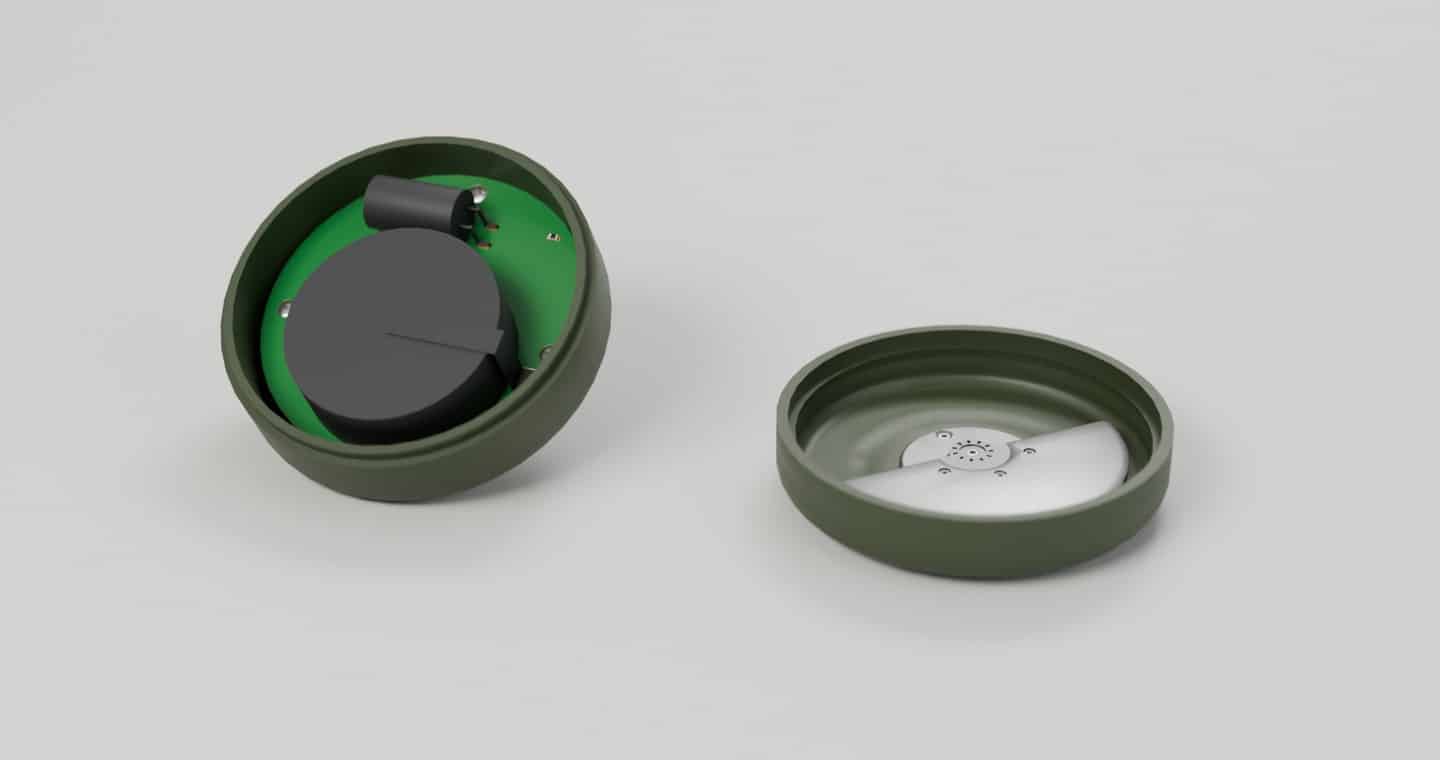
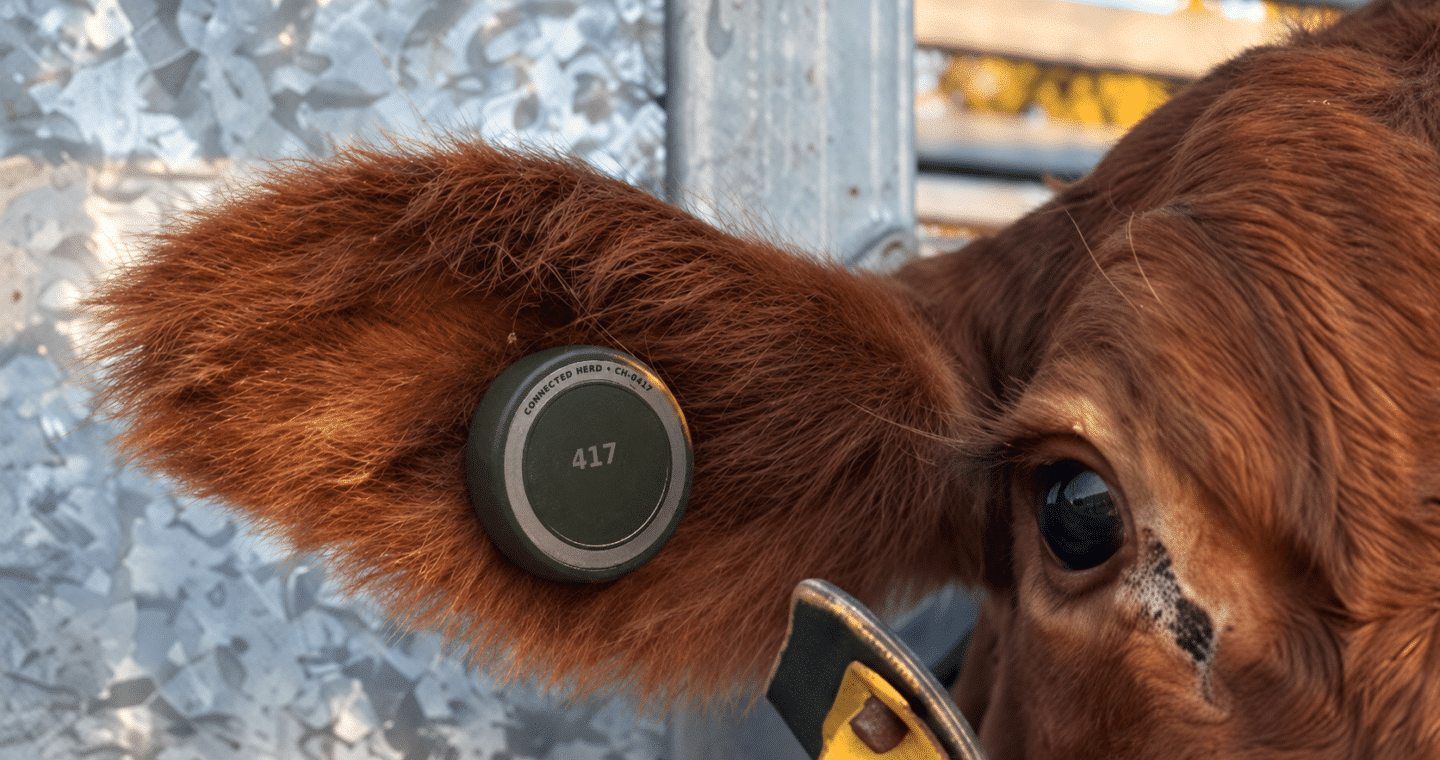
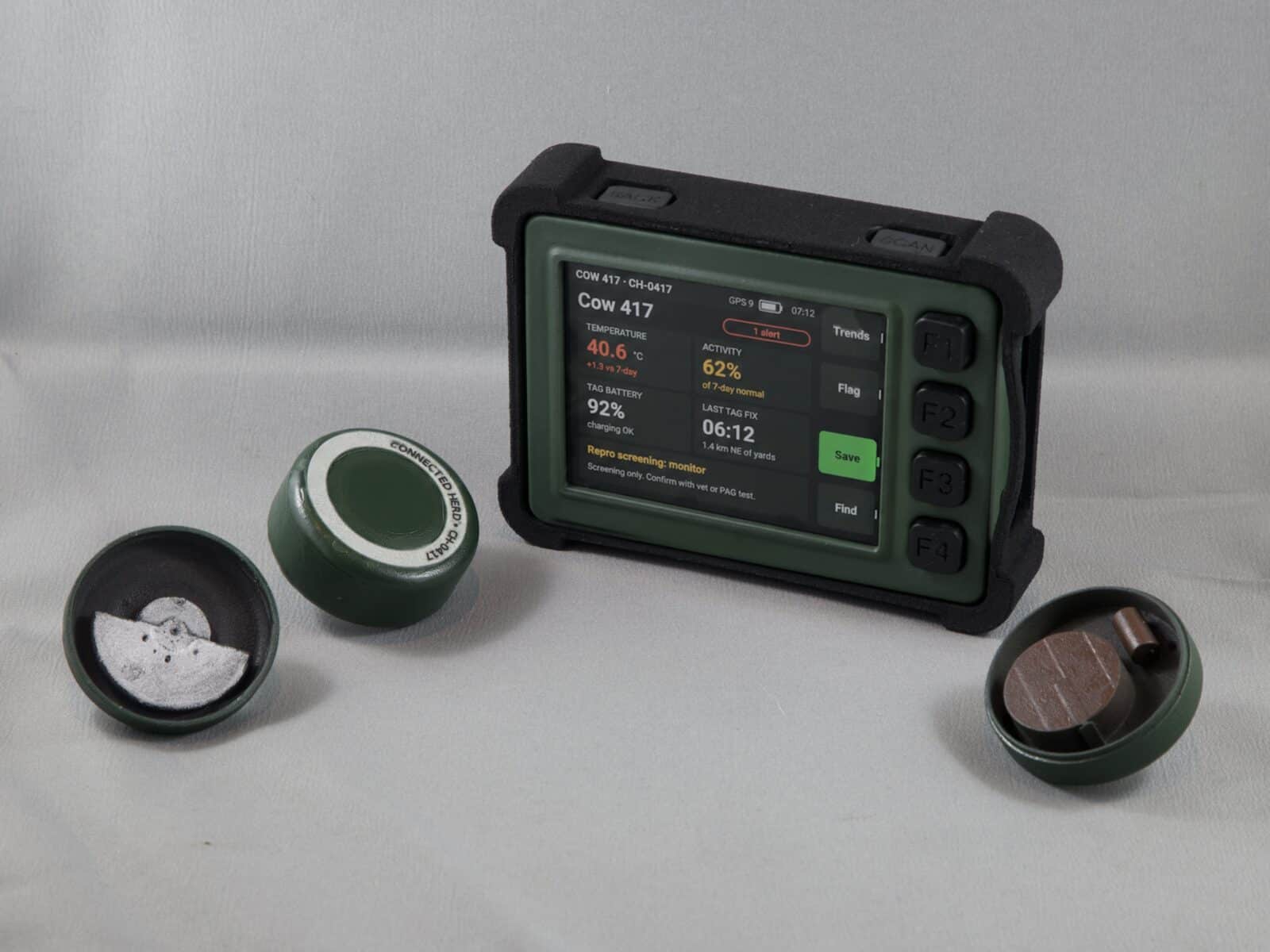
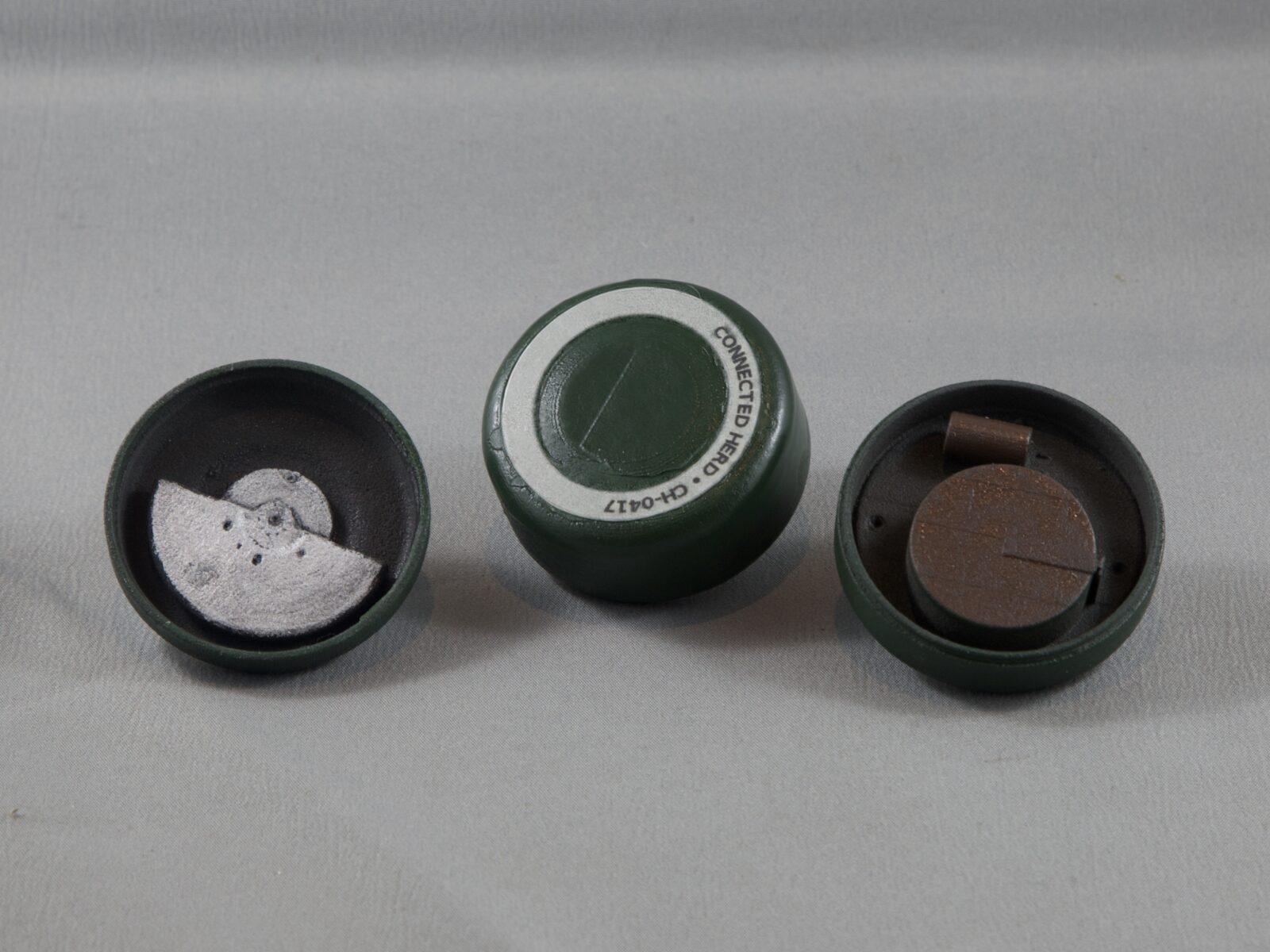
Five concepts were sketched and tested against the Design Needs: a solar tag, a double-sided kinetic disc, a two-part skin-contact clip, a vein-access tag and a passive implant. The kinetic disc was carried forward, borrowing the clip’s two-part build and skin-contact sensing. Testing showed head movement alone could not power the sensors, so the final tag adds a long-life coin cell.
How It Works
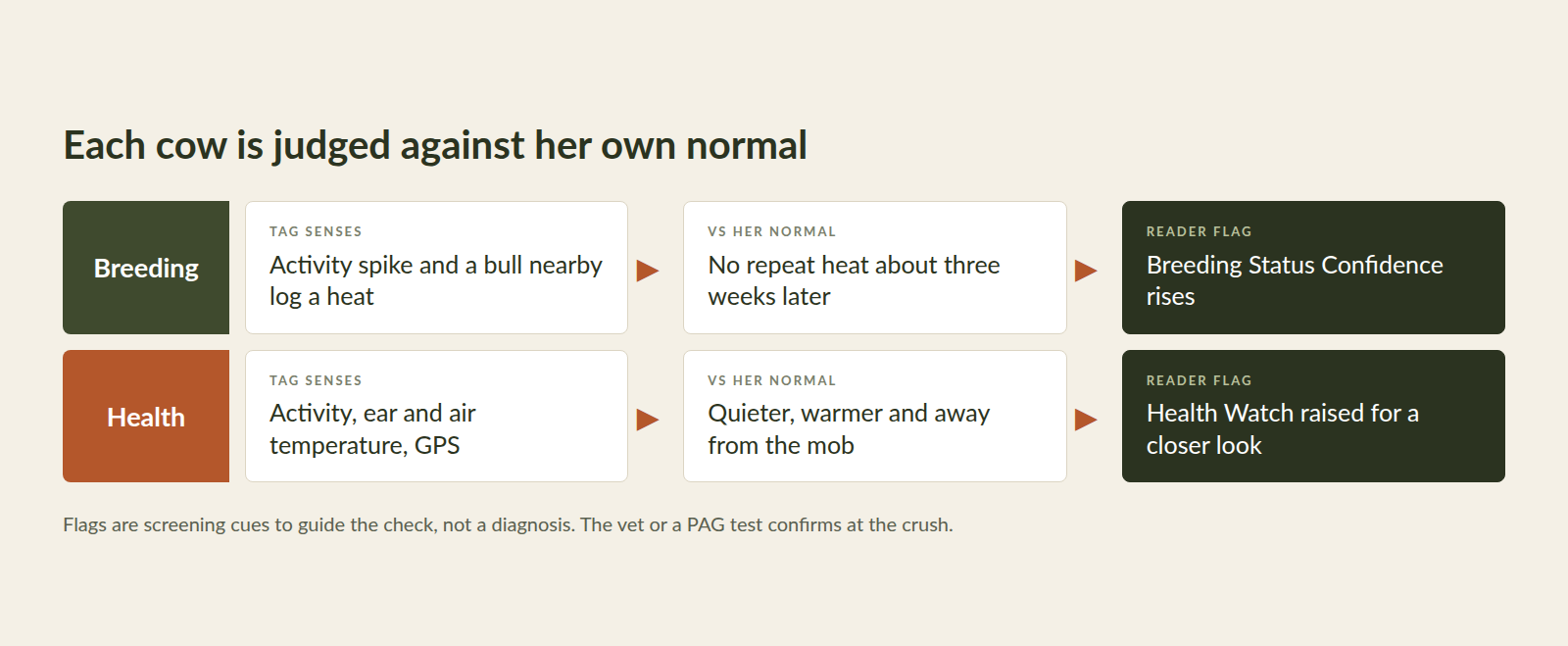
Every cow is compared against her own normal, not a herd average. For breeding, an activity spike with a bull nearby logs a heat, and no repeat heat about three weeks later raises her Breeding Status Confidence. For health, lower activity, a rise in ear temperature corrected for air temperature, and time away from the mob raise a Health Watch.
Published studies show motion plus temperature sensing can detect calving with about 95% sensitivity within 24 hours, but behaviour alone is weak for detecting heats. That is why these are screening flags. The vet or a PAG test, which is 88 to 99% accurate, confirms at the crush.
User Interface
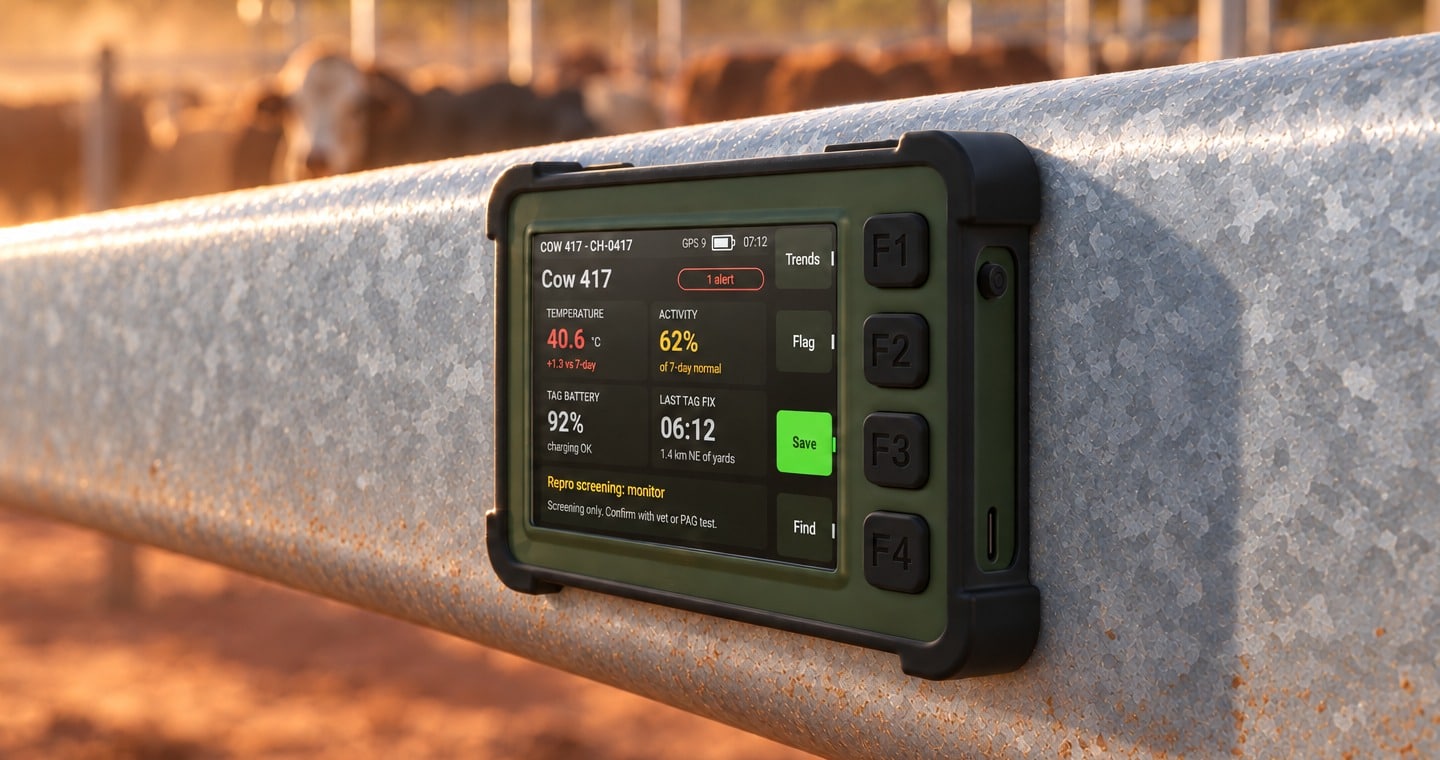
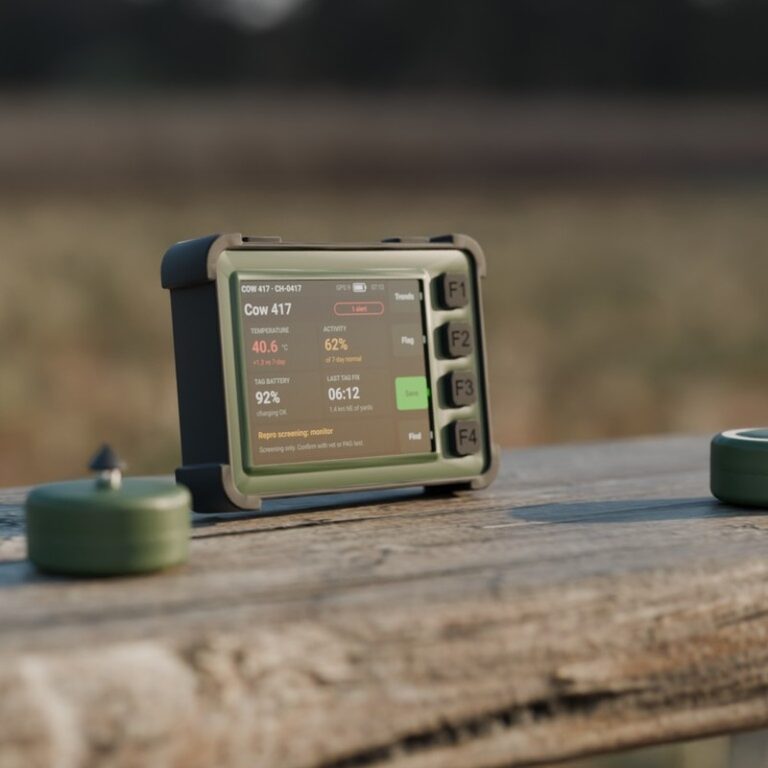
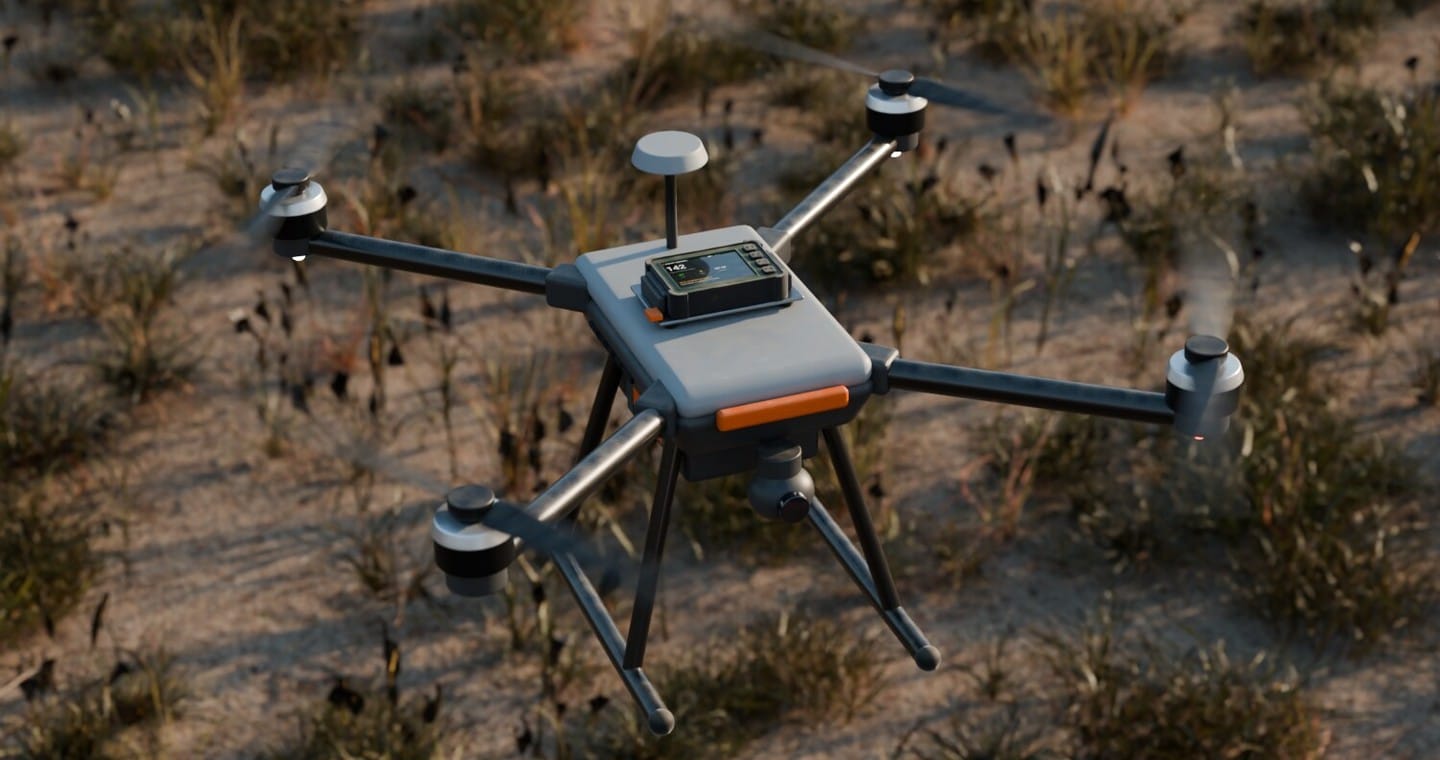
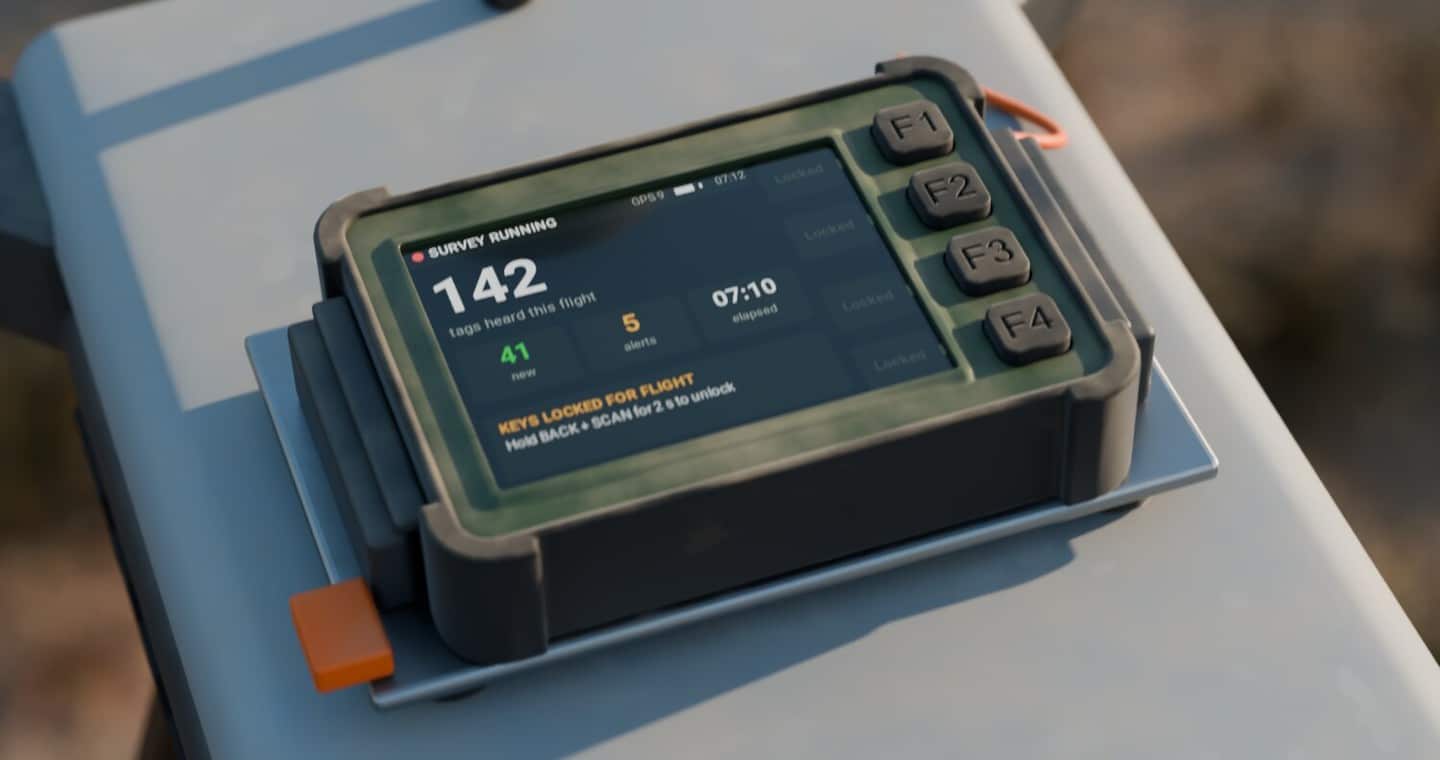
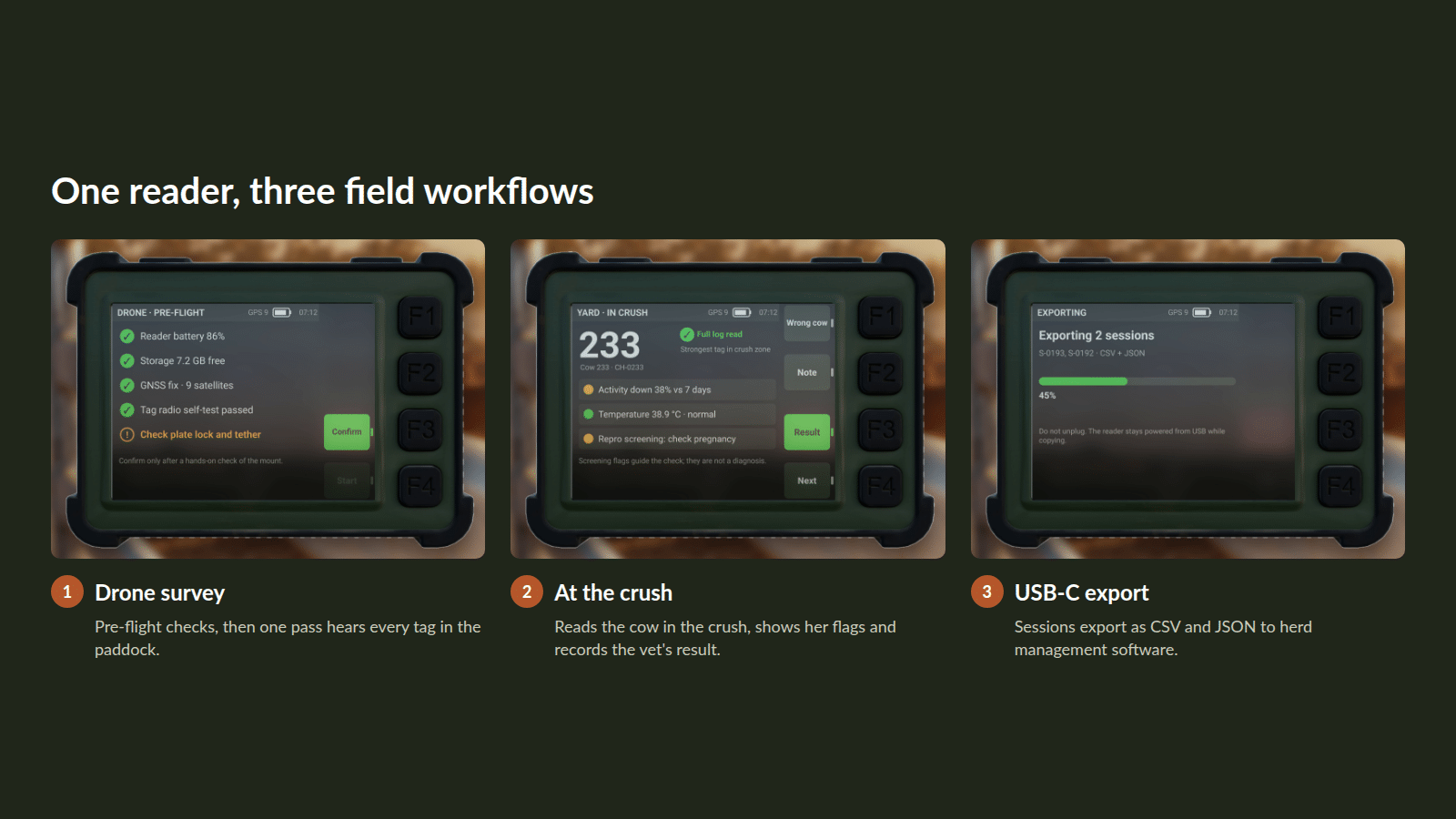
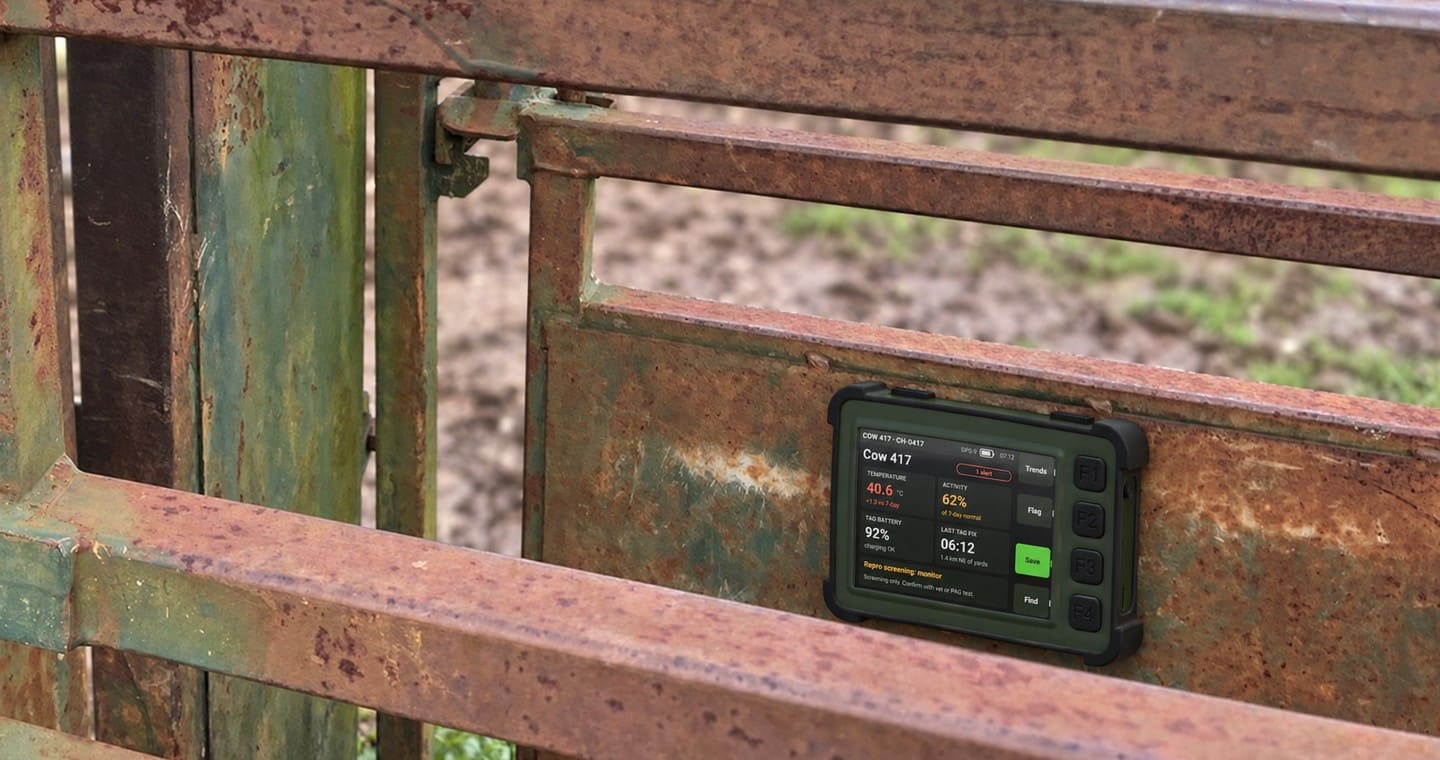
The interface was designed around real field tasks rather than menus. A Select Mode screen leads to Drone survey, Handheld find, Yard and crush, Sessions and Settings, each driven by the four function keys so the reader can be used without a touchscreen.
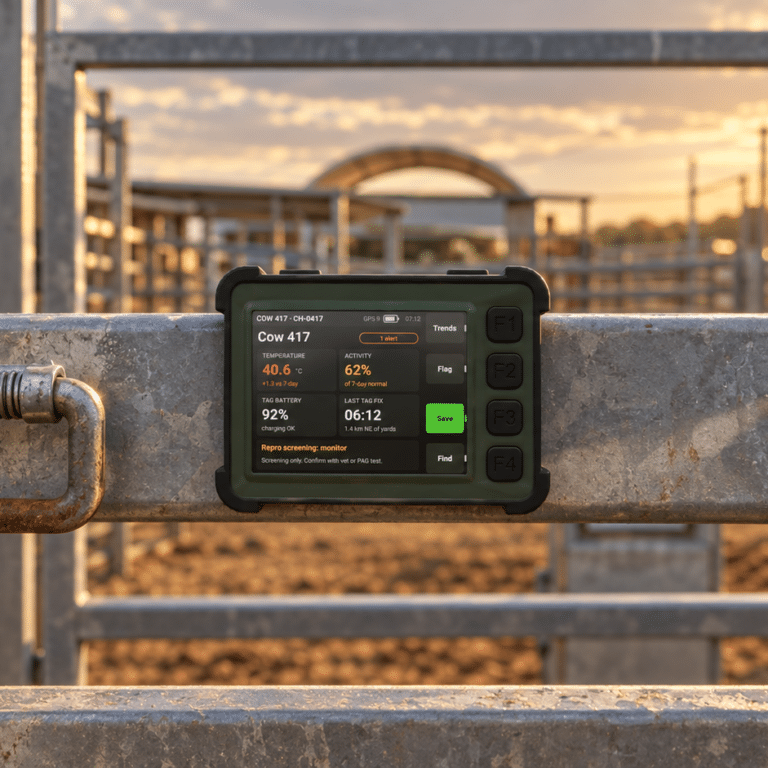
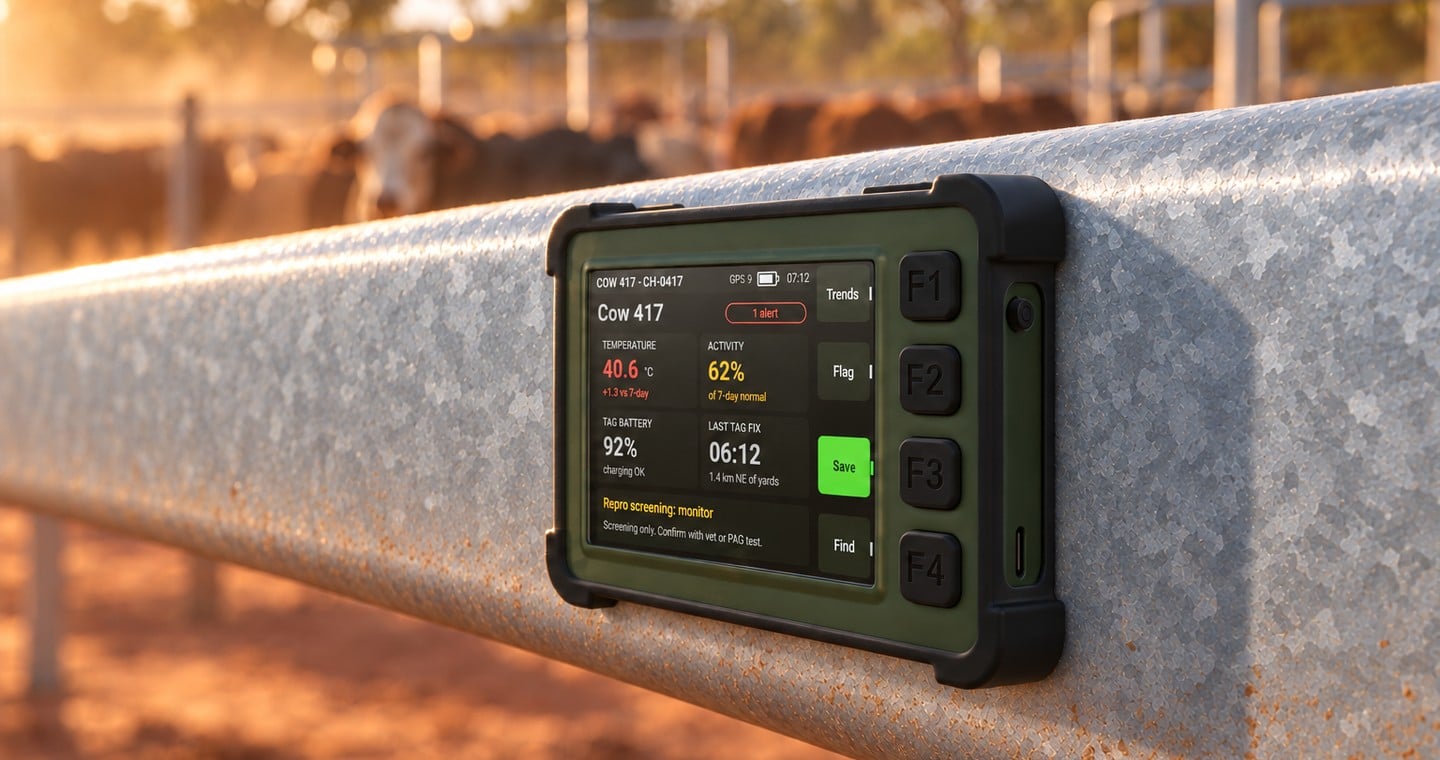
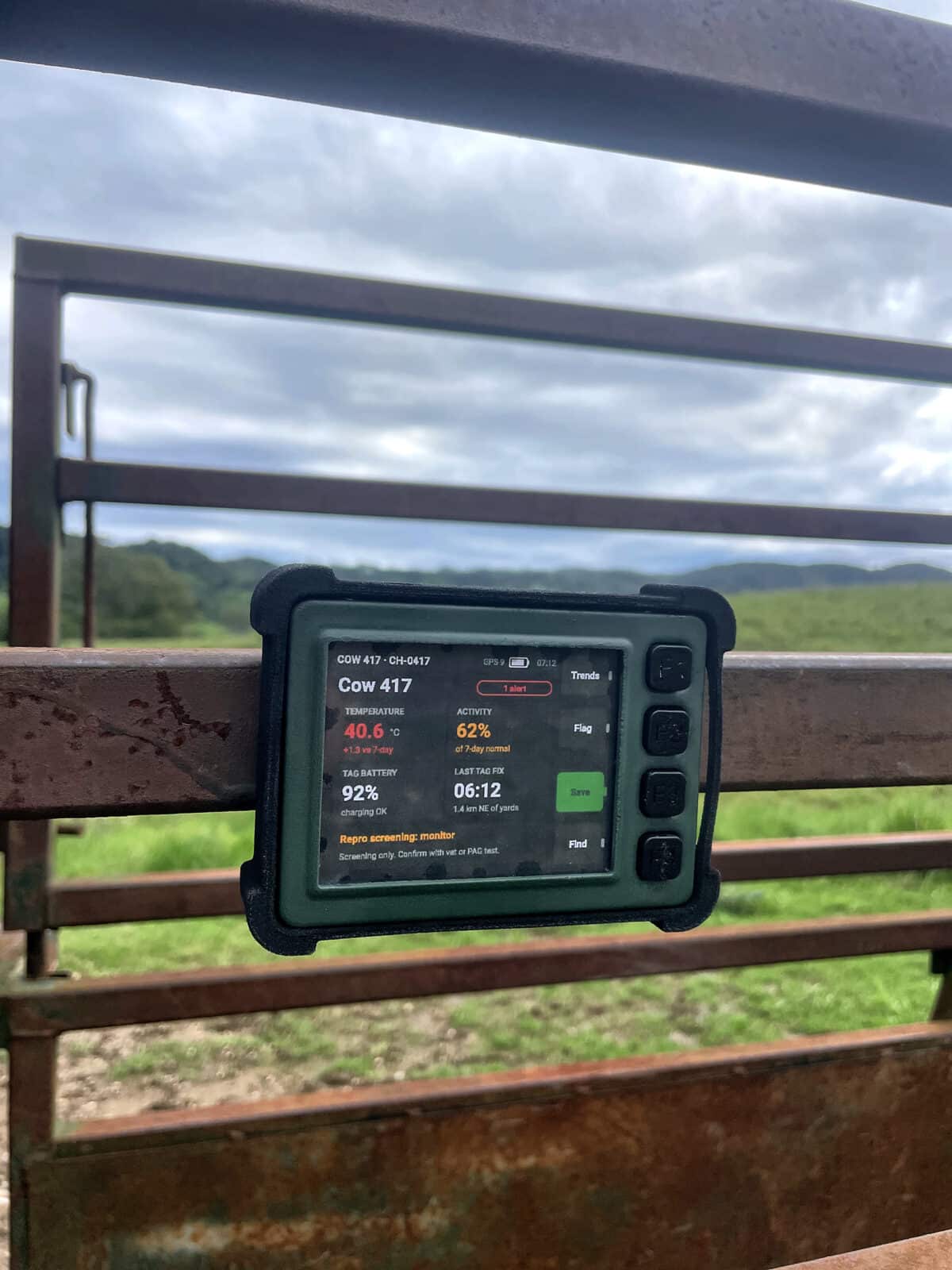
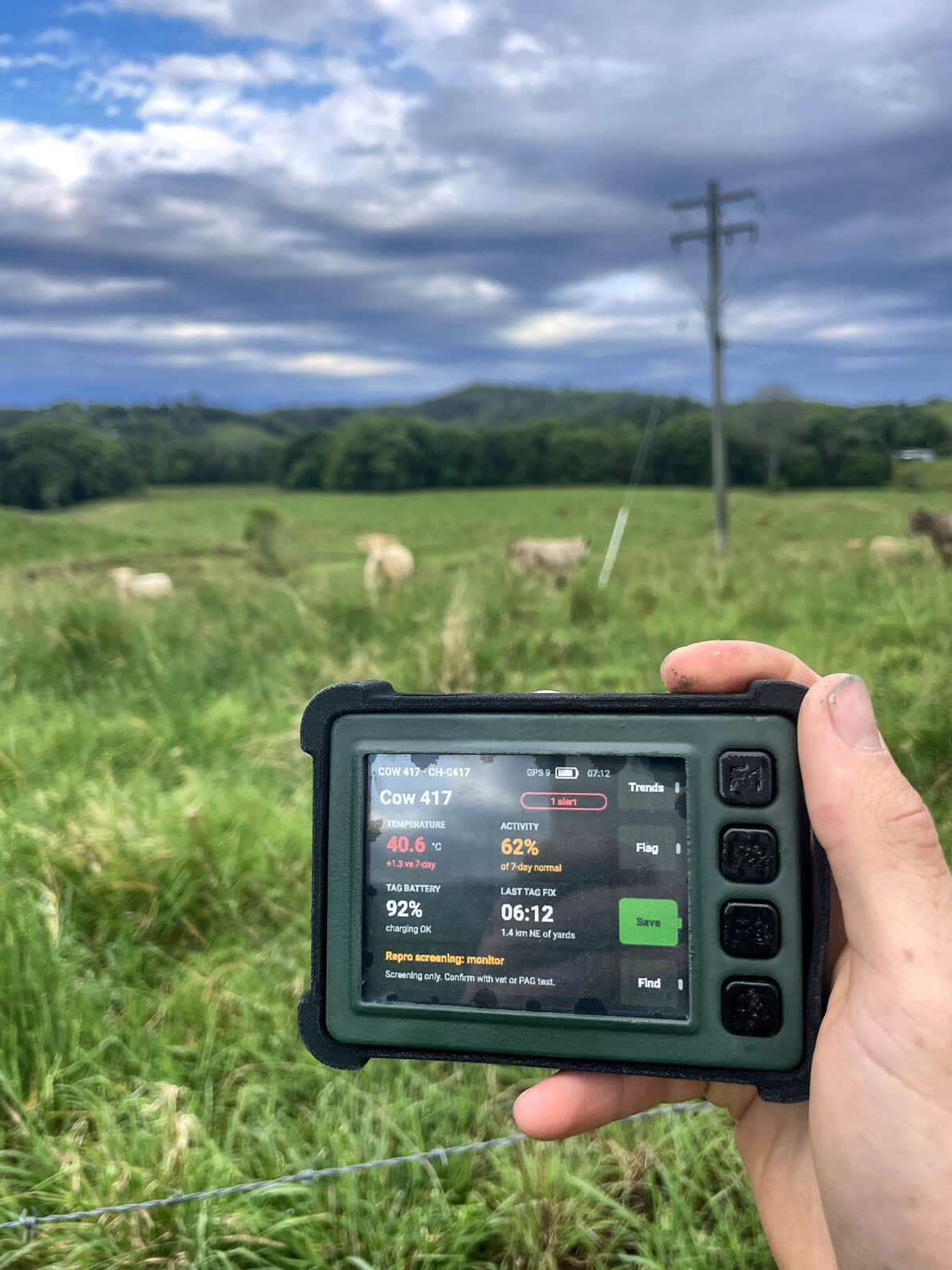
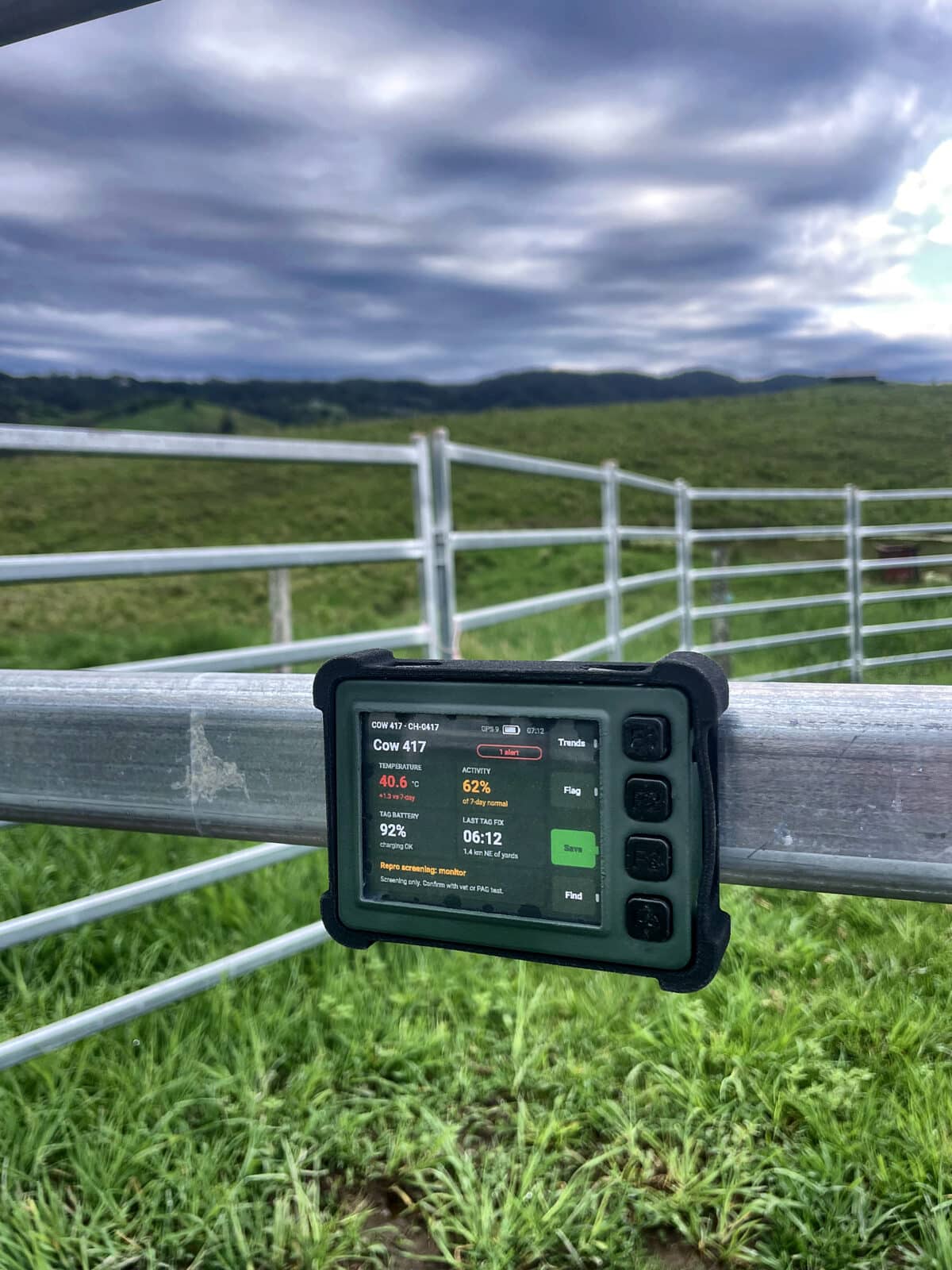
At the crush, the screen shows the cow’s number, the strength of the tag read and her current flags, with clear wording that flags guide the check and are not a diagnosis. Results, notes and wrong cow corrections are one key press away. At the end of the day, sessions export over USB-C as ready for the herd management software.
Connected Herd in Context
Follow a particular cow through one season. She is tagged at the muster and the tag starts learning her normal. At joining, a heat is logged, and with no repeat three weeks later her Breeding Status Confidence rises. Mid-season she is quieter, warmer and away from the mob, so a Health Watch goes up. The next drone survey picks that up, handheld find walks you to her, and at the next muster the vet confirms at the crush. Only she gets the extra attention.
Physical Concept Model
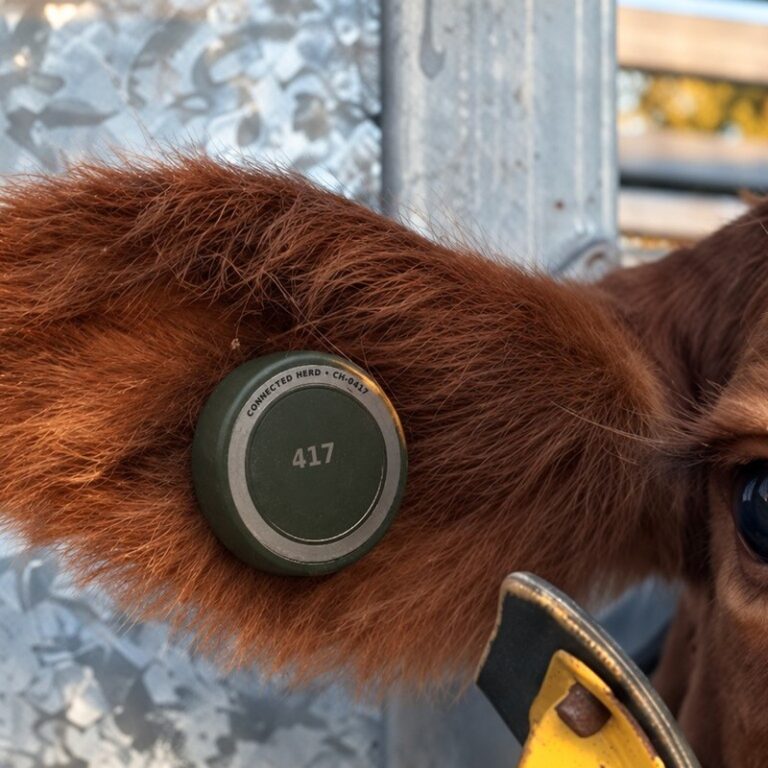
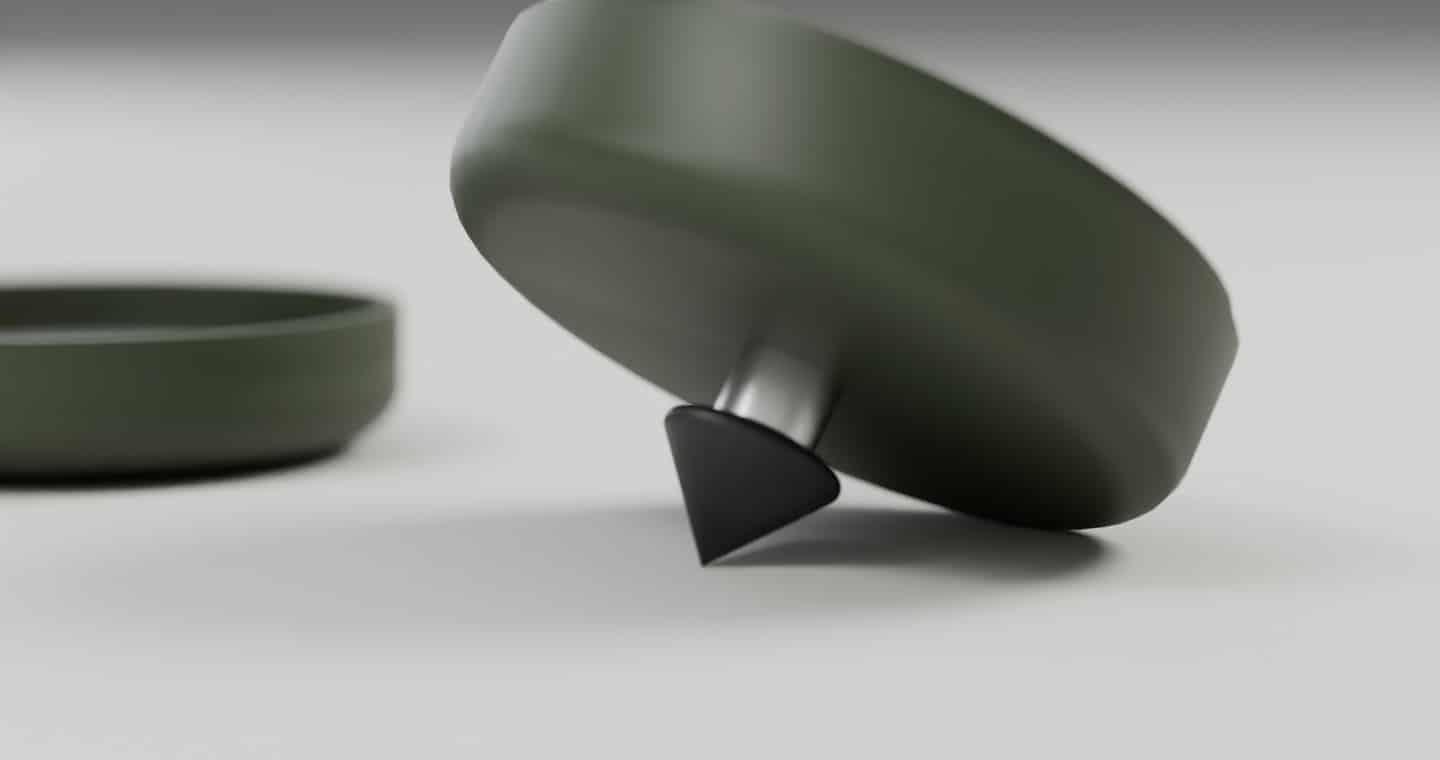
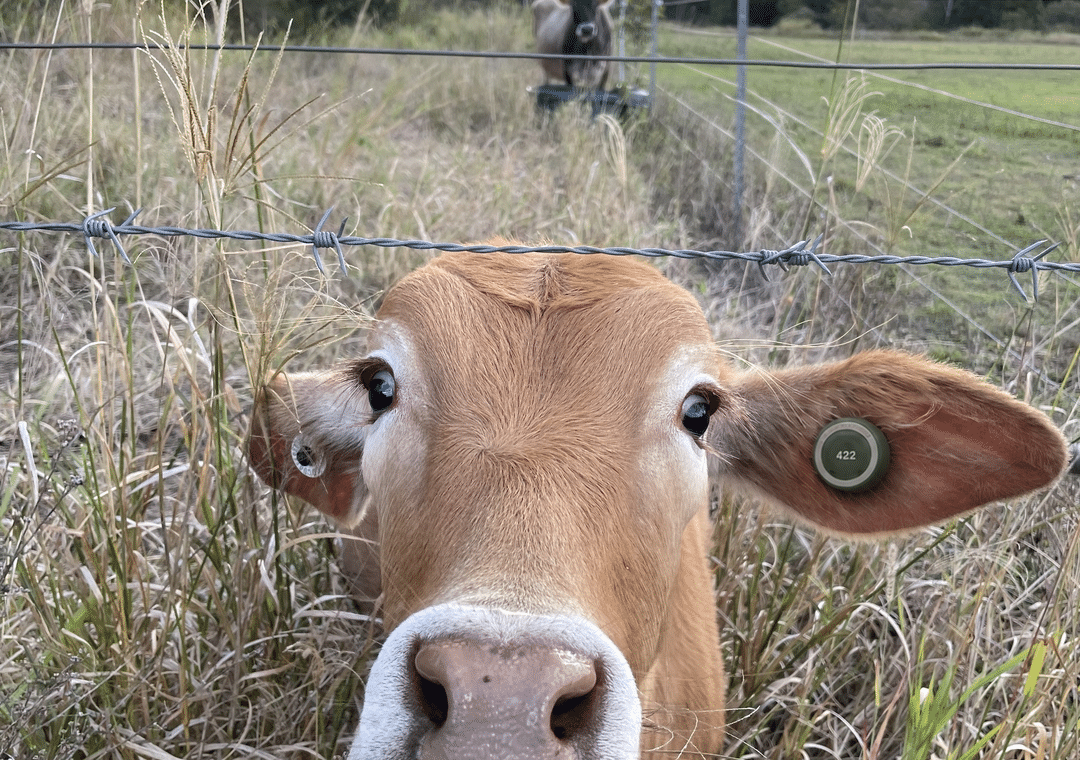
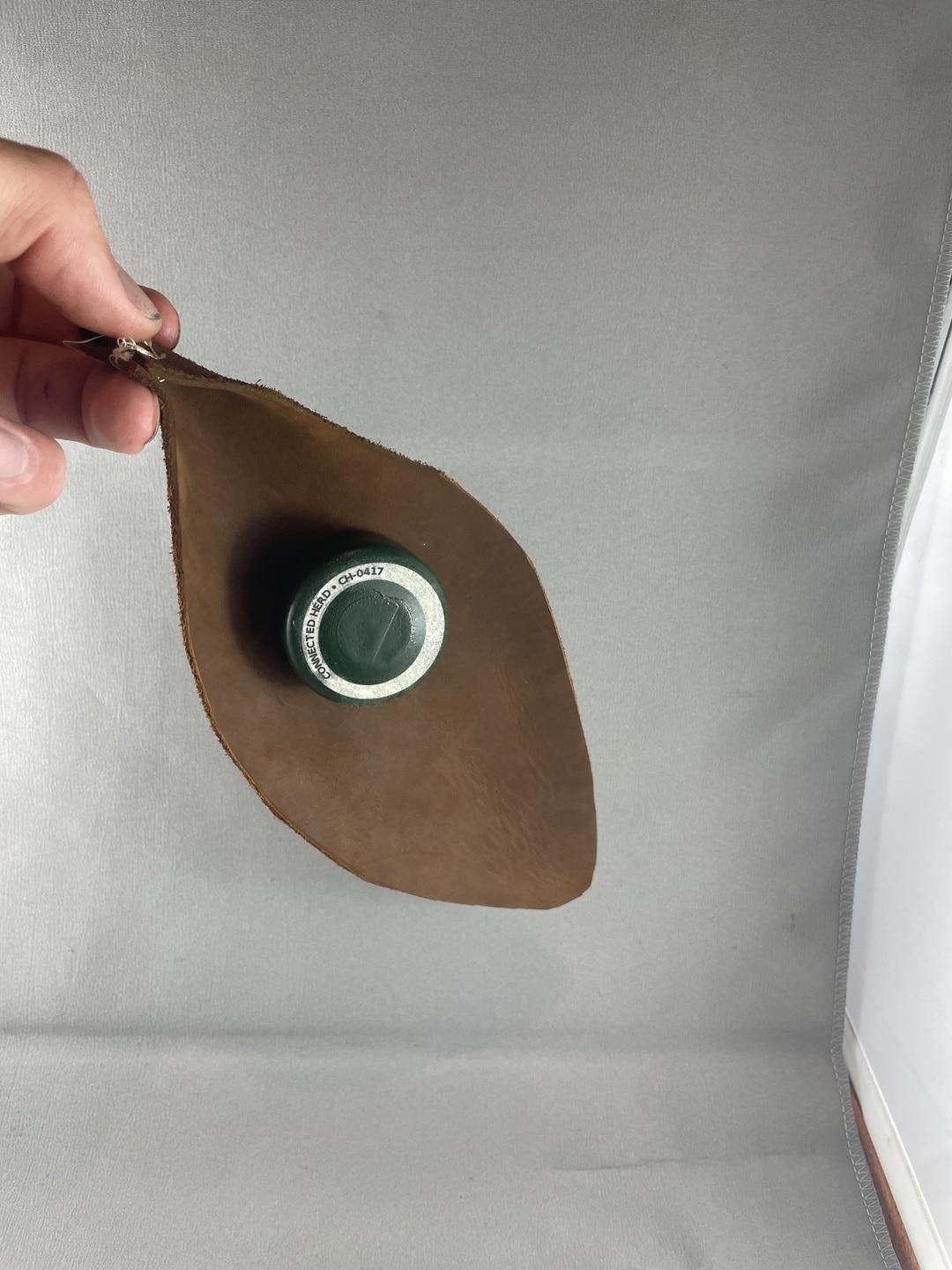
Product images are rendered or photographs of the design model.
AI tools were used to superimpose some product renders onto background photos,