Industrial - Bachelor
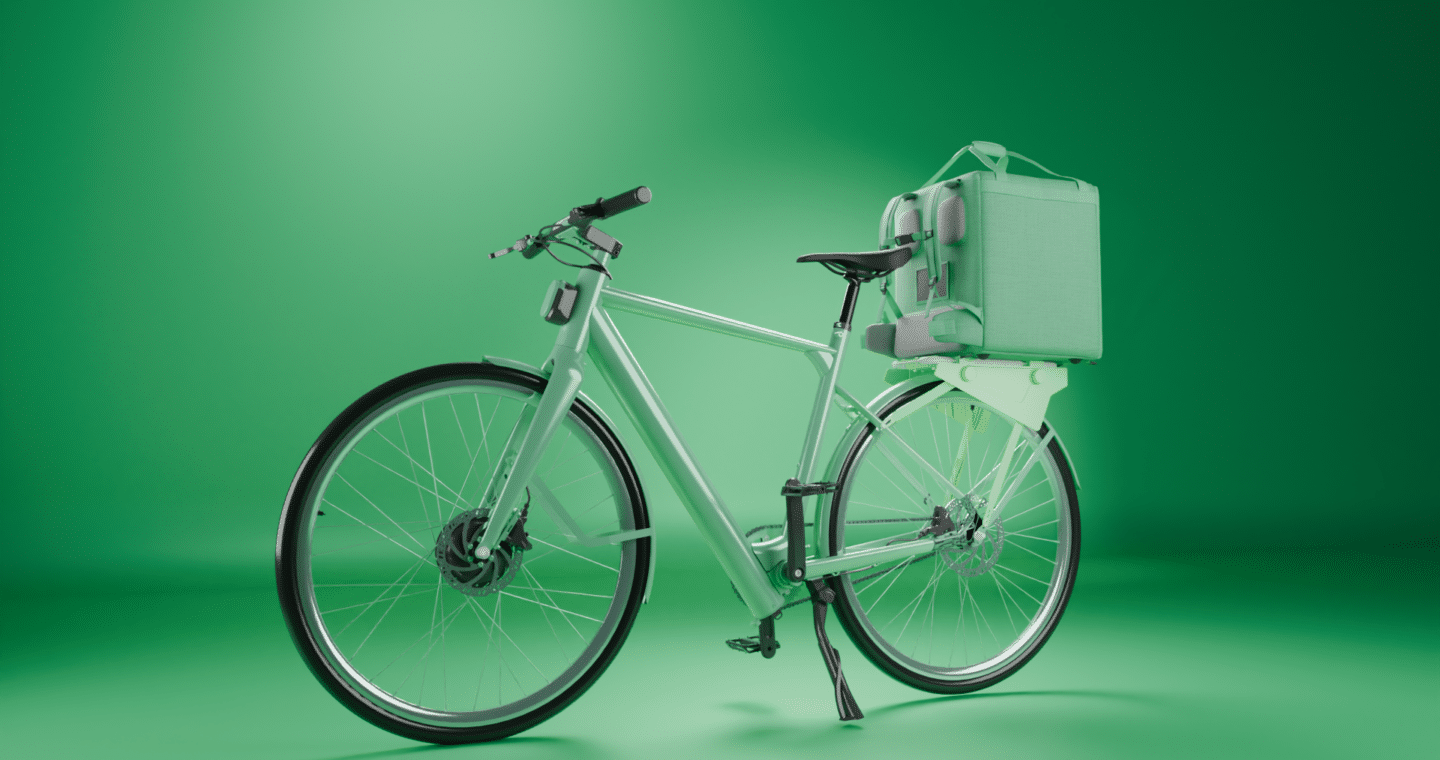
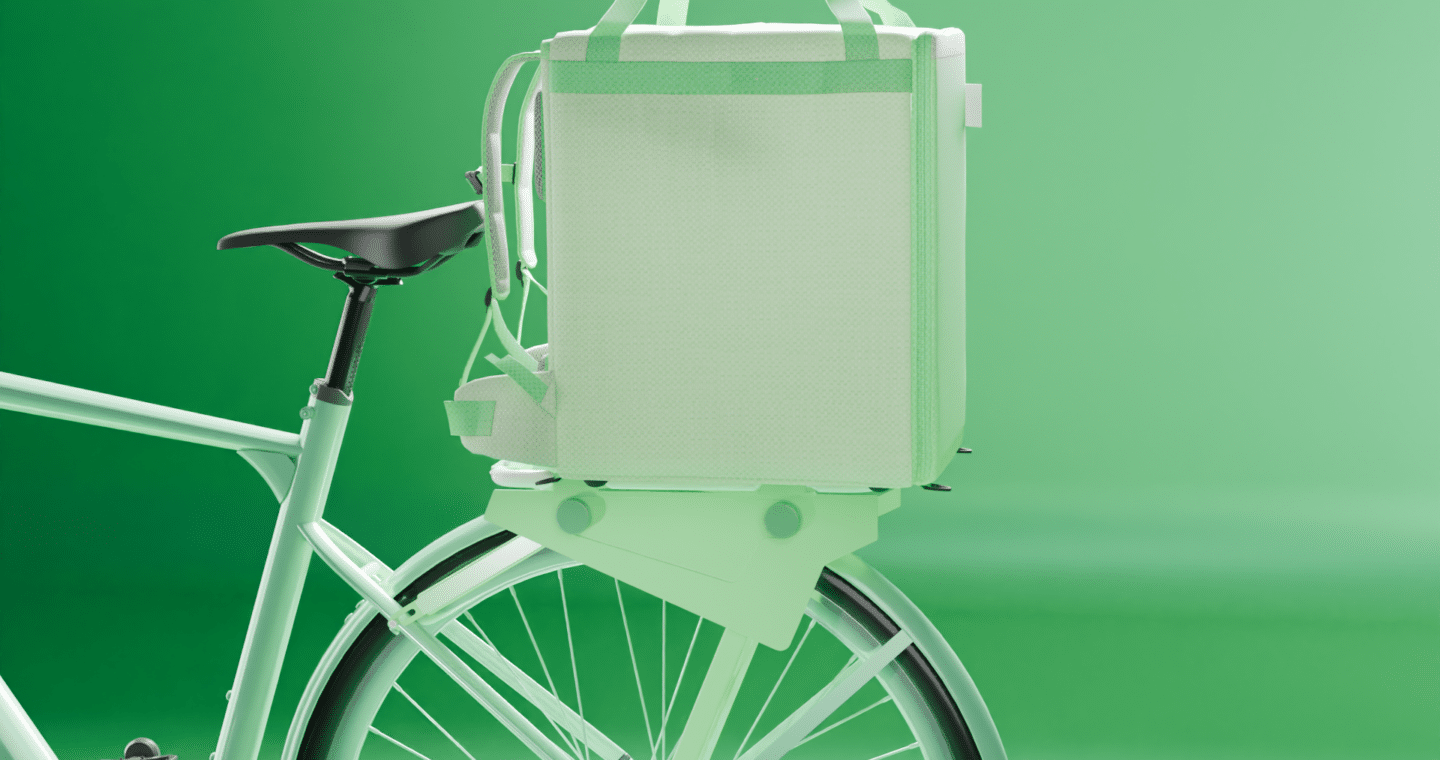
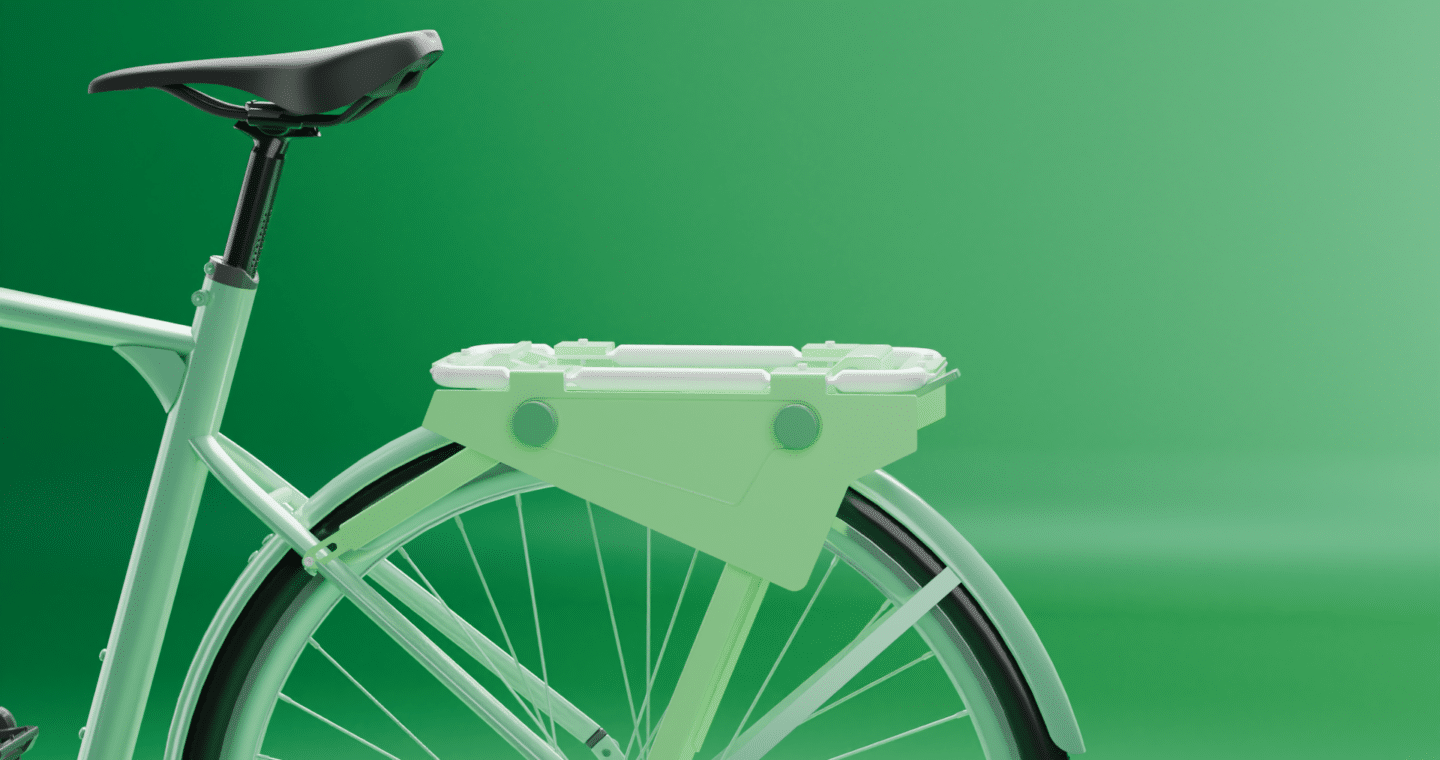
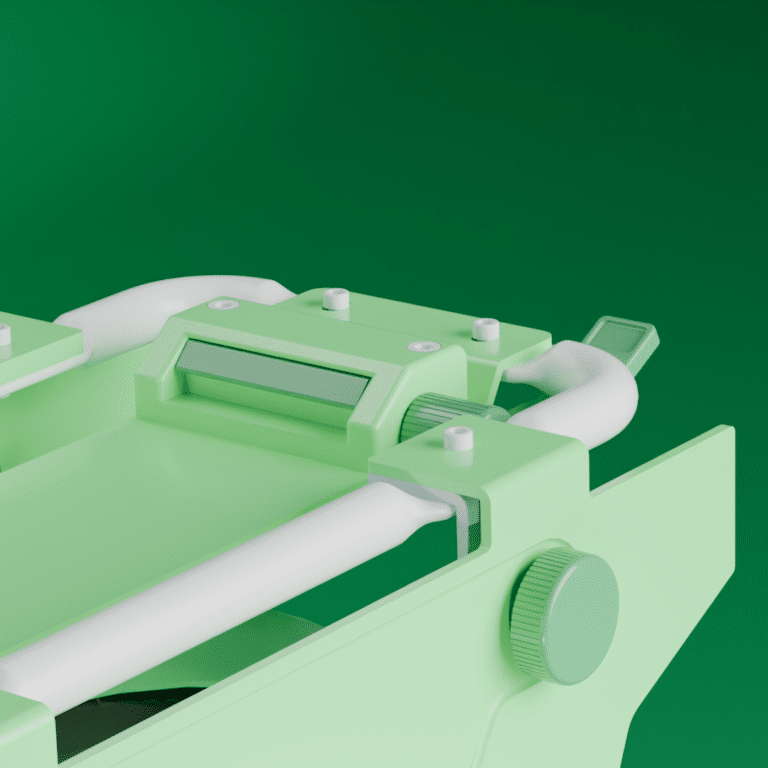
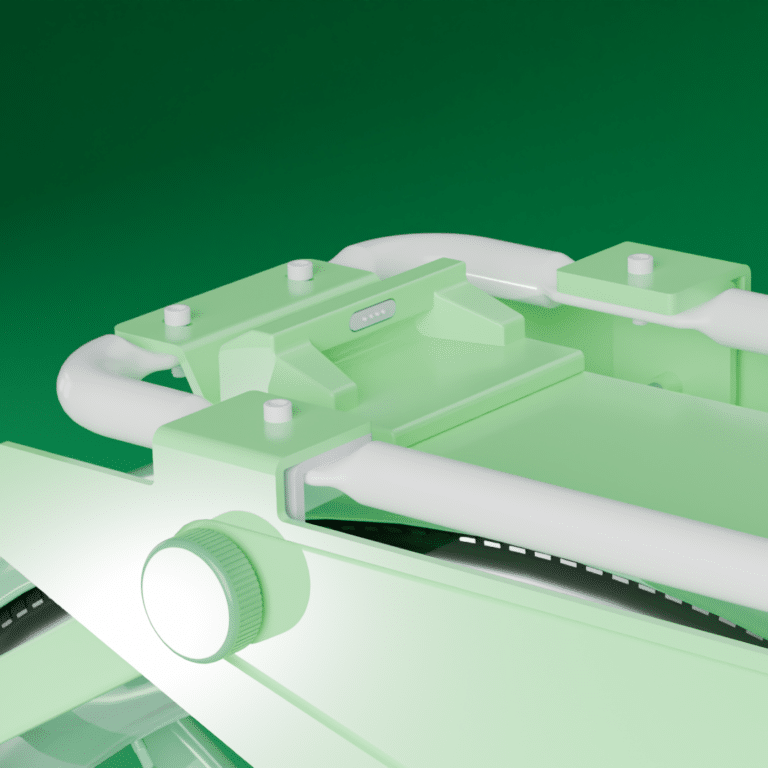
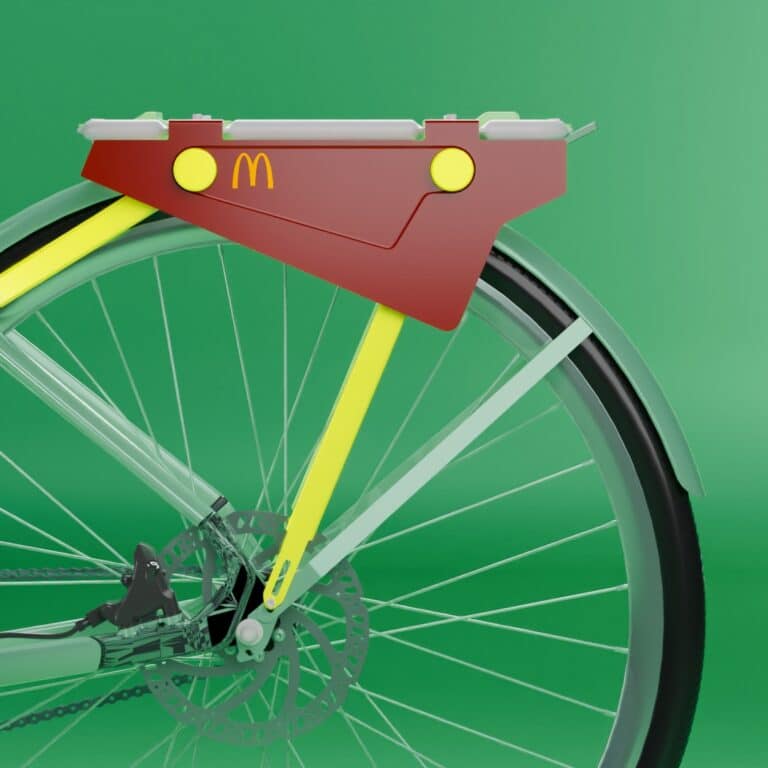
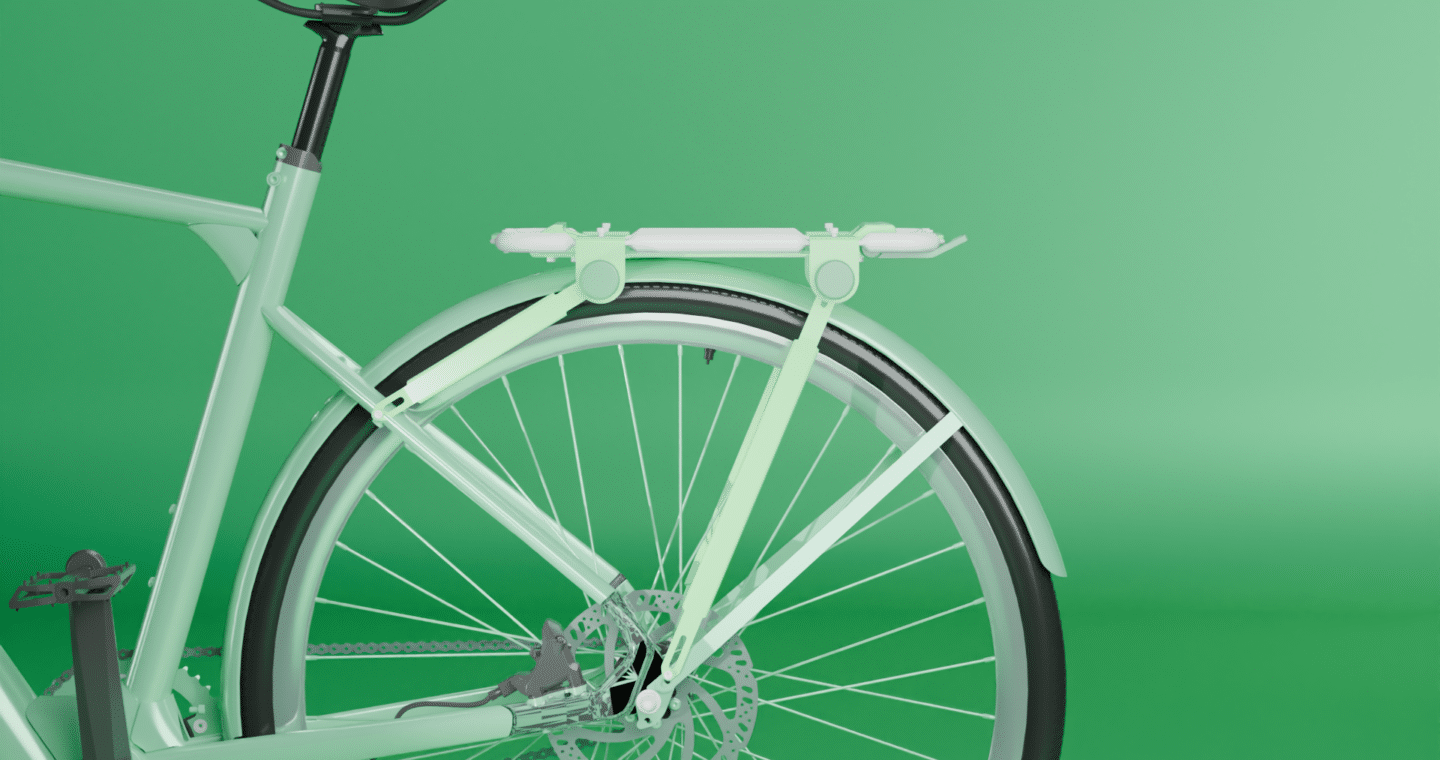
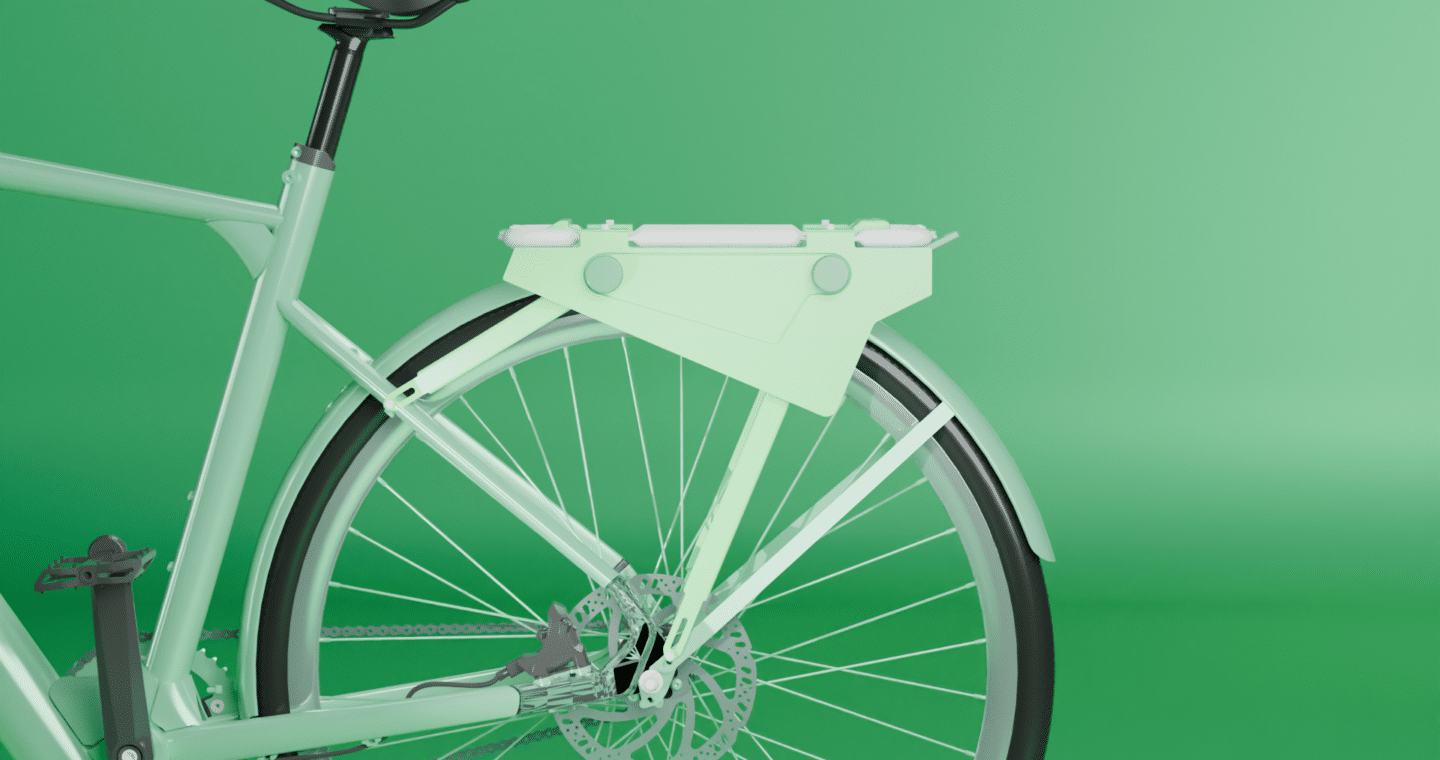
MODU RACK is an e-bike delivery rack with a smart clipping system to quickly attach and detach a delivery bag. It incorporates a modular design to be adaptable to different bikes, to meet the varying needs of users and to be repairable.

The green last-mile e-bike fast food delivery sector is expanding due to societal dining preferences. However, food delivery riders are vulnerable road users four times more likely to have accidents than other cyclists. The poor ergonomics of food delivery backpacks contribute to rider neck, shoulder and back pain and strain and create a higher centre of gravity that reduces rider stability, further increasing accident risk. The majority of riders would prefer to carry their delivery on a bike cargo rack, but the process of tying a backpack onto a traditional bike cargo rack is cumbersome, insecure and time-consuming.
Resolving the occupational safety risk of accidents caused by poor centre of gravity and distribution of weight requires a transformational change in the use of unwieldy food delivery backpacks.
Delivery rider work demand peaks at night and in rainy weather. These conditions increase the risk of accidents and impact on the durability of bike parts and accessories. Solutions need to be designed for ‘worst-case’ conditions and recognise user capabilities may be diminished due to low light/precipitation and stress in these contexts. An opportunity exists for design approaches that help alleviate worker discomfort in demanding work conditions.
Gig-economy riders are paid by the delivery and pressured to meet delivery time targets. Ease of use and efficiency of product design solutions is necessary to ensure take-up of new devices and accessories. Loading and unloading of food carry devices at pick up and drop off and vice versa was identified as a process step where ease of use was a key consideration. Systems mapping of processes is recommended to further explore work flow efficiency opportunities.
The lack of employee training was identified in research as contributing to accidents, and practical recommendations in secondary research also identified the need for employee training. As such, riders may be unfamiliar with work protocols or equipment. Together with a time-pressured work environment often in the dark and surrounded by traffic noise, these contexts point to the need for highly intuitive product design.
Surveys of primary users identified the preferences influencing their use of safety equipment, that can inform design approaches. Design-based factors in order of positive influence were safety, ease of use, comfort and appearance or style.
The ergonomics associated with food delivery are distinct from those involving other cyclists and a critical consideration in design solutions:
▶ cyclists are riding for necessity rather than choice, with potential lack of skill, experience, or stamina
▶ an e-bike that may not be owned by the rider, increasing unfamiliarity
▶ on-bike and on-person food delivery accessories changing centre or gravity and weight, impacting stability
▶ a cycling pattern involving a focus on speed, attention to external factors (e.g. job alerts) and frequent mounting/dismounting
▶ frequent removal/installation or put-on/take-off of food carry devices.
Delivery riders are often temporary residents and students working on a minimum wage, or in gig-economy employment, and business franchisees are focussed on minimising expenditure. As such, product support and adoption is likely to be strongly influenced by cost.
Similarly, cost considerations will influence decisions to replace or repair worn or broken products. The nature of the employment setting, with high-frequency of the e-bikes’ use, and a high accident risk, places great physical demands on parts and accessories and damage is frequent, especially to mirrors, cargo boxes, tyres and brakes. Combined with exacting environmental conditions, product durability becomes a priority consideration.
Ewan is an enthusiastic industrial designer with a strong interest in sustainability and human-centred design. His design methodology incorporates problem-solving and the development of novel solutions.
"*" indicates required fields