Industrial - Bachelor
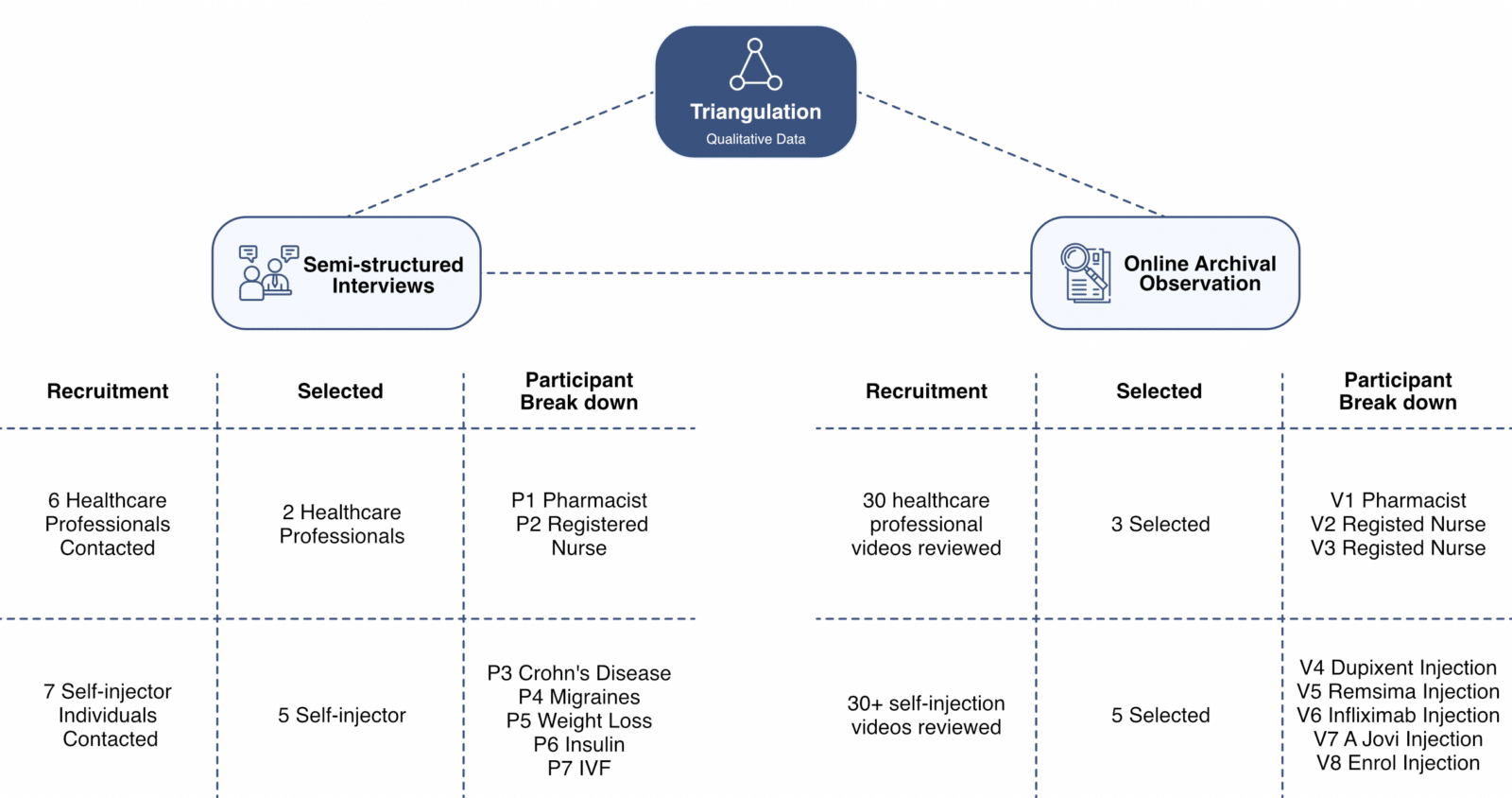
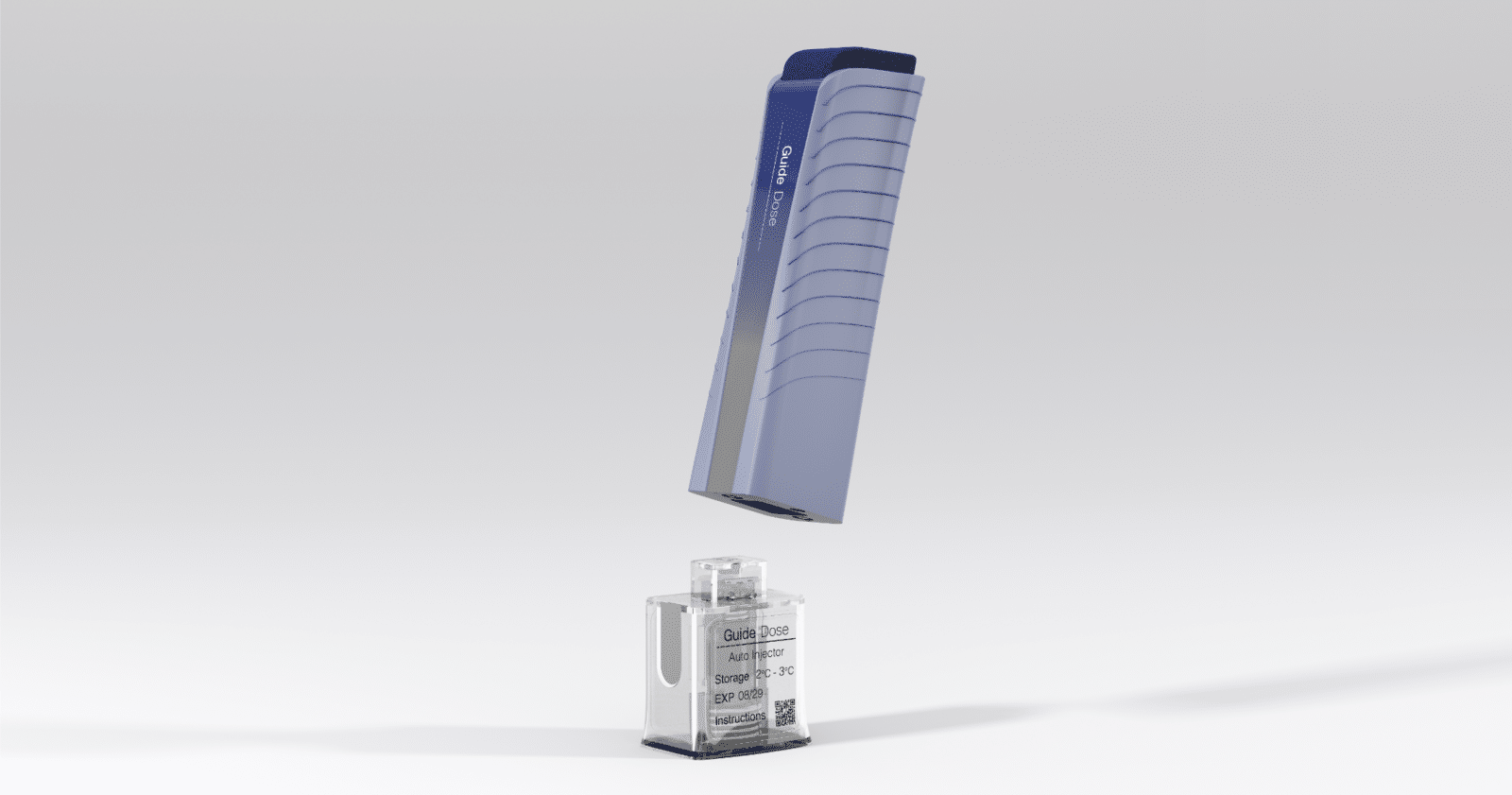
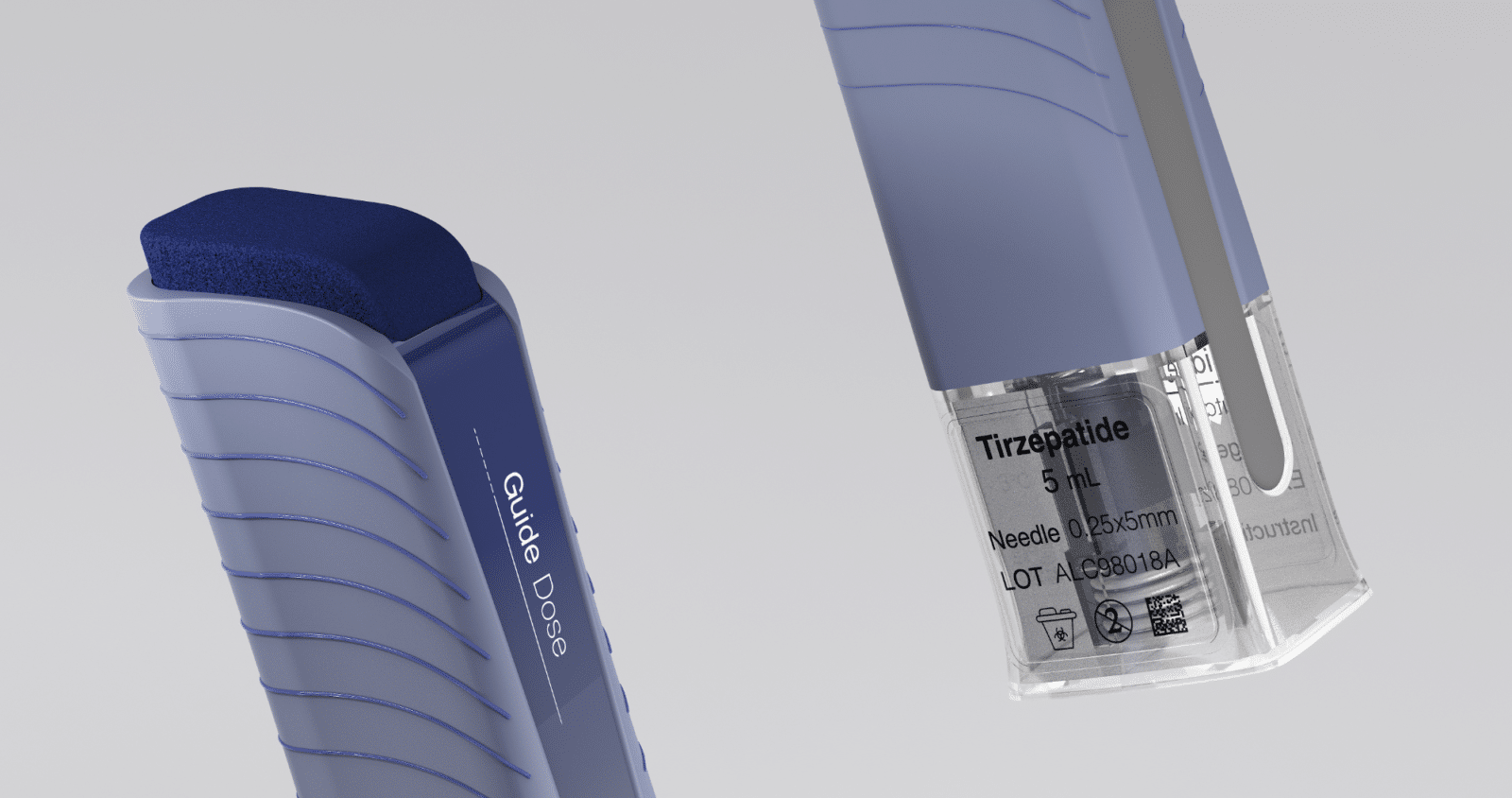
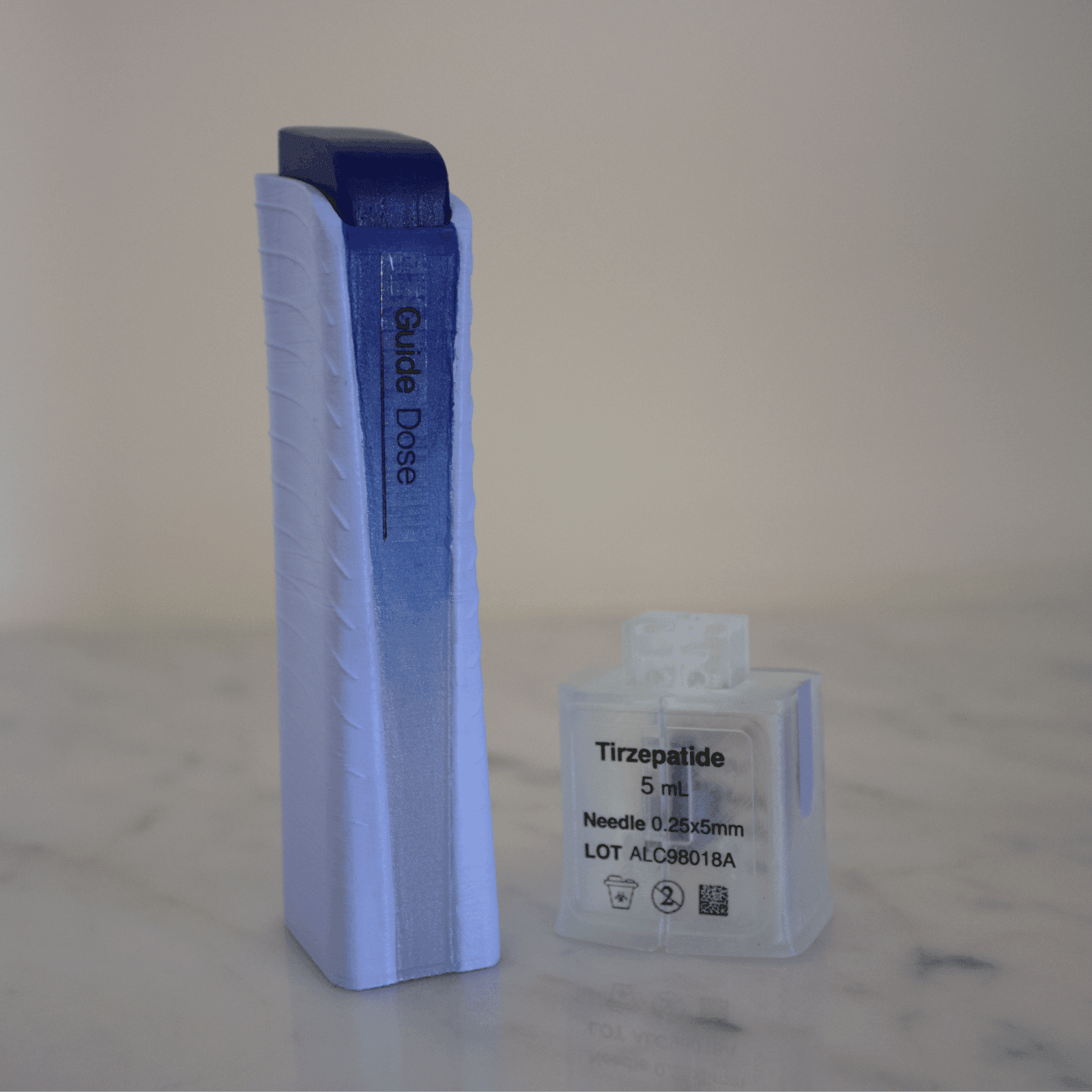
Auto-injectors enable over half a million Australians to self-administer medication. Current devices are unsustainable, with poor ergonomics, confusing instructions, and limited feedback causing user error, uncertainty, and anxiety. Research showed all participants made errors, highlighting the need to prioritise people over medication delivery. Guide Dose addresses these challenges, placing people at the center of every dose, enabling users to inject with confidence and control.

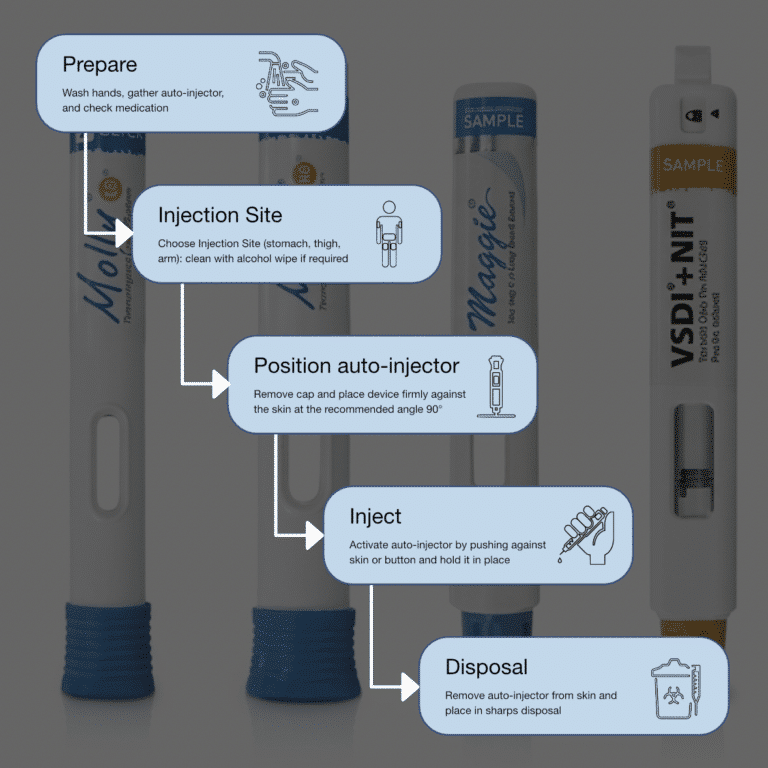
Auto-injectors are medical devices that deliver pre-measured medication into the fatty tissue layer just below the skin. They are intended to simplify the injection process by reducing the number of steps and training required to self-administer medication. This contrasts with traditional needles and syringes, which medical professionals usually administer in clinical settings. Auto-injectors enable patients to self-administer medication independently in any location.
They enable people with short and long-term acute or chronic conditions to independently manage their treatment anywhere. In Australia alone, over half a million people regularly use GLP-1 for obesity via subcutaneous injection. This represents almost 2% of our population. This statistic encompasses only one such condition. However, many other conditions such as clot prevention, migraines, Crohn’s disease, rheumatoid arthritis, and more also require auto-injector use. Demand for these devices continues to rise exponentially. Therefore, as home-based treatment becomes more common, auto-injectors must prioritise patient safety, usability, confidence, and greater sustainability.
“There was no process or device feedback; I’ve definitely given myself the wrong dose. It’s a fair bit of guessing.”
Auto-Injector User for migraines – 2026
“The simpler and clearer the process, and with the least steps possible, the better.”
Nurse Practitioner – 2026
“I’ve got to scrunch my thumb up the device to try hard to press the button.”
Auto-injector User for Weight loss – 2026
“The fact that you just put the whole device straight into the bin is so wasteful!”
Auto-injector User for crohn’s disease – 2026
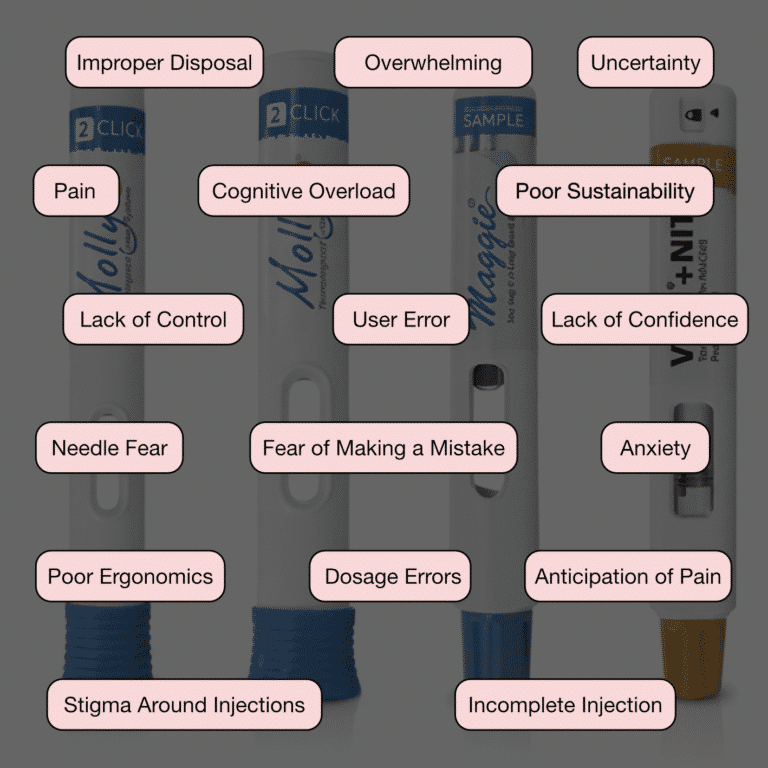
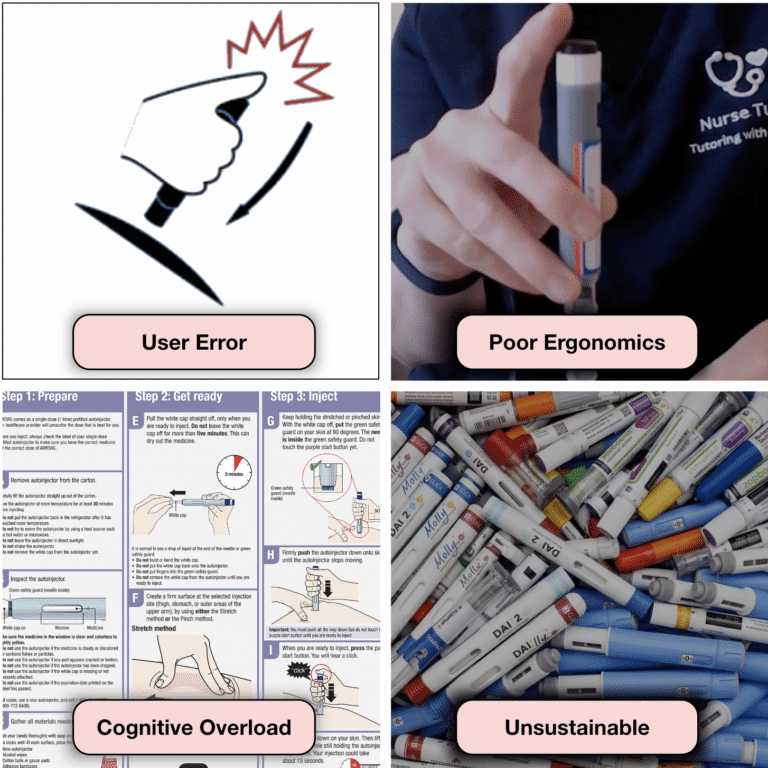
All five self-injecting participants reported at least one form of user error, highlighting the need for clearer instructions and immediate device feedback. Confirming key stages, particularly activation and injection completion, can reduce uncertainty and improve user confidence.
Participants reported anxiety, needle fear, hesitation, and uncertainty, while lengthy, complex instructions added to their cognitive load. Simplifying the process through intuitive guidance and reassuring device feedback can reduce mental strain and help users inject independently with greater confidence.
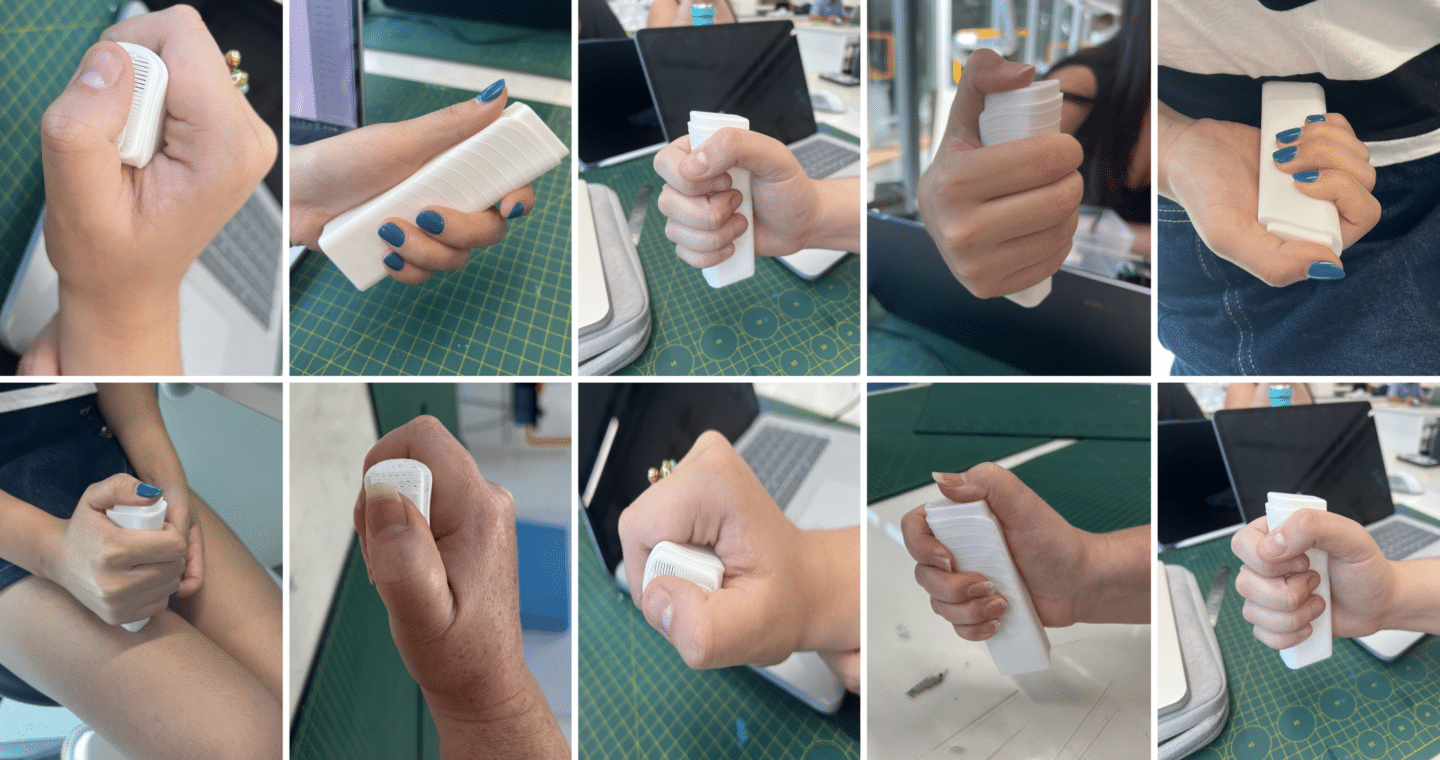
Despite automation reducing some physical demands, participants still struggle with current auto-injector devices’ handling, stability, and pressure-application issues. Improving grip, activation, and stability can provide greater physical control, reduce discomfort, and make injections easier to manage, giving users more control.
Four of five interview participants identified auto-injectors as unsustainable, largely due to their single-use, throw away design. Introducing reusable components and reducing material waste can minimise negative environmental impacts while maintaining safety and usability.
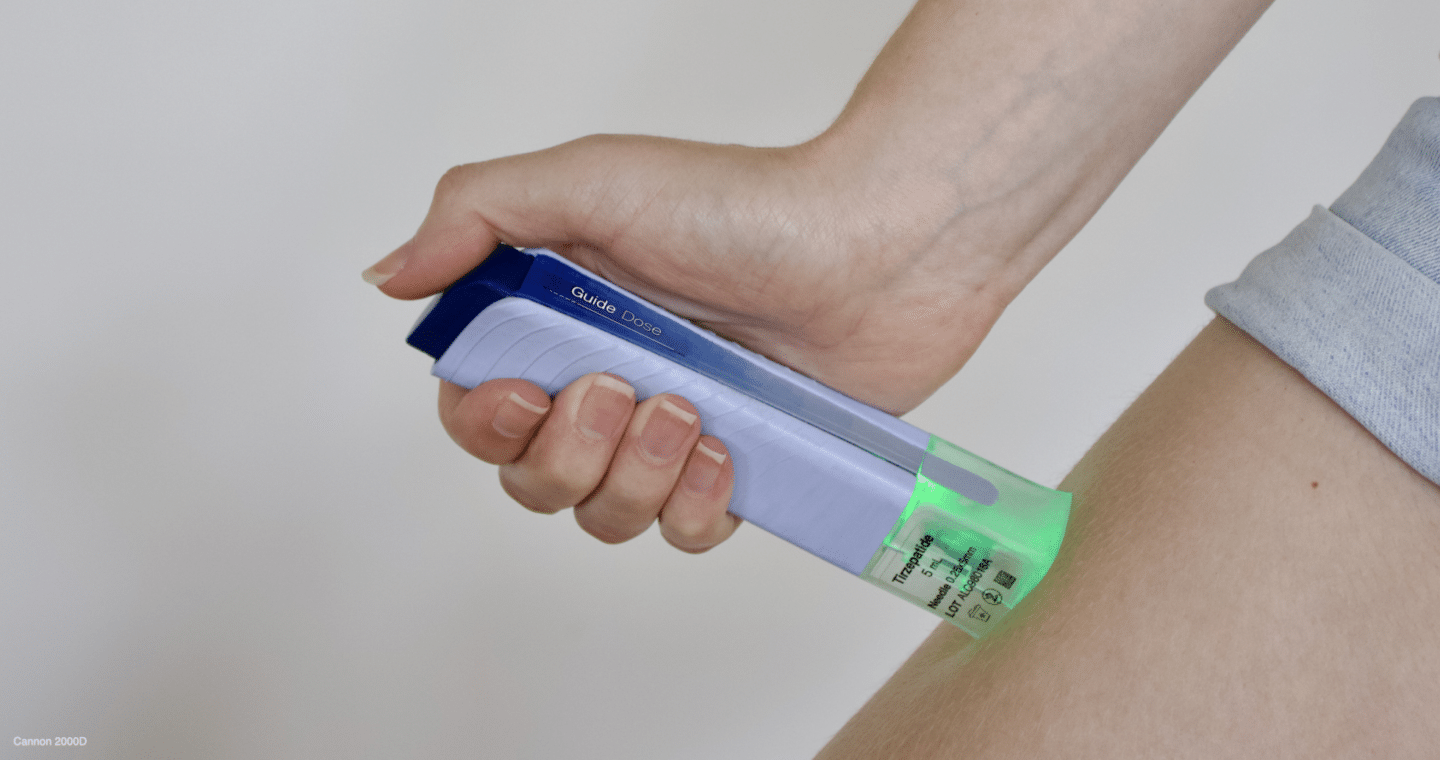
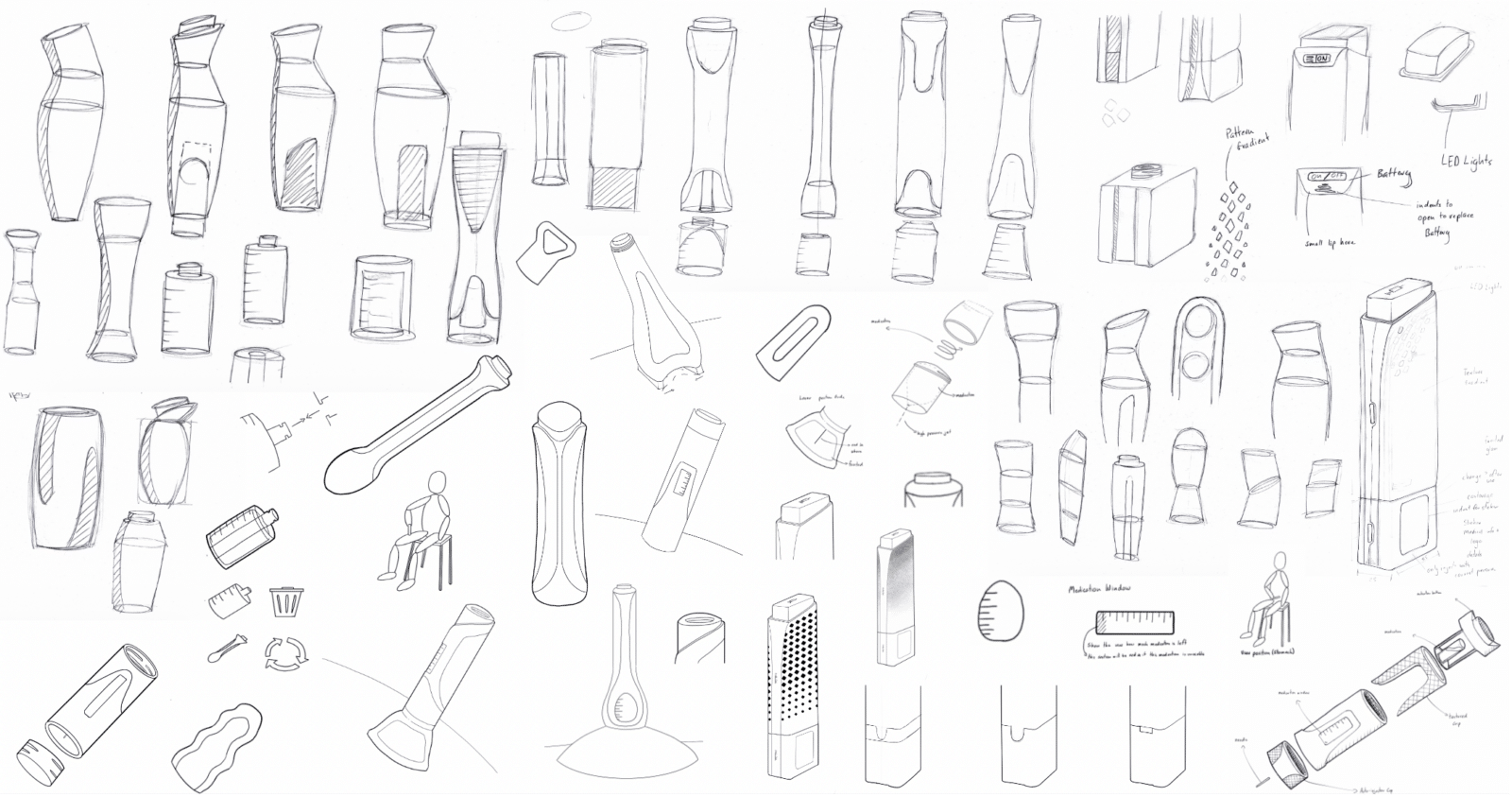
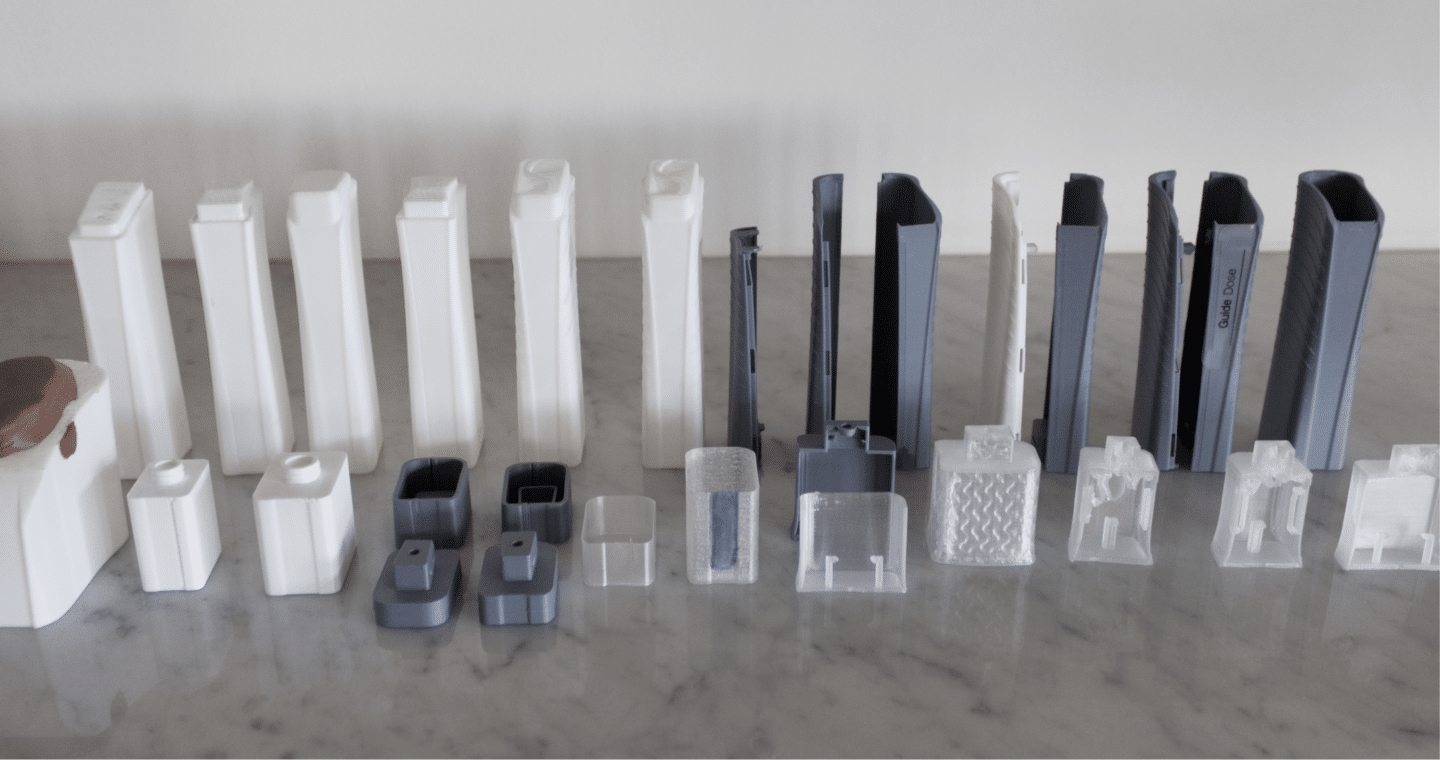
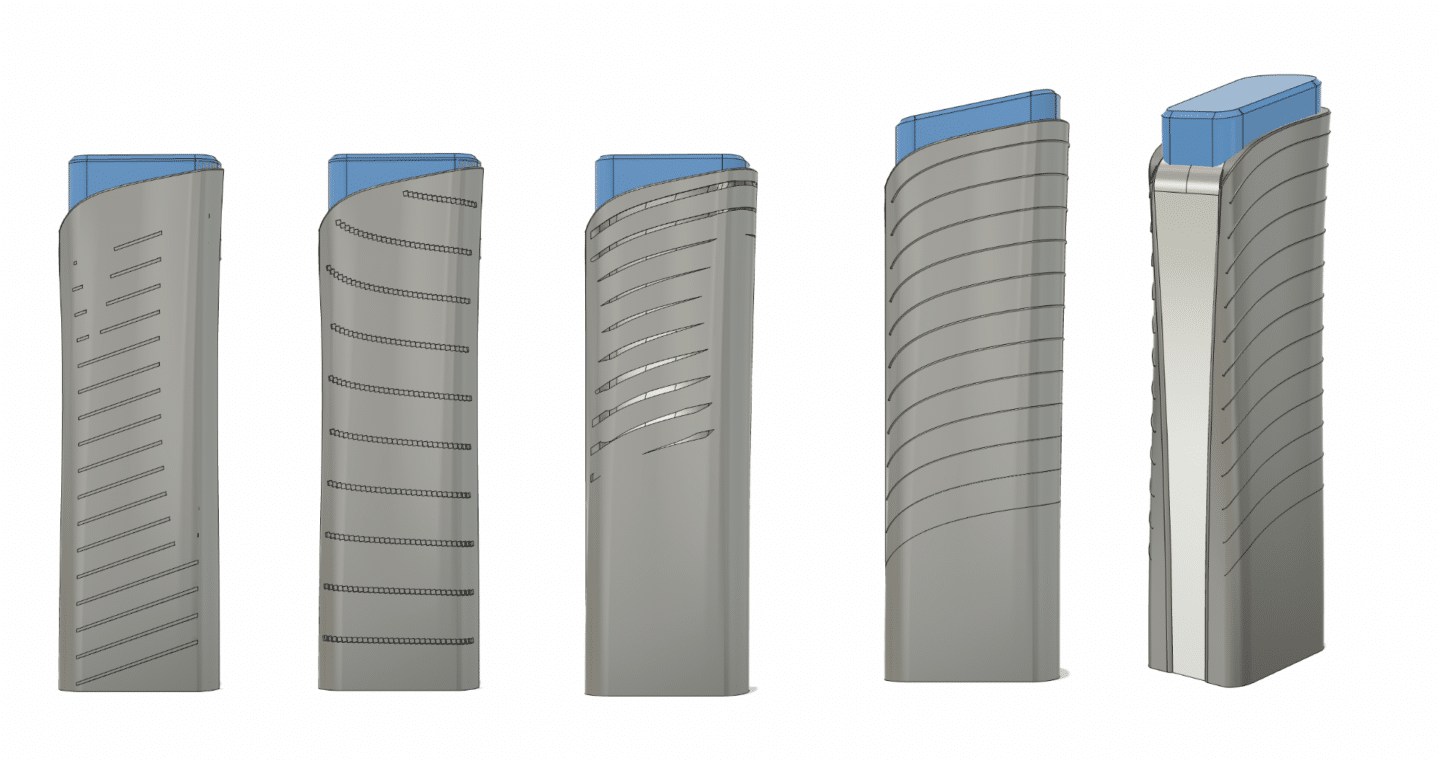
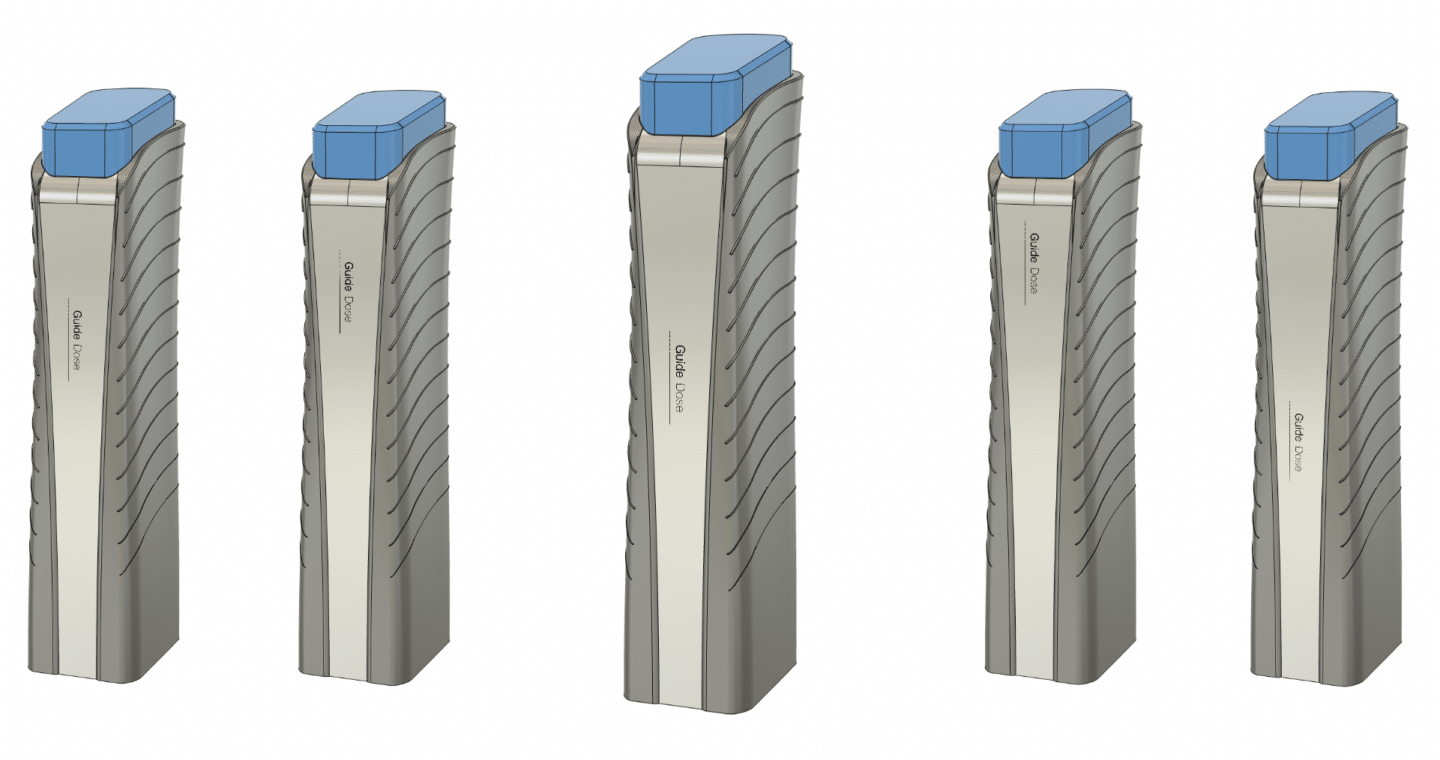
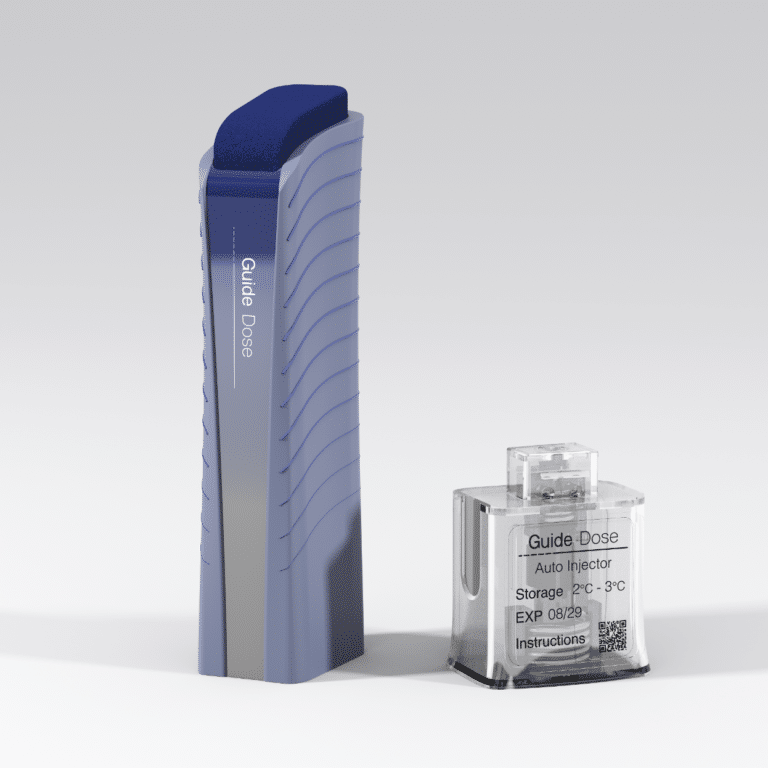
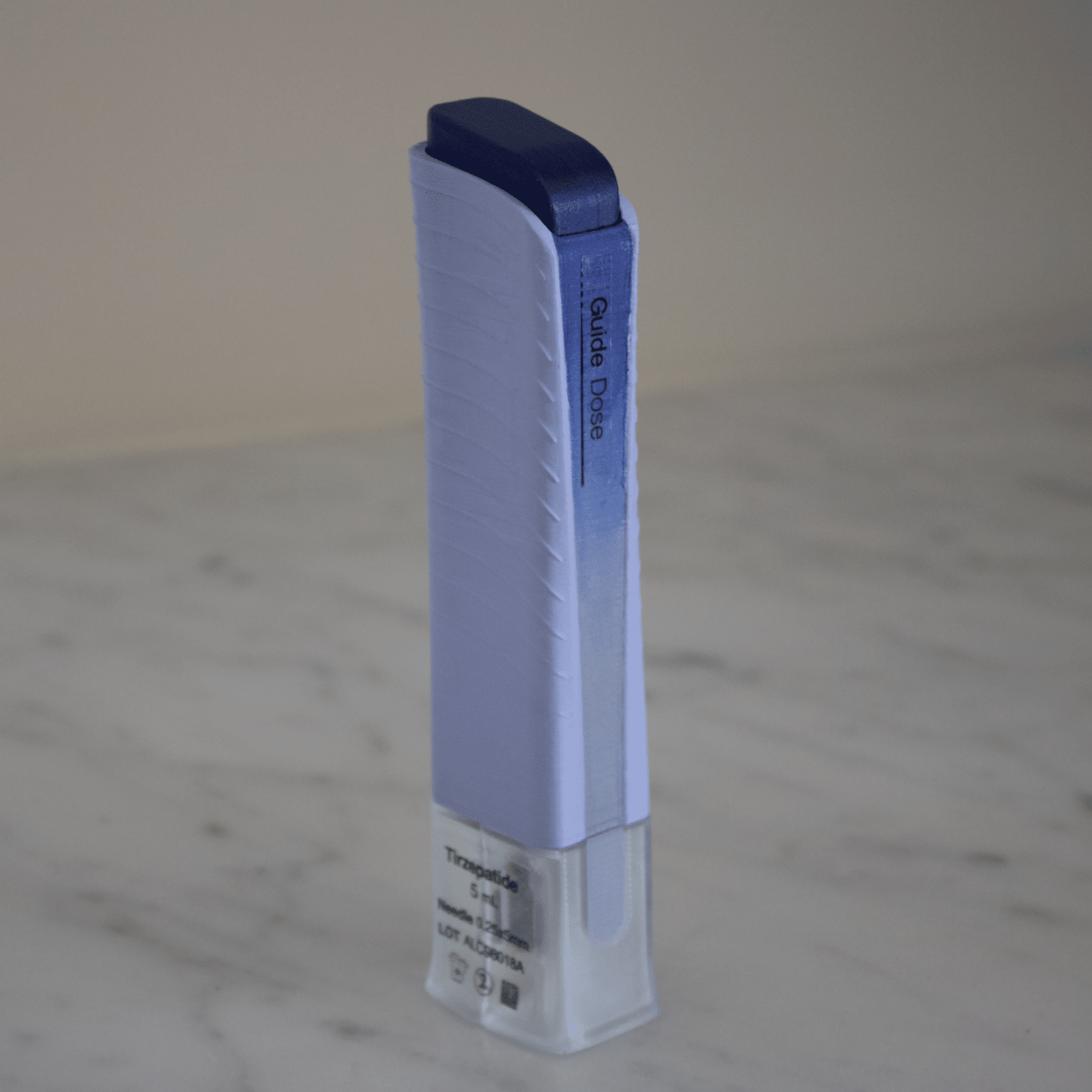
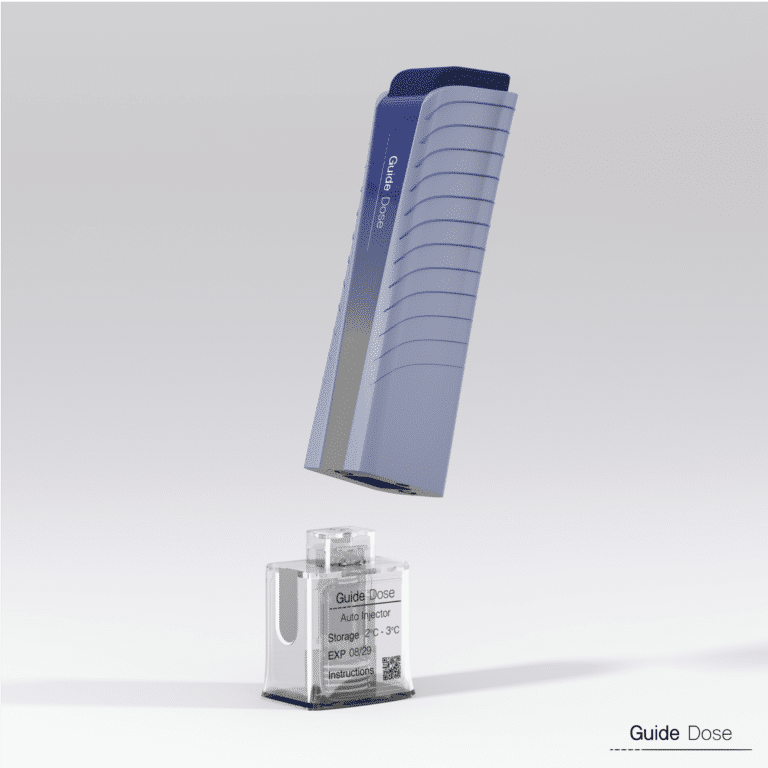
The ergonomic handle accommodates users from the 5th to 95th percentile, providing a comfortable and secure grip. The raised grip section helps prevent hand slippage in humidity or through user nervousness. The solid grip enables users to apply the required pressure more easily and maintain appropriate control during injection.
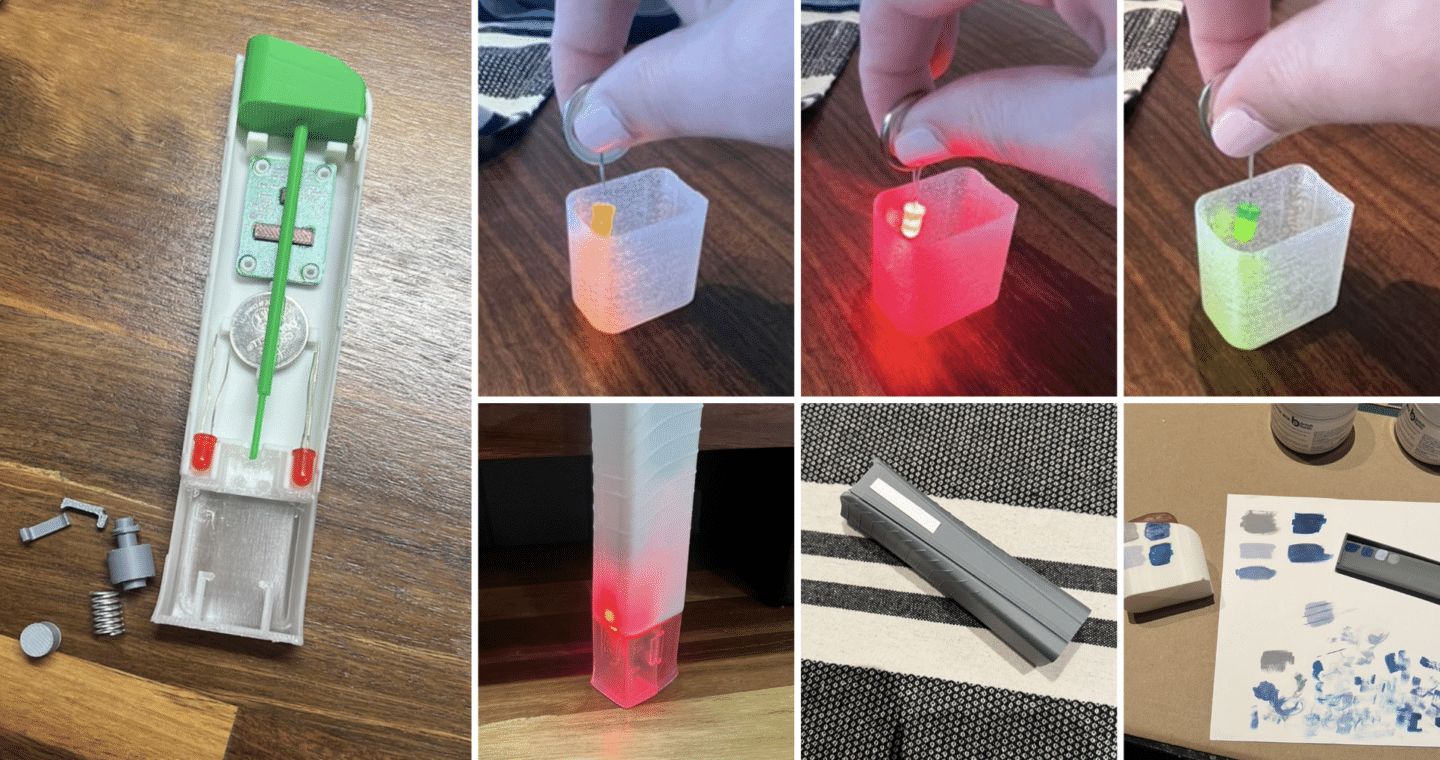
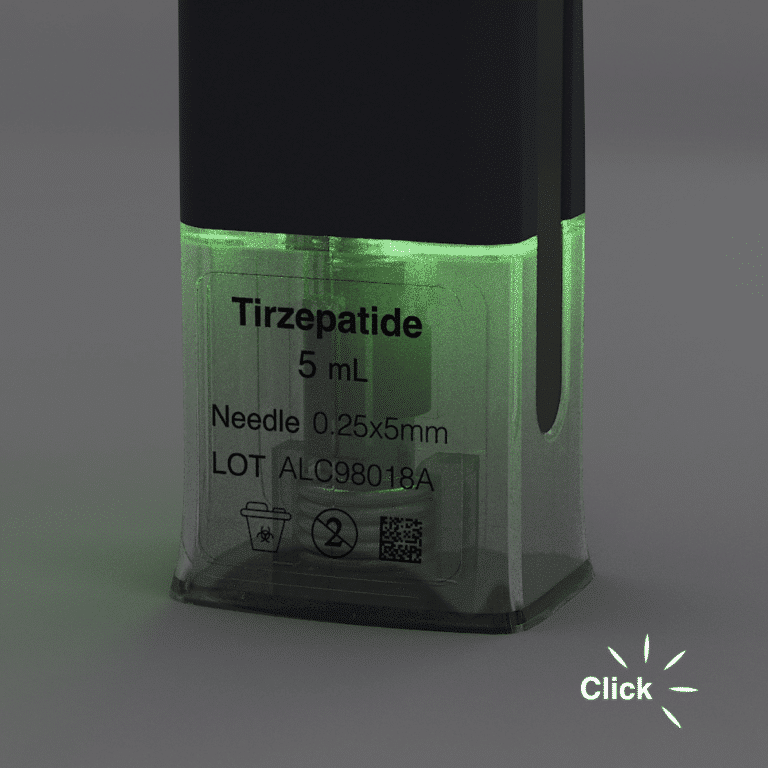
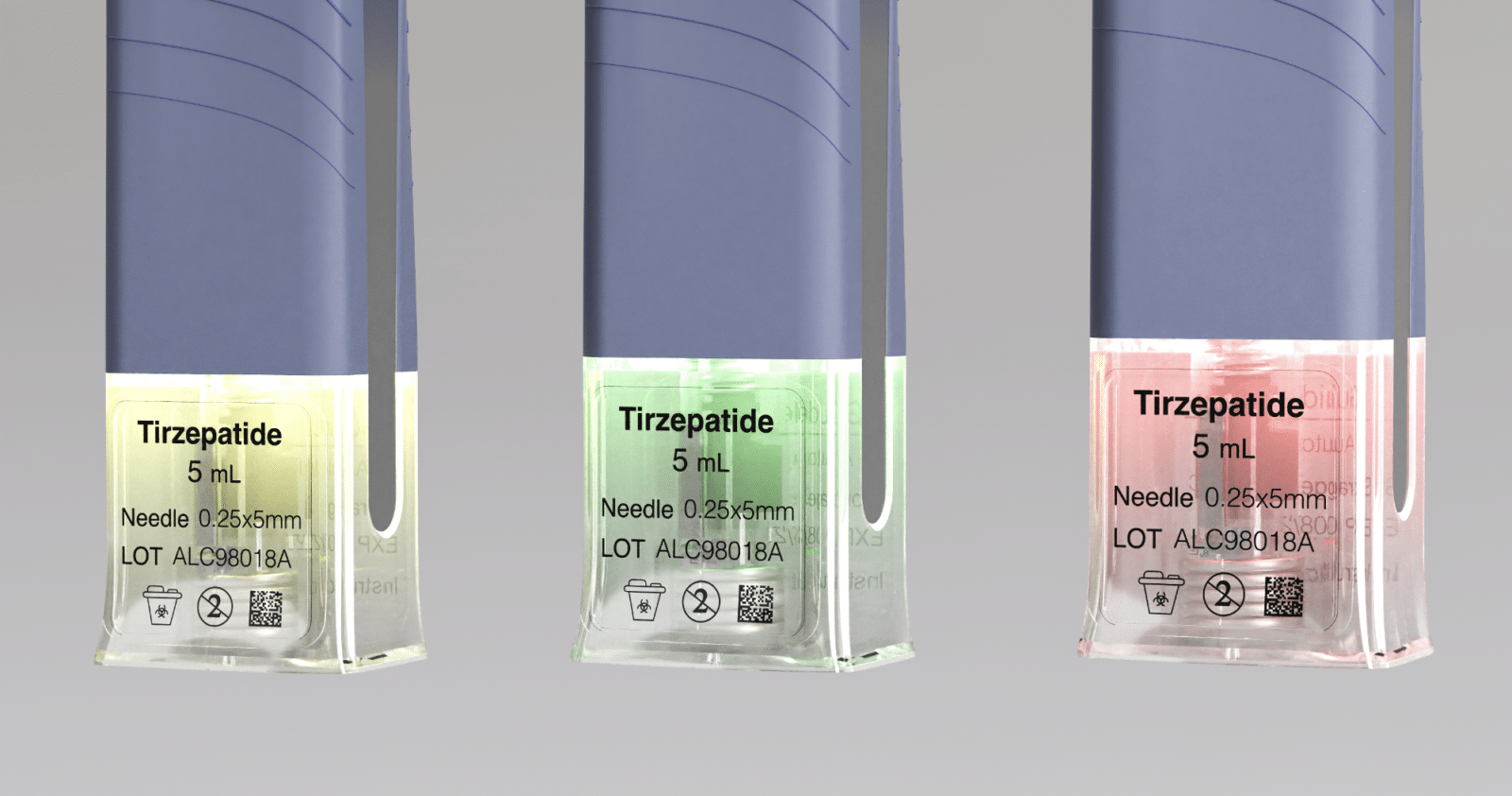
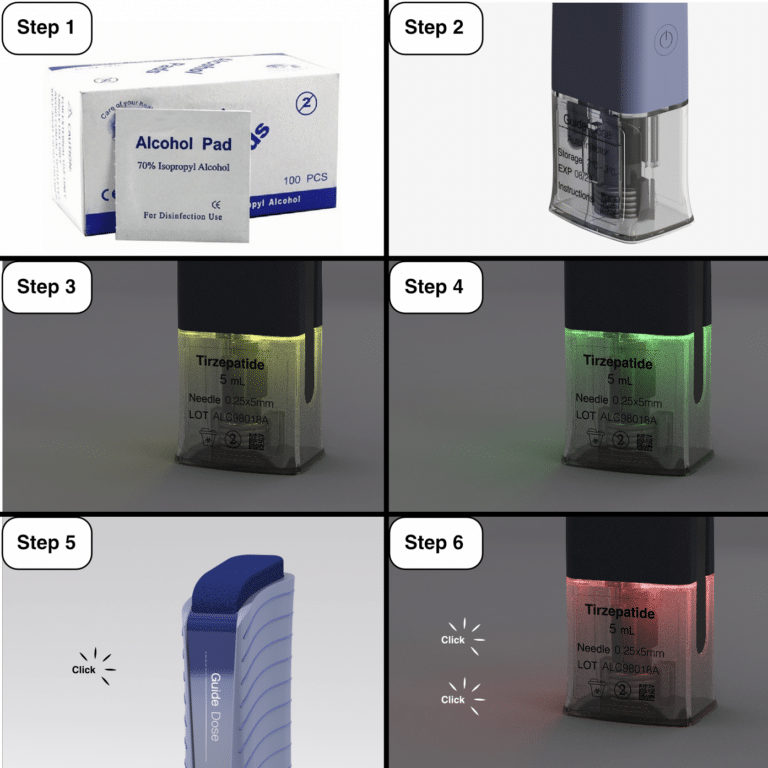
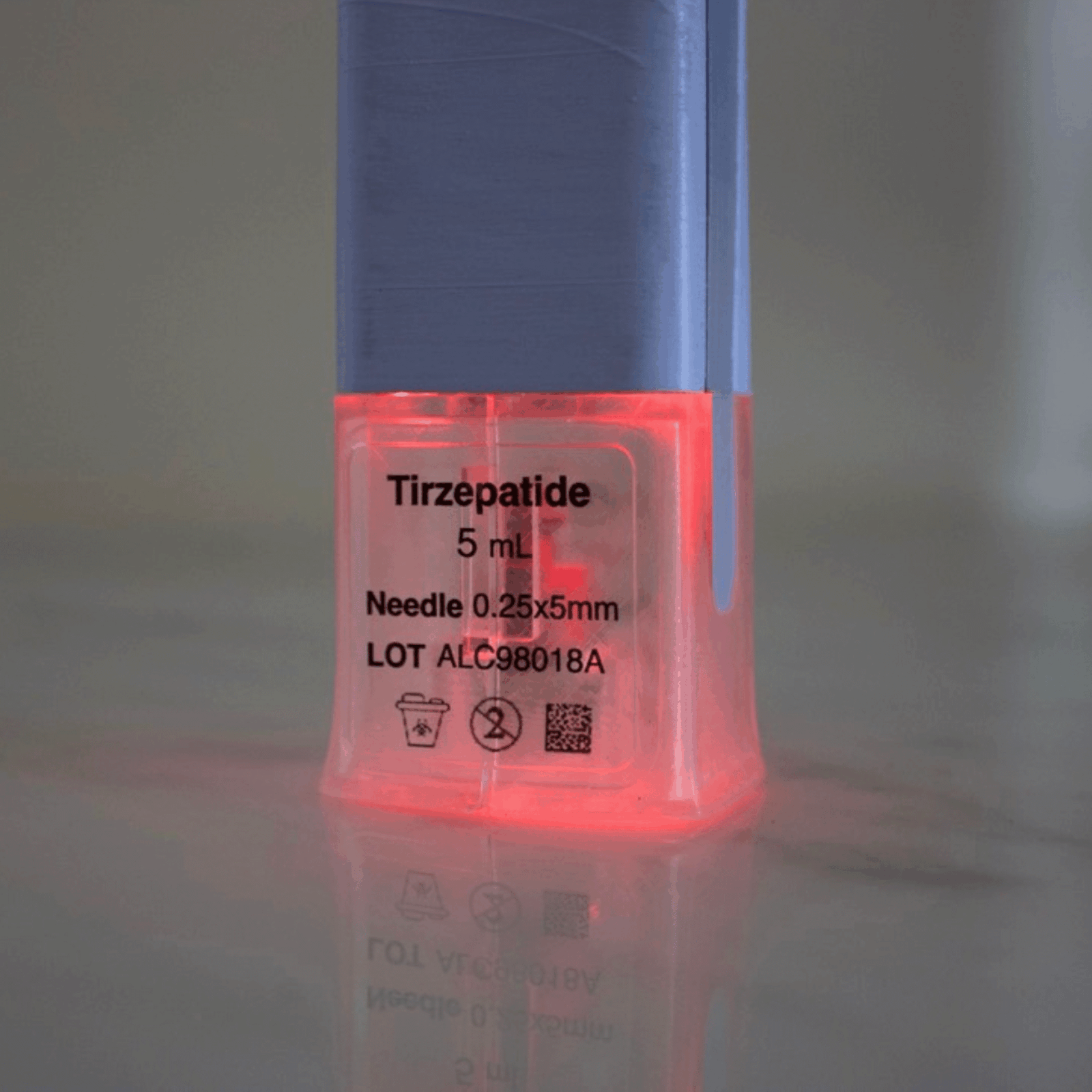
Traditional auto-injectors require users to apply pressure to break an internal mechanism, automatically triggering the injection. Users state this can make them feel as though they are stabbing themselves, reducing their sense of control. Guide Dose separates these steps using a pressure sensor and green LED to indicate when sufficient pressure is applied. Users then choose when to activate the injection using the blue button, based on their own readiness. This freedom to pick the moment they inject provides greater control, confidence and reassurance in the process.
Once the medication has been fully dispensed, the needle automatically retracts into the cartridge, concealing it for safer disposal in a sharps bin. This reduces the risk of accidental needlestick injuries and improves safety during handling and disposal.
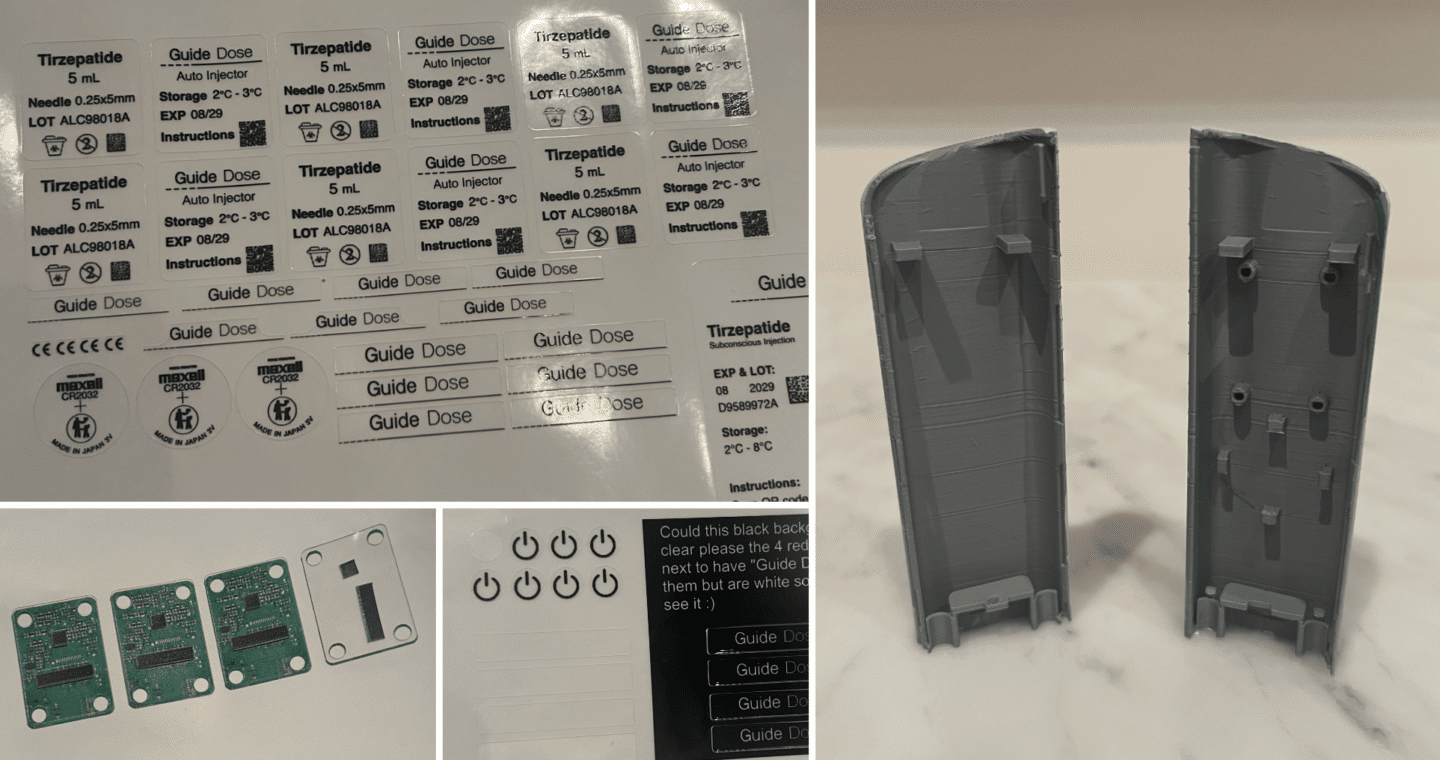
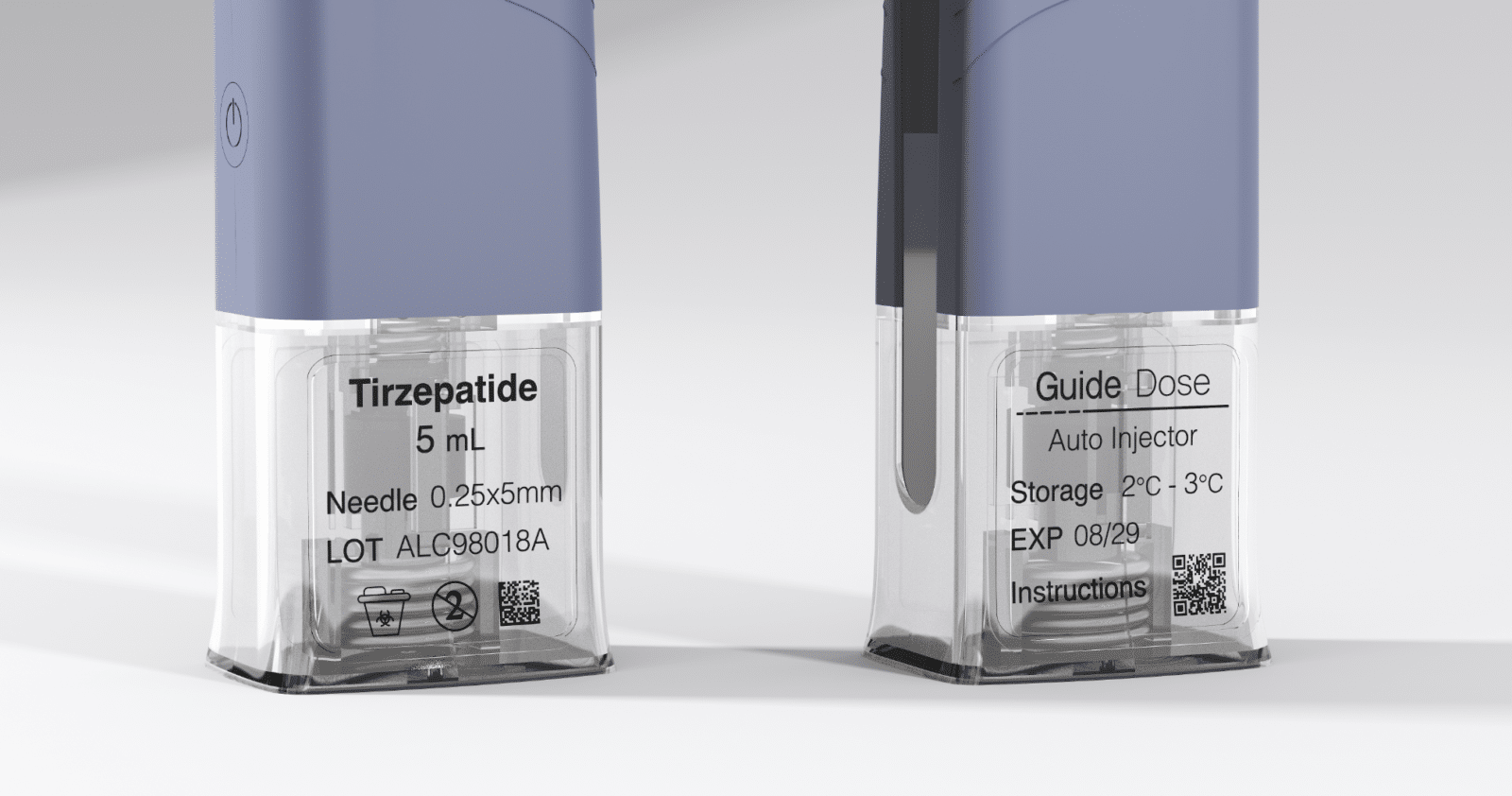
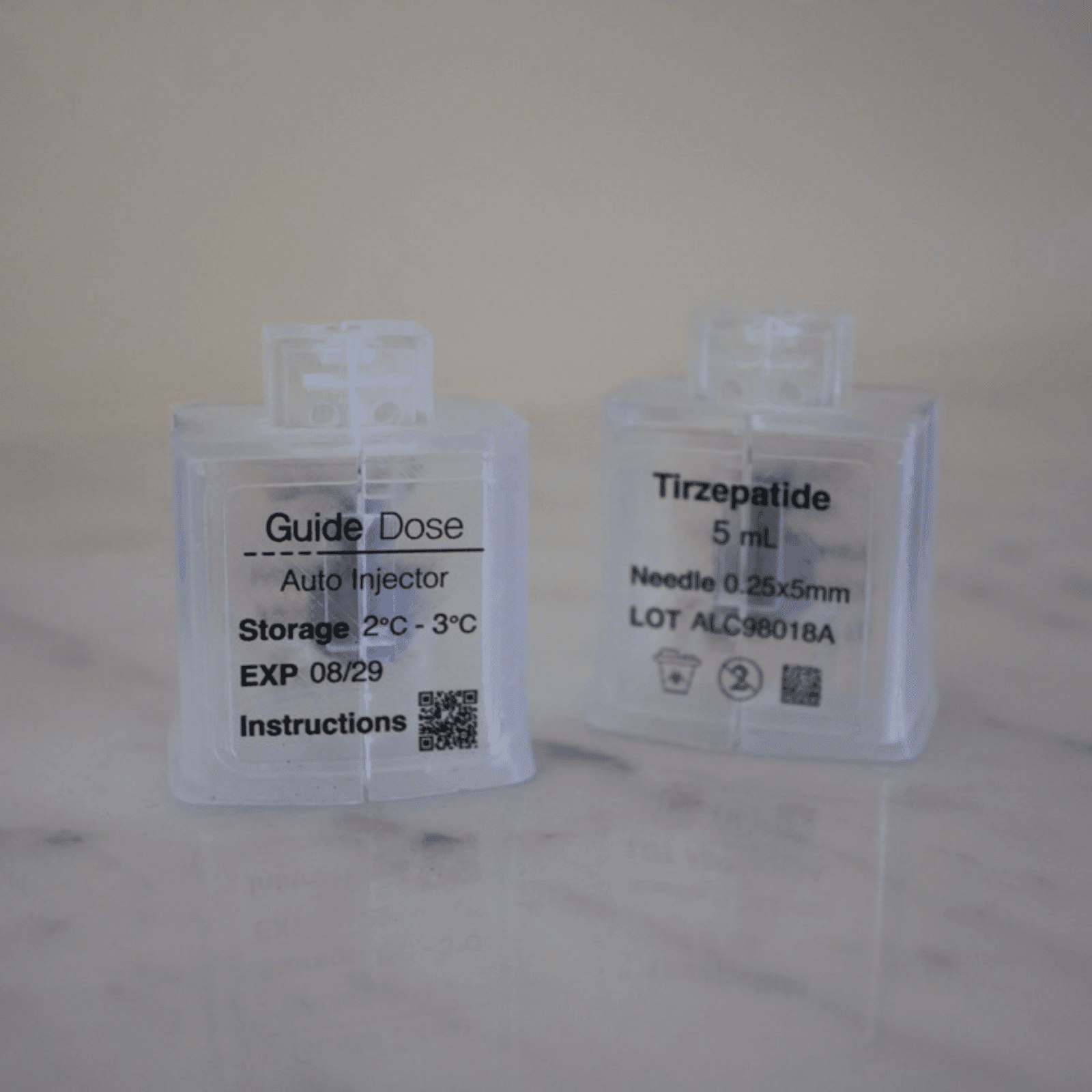
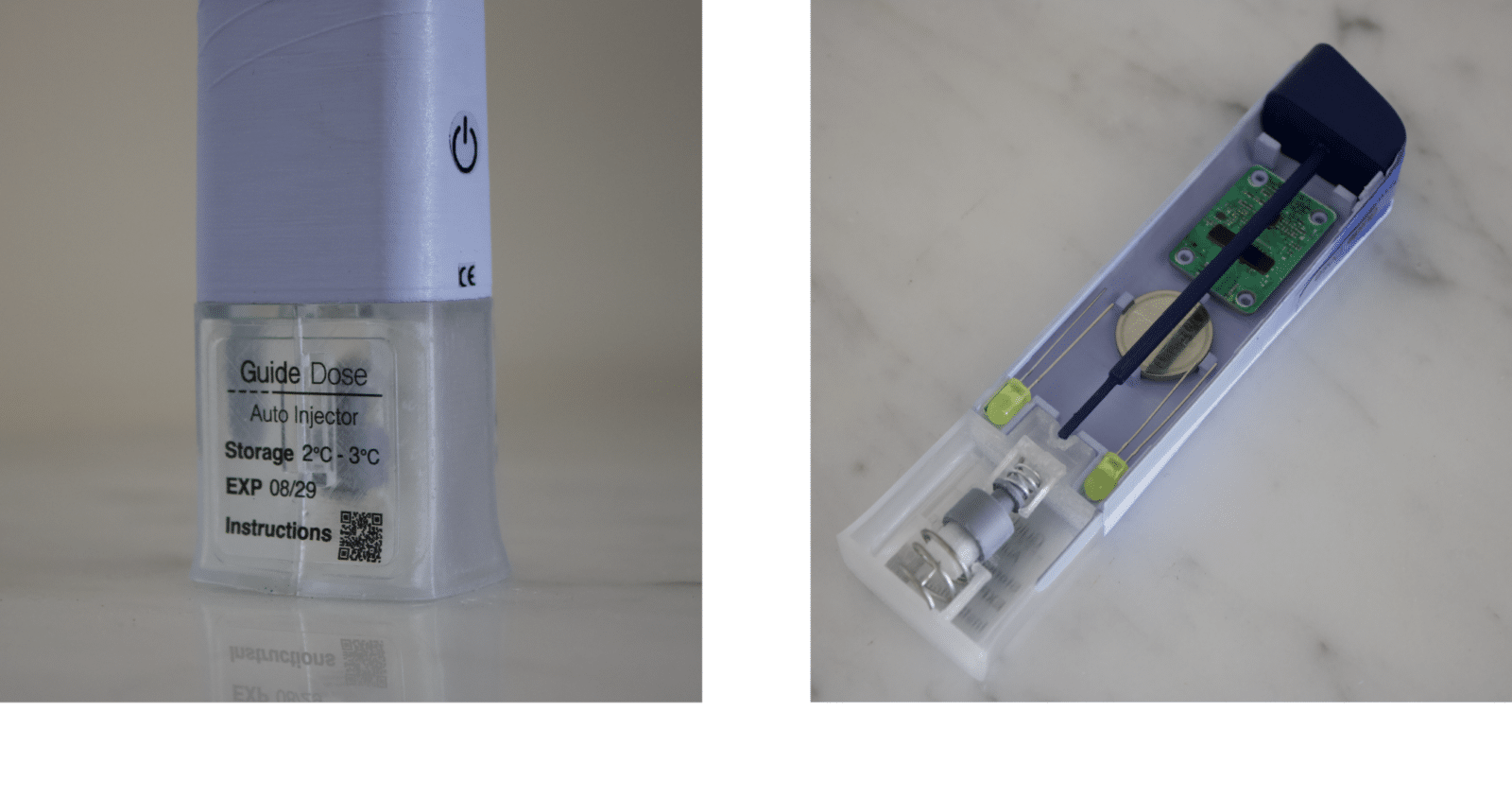
Each cartridge comes pre-filled with the correct medication dose and a concealed needle, eliminating the need to attach a needle or measure and calculate dosages. The concealed needle also averts common needle stick injuries to self-injectors and to carers if they are assisting users. Much clearer dosage labelling helps users identify medication easily and highlights use-by dates which have often be too small to read by many users. Reducing preparation steps, Guide Dose thereby reduces user cognitive load, simplifies the injection process, and helps minimize user error.
Guide Dose features an approximately 20mm x 30mm rectangular skin-contact surface area that distributes pressure evenly and helps prevent the device from slipping or tilting during injection. This provides more stable, secure skin contact, enabling users to apply pressure with greater confidence and control preventing needle slip injury issues.
Current auto-injectors provide limited feedback on how much pressure users should apply, which was shown to leave them questioning “was that enough pressure?” This uncertainty creates doubt and anxiety during the injection process. Guide Dose addresses this by using an LED indicator that transitions from yellow to green when the correct pressure is applied, providing clear visual feedback and greater confidence throughout the injection process.
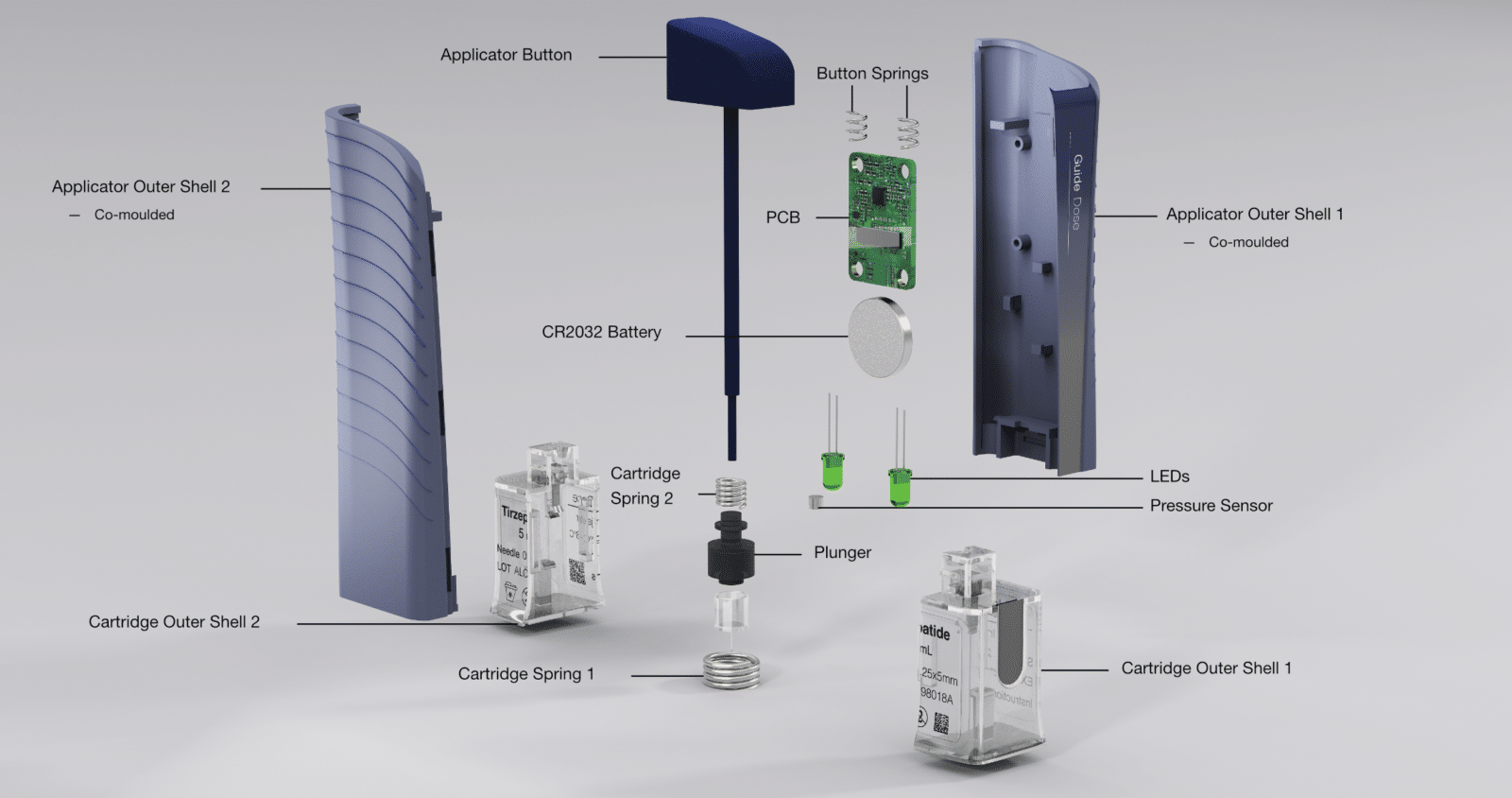
The cartridge uses a double-spring mechanism, allowing the injection to be operated independent of electronic components. This reduces reliance on technology and minimises potential electronic failures. If the applicator is lost or damaged, the medication cartridge can still be manually activated using a pen tip. This provides an excellent backup method to ensure users can always administer their medication.
The applicator features a replaceable CR2032 3-volt battery. There is a snap-fit housing enabling users to easily access and replace the battery when required. This setup extends the product’s lifespan, reduces electronic waste and supports long-term reuse of the applicator.
Tammy is an Industrial Designer passionate about human-centred medical design, accessibility, and inclusivity. She believes in equity over equality. Design should create products and experiences empowering individuals. Supported by diligent research and grounded in deep understanding, Tammy aims to develop purposeful products and systems that make a meaningful difference in people's lives.
"*" indicates required fields