Industrial - Bachelor
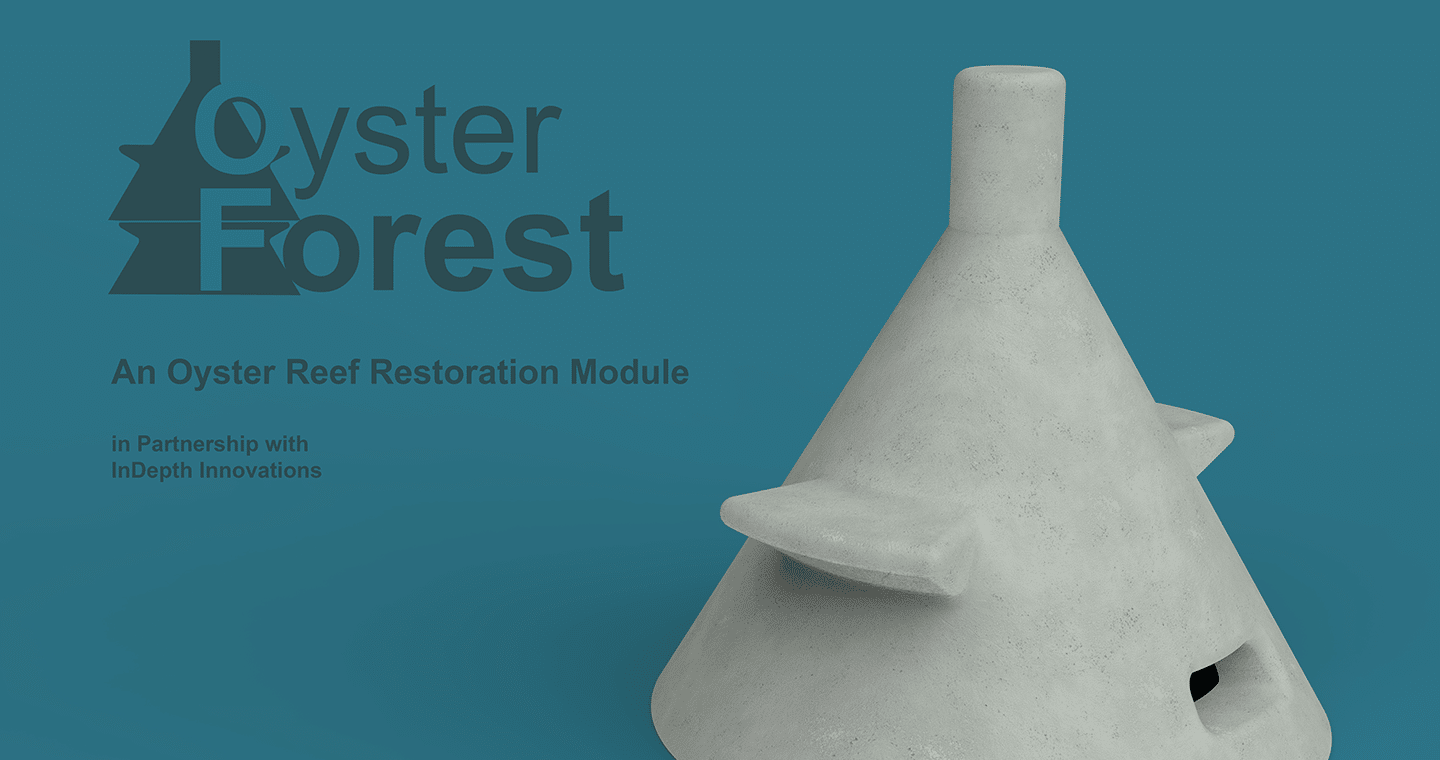
Oyster Forest
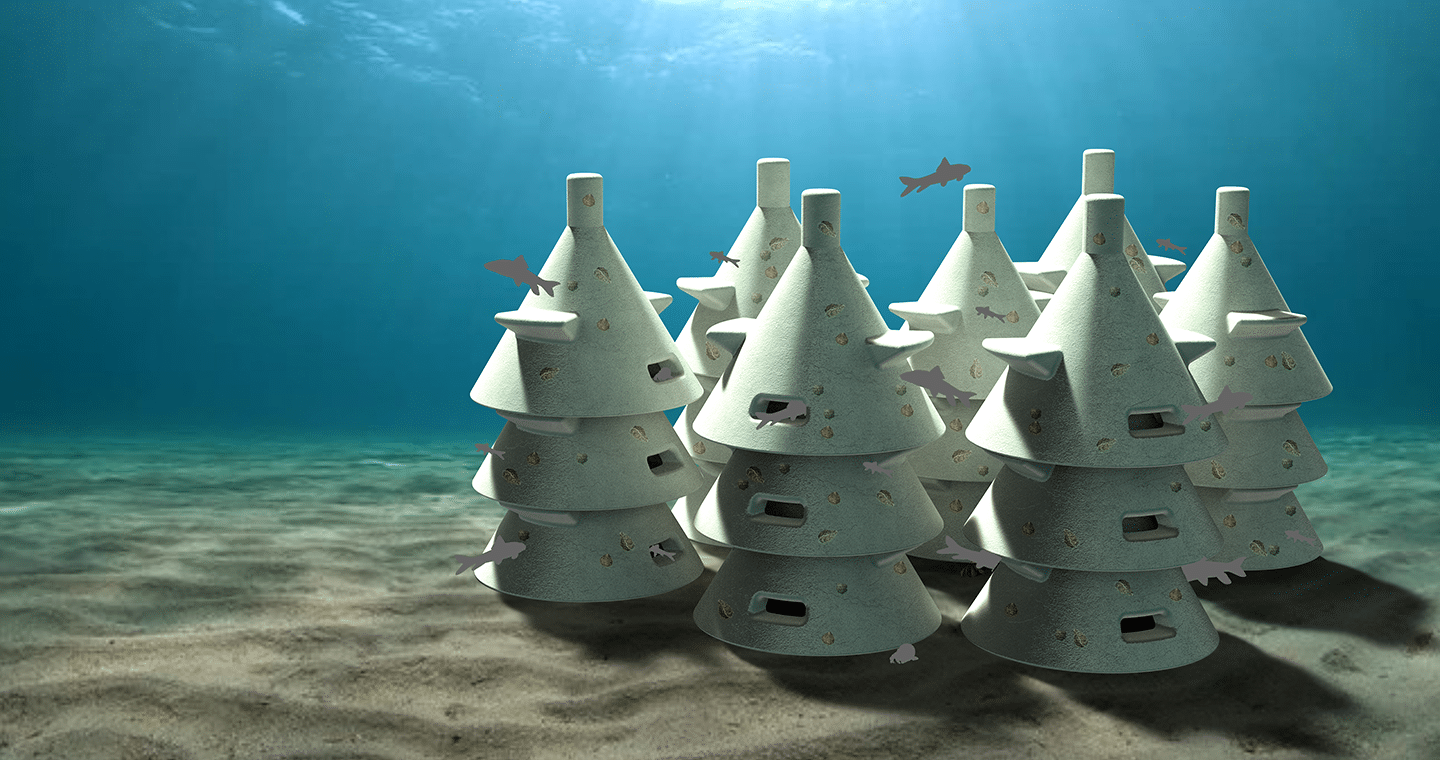
A modular oyster reef restoration module designed in partnership with InDepth Innovations.

Isabella Warne
Industrial - Bachelor
A modular oyster reef restoration module designed in partnership with InDepth Innovations.
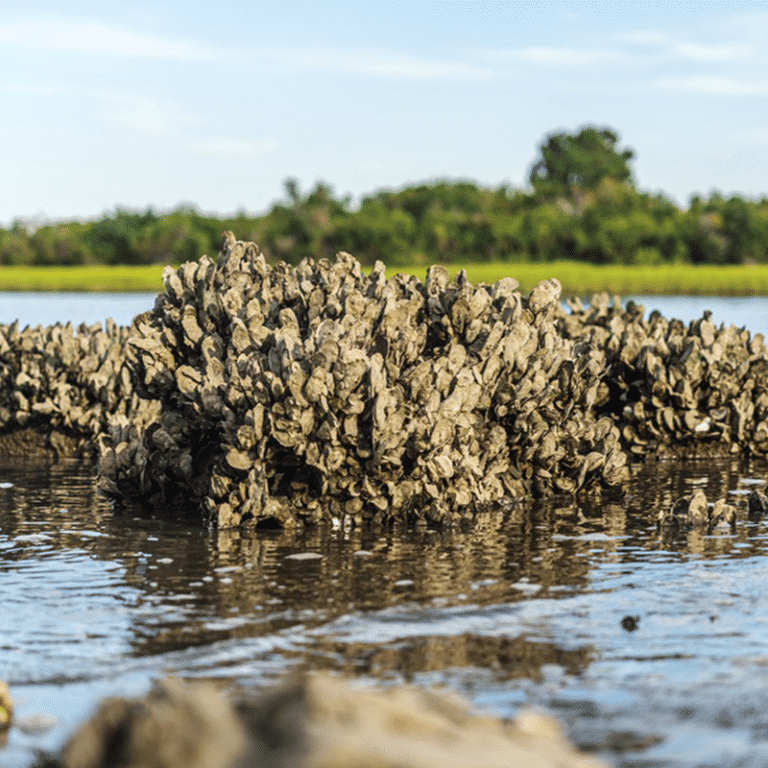
90% of Australia’s oyster reefs have been destroyed, making them a critically endangered habitat.
This is crucial as oyster reef’s provide positive impacts such as; biodiversity, water filtration, shoreline protection and more (Australian Environmental Education, 2026).
Oyster Forest is a response to a critical lack of specifically designed restoration effort towards the heavily bio-significant oyster reefs of Australia. Research was conducted into existing products, to determine what is currently being implemented and with leading experts in relation fields to use their expertise to ensure the oyster forest has its intended long-lasting positive impact.
For primary data collection three methods were used:
Archival Observations:
– Analysing and documenting the process of current reef restoration module installation to identify pain points through 4 archival videos
Semi-structure interviews:
(two of these were conducted)
– One with an environmental scientist working with a leading oyster reef restoration company, to determine the issues experienced with current companies instigating this restoration effort
– The second with a leading researcher in the biology of oysters, specifically their reproduction, to determine what features of oyster reefs are most crucial to ensure repeated safe oyster reproduction and adhesion
Finally, online surveys:
– One was targeted at water way users, with 25 respondents, who both are impacted by the installation of oyster reef restoration modules and therefore can limit and interfere with their effectiveness.
– The other was targeted at existing reef restoration companies, with 4 respondents, looking into the rate of module installation and manufacturing and the main blocks to this process
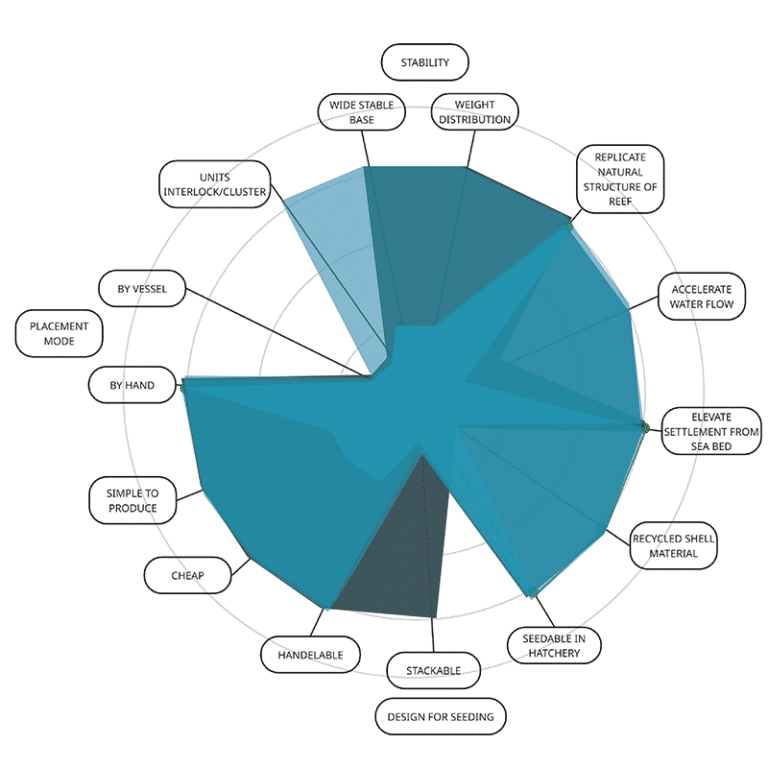
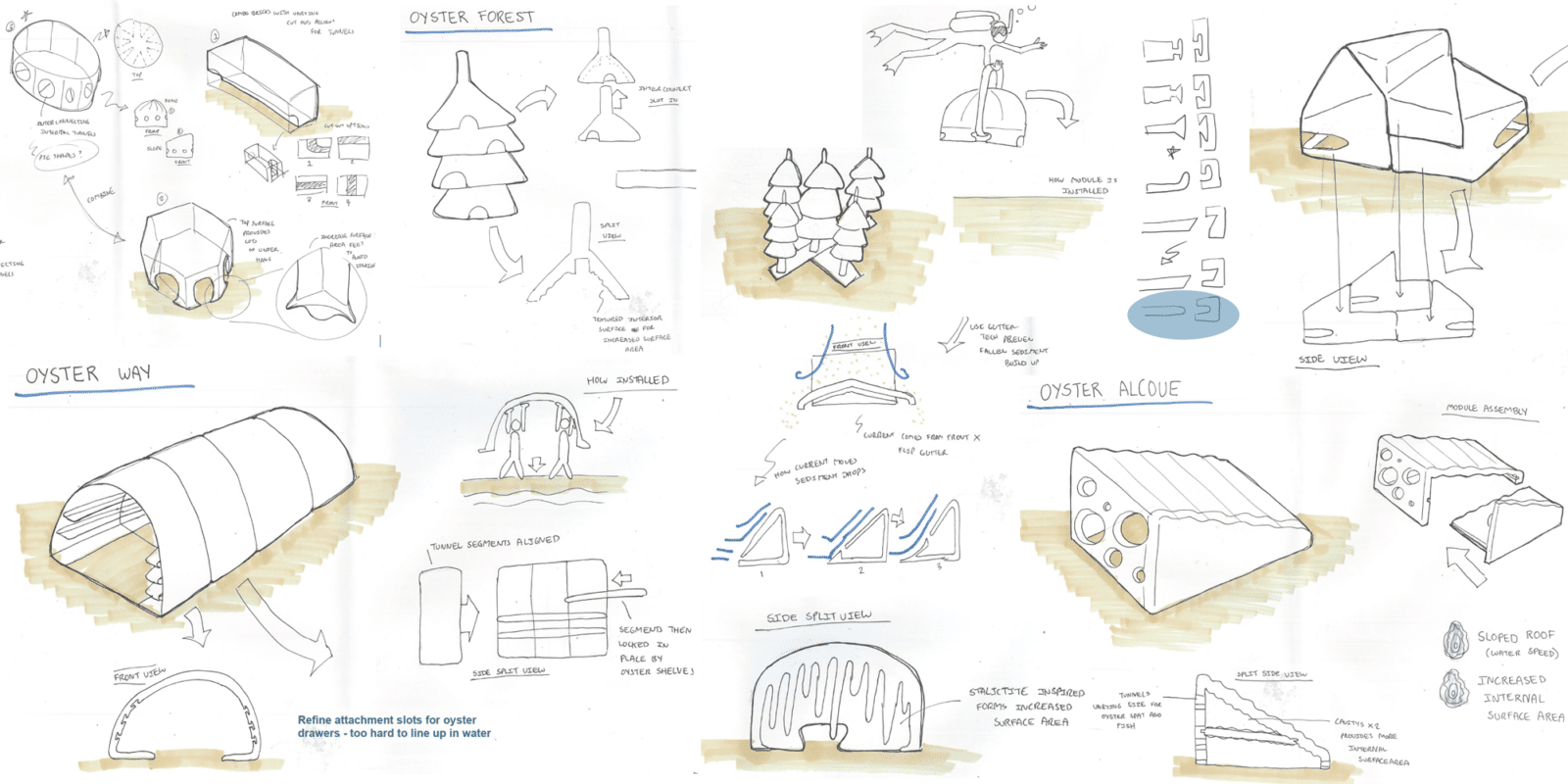
– Increased surface area, for spat oyster adhesion, can be achieved through increased rugosity and interstices
– Sloped surfaces can allow for the water flow to speed up over reef restoration modules, lessening the sediment fall out
– Making the modules handleable allows for manual spat adhesion, jump starting the oyster population of your chosen installation location though this currently brings along the likelihood of spreading disease such as QX disease
– Ensuring the module is both small and light enough to be installed without technology, such as cranes and boats, significantly reduces the cost of installation and therefore increases the ability of impact for the module, as most modules are installed by volunteers
– Lifting the settlement space of the water way floor will minimise the surface area made unusable by sediment buildup
– Designing future reef restoration modules to be interconnectable not only makes the artificial reef evolving and growing mimicking a natural reef but also allows the reef to provide other environmental benefits such as coastal protection and increased seagrass habitat
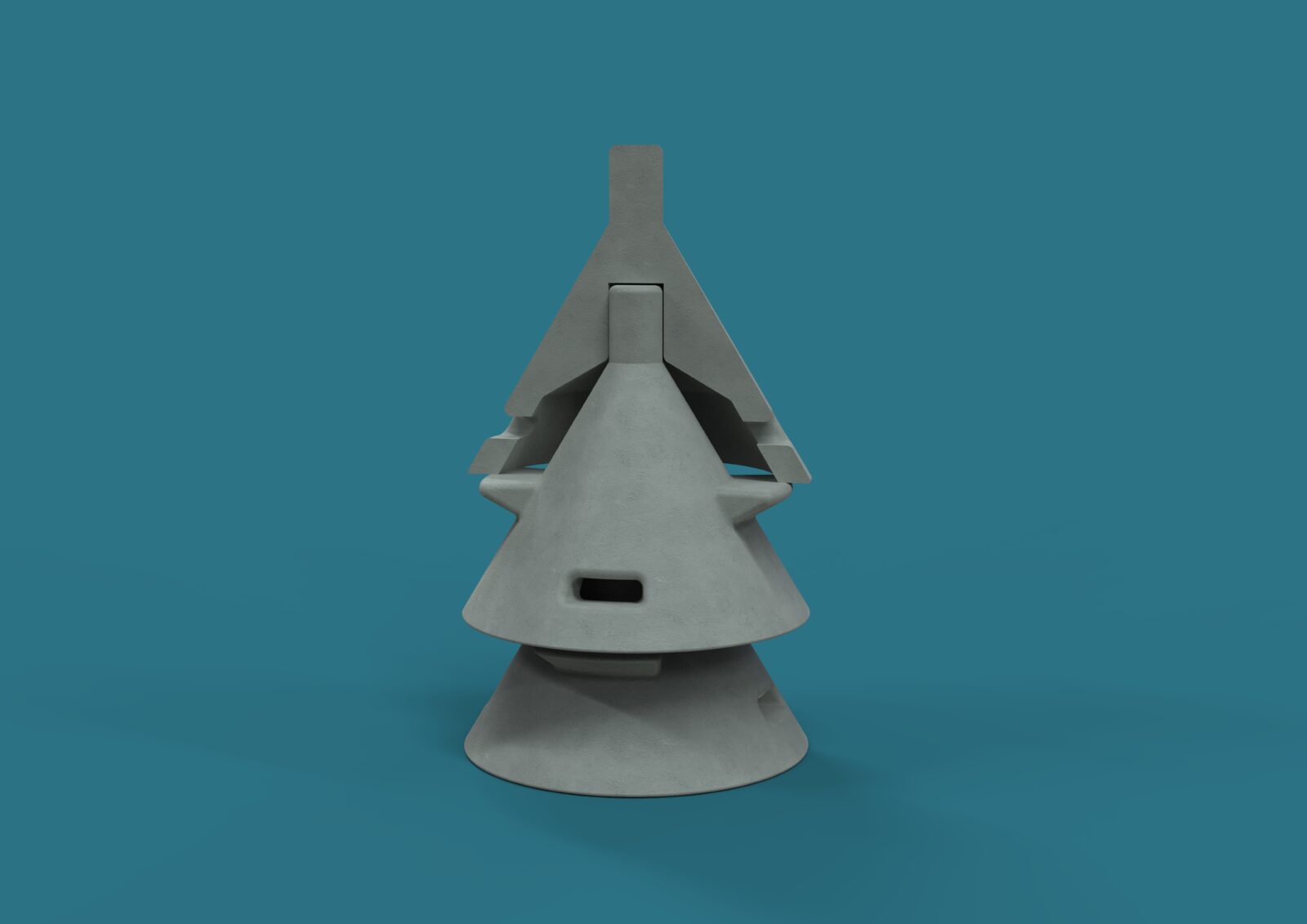
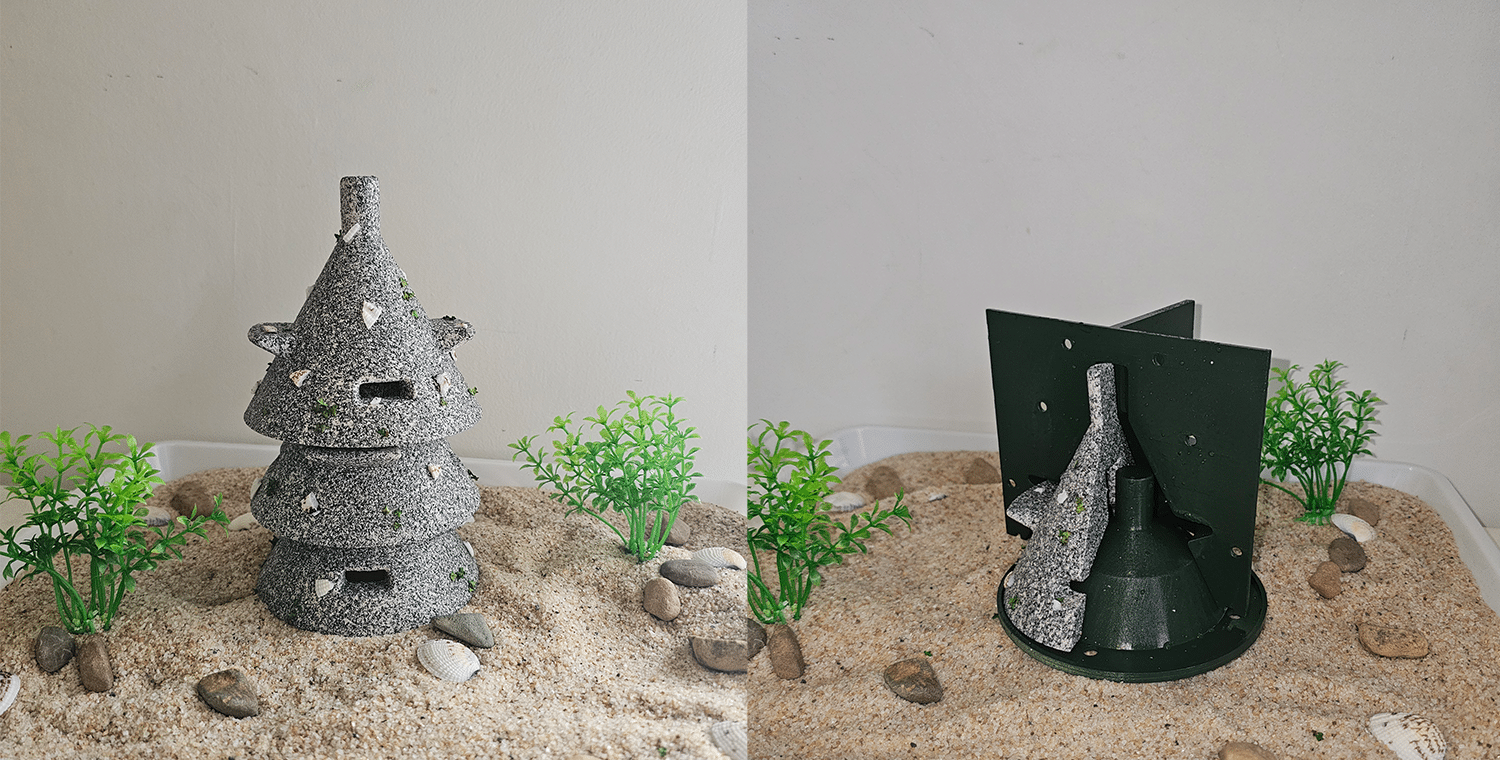
The oyster forest is made up of three vertically stacked oyster trees, each of which weighs 29kg and is 432mm tall, this was designed to allow for easy manipulation and installation by a wide variety of users and volunteers.
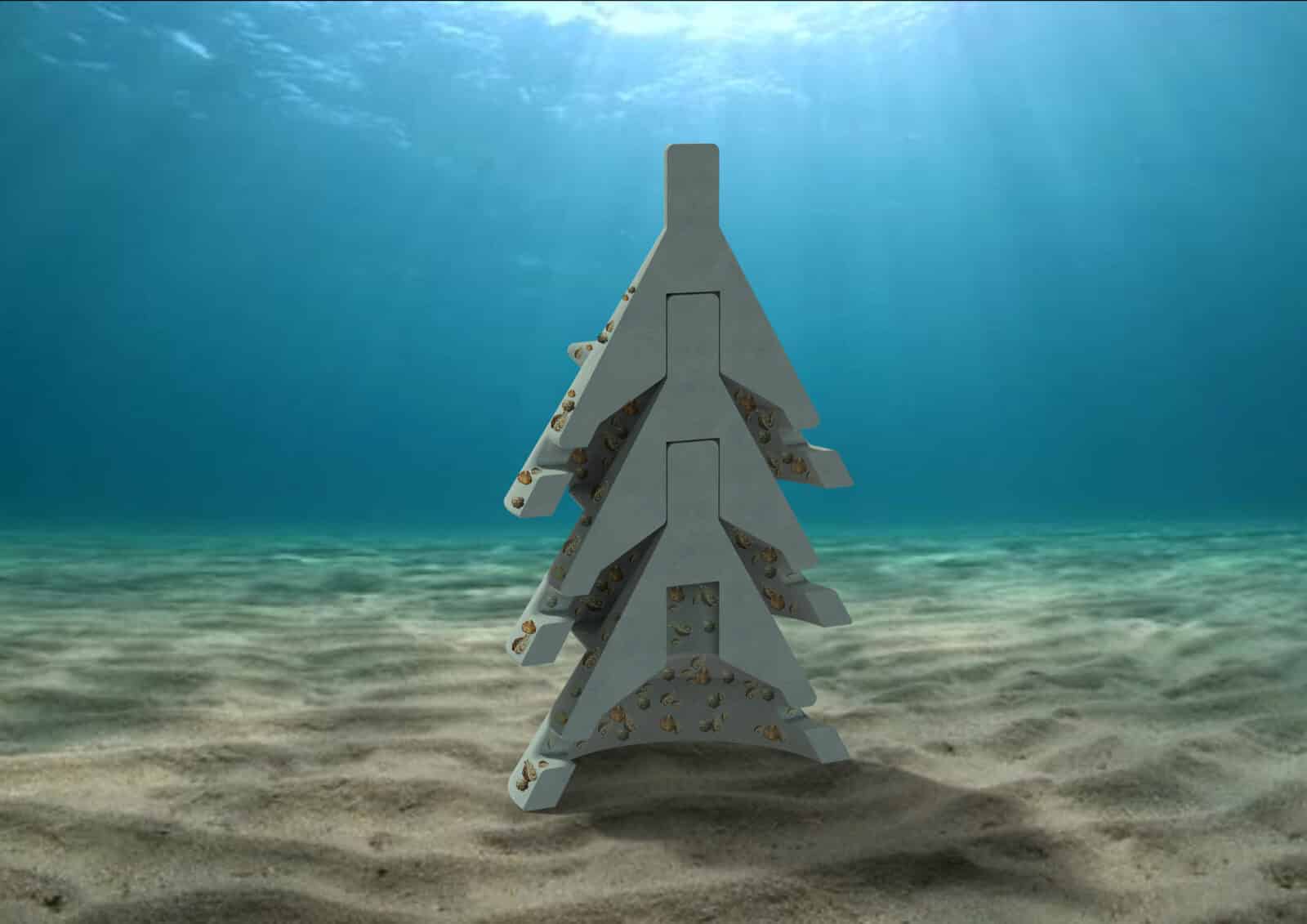
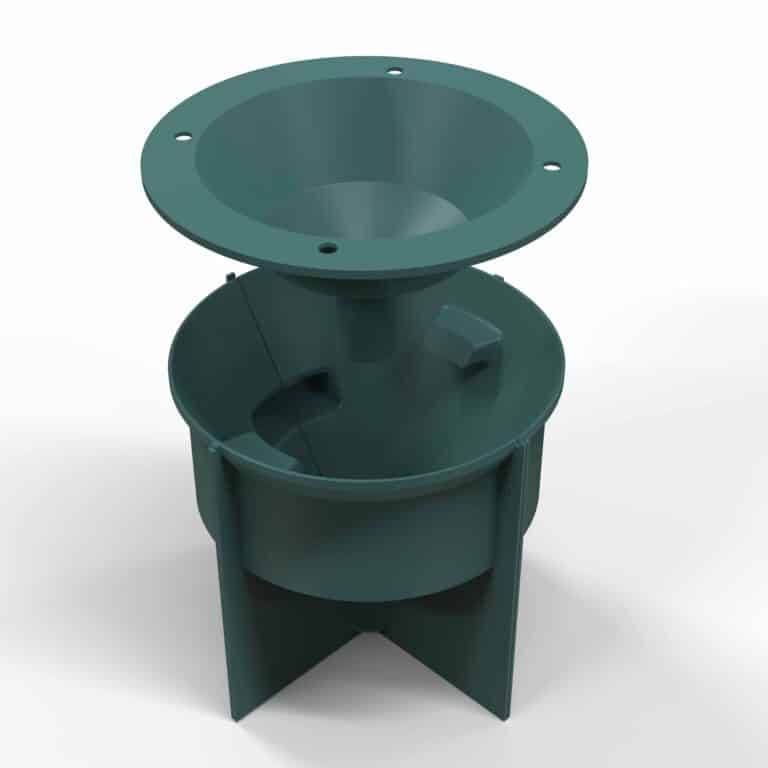
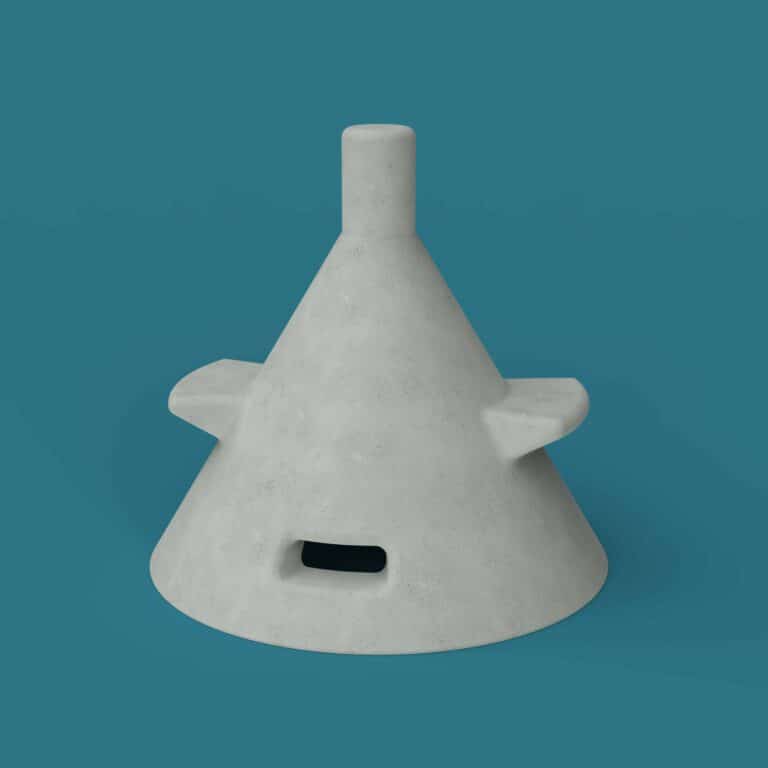
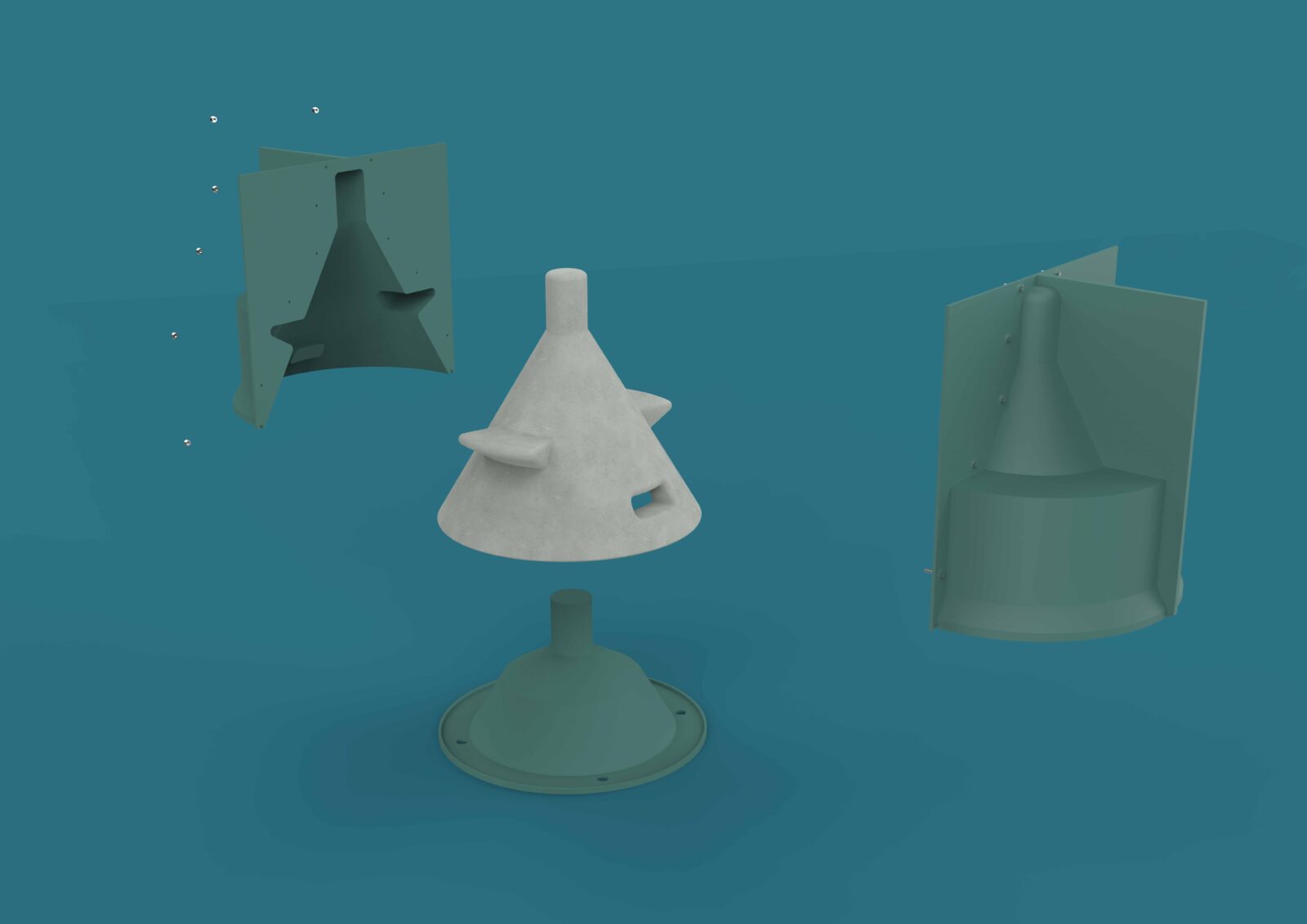
It is important to note that there is no specifically designed base of the oyster forest, this was in order to make the module as cost effective as possible, as creating a separate mould for a concrete base would almost double the cost of manufacturing the oyster forest. Instead, the bottom (of three) oyster trees internal surface area is sacrificed as a base instead.
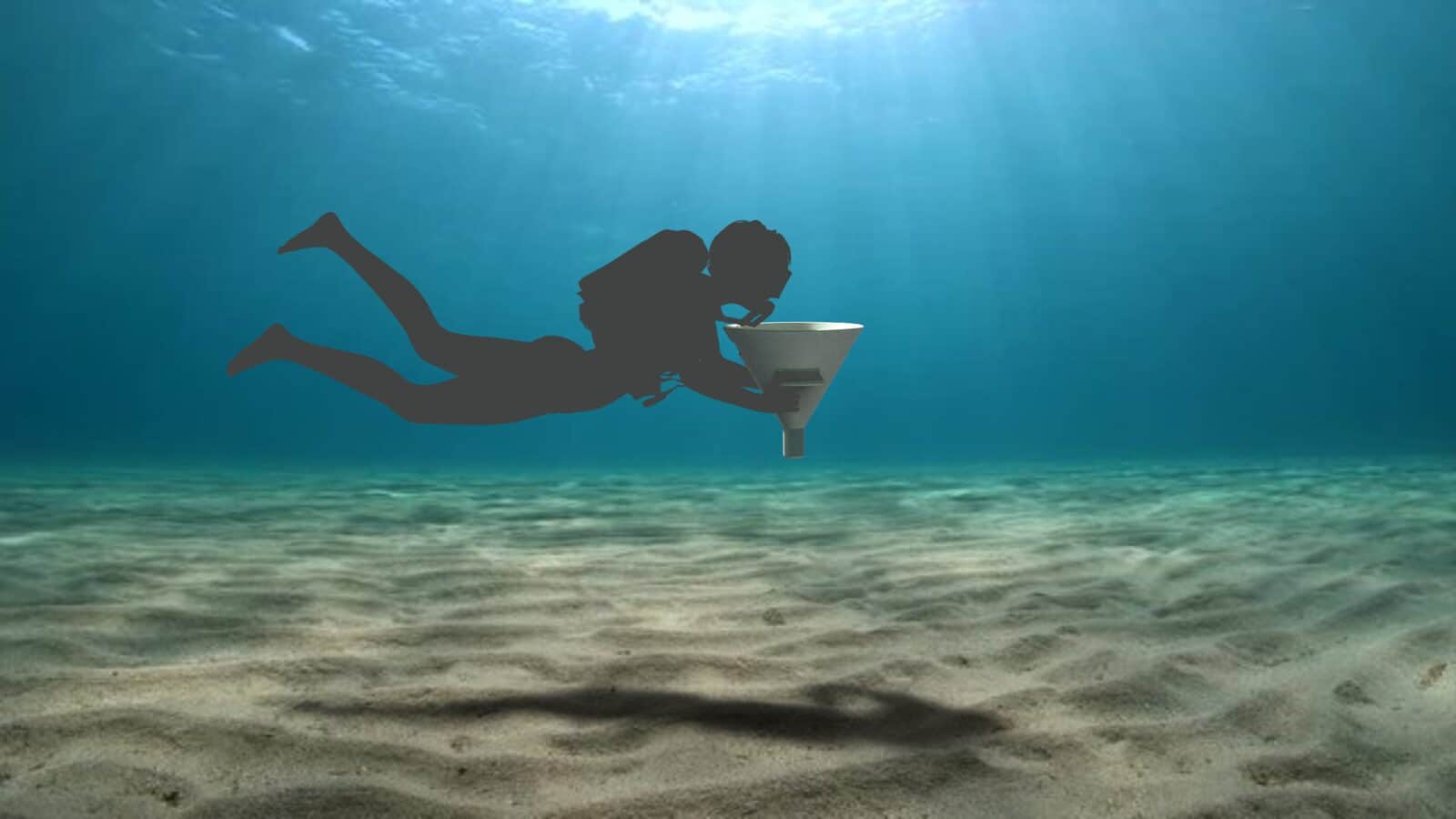
The oyster forest is designed to be comfortably carried by a wide variety of users both upside down and right side up. This allows the device to be picked up and carried vertically and sunken upside down. This prevents air build up in the module making it easier to manoeuvre under the water.

Isabella, better known as Bella, is a soon to be graduated industrial design student passionate in working to improve our environment. She is known for her bubbly personality, and eagerness to learn, through strong group participation and a desire to ask questions to fully understand the topic at hand. She has done an additional study year abroad at the Danish Technology University (DTU) studying environmental engineering to further educate herself on the current and future issues we will face due to climate change.
"*" indicates required fields