Background and Overview
Every decision a manufacturing business makes depends on knowing where its work is. How much material to hold, whether there is capacity for a new job, and what completion date a customer can honestly be given. For smaller manufacturers there is less slack in the system, so a single wrong call carries through every other job on the floor.
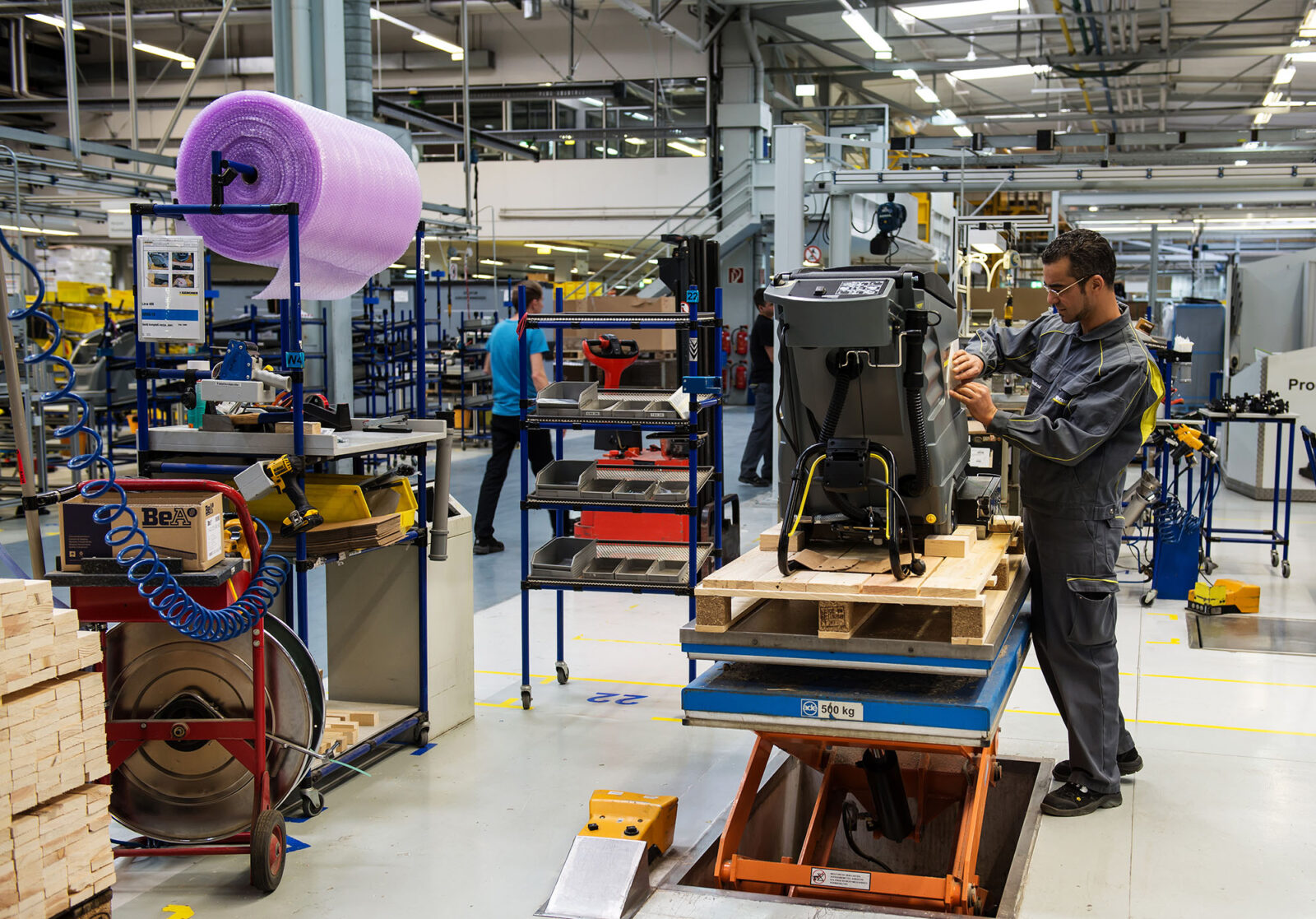
The tracking technology to solve this already exists, but almost all of it is built for large facilities where items move along a consistent, linear path and a dedicated area means a dedicated stage. Small workshops don’t work that way. One area can serve several processes, with pieces at different stages sitting side by side, rendering location based tracking useless.
Research
Secondary research found that real time visibility is the defining theme of how production systems are evolving, but that both the literature and the commercial products concentrate on large scale facilities, with little documented practice at smaller scales.
Primary research was carried out with one participating business, through three semi structured interviews with staff from different parts of the operation, followed by an observation of the full production line. Mapping that line showed the core problem clearly. The product moves forward continuously, while the record of it only catches up when somebody walks across the workshop to a computer. Progress is written down physically first and entered digitally later, if at all, so the digital record lags the floor and depends on recall at the end of the day.
Four criteria came out of this. A solution had to take a single action to update, work in multi use areas, leave a visual reminder on the product itself, and update a digital record. Of the existing options, physical notes satisfy the first three and fail completely on the fourth.
the solution
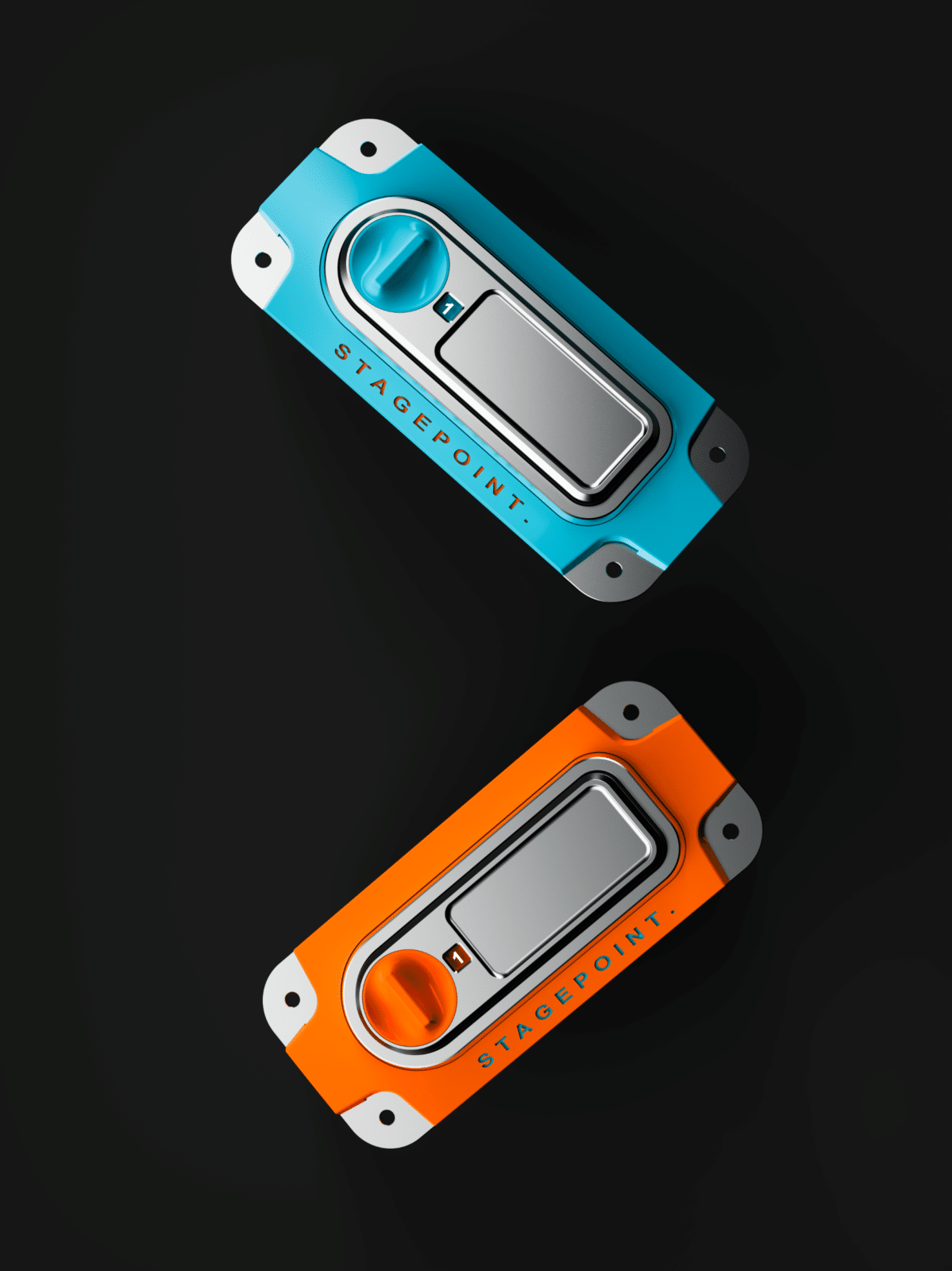
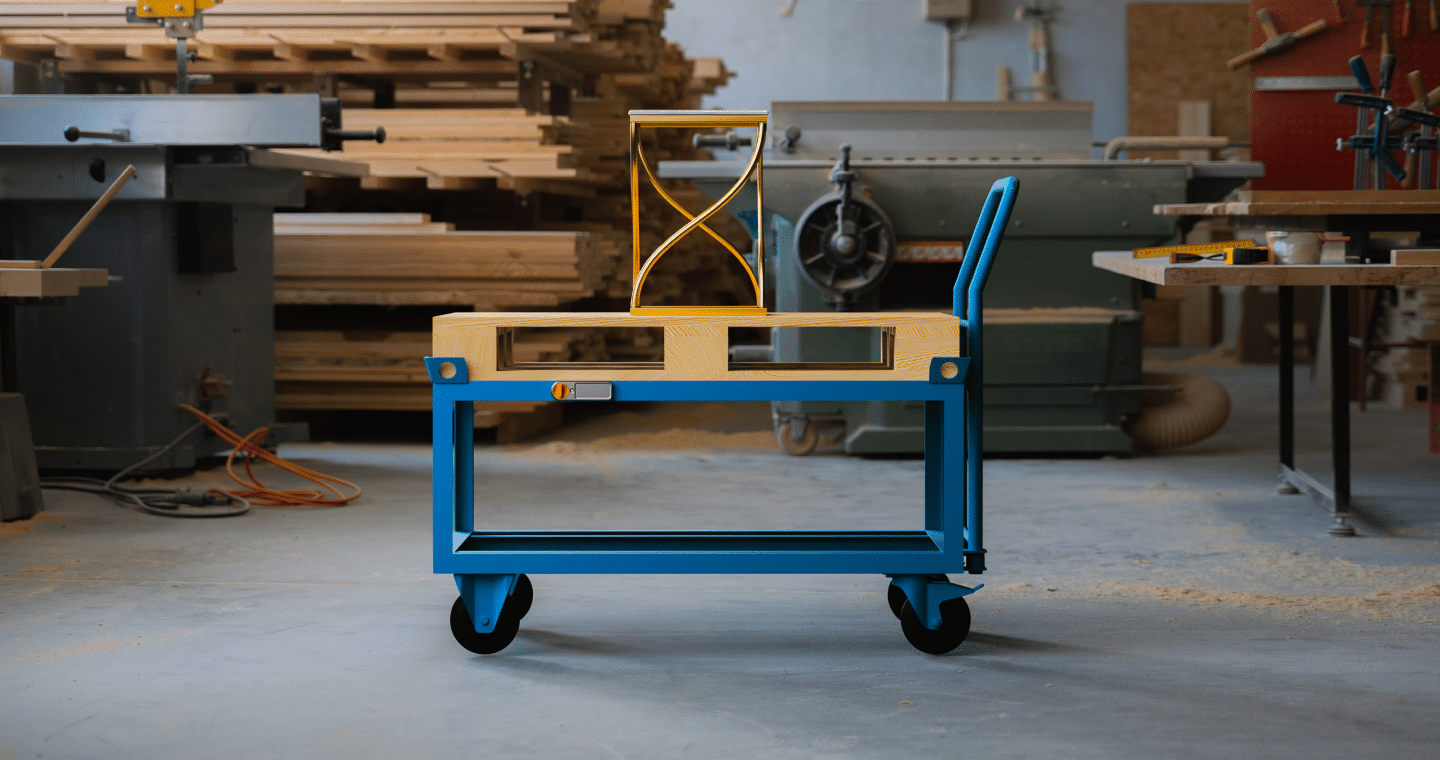
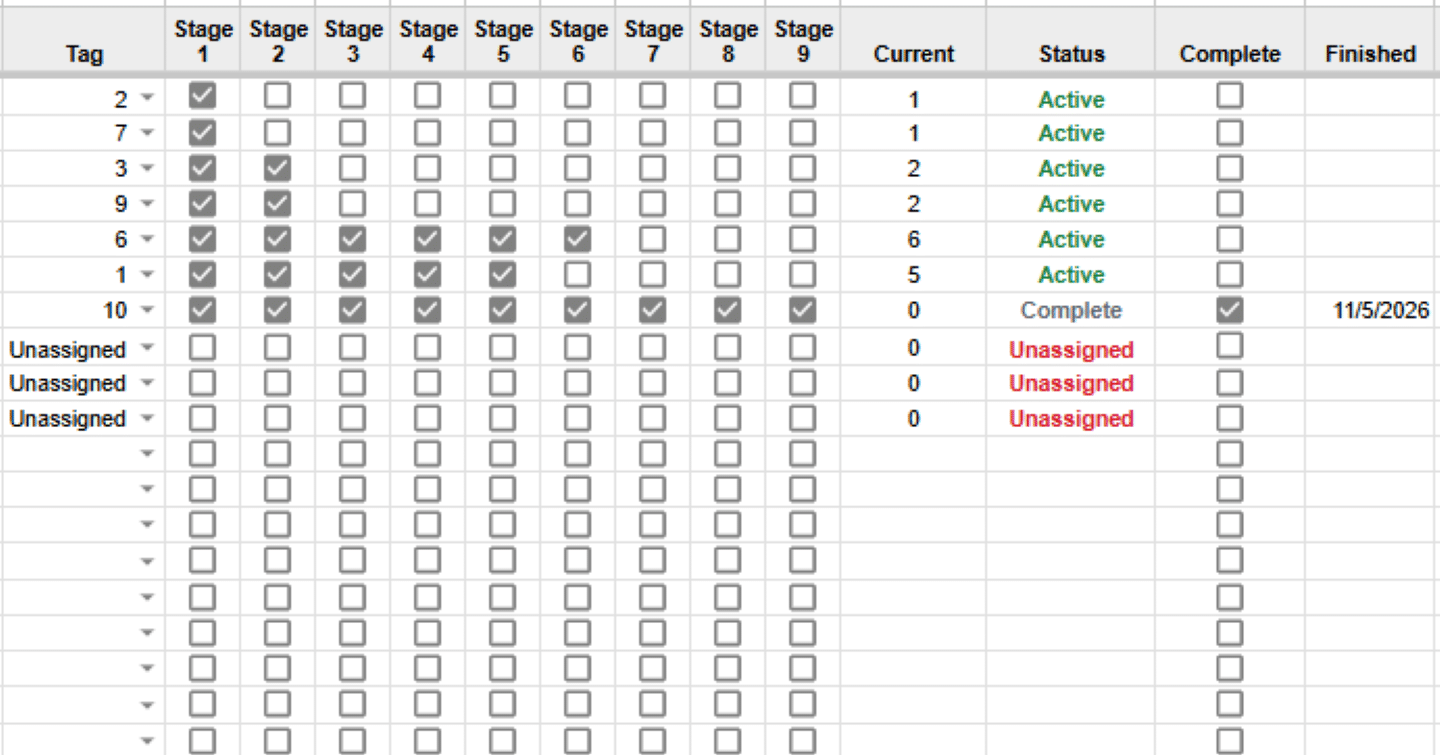
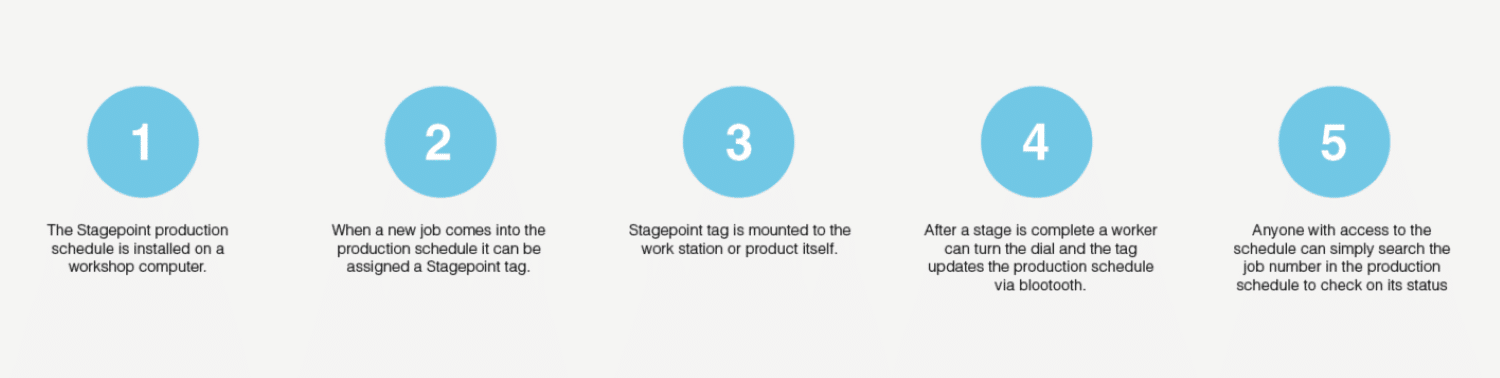
Stagepoint is a small Bluetooth tag that travels with a product through each stage of production. A worker turns the dial to the stage just finished, a light confirms it, and the digital production schedule automatically updates.
how it works
Sequence of use
Why is production visability so important?
Knowing where each job sits is crucial, especially to small manufacturers, in deciding what to prioritise , what commitments can be made to clients and what capacity there is to take on further work. Without it, those decisions depend on memory and guess work. Stagepoint provides real-time production timeline visability and needs no new infrastructure, no process change, and can be implemented in multi-use manufacturing areas.
Automation
Because the schedule always reflects the current state of the floor, it can act on it. Major milestones trigger emails, either internally so the next person knows a piece is on its way, or to the customer so progress updates no longer depend on someone remembering to send one. When a consumable drops below its threshold, a purchase order can be raised with the supplier automatically. And where a tag has sat inactive for an unusual length of time, the job is flagged and a reminder issued, so a piece that has quietly stalled surfaces on its own rather than being found weeks later.
Stock managment
Because Stagepoint already knows the stage of every job, it can also account for what each stage consumes. The consumables, parts and materials used at each step are entered once, and the product description on the job tells the schedule what is being made, so the correct quantities are deducted for that product rather than a flat figure applied across every job. Counts stay current without anyone running a stocktake, and items falling below a set threshold are flagged before they run out rather than when someone reaches for the last one. Inventory tracking becomes a by product of work that is already being recorded.
Efficiency
Every dial turn is timestamped, so the gap between turns is a direct measure of how long each stage actually took. Over time this replaces estimated lead times with recorded ones, making quotes more accurate and making capacity easier to judge before a new job is accepted. It also shows where time is concentrated, so a bottleneck can be identified from the data rather than from memory, and a stage running longer than it normally does can be investigated while the job is still on the floor. The measurement sits on the process rather than the person, tracking how work moves rather than how fast anyone works.
stagepoint in use
materials and design
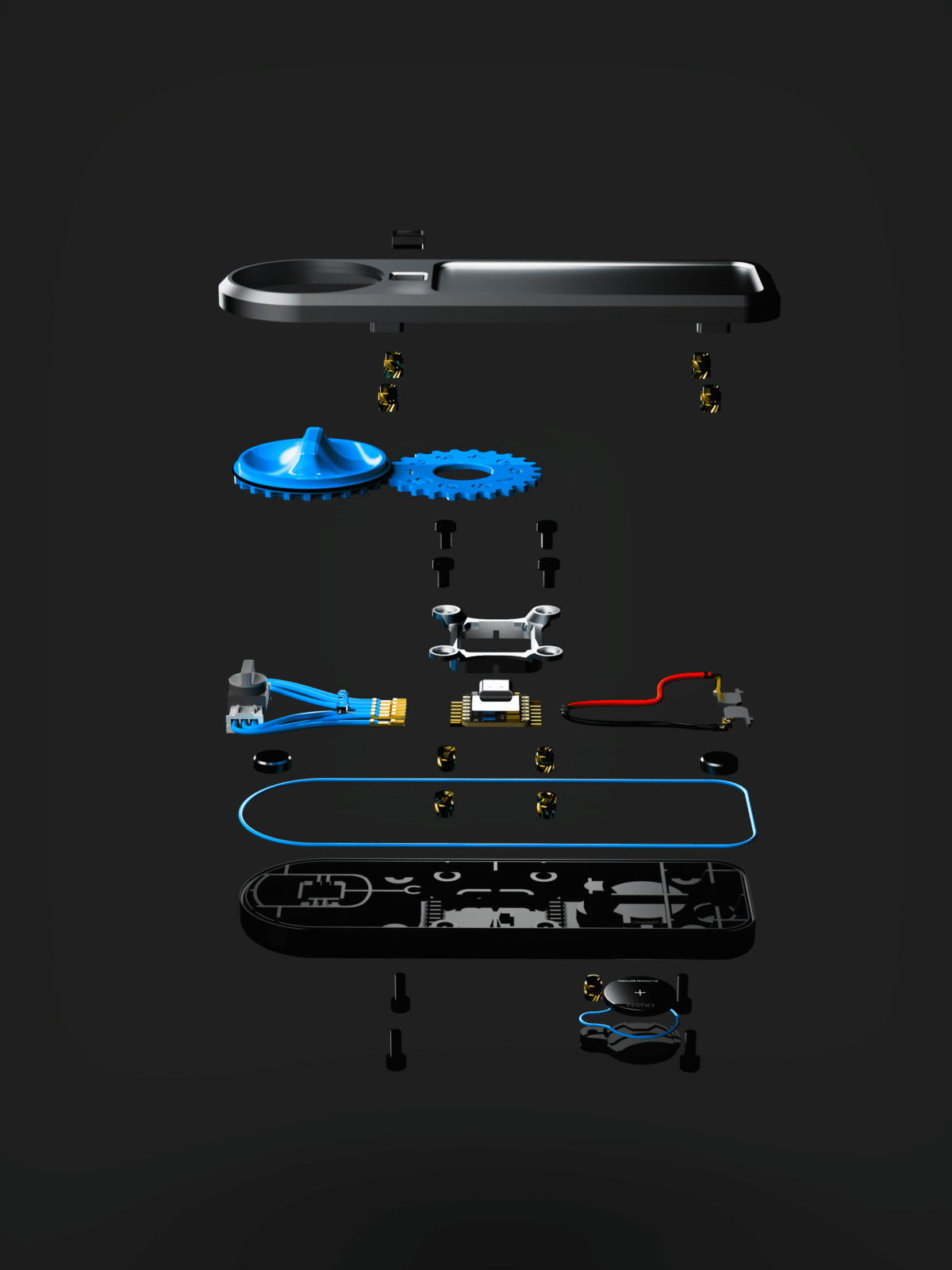
Stagepoint is designed for disassembly. Its twenty two parts are held entirely by mechanical fixings, with no adhesives or permanent joints anywhere in the assembly, so the product can be fully taken apart and reassembled with a single allen key. A sealed two part case, with a main seal, a separate knob seal and a sealed battery cover, protects the electronics from dust, sanding debris and solvents without compromising that serviceability. The top case is stainless steel, specified for its impact and corrosion resistance in a workshop environment and for a non-porous surface that takes a whiteboard marker and tolerates the solvents used to remove it. Because the tag only draws power when the dial is turned, a standard CR2032 coin cell lasts approximately three years. The majority of components are off the shelf, so parts can be sourced rather than specified, supporting right to repair rather than designing it out.
outcome
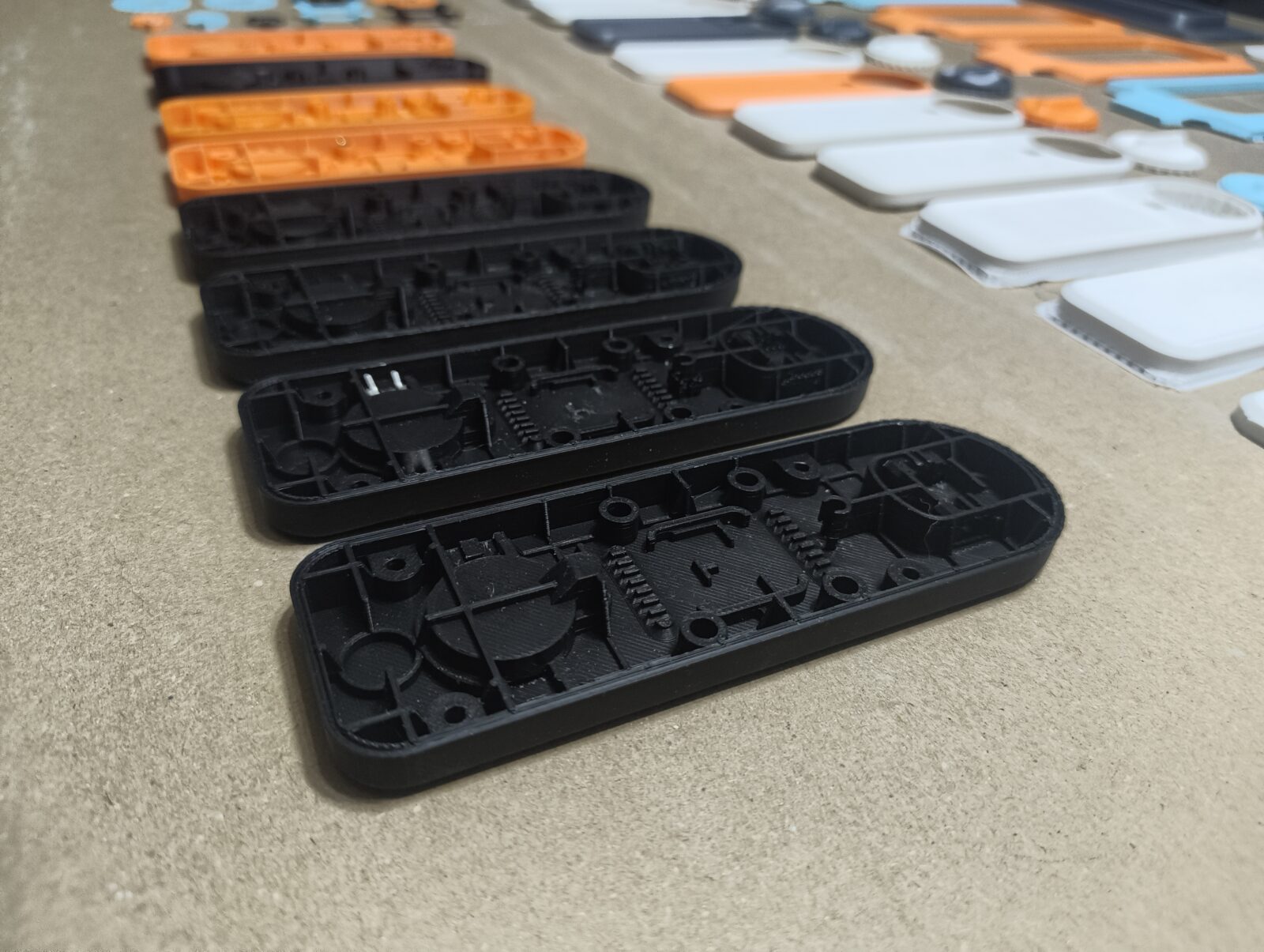
Two fully working prototypes were produced, running live firmware and updating a real production schedule rather than a simulation. The design went through a proof of concept build, iterative 3D printing to refine the internal layout and external form, and a wet sanded final assembly. The resulting tag runs on a standard coin cell, requires no charging or docking, and asks a worker for one deliberate movement at the end of a stage.