Opportunity
What is high density living and who are the user groups?
• High density living refers to 9 plus storey high rise apartment studios or caravans.
• Primary user group: adults 20-40 who are young first-time buyers.
• Secondary user group; mature 55+ years downsizing empty nesters.
Why Australia and why is it important?
• One-bedroom apartment allocates 6m3 of storage of which only about 3m3 needs to be inside the apartment per NSW Apartment Design Guide (NSW Department of Planning & Environment, 2015).
• 62% conceal their machines in cupboards, 17% behind furniture (Harmer et al., 2019).
• Wall docks need drilling into wall. No option for renters.
• To enable the sufficient use of handheld vacuums in these types of environments, ways to store them in a more compact manner are required.
“available and easily accessible, but not visible” (Albiz & Glaerum, 2019, p 18).
Research
Methodology
Mixed methods deployed to observe behaviour first, then test whether it holds at scale.
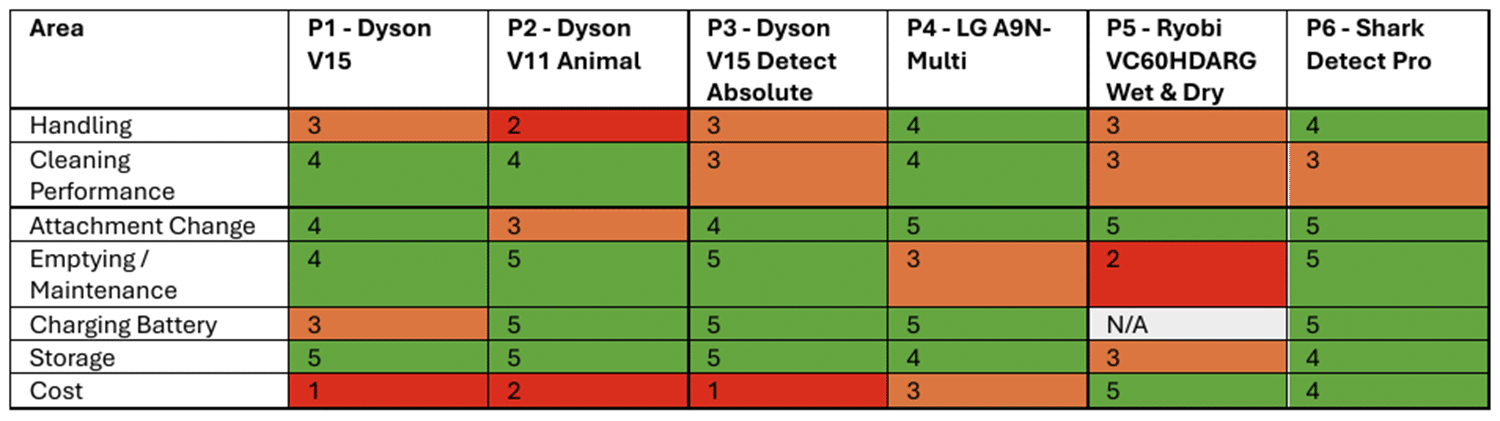
• 6 observations in participants’ own homes, guided by a checklist, documented with photos and video.
• 24 survey participants completing 32 questions via Google Forms.
• 14 females and 10 males, ages 18 to 55+.
Observations
• Observations over 6 sessions in participants’ homes.
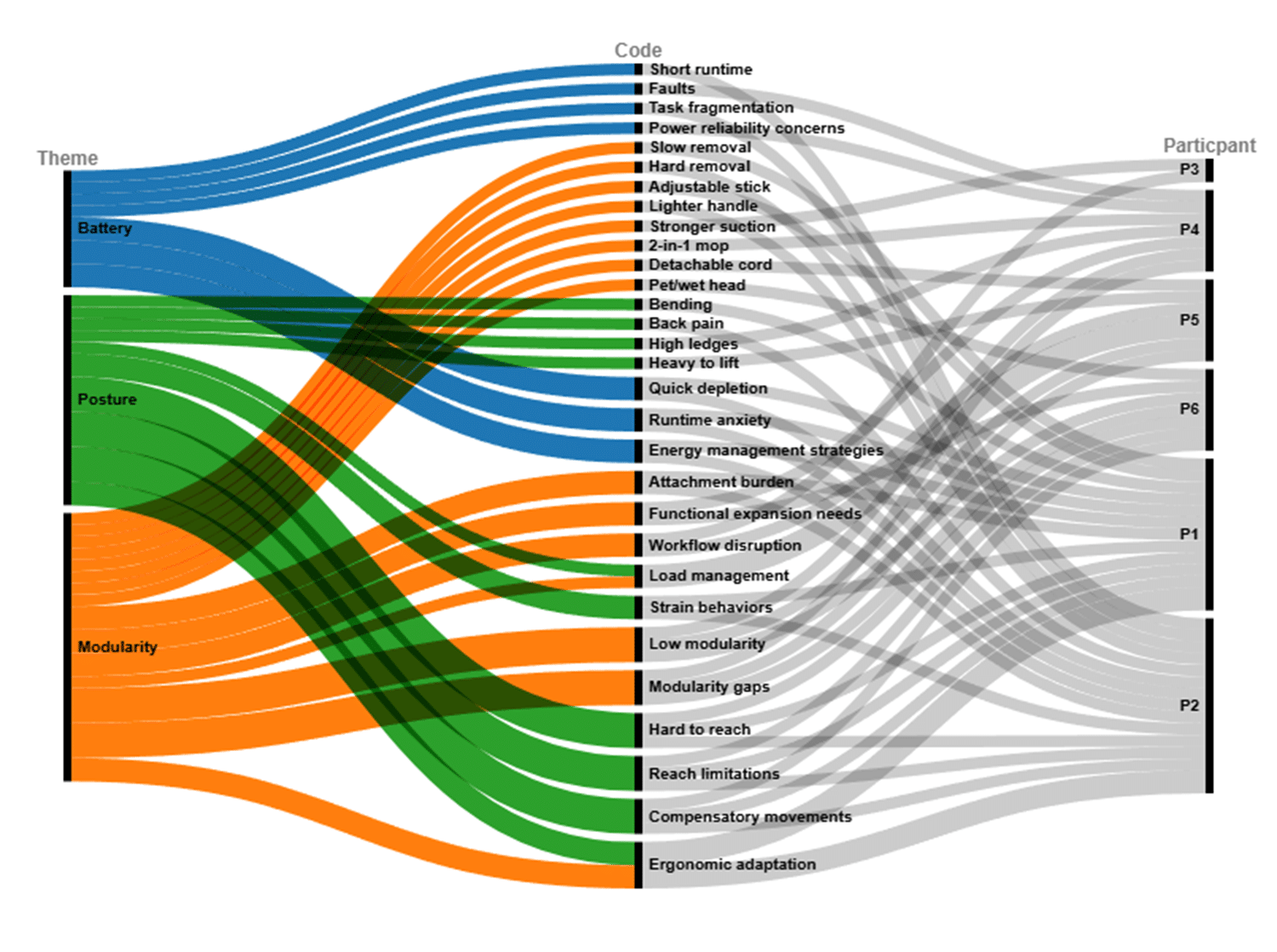
• Affinity diagramming → 10 themes → 3 taken forward.
• Modularity with 6 of 6 attachment burden, workflow disruption.
• Posture 5 of 6 bending, reaching, compensatory movement.
• Battery 3 of 6 runtime interruption, task fragmentation.
• Core needs: usability, ergonomics, adaptability, efficient storage.
Surveys
Surveys – 24 responses
• Typical cleaning sessions lasted for 30 minutes with 7 responses.
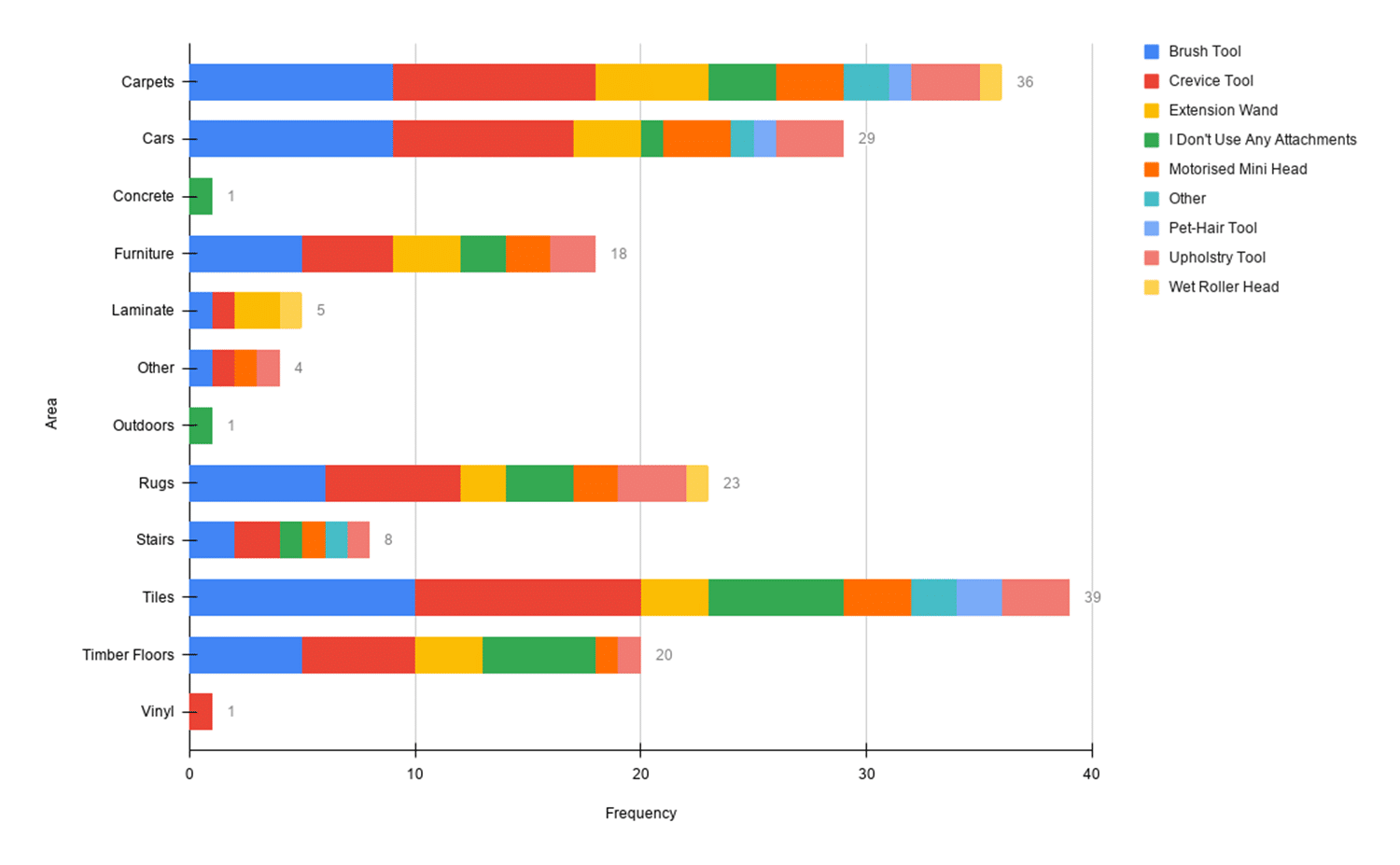
• Tiles and carpet were the most frequently cleaned surfaces with up to 39 and 36 attachments respectively.
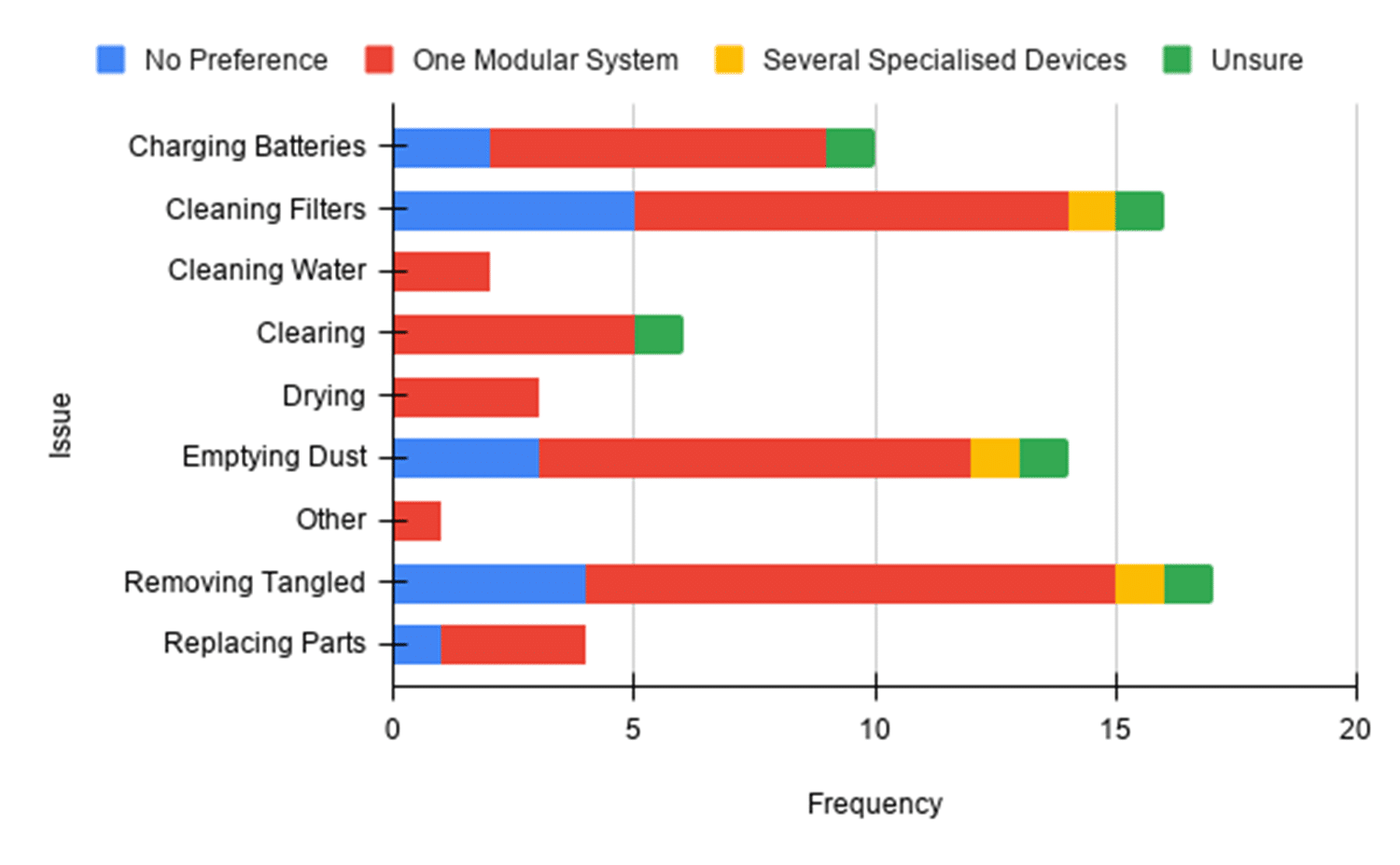
• The highest recorded preference was having one modular system, with 17 responses whilst the lowest recorded was several specialised devices with only 1 response.
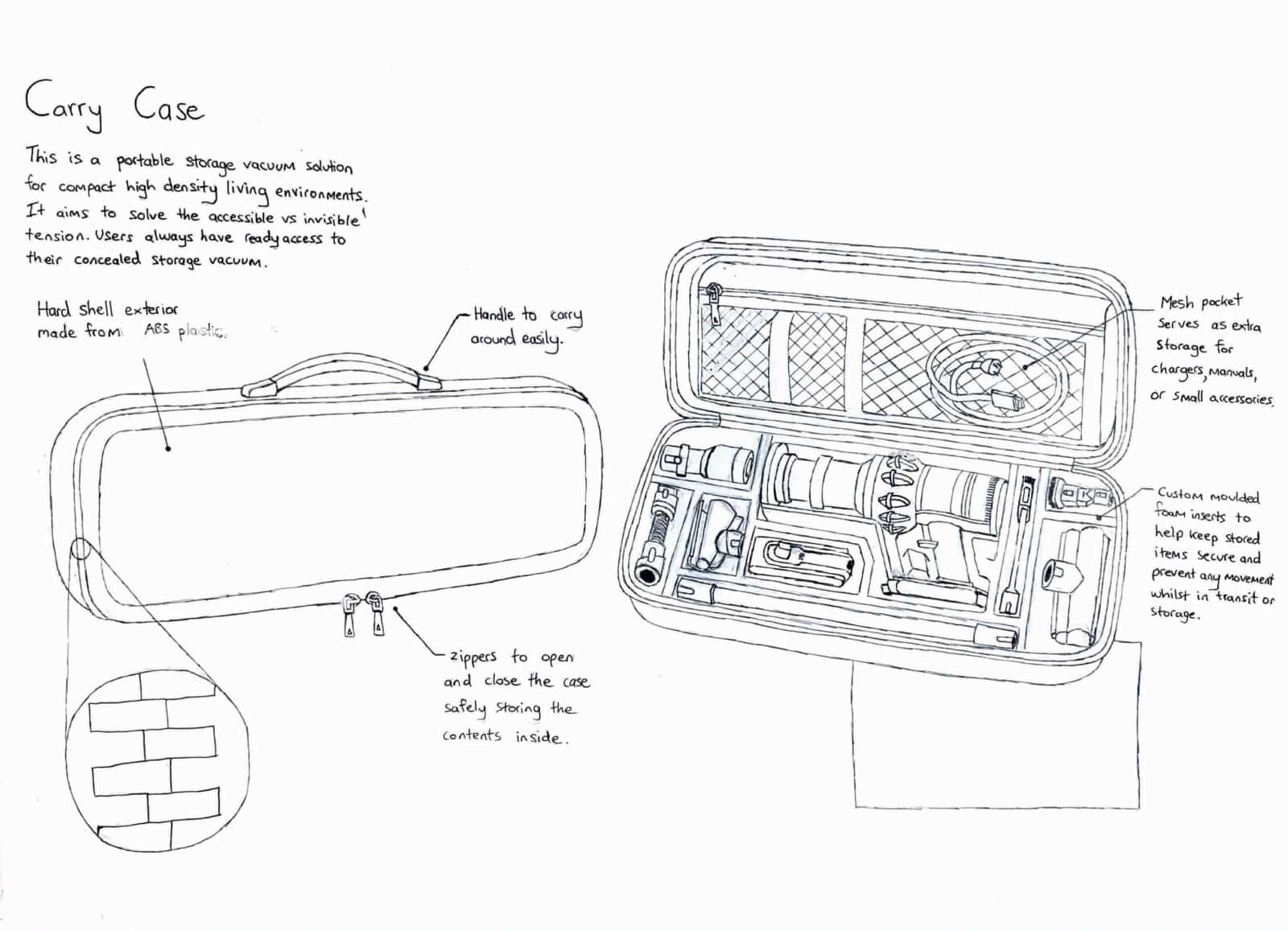
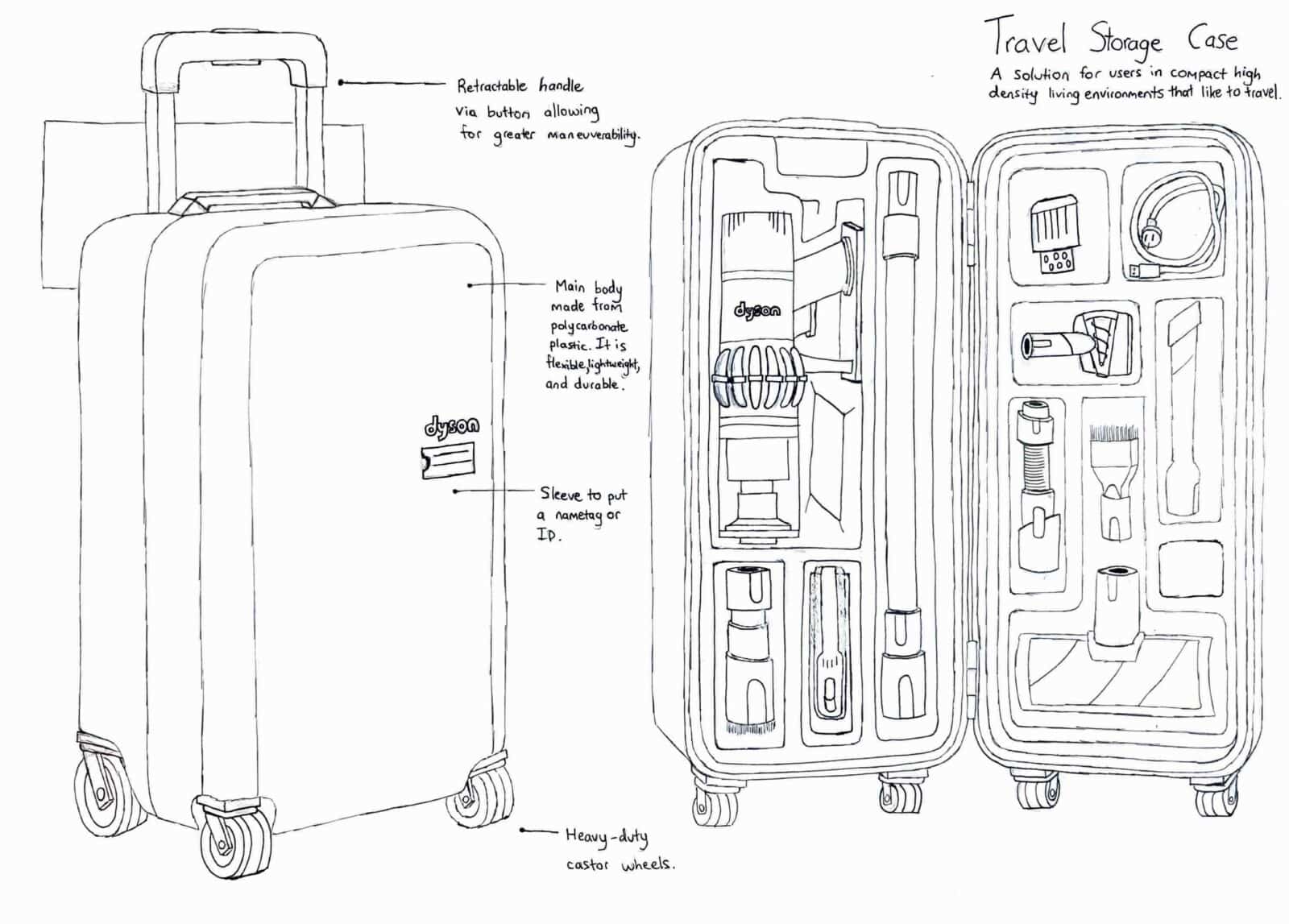
Store the machine and its attachments as a single object.
Concept Development
This section includes the research report documentation to download.
- Name
- Research Report
- File Type
- application
- File Size
- 1 B
- Link
- Download File
Refined Concept Sketches
Prototyping
Final Design
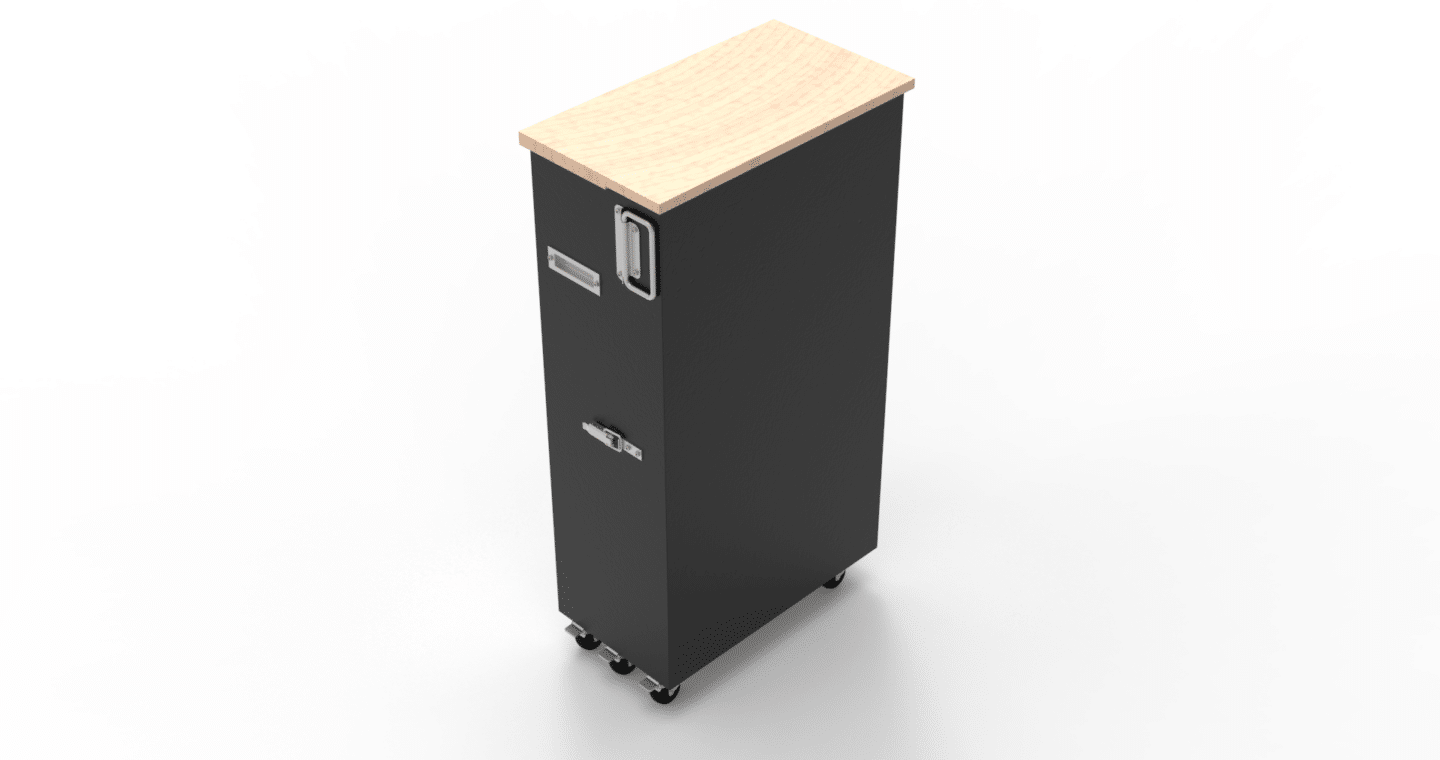
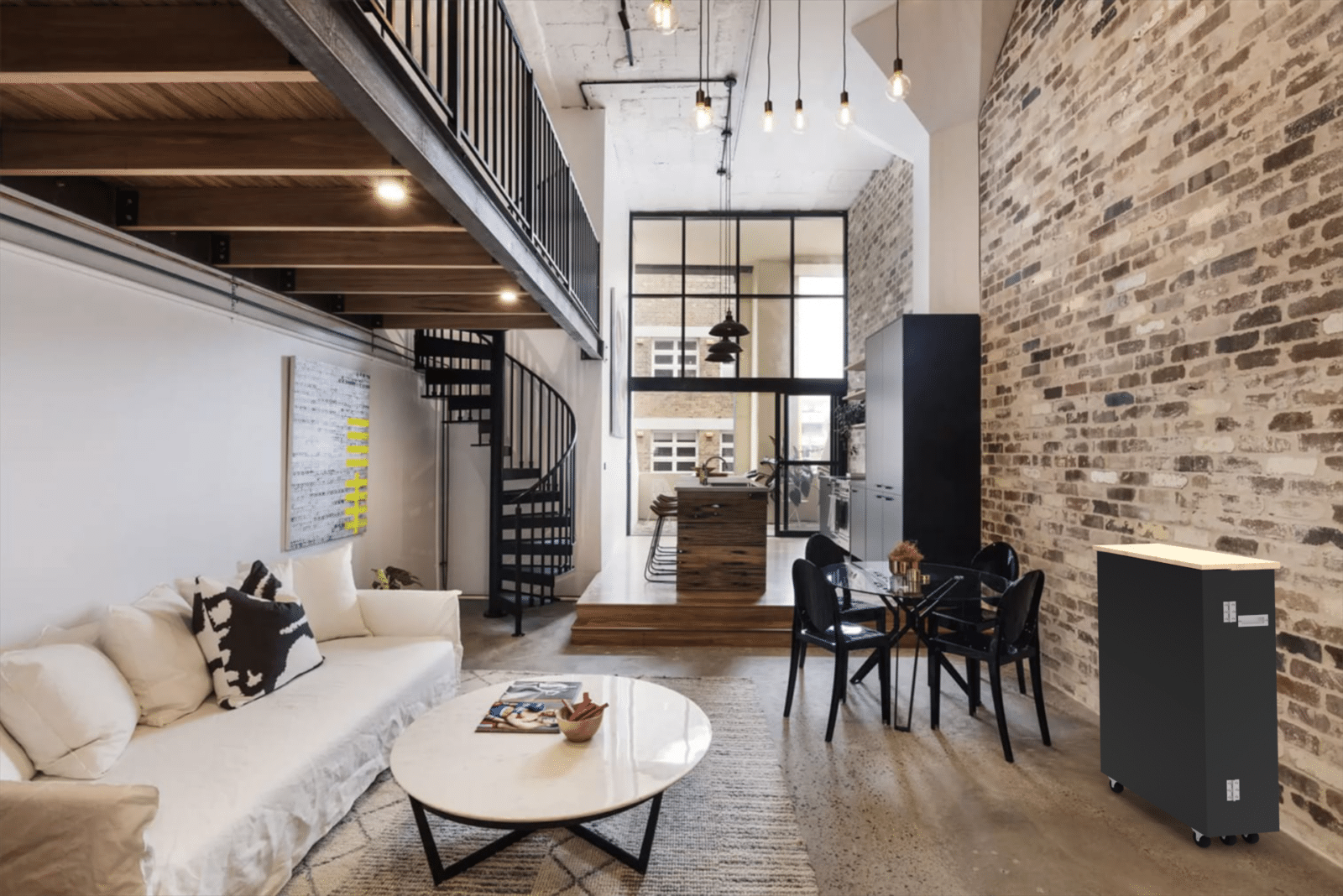
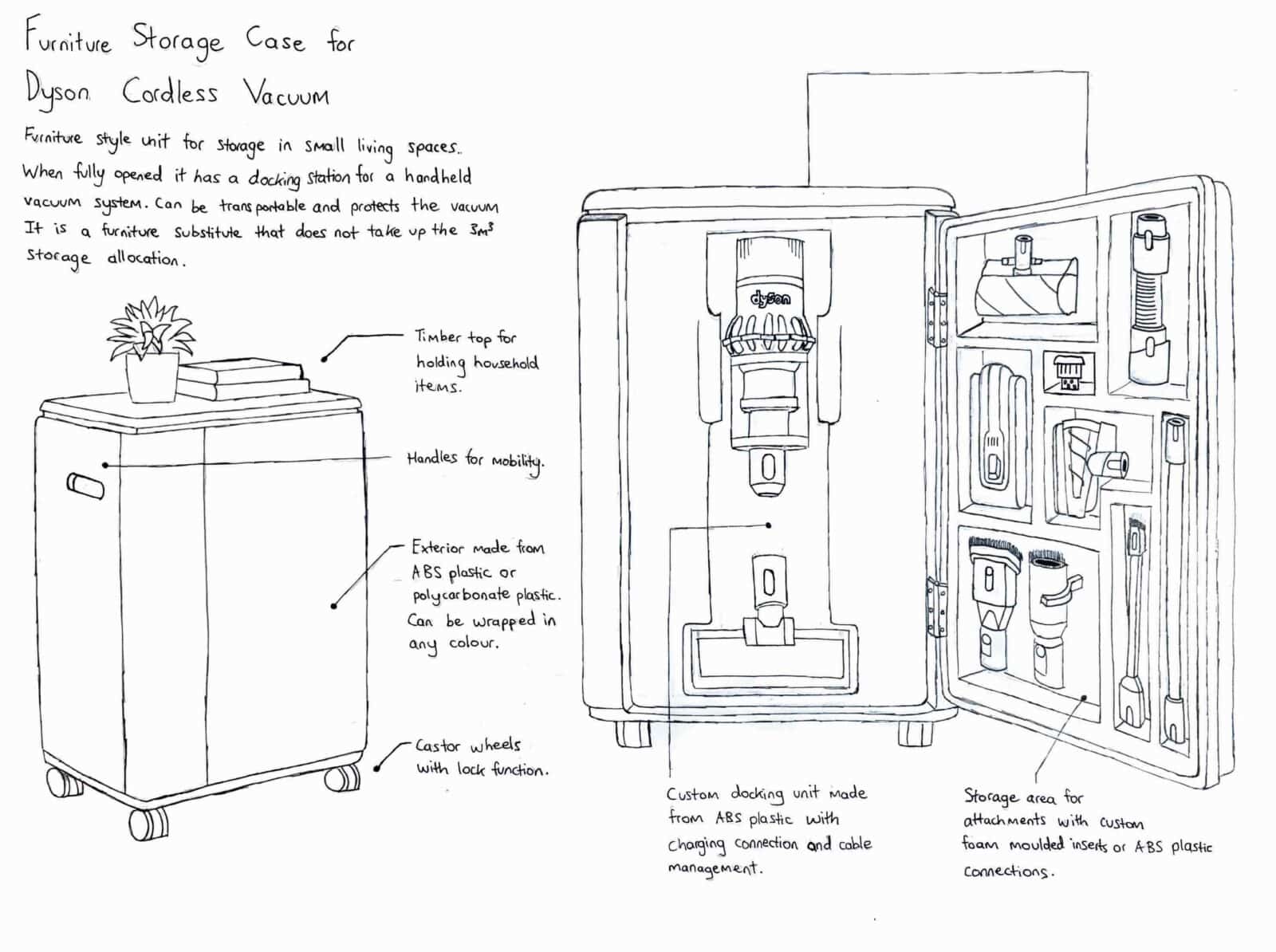
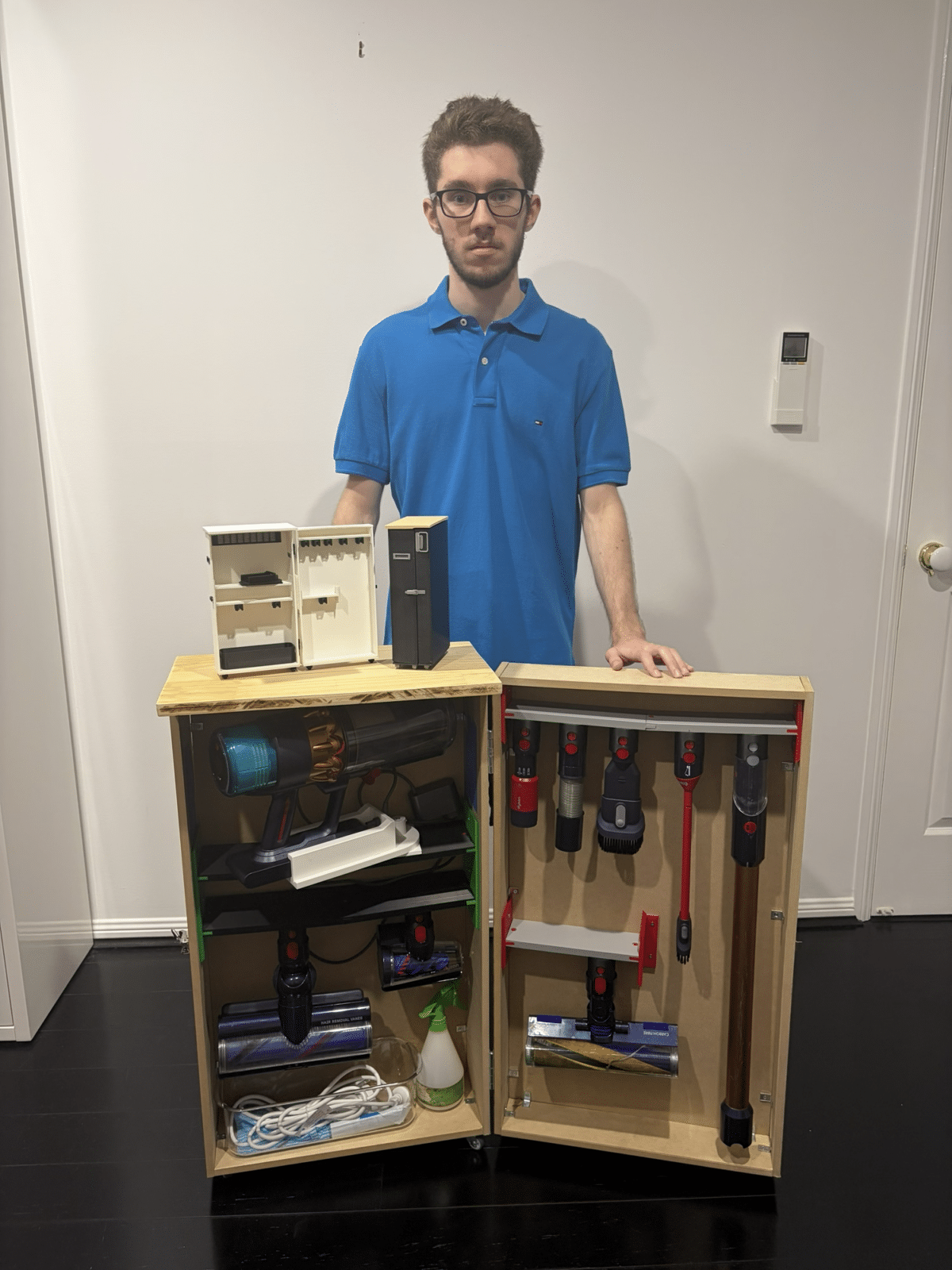
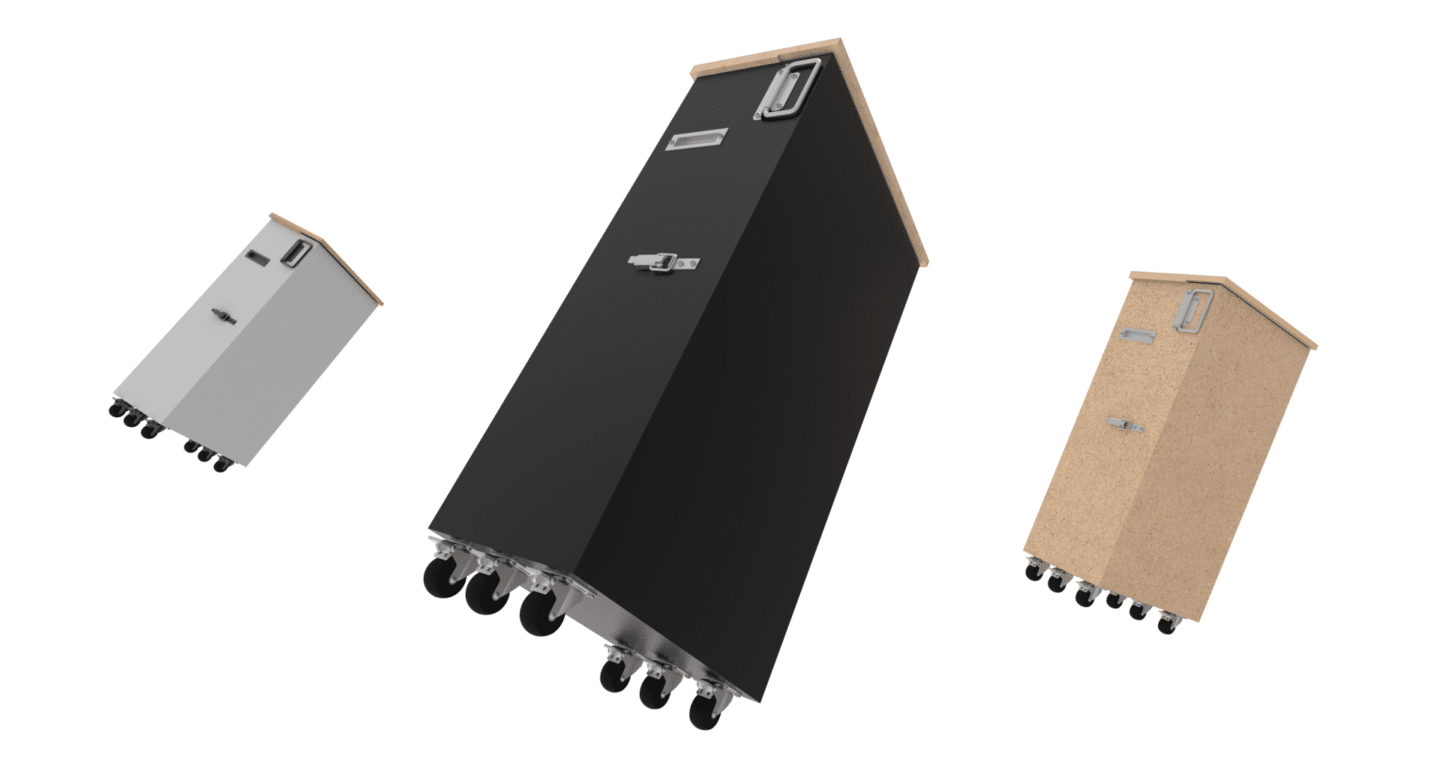
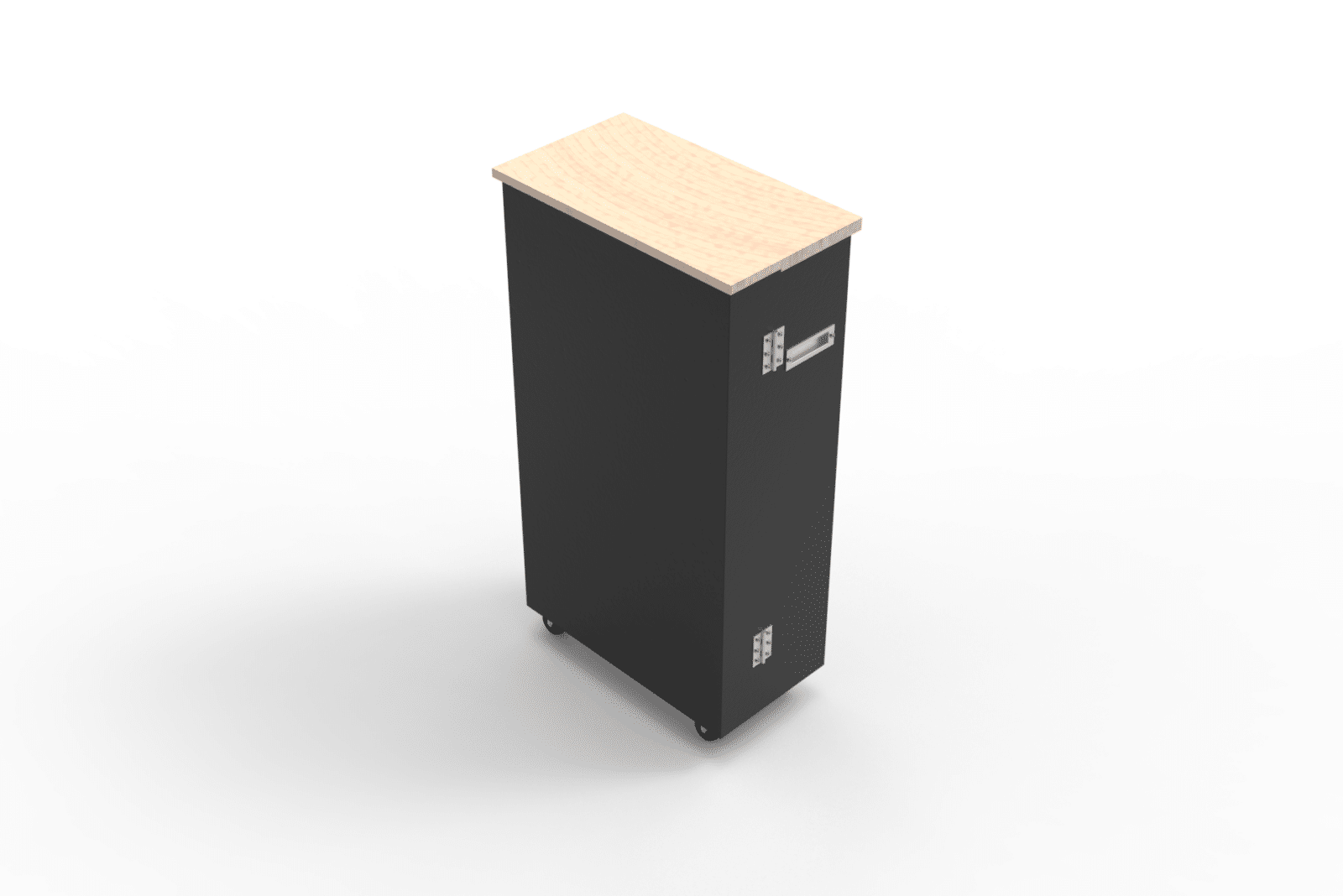
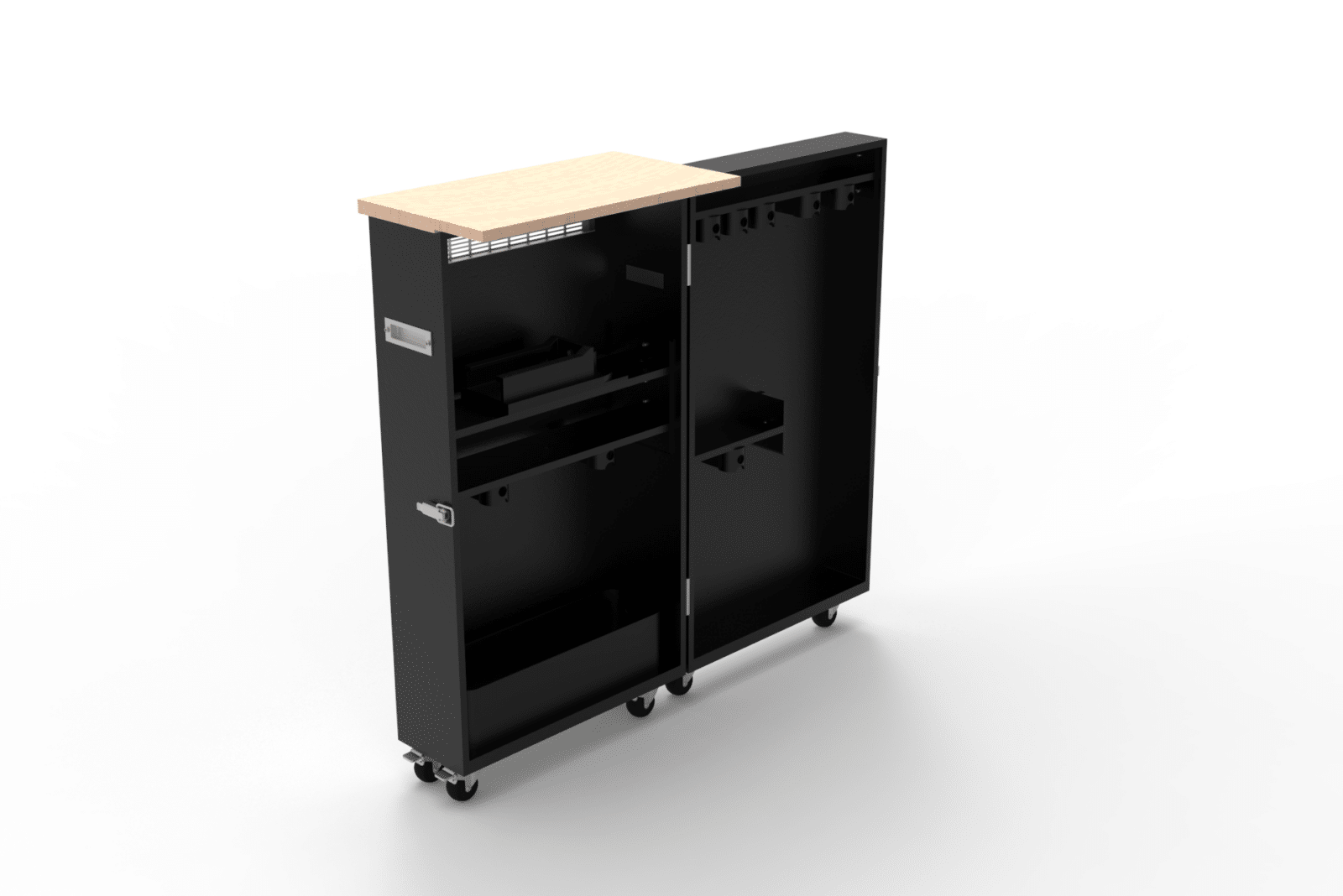
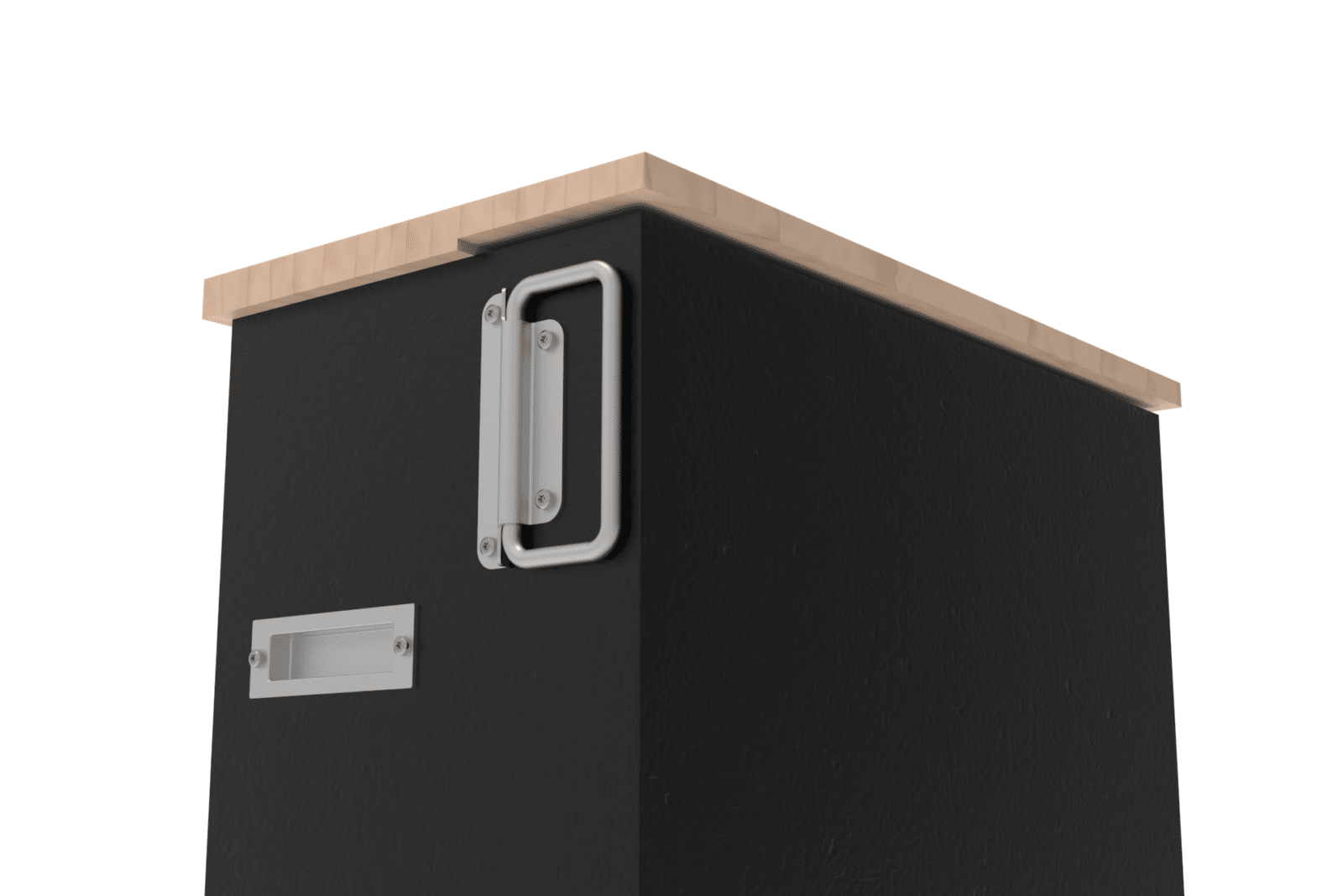
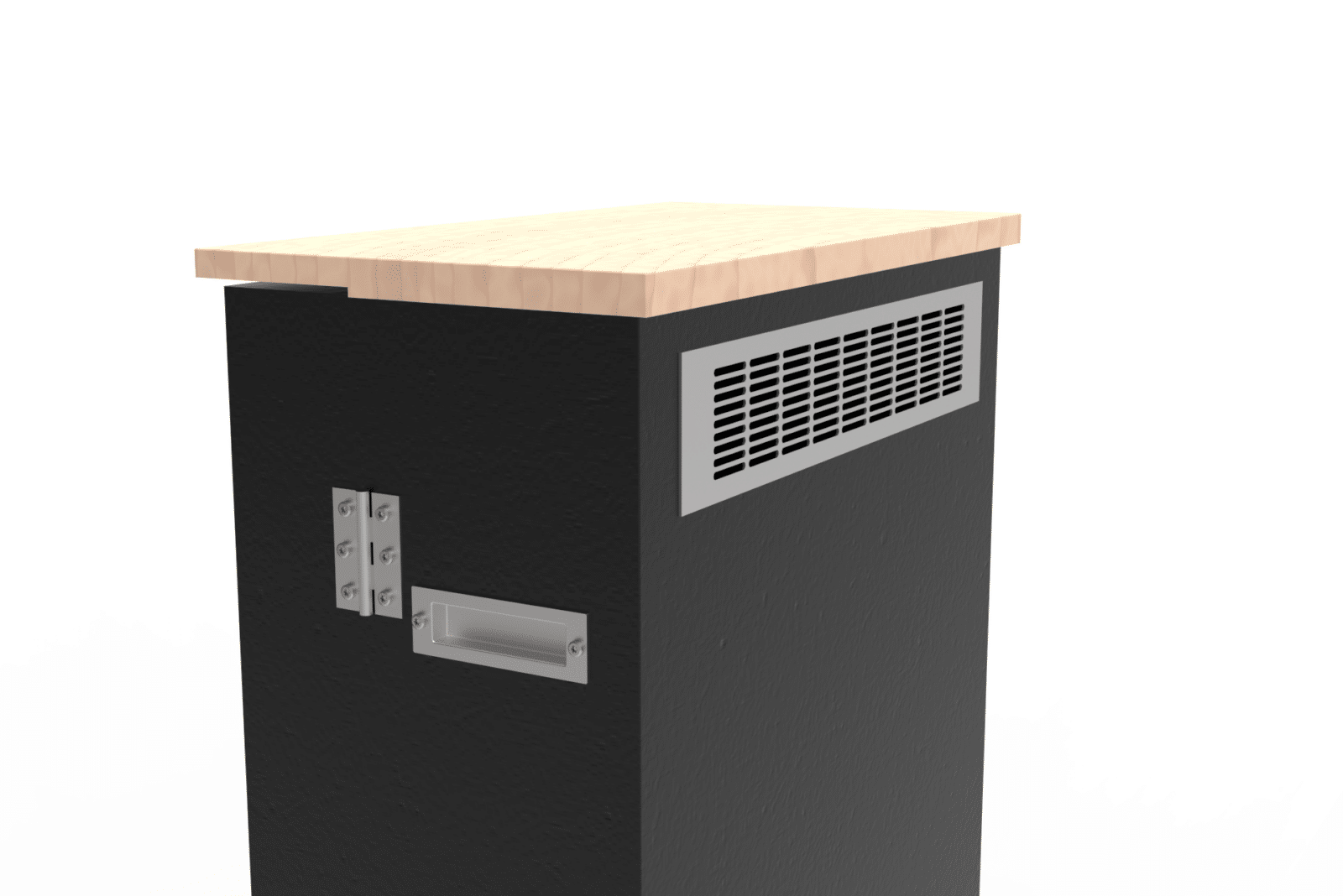
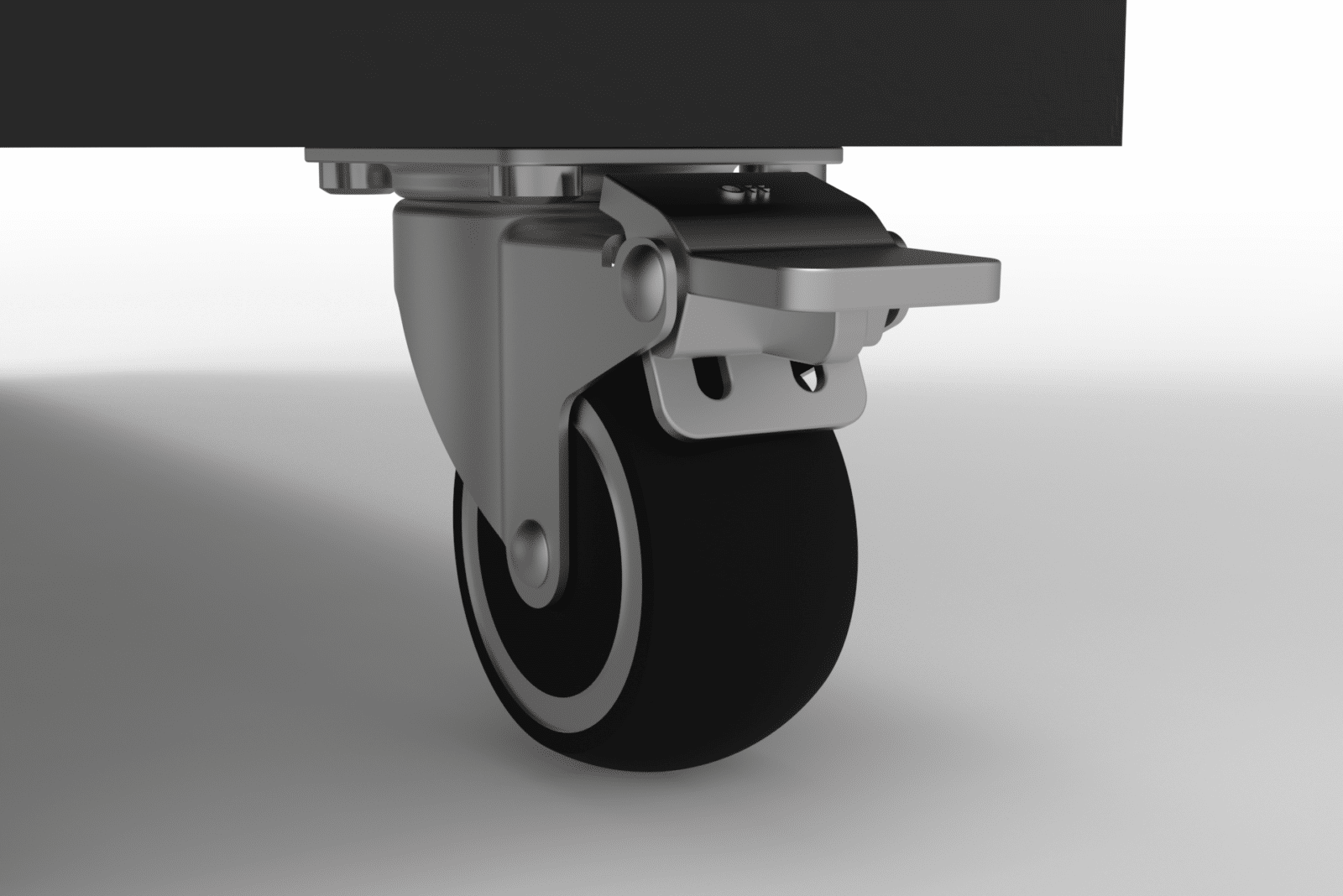
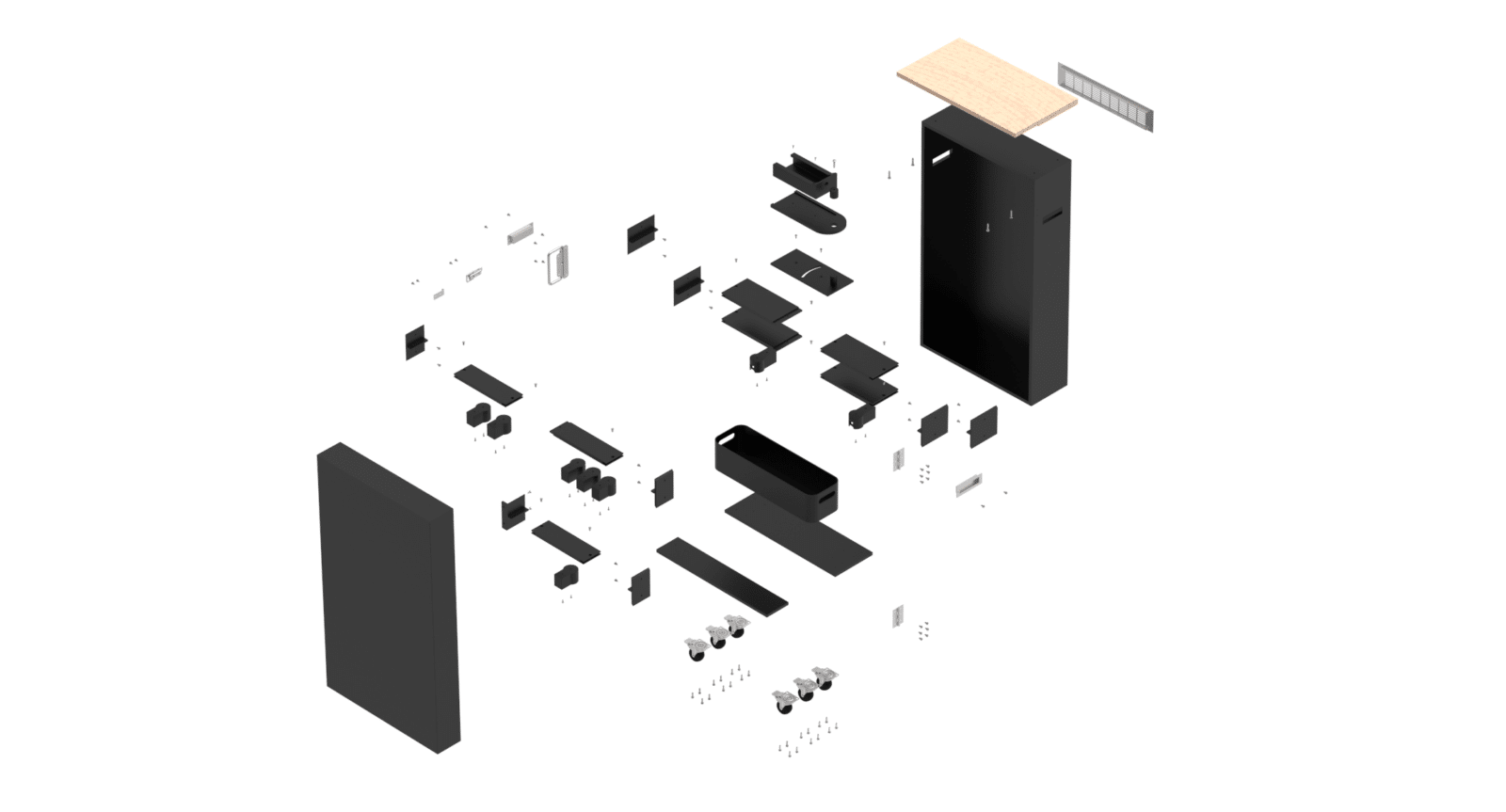
• The design answers the problem of spatial efficiency and organisation as it provides dedicated storage for vacuum cleaners and accessories.
• It maximises the use of the limited living space whilst also improving accessibility, convenience and user experience.
• It is designed for the primary user needs included usability, ergonomics, adaptability, and efficient storage in tightly confined dwellings.