Restocking warehouse aisles while customers shop is dangerous but necessary. The standard straight-belt barrier doesn't meet workers' needs, forcing them to modify existing equipment and create unforeseen product design hazards.
The Wrangle Barrier meets this unmet need with a simple, multipurpose, wide-reaching and angled design, so pedestrians know the aisle is closed, and workers know they are safe to work.
An Industrial Design capstone that rethinks the retractable aisle barrier for stores where forklifts and customers share the floor.
In large-format hardware stores, restocking doesn’t wait for the doors to close. Forklifts and order pickers work the aisles during trading hours while customers, tradespeople and children walk the same floor. The usual safeguard is a retractable belt barrier pulled across the end of the aisle. Final-year QUT student Tait Furlong set out to understand why that safeguard so often fails, and designed the Wrangle Barrier in response.
His research combined interviews with four staff, covering stock, floor management, store management and the outdoor trade yard, with a 55-entry observation log recorded on the shop floor. Some key problems were identified from this research.
The people most at risk aren’t the trained staff. In 41 of the 55 observations, the person near the hazard was a member of the public: someone who has never had a safety briefing, and who can step around a barrier or move it out of the way.
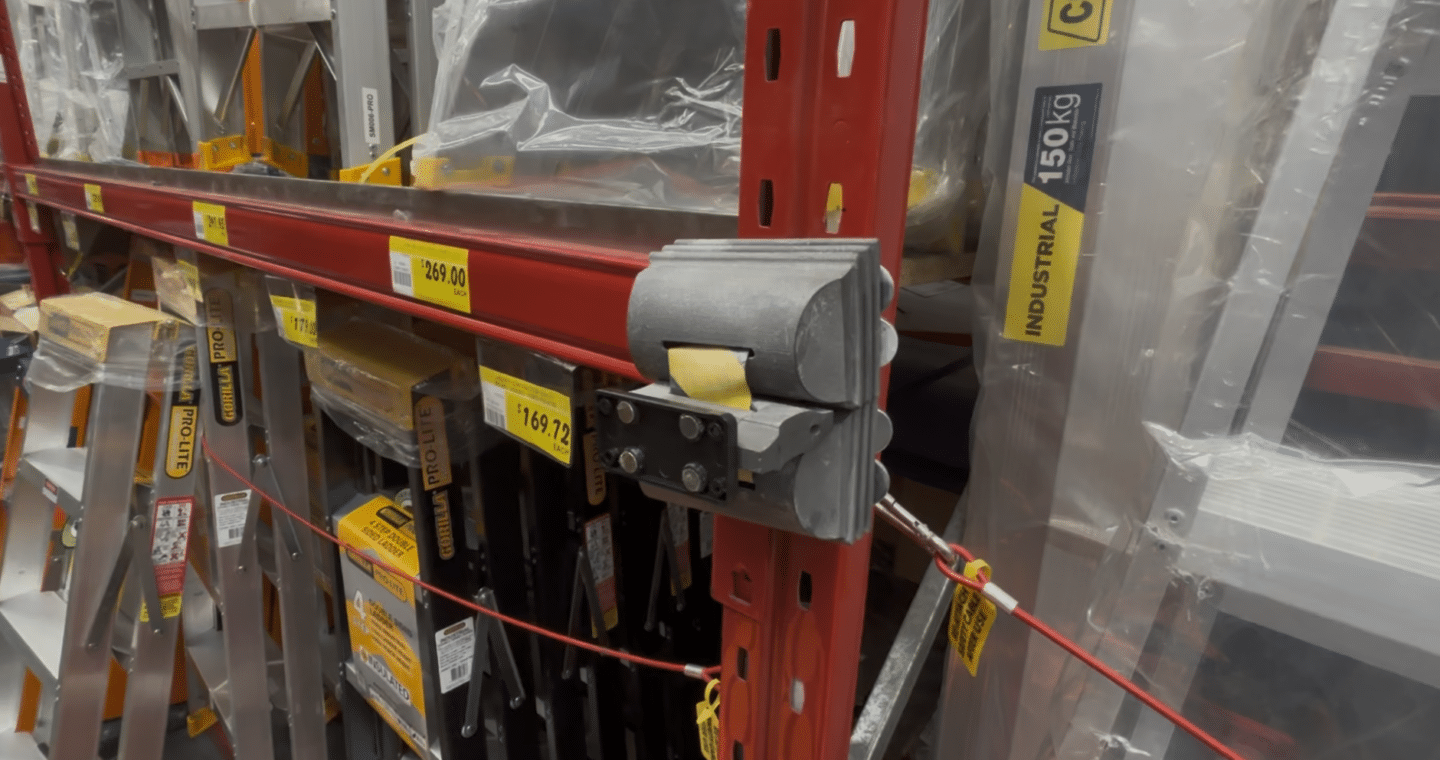
A straight belt doesn’t fit the space. Aisle ends are wide, and racking frames are clunky, so a single belt leaves gaps underneath and can blend in with the lines of looking down an aisle if seen at the wrong angle. It was observed that workers had barriers tied together to close aisles, creating hazards from unplanned needs, unmet by current designs.
A store can move deliveries to quiet hours and schedule restocking around peak trade, but it can’t control who walks into an aisle. Where the hazard can’t be removed, the barrier has to make the closed area obvious to someone with no training at all, and it has to be easier to use than the shortcut staff would otherwise take.
Wide Reach Function
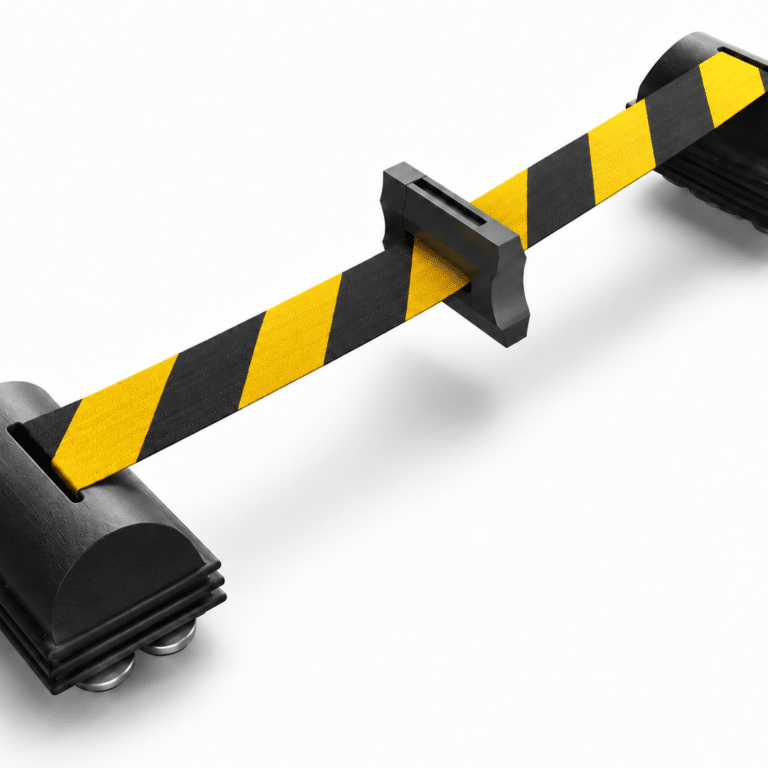
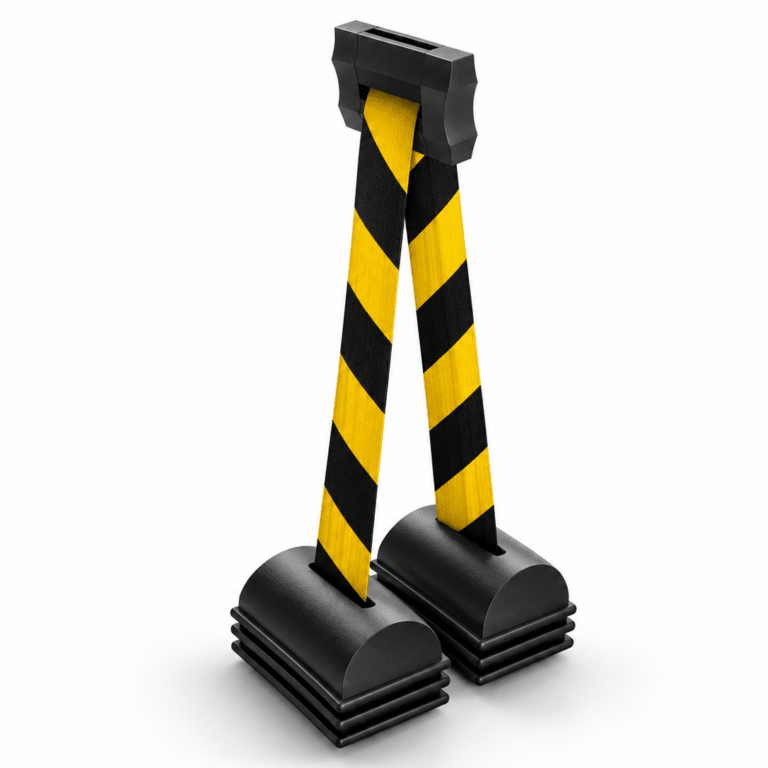
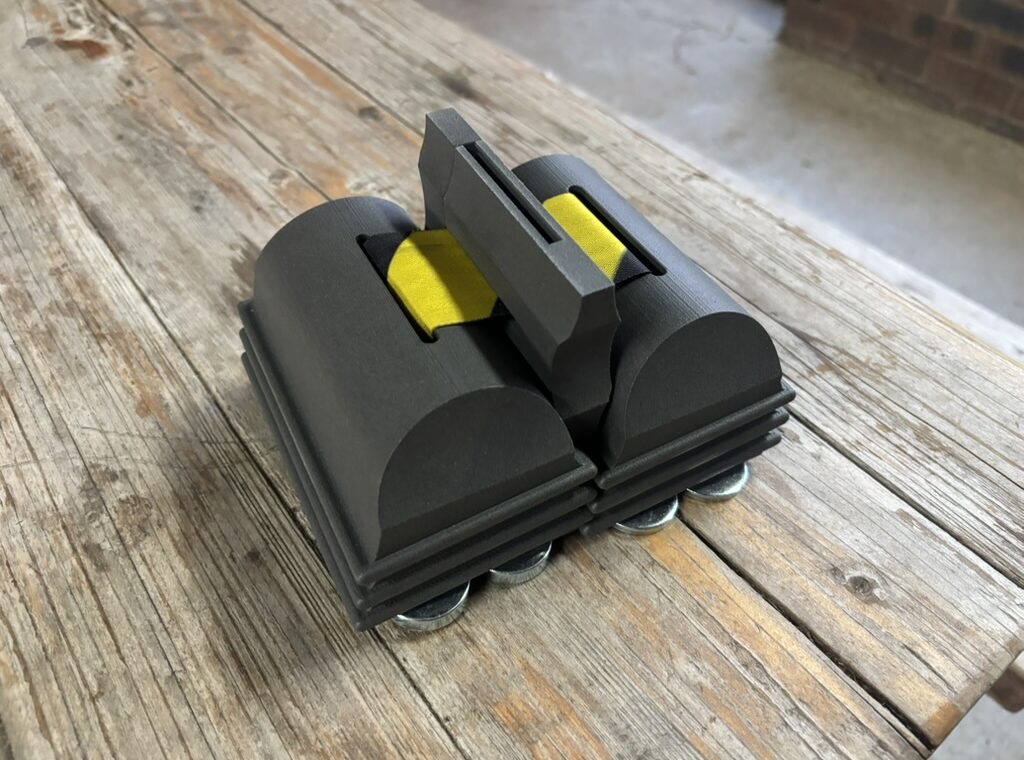
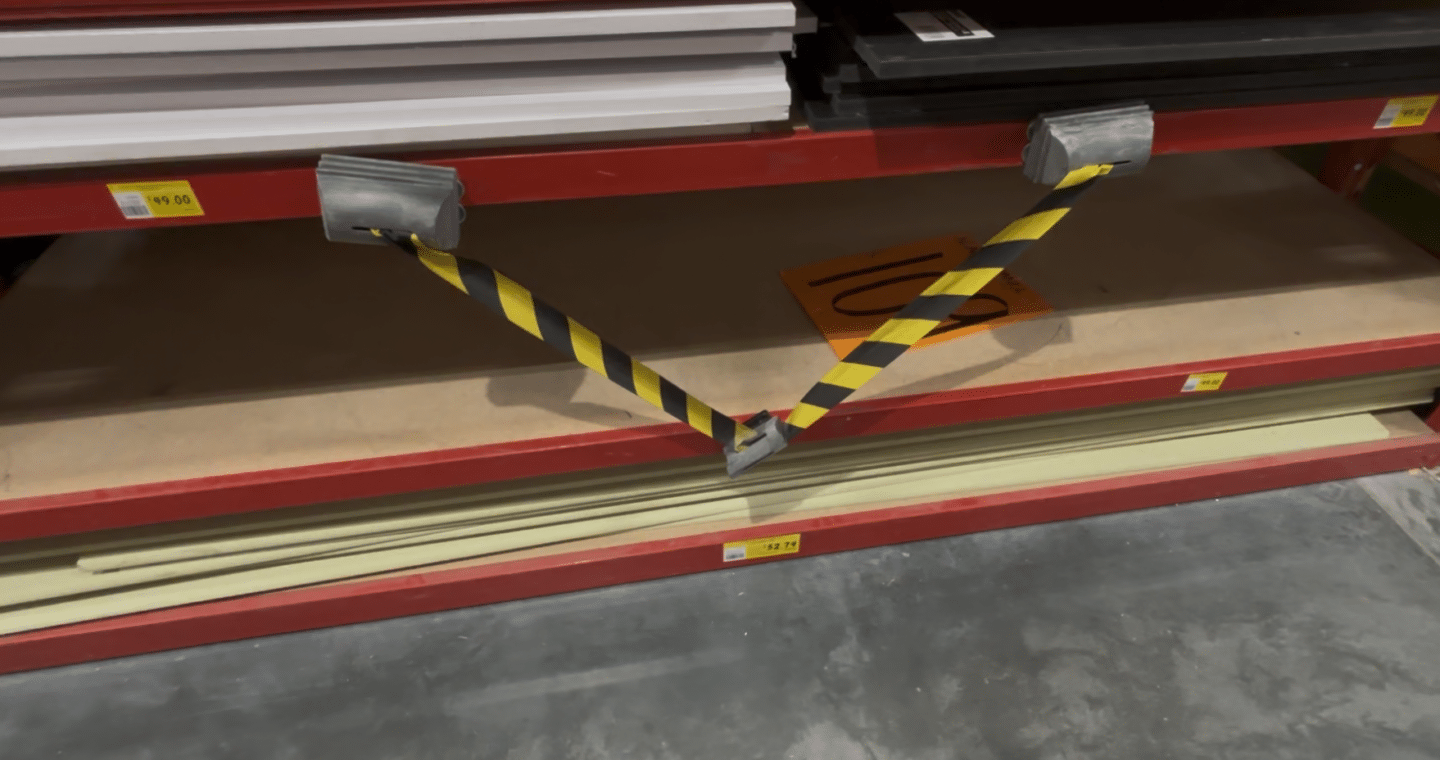
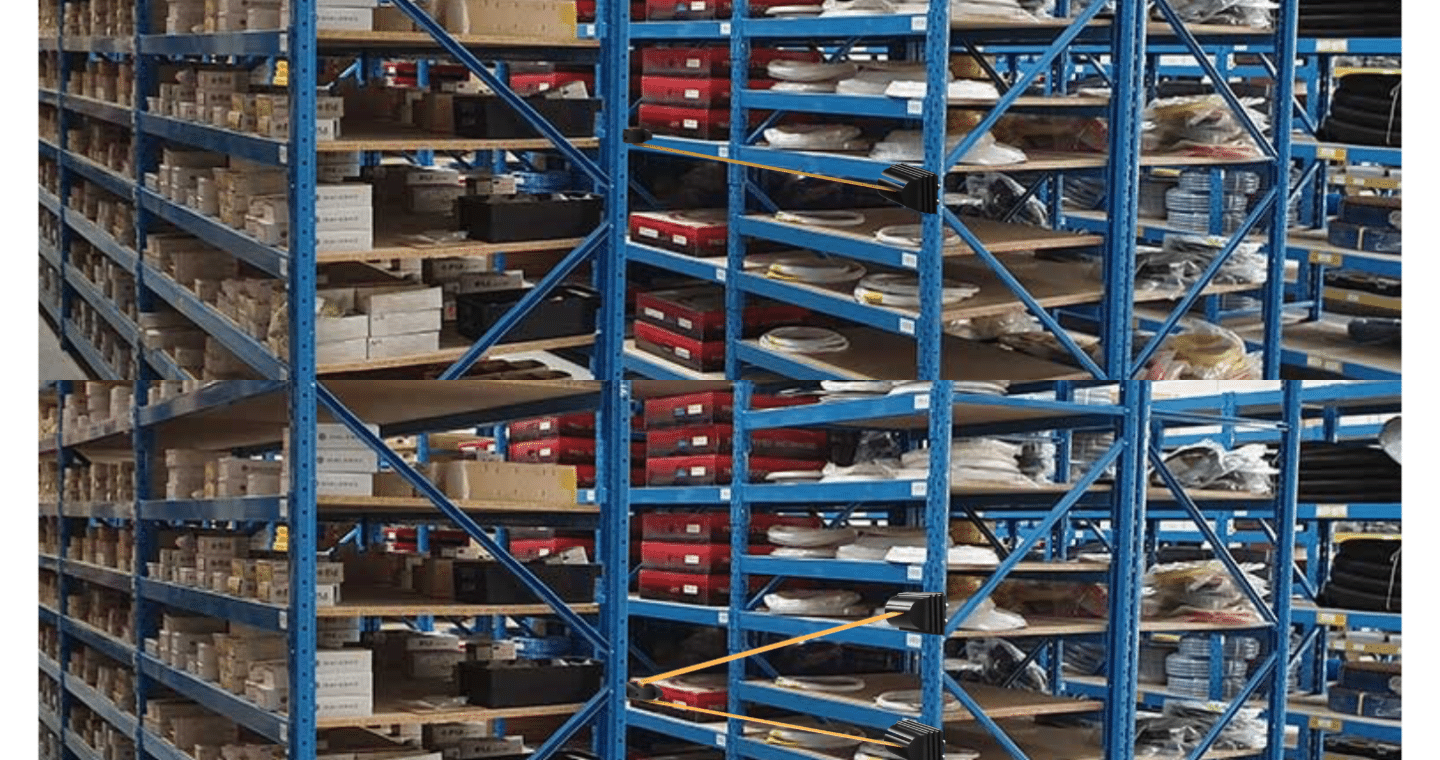
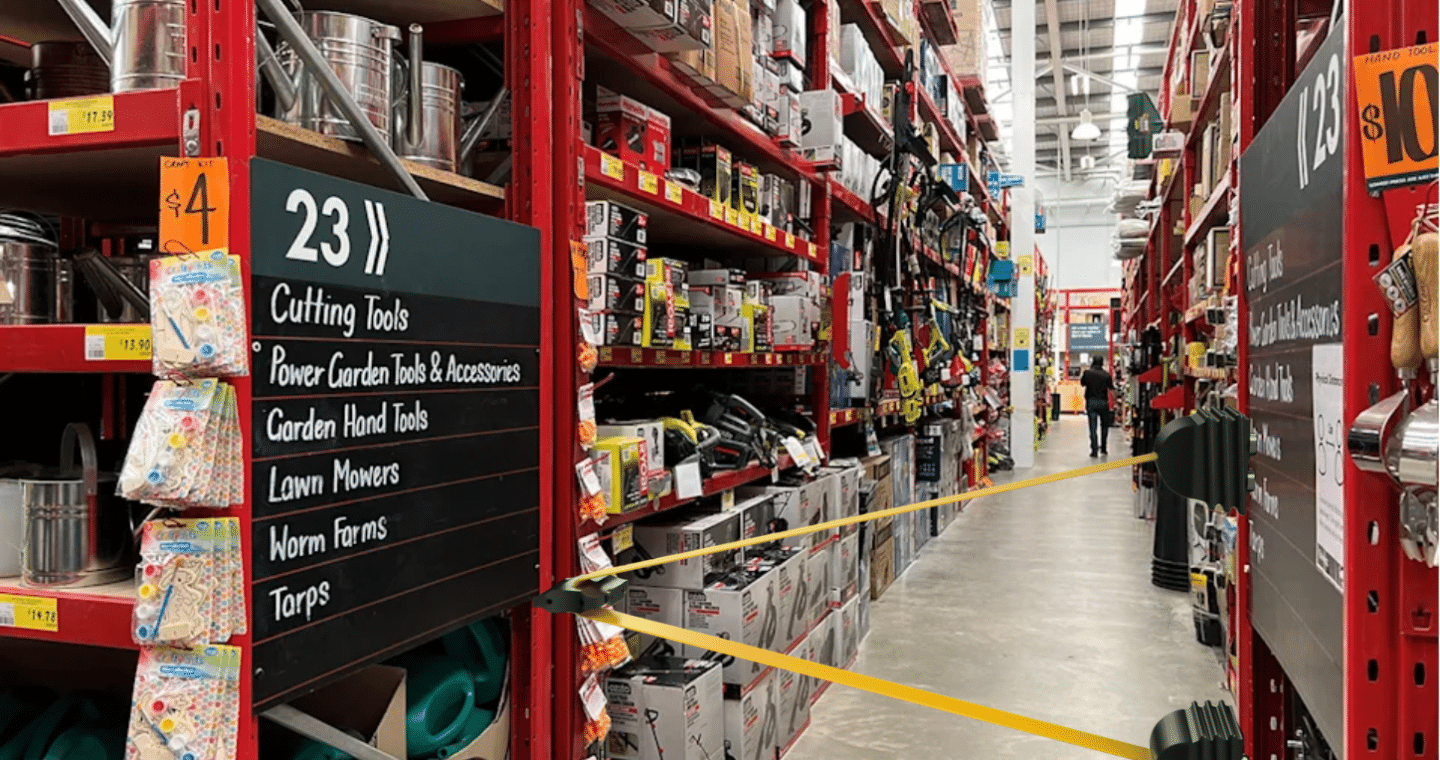
A standard retractable barrier stretches one belt between two posts, so the opening can only be as wide as that belt. The Wrangle Barrier adds a third point of contact. With belts running from two bases to a central pivot, one unit covers a wider opening than a single straight belt. It also blocks more of the opening’s height, so an extra-large item aisle that once needed two barriers tied together can be closed with one and compact to the same safe, portable size.
Angled Function
A straight belt leaves gaps underneath where a small pedestrian or child can slip through if the worker places the barrier too high. And the orientation of the warning mesh can only angle in one linear direction, meaning if seen from the wrong angle or height, it can easily go unseen. The pivot solves both these issues by setting the angle between the two belts, which lets the barrier break the line of parallel and block a greater height or lower depth than a standard barrier.
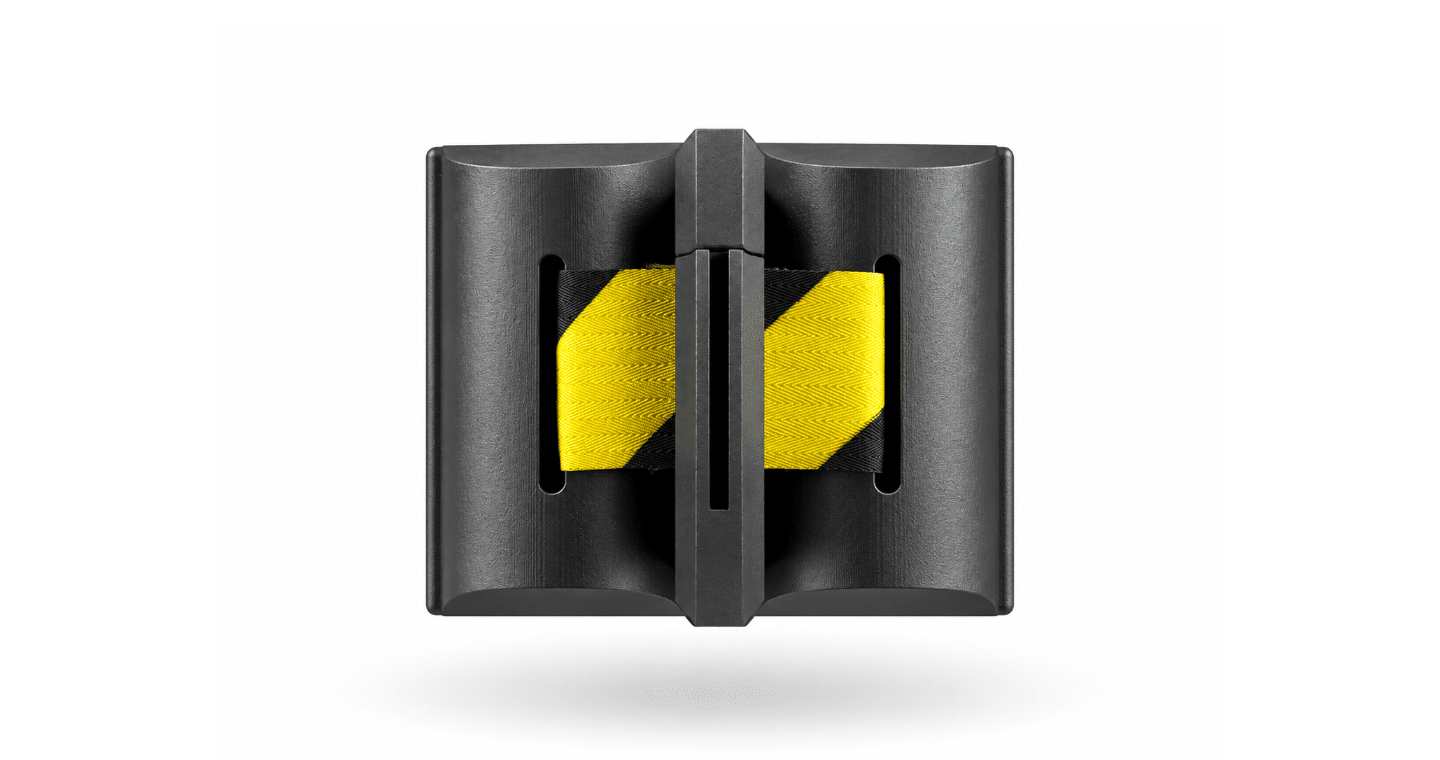
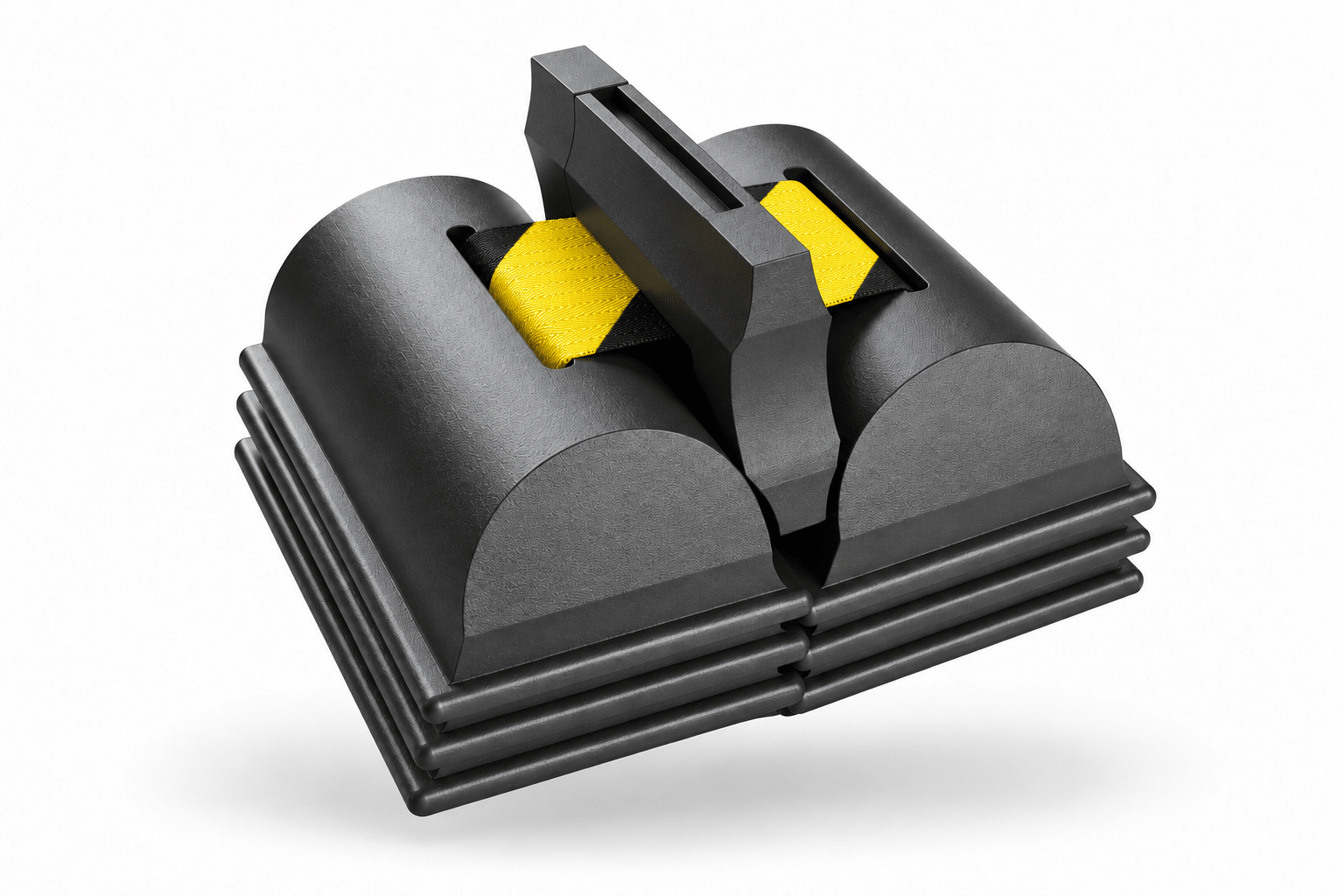
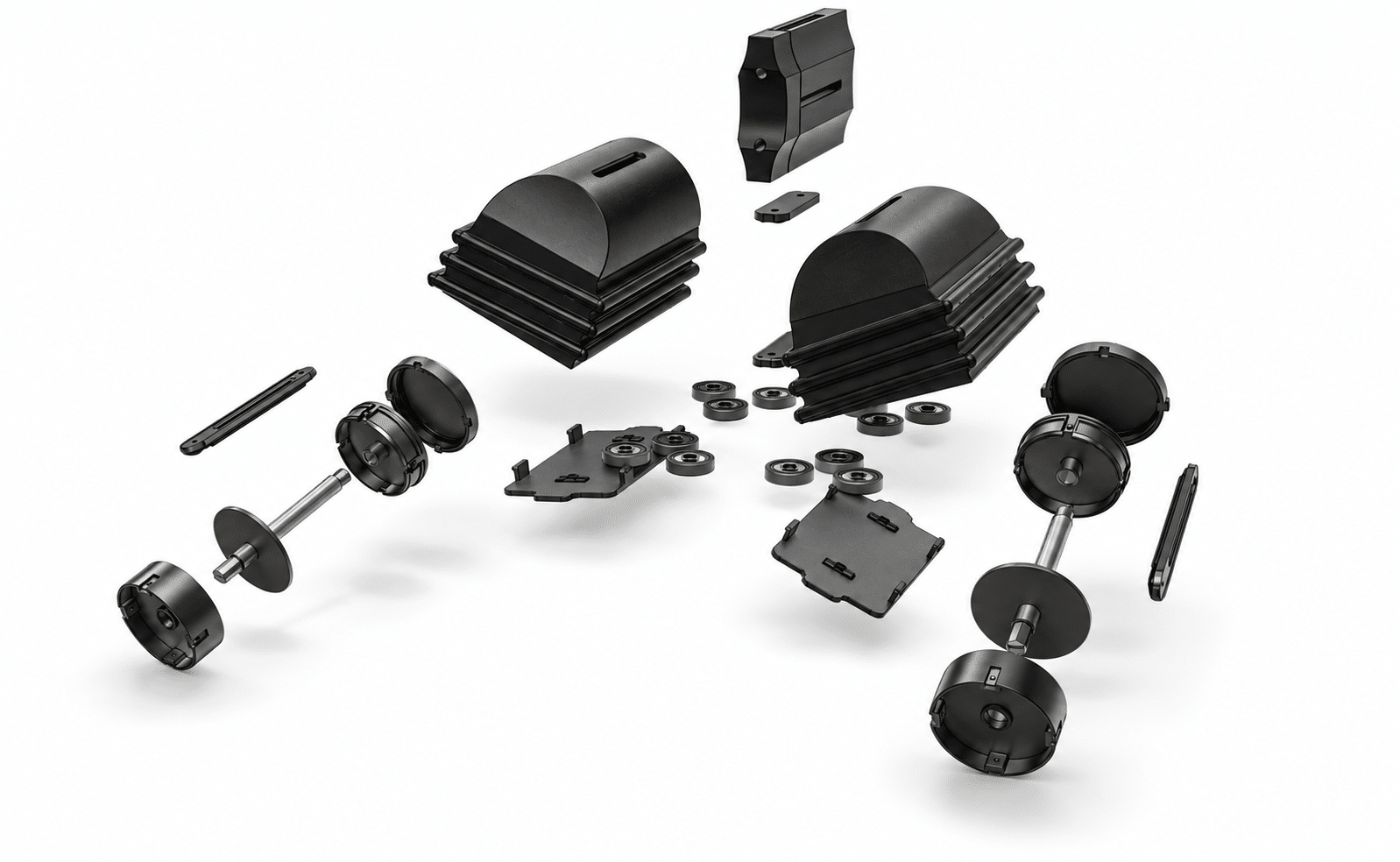
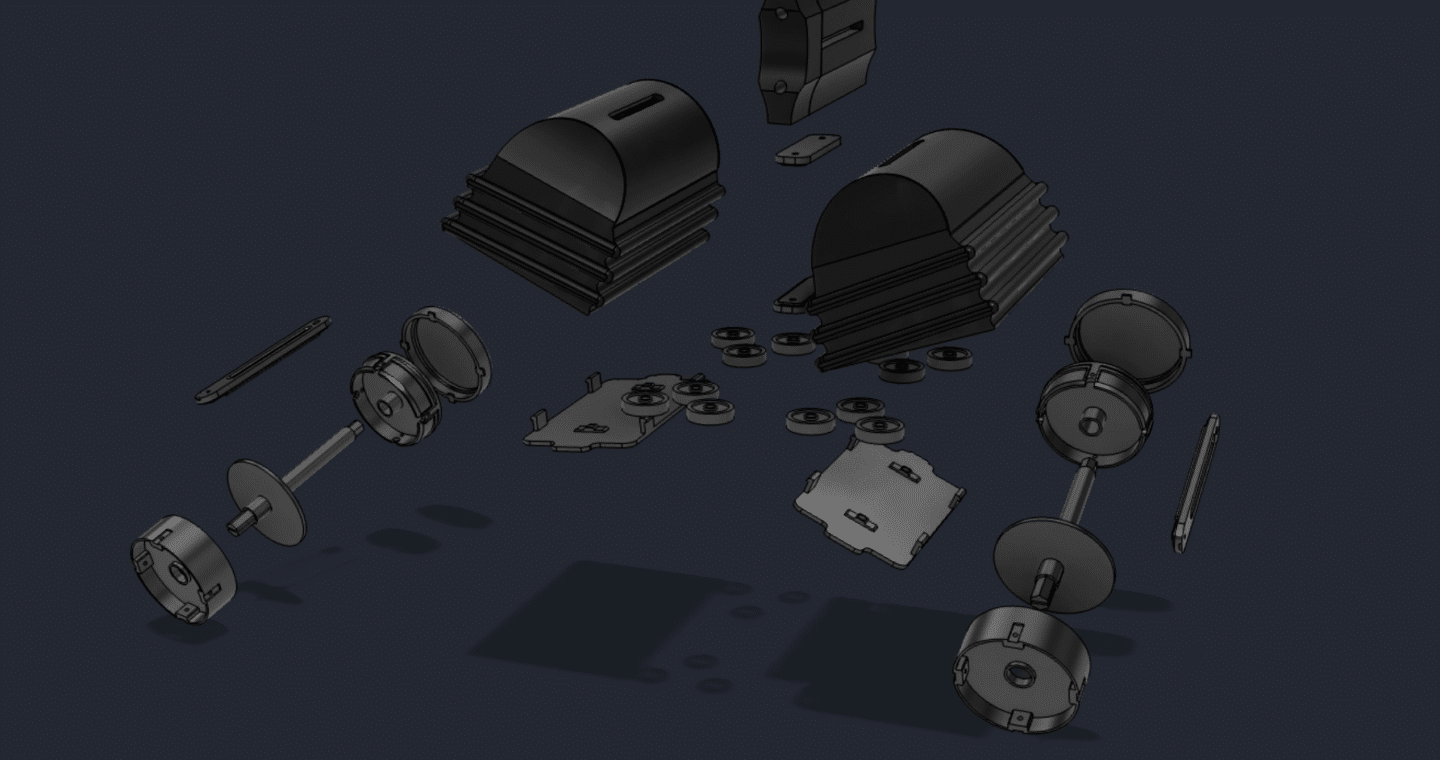
The Wrangle Barrier has two base parts. The bases are the two retractable reel units, one on either side of the pivot part, and each holds its own belt and coil mechanism. The pivot is the centre point the belts run to and are locked in the centre.
The internal coils are miniaturised and modified from existing product infrastructure. They need to be made smaller so to suit the ergonomics of one hands usage.
Context shots
Tait Furlong
Tait designs for the gap between what makers intend and what users expect. A final-year Industrial Design and Advertising student at QUT, he works across both sides of a product: how it’s built and used, and how it’s presented and understood.