Redesigning the First Step of Menstrual Care
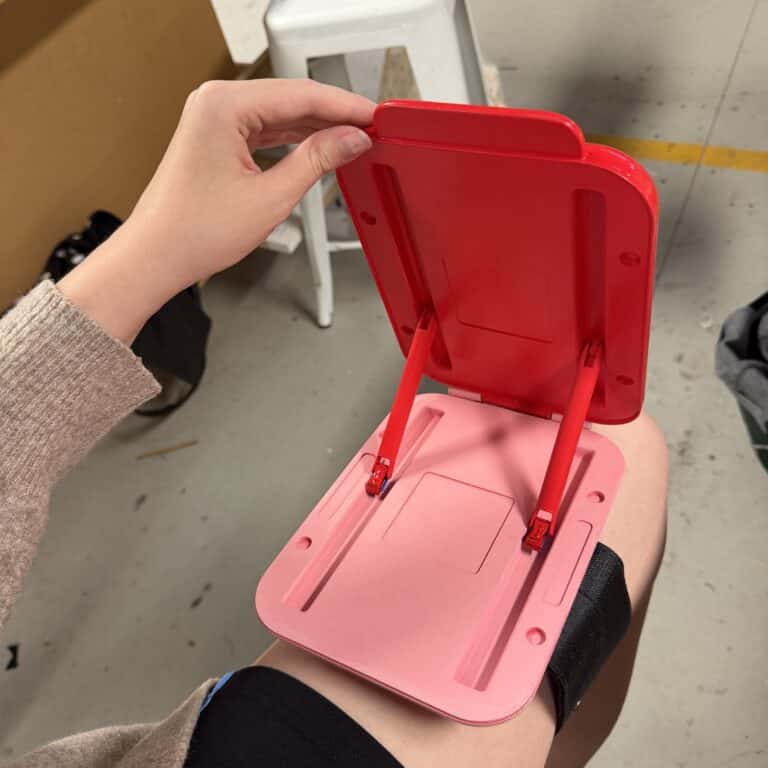
OPEA is designed with the intention of producing a low effort interaction, reducing women’s needs of fine motor
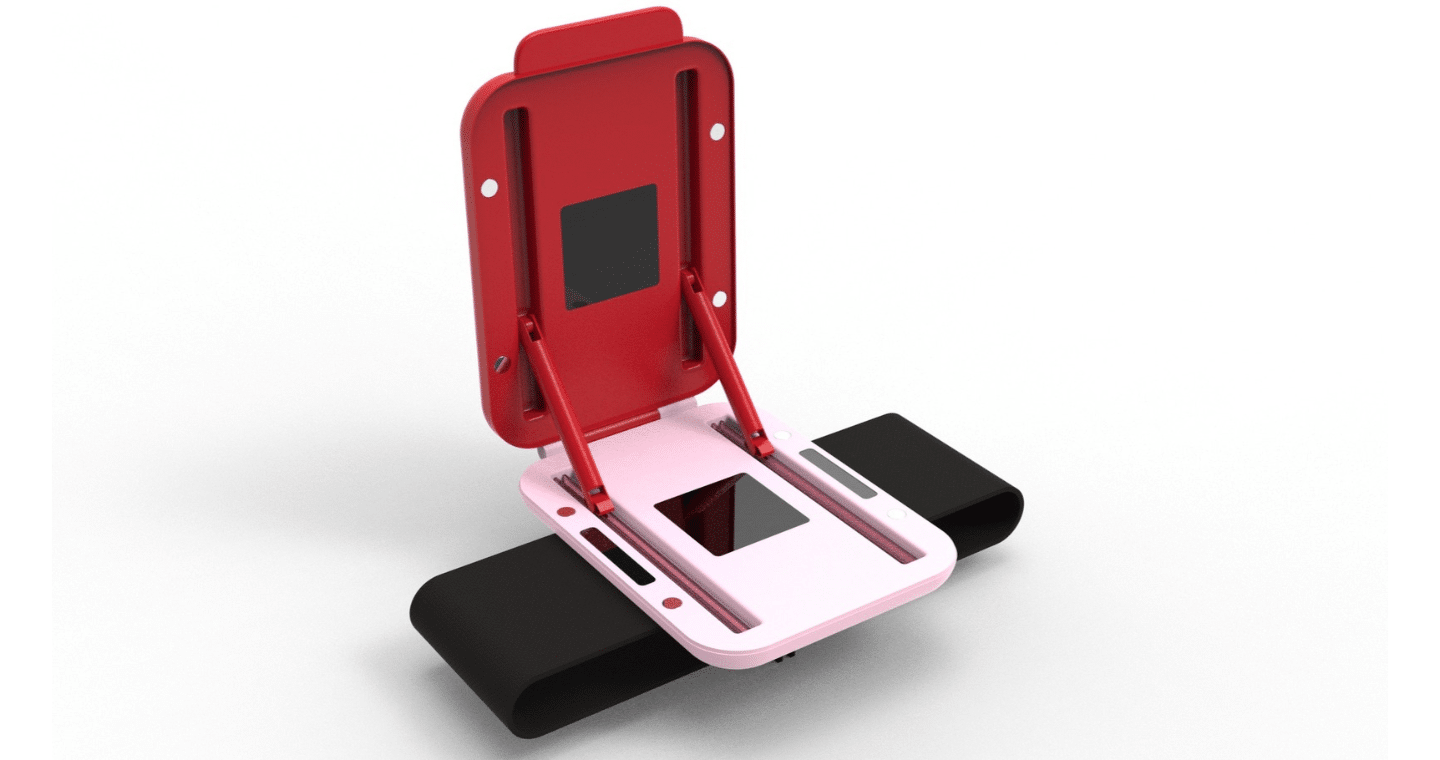
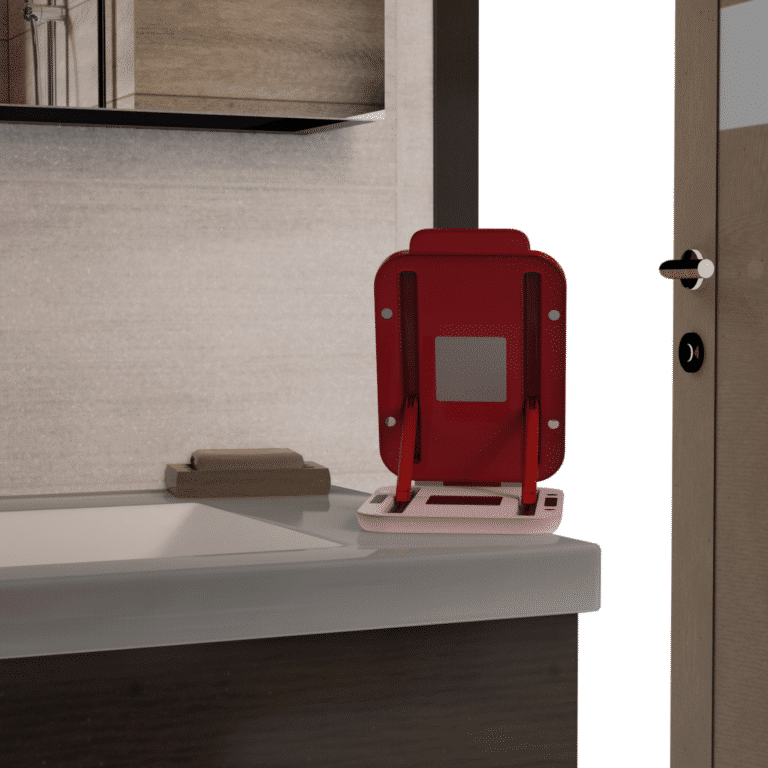
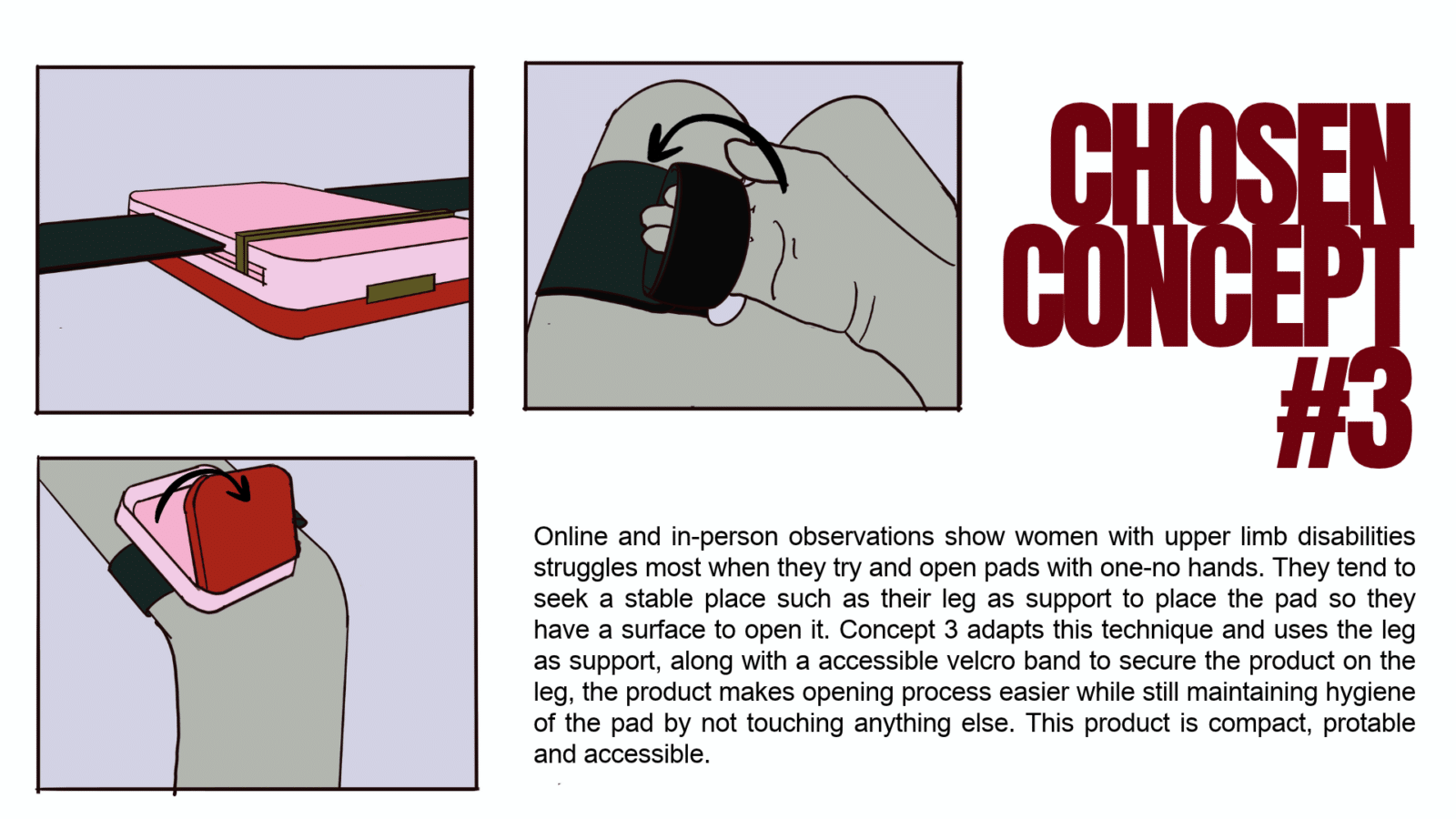
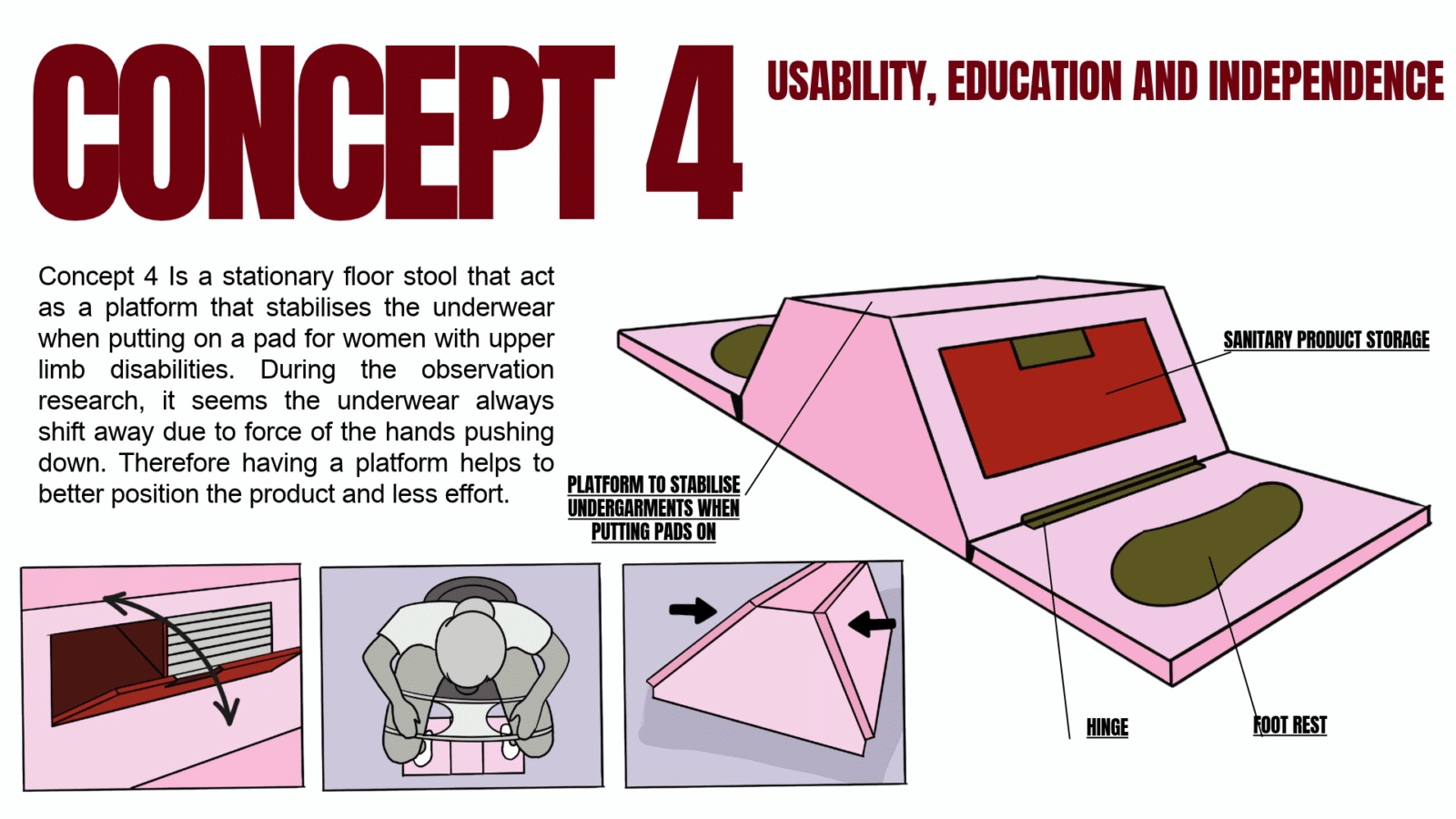
skills such as gripping, ripping and two handed operations when interacting with menstrual pads. A magnetic leg band is provided to secure the device in place on the users leg without requiring them to fasten or tear open conventional straps, allowing the magnets to guide the band into the correct position with minimal action. This product creates a stable working surface while still keeping the interaction simple and accessible.
How To Use –
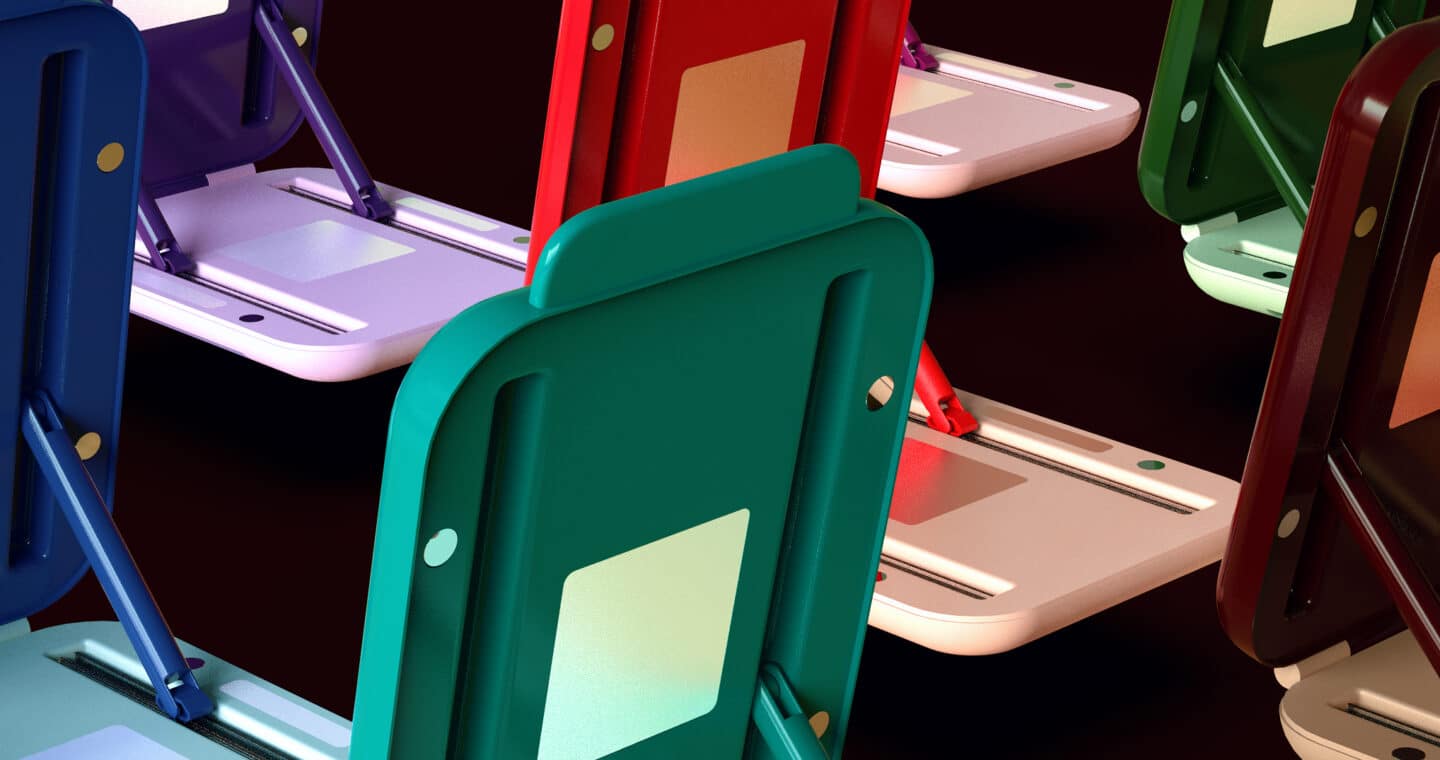
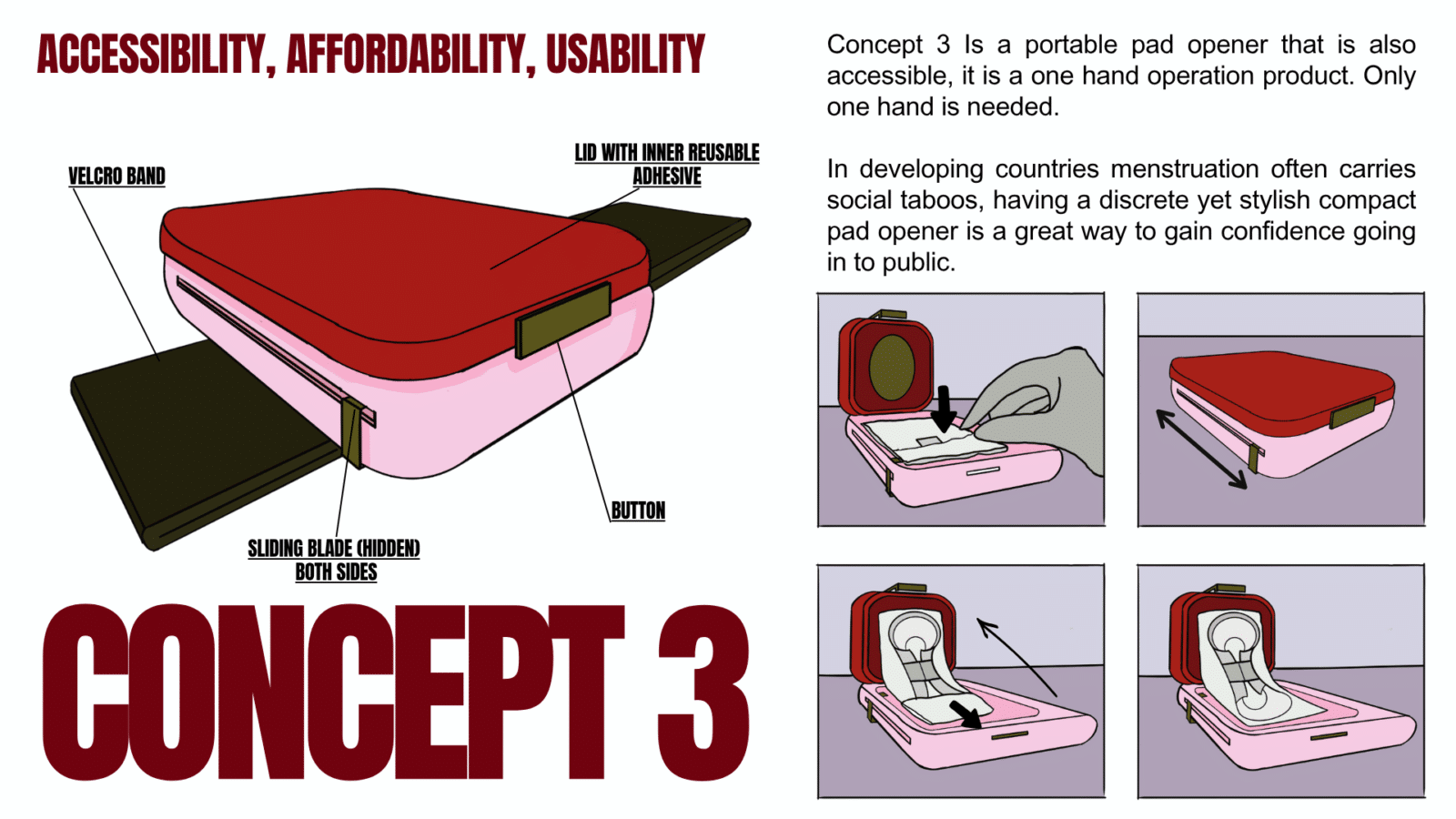
To use OPEA, the packaged pad is placed on the device while the lid is open. As the lid closes, the internal mechanism guides the sliders along the rails, allowing the plastic packaging to be cut while the pad still remains secure inside the case. When the lid is open again, the reusable adhesive separates the cut wrapper and revealed the pad without requiring it to be placed on the surrounding bathroom surfaces, helping to maintain a cleaner and more hygienic preparation process. To reuse the adhesive, simple water cleanse works.
“With my upper limb disability, every product requires figuring it out and practising from scratch”
“China has 8.5 million people with disabilities and women are ⅓ of that population. But the current menstrual market are still serving standard bodies”
Why Target sanitary Pads?
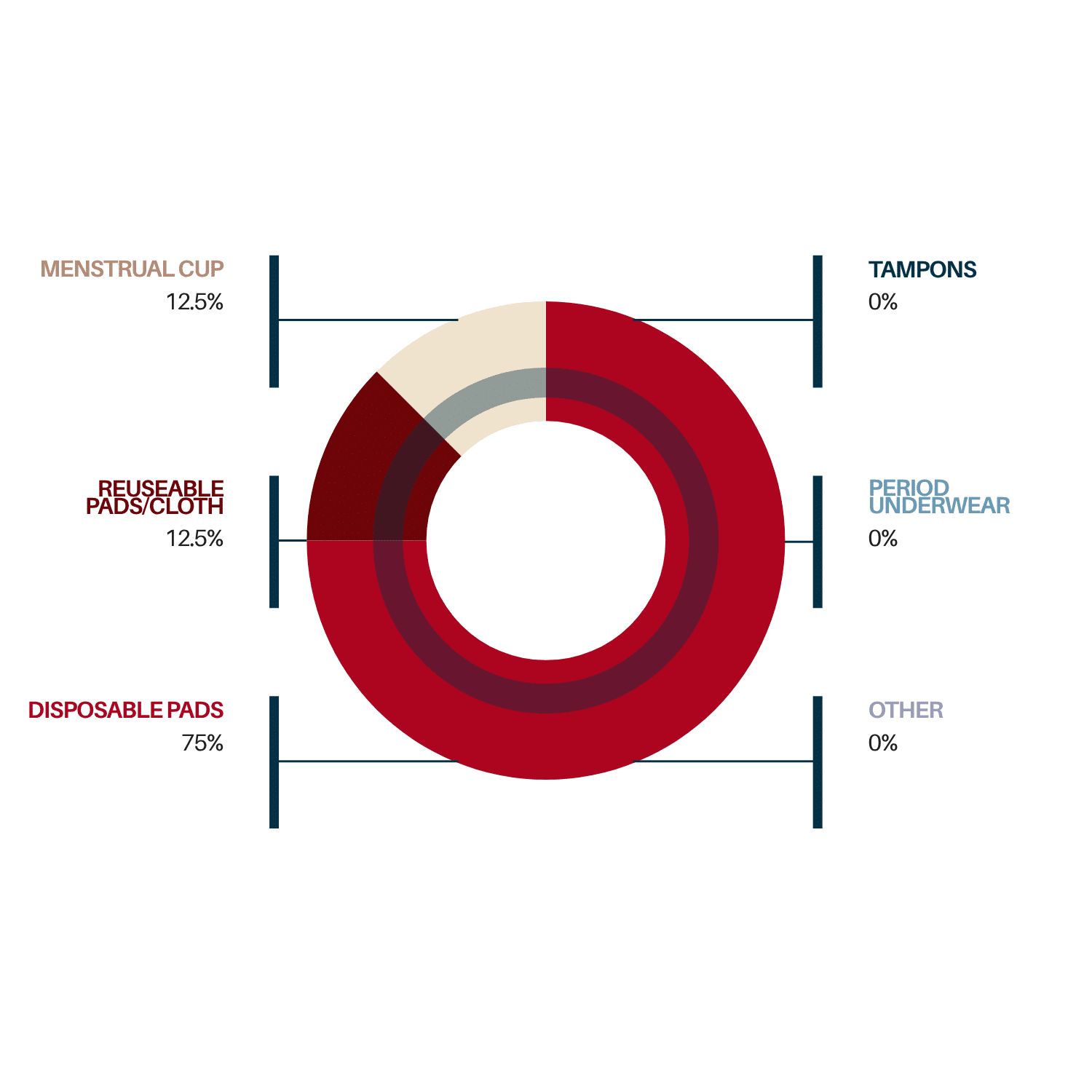
Sanitary pads were selected as the focus of OPEA because they are one of the most widely available and familiar menstrual products, particularly in developing countries where access to alternative products can be more limited. This was also reflected in the primary research, where most participants reported using disposable sanitary pads. Focusing on an existing and commonly used product allows OPEA to improve accessibility without requiring users to completely change their current menstrual care routine.
Impact –
OPEA demonstrates how accessibility can be incorporated into menstrual product design from the beginning rather than treated as an additional feature. By redesigning a small but important interaction, the project aims to support greater independence and make menstrual care more inclusive for people with limited upper-limb function.
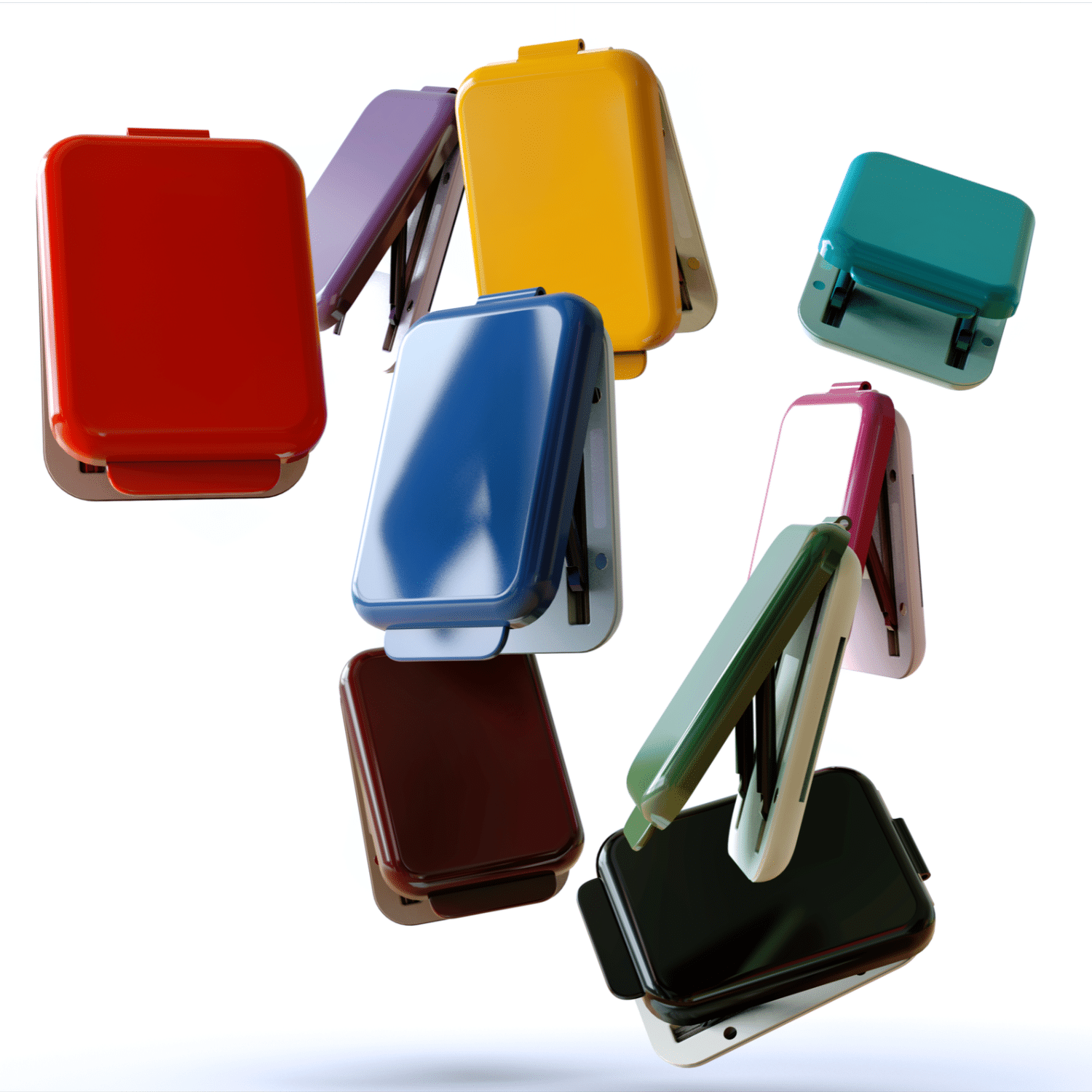
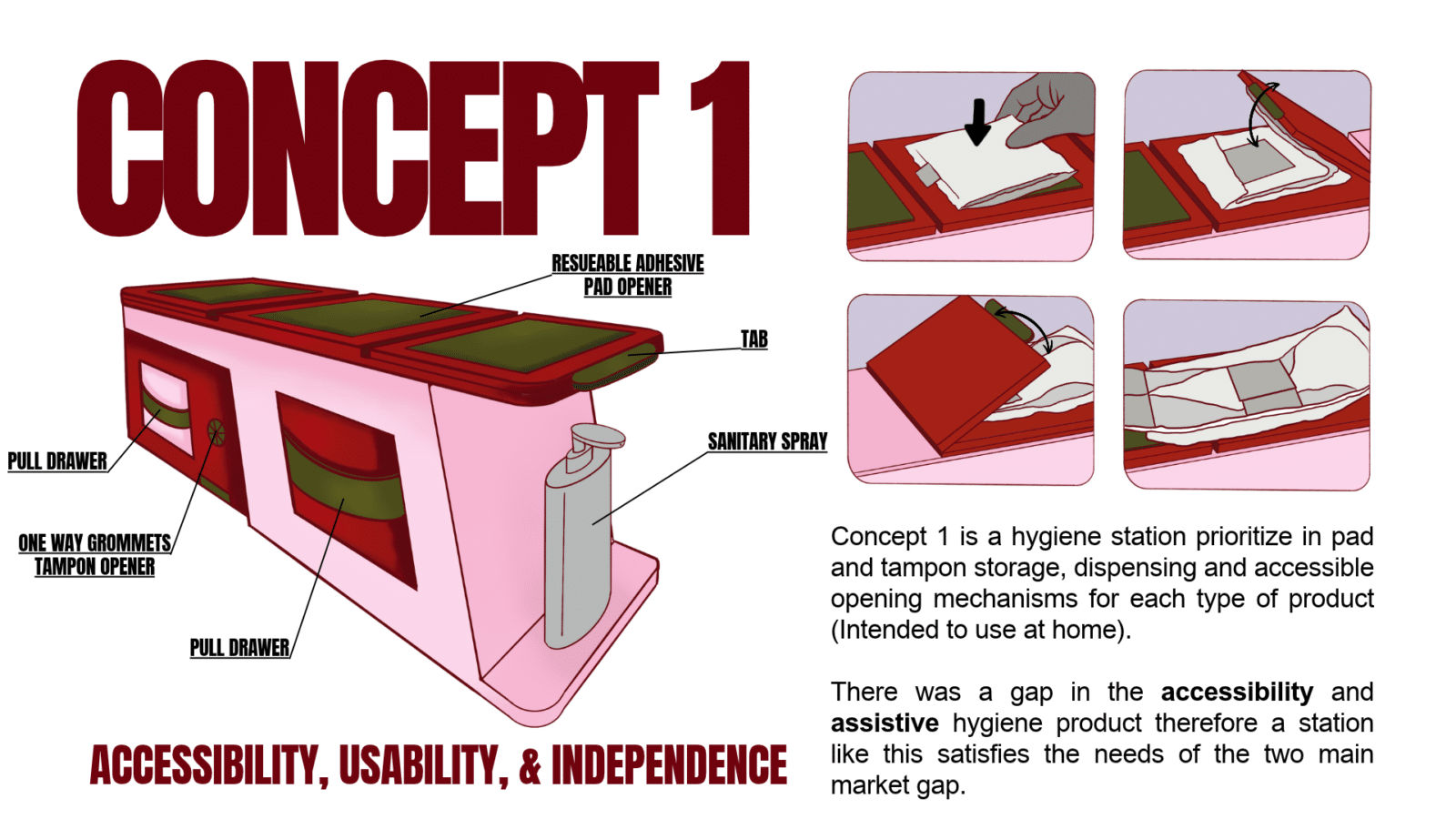
5 Concepts –